Making our mark at the Underberg Agricultural Show

Making our mark at the Underberg Agricultural Show

In The Field: 

Making our mark at the Underberg Agricultural Show

By Jacquie van der Westhuizen – Field Officer, Endangered Wildlife Trust (EWT)
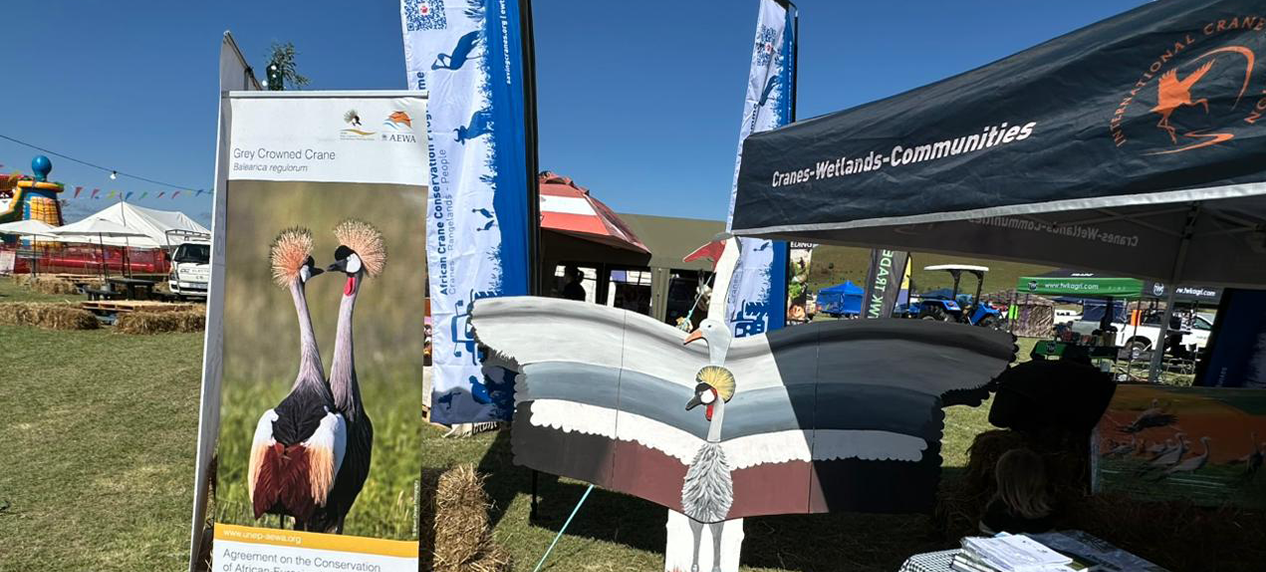
 

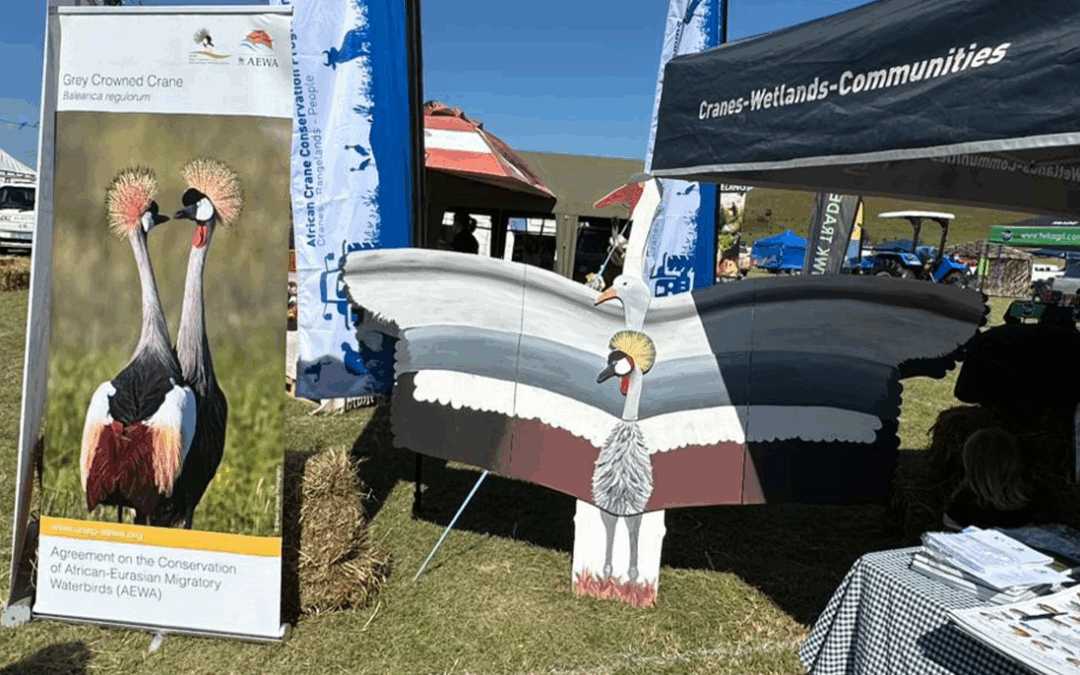
EWT African Crane Conservation Unit stand at Underberg Agricultural Show


The African Crane Conservation Programme, this year, showcased the work we have been doing in the Southern Drakensberg at the Underberg Farmers Association agricultural show held at the beginning of October.

The Southern Drakensberg is the stronghold for Wattled Cranes in South Africa, and houses populations of Grey Crowned and Blue Cranes too – literally Crane central!

Creating awareness about cranes, the importance of wetlands, highlighting the role of communities,  educating children and meeting and speaking to farmers were our main goals, something we achieved over and over.

When we arrived on Friday and set up our stand in freezing cold, rainy weather, we dreaded what the rest of the weekend was going to be like.  Joking that we were going to have to buy a braai to keep it lit in the middle of our stand to keep us warm, we woke up on Saturday and Sunday to the most beautiful, sunny weather.

We were visited by lots of old friends and farmers, and met a lot of new farmers who will soon become old friends too.

The outcome was amazing and exactly what I had hoped for.

My colleagues Samson Phakathi and Lindo Mgwaba were in charge of setting up a wetland scene that included our trusty taxidermised Wattled Crane and Oribi (all with the correct permits, of course)  firmly planted amongst some wetland grasses – yes, they actually went to a wetland and dug up some grasses.  It looked amazing and attracted lots of eager children who couldn’t believe how big and soft a Wattled Crane is.

I also had our wooden cranes set up so people could see exactly what the wingspans and heights of the three crane species are. This made a huge impact on show attendees, many of whom joined me in appreciating how majestic, stately and huge these birds are.

Obviously, being at an agricultural show surrounded by farmers, we wanted to give them a practical and useful gift to take away with them.   The farmer in Pieter Botha kicked in, and he came up with the brilliant idea to have keyrings made from cattle ear tags! My daughter drew a picture of the three crane species, which we had lasered into one side.  The other carries the logos of the Endangered Wildlife Trust and the International Crane Foundation in celebration of our more than 30-year partnership.

A chance to win a beautiful blue crane canvas, candy floss and stunning Wattled Crane zoo biscuits enabled us to collect the details and information of about 60 farmers (and their children) on the cranes they have on their farms.

What a successful weekend of friendship, networking, socialising and creating awareness!
Building internal capacity on biodiversity offsets

Building internal capacity on biodiversity offsets

In the Field

Building internal capacity on biodiversity offsets

By Neha Kooverjee, Sustainable Finance Officer – Endangered Wildlife Trust (EWT)


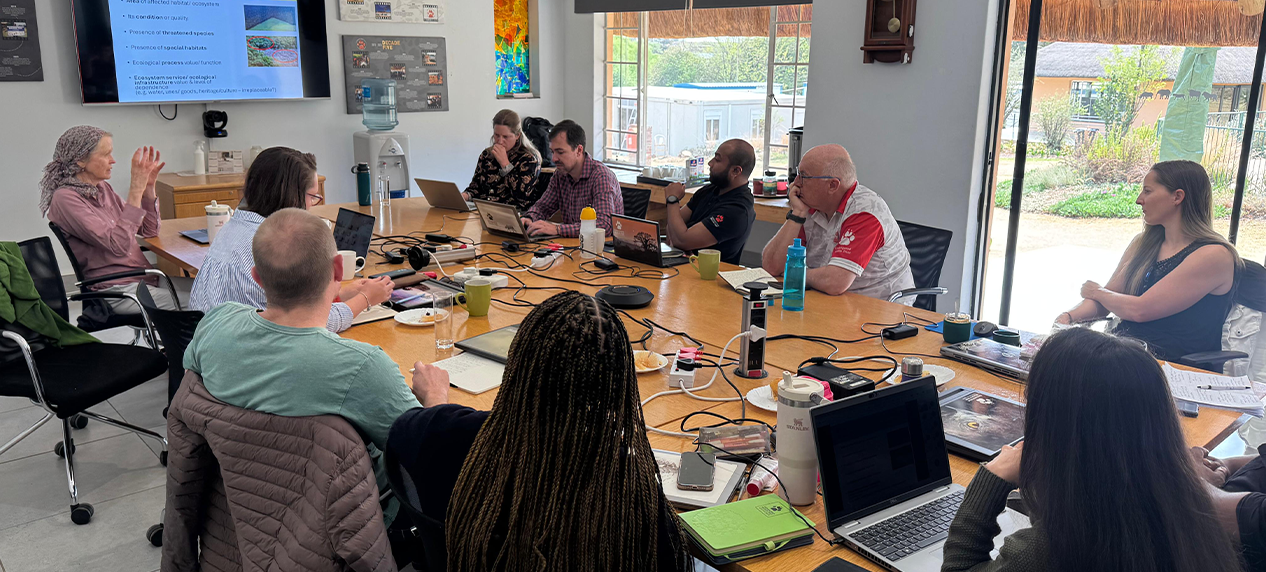
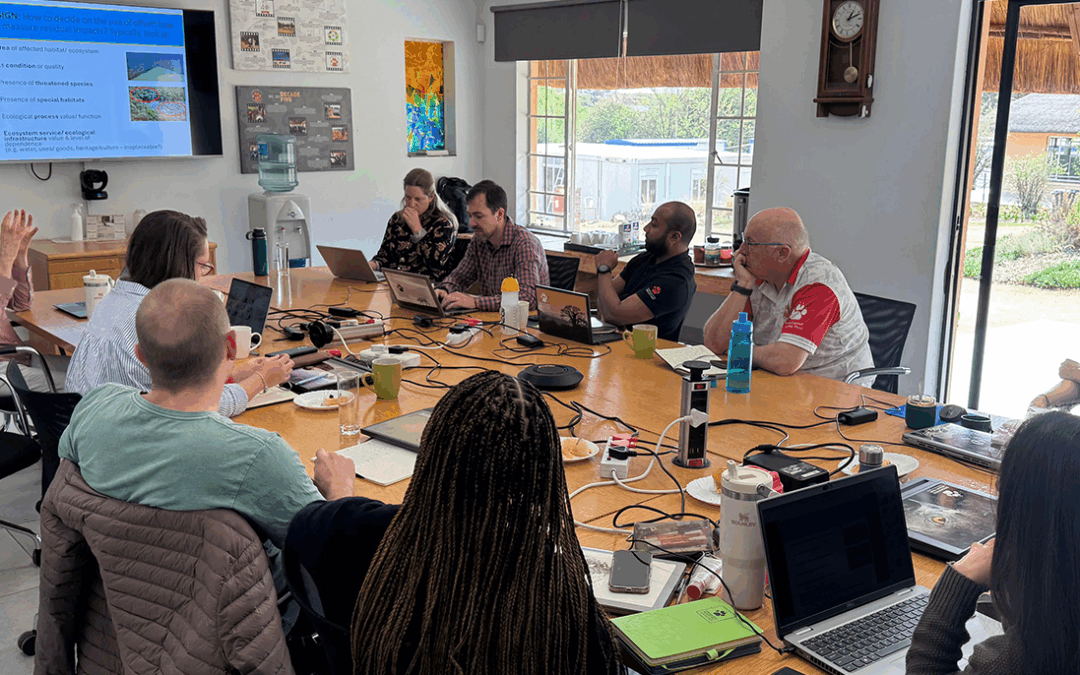
EWT team during biodiversity offset training workshop


In September, the Endangered Wildlife Trust (EWT) held an internal workshop and training session focused on biodiversity offset best practices and the potential for strategic offset banking.

Susie Brownlie, a global thought leader in biodiversity offsets and impact assessment for No Net Loss, facilitated the two-day session aimed at strengthening internal capacity and deepening alignment by unpacking the principles, challenges, and emerging opportunities of this important – yet often controversial – conservation approach.

Offsetting is the last resort in the mitigation hierarchy and is designed to compensate for significant, unavoidable residual impacts on biodiversity, including after every possible effort has been made by the developer to avoid, minimise and rehabilitate harm to biodiversity. It must not be used as a bargaining chip or license to justify destructive projects.

As with any tool, the design and application of offsets can either add genuine value to conservation or, if poorly managed, undermine the very systems they are meant to protect. Offsets, therefore, need to be carefully designed to meet the 10 core principles of best practice according to the Business and Biodiversity Offsets Programme. This includes like-for-like or better, additionality, no net loss (or net gain), long-term outcomes, and stakeholder participation.

The EWT is increasingly being approached to design and implement biodiversity offsets for developers. We are also exploring the potential of strategic offset banking – a proactive approach where biodiversity credits are generated in advance through habitat protection and/or restoration. These credits can then be sold to developers needing to offset their impacts in like-for-like areas. With potential projects and partnerships in the pipeline, this workshop was timeous in equipping relevant pack members with the necessary knowledge to design and implement offsets and offset banks according to best practice.

The workshop delved into the practicalities of implementing offsets, such as site selection, stakeholder engagement, financing mechanisms, and long-term management. It highlighted the risks of vague environmental authorisation conditions, insufficient budgets, and reputational damage if offsets fail to deliver meaningful conservation outcomes. It also underlined the benefits: that such investments can strengthen landscape resilience and water security against climate change; build trust with communities and regulators; demonstrate genuine corporate responsibility to shareholders and society; and leave a legacy of ecological and social benefits that extend beyond the life of a development project.

Key takeaways over the two days included the need for capacity building on the mitigation hierarchy and biodiversity offsets for project developers, financial institutions and provincial authorities to support effective design and implementation. Further, whilst conservation banking offers potential for more strategic, aggregated conservation outcomes, the location and potential demand need to be carefully considered. This is where the EWT’s unique advantage in South African landscape planning and related spatial datasets is of great value.

The workshop reinforced the importance of a unified, informed approach to biodiversity offsets across the EWT: when guided by science, aligned with conservation priorities and implemented with rigour, they can secure ecologically critical habitats, mobilise private capital for conservation, and help achieve global biodiversity goals, such as protecting 30% of land and sea by 2030.

Whether we are acting as an implementing partner, advising on offset design, or driving development of offset banks, the EWT’s credibility and impact depend on applying best practices and engaging with stakeholders transparently and ethically. The session laid the groundwork for future collaboration, advocacy, and innovation in this critical area of conservation, where we move beyond damage compensation to leaving our landscapes richer, more resilient and better prepared for the challenges of the future.

A cancelled event, storms, bad roads, no communication and vultures

A cancelled event, storms, bad roads, no communication and vultures

A cancelled event, storms, bad roads, no communication and vultures

By Danielle du Toit, Birds of Prey unit –  Field Officer


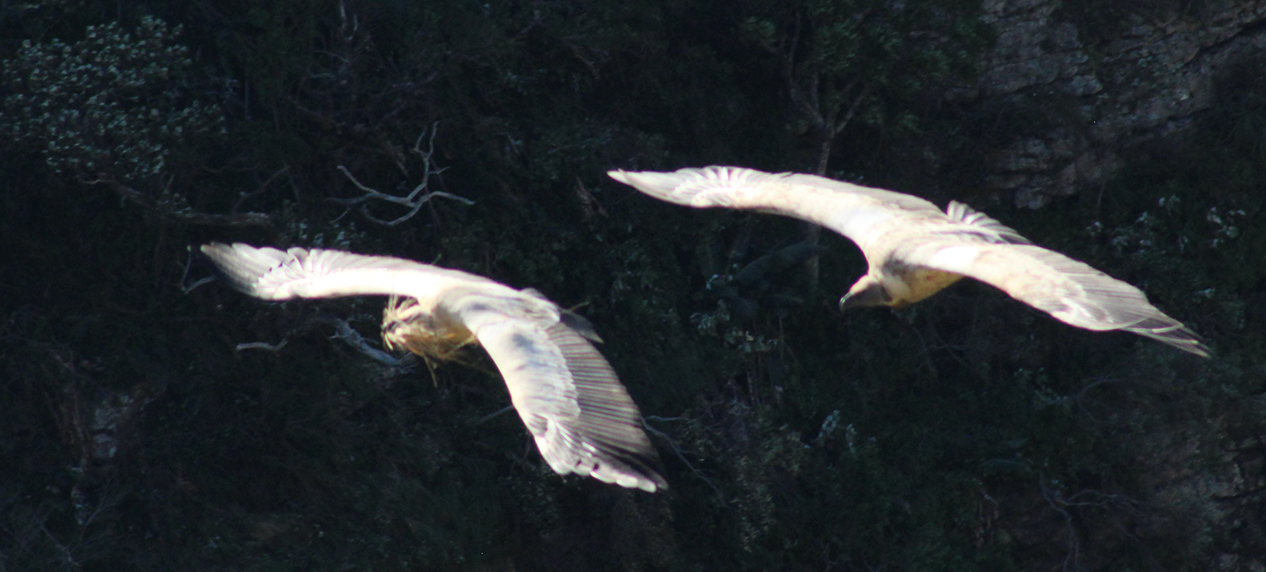
Cape Vultures soaring at Msikaba Vulture Colony in the Eastern Cape

EWT pack members never let what could be a lost opportunity go to waste.

On a recent trip to the Pondoland region of the Eastern Cape, Senior Conservation Manager Lourens Leeuwner, and I almost swore never to embark on such a journey again.

I say almost—because you never know what the universe might throw at you.

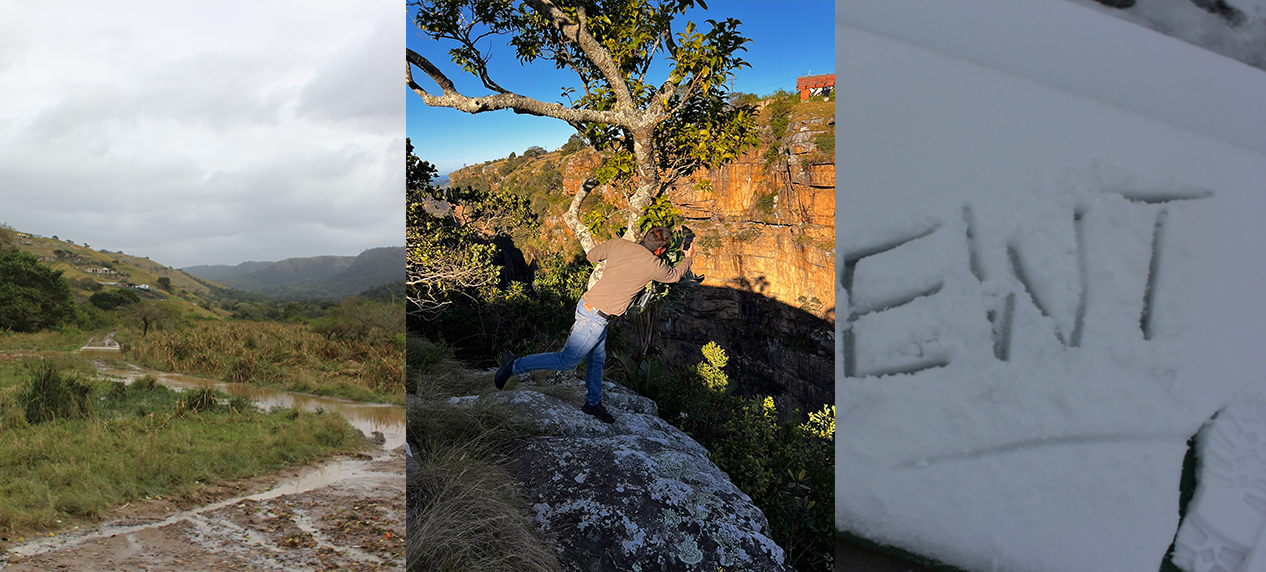
We only discovered on arrival in Mbotyi that the Eastern Cape Avitourism Roadshow had been cancelled at the last minute due to severe storms. The conditions were grim: heavy winds had lifted roofs off houses, power lines were down, and cellphone towers were out of service. To top it off, the accommodation we had managed to find was leaking, mouldy, and filled with stray dogs that insisted on following me everywhere (what’s new?).

Nevertheless, we persevered. We spent time in the surrounding forest searching for Cape Parrots, Hornbills, and other elusive species. Exploring the village—something that took all of 20 minutes—we watched the community rally to clear roads using broken chainsaws, a clapped-out 1988 Toyota Hilux, and a frayed tow rope. One young man worked barefoot with heavy machinery on a slippery tar road in cold conditions—a snapshot of the resilience (and recklessness) of local life.

With no way to book alternative accommodation online, we stumbled across a cottage during our exploration and begged the owner to take us in. Fortunately, her guests were leaving, and we found room at the proverbial inn. From there, we resumed our quest for cellphone signal. After hours of holding our phones in the air and running in circles on a cleared road, the universe humbled us yet again—no signal.

But then, luck turned. Our new home, Destiny Cottage, had satellite internet. The signal barely reached inside, but it was enough. A view of the ocean from the lounge and a supper of Salti-Crax and cream cheese (after Lourens’s half-hour mission in the Lusikisiki Spar) lifted our spirits. Using the connection, we reached stakeholders and began to reschedule the cancelled roadshow meetings.

The following day took us to the Msikaba Vulture Colony. After a long drive, a missed turn, and a detour to a random campsite, we finally arrived. Hours drifted by as we watched Cape Vultures float effortlessly between cliff faces, rising on the thermals. Over coffee and Lourens’s famous peanut-butter-and-berry-jam sandwiches, we felt the frustrations of the previous days slip away.

On our final day, before heading back to Graaff-Reinet, we met with officials from the Eastern Cape Parks and Tourism Agency in Mthatha to discuss a future Wild Coast recce.

What began as a cancelled event in the middle of storms and silence ended with vultures, resilience, and new opportunities—reminding us why we do this work, and why it’s always worth carrying on, no matter the obstacles.


Left: state of the road. Centre: Searching for signal. Right: EWT in the snow

A quick Cheetah relocation becomes an all-day exercise

A quick Cheetah relocation becomes an all-day exercise

A quick Cheetah relocation becomes an all-day exercise

By Olivia Sievert – Project Coordinator: Cheetah Conservation Project


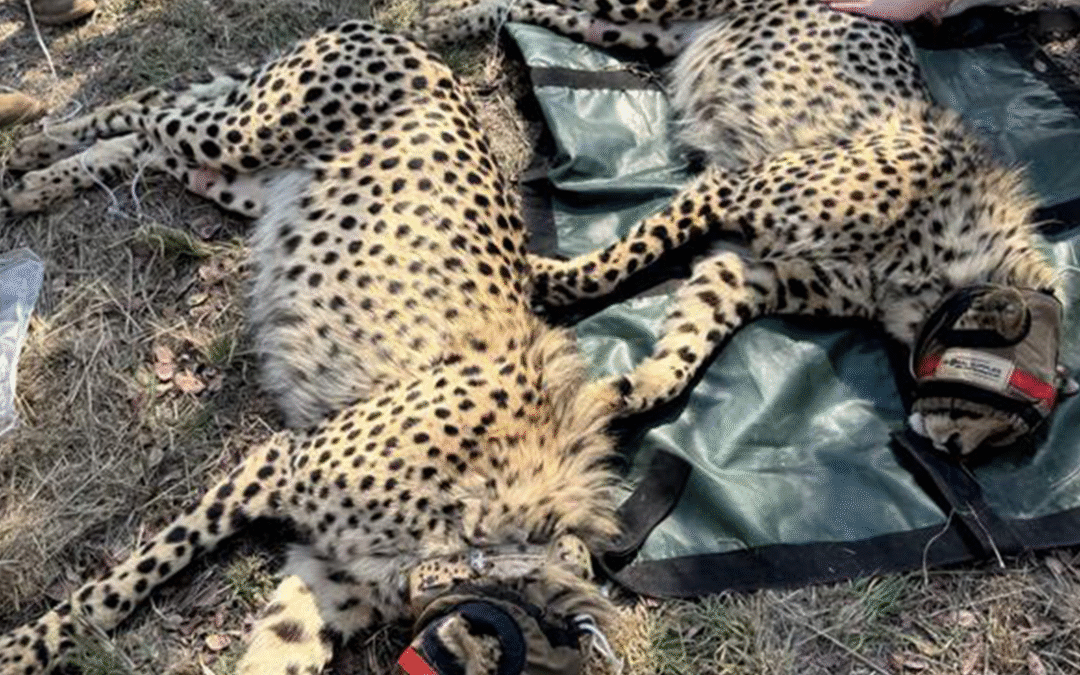
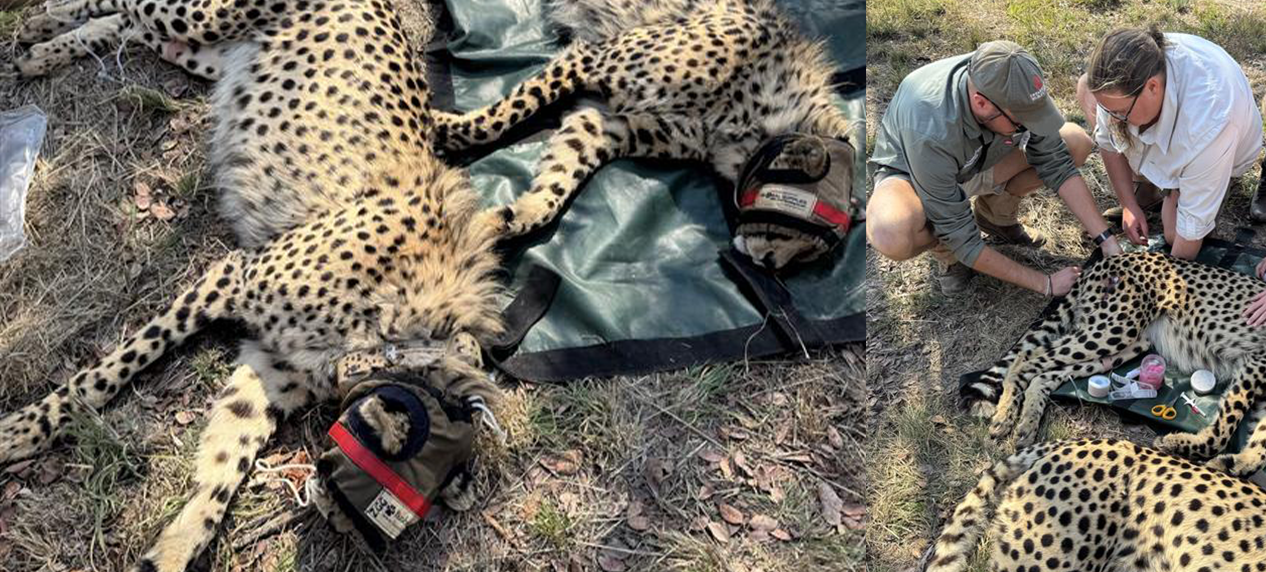
Cheetahs being relocated to Mabula Game Reserve

As a Field Officer, you learn to expect the unexpected! What was meant to be a quick two-hour cheetah relocation from one reserve to another turned into a full-day adventure, thanks to some persistent car troubles.

Now, most field staff are well-versed in the art of vehicle recovery and minor repairs, but these days I spend more time on tar roads than off-road tracks and, given my dislike for vehicle mechanics I have forgotten most of what I had once known. So imagine my surprise when, with two very awake cheetahs in the back, a reserve staff member waved me down to point out that part of the vehicle was hanging off where it really shouldn’t be! Thankfully, the brilliant Shambala team immediately had a bush mechanic’s fix in mind: “We’ll wire it together, just drive carefully”.

Still, before setting off, I had to send a few long voice notes to EWT Senior Conservation Manager Lourens Leeuwner, my ever-patient vehicle guru, for the all-important “yes, you’ll be fine” reassurance. Then, I was  off again. With any relocation it is key to minimise the time the cheetah are in crates, especially with the heat we were experiencing that day, so this was a huge relief.

However, just when I thought we were in the clear at Mabula Game Reserve, the cheetah vehicle gave one last surprise: the back refused to open! Cue a new plan involving teamwork, heavy lifting, and careful crate manoeuvring. At last, the cheetahs were safely released, tucking into an impala meal as if nothing had happened.

After a quick check over from the Mabula mechanic, I limped back into Johannesburg, five hours later than expected, but grateful, safe, and reminded once again that fieldwork is all about teamwork. Huge thanks to the Shambala and Mabula teams for their quick thinking, muscle, and good humour. Without them, this relocation wouldn’t have been possible, and the cheetahs certainly agree!


Celebrating Arbour Week at Madibatlou Middle School with Eskom and EWT

Celebrating Arbour Week at Madibatlou Middle School with Eskom and EWT

Celebrating Arbour Week at Madibatlou Middle School with Eskom and EWT

Ndzalama Chauke, Senior Field Officer – Wildlife and Infrastructure Unit


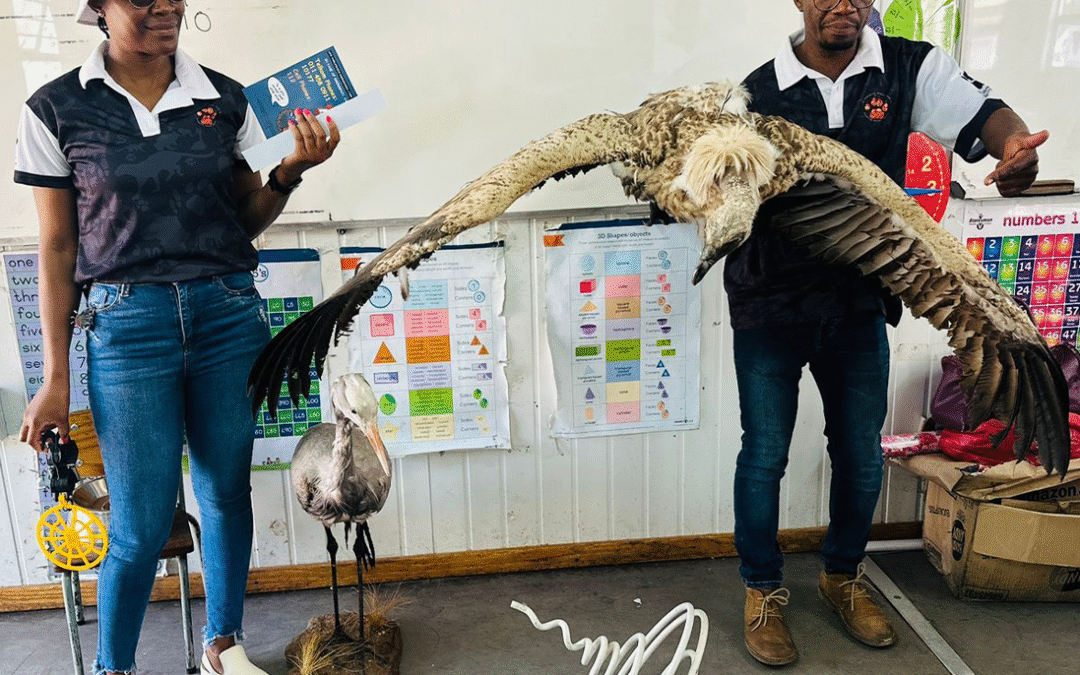
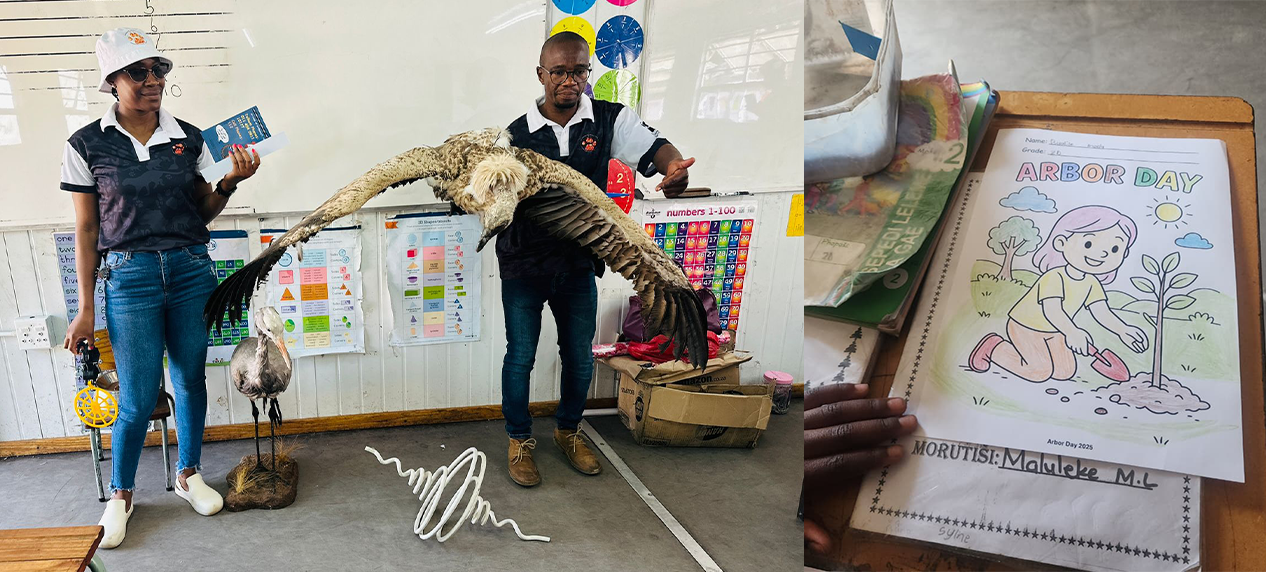
Blue Crane and vulture models used for bird conservation education


To celebrate Arbour Week, the Wildlife and Infrastructure team joined colleagues from Eskom at the Madibatlou Middle School in Olifantfontein, Gauteng, on 5 September, to speak about the importance of planting and conserving trees.

Wildlife and Infrastructure unit head Oscar Mohale and I also spoke to the school’s Grade 2 and 3 learners about birds and power lines, and what we, as the EWT, are doing to reduce the number of bird collisions with power lines. During these talks we showcased a vulture and a Blue Crane, as well as some of the devices we use to mark power lines.

I read a story to the children about Arbour Day so they could understand what this day is about and how, as people, we can conserve trees and, most importantly, plant trees.

After an art competition where the children coloured in pictures of birds, trees and people, the vegetable garden planted at the school earlier in the week was officially opened. The food grown in this garden will assist in feeding the children and the community.


Running for Conservation: Rhino Peak Challenge 2025

Running for Conservation: Rhino Peak Challenge 2025

Running for Conservation: Rhino Peak Challenge 2025 with the EWT

By Eleanor Momberg


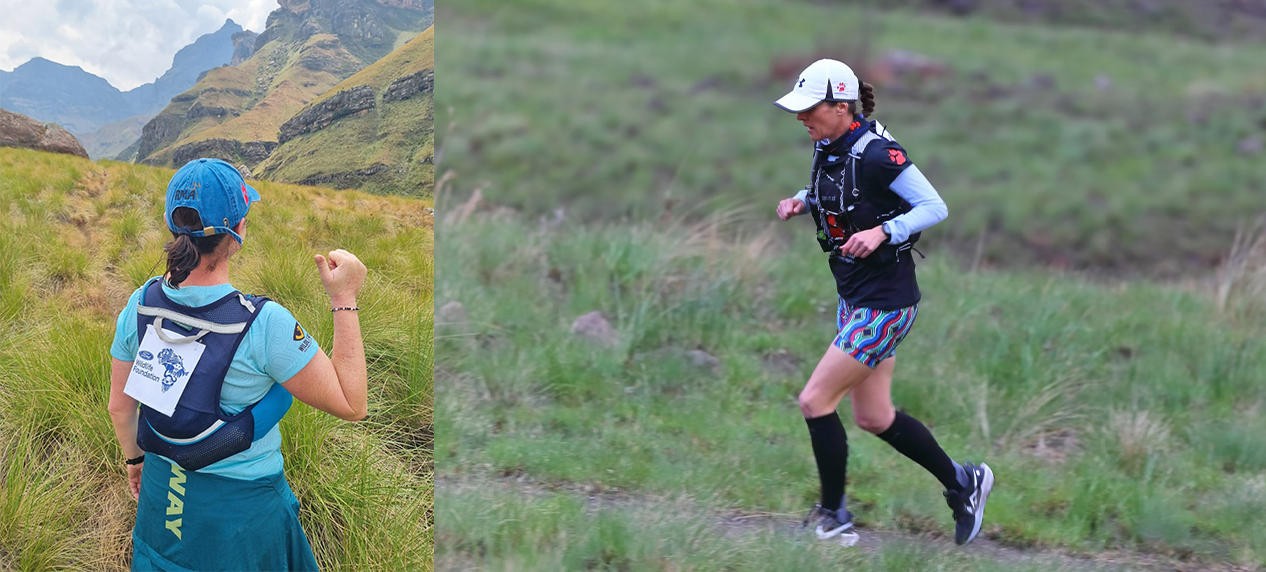
Ambassadors hiking towards Rhino Peak in rain and mist


Saturday, 20 September 2025, will live long in the memories of those who partook in a variety of athletic challenges in support of conservation and rangers.

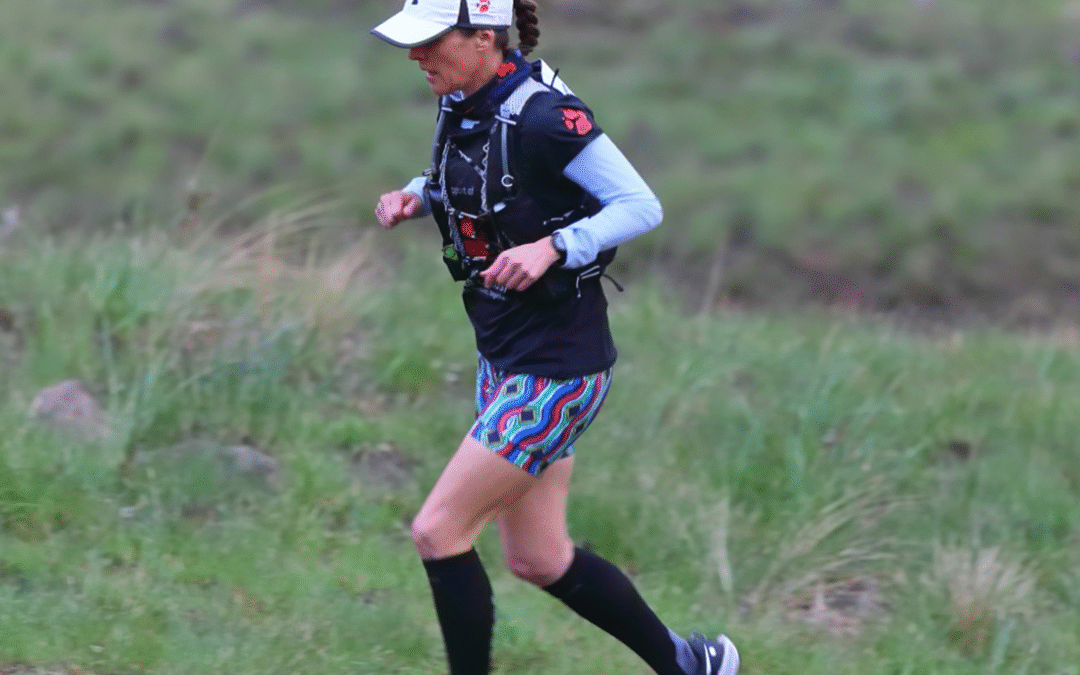
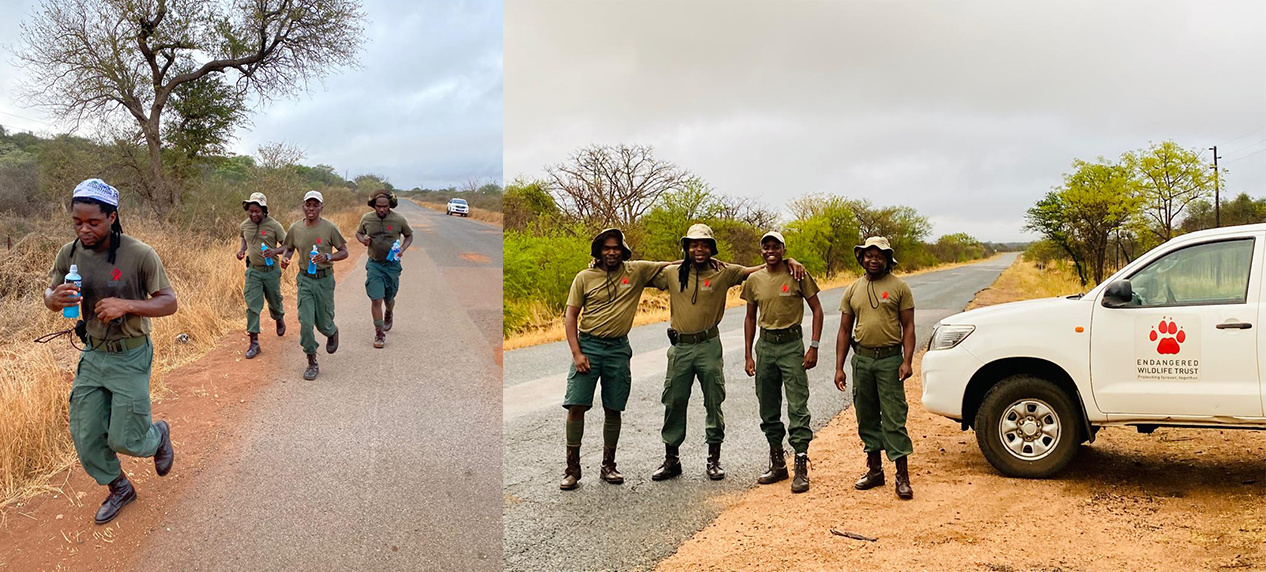
While four Soutpansberg rangers in the EWTs Savanna Conservation Landscape donned their uniforms to complete the 21km Game Rangers Association ranger challenge, the EWTs CEO, Yolan Friedmann participated in the 21km challenge at the Zuka Game Reserve in KwaZulu-Natal in support of rangers everywhere.

The Soutpansberg rangers, based at the EWTs Medike nature reserve, were accompanied by members of the recently formed Mideroni cricket team. Running on a cooler day at only 15 degrees Celsius was a welcome relief as members of the local community joined them to run stretches along the route as they cheered them on.

It was in the Maloti-Drakensberg Park World Heritage Site that the weather played havoc with the Endangered Wildlife Trust and Wildlife ACT ambassadors participating in the 10th annual Rhino Peak Challenge.

On Friday afternoon, when the 48 ambassadors running for conservation gathered on the balcony of the Drak Gooderson hotel in Underberg to prepare for the adventure that lay ahead, their view of Rhino Peak was clear. This challenge is the vision of Spurgeon Flemington, who has been driving the Rhino Peak Challenge since its inception.

It was the EWTs donor relations officer Tammy Baker’s seventh Rhino Peak Challenge, a second for Catherine Vise, and a first for her colleagues, Catherine Kuhn, Ian Little and Dave McCollough.

Spurg’s words during the pre-challenge briefing on Friday included “Watch out for snakes on the path, don’t get lost, it’s windy up there, and for safety reasons, I will be turning ambassadors back who haven’t summited by 11:30 am. If you haven’t reached the rhino horn by then, I’m really sorry.”   Those remarks prompted a few more nervous glances being exchanged amongst the group.

As these remarks sank in amongst nervous participants, he added, “While you are all lying awake tonight, keep pushing for those funds. This is a fundraising event first and foremost.”

The Rhino Peak Challenge (RPC) is a conservation fundraiser aimed at raising funds for the EWT, Wildlife ACT and the Bearded Vulture Recovery Programme for the conservation of vultures, rhinos and cranes. In the past decade, more than R10 million has been raised through the RPC, with some R1.8 million being raised so far this year.

Shortly after the ambassadors gathered to set off in four groups of 12, ten minutes apart, the weather changed.

“As we’re about to start, the wind picked up significantly and the weather turned. We all looked nervously towards the peak where the conditions looked bleak with rain, wind, lightning and thunder raging over the mountain,” said Tammy. “Despite this, we set off, hitting the icy rain almost immediately.”

But there was no reaching the peak for the ambassadors as conditions deteriorated. Tammy says once she reached the seven-kilometre point, she started getting worried about the last 500m to the peak.

“It’s sheer rock and difficult enough on a dry day, never mind when it is wet, slippery and full of mud,” she said.

It was then that some of the sweepers started passing them on the way down, telling them it was “too dangerous” up there, that Spurg had “called it”, and that no one would make the peak this year.

Catherine Kuhn says:  “The safety of the ambassadors came first, and it was indeed a good call. The rain made everyone freeze and soak to the core, and lightning in the Drakensberg is not something you take chances with. Being part of MCSA Mountain Rescue for 13 years, I could well appreciate, respect and understand the extremely difficult call the race organiser had to make”.

Although she knew it was the right safety call, Tammy pushed on to meet up with Spurg, who had been sitting further up the trail in cold and wet conditions for nearly two hours, turning ambassadors back.

On her way back to the finish line, Tammy says she “drank in the mountain with its pristine water and incredible scenery” before being welcomed across the line by Chris Kelly from Wildlife ACT and his team.

Despite the disappointment of not reaching the Rhino Peak on Saturday, Catherine Kuhn and two other ambassadors, Ben Bert and Dave Rose, decided to give it another go on Sunday morning.

“Starting at 5 am on Sunday, the weather was absolutely perfect. By 08:45, we had reached our goal and summited the Rhino!  The view is unbelievable from up there. The hike is a tough one, and not one to be underestimated by any means,” says Catherine. “We had a flight to catch, so we had to Vooma down the mountain – we were all down safely by 11:00 am”.

Tammy says every year, when it’s about halfway into the challenge, she questions why she is doing this.

“But then, when it’s done and dusted, I say to myself that I can’t wait to do that again next year.  That’s what the event does to you. It’s a life-changing experience. I think about the rhino peak every time I run. Once you’ve been there, it never leaves you”.

For those still wanting to donate to the Rhino Peak Challenge, please visit https://ewt.org/rhino-peak-challenge/


**  The EWT would like to thank the Ford Wildlife Foundation for supporting our entire team of RPC ambassadors.


Soutpansberg rangers in uniform running the 21km ranger challenge