Make it rain
MAKE IT RAIN
 Catherine Vise, EWT Soutpansberg Protected Area Water Conservation Project Coordinator CatherineV@ewt.org.zaWe are proud to announce an investment from The Coca-Cola Foundation (TCCF) into the EWT’s Soutpansberg Water Conservation Project, through their Replenish Africa Initiative (RAIN). TCCF’s investment is part of their ongoing support of watershed protection programs across the continent and demonstrates their commitment to driving progress on the sustainability development goals on the African continent. The Soutpansberg Water Conservation Project identified a large area of alien trees in Limpopo, which, once removed, will significantly contribute to the region’s bulk water security. RAIN is the flagship programme under which TCCF implements its community water projects in Africa. To date, RAIN has reached more than 2.8 million people with improved water access, sanitation and hygiene (WASH) across 41 countries. By the end of 2020, RAIN aims to measurably improve the lives of at least six (6) million people in Africa through sustainable WASH interventions. The EWT is very pleased to be working with The Coca-Cola Foundation, through the RAIN programme, as the funding will expand our current work removing IAPs from upper catchment areas in the Soutpansberg, while at the same time empowering local people through the creation of jobs.
  What are IAPs? Invasive alien plants (IAPs) are plants introduced to a new location from elsewhere in the world. These introductions can occur purposefully, such as exotic plants introduced for garden plants or forestry and agriculture, or sometimes these introductions happen accidentally. Once introduced, IAPs are a species that naturalise, adapt and spread quickly in their new environment. With no natural predators the IAPs increase, which can lead to mass invasions of habitats. Consequences of this can be dire – from direct impacts on biodiversity through habitat displacement, to impacts on human livelihoods. Invasive alien species are globally recognised as the second largest threat to biodiversity, after direct habitat destruction.
  How do IAPs affect our water resources? IAPs also have a very high impact on water resources. Some species (e.g. Eucalyptus and Black Wattle) extract large amounts of water from both groundwater and river systems due to their much higher use of water than the indigenous vegetation. It is estimated that IAPs can lower water availability by up to 4% across the country, and if left unchecked this impact could increase to 16%. Dense stands of Black Wattle on river systems can also exclude indigenous vegetation (such as grasses and sedges) from growing on the riverbanks leaving the soil exposed and dried out. This can lead to soil erosion when it rains, further degrading the system.
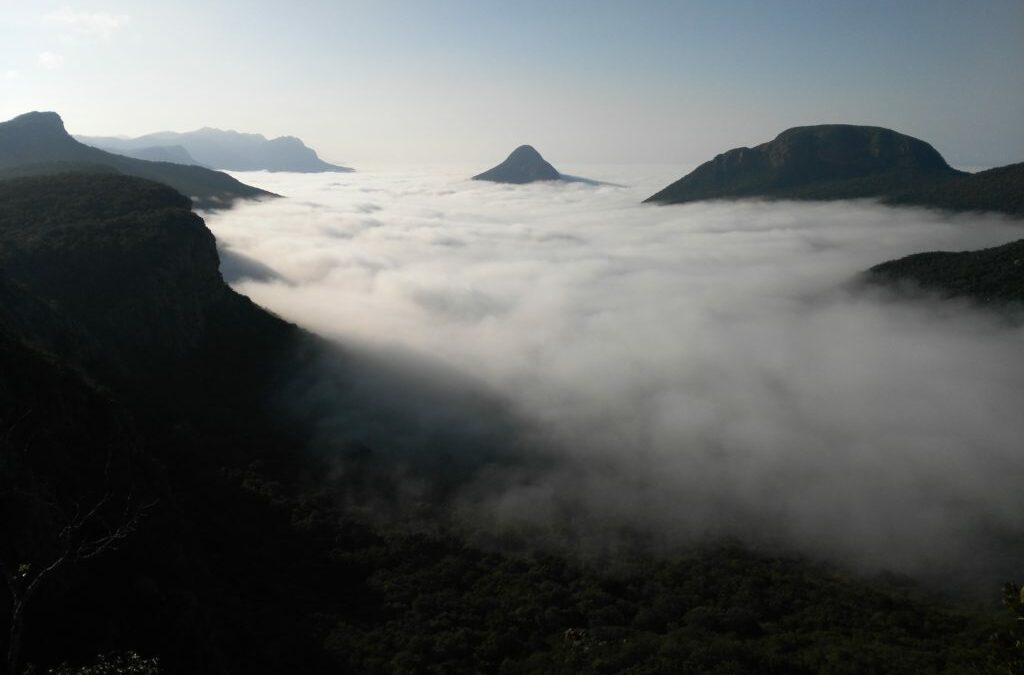
  How have IAPs affected our Soutpansberg mountain region? The Soutpansberg Mountain range is a unique set of mountains in the far north of Limpopo, South Africa. This area offers a wide range of habitats, hosts incredible biodiversity, and is a known centre of endemism in the country. Some habitats high up on the mountain include grasslands and wetlands. These host a number of species and are important sources of water, particularly for the recharging of groundwater sources for downstream users. However, the relatively pristine Western Soutpansberg is threatened by the presence of IAPs. Dense stands of Black Wattle and Eucalyptus are invading wetland and riverine systems. There are also other isolated stands of Eucalyptus trees across the mountain, associated with river systems and impacting on water resources coming off the mountain. This is of particular importance as downstream the Limpopo Valley has important agricultural significance. Farmers are dependent on these ground and surface water sources for irrigation and rural communities rely on natural water sources for their livelihoods. The EWT initiated the Soutpansberg Protected Area Water Conservation Project in 2018. The project focuses on the removal of IAPs and has a dedicated team of Water Rangers recruited from local communities. In a country where water scarcity’s importance has increased on the national agenda, it is vital that we preserve our water resources to the best of our ability. Investing in clearing of IAPs has been recognised by Department of Environmental Affairs’ Natural Resource Management as a key priority area – for water security, as well as the jobs that are created through this investment. In addition to removal of alien trees, the project will also work within the larger Soutpansberg Protected Area Programme on protected area expansion, targeting 4,000 ha of upper catchment mountain habitats for protection. In this area, we will work with landowners to commit their land to becoming a Nature Reserve through the Biodiversity Stewardship Programme. Our partnership with RAIN will include engagement with communities in the wider Soutpansberg area on water related issues, and especially water stewardship towards reduced consumption. This will be implemented by workshops on water, sanitation and hygiene to local people, fulfilling RAIN objectives of education on this important topic. We are looking forward to forging ahead with this project and making a real difference to conservation in the Soutpansberg Mountains.