WHO LET THE DOGS OUT?
Annie Dupre-Reynolds, Manager, EWT Wildlife in Trade Programme
AnnieD@ewt.org.za
The EWT Conservation Canines are sniffing and tracking their way into a busy 2020! From screening vehicles for wildlife products, to tracking in game reserves, to anti-poaching initiatives, our canines support the conservation sector in well-structured security plans.
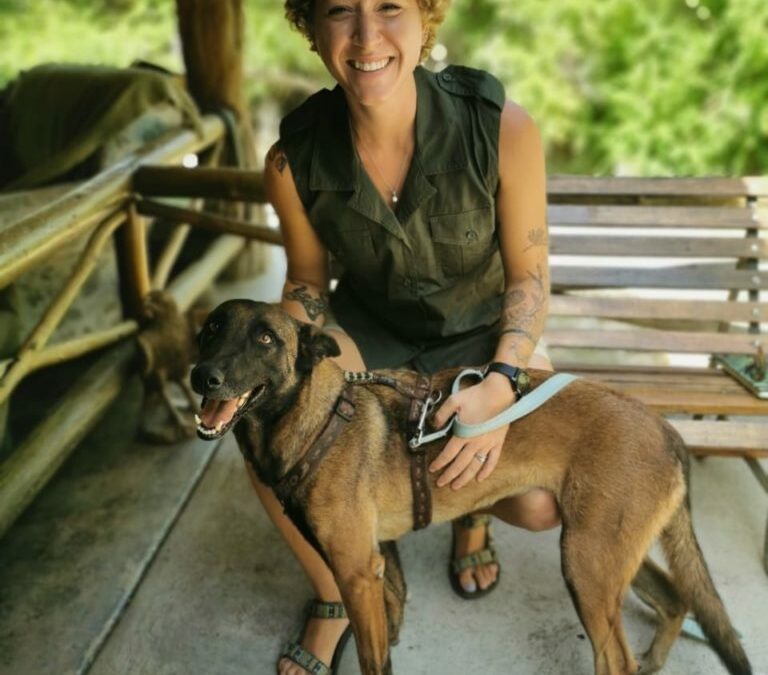
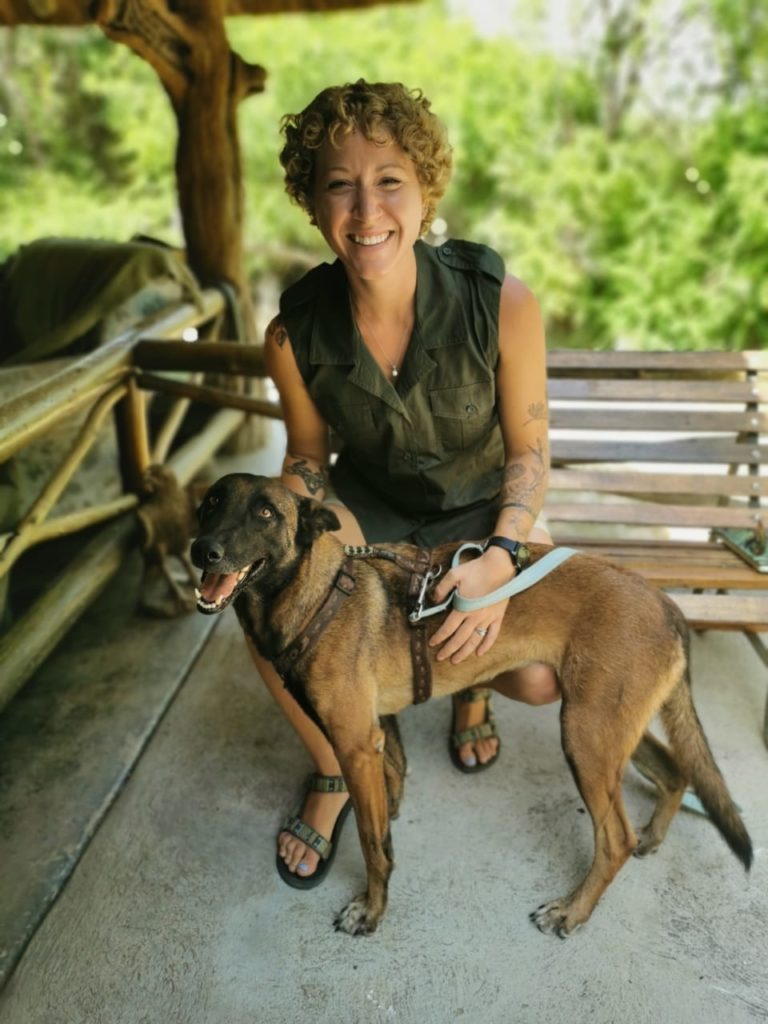
This January, Annie DuPre-Reynolds, the new Wildlife in Trade Programme Manager, got a chance to visit some of our canines in the field. Her first stop was to see Conservation Canine Annie (see photo). Annie (a Belgian Malinois) works in the lowveld where she is an integral part of an anti-poaching unit. One of our other canines, Fury, does detection work in KZN with his handler, Shay. Since their deployment in early January, Shay and Fury have screened over 375 vehicles.
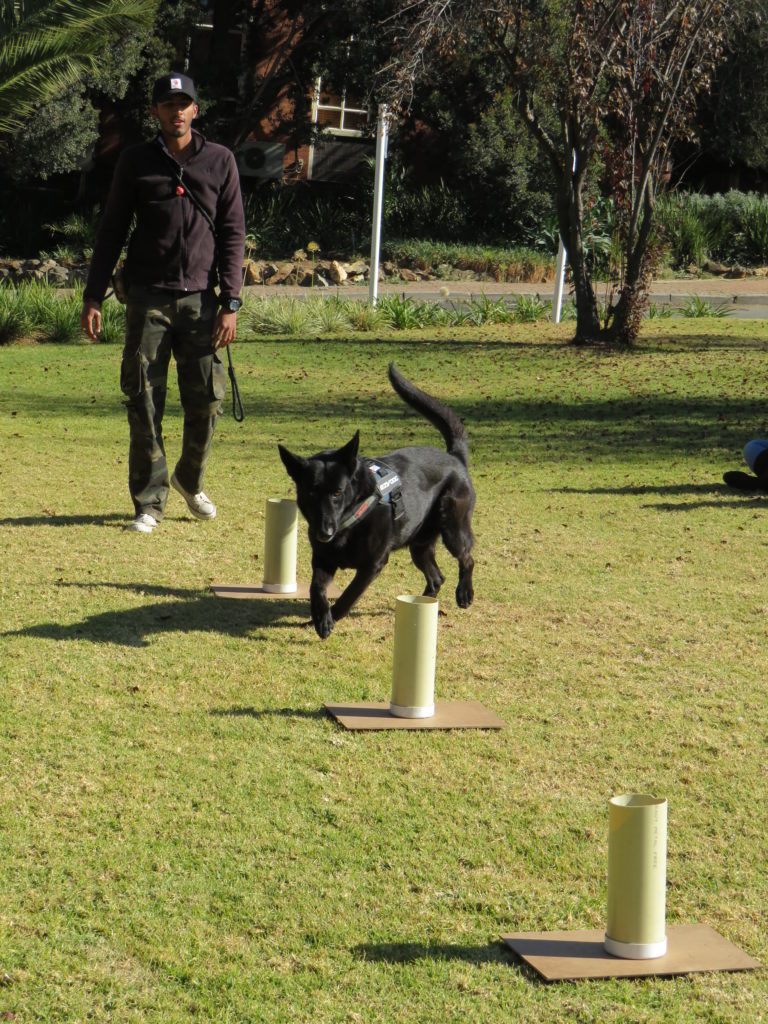
We have big plans for our Conservation Canines. Our beautiful new kennels are up and running at the new EWT Conservation Campus in Midrand. We train our canines on-site and our detection dogs can identify key wildlife products, including rhino horn, elephant ivory, and pangolin scales, among others. Our Conservation Canines Hitsch and Pirate (in training), can also identify arms and ammunition. Our Conservation Canines are strategically placed across South Africa’s private, provincial and national parks, where they can have the most impact on anti-poaching and anti-smuggling operations.
This work is made possible by U.S. Fish and Wildlife Service, Tourvest, Royal Canin, Boehringer-Ingelheim, Relate Trust and Platinum Life.
CONSERVATION GETS ITS AHA MOMENT IN 2020!
Belinda Glenn, EWT Marketing and Communications Manager
belindag@ewt.org.za
The EWT and aha Hotels and Lodges have kick-started 2020 with an exciting new venture that will boost the important work being done by the EWT to save wildlife, habitats and people around Africa.
Both the EWT and aha Hotels and Lodges (aha), a division of Tourvest Holdings, share a passion for the African wilderness and our unique natural heritage, and borne out of this shared value is a new collaboration that will raise much needed funding to support conservation and community projects across Africa.
Both organisations are driven by conservation and strongly believe in the power of the tourism sector to play an instrumental role in conserving African wildlife to the benefit of all. The overlap in the organisations’ operational areas, as well as their strategic focus on flagship species and their habitats, further makes this partnership a natural fit.
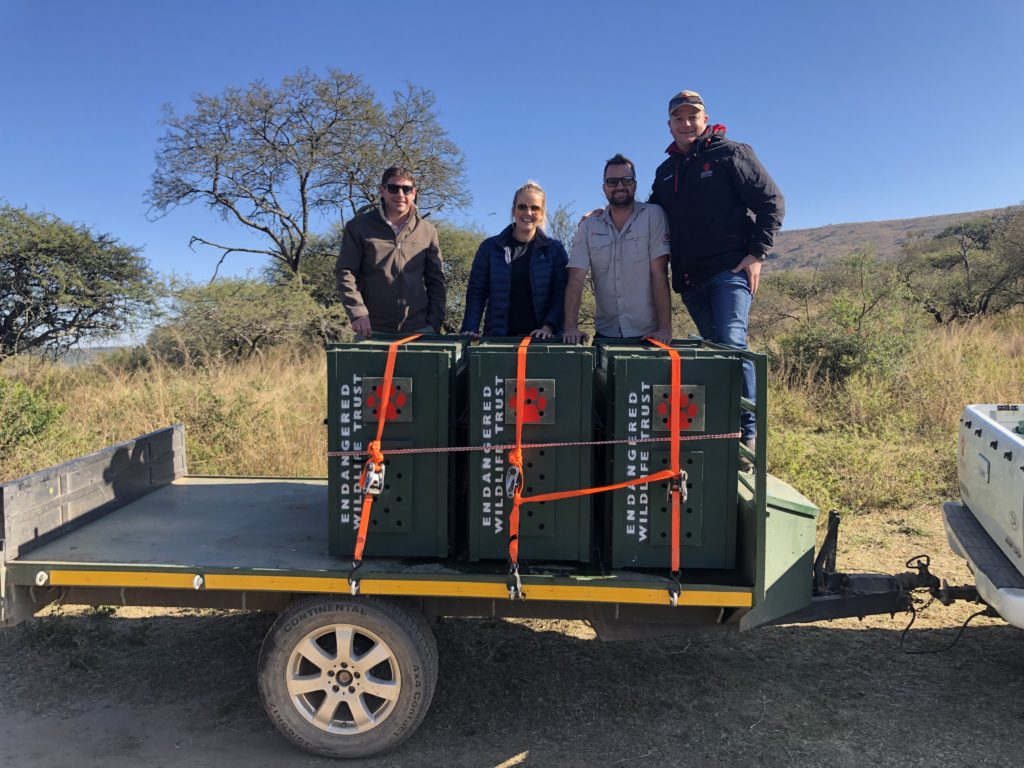
Constant Hoogstad, EWT Senior Manager: Industry Partnerships, says, “We have always known that there is a strong link between conservation and tourism. People come from all over the world to Africa, to see some of the most iconic species and habitats on the planet. The EWT has a strong focus on working with communities in areas that are home to some of our most threatened species. And stimulating local economies, particularly through the jobs that tourism operations create, which are extremely valuable to the economy.”
Graeme Edmond, CEO of aha Hotels & Lodges, added, “Conservation is the thread that binds so many of our properties together, and contributing to the protection of our ecosystem is a responsibility we can’t ignore. In getting involved, there’s also an opportunity for us to give local communities a lift. The EWT does amazing work all over the continent. We’re grateful that we are able to boost their noble efforts and honoured to be in such good company. We hope that this collaboration will make a lasting impact on the landscape and wildlife that is so important to us, and leave a lasting impression for generations to come.”
The partnership began in February 2020 and will run for an initial period of five years. During this time, aha will contribute a monthly percentage of their turnover towards projects and activities undertaken by the EWT, and strategically identified by both partners, which will benefit from a sustainable income stream. Said Yolan Friedmann, EWT CEO, “the EWT has a robust monitoring framework for all projects to measure their impact and we expect significant conservation benefit to stem from this exciting partnership. Our relationship with aha thus far has been positive and rewarding and we have already seen some of our most threatened carnivores benefit from their successful tourism services and we are eager to see how many other species will soon benefit from their input.”
At a time when conservation needs strong and committed partners, aha has stepped up and given the EWT much needed support to ensure that we keep protecting forever, together.
BALWIN GIVES BACK
Tammy Baker, EWT Business Development Officer
TammyB@ewt.org.za
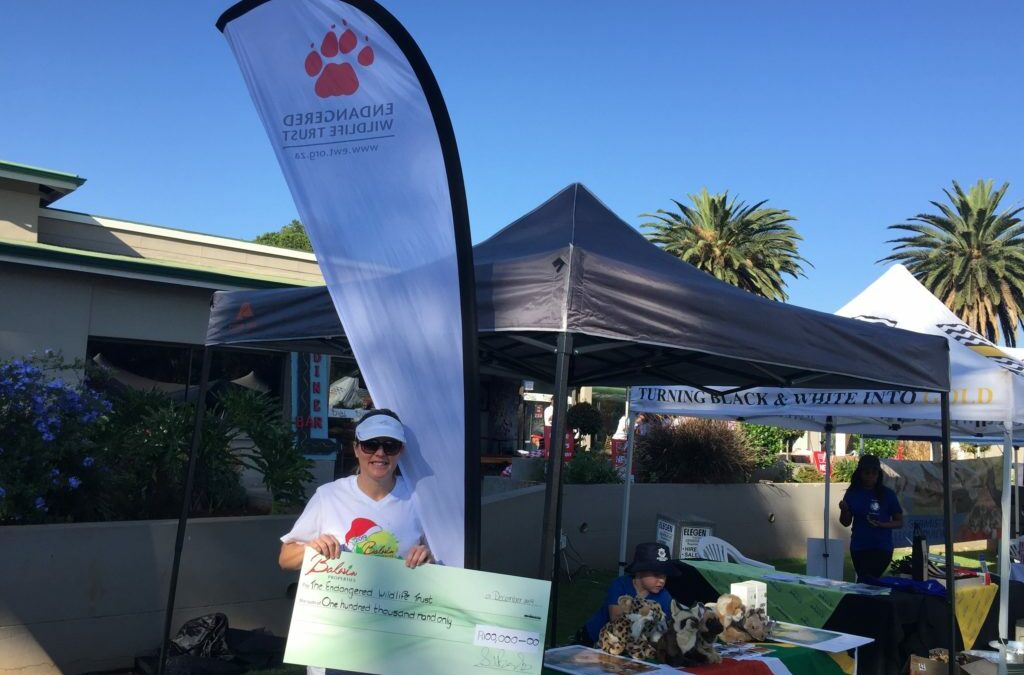
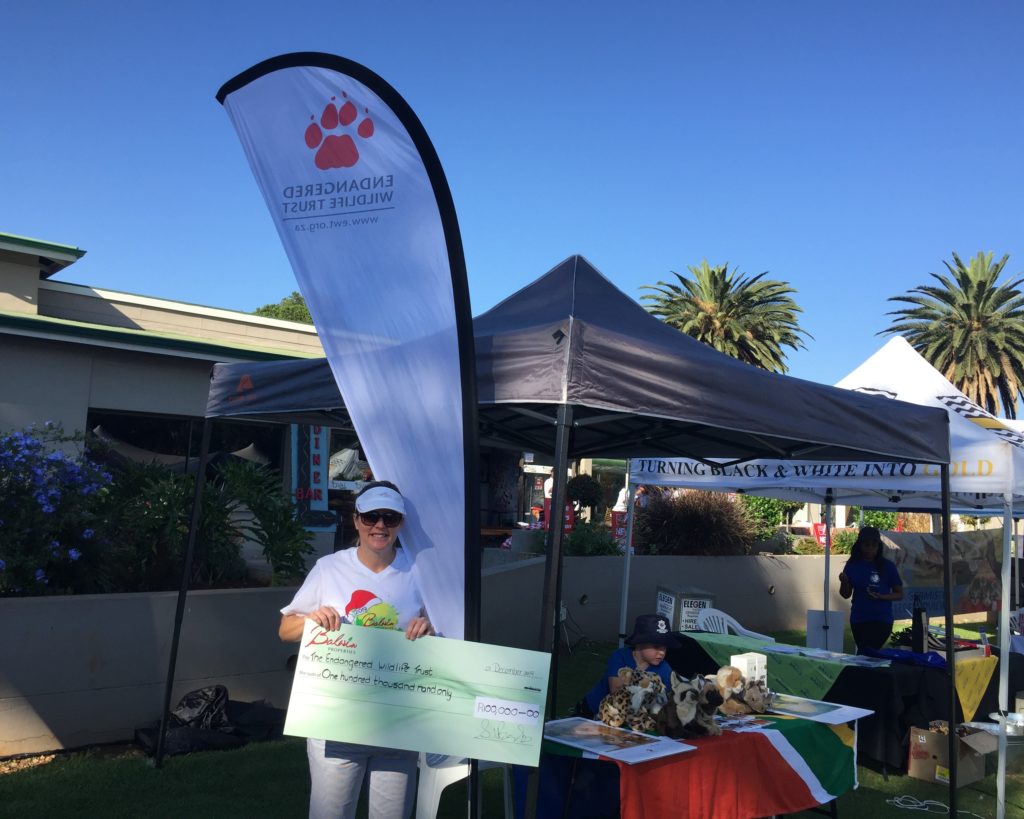
Thank you to Balwin Properties for nominating the EWT as a beneficiary at their 2019 Balwin Charity Hat Walk. We commend them for doing end of year staff functions differently – instead of another year-end party, staff and suppliers donate to and attend a charity walk at the end of every year and raise funds for charity. This is the second year that we have been beneficiaries of this exciting day out, and we were thrilled to accept a cheque for R100,000.
UNRAVELLING THE MYSTERIES OF RIVERINE RABBIT FAMILIES
Esther Matthew, Specialist Conservation Officer, EWT Drylands Conservation Programme, EstherM@ewt.org.za
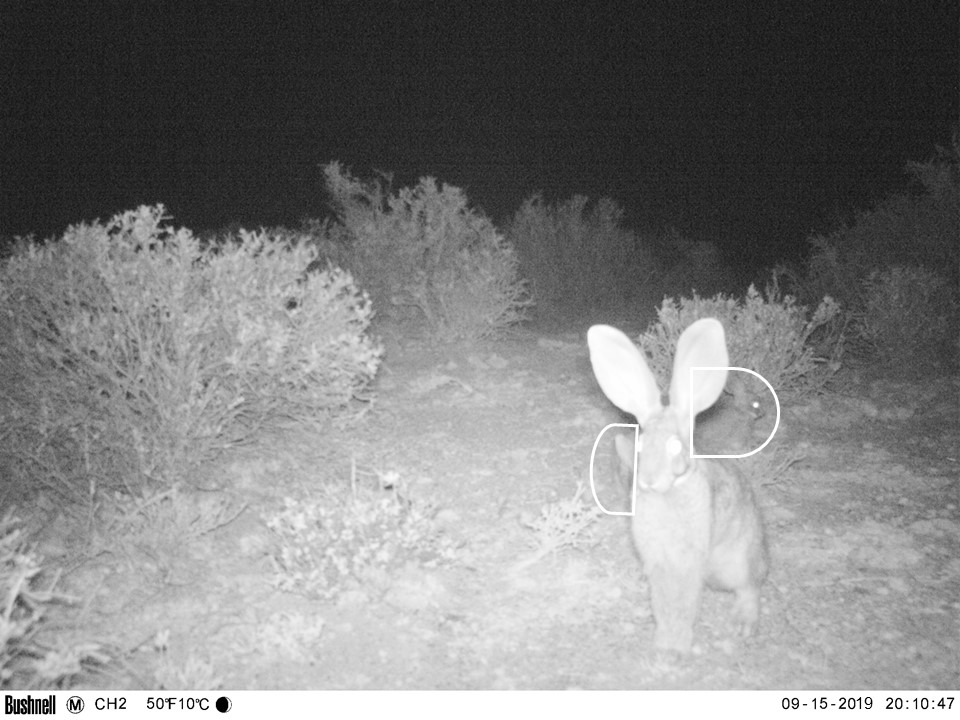
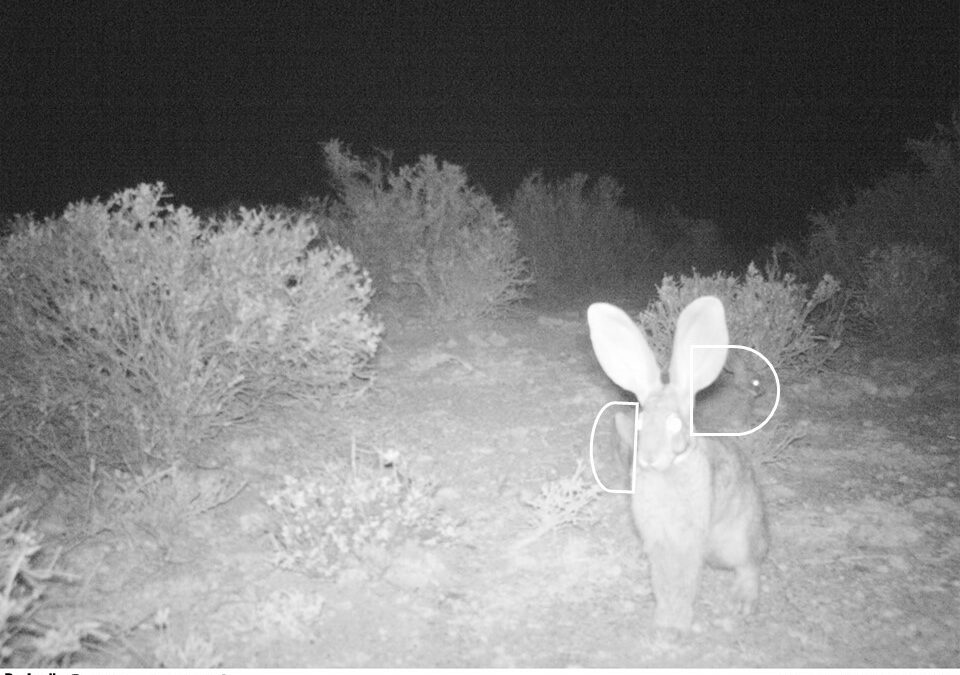
In another exciting first for conservation, the EWT has captured the first ever photographic evidence of Riverine Rabbit kits (babies) with their mother. This unbelievable image was captured on a camera trap near Loxton, and showed a mother Riverine Rabbit and two kits. This is in line with previous research that has suggested that these elusive rabbits, rather than breeding like the proverbial bunnies, tend to only have one or two kits.
To make this news even more exciting, the area where this image was captured was previously data deficient. This means that no sightings of Riverine Rabbit were previously recorded on this farm. The new discovery takes us one step closer to closing the gaps in our knowledge of the complete distribution range for the species and provides us with more information on their ecology.
The EWT’s Drylands Conservation Programme significantly increased its camera trapping activities in 2019, in both the northern and southern populations of Riverine Rabbits. This has led to several exciting developments, such as the confirmation of the new Baviaanskloof population, and a far greater understanding of the species and their use of habitat.
We would like to thank our funders, Rand Merchant Bank (RMB) and the Zoologischen Gesellschaft für Arten und Populationsschutz (ZGAP), for providing ongoing support for our innovative endeavours to uncover the secrets of the iconic Riverine Rabbit.
TO THE RESCUE
Ronelle Visagie, Coordinator: Platberg Karoo Raptor Project, EWT Birds of Prey Programme
RonelleV@ewt.org.za
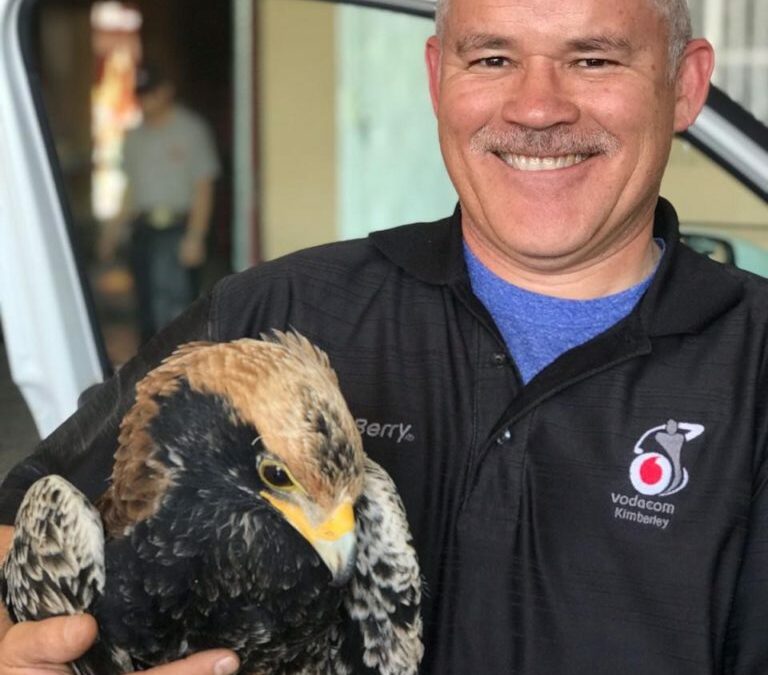
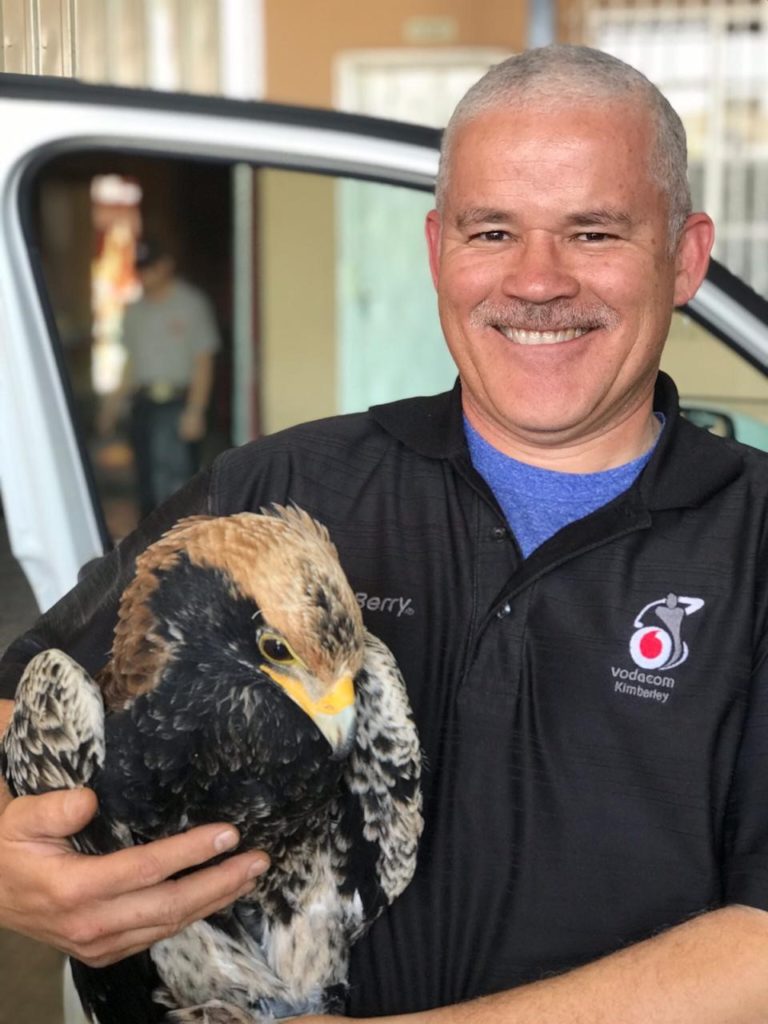
Early on a Friday morning I received a call from Gavin Williams, who works for Vodacom. He was at a mast near De Aar and saw an injured Verreaux’s Eagle under a Sentech mast, but he could not reach the eagle as it was in the camp of the Sentech mast and the gates were locked. I called a contact who works for Sentech and he helped us to reach the injured bird. We discovered that it was the chick from the nest on the mast, and had probably fallen out of the nest and injured its leg.
After spending time with a falconer, who will help this special bird to get fit and train it to hunt, it will be released back into the wild. Well done to Gavin for going out of his way to save this eagle!
SUCCESSFUL FACILITATION LEADS TO POSITIVE MOMENTUM FOR CAPE PARROTS
This article was first published by the Conservation Planning Specialist Group
Kerryn Morrison, chair of the IUCN Crane Specialist Group and Africa lead for the International Crane Foundation and Endangered Wildlife Trust, is a mentee in Conservation Planning Specialist Group’s (CPSG) Development Path. As a part of this conservation planning mentorship program, Kerryn recently facilitated a workshop for the Cape parrot, South Africa’s only endemic parrot species. The aim of the workshop was to bring stakeholders together to review the status and threats to Cape Parrots and to develop a conservation action plan for the species.
For Kerryn, the workshop was also a chance for her to strike out on her own as a facilitator, putting her developing skills to the test. Read on to hear her thoughts on the workshop and her experience as a mentee in CPSG’s Development Path.
How did you get involved in this workshop?
I have been a member of CPSG since the early to mid-2000s. I started off assisting with or leading Population Viability Assessment modelling at a number of workshops. However, I have not been an active member for several years. I then attended the online facilitation training course that CPSG Director of Training Jamie Copsey was leading and expressed my interest in becoming more involved in facilitation. When the Cape Parrot project request was received, Jamie approached me to do the workshop.
How did the workshop go? What were the results?
The workshop went well, and we achieved a lot in the very short two days that we had for the workshop. I used a hybrid CPSG/Open Standards for the Practice of Conservation approach, which I do think worked well. But I also learned a lot about where improvements could be made. The work was not completed in the two days, but commitments were made by all participants to complete the various sections by mid-October.
The outcomes of the workshop were many, but for me the following are key:
- There was a real sense of collaboration in the room and a positivity about the way forward.
- Funding and a supporting structure were offered by the Wild Bird Trust for a coordinating body to ensure that the plan and Cape Parrot conservation continues in a coordinated manner.
- There was support for the development of a Cape Parrot Biodiversity Management Plan, which will use the plan developed here as a basis for a South African legislative process that provides for conservation action for a species.
We will commence this project in March 2020 when we embark on a Lost Species expedition up the West Coast to collect samples for analysis. If the results are positive, we could not only rediscover the species, but we will also narrow down the search area for future conservation actions. Watch this space!
