
ALARMS ARE RINGING – IS THE COVID-19 PANDEMIC A WAKEUP CALL FOR BUSINESSES?
Megan Murison, Project Officer, EWT National Biodiversity and Business Network, Angela Cherrington consultant, and Dr Joel Houdet, consultant
meganm@ewt.org.za
“Nature is sending us a message with the coronavirus pandemic and the ongoing climate crisis”.
The United Nations Environment Chief, Inger Anderson (2020)
Disease outbreaks, biodiversity loss and climate change
According to the World Economic Forum (2020), the frequency of disease outbreaks has been increasing steadily. There were 12,012 recorded outbreaks between 1980 and 2013, comprising 44 million individual cases all over the world. While these outbreaks are linked to increasing global travel, trade, connectivity, and high-density living, and although our understanding of how functional ecosystems protect us from diseases is still limited, there also appear to be strong linkages between disease outbreaks, climate change, and biodiversity loss.
Human activities have significantly altered three-quarters of the land and two-thirds of the ocean, changing the planet to such an extent as to birth a new era: The Anthropocene”. Changes in land use that result in habitat destruction for biodiversity (e.g. deforestation and agriculture) bring wildlife, domestic animals, and humans into closer contact, facilitating the spread of zoonotic diseases, including new strains of bacteria and viruses. Uncontrolled illegal and legal trade in live wild-caught animals breeds even more dangerous grounds for human-wildlife contact and the transmission of diseases. Many recent outbreaks have originated in markets selling a combination of live and dead, wild and domestic mammals, birds, and reptiles.
Climate change has also altered and accelerated the transmission patterns of infectious diseases such as Zika, malaria, and Dengue fever, and in some cases resulted in the displacement of large groups of people to new locations, often under poor conditions. Groups under these conditions are also more vulnerable to additional ailments such as measles, malaria, diarrheal diseases, and acute respiratory infections.
Business unusual: Time for pro-active biodiversity mainstreaming
Biodiversity is under severe threat globally, including in South Africa, and the private sector is one of the primary drivers behind the degradation of habitats and the loss of biodiversity. The Intergovernmental Science-Policy Platform on Biodiversity and Ecosystem Services (IPBES), an independent body established in 2012, made up of over 130 member states around the world, recently confirmed that around one million animal and plant species are now threatened with extinction, more than ever before in human history.
Business both relies and impacts on biodiversity. Biodiversity produces a wide variety of services on which businesses depend. Examples include the supply of raw material, crop pollination, genetic resources, water filtration, flood attenuation, erosion control, and many others. As such, business is critically dependent on ecosystem services to produce the goods and services it sells. Companies would not be able to operate without biodiversity.
In the context of COVID-19, countries and the private sector must not use the pandemic as an excuse to weaken environmental protection and enforcement, as argued by a UN independent human rights expert. The reverse should be the case. Governments and businesses must tackle the Covid-19, biodiversity, and climate crises with a holistic strategy – transforming the global economy to be just, inclusive, sustainable, and resilient.
If this is to be achieved, the mainstreaming of biodiversity should be done in all economic sectors: i.e. integrating biodiversity into business strategies and activities, notably in supply chains where land use changes, resource consumption and wildlife trade take place. Biodiversity mainstreaming needs to benefit both humans and nature, and businesses need to be able to assess their impacts on biodiversity and manage them effectively. This builds on a growing movement toward nature-based solutions, which harness the power of biodiversity and ecosystem services to mitigate effects of the climate crisis, unsustainable food systems, water pollution, and other socio-economic and environmental challenges. The EWT’s National Biodiversity & Business Network’s Biodiversity Disclosure Project (BDP) aims to assist companies to assess both their opportunities and their risks related to biodiversity. The BDP offers businesses an easy method to account for their biodiversity impacts, using a standardized accounting protocol. Should you or your business be interested in better understanding your impacts on biodiversity, please contact the NBBN team here.
FORD WILDLIFE FOUNDATION COMMITS TO CONSERVATION THROUGH ONGOING SUPPORT OF THE ENDANGERED WILDLIFE TRUST
Alison Janicke, EWT Head of Resource Development
alisonj@ewt.org.za
For over 30 years, Ford Motor Company of Southern Africa (FMCSA) has been actively involved in the conservation of wildlife and ecosystems in South Africa and Sub-Saharan Africa. To date FMCSA has invested almost R40 million to support more than 170 conservation projects. Generously sponsored Ford Rangers make it possible for EWT field officers to get where they need to be and make a real impact for conservation, and the communities they work with. FWF is funded by the Ford Motor Company of Southern Africa and supported by its nationwide network of Ford Dealers. The EWT would like to thank FWF for their incredible support over the years. FWF currently supports our Cheetah, Wild Dog, Amphibian, Crane and Wildlife and Roads projects, all of which require our field staff to be on the open road and driving through rough terrain for hours on end. These projects would not be as successful as they have been without the support of the FWF and their Ford Rangers.On top of their incredible vehicle support, Ford donated 120 face shields for our staff to use in the field, so that even when they are not in their Rangers, they can continue with their critical conservation work. Thank you, Ford, for keeping the EWT field officers in the field doing what they do best.
SCIENCE SNIPPET: VESSEL COLLISIONS WITH MARINE ANIMALS

Lizanne Roxburgh, Senior Scientist, EWT Conservation Science Unit
lizanner@ewt.org.za
There is increasing concern globally about the effects of maritime vessel collisions with marine animals. A vehicle collision is defined as an impact between any part of a watercraft, typically a bow or propeller, and a live marine animal. Collisions often result in injury or death of an animal, and may also cause serious damage to the vessel, and injury or even death to the people on board. There is extensive and growing use of the world’s oceans by both commercial and recreational vehicles, and concern about the impact this has on marine life.
To-date, most scientific publications on maritime vessel collisions have focused on the collisions between large vessels and large whales, such as right, blue and humpback whales. In this new publication, co-authored by EWT staff member Claire Patterson-Abrolat, the authors compiled information on collisions with all marine animals, to obtain a more holistic understanding of what species are affected. They also evaluated whether our knowledge of vessel strikes with whales can assist in understanding and mitigating vessel strikes with smaller species. Lastly, they provided recommendations for priority actions to address essential information gaps.
The authors found that at least 75 marine species are affected, including smaller whales, dolphins, porpoises, dugongs, manatees, whale sharks, sharks, seals, sea otters, sea turtles, penguins, and fish. They found that collision incidents with smaller species were scarce, but this is likely a result of reporting biases, where smaller collision incidents are not reported.
The authors reviewed various mitigation measures that aim to reduce the risk of collisions between vessels and marine animals. These were mostly developed with a focus on whales, but some of these have proved effective for smaller animals. The effective measures include re-routing away from high risk areas, and speed restrictions. However, many studies have reported that particularly smaller vessels tend to ignore these restrictions, and that both education of boat skippers as well as better monitoring by law enforcement needs to be done.
Lastly, the authors recommend that an international database of vessel strikes for smaller species is established, so that we can gain a better understanding of where high-risk areas are for smaller species. This would be a valuable first step towards the mitigation of collisions with smaller species. However, we also need to move beyond just reporting mortalities, to really understand the impact of these deaths on populations of marine animals, many of which are already at risk of extinction.
Reference: Schoeman RP, Patterson-Abrolat C and Plön S. 2020. A Global Review of Vessel Collisions with Marine Animals. Frontiers in Marine Science. 7:292. doi: 0.3389/fmars.2020.00292
For more information, please contact Lizanne Roxburgh here.
A FOND FAREWELL
This month we sadly say farewell to a valued member of our pack. Belinda Glen has managed our communications unit for the last four years, creating and inspiring meaningful, eloquent, and accessible conservation content, in ever new and exciting ways. Belinda will be sorely missed, but she was offered a wonderful career opportunity and we wish her everything of the best and look forward to seeing what she gets up to next! It is going to take a few of us to fill her enormous shoes, but don’t dismay, we will still be bringing you all the great content you are used to! Conservation Matters will now be compiled by Emily Taylor and Khanya Peacock.
THE BRAVE JOURNEY OF SMOKE AND HER PACK OF AFRICAN WILD DOGS
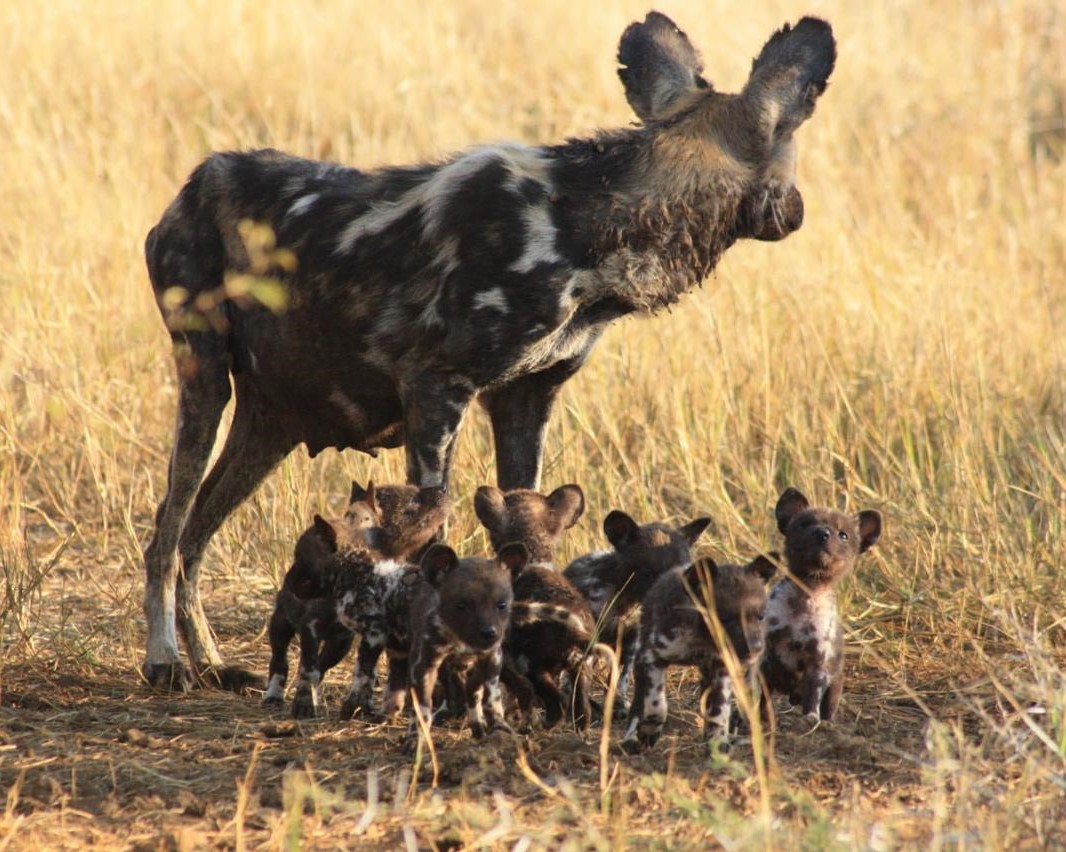
Cole du Plessis, Wild Dog Range Expansion Project Coordinator & KZN Regional Carnivore Coordinator, EWT Carnivore Conservation Programme
coled@ewt.org.za
In South Africa, most of our reserves (protected areas) share boundaries with dense rural community settlements or farmers – this means that the direct threat to any wild animal significantly increases when they leave a protected area. Deliberate persecution, snaring, hunting, disease, and roadkill are some of those threats.
In 2018, the Nqolothi Wild Dog pack, led by a female named Smoke, left the protection of the Hluhluwe-iMfolozi Park and settled in nearby communal land. To the communities, , a predator like a Wild Dog can pose a threat to people or their livelihoods. The latter is far more likely. While there has never been a documented case of a Wild Dog killing a person, they do prey on livestock and large packs can do significant damage, particularly in rural subsistence farming communities.
Unfortunately, there was no functional tracking collar on the Nqolothi pack and monitoring them seemed like an impossible task. It was also almost like the pack had sensed the loss of their protection when leaving the reserve as they became highly elusive…only leaving the odd clue behind when they moved. When there was a sighting or report, we made a valiant effort to get there in time, but the pack was always long gone upon arrival. Tension was mounting in the community. Many goats had been reported dead and, whether there was evidence or not, it all pointed to Smoke and her pack. The community was losing patience and wanted to kill the pack to protect their livestock. It became a race against time to find them.
After almost a year of living in communal land, the pack finally exposed themselves. Smoke had fallen pregnant and went down to den. The weakness here was that the den site anchored them, and they started leaving traces. One day, community members used their hunting dogs to follow the scent back to the den and managed to dig out and kill two of the pups. When we arrived, just the carcasses of the pups remained. The rest of the pack had abandoned their den and took the remaining pups with them. We needed to intensify our efforts.
We immediately set up remotely triggered field cameras to monitor the area and spent nights in the field closer to where the Wild Dogs operated. A vet was on call and would be flown by chopper as soon as we received reports of sightings or discovered fresh signs. Eventually our luck changed. The pack made a brief appearance back in Hluhluwe-iMfolozi Park. The team responded immediately and for the first time the pack stuck around long enough for us to see them. One of the Wild Dogs was immobilised, and a satellite collar finally fitted. This was the game changer. We could now monitor the pack and plan their capture. We would normally call the pack in using recorded Wild Dog “hoo” calls and free dart them from a vehicle. Unfortunately, this pack had become far too skittish to use this method. Capturing this pack would involve careful planning and preparation, large capture nets, experienced game capture staff and a helicopter to guide them into the capture site. This operation needed to be perfectly executed, and it was. In one go, all the pack members were safely captured and transported to a holding facility nearby. At last, they were safe.
But the pack now needed a new home. Fortunately, Madikwe Game Reserve in the North West, was in a position to take them and the ever supportive Bateleurs offered to fly them there. Three months later, when all the permits were in place and preparations made, the pack was re-anaesthetised and driven to the Mkuze airstrip. The plane was prepped and ready on arrival. We carefully transferred the sedated Wild Dogs into the plane, and we were ready to begin our four-hour journey with our VERY SPECIAL cargo. Once we touched down, the pack was transferred to vehicles and driven to the boma. They had arrived at their new home. What we only realised on the plane was that Smoke had fallen pregnant again and only had a few weeks before she would have her pups. Normally, we use the soft-release method, where the pack stays in the boma to acclimatise to their new environment. This counteracts their instinct to return to their former territory and ensures that they will establish themselves in their new home. But Smoke needed time to explore her new territory and scout a safe den site. So, the pack was only in the boma for a brief period before they were released.
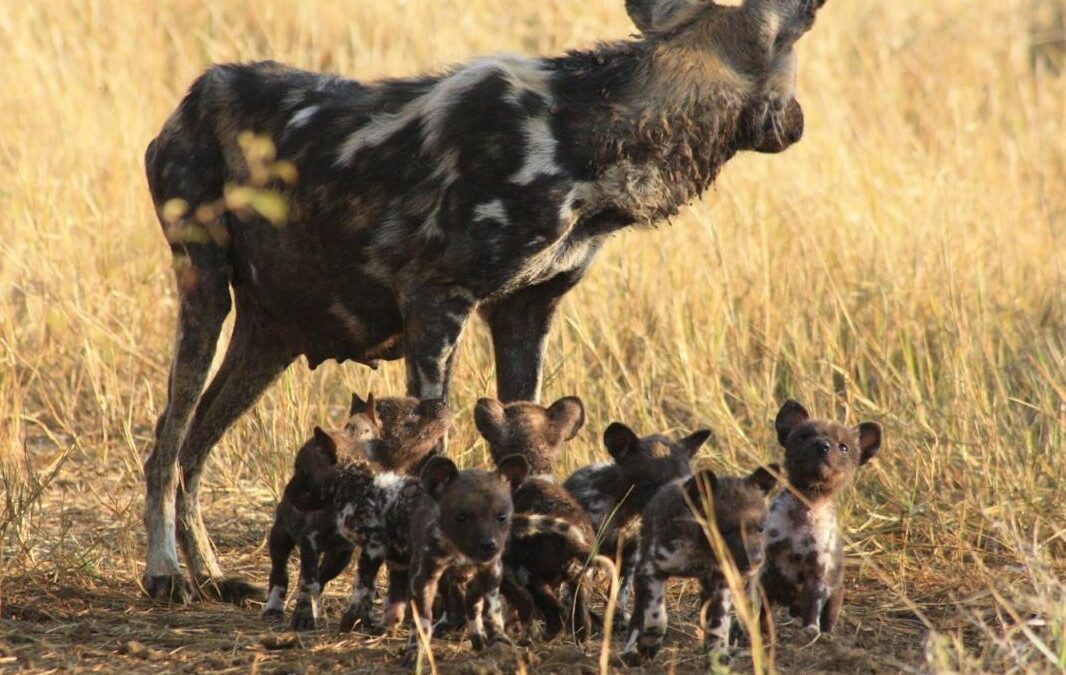
Using the satellite collar data, we were able to remotely monitor the pack as they started to explore their new home. And, after a few weeks, the collar data showed that the pack kept returning to the same point. Smoke had started denning and the rest of the pack was hunting and bringing food back to her. The pack was given their space to live in peace – they had the code to survival and didn’t need anyone checking in on them. But after weeks of eager anticipation, one of the researchers on Madikwe was given the green light to go in and check on the pack. Much to our excitement, they were all present and healthy, with the new offspring stumbling around at their feet.
As a result of an increasing human population and development, Wild Dogs no longer have the space that they need to thrive. South Africa is quickly approaching its relatively small Wild Dog carrying capacity. Many of the Wild Dog reserves are surrounded by farmland, so when Wild Dogs choose to expand their range or disperse, by default, they come under threat. In order to save our most endangered carnivore, we need to keep working at expanding safe space by reintroducing Wild Dogs into South Africa’s many fenced reserves. These reserves, in turn, serve as source populations as we work with partners such as African Parks, Peace Parks, and the Carr Foundation to recover former Wild Dog range across the continent.
It wasn’t ideal that we had to relocate Smoke’s pack, but we owed it to them to give them refuge. They can, once again, be at peace.
Thank you to our long-time partners Ezemvelo KZN Wildlife, Wildlife ACT, the Bateleurs, North West Parks Board and Madikwe Game Reserve, and donors Richard Bosman, Painted Wolf Wines, Tania Ihlenfeldt, Tata Consultancy Services, and the Relate Trust. It is a pleasure to work alongside you and share the common goal of conserving our most endangered carnivore.
CELEBRATING OUR FATHER FIGURES
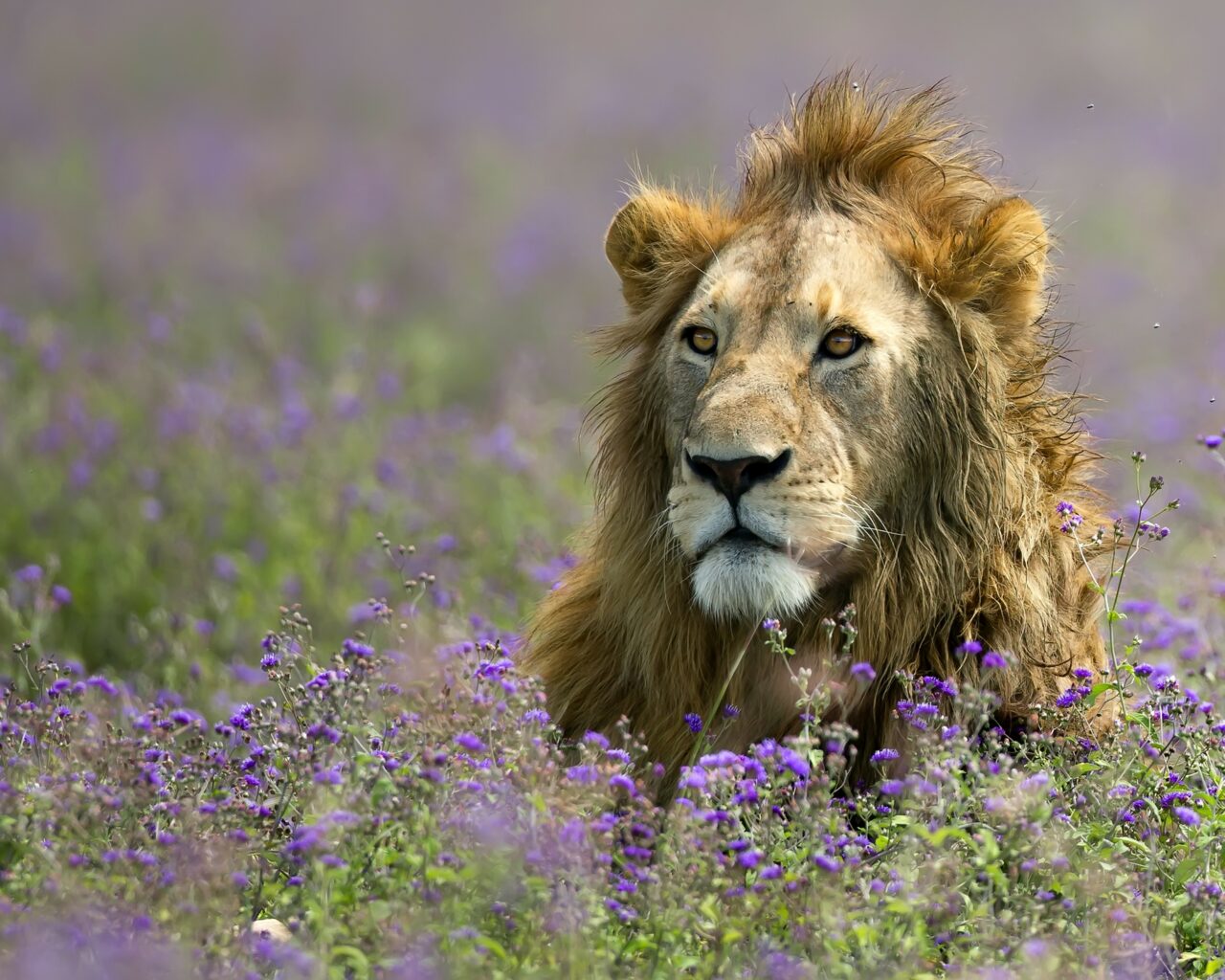
Has your dad been your lockdown hero? Whether he’s locked down at home with you, or far away, let us know if your dad deserves one of these lockdown awards
- All-round Super Dad
- Braaied every night
- Best pineapple beer brewer
- Survived without live sport
- DIY champion
- Made a mask look good
- Best lockdown haircut
- The beard has taken over…
If you’d like us to send your dad one of these special awards, it’s as simple as 1,2,3!
- Make a donation on our website or via EFT – the amount is entirely up to you – and send proof of payment to TammyB@ewt.org.za (this can be a screengrab of your donation or proof of payment from your bank). The link to donate is https://ewt.org/campaigns/ewt-donations/
EFT payments can be made to Endangered Wildlife Trust, account number: 50371564219, First National Bank, branch code: 253305, Rosebank branch 037, SWIFT code: FIRNZAJJ
- Choose your award and let us know what dad’s name is so we can personalise it.
- We’ll send the award to the email address or cell phone number of your choosing, anywhere in the world!
