Help African Wild Dogs 

Donate today  

Pride & Progress: Inside the Kgalagadi’s Desert Lion Survey

Pride & Progress: Inside the Kgalagadi’s Desert Lion Survey

Pride & Progress: Inside the Kgalagadi’s Desert Lion Survey

By Alison Govaerts and Nonkululeko Makobong, Carnivore Conservation Unit
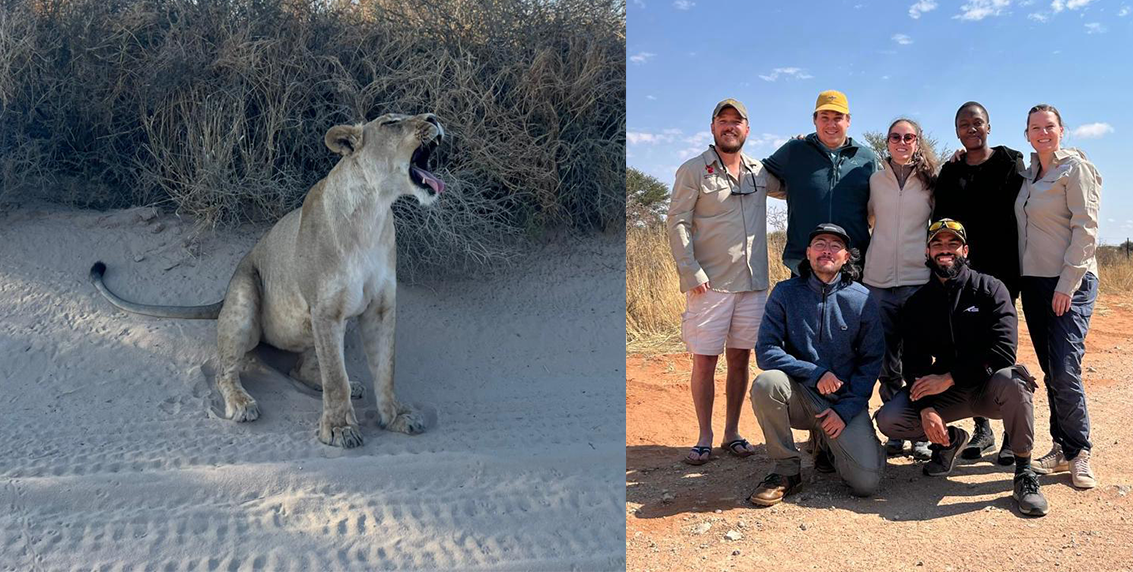
 

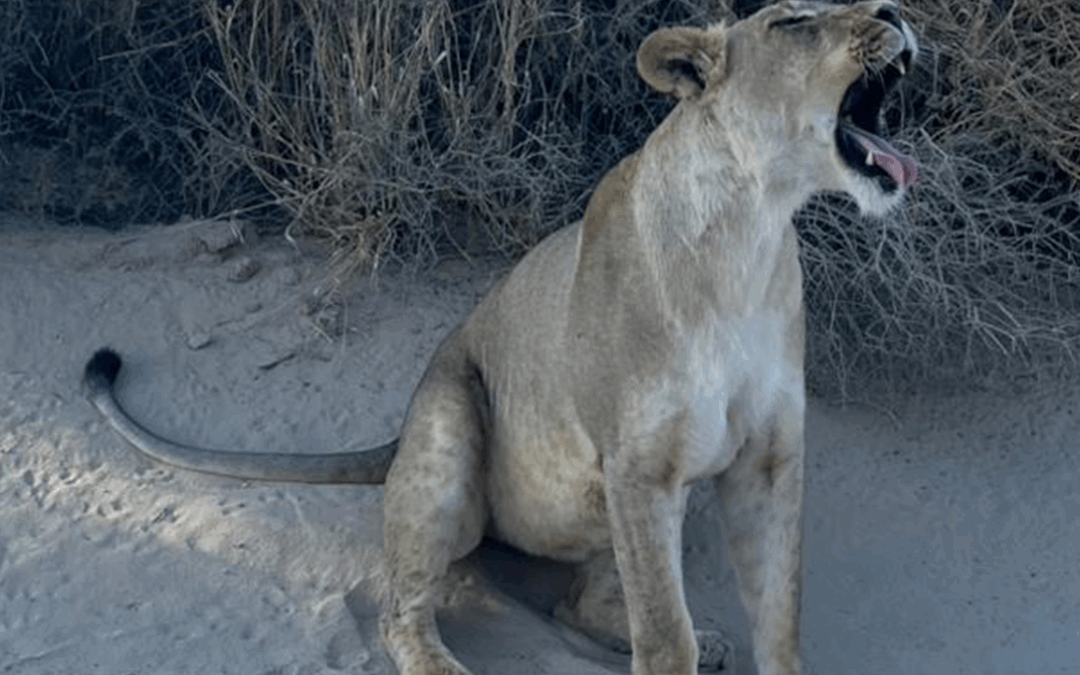
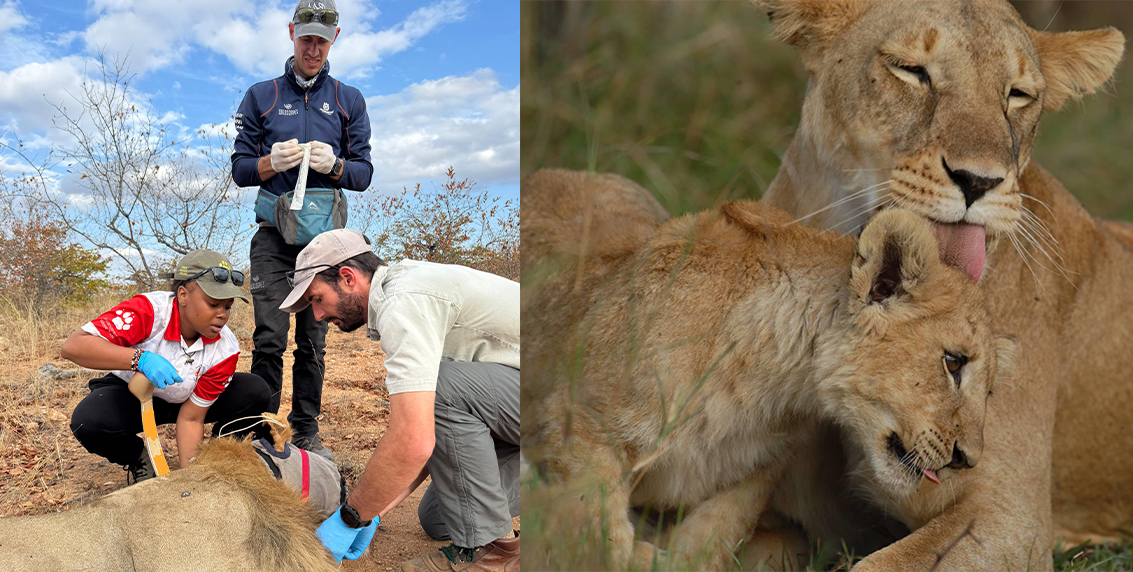
desert lions photographed during Kgalagadi lion population survey


The lion (Panthera leo) is a predominant species in the functionality of ecosystems across Africa. These cats play a vital role in maintaining a balance in the food chain and in supporting biodiversity.  

In the Kgalagadi Transfrontier Park, spanning parts of South Africa and Botswana, lions have adapted to one of the harshest environments. These desert lions roam a landscape of vegetated red dunes, depend on manmade waterholes for water, and need to cope with temperatures ranging o from scorching to freezing. Despite these challenging conditions, the park is home to a variety of bird, reptile and mammal species; enough to support a healthy lion population. 

To develop and implement effective conservation efforts for this species, it is crucial to monitor the populations closely. That’s why the Endangered Wildlife Trust, in collaboration with SANParks, surveyed the lions in the park over three months to obtain robust estimates of population numbers and demographics. Much like the lions, the research team needed to adapt to the challenging environment while enjoying the privilege of following the lions until October 2025.

To obtain robust estimates of the lion population, we used what is known as a spatial capture-recapture methodology, which meant we had to identify as many lion as possible through physical searches and using camera traps, and measuring the effort it took to get them.

Because lions do not have spots like Leopards or African Wild Dogs, the key to identifying them lies in tiny whisker spots on their faces. Each lion has a unique pattern of whisker spots, on both the left and right of its face. Therefore, you must get quite close and have proper cameras to capture this.

There were two ways to get an identification: the team would either drive transects while recording the kilometers driven on a mobile tracking APP on our smartphones and find lions close enough to identify; or we would capture them on the camera traps that we put out. Because the team identified the lions individually, there were no double counts, and pride/coalition catalogues could be constructed based on lions spotted together. Only lions above the age of one were counted, as the mortality rate among younger lions is very high.
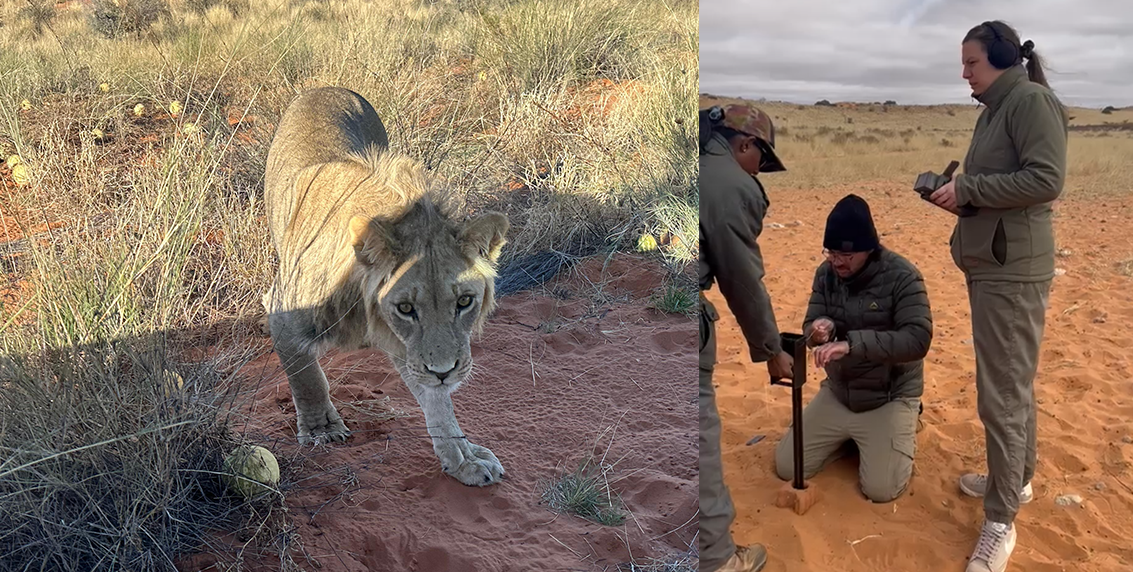
camera trap image from Kgalagadi lion population survey

In the field

Life in the field was far from ordinary, and definitely not your average day at the office. The area is remote, which meant only one town visit a month for massive bulk shopping and limited contact with the outside world – only one of the camps had good cellphone reception. The team relied on hefty cameras, rugged 4×4 vehicles and each other. In each transect, two people shared a vehicle: one drove over treacherous dunes while the other scanned for lions that blended perfectly into the sand. Success hinged on flawless teamwork. The team of six moved like nomads, rotating between the three camps (Twee Revieren, Nossob and Mata Mata) each week, following the lions across hundreds of kilometers of dunes.   Since we all hailed from different walks of life, the team had to adopt a number of intriguing lifestyle changes. 

One highlight was the day we stumbled upon a pride of seven lions – six lionesses and a male.  It topped a day in which we had had three other lion sightings. It’s breathtaking to realise that you would have to tell them apart later.

Data processing turned into a puzzle of whisker dots and pride dynamics. This was tackled directly after each transect to keep the information fresh. When the dust settled, the results were encouraging. The Kgalagadi lion population is thriving and unusually well‑balanced. While many regions show a 2:1 female‑to‑male ratio, Kgalagadi prides exhibit a near‑even sex ratio, indicating strong genetic health and stable social structures. This differs from other prides that often have two or more adult males instead of one male dominating over one pride, like in other protected areas.

The survey’s findings provide significant information about the lion population dynamics in the area. However, the extensive sand dunes and limited road network posed logistical challenges. The restriction to certain areas influenced the detection probability and overall sampling, and there was a week when all the teams had no lion sighting at all.  This was discouraging, but that is the reality of working in a Transfrontier conservation area; the animals can move around freely as they choose. Despite these limitations, the team pioneered through and conducted the study to the best of their ability. More than 100,000 kilometers were driven, and even more pictures captured. The survey was a success!

A detailed report is being drafted by the team. The results will inform conservation and management strategies and ultimately contribute to the long-term conservation of the lions of the Kgalagadi.
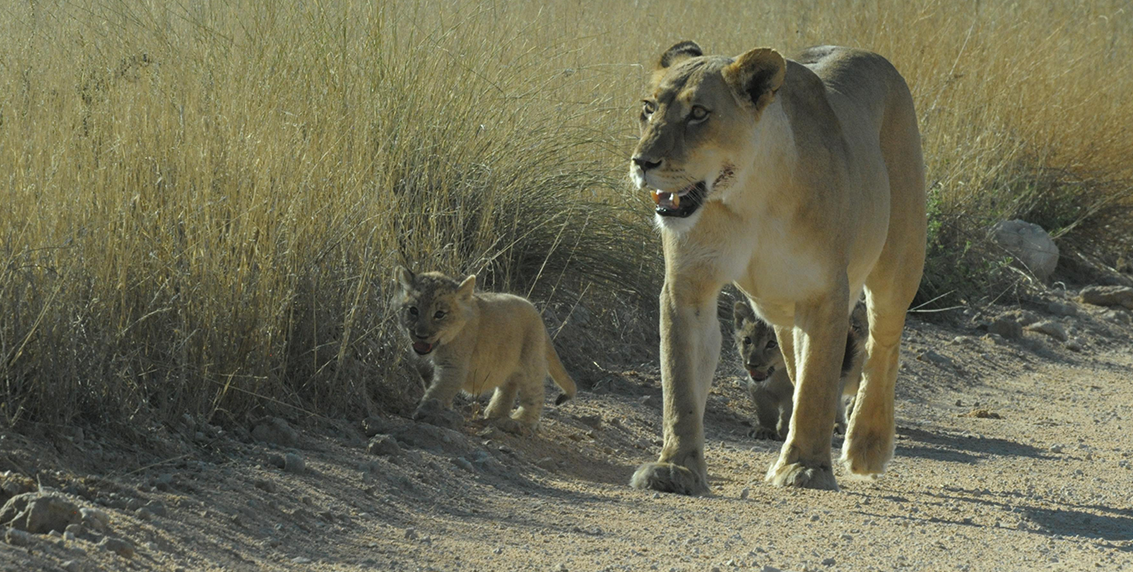
researchers identifying lions by whisker spots during Kgalagadi lion population survey

** ** The EWT would like to thank its sponsors – the Lion Recovery Fund and the Ford Wildlife Foundation – for their support during the 95-day Kgalagadi lion population survey.
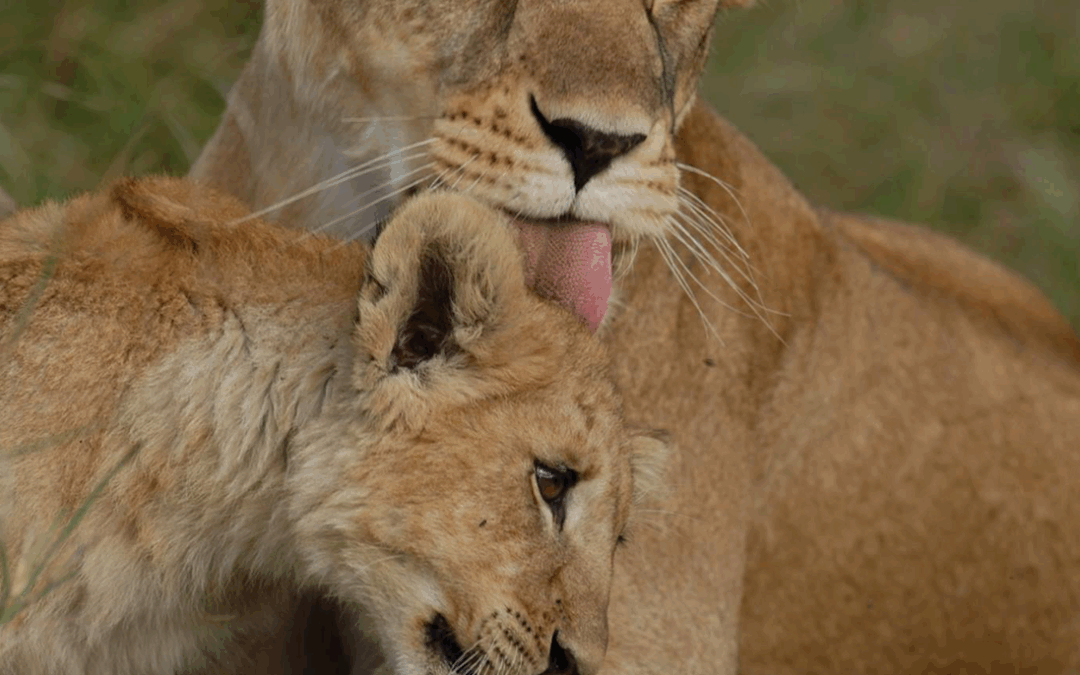
Lions: a year of success, collaboration and testing new ideas

Lions: a year of success, collaboration and testing new ideas

Lions: a year of success, collaboration and testing new ideas

By Marnus Roodbol, project manager: Carnivore Conservation Unit


human-lion conflict mitigation technology in lion conservation efforts 2025

Three hundred and sixty five days may sound like a long time, but when you’re driven by purpose, the year passes quickly.

Throughout 2025, our lion conservation work expanded significantly across South Africa and Mozambique as the Endangered Wildlife Trust (EWT) also embarked on an exciting new initiative in the Kgalagadi Transfrontier Park between South Africa and Botswana. Read: Pride & Progress: Inside the Kgalagadi’s Desert Lion Survey

Kruger National Park

During 2024, SANParks, the EWT, the Greater Kruger Environmental Protection Foundation (GKEPF), and the Lion Recovery Fund (LRF) joined forces to discuss the future of lions in the northern Kruger National Park. Since beginning our work in this region in 2020, our population surveys have revealed a concerning decline in lion numbers, highlighting the urgent need for targeted conservation action.

To better understand population dynamics, several lions have been fitted with GPS collars allowing our team to track movement patterns, identify stable prides, and monitor areas frequented by nomadic males. The data we are gathering will guide long-term conservation planning aimed at restoring lion populations to their historic strength within the park.

Limpopo National Park

Limpopo National Park in Mozambique has been severely affected by the civil wars spanning almost two decades. Recovery has been slow, and today, the park remains vulnerable to poaching, particularly the targeting of lions for their body parts.

The park functions as a “sink area”, meaning that it does not yet sustain resident prides but instead receives dispersing lions from the adjacent Kruger National Park. Females often cross the border with their cubs when prides are taken over by new males, while younger males move through during their nomadic phase.

Our current efforts in Limpopo focus on two key activities:

  • Camera trap surveys in a pre-selected grid to assess biodiversity.
  • Supporting lion rangers with essential field equipment to enhance their ability to patrol, track, and monitor lions on foot.

Data collection continues, with analysis scheduled to begin in January 2026.

Testing the Waters: Livestock Conflict Mitigation

An exciting project embarked on has been our collaboration to rest innovative solutions for human-lion conflict with the global company CLS.  This has included the development of a proof-of-concept project where cattle are fitted with GPS ear tags to monitor their movements and detect when they enter known lion territories.

Although still in its early stages, the project has already recorded several instances of livestock predation in adjacent municipal parks. With continued support, we aim to scale up this initiative in 2026, offering practical tools to help communities coexist safely with wildlife.

Together, these projects represent EWT’s commitment to securing a future where lions — and the people who share their landscapes — can thrive side by side.

EWT-led Vulture Safe Zone certified in a national park

EWT-led Vulture Safe Zone certified in a national park

EWT-led Vulture Safe Zone certified in a national park

By Eleanor Momberg – Communications manager, Endangered Wildlife Trust 


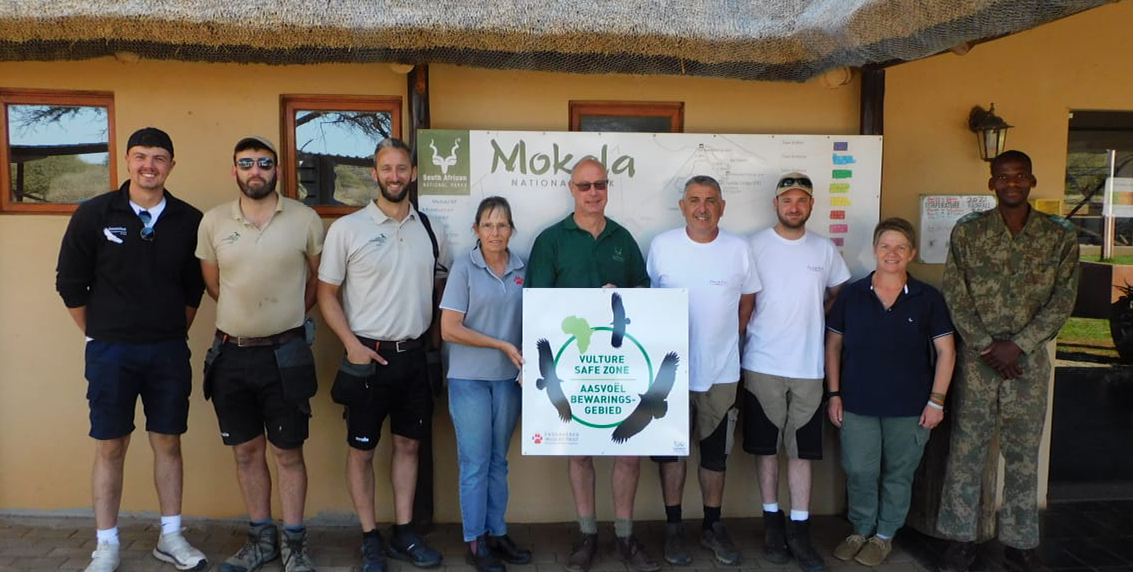
EWT-led Vulture Safe Zone in Mokala National Park

An Endangered Wildlife Trust-led Vulture Safe Zone has been certified in the Mokala National Park – a first for South Africa.

The national park, in the Northern Cape, is a stronghold for breeding White-backed Vultures (Gyps africanus).  It is the first SANParks national park to be certified a Vulture Safe Zone

“The certification is a further step in a working relationship between the Endangered Wildlife Trust (EWT) and SANParks to conserve threatened species and restore and preserve the habitats they require to survive,”  says the CEO of the EWT, Yolan Friedmann.

The EWT has been working in Mokala National Park since 2008, monitoring vultures and other raptors.  In the last three years, the EWT’s Birds of Prey team and park management have been mitigating threats to vultures and related species on the 27,500ha property with the aim to certify it as a Vulture Safe Zone (VSZ).


What is a Vulture Safe Zone?

Vulture Safe Zones are an outflow of what is commonly known as the Asian Vulture Crisis, spanning the 1980s and 1990s, which saw declines of over 99% in the population of vultures in this landscape.  Subsequent research found that the mass die-off had been caused by the veterinary NSAID (non-steroidal anti-inflammatory drug), Diclofenac. The disappearance of Vultures in India led to the ecological tipping of scales, causing the death of tens of thousands of people due to the spread of pathogens because of the decline in vultures, known as the environment’s clean-up crew.

The urgent need for action to stop the rapid decline of vulture species in Eurasia and Africa led to the development of the Multi-Species Action Plan to Conserve African-Eurasian Vultures (commonly referred to as the Vulture MsAP). Vulture Safe Zones are recognised in the Vulture MsAP as a means to encourage the responsible management of the environment by actively reducing threats to vultures in identified areas. In South Africa, the EWT has led the implementation of the Safe Zones, spanning the Karoo,  the Kalahari and the Eastern Cape.

Among the criteria for a VSZ is that the area must be poison free and carcasses may not be laced with NSAIDs, power lines are mitigated to prevent electrocutions and collisions by wildlife, breeding or roosting populations of vulture species are protected from disturbance; and that breeding and/or roosting populations are monitored annually.


The Mokala Vulture Safe Zone

Mokala is the first of many identified national parks to be certified as a Vulture Safe Zone. In partnership with Eskom, the project has ensured that all power lines are safe and, through a kind donation by the SANParks Honorary Rangers, the team was able to cover the dams with nets to prevent drownings.

Because the reserve is a stronghold for White-backed Vultures, a team led by the EWT has ringed and tagged over 1,100 vulture chicks in the park since it began working there. In October 2025 alone, 90 chicks were ringed and tagged, and 155 active nests were counted in the larger breeding area, which includes neighbouring farms.

“With the Vulture Safe Zone certification in place, Mokala National Park now has ample support to continue critical conservation efforts to protect their resident vulture populations, as well as other threatened birds of prey, including Martial Eagle and Tawny Eagle,”  said Friedmann.

** The EWT would like to thank our donors, partners and collaborators for their ongoing and much appreciated support for this important conservation initiative:  Charl van der Merwe Charitable Trust, Puy du Fou, Gauntlet Conservation Trust and Hawk Conservation Trust, as well as the SANParks Honorary Rangers  

2024/25 Integrated Report:  Saving species, saving lives – a year of empowerment, collaboration and expansion

2024/25 Integrated Report: Saving species, saving lives – a year of empowerment, collaboration and expansion

2024/25 Integrated Report: Saving species, saving lives – a year of empowerment, collaboration and expansion

Endangered Wildlife Trust Integrated report 2024/2025

“The money we are getting here has changed our lives. Our children are now going to school, says Tshifularo Madzhie of Kutama village in Limpopo as he speaks with pride about his job at the EWT’s  Medike nature reserve.

Situated in the Endangered Wildlife Trust’s (EWT) Savannah Conservation Landscape, which spans large tracts of northern Limpopo and extends into Mozambique, the EWT-owned Medike nature reserve in the Soutpansberg Mountain Range is a haven for numerous threatened and highly endemic species of reptiles, insects, amphibians and plants. The EWT acquired the reserve in 2018 and has slowly been transforming it into not only a conservation wonderland, but also a distinctive tourist destination where nature-loving visitors participate in developing the story of nature-based solutions uplifting local communities.

Four members of the local communities have received training to become rangers and are now employed by the EWT. In addition, 205 community members are being supported sustainably grow and harvest Pepper Bark Trees, Haworthiopsis  and other medicinal plant species.

In the past year, seven more local community members have been employed to build roads and clear alien and invasive species, further restoring the natural systems and creating access for tourism development.  Two community members have been employed by Medike nature reserve to strengthen law enforcement.

Madzhie speaks with pride about his job building roads, the fact that he has obtained his driver’s license in just four months, and being able to build a fence around his family’s home, on top of all the skills he has learnt.

“I am saving my money so that I can attend a security course when this job finishes, so I can apply for a job as a security guard at one of the reserves or in town. This job has given me experience and purpose,” he says as he speaks about giving up poaching and embracing conservation, teaching his community about the environmental harm caused by littering, runaway fires and poaching.   “My perception has changed because of this opportunity I have been given.”

Madzhie is one of numerous community members involved in projects managed by the Endangered Wildlife Trust, with our partners like the International Crane Foundation. This work not only restores and secures safe spaces for threatened species, but it also facilitates climate adaptation, expands protected area corridors across Africa, and reduces human-wildlife conflict. Additionally, it improves the well-being and ecological resilience of Indigenous People and Local Communities (IPLCs).

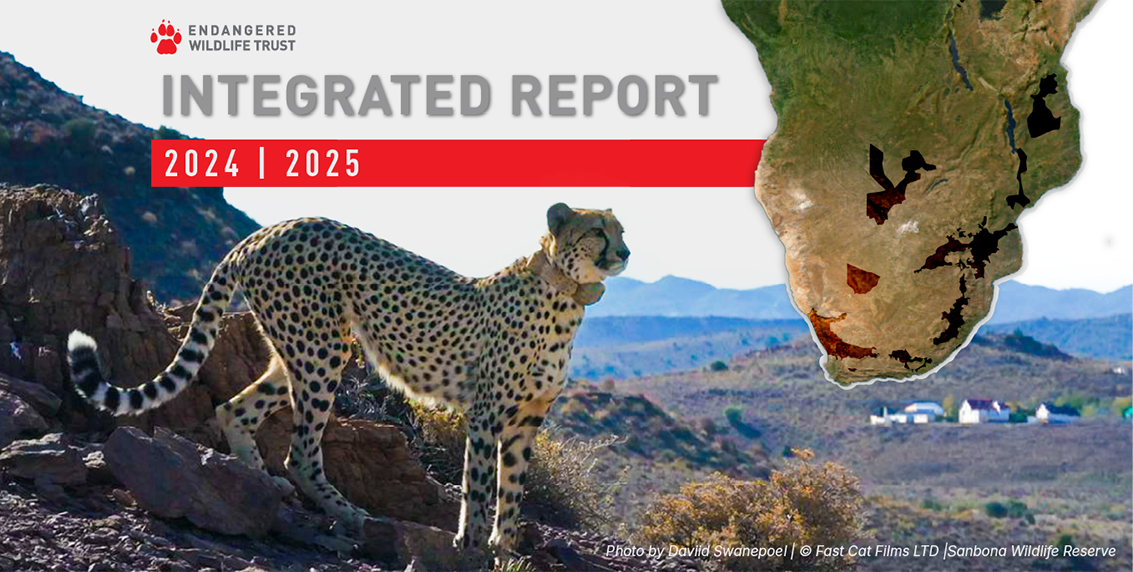
Communities are central to the EWT’s conservation success, and our 2024/5 Integrated Report showcases multiple examples of the impact of partnerships with communities to the benefit of conservation and the people who are directly dependent on their environment for their livelihoods.

Through skills training, livelihood support, and local leadership, we’ve helped people build sustainable futures that keep ecosystems healthy.  With the declaration of the 11,563ha Western Soutpansberg Nature Reserve in January 2025, the EWT now works collaboratively with landowners and provincial authorities to conserve and manage an additional 31,180ha of habitat.  As of the end of the 2024/25 financial year, 114,819ha of critical conservation land across all our Strategic Conservation Landscapes had undergone some form of improved land management change, rehabilitation, or restoration process, which will lead to improved ecosystem function, health, and resilience.  This includes 95,000 ha declared Vulture Safe Zones, and work done on about 20,000ha to clear alien and invasive species, control erosion, restore habitats, improve law enforcement, and manage game.

A total of 20 million m3 of freshwater had been replenished through community-based initiatives to remove alien invasive species and restore catchments. In a water-scarce region, the conservation of freshwater sources is critical for  climate change adaptation, benefitting both the communities and the multiple threatened species in those systems

In the year under review, more than 22,074 people were empowered through various training and development initiatives.  The livelihoods of 20,356 people were directly improved through employment or income-generating activities; 1,108 people were trained to provide them with better employment opportunities; and the livelihoods of 610 people were secured by, for instance, placing livestock guarding dogs to protect their livestock.

People are integral to sustained conservation impact and, closer to home, the EWT’s own pack of extraordinary conservationists has achieved other remarkable gains for threatened species conservation.


Highlights in the EWT’s 2024/25 Integrated Report include:
  • Coordinated the translocation of more than 20 Endangered African Wild Dogs and multiple Cheetah across southern Africa, creating new packs and coalitions to expand the population sizes.
  • Rescued and saved 81 vultures from a mass poisoning event in the Kruger National Park in May 2025.
  • Removed over 500 kg of poisons from Vulture Safe Zones.
  • Supported the training of 200 Soutpansberg community members to attend an AgriSETA-accredited training programme; provided seeds and basic equipment to contribute to their household’s food security.
  • In partnership with Bionerds, we recorded the first documented breeding calls and mating activity in over 40 years for the Critically Endangered Amathole Toad.
  • In Durban, the Widenham Wetland was declared a Protected Environment and Treasure Beach was granted Nature Reserve Status to protect the Endangered Pickersgill’s Reed Frog and critical burrowing skink habitat.
  • In the Drakensberg, spring protection projects at KwaMkhize, Mqatsheni, and Hlatikulu now supply clean water to over 1,000 people, while community-led land-use planning has designated 800 hectares of high-value grassland for conservation and grazing.
  • Initiated carbon offsetting projects, covering 93,000 hectares with an additional 53,000 hectares in development. These will secure critical grassland habitat whilst providing sustainable income for the farmers.
  • The EWT entered into a conservation servitude agreement with Lokenburg Farm, specifically to conserve habitat for the Speckled Dwarf Tortoise.
  • The EWT’s Conservation Canine Unit hosted the first African Canines in Conservation Conference, hosting speakers and delegates from 19 countries, focusing on the use of dogs for conservation research and the science of utilising working dogs for conservation
  • More than 100 renewable energy applications have been reviewed in South Africa to reduce negative impacts and enhance the positive potential of this sector to sustainably benefit the environment.

To support the rapid growth and expansion of the EWT’s groundbreaking conservation work across Africa, the EWT USA was registered as a 501(c)(3) tax-exempt public benefit organisation, kickstarting a phased approach to expanding our U.S. fundraising market.

“The EWT envisions a future where Africa’s wildlife and her people thrive together, and where our long-term strategic objectives have turned hope into intention, laying the foundation for a sustainable tomorrow. To achieve this, our 25-Year Future Fit Strategy is an ambitious, long-term framework designed to secure biodiversity, restore ecosystems, and build resilient communities across nine Strategic Conservation Landscapes in southern and East Africa,” says the EWT’s CEO, Yolan Friedmann. “Our Strategy is not just a roadmap – it is a bold commitment to future generations that is ambitious, inclusive, and enduring.”

“The year under review shows how we are successfully bringing this vision to life, and this report showcases multiple examples of how healthy ecosystems support thriving wildlife and people. We close out this financial year with energy and determination to do more.”

Friedmann adds that the 2024/5 financial year was shaped by transformation and tested the EWT’s tenacity. “Despite global and regional challenges, from geopolitical volatility to socio-economic pressures, our conservation programmes have not only endured but thrived”.

Chair of the EWT’s Board of Trustees, Muhammed Seedat, says the year marked another period of both reflection and renewal.

“The world continues to grapple with the accelerating effects of climate change, habitat loss, and economic uncertainty. Yet, despite these pressures, the EWT has not only sustained its vital conservation work, but expanded its impact across multiple fronts,” he says.

“We are entering a defining decade for biodiversity. We are at a juncture where we have just over four years in which to achieve the international targets of conserving 30% of land and sea by 2030, drastically cut greenhouse gas emissions as we work to build resilience and protect vital resources and halt biodiversity loss in the face of unforgiving climate change. The decisions we make now will determine the health of our planet for centuries to come”.

Thus, the importance of the EWT’s Future Fit Strategy.  This, he says, is the EWT’s promise and commitment to a sustainable tomorrow in which no-one is left behind.

In Memorium: The EWT bids a fond farewell to Trustee, friend and Board Member Michael Esterhuysen

In Memorium: The EWT bids a fond farewell to Trustee, friend and Board Member Michael Esterhuysen

In Memorium: The EWT bids a fond farewell to Trustee, friend and Board Member Michael Esterhuysen


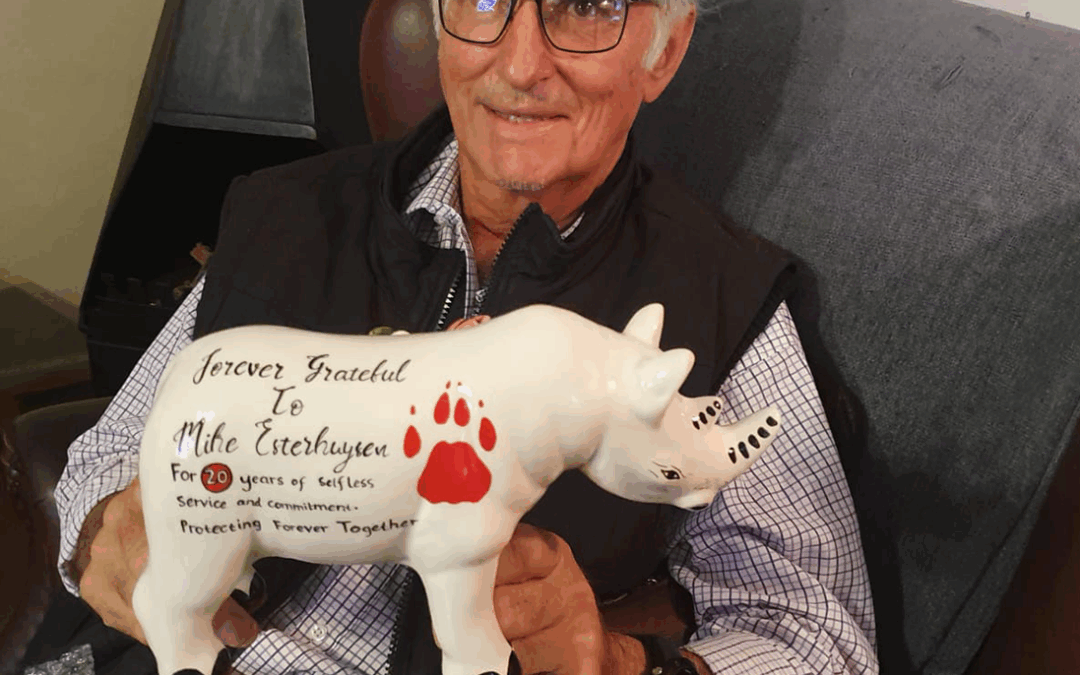
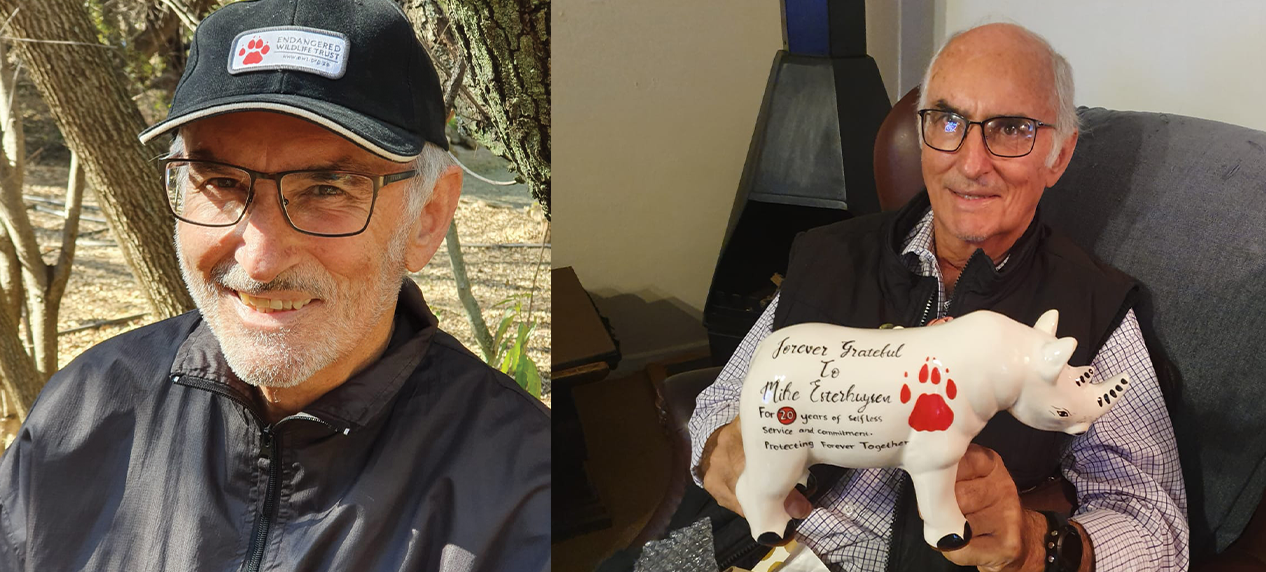
Tribute image honouring Michael Esterhuysen’s legacy in conservation

Mike Esternhuizen, a much-loved member of the Endangered Wildlife Trust (EWT) Board of Trustees since 2001, passed away after a long battle with cancer on 4 October 2025. He was 77.

Mike’s relationship with the EWT began when he offered the pro bono services of his advertising and marketing agency, Lesoba, to support the organisation’s marketing and communications, says his widow, Michelle.

He played a key role in shaping the EWT brand, from helping to develop the first Corporate Brochure in 2002 to the website redesign in 2022, with multiple projects along the way.

As a member of the Board, he was one of the founding members of the Social and Ethics Committee.

“Even when he was wracked with cancer, he would always contribute.  He was always present in a quiet and unassuming way,”  said former Board member and chair of the Social and Ethics Committee, Karin Ireton.

“Having been part of the EWT’s leadership and brand DNA for more than 2 decades, Mike was instrumental in shaping the EWT,” says Yolan Friedmann, EWT CEO. “Mike’s support of and love for the EWT spanned almost the length of my career, and I am blessed to have been influenced by his unwavering commitment, his quiet strength, fortitude and his relentless love for Africa’s wildlife. Mike was one of those who always put his hand up for a new role and made the effort to always show up. Mike was reliable, and you could count on him for anything. I will miss him greatly”.

Dirk Ackerman, EWT Board of Trustees Vice Chair, said Mike was a stalwart and always “someone we could rely on”.

“He set a fantastic example through his complete dedication. He was unselfish with his marketing expertise and made a high financial contribution to the EWT,” said Ackerman. “His fortuity and character were visible in the fact that he remained on Board despite his health issues.  He was tireless and dedicated to the last, and he will be sorely missed.”

Mike’s family described him as a “special, loving, and deeply caring man, and a passionate conservationist whose wisdom and generosity left a lasting mark on those who knew him”.

Mike and his wife built their own marketing agency, which he led as CEO for nearly four decades. Mike’s love for the bush began in childhood, fostered by his father and deepened when he and his family invested in a bungalow at Olifants River Game Reserve almost forty years ago.

In 2019, Mike was diagnosed with Stage 4 oesophageal cancer. He met the illness with quiet courage, grace, and determination throughout a long six-year journey. Even after losing his voice following a laryngectomy, he remained steadfast, continuing to participate in life and Board meetings with resilience and dignity.

He is survived by his wife, Michelle, and their five children and three grandchildren.

The Buzz on Bees: Why These Pollinators Are Crucial to Our Ecosystem

The Buzz on Bees: Why These Pollinators Are Crucial to Our Ecosystem

The Buzz on Bees: Why These Pollinators Are Crucial to Our Ecosystem

By Amos Letsoalo – Wildlife and Infrastructure, Senior Field Officer, Endangered Wildlife Trust (EWT)


** Note:  EWT Head Office staff have been working from home since the end of September due to construction work taking place at the Conservation Campus in Midrand, Gauteng.


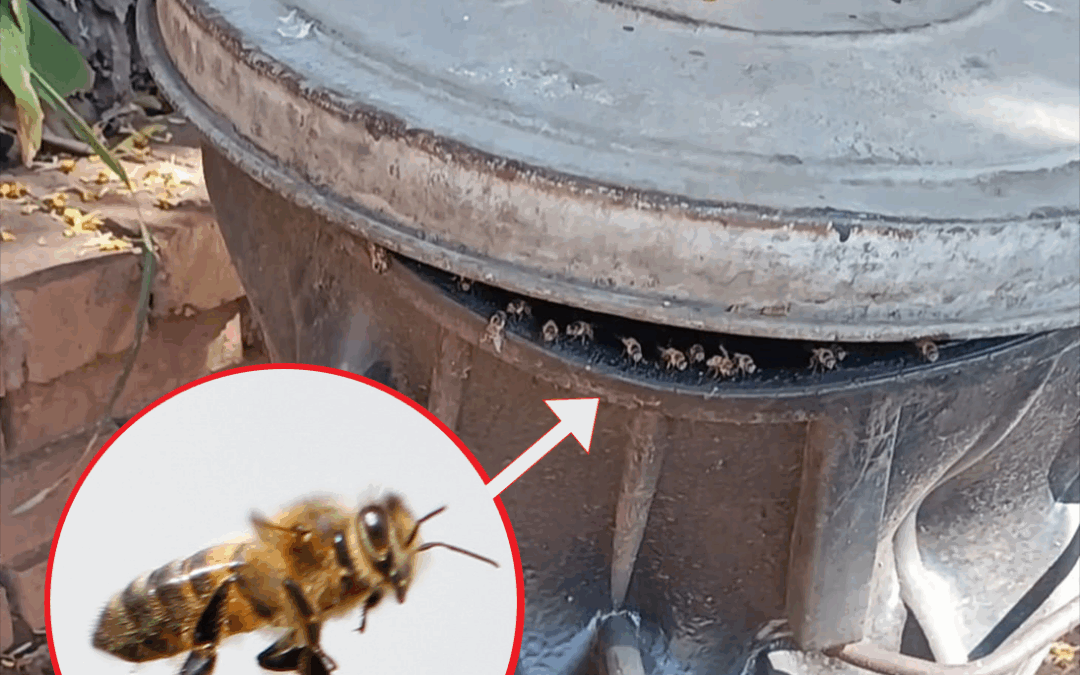
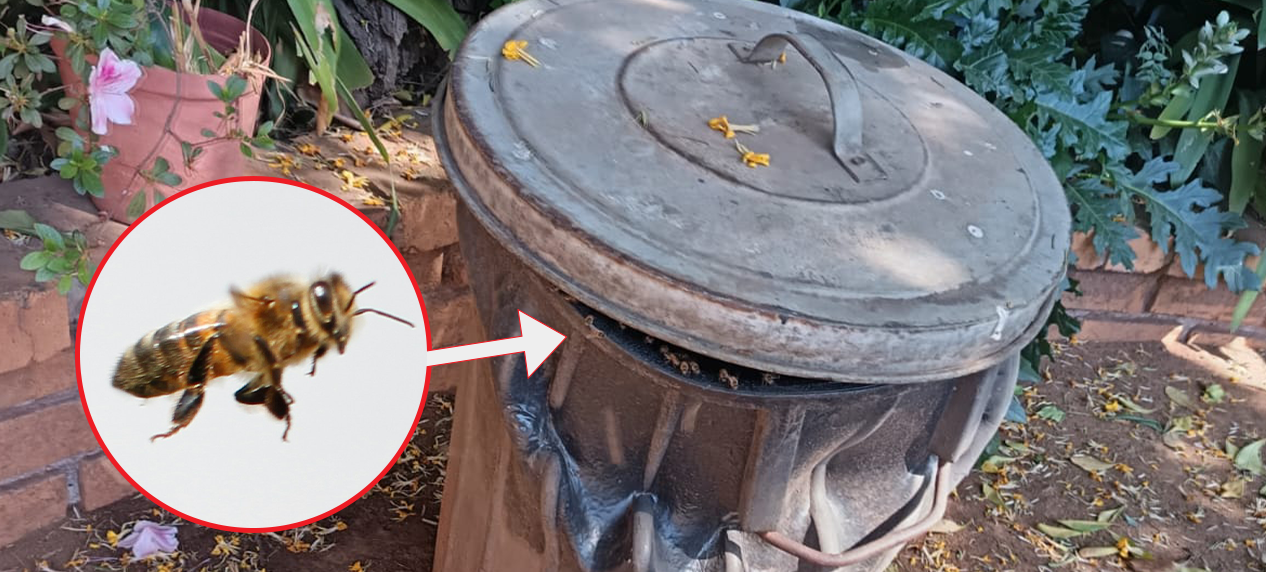
beehive settling inside garden compost bin

Beehive settling inside garden compost bin


When I stepped out into my garden one morning in mid-October, I was surprised to see swarms of bees buzzing around, particularly near a dustbin I was using for composting. I watched as they clustered around it, and eventually some of them began to flit between the flowers. Initially, I thought they were just passing through, but as the day went on, they remained.   The next morning, I checked again and found that they had settled in. Some bees were busy collecting nectar from the flowers, suggesting that they might have found a new home in my garden.

My new residents have settled in well in the half-empty composting bin, which I have moved from its original home to a quieter spot so they won’t be disturbed.  Now they spend their days buzzing between my flowers, collecting nectar and pollen.  It was their choice of my garden to live in that got me thinking about the importance of bees in our lives.


Why Bees Matter

Bees are amongst the most vital creatures in our ecosystem, playing a crucial role in pollinating plants and maintaining biodiversity. Without bees, many of our favourite foods and flowers would disappear.  That is why it is essential to protect them.

Bees are pollination powerhouses responsible for pollinating around a third of the world’s crops, including fruits, vegetables, and nuts. Without bees, many of these crops would be unable to reproduce, leading to food shortages and economic losses.

Bees contribute to ecosystem health by pollinating flowers and plants, which in turn support a wide range of wildlife. By pollinating plants, bees help maintain ecosystem health and biodiversity.

Bees are economically important because of their contributions to the global economy, not only through pollination services, but also the production of honey, which is used in a variety of products.


Why Bees Are in Danger
  • Habitat Loss: Bees rely on flowers and plants for food and shelter. However, habitat destruction and urbanisation have reduced the availability of these resources.
  • Pesticides and Chemicals: The use of pesticides and chemicals in agriculture can harm bees and other pollinators.
  • Climate Change: Climate change is altering the timing of plant-bee interactions, making it harder for bees to find the resources they need.


How We Can Help

There are a number of ways in which we can ensure the survival of bees.  One of these is to create bee-friendly habitats by planting flowers and other plants in our gardens to provide a source of food and shelter for bees.   Another is to avoid the use of pesticides and other chemicals in your garden.  Rather, opt for organic or integrated pest management methods.   Supporting local beekeepers through the direct purchase of honey and other bee products supports an industry that is critical to people and the environment.


My Personal Commitment

Since the swarm of bees moved into my garden, I’ve made a personal commitment to protect and support these incredible creatures. By providing a safe and welcoming environment, I hope to contribute to the well-being of these vital pollinators, as my garden has a number of flowering plants.

Bees are a crucial part of our ecosystem, and it’s essential that we take steps to protect them. By understanding the importance of bees and taking action to support them, we can help ensure the long-term health of our planet. So, let’s all do our part to protect these incredible pollinators!