
Some of our fascinating science saturday posts
SOME OF OUR FASCINATING SCIENCE SATURDAY POSTS


Even though the kids are back at school, our fun, curriculum-aligned Guardians of the Future education resources are still available online to boost the knowledge that your kids are learning in class. There are also educator resources that can be used by parents and teachers to guide you through engaging activities that cover curriculum content and incorporate the learning processes and design skills required for that topic.
Have a look at our Curriculum Boosters here: https://ewt.org/resources/educational-material-3/ and contact emilyt@ewt.org.za to tell us what you think!

22 September 2020 was World Rhino Day! To celebrate, the EWT hosted a panel discussion to provide an update on the various rhino conservation initiatives we are involved in, to raise awareness about the plight of rhinos, and to encourage people to support the conservation of this iconic species. Yolan Friedmann facilitated the discussion and panellists included Dr. Andrew Taylor, Ashleigh Dore, and Shayen Seebran from the EWT’s Wildlife in Trade Programme. If you missed this, be sure to watch it on our Youtube below!


For the fifth year in a row, Lapalala Wilderness School and the EWT hosted a World Rhino Day public speaking competition. Two Grade ten learners from six schools participated, speaking on this year’s topic: “What are the social, political and economic impacts of rhino poaching in South Africa?” The future conservation champions were asked to present their arguments and possible solutions to the impacts and challenges we face in the battle against rhino poaching. The winners were as follows:
1st prize – John Tawanda Chauke from Leseding High School (Vaalwater).
2nd prize – Machuene Sikalo from Lemetja (Dipere village).
3rd prize – Ephraim Ramashita from Nkgoru High (Nkgoru village).
4rth prize – Maphuti Malope from George Langa (Marulaneng village).
Congratulations to all the schools that participated and all of the learners who spoke beautifully.

Megan Murison, Communications Officer, Endangered Wildlife Trust, meganm@ewt.org.za
Patent laws were designed to protect intellectual property and ensure that the rights of those involved in the development of the product or service be safeguarded. However, some use these laws to infringe upon the rights of others. Biopiracy occurs when individuals or companies take indigenous knowledge of species provided by others and patent this information without official sanction or permission. These biopirates do not acknowledge those who have taken the time to understand and nurture plants over generations (farmers, communities, traditional healers, etc.), neither do they compensate them for their contribution of knowledge and experience.
An interesting case study for biopiracy is the use of stevia. Any consumer in this day and age will have heard of the use of stevia as a sugar replacement in cooldrinks and food items. Public Eye, a global justice initiative, classifies the use of the Steviol glycosides as a classic case of biopiracy. This plant was historically used as a natural sweetener by the Guarani peoples of Brazil and Paraguay. Unfortunately, with no legislative backing, the use of stevia glycosides is uncontrolled, and many large organisations are applying for the patent. Even more concerning is that 80% of commercially used stevia is produced in China. While it is indigenous to Brazil and Paraguay, they only make up 3% of the commercial use. Moreover, the impact on the genetic biology of the plant is also worrying. As large companies quickly race to produce synthetic stevia material, small scale farmers are at risk of losing their livelihoods. And in the end, the large companies will receive the monetary benefits.
International agreements, such as the Convention on Biological Diversity, do not appear to stop large companies from conducting acts of biopiracy under the guise of bioprospecting. The legislation regulating its implementation, the Nagoya Protocol, is often improperly applied by countries, and others, including the United States, have yet to sanction them.
Africa is no stranger to cases of biopiracy, and the Hoodia cactus was the subject of a landmark biopiracy case. The San people of the Kalahari have used this plant to suppress hunger pains for centuries. The active molecule involved in this function was identified and sold to Pfizer, a massive pharmaceutical company, for use as an appetite suppressant. Following a complaint and a case brought against Pfizer by the San Council, the community was, after a fight, awarded a share of the royalties, and a precedent was set that clearly communicated the right indigenous people have to stake a claim to their knowledge and to profit from it. A South African example originates in the small Eastern Cape town of Alice. The heavyweight pharmaceutical company, Schwabe, manufactures a syrup for respiratory tract infections made from the roots of Pelargonium sidoides and Pelargonium reniforme, marketed as Umckaloabo. Not only is this the use of the plant for this purpose theft of indigenous knowledge, but there are also many cases of the exploitation of labour during harvesting, and of unsustainable farming practices, which put the plants at risk of extinction.
Patent legislation requires that the product or service in question be novel and unique. Therefore, in the fight against biopiracy, scientists and researchers are attempting to collect and publish these plants’ properties and uses on public domains. Countries are also fighting back, with India battling to prevent the patent of the wound healing capabilities of Turmeric, and Thailand has appealed the patent of Jasmine Rice. With the threats associated with climate change, even more cases of biopiracy will come to light with the increased need for medicine and food sources that are resistant to drought, heat, and salt. While finding sustainable and resilient sources is a priority, it should not come at the expense of indigenous people.

Samson Phakathi, Field Officer, EWT’s People in Conservation Programme, samsonp@ewt.org.za
As in most cultures, folklore has played an essential role in influencing social norms and values in most African communities. Folklore is oral history attached to a particular place, group, or activity, communicated through tales, proverbs, riddles, songs, etc.
Folklore is typically passed down by word of mouth, although sometimes people write down collections of folklore to preserve the stories of a particular community. The fundamental premise is that folklore has no author – it slowly emerges and evolves from within a culture, and is carried forward through constant retelling. Some folklore is a product of indigenous knowledge about species and natural ecosystems. In Africa, particularly in KwaZulu-Natal, many of the folklore legends relate to the environment and specific species. Folklore has both positive and negative effects on the environment and species, determined by how much species are valued in a specific tribe. For example, if a species is deemed harmful and of no use to man, folklore will prescribe that it be persecuted, whereas if it is useful to man, folklore projects a glorified image of the subject, motivating for people to care for and conserve it. Folklore sparks the imagination of children, strengthens bonds between generations, and helps to shape people’s cultural views on biotic utilisation and preservation.
Folklore has always played an important role in preserving heritage in KwaZulu-Natal. Legends have it, for example, that upon discovery of signs of damage to Itshe LikaNtunjambili, the cliff head above the Tugela Valley, a narrative was spread warning that anyone who tampers with the cliff will develop misshapen legs, and to this day the cliff head is intact for all to see and enjoy. Older women are traditionally the narrators of folklore, and young people would sit around an open fire and enjoy stories in the dark. As we celebrate Heritage Month, we recognise the role of folklore in preserving our cultural and natural heritage. A story about the role of folklore in preserving wildlife and heritage
Once upon a time when people’s existence could be directly affected by how well they understood and respected their environment, Indlovukazi-the Queen Mother once embarked on a long trip from the Zululand to the South Coast in KwaZulu-Natal. She was accompanied by six warriors who were instructed by the King to ensure her safety, not only from physical dangers but also against unseen nature-related obstacles that might come to the fore. They walked gracefully for days using species like Honey Badgers, starlings, and weavers to provide signs of what lied ahead. Honey Badger would lead them to honey, starlings and weavers warned them about the presence of slippery friends (snakes). They walk for days until their supplies were beginning to run out. They had to find a suitable spring to collect water, but unfortunately, they walked for days without much luck because springs in their midst did not fit the description of a water source that is suitable for Indlovukazi.
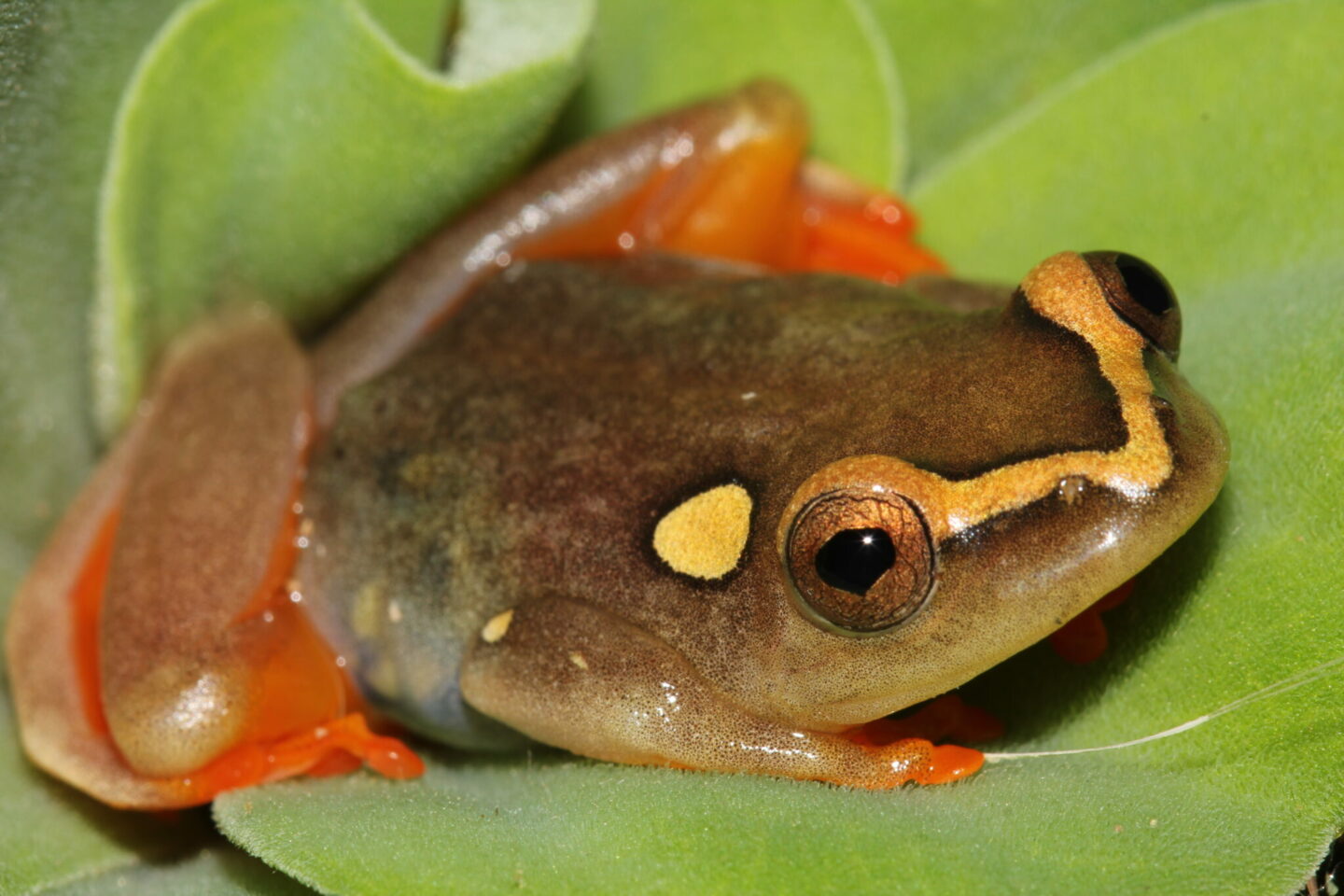
An instruction from Indlovukazi was clear, croaking frogs and running water signalled a sign of water suitable for Indlovukazi. None of the springs they found showed signs of life, and the wise Indlovukazi decided that they would take a well-deserved break and brainstorm strategies to ensure that there is life in every stream the next time they travelled this way. They sat under a tree of great cultural significance, and as they deliberated on what to do to bring back the frogs, they heard the loud croaking sound of a frog in the distance. The Indlovukazi immediately instructed two warriors to search for the stream where the croaking was coming from, and if there was a sign of frogs, they dare not touch the water as the Indlovukazi should be the first to enjoy the sweet waters, or Amanzimtoti (of the spring). They found the stream, inundated with frogs of all species, shapes, sizes, and colours, and returned to inform the Indlovukazi about their finding. The thirsty Indlovukazi walked to the stream and scooped a cup full of the water and, instead of quenching her thirst, insisted that before they enjoy the water, they come up with a plan to bring life back to the other streams that they had passed. The men thought long and hard and soon realised the association of frogs to the sweet water the wise Queen had described earlier.
As the sun was setting, Mpeku, one of the lead warriors, began to put the pieces together and remembered how, as young boys, they used to go to play in the streams, throwing stones at the frogs and throwing their rubbish into the streams, until there were fewer signs of life in the area. He relayed what he thought was a contributing factor in the decline in frog numbers, and the Indlovukazi felt that what he shared was genuine. They all felt that there was a need to educate young boys about the importance of frogs in streams and folklore stories were an essential method of reinforcing a particular narrative in communities.
The Indlovukazi and her combatants manufactured a folklore narrative that those who kill frogs and pollute water will have an unpleasant period in their lives, and this narrative has played a role in the conservation of frogs and streams in Natal. Mpeku was rewarded and entrusted with a responsibility to develop folklores intended to preserve local natural heritage, associating certain species with good luck and positive experiences.