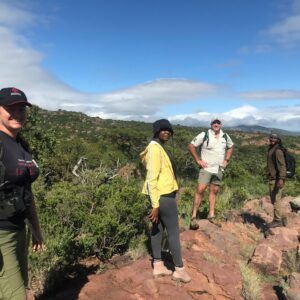
Our best-kept secret
Emily Taylor, EWT Communications and Marketing Manager, emilyt@ewt.org.za
This month’s tale from the field is a special one. It isn’t often that Support Services staff based at Head Office get to write stories about field trips, or at least ones that would be interesting! But in February, the Endangered Wildlife Trust (EWT) Communications and Marketing team was given the opportunity to get out from behind our desks and venture into the spectacular Soutpansberg mountains. And what a trip it was.
The VhaVenda call it “Tha vhani ya muno” – the Mountain of salt. Rising like an island from the surrounding bushveld flatlands, the forgotten Soutpansberg is South Africa’s best kept secret and one of the country’s most unique and unexplored natural areas. The name ‘Soutpansberg’ is derived from the large natural salt pan to the northwest of the range.

The Soutpansberg Mountains. Photo credit: Suzette Britz
|
The Medike Mountain Reserve boasts 58 butterfly species, 15 scorpion, 19 amphibian, 61 reptile, 59 mammal, 229 bird, and 237 tree species. The Vulnerable Leopard, the Near Threatened Brown Hyaena and Natal Red Duiker, and the Endangered Mountain Reedbuck are among these.
|
The Soutpansberg in Limpopo is South Africa’s northernmost mountain range and forms part of the UNESCO Vhembe Biosphere Reserve. The mountainous landscape comprises an impressive variety of habitats: forest, thick thornveld, savannah, and grassland – and is home to several iconic, rare, and Endangered species, including a plethora of endemic species of both fauna and flora (which occur nowhere else on Earth)! It is also a critical groundwater source. The EWT identified the urgent need to conserve the area, and in 2015, on behalf of the Roberts family in Australia, the EWT purchased the 1,398 ha Medike Mountain Reserve in the Soutpansberg. We subsequently received funding from the Rainforest Trust to purchase a neighbouring property, almost doubling the reserve’s size.
When the EWT began working on the mountain, we embarked on several ambitious projects to restore the integrity of the mountain by clearing large patches of alien and invasive plants that had encroached on native vegetation and affected the function of the water sources on the mountain. Check out our Forgotten Mountain video to see the benefits these projects have had for the landowners and local communities. The EWT also began to engage with neighbouring landowners about interlinking their properties and creating an opportunity for the community to unite and optimise the mountain’s value as an ecotourism destination. Many landowners welcomed the opportunity for collaboration, and 17 have already decided to join the EWT in legally declaring their properties as one large protected area spanning 22,000 ha of the Western Soutpansberg, called the Western Soutpansberg Nature Reserve (WSNR). The collective vision for the WSNR is to create and protect a connected landscape under formal conservation, covering priority species, habitats, hydrologically important areas, and cultural heritage, for the benefit of biodiversity, ecosystems, and people in perpetuity.
The Old Salt Trail is one of the first projects initiated to share the mountain and its unique and diverse landscapes and cultural heritage with others, generate income for local people, and secure a sustainable future for the WSNR and Luvhondo Nature Reserves. The long-term vision is for this project to catalyse a successful ecotourism initiative, bringing visitors to the mountain in an ecologically sensitive way. Hikers will be able to experience the exceptional beauty and biodiversity on offer while gaining knowledge from local trail guides and supporting local socio-economic development within a protected environment.

The EWT’s Communications and Marketing Team. From left to right, Kedibone Chauchau, Suzette Britz, and Emily Taylor
This particular field trip enabled the Communications and Marketing team to visit the EWT’s Medike Mountain Reserve and neighbouring properties to experience first-hand the unique mountain landscape and meet with the local landowners and communities to better understand how to market the area, and the Old Salt Trail in particular, as a unique ecotourism destination.
The Soutpansberg, and Medike in particular, is known for its astonishing diversity of landscapes and habitats , and as the geology changes, so too do the colours of the soil, the topography, the shape, size, and density of the vegetation, and the animals that occupy each habitat. And a few hundred metres later, they all change again. One minute we marvelled at the less dense thorn-veld with its brown soils, patches of golden grass, and fine-leafed thorn trees; the next, at the dense green bushveld packed with broad-leafed Bushwillows, Gardenias, Silver Cluster Leafs, and the remarkable Rock Figs that wrap themselves around and push through the mammoth rocks.
I was a field officer once upon a time, and, perhaps out of self-preservation, I often forget the utter bliss that being in the bush brings. I almost forgot that I was there for work and found so much joy just driving along, chatting to the landowners and the EWT’s Soutpansberg Rangers, and seeing first-hand what they have all achieved in the last few years. More than that, though, it was touching and inspiring to witness the connection that those living and working there have with “the mountain”, as they affectionately call it. I completely and instantly understood why they have this deep and eternal love for this land – it is undeniably one of the most enchanting places on Earth. But don’t take my word for it – you need to see it to fully comprehend its magic – contact Catherine Vise for more information on how to find the forgotten mountain.
Don’t miss out!
This spectacular range of Mountains will host the second running of the Soutpansberg Mountain Marathon. With 42 km, 21 km,10 km, and 5km courses on offer, all start and finish and Schoemansdal (30 mins from Louis Trichardt) at the base of the mountain range. The longer three courses climb up the mountain and can be considered proper challenges. To register, click here.
LATEST STORIES
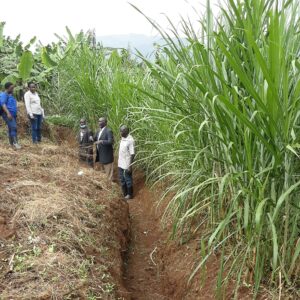
Fighting landslides in Rukiga
Phionah Orishaba, EWT’s African Crane Conservation Programme/International Crane Foundation Partnership, Field Officer – Southwestern Uganda, PhionaO@ewt.org.za
April 2022
Kigezi region in southwestern Uganda has always experienced heavy rains in March-May and September–November, which are also the crop growing seasons. Human activities on the steep hillslopes in Rukiga, including bush burning, deforestation, and overgrazing, have left the soil bare and eroded. With nothing holding the soil there, runoff from the steep slopes after heavy rains has increased drastically, causing landslides that destroy people’s property and crops below. The runoff removes soil and sediment in wetlands, affecting the local populations of Grey Crowned Cranes, such as in the Rushebeya-Kanyabaha wetland. Soil erosion control in Uganda is a critical issue that needs addressing for communities to thrive.
While an important economic activity in the Rukiga District, excessive eucalyptus planting on the hillslopes has become a great environmental challenge. Eucalyptus trees don’t allow the growth of short grass under their canopies, and rainwater runs quickly down the hillslopes and into the lowlands, where it causes havoc for the communities. Under pressure from an ever-increasing population, the fragmented land of Rukiga has continued to be divided into smaller plots to cater to the many children in each family. Households in the Rukiga district have an average number of six children each, and parents struggle to provide for the basic needs of their families.
Soil and water conservation initiatives have been proposed to remedy the issue of runoff that causes soil erosion in Rukiga district. One such project, funded by The Darwin Initiative, is being implemented by the International Crane Foundation/Endangered Wildlife Trust Partnership, Margaret Pyke Trust, London School of Hygiene and Tropical Medicine, and Rugarama Hospital in Rukiga district. The project has established two Napier grass demonstration gardens in

A Napier grass garden in Rukiga
Rwamucuucu and Kashambya sub-counties, in which Napier grass will be distributed to farmers to plant on the terraces of their gardens so that, when mature, the grass will stabilise these slopes. As part of the resilient livelihoods support that has been given to 248 households, each household was given 500 stem cuttings of three nodes each to be planted along their terraces, as soil and water conservation is one of the conservation actions identified in conservation agreements between the community conservation groups and project partners.
The Rwamucuucu sub-county chief Gideon Tumwesigyire has shown appreciation for the initiative. “This project has come at a time where it is needed because we normally experience heavy rains, sometimes unexpected, which has been a challenge to our community people. We therefore think that giving this Napier grass to farmers in the communities will cause a great impact by controlling soil erosion”.

Communal trenches dug on the hillslopes in Rukiga District to control the speed of water during heavy rains
The chairperson of the local council in Kashambya sub-county embraced the initiative saying that soil erosion has always been a great challenge to their people, but with this Napier grass, we hope to make a difference in the sub-county and district at large.
Community engagement has motivated the district leadership at all local council levels to join hands with ICF/EWT to make communal trenches on the hillslopes as one of the soil and conservation activities that can help to control the speed of water caused by heavy rains that have become disastrous to peoples, crops, and property. These simple conservation actions they can take themselves provide people in the district with the hope that they can stop fighting the land they depend on.
LATEST STORIES
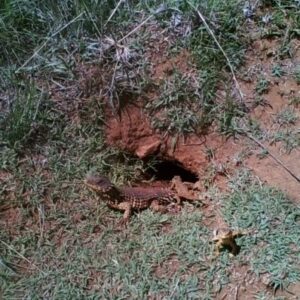
Sungazer Custodians
Bradley Gibbons, African Crane Conservation Programme, bradleyg@ewt.org.za
Sungazer lizards Smaug giganteus are more commonly known as Ouvolk in South Africa’s Free State province, the only place on earth where these Vulnerable charismatic lizards can be found in the wild together with a very small population located in the south of Mpumalanga.
Since 2015, the EWT has awarded Sungazer custodian boards to exactly 30 farmers, five of which were awarded during 2021.
Sungazer custodians are farmers who go the extra mile for Sungazers and assist the EWT to conserve these reptiles on their farms and act as champions for Sungazer conservation in their area. It is never difficult to select a Sungazer custodian, because they show an extra passion for Sungazers on their properties. They ensure that their farms are safe for Sungazers, by conserving the habitat used by Sungazers and minimising disturbance to them. Another example of going the extra mile is to ensure that areas where Sungazers occur are avoided and farmers won’t drive too close to their colonies. It is important to note that Sungazers are found in colonies in natural grasslands which differs from typical lizards found in rocky areas. The EWT recognises these landowners’ conservation actions through the Sungazer Custodianship Programme.
The custodian agrees to sign a short agreement to cement their commitment to protect the Sungazers for the five-year custodianship period (with the option to renew). Through this they commit to report any useful or relevant information to the EWT, such as new areas where Sungazers are found on the farm (and in some cases to send photos of baby Sungazers) and report potential or current threats to prevent further harm to Sungazers as much as possible in their respective region. We hope that other farmers from the areas will notice the board when they visit a custodian and then follow the example of the custodian. One of the five custodians in 2021 is a couple from Koppies in the Free State, Dawie and Natasha Smalberger, who have not only reported their Sungazer sightings regularly but even put up their own camera trap to keep a watchful eye on the Sungazers on their farm! There is no doubt that they deserve to be awarded a custodian board for this type of involvement, and the EWT appreciates their efforts to conserve Sungazers.
As part of conservation efforts on privately-owned farms, the EWT would like encourage farmers to further protect their farms using another form of a conservation agreement known as the ‘Biodiversity Stewardship’ approach. Not every farm can be declared a nature reserve if a landowner would like these reptiles to be protected. Therefore, conservation on privately-owned land is made possible with the use of this strategy. An example of an agreement like this is a protected environment where livestock farming and even crop farming can operate as it currently is. However, intact vegetation such as grasslands will remain intact from not further extending any cultivated fields. These farmers will in most cases also adhere to a management plan that has been compiled to further improve the habitat on the farm.
LATEST STORIES
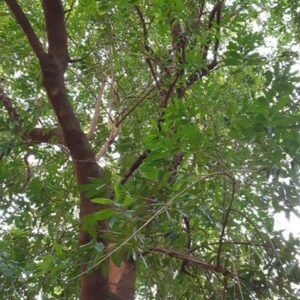
Protecting our rich culture and biodiversity for future generations
Jenny Botha, EWT People in Conservation Programme Manager, jennyb@ewt.org.za
Although the leaves of the Pepper-bark Tree (Warburgia salutaris) are reportedly used in curries and to flavour other foods in Kenya, the species is more commonly known for its healing properties throughout its range in East and southern Africa. This attractive evergreen tree grows in diverse habitats, including forest, kloofs, thickets, and open woodlands. Historically, it was distributed from north-eastern KwaZulu-Natal and Swaziland to Mpumalanga, Limpopo, and Zimbabwe, extending into Mozambique and Malawi. Today though, the Pepper-bark is classified as Endangered on the IUCN’s Red List of Threatened Species, and many of its habitats are degraded and fragmented through human activities and the impacts of alien plants.
In 2020, the Endangered Wildlife Trust (EWT), with the support of the Fondation Franklinia, initiated a strategic conservation project in Limpopo to safeguard the Pepper-bark for future generations. To achieve this, we need to protect and improve the management of existing Pepper-bark Tree habitats and ensure that people who have historically depended on this tree for medicine, and continue to do so, have legal access to it.
To secure habitat for the Pepper-bark and other plant and animal species of high conservation value, the EWT has been collaborating with the Limpopo Department of Development and Tourism (LEDET) and private landowners in Limpopo to increase formal protection of these sites. It is also important to manage these habitats effectively. Over the past two years, we cleared alien vegetation from 25 hectares of Pepper-bark habitat.
Despite the Covid-19 pandemic, we were able to meet with over 100 traditional healers, community leaders, and other community members from 25 villages or towns to discuss mutual challenges arising through the loss of the Pepper-bark through overharvesting. Traditional healers, leaders, and community members welcomed donations of Pepper-bark saplings that will enable them to harvest directly from their gardens in future. Thanks to a year of high rainfall, the trees are growing well and will provide the traditional healers with a vital source of bark, roots, and root-bark in upcoming years. The traditional healers can also use the tree’s leaves now that scientists have verified that they contain the same phytochemical constituents as the bark and roots. This has the potential to substantially reduce the impacts of harvesting from the wild, as it is far easier to harvest sustainably if the leaves can be used instead of bark or roots.
We would like to thank SAPPI, the Agricultural Resource Council, and SANParks for the donation of 2,000 trees to this project and look forward to continuing this exciting journey with the many traditional healers, communities, and other conservation partners who are participating in this initiative.
LATEST STORIES
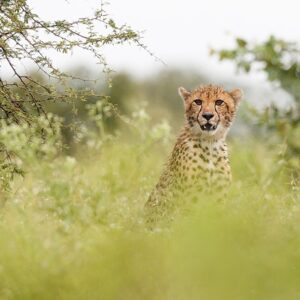
Cats and crickets: Testing the naivety of reintroduced Cheetahs to predatory cues
By Erin Adams
As wildlife numbers decline, it is becoming an increasingly popular theory that it is viable to reintroduce once captive individuals back into the wild. However, reintroductions may fail as newly introduced animals could be naïve to the threats around them. As Cheetahs are listed as Vulnerable and have been extirpated from much of their original range, reintroductions have become an important exercise in Cheetah conservation. In a recent publication* co-authored by EWT scientists, the perception of threats was tested on reintroduced cheetah populations to gauge the effectiveness of reintroduction programmes on Cheetah’s survival.
As lions pose the biggest threat to Cheetahs in the wild, recordings of territorial lions were obtained. In addition to lion cues, recordings of African Bush Crickets were used as a control to test whether Cheetah could distinguish between danger (predation due to lions) and no danger (crickets). These recordings were then played to three different groups of Cheetahs. The three groups included a population that had been raised and kept in captivity; a semi-wild population that had been raised in captivity and was undergoing a “soft-release”, meaning that they were released into a reserve with prey species where they could hear and smell lions but not directly interact with them; and a population of fully wild Cheetahs that interact with both prey and other predators. It was predicted that the group of captive Cheetahs would be least sensitive to the lion recordings, as they have had no prior experience of other predators.
The results showed that the captive Cheetah population showed no fear of the lion or the bush cricket cues and spent more time near the stimulus than the other Cheetah groups. The semi-wild and wild populations consistently fled at the sound of the lion’s roar. The semi-wild Cheetah individuals approached the sound of the bush cricket (the control, or “no danger” sound), while the wild Cheetah individuals were indifferent to them.
The authors concluded that there is a great need for this pre-release testing as it could help assess the readiness of individual Cheetahs for release into the wild and the potential success of Cheetah rewilding. Assessing the Cheetahs’ response to potential threats before release could increase the rate of Cheetah survival in the wild, post-release. This study only looked at one aspect of the readiness of captive-bred Cheetah to be released into the wild – other issues such as fitness and the ability to hunt, amongst others, could also affect the readiness of Cheetahs for release into the wild, and thus their survival.
* Wemer, N., Naude, V. N., van der Merwe, V. C., Smit, M., de Lange, G., & Komdeur, J. (2021). Successful predatory‐avoidance behaviour to lion auditory cues during soft‐release from captivity in Cheetah. Ethology.
LATEST STORIES
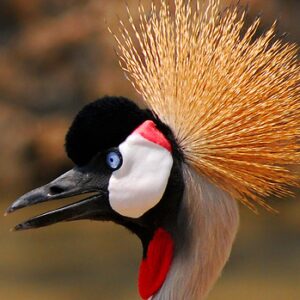
Healthy wetlands: people and cranes in Uganda
Dr. Adalbert Aine-omucunguzi, International Crane Foundation/Endangered Wildlife Trust Partnership, adalberta@ewt.org.za
Kathryn Lloyd, Margaret Pyke Trust, kathryn@margaretpyke.org
The wetlands of Rukiga in south-west Uganda are home to Uganda’s National Bird, the Grey Crowned Crane, and they are vital to their human neighbours, who rely on the wetlands for their food, water, and livelihoods. But increasing human activity is putting pressure on the wetlands and their cranes. A new project between the International Crane Foundation (ICF) / Endangered Wildlife Trust (EWT) Partnership, Rugarama Hospital, the Margaret Pyke Trust, and the London School of Hygiene & Tropical Medicine is working to respond to these pressures for the benefit of Rukiga’s wetlands, its cranes, and its people.
The population of Grey Crowned Cranes in East Africa has declined by over 80% in the last twenty-five years, largely due to increasing pressure on wetlands. As cranes are pushed into smaller and more marginal wetlands to care for their eggs and young, they are increasingly disturbed by people, domestic dogs, and livestock and are unable to breed successfully. Chicks raised on fragmented and degraded wetlands are easily captured for traditional medicine use, domestication within Africa, or exported to captive facilities at zoos and safari parks. The population of Grey Crowned Cranes in Uganda (a stronghold for the species) is now believed to consist of only 10,000-20,000 individuals.
As a first stage, the project team spent six months undertaking ethnographic research in Rukiga to properly understand the communities’ health, livelihood, social, and environmental challenges and views, and how they saw the connections between them. They reported a diversity of challenges, not least of which was inadequate healthcare provision, poor soil and water quality, and increasing sub-division and fragmentation of land on which to farm their crops.
For these reasons, project partners are implementing a Population, Health and Environment, or PHE, project that aims to empower communities to conserve their cranes and manage wetlands while also meeting the health and livelihood needs of Rukiga’s communities. The project research highlighted that the people of Rukiga District wanted better health services, including family planning, to promote strong and sustainable families. The project also keeps women involved in local livelihood activities to support their families and reduce pressure on local natural resources, benefiting people, cranes, and the wetlands we all depend on.
Population Health and Environment, or PHE, is a conservation model defined by the Conservation Measures Partnership as “a multi-sectoral partnership approach to biodiversity conservation, human health, and sustainable livelihoods. PHE approaches are developed inclusively and equitably in response to local situations and the expressed needs of the people most closely linked to biodiversity conservation. PHE is intended to improve human health, particularly reproductive health, while empowering communities to achieve sustainable livelihoods, manage natural resources, conserve biodiversity, and maintain ecosystem services.”
Family planning allows couples and individuals to plan if and when to have children and how many. Making our own decisions about our health, bodies, and family size is a fundamental human right. But there remain many parts of the world where exercising this right is much more challenging due to barriers to family planning. One such place is Rukiga, where, prior to the launch of this project, accessing family planning was largely impossible due to the scarcity of local healthcare providers and other local challenges.
As those in the health sector know all too well, “healthy timing and spacing of pregnancy” is critical to improving health outcomes for women and infants. For instance, becoming pregnant too soon after a previous pregnancy puts mothers and their newborns at a higher risk of illness and even death. As well as the health impacts of not being able to choose if and when to have children, unintended pregnancies can lead to women withdrawing from the livelihood activities critical to supporting their families. The ethnographic research highlighted that the people of Rukiga District want better health services, including family planning, and that one of the reasons is because larger families place further pressures on them as parents at home and in the longer term, on the finite amount of agricultural land to sub-divide among children
Given that the people of Rukiga understand the connections between their own health and that of their local environment and their desire for adequate health services, the ICF/EWT Partnership’s habitat restoration, alternative and sustainable livelihood interventions, and crane monitoring actions are integrated with the work of the Margaret Pyke Trust and Rugarama Hospital, to ensure the people of Rukiga receive the health services they want and need. Outreach clinics are now providing health services, clinicians are being trained to provide better services, and “service improvement” measures are being implemented.
The project team engages community members in various ways to raise awareness about wetland and crane conservation, sustainable livelihoods, and family planning. For instance, in the same session, the ICF/EWT conservation experts and Rugarama Hospital nurses raise awareness about the importance of wetlands for health, livelihoods, and cranes, and the benefits of family planning. This integrated approach means that men and women hear messages that they might not have heard before. This approach has wide-reaching benefits as frequently in Rukiga; men stop their female family members from using family planning services as they hold myths and misconceptions, such as family planning causes women to be promiscuous or causes cancer. Similarly, even though both men and women are involved in livelihoods, men are more likely to attend livelihood training, meaning that women often miss these important messages.
Community members themselves are also raising awareness about sustainable farming techniques, sound waste disposal methods, and healthcare. Leading this approach are the Conservation and Health Mobilizers, volunteers who engage their neighbours with messages around crane and wetland conservation and healthcare, in addition to monitoring cranes and reporting crane incidents, such as poisoning and capture, monitoring wetland water quality, and referring people for healthcare services.
Community members themselves are also raising awareness about sustainable farming techniques, sound waste disposal methods, and healthcare. Leading this approach are the Conservation and Health Mobilizers, volunteers who engage their neighbours with messages around crane and wetland conservation and healthcare, in addition to monitoring cranes and reporting crane incidents, such as poisoning and capture, monitoring wetland water quality, and referring people for healthcare services.
Project interventions include activities designed to increase community capacity for sustainable land use planning and management, such as soil and water conservation, to meet food security and conservation objectives. These interventions aim to prevent soil erosion and restore the soil fertility and productivity of hillslopes exhausted through unsustainable farming practices. This intervention aims to reduce the expansion of agriculture into wetlands.
The project’s alternative sustainable livelihood provision enables communities to generate additional income to meet their families’ needs. Community members selected the livelihoods they wanted, and ICF/EWT provided them with materials, training, and mentoring to benefit their income generation and access to local markets.
By integrating actions across multiple sectors, PHE can reach more people linked to biodiversity outcomes, engage more men in reproductive health, and more women in livelihood and natural resource management. PHE can, ultimately, achieve more significant and longer-lasting conservation outcomes than would likely occur without integration. There is a further benefit of PHE, which the project team already sees. It is known as the “goodwill effect”. The ethnographic research highlighted the challenges that the people of Rukiga see in their everyday lives, and health services were a key priority. By listening to the community, ICF/EWT has built a partnership with the deeply respected local hospital. In the minds of the community, ICF/EWT is now associated with Rugarama Hospital and the provision of healthcare services. Conservation messages are broadcast at Rugarama Hospital’s health centres and by Rugarama Hospital’s staff. The people of Rukiga see that ICF/EWT cares about them and their health and wellbeing, not only cranes and wetlands. That can only be a good thing in a project so deeply embedded within the community.
LATEST STORIES



