LEAVING A LEGACY FOR LIFE – Remembering Melanie Kwan
[/vc_column_text][vc_column_text]On 2 May three years ago, Melanie Kwan passed on but made sure that the EWT was included in her will. Her nephew Jayden, aged 12, wrote these wonderful words of tribute to Melanie.
“Melanie always loved animals and saving them! She had cancer but that did not stop her from loving animals. She always appreciated animals just the way they were, and not the way she wanted them to be. Every week she would go to the animal shelter and take a few hours out of her day to help them even though she was not well. She loved going to the Kruger National Park and the Kgalagadi Transfrontier Park when she was well enough to go. She was brave and independent and her very last trip to the Kgalagadi Transfrontier Park was on her own.
When the time came to write down her will, Melanie decided to donate everything for the love of animals and dogs. She chose the EWT because she wanted to forever take care of animals in the wild even though she knew she could not do that herself. The money will help those animals who are always being killed. I want my own children one day to be able to see those animals that God created.
We love you Aunty Melanie and appreciate all the time and effort and money that you put into animals. Thank you Aunty Melanie!”
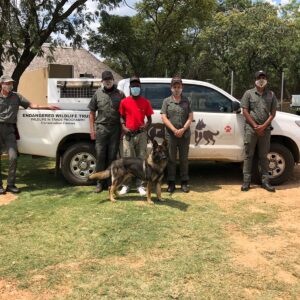
So far, we have deployed two tracking dogs in reserves and will soon be deploying a further four, including both tracking and detection dogs. We have also supported the full training of two new handlers and partial training for a third handler through our relationship with Genesis K9 Group. Furthermore, we provide ongoing support to these deployed dogs and the handlers who have recently completed their training to reinforce what they have learned.
This project is supported by IUCN Save Our Species and co-funded by the European Union. The contents of this publication are the sole responsibility of the Endangered Wildlife Trust and do not necessarily reflect the views of IUCN or the European Union.
LATEST STORIES
Thanks to this grant, the EWT supports seven reserves that have many ecologically and economically important species threatened by poaching. We are taking a three-pronged approach that includes deploying freshly trained young Conservation Canines (trained in detection or tracking), training dog handlers who will be responsible for working with and looking after these dogs and supporting these dog-handler teams in these reserves to ensure they have what they need to work effectively.
Black Rhino (Diceros bicornis) in the Eastern Cape, South Africa. The Black Rhino is threatened by the illegal trade in rhino horn products. Photo credit: the african eye
The reserves we are assisting suffered income losses during the COVID-19 pandemic due to tourist travel bans, and we aim to support them through these hard economic times. Many reserves at risk of poaching use a variety of approaches to combat it, with anti-poaching field rangers commonly the first line of defence. Certified dog-handler teams can provide invaluable support to these teams on the ground in several ways. Our dogs either track poacher incursion routes within a reserve or provide a quick and reliable method for screening vehicles for concealed firearms or wildlife contraband.
So far, we have deployed two tracking dogs in reserves and will soon be deploying a further four, including both tracking and detection dogs. We have also supported the full training of two new handlers and partial training for a third handler through our relationship with Genesis K9 Group. Furthermore, we provide ongoing support to these deployed dogs and the handlers who have recently completed their training to reinforce what they have learned.
Conservation Canine Nala, a three-year old Belgian Malinois recently deployed in the Eastern Cape. Nala is a tracking dog and works with anti-poaching teams to protect threatened species.
This project is supported by IUCN Save Our Species and co-funded by the European Union. The contents of this publication are the sole responsibility of the Endangered Wildlife Trust and do not necessarily reflect the views of IUCN or the European Union.
LATEST STORIES
Conservation Canines to Save our Species from illegal wildlife trade
Dr Andrew Taylor, EWT’s Wildlife in Trade Programme Manager, andrewt@ewt.org.za
South Africa is blessed with exceptional wildlife and landscapes that attract tourists and boost our economy. Some of our country’s biggest drawcards, such as White and Black rhinos (which are Near Threatened and Critically Endangered, respectively on the IUCN Red List of Threatened Species), the African Savannah Elephant (Endangered), and the African Lion (Vulnerable), play vital roles in our ecosystems while also bringing in valuable ecotourism income. However, these species are threatened by the global illegal wildlife trade (IWT), which is a major cause of population declines in some countries. With funding from the IUCN Save Our Species Rapid Action Grant and the European Union, the Endangered Wildlife Trust (EWT) aims to reduce IWT by preventing wildlife poaching. We use our Conservation Canines to achieve this by training and deploying them to detect wildlife products and track poachers.
Newly qualified dog handler trained at Genesis K9 Newly qualified dog handler trained to reduce poaching as part of the project funded by the IUCN Save Our Species Rapid Action Grant and the European Union.
Thanks to this grant, the EWT supports seven reserves that have many ecologically and economically important species threatened by poaching. We are taking a three-pronged approach that includes deploying freshly trained young Conservation Canines (trained in detection or tracking), training dog handlers who will be responsible for working with and looking after these dogs and supporting these dog-handler teams in these reserves to ensure they have what they need to work effectively.
Black Rhino (Diceros bicornis) in the Eastern Cape, South Africa. The Black Rhino is threatened by the illegal trade in rhino horn products. Photo credit: the african eye
The reserves we are assisting suffered income losses during the COVID-19 pandemic due to tourist travel bans, and we aim to support them through these hard economic times. Many reserves at risk of poaching use a variety of approaches to combat it, with anti-poaching field rangers commonly the first line of defence. Certified dog-handler teams can provide invaluable support to these teams on the ground in several ways. Our dogs either track poacher incursion routes within a reserve or provide a quick and reliable method for screening vehicles for concealed firearms or wildlife contraband.
So far, we have deployed two tracking dogs in reserves and will soon be deploying a further four, including both tracking and detection dogs. We have also supported the full training of two new handlers and partial training for a third handler through our relationship with Genesis K9 Group. Furthermore, we provide ongoing support to these deployed dogs and the handlers who have recently completed their training to reinforce what they have learned.
Conservation Canine Nala, a three-year old Belgian Malinois recently deployed in the Eastern Cape. Nala is a tracking dog and works with anti-poaching teams to protect threatened species.
This project is supported by IUCN Save Our Species and co-funded by the European Union. The contents of this publication are the sole responsibility of the Endangered Wildlife Trust and do not necessarily reflect the views of IUCN or the European Union.
Provinces challenged to manage their land more sustainably
By Bonnie Schumann, EWT Drylands Conservation Programme, bonnies@ewt.org.za
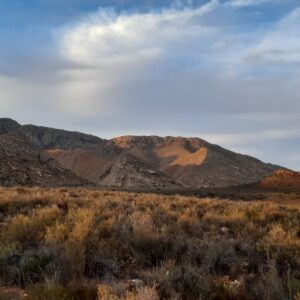
The UNDP-GEF5 Sustainable Land Management (SLM) Project and the Endangered Wildlife Trust (EWT) recently brought Engineering Technicians and LandCare officials together for a unique SLM challenge. The officials, all experts in soil erosion control, represented four provincial departments of agriculture from the Western-, Eastern- and Northern Cape, and the Free State. The challenge was hosted by the Samara Private Game Reserve near Graaff Reinet, in the Mountain Zebra Camdeboo Protected Environment (MZCPE) in the Eastern Cape, from 7–10 February 2022.
The four teams were tasked to assess three sites on Samara with varying severities of soil erosion that are typically found in the region. The teams were challenged to develop practical, cost-effective and replicable technologies and approaches to addressing the soil erosion issues. The degradation is primarily caused by historical grazing practices that were not ideal and is compounded by continuous grazing by game. What makes veld regeneration in this landscape particularly challenging is the topography in the area. The catchments are large and consist of mostly steep slopes, which result in high volume, very erosive runoff directed towards the lower slopes, where soils are vulnerable to erosion. The protracted drought experienced in the Karoo over the last approximately eight years resulted in a loss of vegetation cover, leaving soils exposed and vulnerable to both wind and water erosion.
The spirit between the provincial teams was positive, open, and cooperative, with high levels of camaraderie. Teams shared survey results, advice, and suggestions. Training of younger technicians formed an integral component of this knowledge sharing initiative. The collective institutional experience of the team was around 400 years, which is really astonishing considering there were only 14 participants. The challenge was concluded with a knowledge-sharing workshop and seminar. Participants on the last day included the Samara Management Team, neighbouring farmers, and two senior government officials from the Western- and Northern Cape responsible for Sustainable Land Management. The provincial teams presented their suggested soil conservation plans, and some lively discussions followed. In summary, all the participants agreed that this wealth of technical knowledge is critically important for SLM and soil conservation in the drylands. We need to ensure that this hard-earned experience and “institutional” knowledge needs to be shared with the next generation of soil technicians.
The next step will entail compiling these case studies and sharing the information with all the stakeholders in the MZCPE and throughout the drylands to encourage soil conservation action. Watch this space!
This initiative formed part of the United Nations Development Programme’s GEF 5 SLM Project – Small Grants initiative. The EWT, through their Karoo Forever SLM project, is responsible for the implementation of small grants in the Karoo landscape.
Science Snippets: Crane populations bounce back after concerted conservation effort in KwaZulu-Natal, South Africa
Erin Adams, Tamsyn Galloway-Griesel, and Lizanne Roxburgh, EWT Science and Planning Unit, erina@ewt.org.za
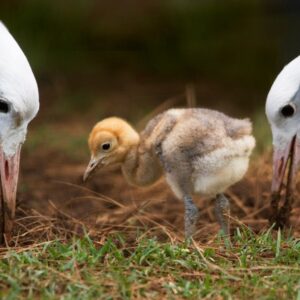
South Africa is home to three of the four African Crane species. These include South Africa’s national bird, the Blue Crane (listed as Vulnerable on the IUCN Red List), the Grey-crowned Crane (Endangered) and the Wattled Crane (Vulnerable). The three crane species converge within the KwaZulu-Natal province of South Africa (see map), and crane populations declined severely in this region in the 1980s. And as a result, there have since been considerable conservation efforts focused there. Annual aerial surveys have been conducted in this region by the Endangered Wildlife Trust – International Crane Foundation partnership and Ezemvelo KZN Wildlife for many years to monitor crane population sizes. In a recent publication* co-authored by EWT scientists, the results of the long-term aerial surveys were analysed in relation to the conservation initiatives. As cranes’ deaths due to collisions and electrocutions with powerlines are common, particularly amongst young birds, markers were placed on powerlines in high-risk areas to improve visibility and reduce crane mortalities. Another major threat to cranes is habitat loss, and so protecting crane habitats has been one of the major interventions in KwaZulu-Natal. This was achieved by declaring new protected areas, getting willing landowners onboard to maintain crane habitats on their property and involving the general public to become “crane custodians”, who would report any powerline collisions and any crane nest disturbances they may come across. The extent of these initiatives was monitored over 15 years (from 2003 to 2018), along with monitoring crane population numbers with standardised annual aerial surveys to determine whether they increased due to these initiatives.
Within KZN, all three crane populations have slowly but steadily increased in size since 2003. These numbers are directly correlated with the conservation initiatives in the region. The protection of crane habitats has facilitated the return of cranes to previously disturbed areas but are now protected and maintained due to the work of crane custodians. A reduction in crane mortalities due to the increased visibility of marked powerlines has also been recorded.The authors concluded that the conservation initiatives to conserve cranes in KZN have effectively increased the population numbers of these threatened species. It was not possible to determine which conservation initiative, in particular, was the most effective, but rather concluded that a combination of all of these interventions has allowed for an increase in the crane population sizes, and led to this conservation success story.
*Galloway-Griesel, T., Roxburgh, L., Smith, T., McCann, K., Coverdale, B., Craigie, J., Pretorius, M., Nicholson, S., Michael, M., Durgapersad, K., & Chetty, K. (2022). Evidence of the effectiveness of conservation interventions from long-term aerial monitoring of three crane species in KwaZulu-Natal, South Africa. Bird Conservation International, 1-16.
The cat’s out of the bag – understanding South Africa’s captive lion sector
Christina Hiller, EWT Wildlife in Trade Programme Consultant, tinah@ewt.org.za
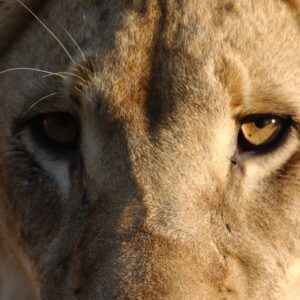
South Africa is currently the only country with an extensive captive lion sector where lions in captivity significantly outnumber wild and free-roaming animals. There is an ongoing debate around the practices of keeping lions for commercial use, and captive lion hunting, the lion part trade, and human interaction such as cub-petting have been heavily criticised. However, there was a need to establish a detailed understanding of South Africa’s captive lion sector and evaluate its environmental and socio-economic impacts.
The Endangered Wildlife Trust initiated a study to close this information gap by developing an improved understanding of the sector and the trade of captive lion products and services. The research aimed to supply the South African government and the local CITES (Convention on International Trade in Endangered Species of Wild Fauna and Flora) authority with sound information to inform future policy decisions and measures to adequately address the sector’s influences on environmental, economic, and social outcomes and developments.
We conducted 51 semi-structured interviews and verified and supplemented the findings through five focus-group sessions with experts from related fields and desk review activities. Interview parties consisted of 31 captive lion facilities in four provinces, i.e., the Free State, North West, Limpopo and Gauteng and 20 key players in the sector. These actors included professional hunters of captive lions, taxidermists, lion part traders, live lion traders, veterinarians, scientists, non-governmental organisations (NGOs), and provincial environmental management inspectors (EMIs). In addition, we collected quantitative data on captive lion facilities from the South African provinces where the interviews took place to further augment the research findings.The research report describes how the sector is structured and functioning amidst influencing factors such as mainstream and social media pressure, regulatory conditions, and conflicting ideas about the meaning of sustainability and sustainable use regarding an iconic species like the lion.
We found that captive lion owners’ underlying motives and deep-seated attitudes are behind the uniqueness of every captive lion facility’s (business) model. A combination of eleven different motives underpinned the decision to establish a captive lion facility. Only four of those were income-related. It was found that facilities were seldom established primarily for financial gain, suggesting the importance of personal drivers other than income generation and profit. Furthermore, our research revealed five distinctly different sector clusters with corresponding supply chain models and typical breeding systems. Findings suggested that facilities do not specifically breed lions for their bones, so this was not considered a separate cluster. The lion bone trade rather forms part of the hunting tourism cluster.
Cluster 1: No lion revenue cluster
Cluster 2: Sanctuary cluster
Cluster 3: Guest attraction cluster
Cluster 4: Live export cluster
Cluster 5: Hunting tourism cluster (incorporating the lion part trade)
Legal trade in each cluster was organised along a distinct supply chain (except for cluster 1 without lion-related trade activities). All supply chains in the sector are separate, and research did not show an organised supply chain wherein captive lions were hunted after being used for human-lion interactions. However, a shared supply chain segment for selling lions to other South African facilities combined with a lack of traceability makes it feasible to move captive lions between clusters, especially between the guest attraction, live export, and hunting tourism clusters. It was clear that there was little transparency in the sector because of the non-existent, inefficient, or inconsistent collection, storage, and sharing of information about facilities and their trade activities.
The research data suggest that reasonable and tolerable management practices fall into five domains: financial health, legality, conservation, animal welfare, and social responsibility. Moreover, two specific areas emerged as seemingly insurmountable obstacles for managing captive lion facilities. On the one hand, the data suggest that managing a captive lion facility and animal rights are mutually exclusive. On the other hand, the interviews revealed that transformation is not happening, which is why the facilities are deemed not acceptable.
The insights of this research will support more robust decisions about the sector. We conclude that it will be critical to follow a nuanced approach to shape the sector’s future, mindful of the five clusters. Simultaneously, immediate measures ought to be taken to prevent undesired loss or harm until a clear future scenario for the sector materialises.
The report will be released soon – keep an eye on our socials and check back here in a few days for the link.
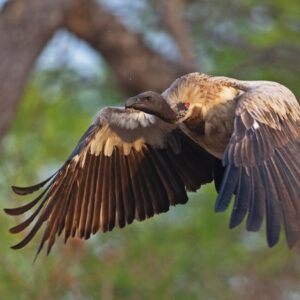
Most populations of vultures in Africa are declining rapidly, and conservationists are calling this an ‘African Vulture Crisis’1. There has been an increasing focus on the movements of vultures using tracking devices, but so far, there are very few continent-wide studies 2. To address this, a group of 35 researchers pooled their tracking data from 163 vultures to look at how vulture movements vary across Africa and how vultures are using protected areas in a new study published in Biological Conservation 3. The researchers found that breeding adult vultures had smaller ranges than non-breeding adults and immature vultures. Adult Rüppell’s Vultures had range sizes larger than 75,000 km2, while Cape Vultures and White-backed Vultures had range sizes of up to 36,000 km2. But the overlap of vultures’ ranges with protected areas was low, which poses significant challenges for conserving African vultures, particularly since the main threat to vultures, the intentional poisoning of carcasses, is widespread, and one poisoning event can kill large numbers of vultures because most species of vultures are social feeders. Successful conservation of vultures relies on reducing wildlife poisoning over vast areas, both inside and outside of protected areas, by tackling the drivers of poisoning. These drivers include human-wildlife conflict, trade in vulture parts4, and elephant poaching 5. For African vultures to survive and thrive, we need better law enforcement and anti-poaching, reduced human-wildlife conflict, and prevention of the illegal trade in vulture parts. Studies using tracked vultures should help prioritise where these interventions are needed most. Full article available here: https://doi.org/10.1016/j.biocon.2022.109516
References:
1 Ogada D. et al. (2016). Another continental vulture crisis: Africa’s vultures collapsing toward extinction. Conservation Letters 9: 89-97. https://doi.org/10.1111/conl.12182
2 Thompson L.J. et al. (2020). Variation in monthly sizes of home‐ranges of Hooded Vultures Necrosyrtes monachus in western, eastern and southern Africa. Ibis 162: 1324-1338. https://doi.org/10.1111/ibi.12836
3 Kane A. et al. (2022) Understanding continent-wide variation in vulture ranging behavior to assess feasibility of Vulture Safe Zones in Africa: Challenges and possibilities. Biological Conservation 268: 109516. https://doi.org/10.1016/j.biocon.2022.109516
4 Mashele N.M. et al. (2021). Uses of vultures in traditional medicines in the Kruger to Canyons Biosphere Region, South Africa. Journal of Raptor Research 55: 328-339. https://doi.org/10.3356/JRR-20-36
5 Mateo-Tomás P. and López-Bao J.V. (2020). Poisoning poached megafauna can boost trade in African vultures. Biological Conservation 241: 108389. https://doi.org/10.1016/j.biocon.2019.108389