
In the field
Searching for rare, threatened beetles on high-altitude mountain peaks
By Dr Samantha Theron, Conservation Researcher in the Drylands Strategic Conservation Landscape
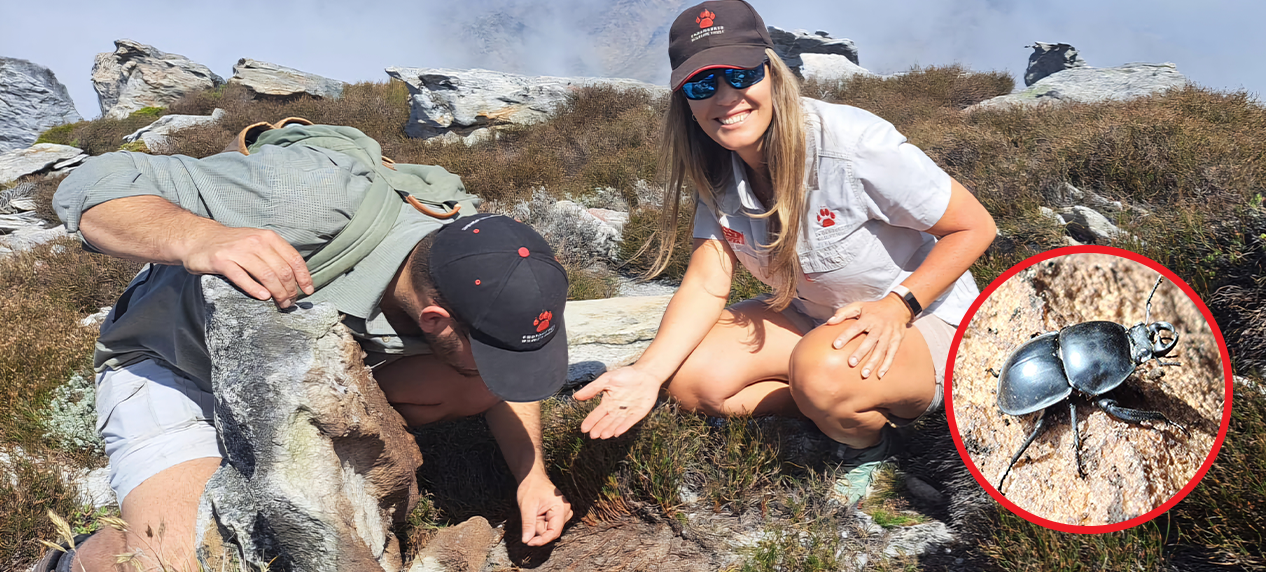
Boarding a helicopter to search for a beetle rarely seen by anyone besides keen mountaineers, has proven helpful in determining whether two species of these extraordinary insects continue to persist in the mountains of the Western Cape.
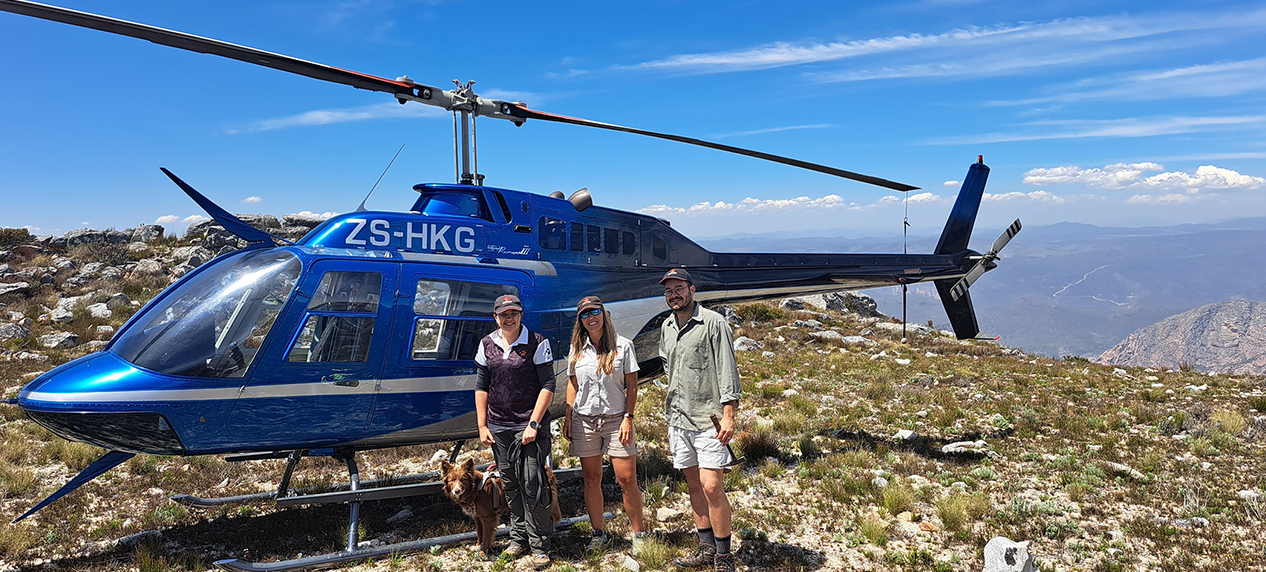
Last year (2025), the EWT’s Drylands Conservation team, including myself, field officers Handré Basson and Esther Mathew and scent detection dog, Delta, took to several mountain peaks in search of two species of Cape Stag Beetles (Colophon eastmani and C. nagaii) that have become seriously threatened, not only by climate change and wildfires, but also by illegal collection. We undertook numerous field surveys, including two helicopter-assisted survey expeditions, in which pilot Jaco Vermeulen flew us to six previously unsurveyed and otherwise inaccessible mountain peaks, to search for these beetles.
Our survey had four objectives. The first was to conduct field surveys to gain a better understanding of the species’ distribution and habitat condition. The second, to ensure habitat protection for both species, which included engaging the relevant landowners to establish legally-binding protected areas for the beetles. Thirdly, to ensure steps are taken to protect these species, and that conservation management plans are drawn up and implemented in collaboration with the landowners. The fourth aim was to update the known distribution of the two Colophon species and to conduct IUCN Red List threat assessments for both species.
Conserving these unique insects and their habitat is necessary to ensure their continued survival, and also to support further research on the impacts of climate change on species across the Karoo and Fynbos biomes. Cape Stag Beetles can act as flagship species for high-altitude ecosystems, in which certain species, like these flightless beetles, have been forced to migrate to higher ground in order to survive. With the ongoing effects of climate change, these mountaintop habitats, or “islands in the sky”, could be further reduced, thereby increasing the risk of extinction for these high-altitude specialists.
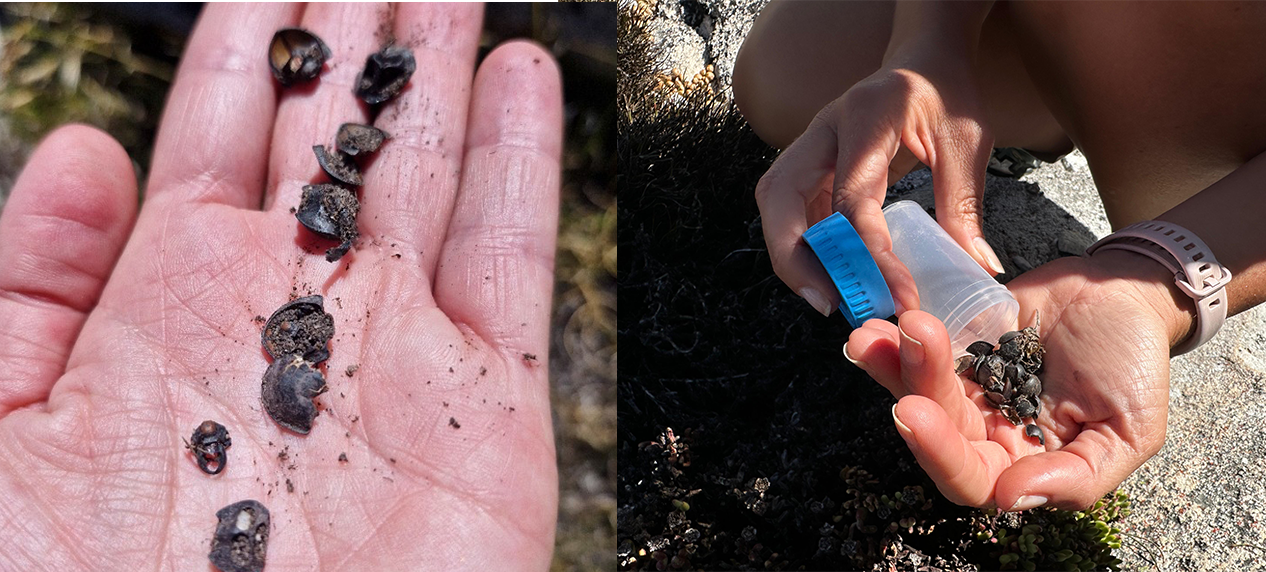
Cape Stag Beetle specimen fragments
The surveys
The EWT team was joined by three landowners on the first of the two helicopter-assisted expeditions last year, in which we surveyed three of our six target peaks.
The habitat on the first peak was found to be unsuitable for Colophon, and we quickly moved on to the second peak, where we found evidence of the beetles’ presence in the form of beetle fragments. Because it was only the start of the beetles’ active season, we presumed that the fragments we found were the remains of the previous year’s beetles. Furthermore, a recent intense wildfire, may have had a severely negative impact on the beetle population on the peak.
At the third peak, which is the highest of the six, we immediately started finding lots of beetle fragments – evidence of a healthy population. We found fragments of roughly 40 individual beetles, and after a few hours of searching, we found two live beetles! We noted the vegetation cover, which was healthier and higher than the previous sites, indicating that the fire had not reached this peak.
During the second helicopter-assisted expedition, we surveyed three peaks, finding the habitat on one unsuitable for the beetles. A survey of the second peak revealed indications that a fire had ravaged this peak in the last year or two. Only a few fragments of roughly four individual beetles were found during our three-hour survey. The beetles need damp soil to survive, and most of this peak was dry. The heat was also unbearable at times, and with little cover on the exposed mountaintop, we found ourselves seeking shelter from the heat in the shade of the helicopter.
Moving to the last, and second-highest of the six peaks, which had also been affected by a recent fire, we found both old- and fresh fragments of beetles on the peak. Unfortunately, the habitat at this location was noticeably disturbed, with pieces of wood, metal and wires lying around. There also appeared to have been oil spills. In total, we found fragments of roughly 18 individual beetles on this peak.
Our time on the mountain peaks delivered a number of other interesting finds, including a Skolly Butterfly (Thestor sp.), Hex Protea Chafer (Trichostetha dukei), Tradouw Mountain Toadlet (Capensibufo tradouwi), Creeper Scorpion (Opsitacanthus diremptus), the unusual Arid Rainspider (Paraplystes sp.), Male Firefly (Lampyris sp.) and the Conbush Rainspider (Palystes kreutzmanni). Several lizard and scorpion species were also recorded.
In addition, Colophon fragments were found on another peak we surveyed on foot, roughly midway between the two species’ known distributions. The species identity of these fragments is unknown, and further surveys will be required to collect genetic material to determine the identity of this population.
In summary…
This project revealed multiple new sites for Colophon eastmani, and we were able to update the distribution of the species and conduct a threat assessment for the IUCN Red List, listing this species as Endangered. Conversely, for Colophon nagaii we found nothing but a few beetle remains at the historical site (type locality), confirming that the species is only known from a single location, and may already be extinct. It is possible that a fire which swept over the peak in 2017 may have wiped out this population. We have drafted the first IUCN Red List assessment for Colophon nagaii, listing it as Critically Endangered.
The EWT would like to thank the Mohamed Bin Zayed Species Conservation Fund, Mapula Trust, Ross Air and the landowners for their support in this project. Using a helicopter has proven to be a game-changer for this type of survey. Without it, we would not have been able to take our scent detection dog, Delta, up to these sites, nor survey so many sites in one day. Two of the landowners have indicated their intention to declare formal protection of Cape Stag Beetles on their properties, and we will be initiating these processes in due course.
Despite increased threats to their survival, Cape Stag Beetles continue to persist. As soil dwellers, they are able, in some instances, to survive devastating fires, but altered fire regimes, poaching by insect collectors, and habitat reduction resulting from climate change, continue to pose threats to their existence. This year we are continuing our field surveys and associated research to assess the impacts of altered fire regimes and other threats on these insects, and to implement further long-term conservation measures to protect the species and their habitats.