
Science Snippets:
Camera Traps Reveal a Hidden Predator in Zinave
By: Erin Adams and Lizanne Roxburgh
Large carnivores have disappeared from much of their natural range around the world, and Mozambique has been no exception. Decades of civil conflict, drought, and limited management capacity led to the loss of many large mammals in several of the country’s national parks and wildlife areas. Zinave National Park is one such place, now undergoing an encouraging recovery thanks to strengthened management and dedicated restoration efforts.
Since 2015, more than 2,000 herbivores have been reintroduced to the park. Predator reintroductions followed: four Spotted Hyaenas were released in 2020, and two Leopards in 2021. In late 2021, a Lion was spotted that had not been reintroduced, signalling that carnivores might be returning naturally. By 2023, three more Lions and an additional Leopard were recorded in the park. As of 2025, an estimated seven Lions reside in Zinave.
Up until 2023, however, park staff and researchers did not know which other species might have dispersed into the area on their own. To answer this question, they established a long-term, permanent grid of camera traps across the park. Additional cameras were placed on carcasses to detect scavenging species. After a year, the findings were published in a study co‑authored by EWT scientists.*
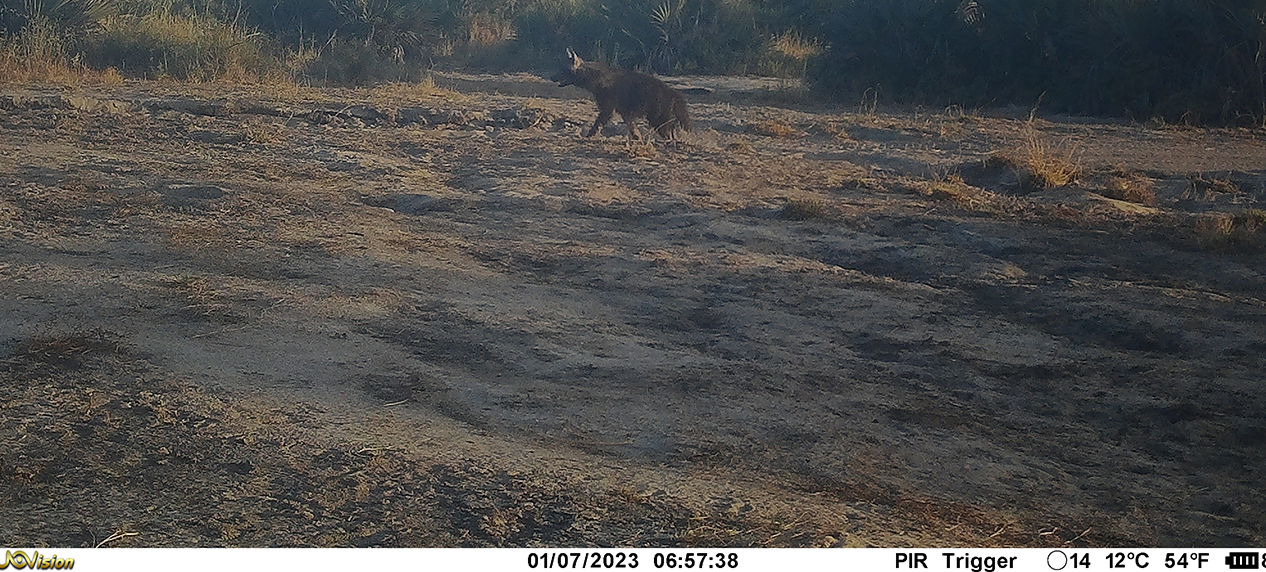
When the images were analysed, the team documented 37 different species, including 11 scavenging mammals and five scavenging bird species. Among these observations was a particularly surprising discovery: a Brown Hyaena. This marks the first recorded sighting of a Brown Hyaena in Zinave National Park, an area previously thought to lie outside the species’ natural distribution range. Brown Hyaenas are classified as Near Threatened on the IUCN Red List, with a global population estimated at fewer than 10,000 individuals. Their population size in Mozambique remains unknown.
Studies like this are vital for understanding how biodiversity shifts over time and for monitoring recovery or decline in populations. Permanent camera trap grids make it possible to detect elusive and rarely seen species, track changes in species’ ranges, and generate reliable, long-term data. This information helps park management make informed decisions and supports the development of effective conservation strategies.
*Abrao, O. J., Sievert, O., Roodbol, M., Roxburgh, L., Van Lent, B., Abacar, A., da Conceição, A. G., Chinder, G., Nganhane, I. D. N., & Nicholson, S. K. (2025). A Novel Record of Brown Hyaena (Parahyaena brunnea) in Zinave National Park, Mozambique. Ecology and Evolution, 15(11), e72473. https://doi.org/10.1002/ece3.72473