From Red Lists to real action: How science shapes conservation
By Dr Tamanna Patel and Dr Lizanne Roxburgh, Conservation Planning and Science Unit
Conservation does not happen in isolation. Every decision about which species to protect, where to invest limited resources, and how to balance development with biodiversity rests on one critical foundation: evidence. When that evidence is outdated or incomplete, conservation action risks becoming ineffective, or worse, misdirected. In the face of an accelerating biodiversity crisis, acting on yesterday’s data can mean losing species forever.
This is why scientific assessments of species’ statuses, are not merely academic exercises, but essential tools for species survival. The IUCN Red List of Threatened Species remains the world’s most authoritative system for assessing extinction risk of animals, fungi, and plants at either a global, regional or a national scale. It classifies species into nine categories, from Least Concern to Extinct, using objective criteria. Beyond labels, Red List assessments provide vital information on threats, habitats, population trends, and conservation needs, shaping policy, land-use planning, environmental impact assessments, and research priorities.
While global assessments provide a big-picture view, conservation action happens locally. This is why national and regional Red Lists are also important. National assessments identify species at risk within a country’s borders, guiding conservation policy, informing development decisions, allocating resources, tracking progress on international biodiversity commitments, and raising public awareness.
But Red Lists are only as powerful as they are current. When assessments lag behind reality, conservation resources, already stretched thin, may fail to reach the species that need urgent intervention. In conservation, timing matters.
This is why the release of the revised 2025 Mammal Red List of South Africa, Eswatini, and Lesotho in mid-January is so significant. Coordinated by the Endangered Wildlife Trust (EWT) and the South African National Biodiversity Institute (SANBI), and informed by the knowledge of 150 mammal experts, the assessments reveal trends that demand attention from policymakers, researchers, and the public alike. They form part of a broader suite of National Red Lists, covering everything from birds and amphibians to spiders and freshwater fishes, which fed into the 2025 National Biodiversity Assessment launched by SANBI in December 2025 – demonstrating how Red Lists translate science into national planning.
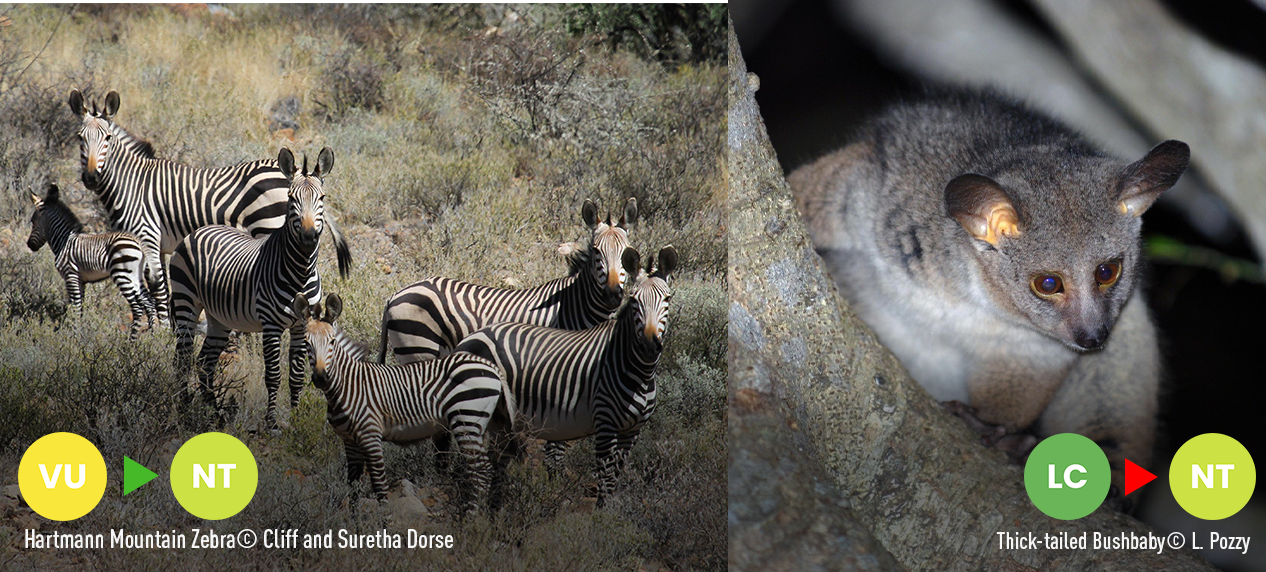
The findings are sobering. Of the 336 mammal species assessed, 20% are now threatened with extinction, while a further 12% are classified as Near Threatened, meaning that they are close to meeting the criteria for threatened, and should be monitored closely. Eleven species were uplisted to a higher risk category, signalling declining conservation status, while only three species showed sufficient improvement to be downlisted. The Thick-tailed Bushbaby, once considered secure, has been uplisted from Least Concern to Near Threatened as agriculture, urban expansion, infrastructure development, and climate change increasingly fragment its habitat. In contrast, Hartmann’s Mountain Zebra offers a rare conservation success story, having been downlisted from Vulnerable to Near Threatened thanks to a real increase in population numbers – clear evidence that well-directed conservation can deliver results.
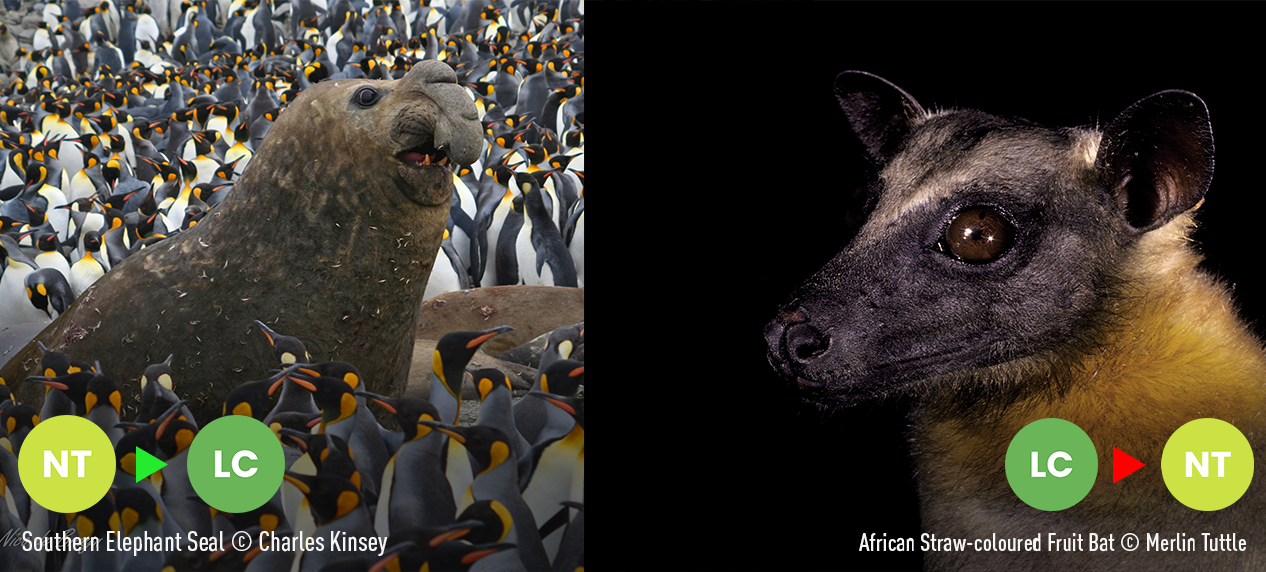
The region’s responsibility is particularly stark when it comes to endemic species. Sixty-seven mammal species occur nowhere else on Earth, and 42% of them are threatened with extinction. If these species are lost here, they are lost forever. Yet protection remains uneven: while around 76% of mammal species are considered well or moderately protected, nearly a quarter are poorly protected or not protected at all. Habitat loss from agriculture and urban expansion remains the dominant threat, compounded by climate change, extreme weather events, over-exploitation, and poaching.
Importantly, this Red List also marks a step forward in how we assess species. For the first time, genetic health and climate change vulnerability were incorporated into all mammal assessments. Climate modelling was conducted for species already flagged as climate-sensitive in the previous assessment, and genetic indicators were evaluated across all mammals. These advances are critical, but they also expose how much we still do not know. Without targeted research on climate vulnerability and stronger genetic data, conservation planning risks being reactive rather than proactive.
The most significant gap remains basic population data, particularly for small mammals and species within protected areas. Many species continue to be under-studied, limiting our understanding of population size, trends, and genetic diversity. Seven percent of assessed species were classified as Data Deficient, meaning that experts were unable to assign them a Red List status due to insufficient information. Dolphins and whales dominate this group, highlighting an urgent need for baseline surveys and long-term monitoring of these marine species.
The IUCN recommends reassessing species every five to ten years. South Africa’s mammal Red List, first published in 1986, revised in 2004, expanded regionally in 2016, and now updated in 2025, shows the value of this commitment. Each revision not only tracks declines and recoveries but also refines the questions we must ask next.
Red Lists do more than tell us which species are in trouble. They reveal where our knowledge is weakest, where research investment is most urgently needed, and where conservation action can make the biggest difference. In a world of limited resources and growing environmental pressures, evidence-based decision-making is not optional, it is the difference between recovery and irreversible loss.