Help protect Africa's 

Olifants River Survey Monitors Ecological Threats to the system

Olifants River Survey Monitors Ecological Threats to the system

In the Field

Olifants River Survey Monitors Ecological Threats to the system

Liam Taylor, field officer in the Birds of Prey Unit
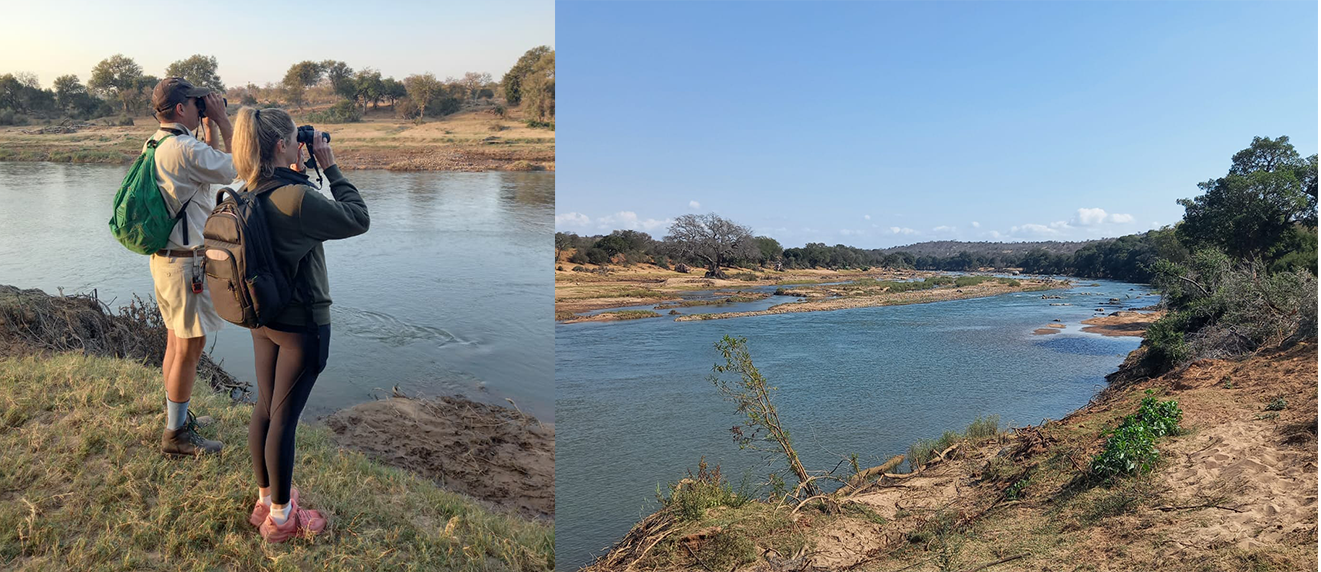
 

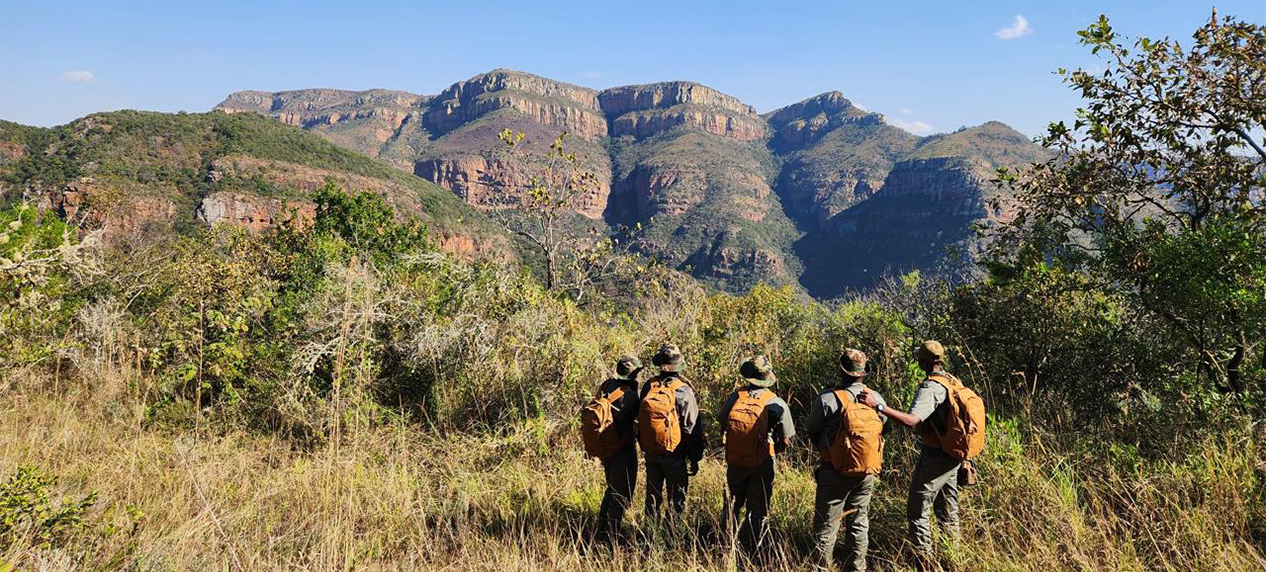
EWT researchers conducting an ecological survey along the Olifants River in the Lowveld

The Olifants River is one of the defining features of the Lowveld. Unfortunately, the last three decades brought with it extensive flood events that have had cataclysmic impacts on the river’s trees.

In addition, opposing drought impacts, flow regime changes from water abstraction and damming, and chemical and pesticide run-off from mining and agriculture, have all threatened the natural functioning of this system.

Recently, EWT researchers and field staff took part in an ongoing survey along the section of the Olifants River inside the Greater Balule Game Reserve region to monitor this vital habitat.

Organised by the EWT’s Birds of Prey Unit research and monitoring coordinator, Dr Lindy Thompson, the team included EWT project manager, Dr Darren Pietersen, field officer Liam Taylor, and Dr Carrie Hickman of the APNR Ground Hornbill Project, as well as numerous wardens and rangers from the various reserves along the river. The team was split into two, and each one walked over 50 km, on opposite banks, counting every single waterbird, crocodile and hippo they saw, allowing numbers and species to be compared to previous years. The trees were also scanned for both White-backed and Hooded Vulture nests, where incubating birds or chicks were recorded. This section is a major breeding stronghold for these Critically Endangered birds. These nests will be monitored until the chicks fledge in October. The search also included looking for the famous and elusive Pel’s Fishing Owl.

The impacts of the January 2026 mega-flood event were clear. Many trees and tracts of habitat were removed. The riparian forest is also classified as Endangered, making the losses extra worrisome. We made other additional ecological observations, including elephant herbivory on riparian trees, Pied Crow interactions with nests, and documented where human activity may jeopardise breeding success.

The survey did not have many challenges, but on one occasion, a pod of hippos came stampeding out of the bush back into the water, crashing through everything in their path. Fortunately, no researchers (or hippos!) were harmed, and we scored an exciting story to tell friends later around the braai.

These surveys are vital for long-term monitoring and identifying threats to ecology and Endangered species. Continued support for this work will help ensure that changes in the Olifants River system are detected early, that conservation responses are guided by reliable field data, and that this remarkable river can continue to sustain its wildlife. By maintaining regular monitoring and acting on what the river is telling us, we can help safeguard one of the Lowveld’s most important ecological areas.
A Race to Rescue Limpopo’s Vultures

A Race to Rescue Limpopo’s Vultures

In the Field

A Race to Rescue Limpopo’s Vultures

Dr Lindy Thompson, Birds of Prey Unit Research and Monitoring Coordinator


EWT Birds of Prey Unit releasing rehabilitated vultures on International Vulture Awareness Day

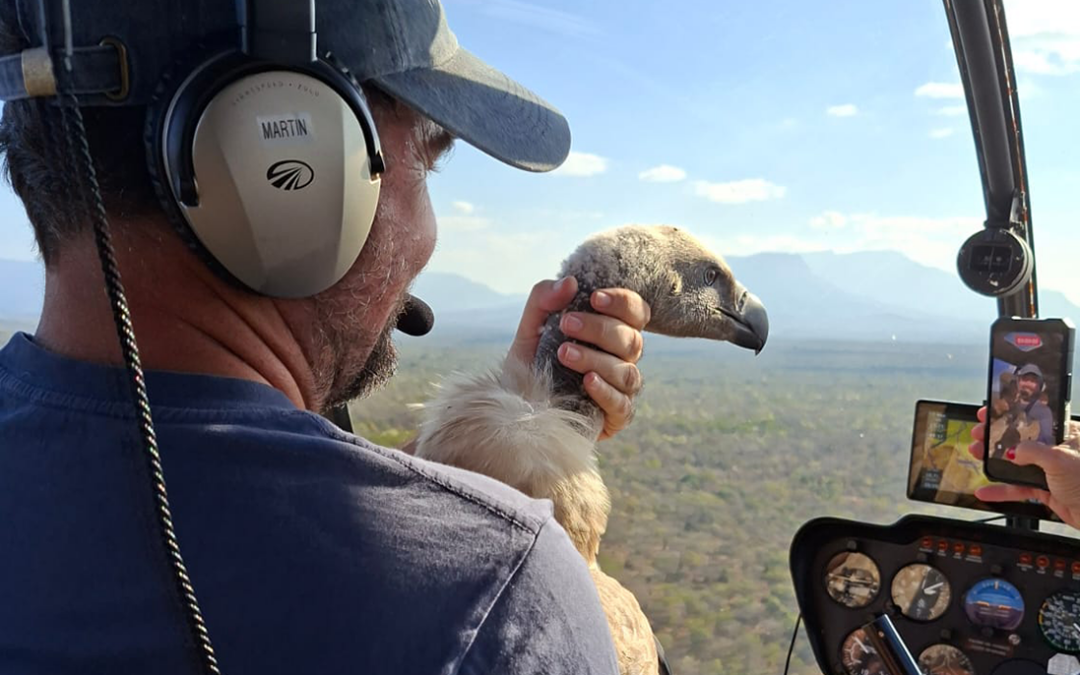
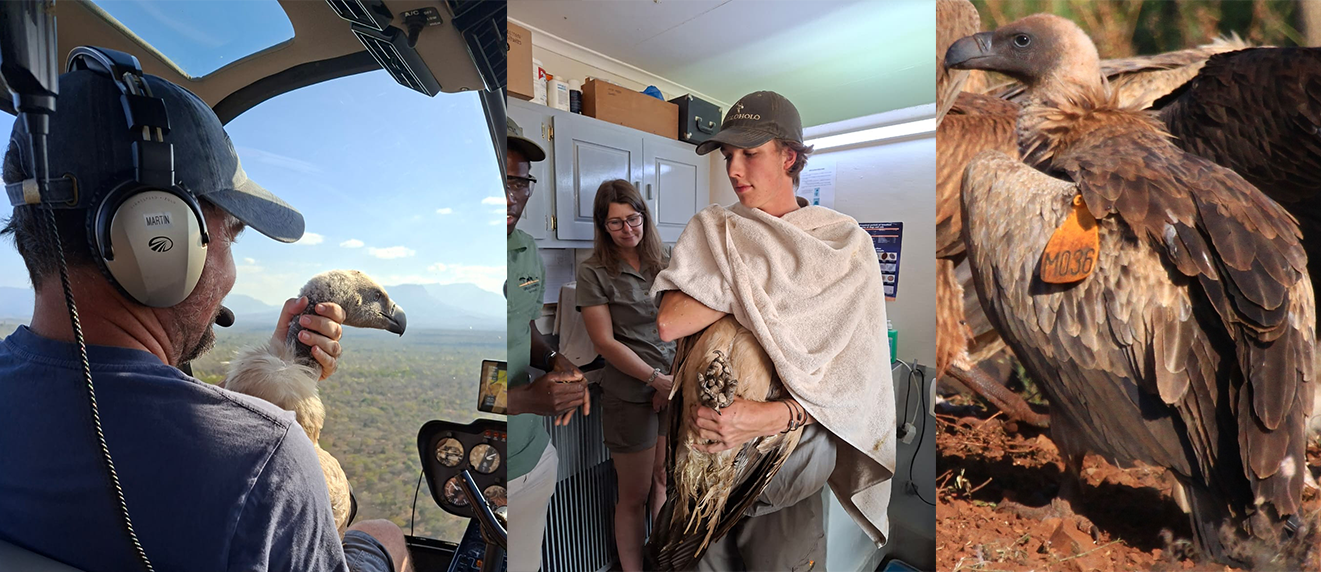
Left: A Cape Vulture being transported to Moholoholo Rehab Centre by helicopter. Center: Moholoholo clinic team treated the vultures.

On 28 August 2026, the EWT Birds of Prey Unit received an urgent notification that a number of vultures had been found unable to fly on a property in Limpopo.

With the assistance of the Hoedspruit Endangered Species Centre, these birds were quickly collected and transported to Moholoholo Wildlife Rehabilitation Centre.

Pilot Jana Meyer from Hope for Wildlife also joined the rescue effort, flying us in her helicopter to search the surrounding area for any other grounded vultures.

In total, 18 vultures were taken to Moholoholo, where they received first aid and expert care from the clinic team. Rehabilitating vultures is intensive work, requiring round-the-clock care during the first 48 hours while the birds are stabilised, until they are out of the woods. We have the greatest respect for the Moholoholo team, whose experience and dedication gave these birds the best possible chance of recovery. Sadly, one bird died on arrival and another died that night, but the remaining 16 recovered well and were ready to return to the wild about a week later.

The timing of their release could not have been more fitting: the 16 survivors (three Critically Endangered Hooded Vultures, 12 Critically Endangered White-backed Vultures, and one Vulnerable Cape Vulture)  were released at Moholoholo on 5 September – International Vulture Awareness Day.

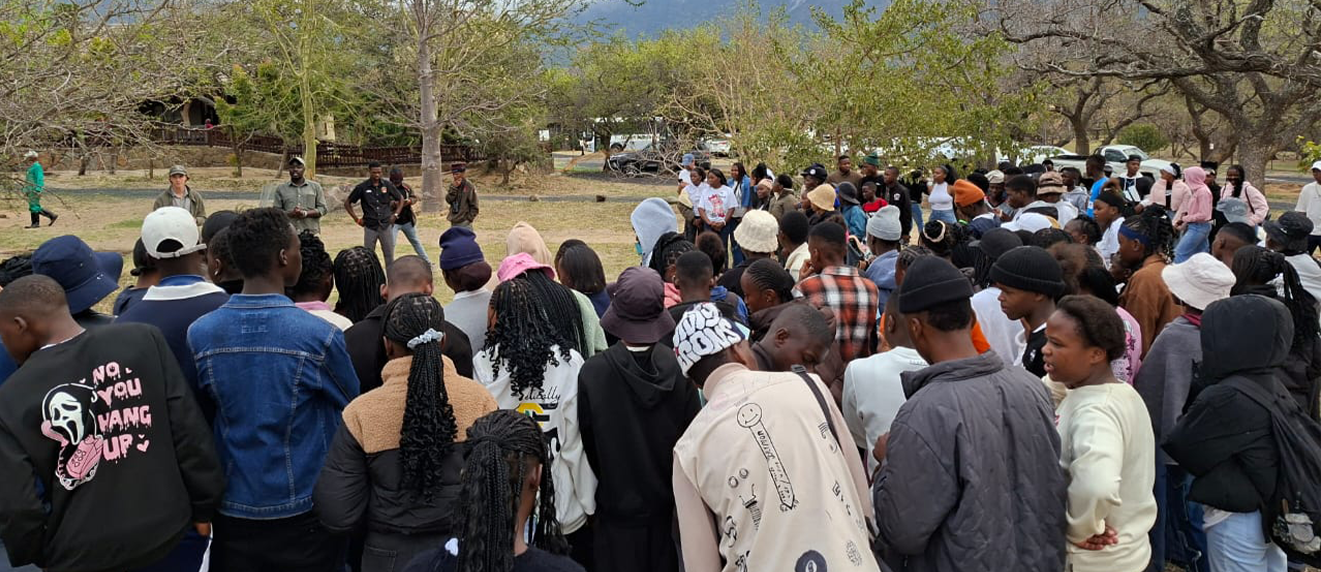
To make the occasion even more special, the EWT supported 250 learners to visit the Cape Vulture Nature Reserve before travelling to Moholoholo to witness the release. For these young people, seeing the vultures take to the skies was a powerful opportunity to connect with these remarkable and highly threatened birds.

It was also particularly important that the adult vultures got home quickly, as winter is the breeding season and most of the rescued birds had brood patches, indicating that they had chicks waiting for them in their nests. Both male and female vultures share responsibility for incubating and raising their young, so every day away from their chicks mattered. Thankfully, the tracked birds gave us the best news possible: they returned to their nests straight away.

What began as an urgent rescue ended with 16 vultures back in the wild, their chicks waiting for them, and 250 young conservationists watching them take flight; a wonderful reminder of why every vulture matters.

1. Young learners watching rescued vultures return to the wild at Moholoholo

The vultures were released at Moholoholo on International Vulture Awareness Day

** This work is made possible by Critical Ecosystems Partnership Fund (CEPF) Rapid Response to Conservation Crises (R2C2).

Release of two rehabilitated Vultures at Mokala National Park

Release of two rehabilitated Vultures at Mokala National Park

In the Field:

Release of two rehabilitated Vultures at Mokala National Park

By Ronelle Visagie, Field Officer in the Birds of Prey Unit


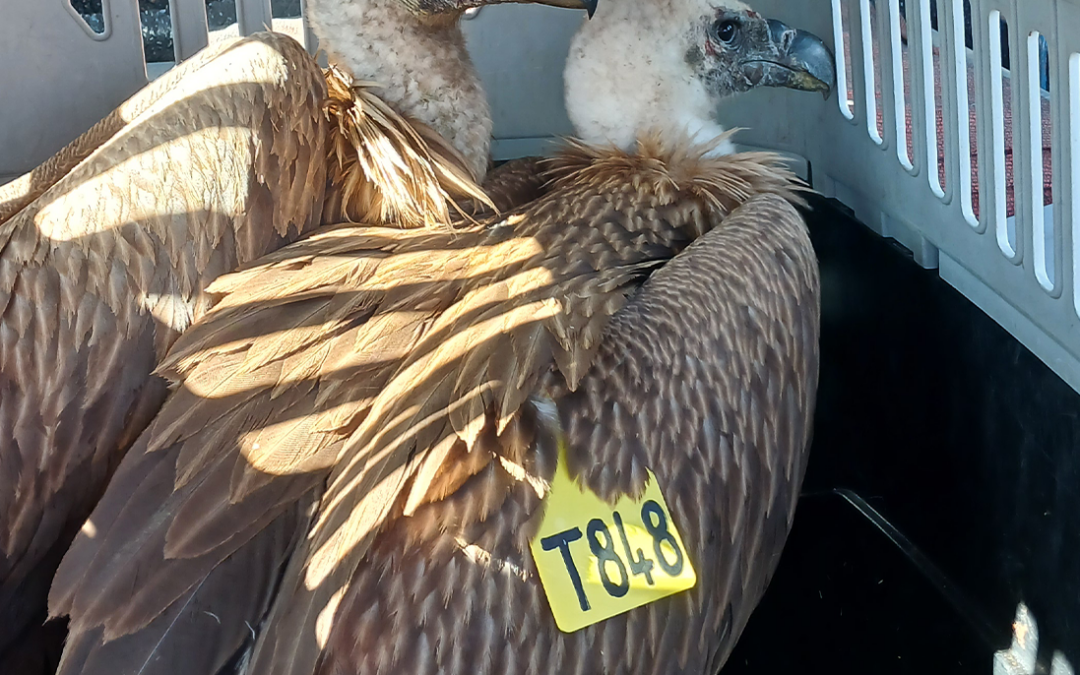
Two rehabilitated White-backed Vultures being released into the wild at Mokala National Park.

At the end of March 2026 a White-backed Vulture landed at a home in in Keidebees, Upington.  The owner of the house, Mike Knoetze, cared for the bird for a couple of days and fed it delicious steak while searching for someone to collect the bird. I was contacted about the bird and drove to Upington to fetch it.

On 22 April Danielle du Toit, Field Officer for the Birds of Prey Unit, was contacted in Graaff-Reinet about a White-backed Vulture that was sitting on the roof of a local church. When it landed on the ground Danielle was there to capture it. She took it to the veterinarian for a check-up and got permission from the local Nature Conservation authorities to transport it to the border of the Northern Cape where I could pick it up.

Both these young vultures were very hungry and had probably got lost from adult birds that could find food for them. When the juvenile vultures cannot find food, they quite often go to people or land at farmyards. If people feed them, they will follow them around and appear to be tame. But, when the juvenile vultures are properly fed and have gained enough weight, their natural wild instinct returns.

After two months of feeding the young vultures as much food as they could eat, they were ready to return to the open skies where they belong. They had become very restless in the aviary and wanted to get out.   Before their release back into the wild, both were ringed and fitted with wing tags for identification purposes and so that their flight paths can be monitored.

In early June I drove went to Mokala National Park near Kimberley and released both the vultures at the breeding colony where they could find adult birds to guide them.  

Note:  If people see tagged vultures, they can report them to Safring or on the email address resightings@ewt.org

Following the Vultures of Badingilo

Following the Vultures of Badingilo

In the Field

Following the Vultures of Badingilo

By Kyle Walker, field officer, Birds of Prey and Carnivore Conservation Units


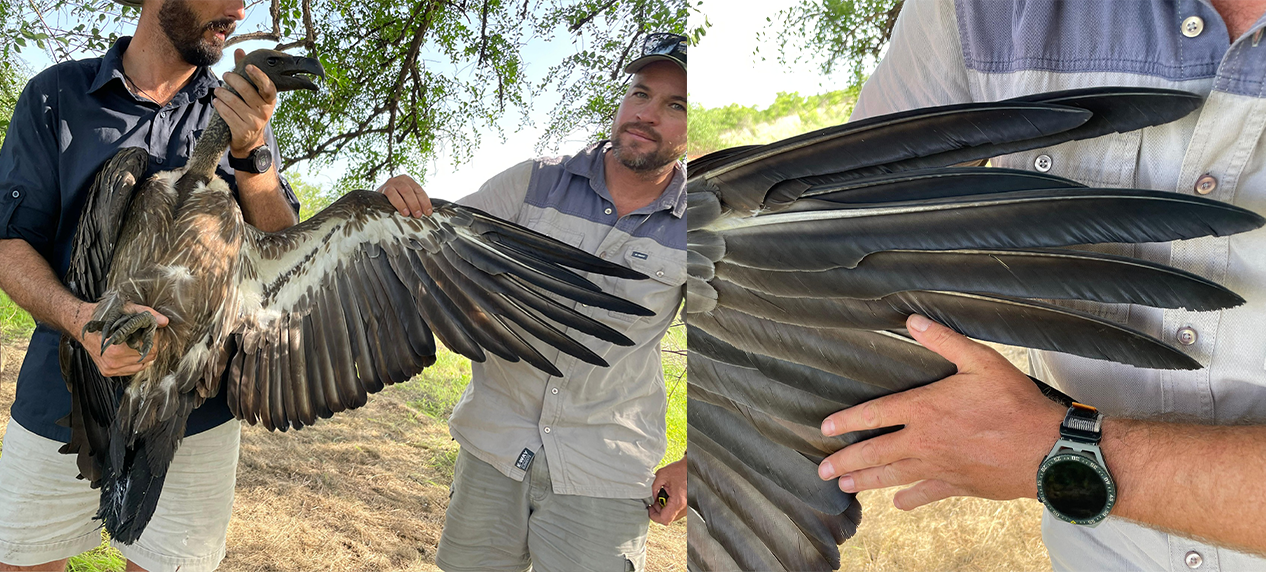
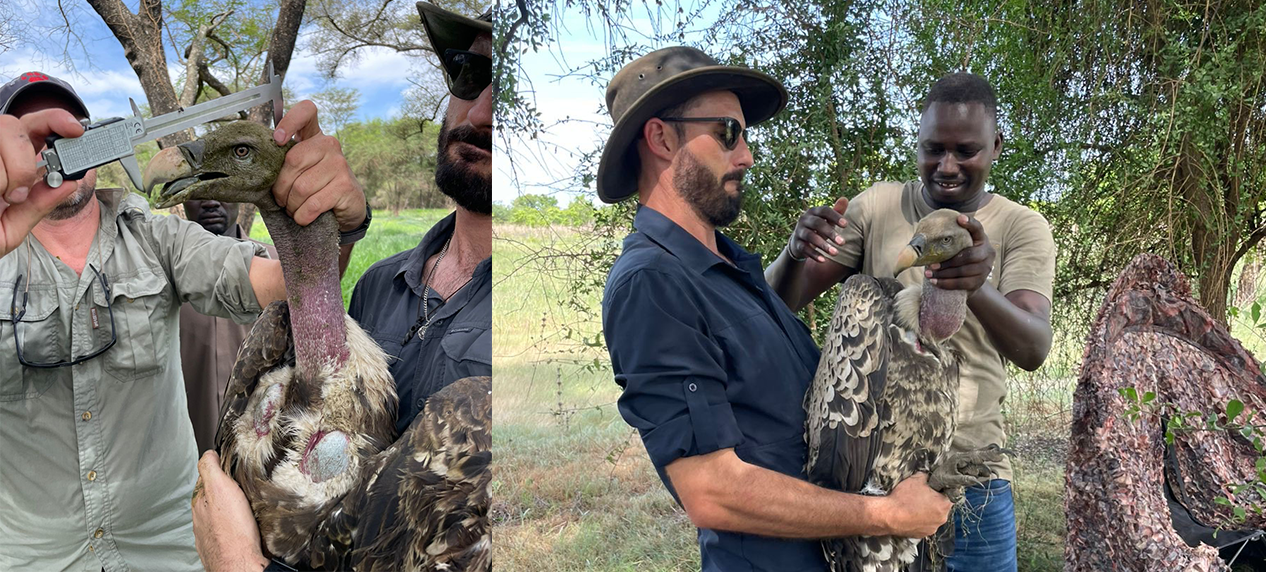
Field researchers conducting vulture conservation in Badingilo National Park

There are few places that make you feel quite as small as the vast landscapes of South Sudan. Endless horizons stretch across open savannas, floodplains, and scattered acacia trees, creating a wilderness that feels untouched by time.

It was here in African Parks’ Badingilo National Park, that the EWT’ s Gareth Tate and Kyle Walker embarked on an adventure with a simple goal: to catch and fit satellite tracking units to vultures and learn more about their secret lives.

The plan sounded straightforward enough. By tagging 15 vultures, we hoped to gain valuable insights into their movements, breeding behaviour, habitat use, and the challenges they face. As with most field expeditions, however, the journey quickly became about much more than the original objective.

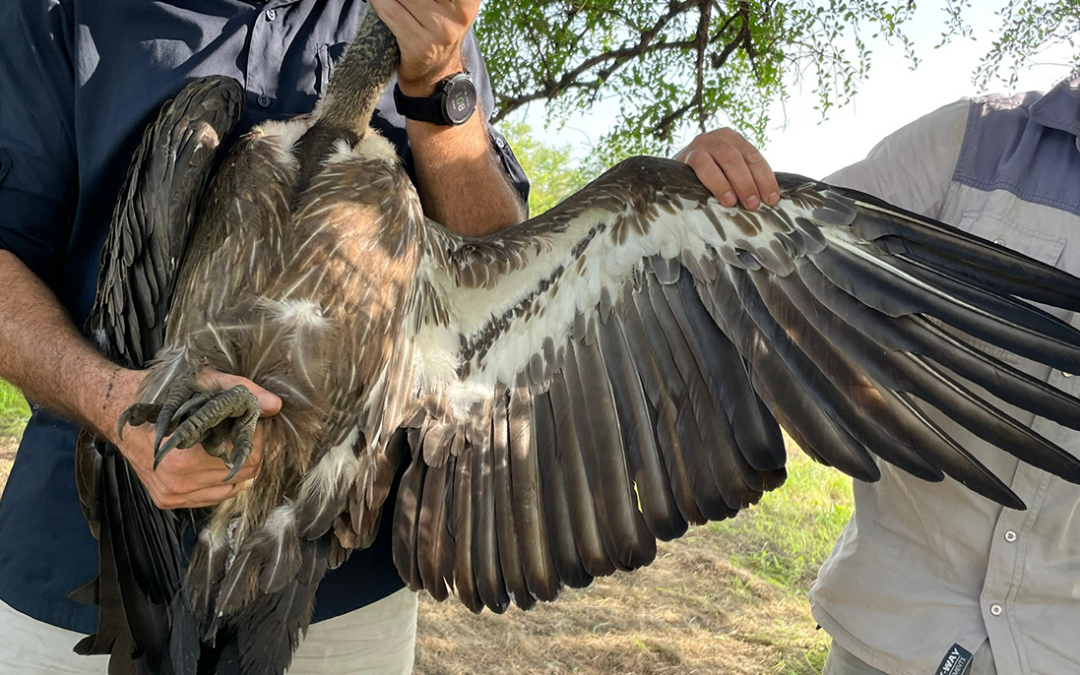
Over the course of the mission, we successfully tagged 15 vultures of three species: four Rüppell’ s Vultures, two White-headed Vultures, and nine White-backed Vultures, all of which are listed as Critically Endangered on the IUCN Red List of Threatened Species. Every bird was handled with care, ensuring minimal stress before being released back into the skies. Watching a newly-tagged vulture disappear over the horizon is a moment that never loses its magic.

Of course, fieldwork rarely follows a script.

One of our ambitions was to extend the expedition into Boma National Park, but poor weather had other plans. After a brief flight, it became clear that conditions would not allow a safe landing. We turned back to Badingilo and focused on catching the remaining five vultures. It was another reminder that flexibility is just as important as preparation.

African Parks collaboration wildlife tracking expedition

Operating in Badingilo also highlighted the realities of conservation in one of Africa’s most remote protected areas. With few roads crossing the landscape, travel often relies on fixed-wing aircraft and helicopters. Distances that appear manageable on a map can become major logistical challenges on the ground.

Those challenges were brought into sharp focus by our aging Unimog. After faithfully carrying us across rough tracks along the White Nile River, it finally broke down far from camp. We found ourselves sitting beside the road waiting for assistance, surrounded by an immense wilderness that seemed to stretch forever. Out here, schedules are suggestions and patience becomes an essential field skill.

Adding to the adventure was a heightened security alert during our stay, a reminder that conservation work in remote regions often involves navigating far more than wildlife management.

Yet some of the most memorable moments had little to do with vultures.

Among the camp’s residents were a young Sitatunga and a Tiang calf, both eagerly awaiting their evening milk feeds. After long days in the field, these small routines became highlights, reminding us of the individual animals whose futures depend on healthy ecosystems.

One evening, we spent the night beside a village on the Nile River, gathered around a fire with community members beneath a sky filled with stars. Stories, laughter, and a shared dislike for mosquitoes, quickly turned strangers into friends.

The next day, the villagers came to see the vultures up close as we processed them. Although Hooded Vultures are a common sight around many communities, few people had ever seen some of the larger vultures at arm’s length. Curiosity turned into fascination as people asked questions and learned about the birds’ remarkable lives.

Through conversations with local communities and rangers, we also gained a deeper appreciation for the region’s cultural heritage. We learned about the Dinka and Murle people and their historic cattle-herding routes across these vast grasslands. Long before satellite tags and GPS units arrived, people had been reading and navigating this landscape for generations.

Now, with the fieldwork complete, the next chapter begins. The trackers are already revealing how these vultures move across South Sudan’s wilderness. As the data accumulates, it will help identify important habitats, movement corridors, and conservation priorities for the species.

But beyond the maps and data, this expedition left us with something equally valuable: a renewed appreciation for the people who make conservation possible. The African Parks rangers who guided us, the communities who welcomed us, the partners who supported the journey, and the birds that inspired it all, are part of the same story.

Looking back, Badingilo was far more than a tagging expedition. It was an adventure shaped by unexpected challenges, extraordinary landscapes, campfire conversations, breakdowns in the middle of nowhere, orphaned antelope waiting for their evening milk, and unforgettable encounters with wildlife.

As the vultures continue their journeys across the skies of South Sudan, their trackers will help us follow along, revealing stories that were previously hidden from view.

For now, we leave Badingilo with gratitude – for the birds, for the people, and for the privilege of being part of their story.

Conservation team releasing tagged vulture into wild

EWT-led Vulture Safe Zone certified in a national park

EWT-led Vulture Safe Zone certified in a national park

EWT-led Vulture Safe Zone certified in a national park

By Eleanor Momberg – Communications manager, Endangered Wildlife Trust 


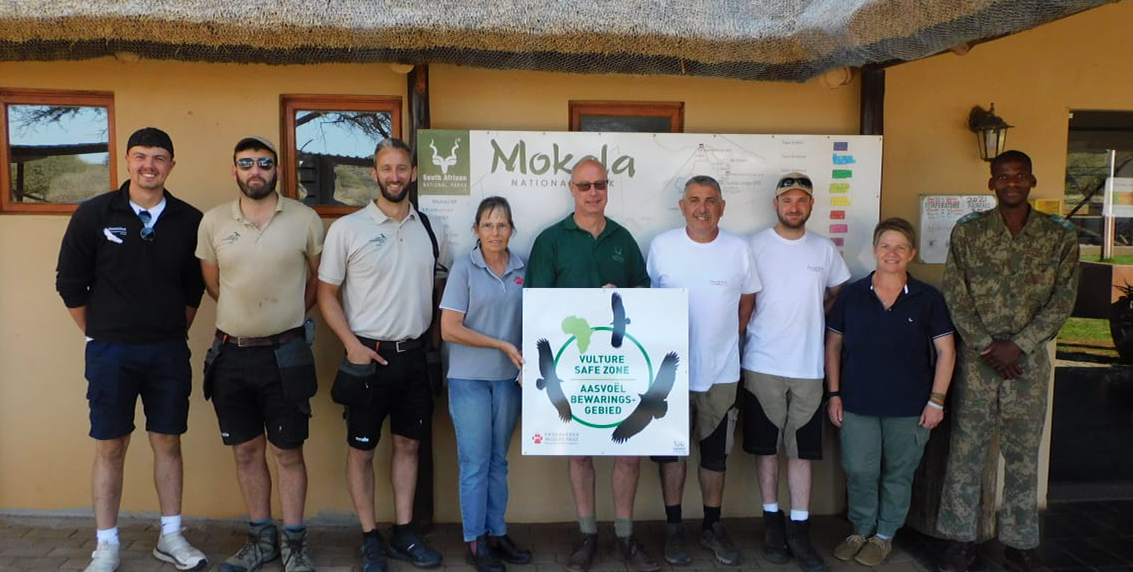
EWT-led Vulture Safe Zone in Mokala National Park

An Endangered Wildlife Trust-led Vulture Safe Zone has been certified in the Mokala National Park – a first for South Africa.

The national park, in the Northern Cape, is a stronghold for breeding White-backed Vultures (Gyps africanus).  It is the first SANParks national park to be certified a Vulture Safe Zone

“The certification is a further step in a working relationship between the Endangered Wildlife Trust (EWT) and SANParks to conserve threatened species and restore and preserve the habitats they require to survive,”  says the CEO of the EWT, Yolan Friedmann.

The EWT has been working in Mokala National Park since 2008, monitoring vultures and other raptors.  In the last three years, the EWT’ s Birds of Prey team and park management have been mitigating threats to vultures and related species on the 27,500ha property with the aim to certify it as a Vulture Safe Zone (VSZ).


What is a Vulture Safe Zone?

Vulture Safe Zones are an outflow of what is commonly known as the Asian Vulture Crisis, spanning the 1980s and 1990s, which saw declines of over 99% in the population of vultures in this landscape.  Subsequent research found that the mass die-off had been caused by the veterinary NSAID (non-steroidal anti-inflammatory drug), Diclofenac. The disappearance of Vultures in India led to the ecological tipping of scales, causing the death of tens of thousands of people due to the spread of pathogens because of the decline in vultures, known as the environment’ s clean-up crew.

The urgent need for action to stop the rapid decline of vulture species in Eurasia and Africa led to the development of the Multi-Species Action Plan to Conserve African-Eurasian Vultures (commonly referred to as the Vulture MsAP). Vulture Safe Zones are recognised in the Vulture MsAP as a means to encourage the responsible management of the environment by actively reducing threats to vultures in identified areas. In South Africa, the EWT has led the implementation of the Safe Zones, spanning the Karoo,  the Kalahari and the Eastern Cape.

Among the criteria for a VSZ is that the area must be poison free and carcasses may not be laced with NSAIDs, power lines are mitigated to prevent electrocutions and collisions by wildlife, breeding or roosting populations of vulture species are protected from disturbance; and that breeding and/or roosting populations are monitored annually.


The Mokala Vulture Safe Zone

Mokala is the first of many identified national parks to be certified as a Vulture Safe Zone. In partnership with Eskom, the project has ensured that all power lines are safe and, through a kind donation by the SANParks Honorary Rangers, the team was able to cover the dams with nets to prevent drownings.

Because the reserve is a stronghold for White-backed Vultures, a team led by the EWT has ringed and tagged over 1,100 vulture chicks in the park since it began working there. In October 2025 alone, 90 chicks were ringed and tagged, and 155 active nests were counted in the larger breeding area, which includes neighbouring farms.

“With the Vulture Safe Zone certification in place, Mokala National Park now has ample support to continue critical conservation efforts to protect their resident vulture populations, as well as other threatened birds of prey, including Martial Eagle and Tawny Eagle,”  said Friedmann.

** The EWT would like to thank our donors, partners and collaborators for their ongoing and much appreciated support for this important conservation initiative:  Charl van der Merwe Charitable Trust, Puy du Fou, Gauntlet Conservation Trust and Hawk Conservation Trust, as well as the SANParks Honorary Rangers