Help protect Africa's 

Hybrid Wattled X Blue crane fledges

Hybrid Wattled X Blue crane fledges

Hybrid Wattled X Blue crane fledges

By Jacquie van der Westhuizen, senior EWT field officer
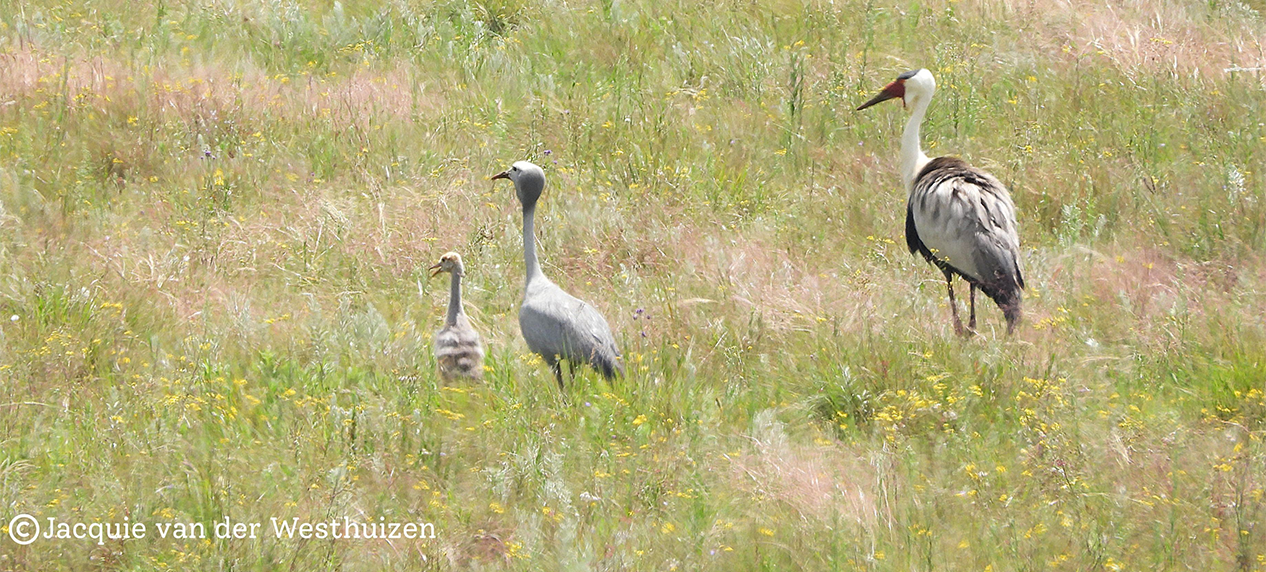
 

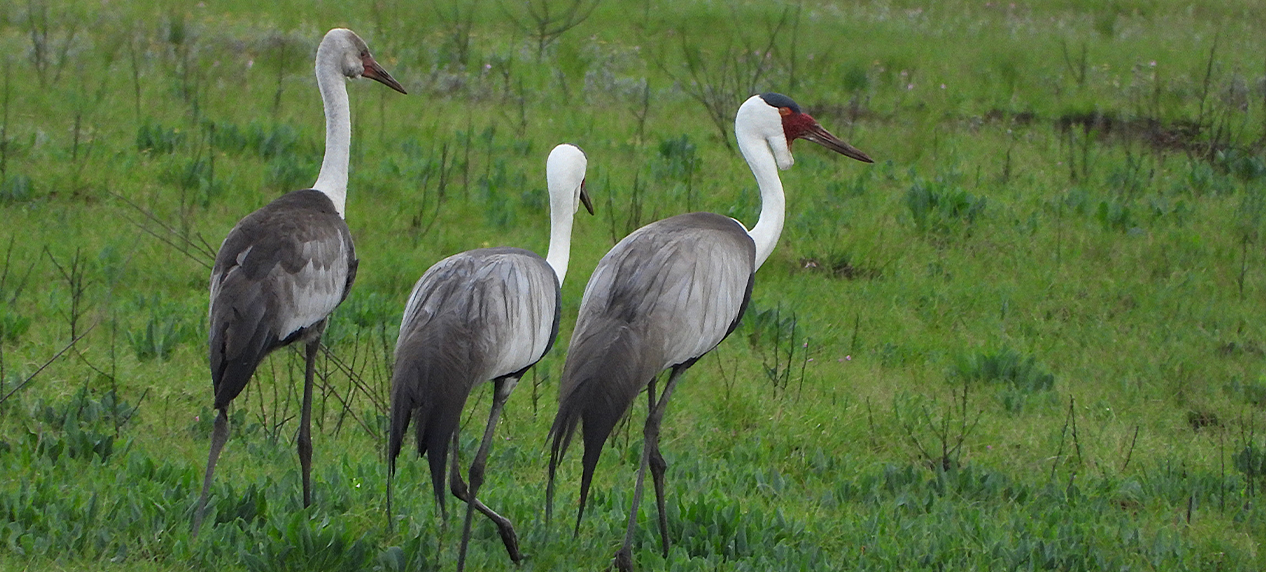
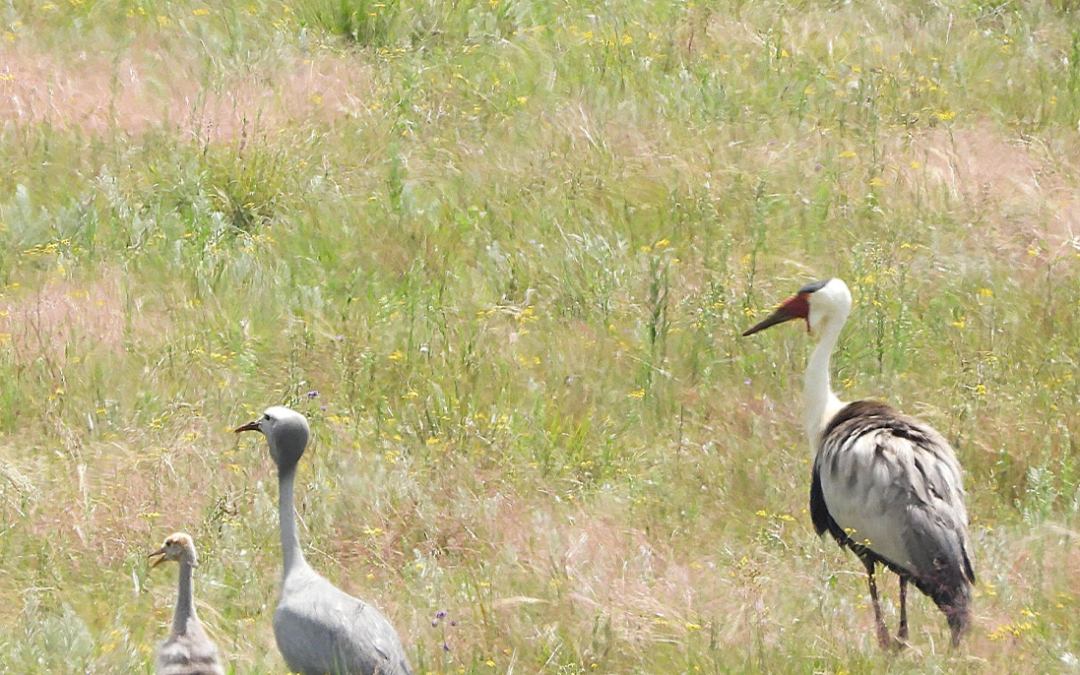
Wattled Blue Crane hybrid chick Mpumalanga grassland

For the last couple of years, we have been getting reports of a lone Wattled Crane hanging around with some Blue Cranes in Mpumalanga.  Never in our wildest dreams did we think that a Wattled crane would pair up with one of the Blue Cranes, but the inevitable happened.

In early February I got a report from the farmer, accompanied by photo evidence, of the pair walking with, yes, a Chick!

There are not many known cases of hybridisation such as this and even less of it being documented, so I went up to Mpumalanga to see for myself.  I spent a few days monitoring, photographing and documenting the interaction between the adult Wattled and Blue crane and their chick, and their general behaviour.  At that point I guessed the chick was approximately 5-6 weeks old resembling a Wattled crane chick in looks and size.

In the normal life cycle of a Wattled crane, chicks fledge at approximately five months and, at approximately 10 months of age the parents take them to a floater flock – a group of cranes that are not yet of breeding age or have yet to pair up – and leave them there to grow up, find a mate and begin a whole new circle of life. 

During our monitoring we decided that in the event that this hybrid chick survived to adulthood and joined a floater flock, we needed to ring it so we would be able to identify him amongst a dance (flock) of cranes.  The purpose of this would be to see if it eventually paired up with another crane and bred.  We also took genetic samples as this would give us a better idea of the genetic makeup of the hybrid crane and the sex of the bird. This was done when the chick was approximately 13 – 14 weeks old, and looking more like a Blue Crane with a smaller bill and head and Blue Crane colouring.  

It has since fledged. This has meant less sightings and more difficult monitoring as the chick and his parents move around. He was last seen a few days ago (in May 2026) and, interestingly, now looks more like a Wattled Crane – lighter neck colouring, grey back and is almost as big as the Wattled crane. But, he is as fast as a Blue Crane when he runs!

In the animal kingdom, hybridised species are generally infertile, but it has been confirmed by none other than the International Crane Foundation’ s (ICF) founder, George Archibald, that hybrisation between Brolga and Sarus Cranes in Australia not only occurs, but results in fertile chicks, and is actually more common than one realises.  These majestic birds are now known as Sarolga.   We have no evidence to prove this in Wattled / Blue crane hybrids as very little has ever been documented.

One of the reasons these types of hybridisations happen could be as a result of habitat loss, which in turn results in the decline of cranes in certain areas.  When crane numbers drop – in this case Wattled Crane numbers declined dramatically – the remaining few cranes start mingling with other crane species and eventually pair up.

We have seen a huge decline in the number of Wattled Cranes in Mpumalanga in the past 20 years.  This province was once home to the second largest population outside of KwaZulu-Natal.  This has resulted in the EWT / ICF partnership implementing a research project in the province to investigate the causes of the decline and how we can improve key crane habitats in the province to bring back this beautiful and iconic species.

Here’ s a challenge for you, our readers:  What should we call our South African hybrid Wattled / Blue Crane?  A Watblue or a Bluewat?   Your suggestions are welcome and can be mailed to emomberg@ewt.org or jacquiev@ewt.org
The resilience of a Wattled Crane chick

The resilience of a Wattled Crane chick


The resilience of a Wattled Crane chick

By:Jacquie van der Westhuizen – Field Officer | African Crane Conservation Proramme – Drakensberg 


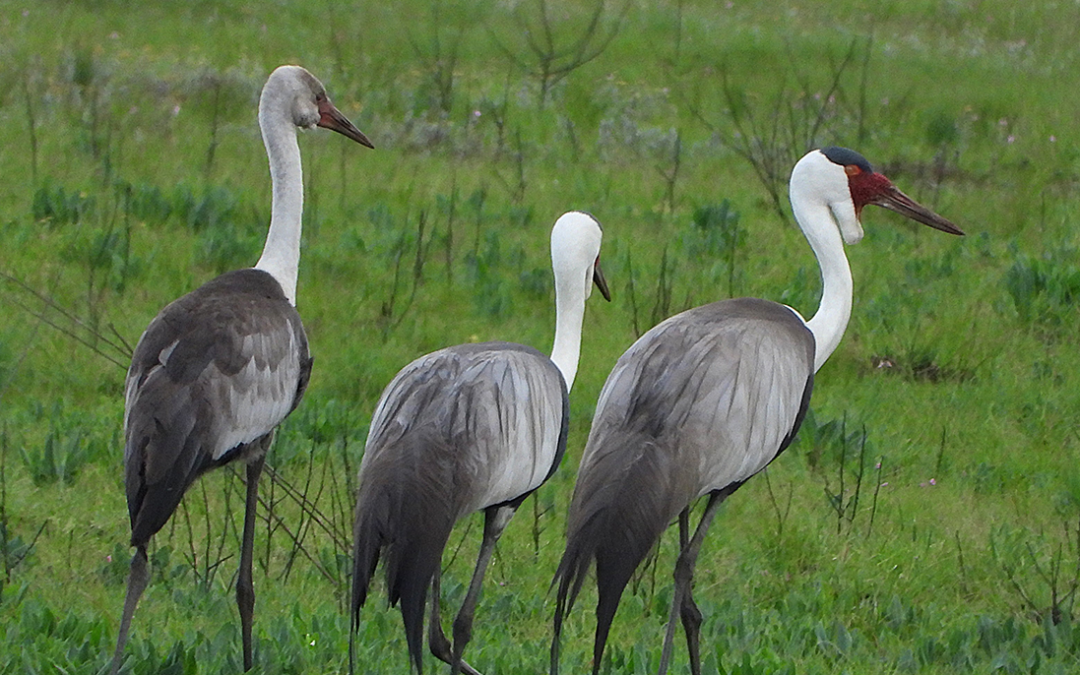
Above: The Crane family just after the chick had flown across the wetland, all big and grown up and the wetland looking beautiful and green.

Have you ever wondered what happens to a tiny, approximately three-week-old Wattled Crane chick in the event of a fire destroying the very wetland that it lives in?

This is a question that the EWT / International Crane Foundation team have been pondering for some time.

Wattled cranes are winter breeders, breeding from April to October, which also happens to coincide with fire season.

On 7 July, a runaway fire destroyed huge portions of timber plantations and wetlands on Mount Gilboa in the Karkloof, KZN Midlands. According to farmers who were fighting the fires, the fire swept through the wetlands at an alarming speed due to them being drier than usual. The devastation was huge – lives were lost, grazing was lost, animals were burnt and had to be euthanised and hundreds of hectares of forest completely destroyed. Every single wetland on Mount Gilboa was completely burnt, except for a small area of reeds about a metre wide around each pond in the wetland where Wattled Cranes were nesting.

I went up to check on the cranes a week after the fire and was totally shocked at what I saw.

At the first nest site I checked, the adults had been sitting on eggs due to hatch on about 26 June, but with the wetland being burnt, I honestly did not think a chick could have survived the fire. I found the adults foraging in the burnt wetland close to their nest site. I just sat a watched hoping to see a chick, but sadly nothing. Ever the optimist, I sat and started videoing the pair, hoping to see something on the video that I couldn’ t see through my binoculars and to my utter joy, I saw this tiny little grey blob running from the one adult to the other. I’ ve never watched a video so many times to get confirmation that it really was a little chick, dirty from the soot and blending in with the burnt grasses.

There have been a few theories tossed around as to how it survived the fire. One is that the adults walked it out the fire, but according to the farmers, the fire went through the wetlands too fast and they would never have got it out in time. It was definitely too small to fly out. Another theory is that the parents took it into the water, left it there hidden near the edge of the pond, maybe under some grass, while they flew to safety and returned once the fire had gone. I am going with the last theory as it is the only one that makes sense to me. We have nicknamed the crane chick Snorkel!

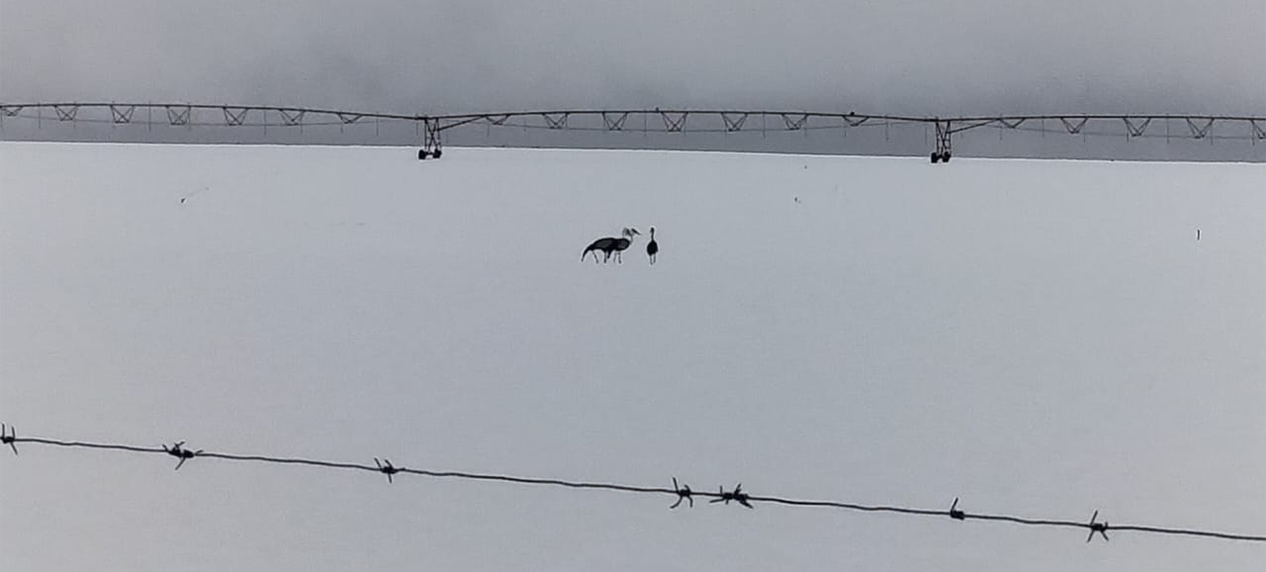
On the 21 September, a huge cold front hit the KZN region and we experienced heavy rain and the worst snow storms in many years. It also snowed up on Mount Gilboa – the snow was up to half a metre deep in places and freezing. Not being able to get up there myself, I was absolutely delighted to get a beautiful photo of our special crane family walking in a snow-covered pasture from a farmer friend that lives on Mount Gilboa.

This little chick had survived a devastating fire and now one of the worst snow storms in years. Can you imagine my delight when I saw it a few weeks ago, almost the same size as its parents, clumsily flapping its wings and then taking flight across the wetlands.

The knowledge that this Wattled Crane chick had survived a fire and a snow storm and had now fledged is absolutely amasing and truly heartwarming!


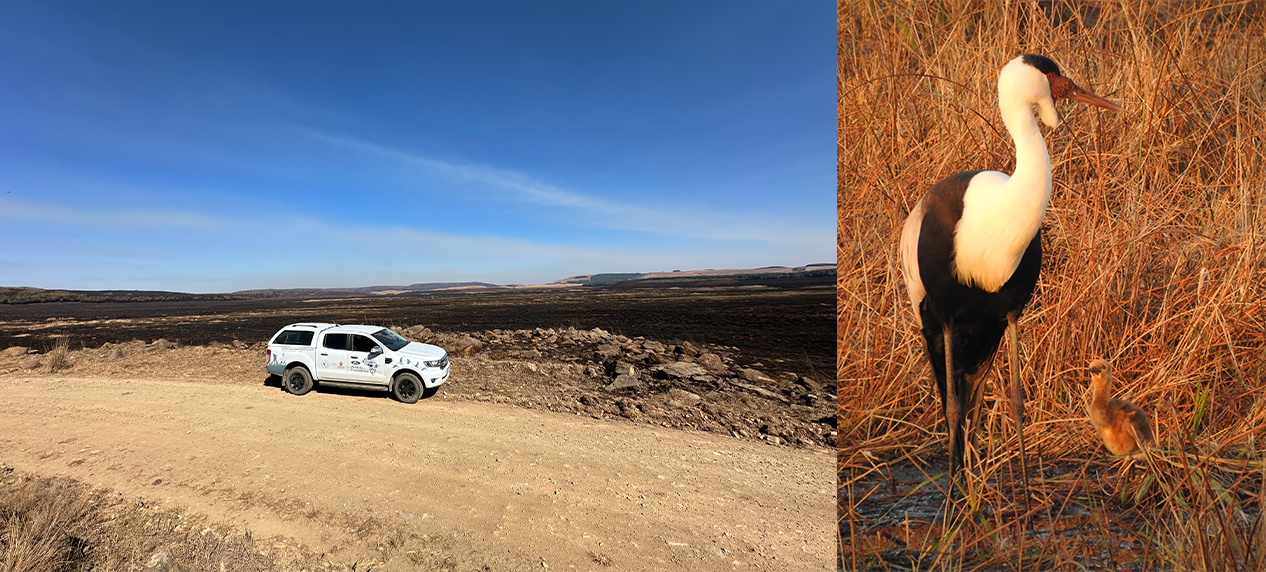
Above left: Burnt wetlands a week after the fire with bakkie in the foreground.

Above right: two week old chick so one can see how big the chick was when the fire came through.


Above: Wattled Crane family in the snow

Creating a Thriving Wetland For All in Zambia

Creating a Thriving Wetland For All in Zambia


Creating a Thriving Wetland For All in Zambia

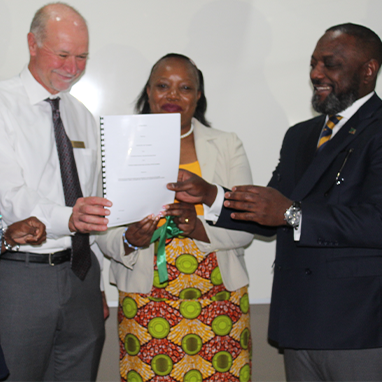
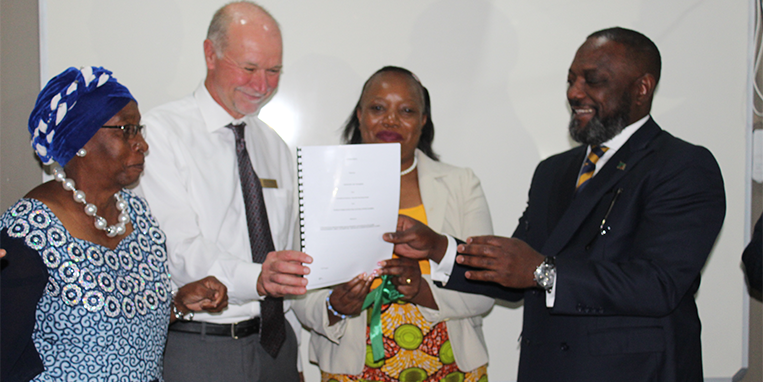
A major conservation milestone was achieved in Zambia on 10th October as the International Crane Foundation, in partnership with the Endangered Wildlife Trust (EWT), officially launched a 20-year collaborative management agreement for the Kafue Flats with the Ministry of Tourism under the Department of National Parks and Wildlife and the World Wide Fund for nature (WWF) Zambia. This groundbreaking initiative, the Kafue Flats Restoration Partnership, aims to create a “thriving wetland for all” by engaging local communities in the conservation and management of this vital ecosystem.

The Kafue Flats includes 6,500 hectares of wetlands, lagoons, grasslands, and floodplains including the Blue Lagoon and Lochinvar National Parks. This region is home to more than 470 bird species, among them the endangered Wattled Crane. Cranes and the lechwe antelope are key indicators of the health of the Kafue Flats ecosystem. More than 1.3 million people live in or around the Kafue Flats, and over 300,000 people rely on this area for freshwater, grazing, livelihoods, and cultural ceremonies.

Sadly, the floodplain is degrading under increasing pressure from unsustainable economic practices, population growth, and climate change. The 20-year agreement will tackle critical problems such as wildlife poaching, poor grazing, unsustainable fishing practices, unplanned settlements, and the impacts of flooding. The partnership will study these issues and manage the region by focusing on finding sustainable solutions that protect both the environment and the livelihoods of the local people.

At the launch, Minister of Tourism Rodney Sikumba emphasised the importance of balancing socio- economic needs with environmental protection of the Kafue Flats. This area is a wetland of international importance under the Convention on Wetlands, a key biodiversity area under Birdlife International, and a Man and Biosphere Reserve under the United Nations Education, Scientific and Cultural Organisation, UNESCO.

Recently, His Excellency, the President of Zambia, Mr. Hakainde Hichilima made a declaration during the Lwanza Traditional Ceremony in Bweengwa, Southern Province, outlining plans to boost cattle production through the establishment of cattle economic zones in the Kafue Flats south and north of the Kafue River. The focus on disease control and improved genetics is seen as a strategic move to enhance the quality of Zambian beef amid climate change challenges.

“We all know that climate change is real, hence the need for adequate adaptation and mitigation,” said Mr Sikumba. “Ecosystem based adaptation is an important option which implies that we manage the Kafue Flats especially in terms of the vegetation, water and fires, because we all know that a well-managed ecosystem is more resilient to the climate shocks such as drought and flood. Therefore, concerted efforts from all partners are needed to manage the Kafue Flats and I wish to reiterate the ministry’ s support on this noble cause,”


“There is urgent need for sustainable solutions in the Kafue Flats for people and wildlife for a brighter future,” said Dr. Rich Beilfuss, President and CEO of the International Crane Foundation. “We must all work together to safeguard the future of the Kafue Flats and its incredible wildlife, including cranes and the endemic Kafue lechwes,”

The Kafue Flats Restoration Partnership will combine the efforts of these three institutions more vigorously with local communities to prevent further degradation in the Kafue Flats. The partnership’ s vision will serve as a model for balancing ecological conservation and economic development in a protected area floodplain ecosystem for the benefit of both people and nature.