Help protect Africa's 

Taking Flight over the Karoo Vulture Safe Zone: 5 years later

Taking Flight over the Karoo Vulture Safe Zone: 5 years later


Taking Flight over the Karoo Vulture Safe Zone: 5 years later

By Danielle du Toit, field officer Birds of Prey, Endangered Wildlife Trust.
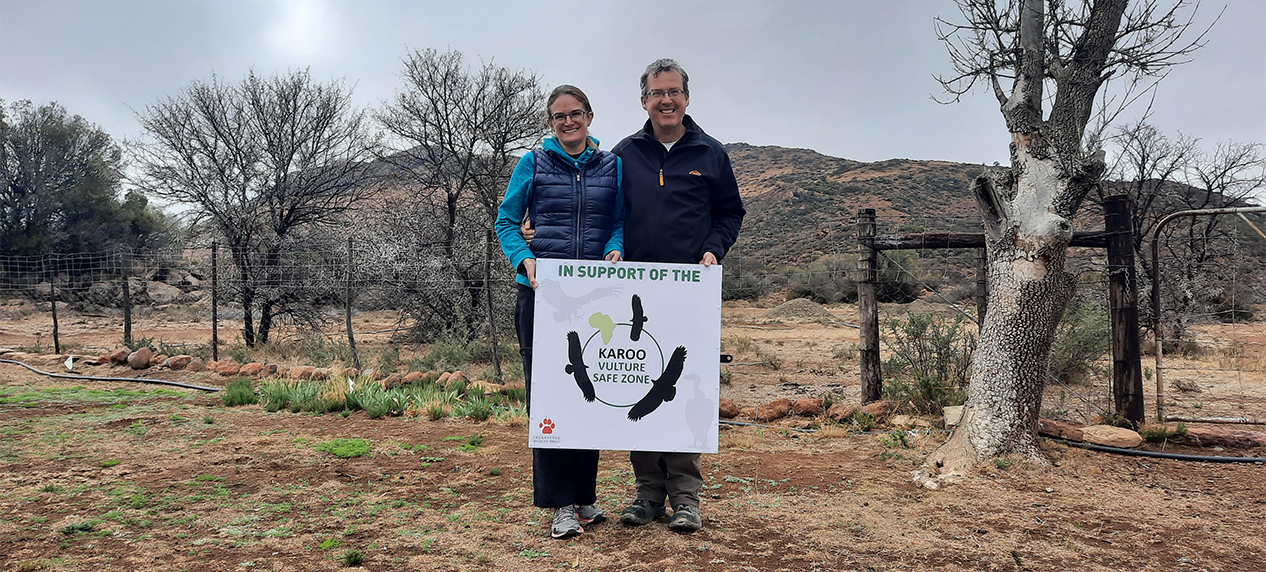
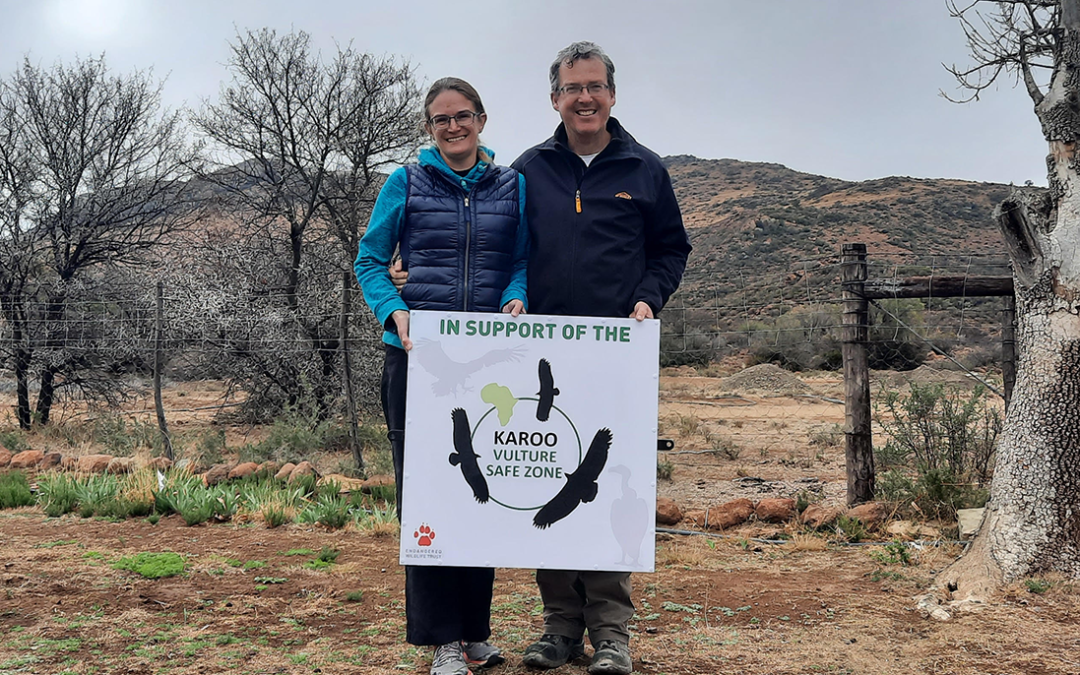
Returning Cape Vultures (Gyps coprotheres) to their historic breeding and roosting sites has been a dream of Karoo farmers for many years.

It was through interaction with the Endangered Wildlife Trust that the Karoo Vulture Safe Zone came into being in 2019. The project, which is a practical example of landscape conservation of a species, aims to cover 23,000 square kilometers. It includes three national parks and the largest protected environment in South Africa, the Mountain Zebra Camdeboo Protected Environment. It was implemented in partnership with SANParks, the Mountain Zebra Camdeboo Protected Environment and SANParks Honorary Rangers, and has received seed funding from the Rupert Nature Foundation and further funding from Cennergi and the Charl van der Merwe Trust.

To date, 95 farmers have dedicated their properties to becoming Vulture Safe Zones, creating an area of more than 700,000 ha for vulture conservation. Dedicating or signing up one’s property for a Vulture Safe Zone means that they are committed to reducing, as far as possible, threats to vultures within the confines of land under their ownership.

In creating the Vulture Safe Zone, two options were considered—reintroducing Cape Vultures to the Karoo or creating an area that is safe for the raptors. Unfortunately, reintroduction was not an option at the time due to the exceedingly high cost of physically bringing in the birds and habituating them, without any assurance that they would stay. More importantly, however, was the need to ensure safe breeding, roosting and foraging ranges for them outside of protected areas.

Vultures are referred to as nature’ s ‘clean-up crew’ , and because of the importance of their role in the ecosystem and the benefit to human health, they are often used as a flagship or umbrella species through which we can conserve biodiversity. By implementing conservation interventions to support the survival of vultures across large areas, we can benefit all species. This includes other birds, mammals, reptiles, amphibians, invertebrates and even plants.

The need for large areas to be conserved and mitigated of threats as far as possible is integral to the conservation of Cape Vultures due to their characteristically wide-ranging behaviour. Studies and GPS tracking data of fledglings have shown an average maximum distance travelled per day to be well over 250km from their nests. This age group is most likely to fall victim to threats as they are not yet experienced fliers and must compete with adults for food and roosting spaces. This is why having large safe spaces, even if it is a conglomerate of private properties, communal land and protected areas, is so important to the survival of the species.
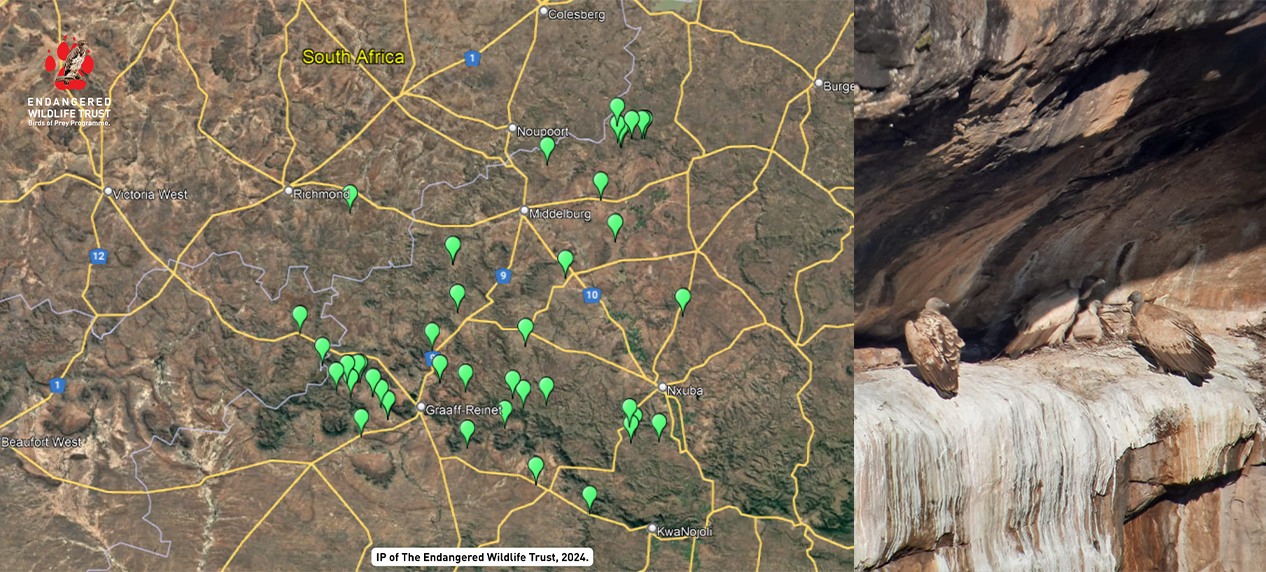
 

Left: Cape Vulture Sightings. Right: Cape Vultures on nest.

The project focuses on “working with people, mitigating threats, saving vultures”. This can only be achieved through community engagement, landowner buy-in and active mitigation of threats. These initiatives include covering or safe-proofing reservoirs to prevent drowning; changing to less ecologically harmful ways of predator control; removing dangerous chemicals from the property; and reporting wildlife injuries or mortalities caused by electrical infrastructure so that they can be mitigated. Some landowners have moved away from using lead ammunition as the fragments in the entrails or carcasses of animals shot with lead bullets can be harmful to scavenging species. Others have changed the active ingredient in their non-steroidal anti-inflammatory veterinary drugs (NSAIDs) to ensure that carcasses of animals that have been treated prior to their death are not contaminated with drugs that can harm scavenging bird species, like these vultures.

Besides the ecological importance of the Cape Vulture, this area also holds a special place for farmers and residents in the heart of the Karoo. Historically, Cape Vultures roamed the Karoo in large numbers. Many farmers have childhood stories focused solely on them. Whether it be how they would seek out their nests on horseback, climbing up the mountains that hugged the borders of their properties, or how they would simply looked up into the sky in search of a rain cloud and instead found these magnificent birds littering the air in the hundreds, stories are littered with memories of vultures.

The Karoo covers around 400,000 square kilometers of brittle ecosystems. It is an area known for its rich biodiversity with large varieties of plants, birds, insects and mammals that occur naturally on private and public land.

Through the Vulture Safe Zone relationships created between the EWT, private landowners and national parks, the project has been able to bridge the gap between agriculture, tourism and conservation. This promotes a sustainable business model for all sectors and decreases the potential of human-wildlife conflict through targeted conservation measures and holistic approaches.

The project is still in its infancy, but has already seen successes including an increase in sightings, repopulation of historic summer roosts and the willingness and eagerness of people to take part in this project in whichever way they can. The hope remains that through landscape- and farm-level threat mitigation, collaboration with all stakeholders and role players, and a multi-pronged approach driven by robust science and understanding of the species, region and people, the Cape Vultures will once again call the Karoo home.

For more information, please contact the Karoo Vulture Safe Zone Field Officer: Danielle du Toit, email: danielled@ewt.org or Gareth Tate, Birds of Prey Manager at garetht@ewt.org
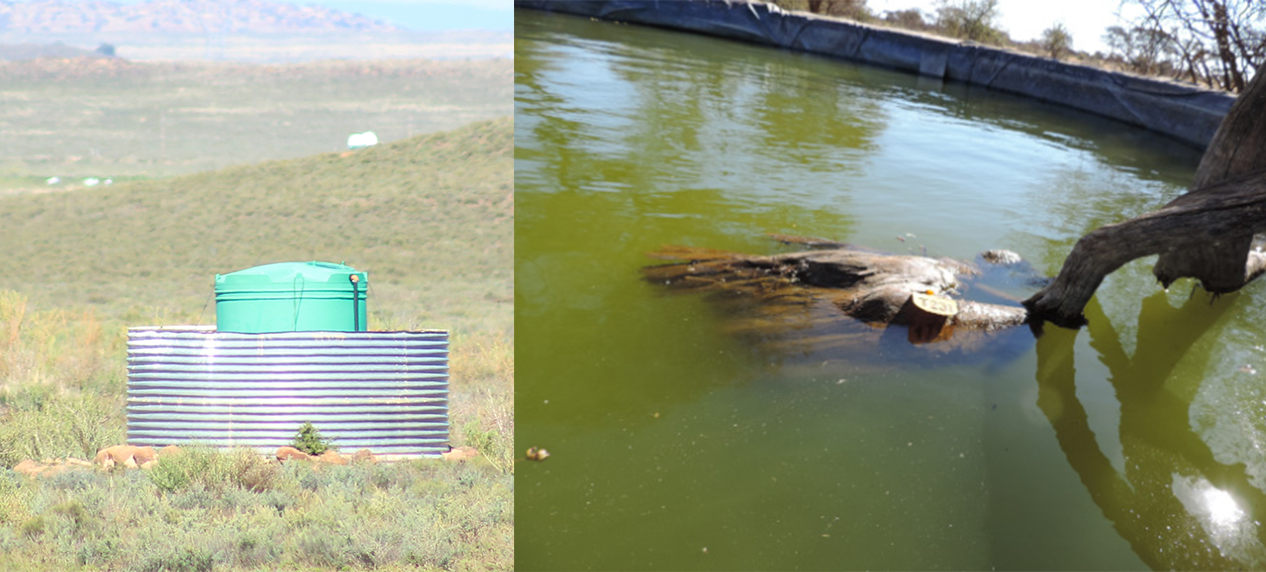
 

Left: reservoir mitigation – tanks in dams. Right: drowned vulture in Namibia
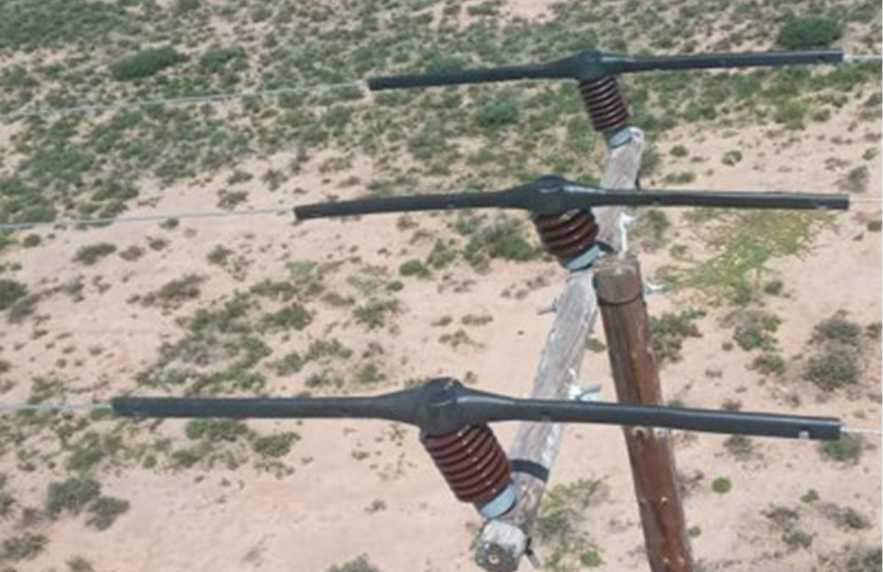
Raptor protector on powerline
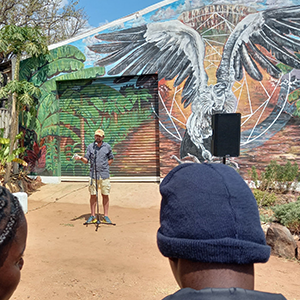
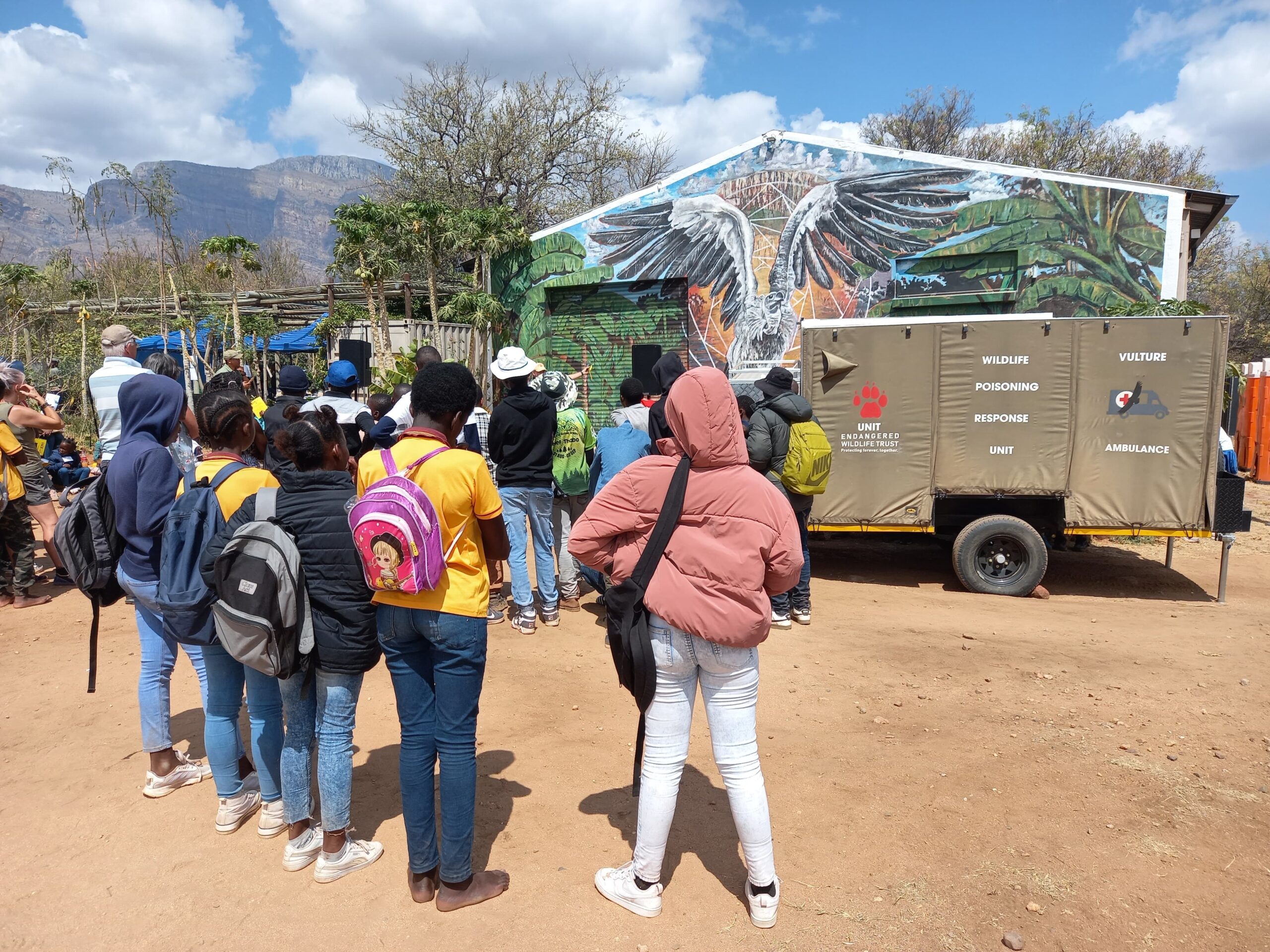
International Vulture Awareness Day, Cape Vulture Conservancy

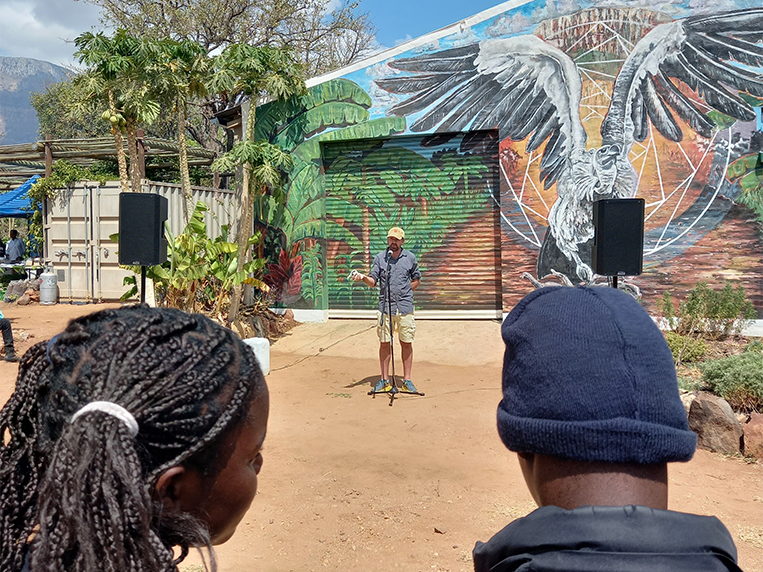
International Vulture Awareness Day, Cape Vulture Conservancy


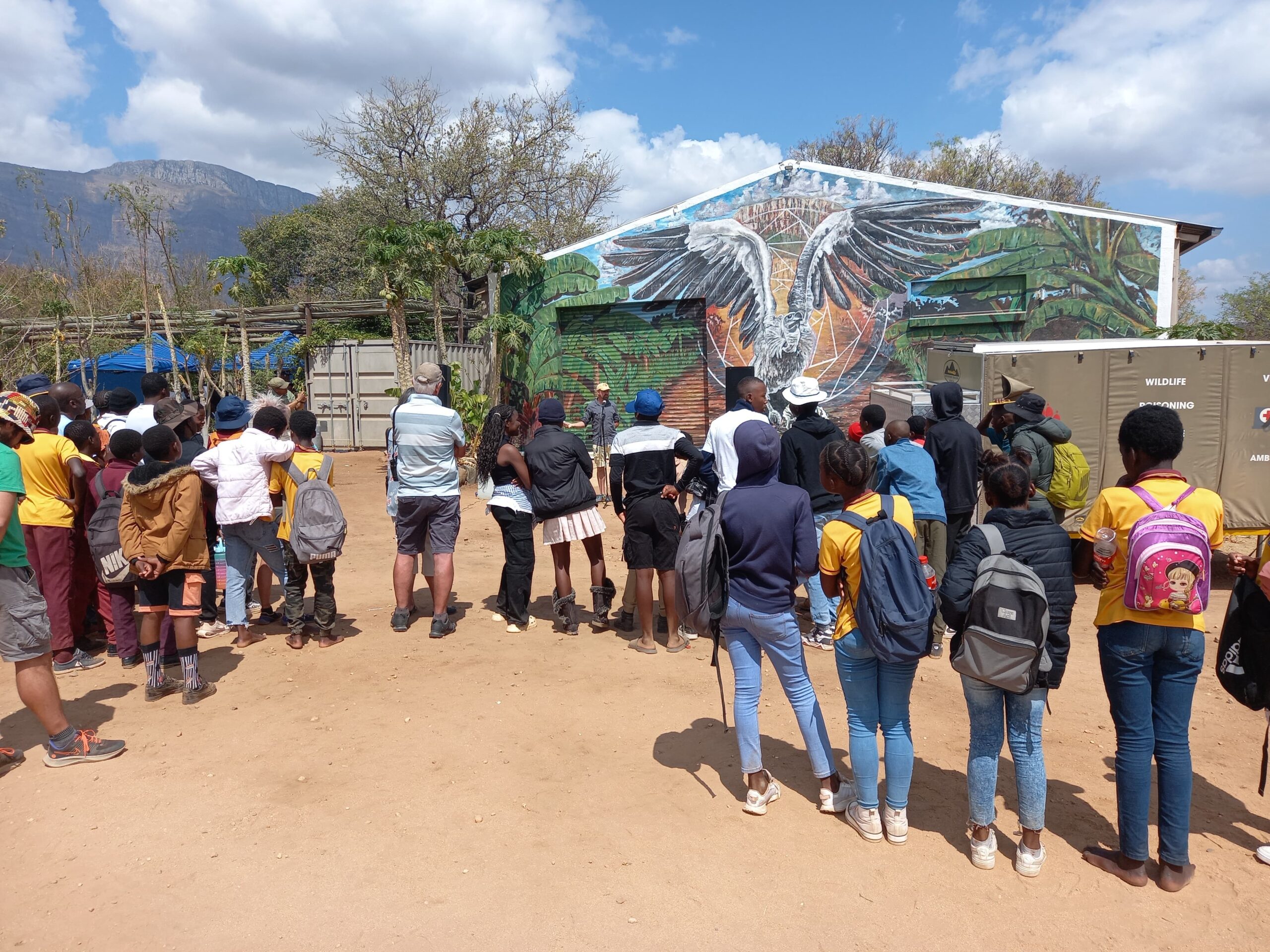
International Vulture Awareness Day, Cape Vulture Conservancy


Every year, people from all around the world, come together on the first Saturday of September to celebrate internation vulture awareness day. Originally started by the Endangered Wildlife Trust and the Hawk Conservancy Trust in 2006, it has grown since inception into a global platform to celebrate a group of birds that don’ t always get the attention and publicity that they deserve. This year, the Endangered Wildlife Trust in the lowveld region of eastern South Africa, joined up with the Cape Vulture Conservancy, to share knowledge and education about vultures in general, along with the threats they face, and how we can collectively work together to create a better future where the skies are filled with vultures.

Cape Vulture Conservancy plays host to the second largest colony of Cape Vultures Gyps coprotheres globally, and as an organisation, they have prioritised the long-term conservation of the colony, and really making this the core of what they do. With over 700 breeding pairs nesting along the cliff faces of the Drakensberg escarpment, it makes for a wonderful backdrop, and a perfect venue for celebrating such an important event.


This year, one of the major aims was to include youth from surrounding areas and the greater Hoedspruit community and afford the chance to not only get to know the property better, but also educate people regarding the plight of these special birds. With roughly 300 school kids attending, and with some travelling from as far as Selwane, to the north-west of Phalaborwa, it undoubtedly was an event that stood out as one of the highlights of the year. The day started with a fun walk covering a 5km section of the property, after which everyone could explore the permaculture gardens, several stalls from organisations such as Daktari Bush School & Wildlife Orphanage, Moholoholo Wildlife and Rehabilitation Centre, and Animal Relief for Rural Communities. After some introductory presentations from Frikkie Kotze, the manager of Cape Vulture Conservancy, and John Davies from the Endangered Wildlife Trust, everyone got treated to a snake demonstration from the Hoedspruit Reptile Centre, which was a real hit and a great way of ending the day.

The Endangered Wildlife Trust would like to thank the wonderful team from Cape Vulture Conservancy for taking the initiative to not only host and drive this event, but also commit to the long term conservation of these magnificent birds within the region.

Saving Vultures from poisoning and other threats

Saving Vultures from poisoning and other threats

Saving Vultures from poisoning and other threats

By John Davies, Project Coordinator: Raptor Conservation & Research

International Vulture Awareness Day is marked annually in September to raise awareness about a species that is often maligned despite their vital contribution to maintaining the health of ecosystems.

Known as nature’ s cleanup crew or garbage collectors, vultures play a crucial role preserve the balance of our environment by disposing of carcasses and likely preventing the spread of disease. The benefits they provide go even further.

Vulture populations have plummeted across their range in recent years, with some species now listed as Critically Endangered. To ensure the future survival of this key species, a Multi-species Action Plan to Conserve African-Eurasian Vultures (Vulture MsAP) was released under the Convention on the Conservation of Migratory Species of Wild Animals (CMS) in 2017. Its main aims are to identify and implement key conservation actions designed to reverse recent population trends and restore the conservation status of each species to a favourable level and to provide conservation management guidelines applicable to all Range States within the plan’s scope. This includes South Africa.

The Endangered Wildlife Trust plays an important role within South Africa, and Africa, to protect vultures for their most common threat – poisoning.

Through our work, we not only monitor and track all vulture species within the southern African region, but also implement a number of applied interventions to conserve the Old World Vulture Species found in South Africa. Of the 11 Old World Vultures found in Africa, seven are on the verge of extinction. These include the breeding resident White-backed Vulture, Hooded Vulture, White-headed Vulture, Cape Vulture, Lapet-faced and the vagrant, less common Egyptian Vulture, as well as the Rüppell’ s Vulture.

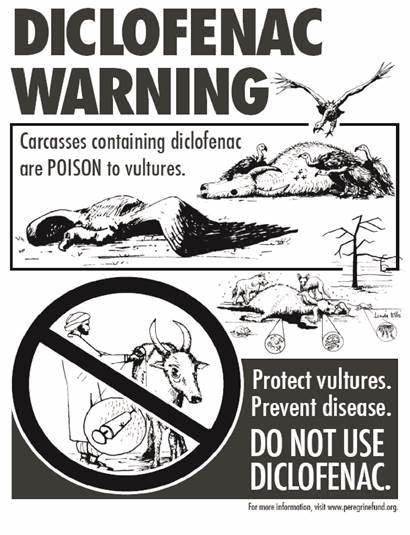
Besides addressing the increasing threat of wildlife poisoning, our work keeps in mind the situation that arose in India in the 1990’ s when the local vulture population plummeted by 95% after vultures fed on livestock carcasses that contained and anti-inflammatory drug used to treat pain and inflammation in animals and people. All vultures died soon after feeding on the tainted carcasses and local scientists attributed their deaths to kidney failure caused by the effects of the drug diclofenac.

The near extinction of vultures in this region led to the death of nearly half a million people in subsequent years, because without these natural scavengers, carcasses pile up, and diseases including rabies spread more prolifically.

In South Africa, wildlife poisoning has become an increasingly prevalent and destructive threat over the last decade. Although this has for a long time been an under-studied and poorly-known concern, more recently, the severity of this has become more topical, particularly with the impacts on large carnivore populations being more notable. With a shift to more targeted poisonings that have a higher impact on these the charismatic species, the conservation focus has shifted to a point where the need to respond and deal with these incidents is finally getting more attention.

A sad outcome of much of this is that many species of avian scavengers, such as vultures, Tawny Eagle and Bateleur, have become the innocent bystanders caught in the crossfire. For most of these species, wildlife poisoning has become the most significant threat to their long-term survival. Unlike many other forms of poaching, just a handful of large events may be enough to cause a sever reduction in the population, particularly if no interventions are put in place.

The EWT’ s Birds of Prey and Vultures for Africa Programmes focusses much of their work on developing key interventions that assist in reducing the severity of these losses. Although these by no means represent an exhaustive approach to solving the issue, there is little doubt that each of these instances provides another tool to work towards the long-term protection of avian scavengers from poisoning.


Eye in The sky

One of the most crucial aspects is the early detection of poisoning events, something that historically has posed a significant challenge in most conservation areas. We developed a pioneering rapid poisoning detection system called Eye in the Sky that harnesses vultures’ natural sentinel and foraging behaviour and pairs it with novel GPS tracking technology. This system closely monitors the behavioural signatures in GPS-tracked vultures to remotely detect the presence of poison sources and feeding events associated with potentially poisoned-laced carcasses. This system was built to enhance law enforcement and response team capacity and efficiency, while reducing the impact of wildlife poisoning in southern Africa.

With our partners, including the North Carolina Zoological Society and Contemplate Wild, we are also developing monitoring and technology solutions to make our alert system practical on the frontline. The system has been programmed to send notifications and near real-time information to monitoring software platforms (e.g. EarthRanger, SMART Conservation) used by those on the ground. In concert with this, we have set up an ever-growing network of GPS-tracked vultures across poisoning hotspots in southern and East Africa, actively surveying extensive wilderness areas that would otherwise be impossible to monitor.


Rapid Response and Treatment

With this early detection, comes the need to have skilled individuals to assist in the treatment of any live animals that may be found at these sites. As such, we have embarked on developing several approaches to make this a much more effective and efficient intervention.

First and foremost has been the training of over 2000 individuals across Africa in wildlife poisoning response and the inclusion of wildlife veterinarians that are able to assist when needed with the treatment of live patients. A vast number of veterinarians have little to no real-world experience working with birds of prey, especially Vultures, and as such, their involvement with these situations has been limited previously. The EWT has embarked on a process of upskilling key veterinarians working in key focal areas to become another layer of support when needed. Many large poisoning events are spread out over a large geographic area and having several individuals able to treat live patients, greatly improves the outcome for patients, particularly considering the time constraints associated with this.

Perhaps one of the most significant limitations to this work has been the effective transport and housing of patients. That is why the EWT developed the first transport and treatment solution for these specific events, which we call our Vulture Ambulance, launched in 2023. This has been developed from the ground up to be a complete solution to teams working in the field, to not only house patients that have been found, but also additional equipment that may be needed in the field during assisting with these events.

By creating a single solution that is permanently kept ready to go, takes a large amount of the preparation and planning away from the responders. To date, this novel solution has been used to assist in excess of 30 vultures and has improved the survival of live patients found at poisoning sites to 98% over the last year. This is a significant improvement from previously, where some animals may have succumbed due to the ineffective housing and transport to a rehabilitation facility.

As a newer addition to this, we have developed emergency treatment kits that are specifically designed to have all needed items for the in-field treatment of birds at poisoning events. These kits contain all the materials necessary to effective respond to emergencies, including headlamps, backup batteries and radios. These are all items that we have found through field experience to be necessary for an effective and efficient response. We’ re currently working towards expanding this equipment to more areas, adding yet another dimension to assisting people who respond to these events.

By understanding the process and having teams that understand how to work effectively, as well as having all the required equipment needed on site, we know that we can give vultures and other avian scavengers have a fighting chance. The only way to achieve this is through large-scale collaborations, and we look forward to developing these even further in future.


Help from above: Feathered rangers take to the sky

Help from above: Feathered rangers take to the sky

Help from above: Feathered rangers take to the sky

By Dr Gareth Tate, manager: Birds of Prey Programme


A critical challenge in wildlife conservation is swiftly locating and responding to poisoning events. Early detection and prompt decontamination can dramatically reduce further wildlife loss, save surviving animals, and enable law enforcement to act quickly. To combat this threat in southern and east Africa, the Endangered Wildlife Trust (EWT) has harnessed the natural behavior of vultures and cutting-edge GPS-tracking technology to create a rapid poisoning detection system called Eye in the Sky.

This innovative system monitors the movements of GPS-tracked vultures to remotely detect poison sources and feeding events linked to poached or poison-laced carcasses. By reducing the time between detection and response, we aim to enhance the efficiency of law enforcement and response teams, ultimately protecting more wildlife.

Now in its third official year, the Eye in the Sky project leverages the extraordinary foraging lifestyle of African vultures and state-of-the-art GPS tracking technology to protect these vital scavengers and other threatened species. Our Birds of Prey Programme team monitors over 120 tracked vultures across the Greater Limpopo Transfrontier Conservation Area, using near-real-time alerts to respond to feeding events and immobility alarms. The impact of our feathered rangers has been remarkable.


The capture locations and GPS tracks of the GPS-tagged vultures, deployed as part of our Eye in the sky project, across poisoning hotspots of southern Africa.

Above: A heatmap showcasing the current coverage obtained from our GPS tracked sample of vultures deployed as part of our Eye in the sky project, across poisoning hotspots of southern Africa.

Above: Our Eye in the Sky system has reached a significant milestone with its seamless integration into the EarthRanger platform. Above is a screenshot of the EWT EarthRanger instance shared across partners, with a basic visual and geographic summary of partners set up and using the Eye in the Sky system effectively across our target project sites.


Over the past year, a significant effort has been devoted to detecting poisoning events and poison bait sources using our system’s immobility and feeding alerts. Since May 2023, we have identified 37 poison sources across our project sites. Early detection and prompt decontamination have been crucial in safeguarding many scavenging wildlife species. We have rescued, rehabilitated, and released over 80 vultures back into the wild — birds that would have otherwise succumbed to ingested poisons.

Despite these successes, challenges remain. In early March 2024, over 80 vultures were poisoned in northern Kruger National Park due to delays in response. This tragic event underscores the need for continued improvements in our rapid detection system and response protocols.


Results from follow-ups to alerts generated by our Eye in the Sky system from January 2023 to December 2023 offer compelling evidence of the system’s effectiveness in identifying crucial illegal wildlife activities and points of interest. This includes the detection of 37 poison sources/events,36 poaching camps, as well as the detection and removal of 3,049 snares across our project sites. Notably, 1,937 of these snares were found still set and untriggered, underscoring the potential threat posed to wildlife. The system has proven instrumental in mitigating harm, showcasing its vital role in conservation efforts.


However, the effectiveness of our rapid detection system has been demonstrated by our ability to intercept potential mass poisoning events. At eight vulture alert sites, poison sources were detected before any wildlife fatalities occurred, showcasing the robustness of our monitoring and alert systems in protecting wildlife.

Besides enhancing our ability to detect snare lines so they can be removed, we have in the past year also detected 36 poaching camps where rangers have seized bushmeat, equipment, and poisons, disrupting illegal activities and trade.

At a time when there appears to be an increase in the targeted snaring and poisoning of lions and hyenas for their body parts, used in traditional medicines, the Eye in the Sky system is making a significant impact on lion and hyena conservation efforts, either by augmenting or improving existing initiatives.

Throughout the past year, the Eye in the Sky system has led to the detection and removal of 3,049 snares across our project sites.

Our teams’ persistent presence in landscapes the Greater Kruger has led to a discernible reduction in illegal wildlife activities, marked by fewer instances of poisoning and snaring events. This ongoing commitment reflects our dedication to fostering a safer environment for the region’s wildlife and underscores the positive impact of sustained conservation efforts.

A significant emphasis has been placed on rescuing vultures that survive poisoning events within Kruger National Park. Thanks to a growing network of veterinarians and a partnership with the Moholoholo Animal Rehabilitation Centre in Hoedspruit, we have rescued over 120 vultures since 2017. Over the past year, we achieved a 100% survival rate for vultures rescued from poisoning events, demonstrating marked improvements in our response, treatment protocols, and rehabilitation processes. This success is complemented by our first vulture ambulance, currently deployed in the Greater Kruger.

The Eye in the Sky project is a testament to the power of innovation and collaboration in wildlife conservation, offering hope for the future of southern Africa’s endangered species.


** The EWT would like to thank our donors, the Mohamed bin Zayed Species Conservation Fund, National Geographic Society, Alu-Cab, the Charl van der Merwe Tryst and the Briandez Legacy Trust for your support on this programme.


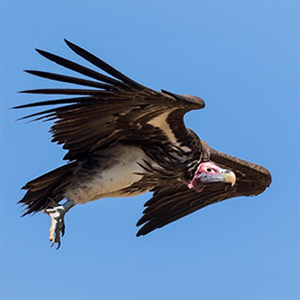
A white-backed vulture fitted with a tracking unit and deployed as one of our Eye in the Sky feathered rangers.

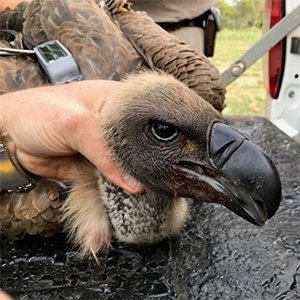
An adult Cape Vulture fitted with a GPS tracking device, ready to be deployed for the Eye in the Sky system

A white-backed vulture fitted with a tracking unit and deployed as one of our Eye in the Sky feathered rangers.

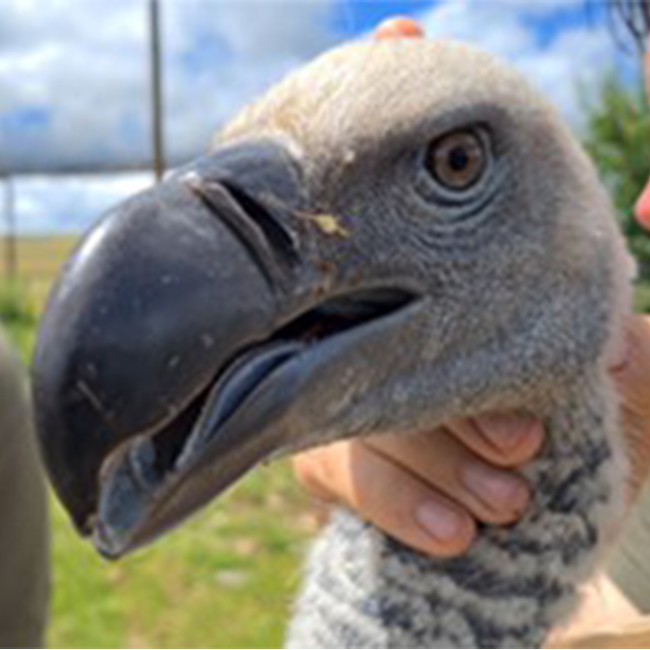
A familiar face greets the Endangered Wildlife Trust team during field monitoring for vulture threats

A familiar face greets the Endangered Wildlife Trust team during field monitoring for vulture threats

News from the field:

A familiar face greets the Endangered Wildlife Trust team during field monitoring for vulture threats

By John Davies, Bird of Prey Programme

The Endangered Wildlife Trust’ s Lowveld Birds of Prey team had a remarkable encounter in the Timbavati Private Nature Reserve recently. During their fieldwork, they trapped a stunning adult Cape Vulture they had previously rescued, an event made even more special given the low probability of re-trapping a ringed and GPS-tracked bird. This vulture, part of the Cape Vulture colony on the cliffs of Manoutsa west of Hoedspruit, which comprises approximately 760 breeding pairs, reconnected with the team in a significant way.

In collaboration with the University of Pretoria, the EWT team was supporting a PhD student investigating various aspects of vulture health. The student’ s research focuses on diseases affecting vultures, such as Avian Influenza, Newcastle Disease, West Nile Virus, ectoparasites, haemoparasites, and cloacal microbiomes. This study is crucial as African vulture populations are rapidly declining, and smaller population sizes increase the threat of disease, a relatively understudied danger.

During this fieldwork, EWT Birds of Prey field worker Kyle Walker spotted a ring on a Cape Vulture and immediately recognized it as one of their tracked birds, named Dr Mike after the veterinarian who saved its life. Dr Mike was discovered in late 2021 at Lissataba Nature Reserve with a broken wing from a powerline collision. Thanks to Murray and Robin Reid, who managed the property, the bird was rushed to White River Animal Hospital for emergency surgery. Following months of rehabilitation at the Dullstroom Birds of Prey Centre, Dr Mike was ringed, fitted with a tracking unit, and released back into the wild on February 2, 2022.

Since his release, Dr Mike has travelled an astonishing distance of over 94,000 km, averaging 110 km a day, highlighting the vast ranges these birds cover and the space they need to thrive. Our tracking data shows he is now breeding on the Manoutsa cliffs, marking a true conservation success story.

Dr Mike’ s story underscores the importance of collaboration between protected area management and conservation organizations like the EWT, alongside the invaluable rehabilitation centres in the Lowveld. Every bird counts, and without intervention, this vulture would have perished. The state-of-the-art GPS tracker fitted to Dr Mike allows us to monitor his behavior and identify threats as he soars through the African skies. It is incredible to see the data from his tracking unit as he breeds again on the cliffs of Manoutsa.

To learn more about Dr Mike’ s story, visit: Cape Vulture (ewt.org.za)