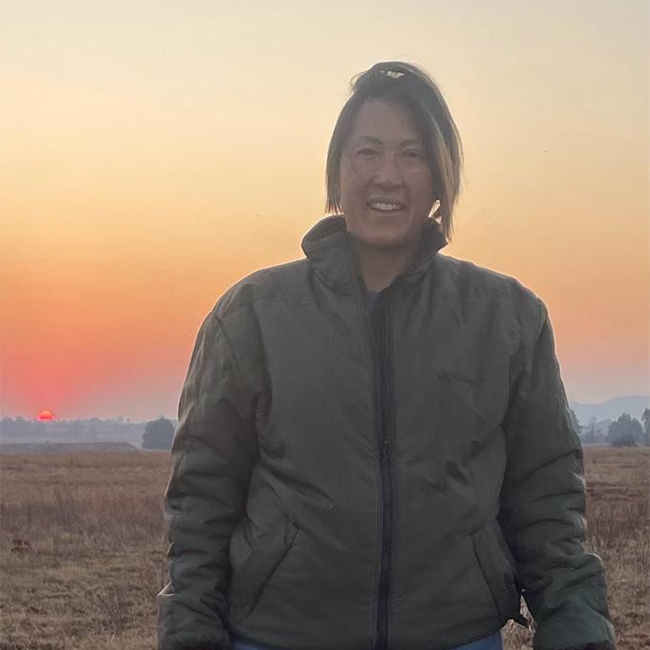
CAREERS IN CONSERVATION – Cliantha Kay
Cliantha is a Conservation Canine Assistant with the EWT’s Conservation Canine Unit. Here is a little bit about Cliantha’s journey to a career in conservation with the EWT.
Job title: Conservation Canine Assistant
What do you do in your day-day work?
I work hands on with our canines that are based at the head office conservation campus, assist in keeping those active minds stimulated and always ready to detect the next contraband item. We swim them, walk them, exercise them, and train them – and of course give them lots of love.
Location: Midrand Campus, but travel extensively
Where did you grow up? Johannesburg
What are your hobbies/things you like to do in your spare time? Catch up with friends and family, go walkabouts with my trusty doggos, a great day out on the lake brings me calm, reading, and hiking
Any pets? all the dogs! My beautiful German Shepherd princess Calla, and two other accomplices
Favourite animal and why: I’ d be lying if i didn’ t say dog.
Pet peeve? Rude People
Why did you want to work for the EWT? The EWT is a vibrant and dynamic organisation that provides wonderful opportunities to make meaningful differences to people’s lives and to conservation. And of course all the doggos.
What are you passionate about? Changing the perception of the relationship between farming and conservation. I think that in the past, a few bad apples ruined it for many conservation-orientated farmers who manage their land in a way that is super beneficial to biodiversity and food security. I also really love finding different ways to approach and overcome challenges and seeing how we, as an organisation, can leave a positive and lasting impact on our environment and its people.
What’ s the best advice you’ ve ever received, and who did it come from? If you can’ t control it – let it go. Life is short – worrying makes us old.
My parents and grandparents taught me that, and I still live by it. I always remind myself that I’m capable of anything I put my mind to, so long as I’m open to learning (and probably failing a few times) along the way!
What is your go-to feel-good song? Robin S – Show me love
What excites you about this new position? constant learning, and the diverse and wonderful people I meet from all different walks of life. Working with Canines is a gift beyond measure.
What are you passionate about? Being kind and genuine in everything I do – it costs nothing, yet is priceless.
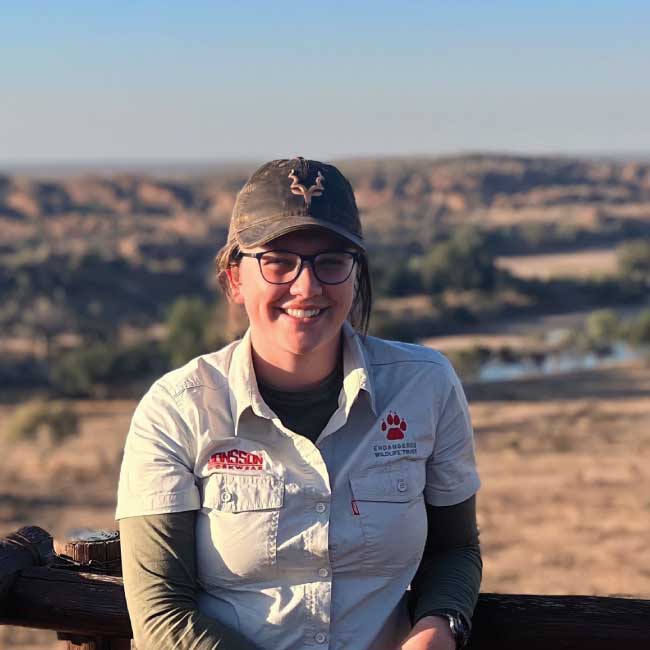
CAREERS IN CONSERVATION – Danielle du Toit
Danielle is a Field Officer with the EWT’s Birds of Prey Programme. Here is a little bit about Danielle’ s journey to a career in conservation with the EWT.
Job title: Field Officer
What do you do in your day-day work?
I meet with farmers and other landowners to sign them on and assist them in making their land safe for vultures. I also work to mitigate threats to vultures and address the reasons behind the threats so we can ensure the longevity of the threat-free landscape. These include addressing livestock loss to predation through implementing non-lethal ways of predation management (mobile kraaling, livestock guardian dogs etc.), minimising potential lead poisoning from lead ammunition used by hunters, awareness campaigns, and working with ammunition industry professionals to promote a reliable and affordable alternative to lead ammunition.
Location: I’m based in Graaff-Reinet (in the Eastern Cape) but work across the broader Eastern Cape and in the Beaufort West area.
Where did you grow up? I grew up on a farm outside Graaff-Reinet
What are your hobbies/things you like to do in your spare time? Anything that gets me outside and busy with my hands. I love to try my hand at gardening, woodwork and super basic home renovation projects – none of which I’ve quite mastered yet!
Any pets? One precious dog and three cats.
Favourite animal and why: This changes all the time. Although I’m supposed to say vultures, I think I’ll go with Meerkats (Suricates). They’re feisty things for their size. I just love their attitude.
Favourite food? I love a good hearty meal – rys, vleis and aartappels, as my Ouma used to say.
Pet peeve? Jeans with fake pockets. Please, can the fashion industry stop selling me dreams?
Why did you want to work for the EWT? The EWT is a forward-thinking organisation with plenty of room to grow personally and professionally.
What are you passionate about? Changing the perception of the relationship between farming and conservation. I think that in the past, a few bad apples ruined it for many conservation-orientated farmers who manage their land in a way that is super beneficial to biodiversity and food security. I also really love finding different ways to approach and overcome challenges and seeing how we, as an organisation, can leave a positive and lasting impact on our environment and its people.
What’ s the best advice you’ ve ever received, and who did it come from? “There’s no such thing as can’t. You either don’t want to or don’t know how to. Either way, it’s your decision.”
My parents and grandparents taught me that, and I still live by it. I always remind myself that I’m capable of anything I put my mind to, so long as I’m open to learning (and probably failing a few times) along the way!
What is your go-to feel-good song? Feel it Still – Portugal, the Man.
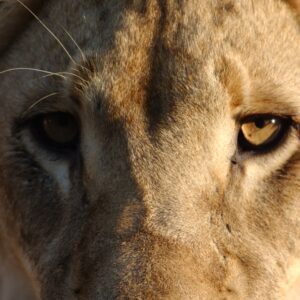
The cat’ s out of the bag – understanding South Africa’ s captive lion sector
Christina Hiller, EWT Wildlife in Trade Programme Consultant, tinah@ewt.org.za
South Africa is currently the only country with an extensive captive lion sector where lions in captivity significantly outnumber wild and free-roaming animals. There is an ongoing debate around the practices of keeping lions for commercial use, and captive lion hunting, the lion part trade, and human interaction such as cub-petting have been heavily criticised. However, there was a need to establish a detailed understanding of South Africa’ s captive lion sector and evaluate its environmental and socio-economic impacts.

The Endangered Wildlife Trust initiated a study to close this information gap by developing an improved understanding of the sector and the trade of captive lion products and services. The research aimed to supply the South African government and the local CITES (Convention on International Trade in Endangered Species of Wild Fauna and Flora) authority with sound information to inform future policy decisions and measures to adequately address the sector’ s influences on environmental, economic, and social outcomes and developments.
We conducted 51 semi-structured interviews and verified and supplemented the findings through five focus-group sessions with experts from related fields and desk review activities. Interview parties consisted of 31 captive lion facilities in four provinces, i.e., the Free State, North West, Limpopo and Gauteng and 20 key players in the sector. These actors included professional hunters of captive lions, taxidermists, lion part traders, live lion traders, veterinarians, scientists, non-governmental organisations (NGOs), and provincial environmental management inspectors (EMIs). In addition, we collected quantitative data on captive lion facilities from the South African provinces where the interviews took place to further augment the research findings.The research report describes how the sector is structured and functioning amidst influencing factors such as mainstream and social media pressure, regulatory conditions, and conflicting ideas about the meaning of sustainability and sustainable use regarding an iconic species like the lion.
We found that captive lion owners’ underlying motives and deep-seated attitudes are behind the uniqueness of every captive lion facility’ s (business) model. A combination of eleven different motives underpinned the decision to establish a captive lion facility. Only four of those were income-related. It was found that facilities were seldom established primarily for financial gain, suggesting the importance of personal drivers other than income generation and profit. Furthermore, our research revealed five distinctly different sector clusters with corresponding supply chain models and typical breeding systems. Findings suggested that facilities do not specifically breed lions for their bones, so this was not considered a separate cluster. The lion bone trade rather forms part of the hunting tourism cluster.
Cluster 1: No lion revenue cluster
Cluster 2: Sanctuary cluster
Cluster 3: Guest attraction cluster
Cluster 4: Live export cluster
Cluster 5: Hunting tourism cluster (incorporating the lion part trade)
Legal trade in each cluster was organised along a distinct supply chain (except for cluster 1 without lion-related trade activities). All supply chains in the sector are separate, and research did not show an organised supply chain wherein captive lions were hunted after being used for human-lion interactions. However, a shared supply chain segment for selling lions to other South African facilities combined with a lack of traceability makes it feasible to move captive lions between clusters, especially between the guest attraction, live export, and hunting tourism clusters. It was clear that there was little transparency in the sector because of the non-existent, inefficient, or inconsistent collection, storage, and sharing of information about facilities and their trade activities.
The research data suggest that reasonable and tolerable management practices fall into five domains: financial health, legality, conservation, animal welfare, and social responsibility. Moreover, two specific areas emerged as seemingly insurmountable obstacles for managing captive lion facilities. On the one hand, the data suggest that managing a captive lion facility and animal rights are mutually exclusive. On the other hand, the interviews revealed that transformation is not happening, which is why the facilities are deemed not acceptable.
The insights of this research will support more robust decisions about the sector. We conclude that it will be critical to follow a nuanced approach to shape the sector’ s future, mindful of the five clusters. Simultaneously, immediate measures ought to be taken to prevent undesired loss or harm until a clear future scenario for the sector materialises.
The report will be released soon – keep an eye on our socials and check back here in a few days for the link.
LATEST STORIES
Science Snippets:The African Vulture Crisis- what do we know?
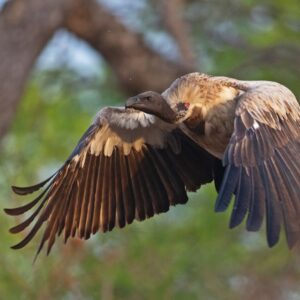
Most populations of vultures in Africa are declining rapidly, and conservationists are calling this an ‘African Vulture Crisis’ 1. There has been an increasing focus on the movements of vultures using tracking devices, but so far, there are very few continent-wide studies 2. To address this, a group of 35 researchers pooled their tracking data from 163 vultures to look at how vulture movements vary across Africa and how vultures are using protected areas in a new study published in Biological Conservation 3. The researchers found that breeding adult vultures had smaller ranges than non-breeding adults and immature vultures. Adult Rüppell’ s Vultures had range sizes larger than 75,000 km2, while Cape Vultures and White-backed Vultures had range sizes of up to 36,000 km2. But the overlap of vultures’ ranges with protected areas was low, which poses significant challenges for conserving African vultures, particularly since the main threat to vultures, the intentional poisoning of carcasses, is widespread, and one poisoning event can kill large numbers of vultures because most species of vultures are social feeders. Successful conservation of vultures relies on reducing wildlife poisoning over vast areas, both inside and outside of protected areas, by tackling the drivers of poisoning. These drivers include human-wildlife conflict, trade in vulture parts4, and elephant poaching 5. For African vultures to survive and thrive, we need better law enforcement and anti-poaching, reduced human-wildlife conflict, and prevention of the illegal trade in vulture parts. Studies using tracked vultures should help prioritise where these interventions are needed most. Full article available here: https://doi.org/10.1016/j.biocon.2022.109516
References:
1 Ogada D. et al. (2016). Another continental vulture crisis: Africa’s vultures collapsing toward extinction. Conservation Letters 9: 89-97. https://doi.org/10.1111/conl.12182
2 Thompson L.J. et al. (2020). Variation in monthly sizes of home‐ranges of Hooded Vultures Necrosyrtes monachus in western, eastern and southern Africa. Ibis 162: 1324-1338. https://doi.org/10.1111/ibi.12836
3 Kane A. et al. (2022) Understanding continent-wide variation in vulture ranging behavior to assess feasibility of Vulture Safe Zones in Africa: Challenges and possibilities. Biological Conservation 268: 109516. https://doi.org/10.1016/j.biocon.2022.109516
4 Mashele N.M. et al. (2021). Uses of vultures in traditional medicines in the Kruger to Canyons Biosphere Region, South Africa. Journal of Raptor Research 55: 328-339. https://doi.org/10.3356/JRR-20-36
5 Mateo-Tomás P. and López-Bao J.V. (2020). Poisoning poached megafauna can boost trade in African vultures. Biological Conservation 241: 108389. https://doi.org/10.1016/j.biocon.2019.108389
LATEST STORIES
Dr. Mike the Cape Vulture
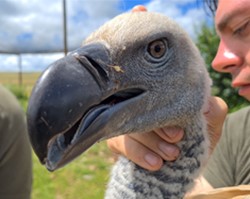
On 3 October 2021, the Lowveld BOPP team was alerted that a Cape Vulture had been found grounded on Licata Nature Reserve, northwest of Hoedspruit. The bird was initially found at sunset by the reserve wardens’ son, Stuart Reid, and although it was unclear why it could not fly, it was speculated that the bird sustained a wing injury at some point.
We arranged to collect the bird immediately after approval from LEDET, and it was taken through to Moholoholo Wildlife Rehabilitation Centre, where it was stabilised and monitored overnight by Nikkita Jackson and Rebecca Lambert. The staff there have always put an exceptional amount of effort into the rehabilitation of birds of prey and have been important allies in the past with dealing with poisoned and injured birds. The following morning, we took the bird to ProVet for x-rays, where it was immediately established that the bird had suffered a bad break to its right metacarpal. Following some emergency arrangements with LEDET, MTPA and the State Veterinary Department, we moved the bird to White River Animal Hospital, where Dr Bennie Pienaar, Dr Karien Prinsloo, and Dr Mike York did an incredible job at pinning the wing. Considering the severity of the break, it was hard to be completely confident that the bird would make a full recovery, but fortunately, the procedure was a success, and the bird could start the next part of its journey.
From here, it was then taken to Dullstroom Birds of Prey Centre, where Magdali Theron and Frith Douglas spent the next few months working their magic to get the bird back to fitness and ready to release. This is not always an easy process, and particularly at the beginning, the birds require a great deal of attention to prevent re-injury of the wing before it has fully healed. After a successful stint in the clinic, it was time to remove the bandages and the pins before placing him in one of the outside enclosures with three other Cape Vultures, two of which are non-releasable, and the third is still being rehabilitated. Fortunately, the entire process had gone incredibly well, and over the following six weeks, the bird slowly began to build up some muscle mass again until he was ready for release.
The BOPP team met up in Dullstroom on 28 January 2022 to give the bird a final check and attach a tracking device and identification ring before finally releasing it. This process could not have gone any better, and the bird immediately shot off and glided through the valley and into the distance, a great success after so much effort from several people. Although it’ s still early days for this Dr Mike, he has already flown a significant distance, heading straight back to the colony at Manoutsa, popping into Mozambique, and spending some time near Shingwedzi in the Kruger National ParkThe case of Dr Mike highlights the value of collaboration between protected area management, veterinary clinics, rehabilitation centres, and conservation organisations. In combination with state-of-the-art GPS tracking, this network ensures the effective rescue, recovery, and safe release of injured birds back into the wild, where they can once again sail through the African skies. With the current declines vultures are experiencing across Africa, every individual counts. Thanks to all who played a role in the rescue and rehabilitation of this magnificent bird.
LATEST STORIES