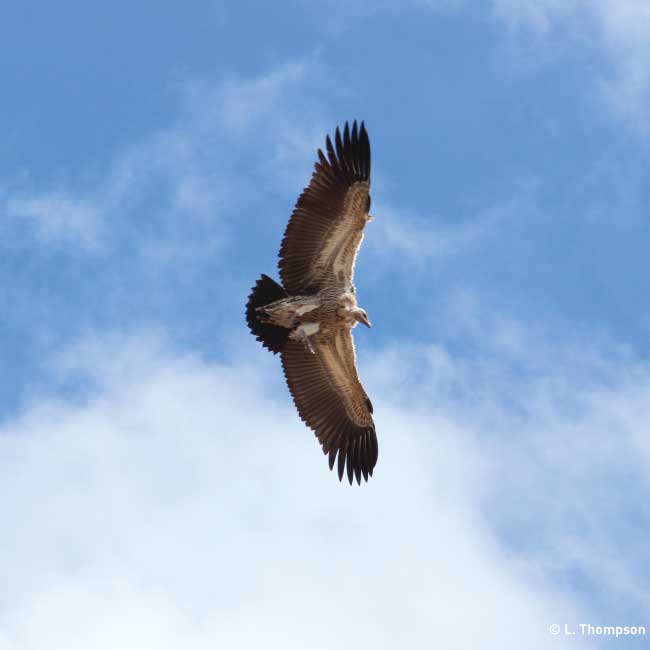
Poisoning poses a deadly risk to vultures in West Africa
Dr Lindy Thompson, the EWT’ s Birds of Prey Programme
African vulture numbers are declining at an alarming rate, and their key threat throughout Africa is believed to be poisoning. One of the reasons people poison vultures is to obtain body parts, both for consumption and use in African Traditional Medicine. Dr Clément Daboné (from the Universities of Tenkodogo and Joseph Ki-Zerbo, both in Burkina Faso) collected information on incidents of mass vulture killings to learn more about the risk that poisoning poses to vultures in West Africa.
Dr Daboné conducted 730 interviews with butchers, veterinarians, foresters, and abattoir guards at numerous sites across Burkina Faso. His results revealed that vultures were killed in motor vehicle collisions and electrocutions at electricity poles, but poisoning was the deadliest threat to vultures in Burkina Faso. Out of 879 known vulture deaths, 779 were due to poisoning. Interestingly, Dr Daboné found that more vultures were more likely to be killed using poisoned baits closer to the country’ s borders, suggesting that poisoning was being done by people from neighbouring countries. He concluded that the recent intentional vulture poisoning events in Burkina Faso were linked to the increasing demand for vulture parts in West Africa.
Dr Daboné and his team highlighted the need for awareness campaigns in local communities to teach people about the risks of using poison. They also mentioned the need for improved legislation and stronger commitment by West African governments to stop the trade in vulture body parts and prevent the extinction of these highly threatened birds and the services they provide.
Vultures face similar threats in southern Africa, and the Great Limpopo Transfrontier Conservation Area is a wildlife poisoning hotspot. For this reason, the EWT’ s Birds of Prey Programme has assisted in drafting South Africa’ s new national Vulture Biodiversity Monitoring Plan, and we are providing Wildlife Poisoning Response Training to rangers so that they know how to identify, detect, and respond effectively to wildlife poisoning events by containing the crime scene and sampling carcasses for investigative purposes. Rangers are also trained on methods to save as many surviving birds as possible and decontaminate the scene to prevent further poisoning of animals or people. Together, we can make a difference.
The study was titled ‘Trade in vulture parts in West Africa: Burkina Faso may be one of the main sources of vulture carcasses’ , and you can access it here: https://doi.org/10.1017/S095927092100054X
References:
Daboné, C., Ouéda, A., Thompson, L.J., Adjakpa, J.B. & Weesie, P.D.M. (2022) Trade in vulture parts in West Africa: Burkina Faso may be one of the main sources of vulture carcasses. Bird Conservation International. https://doi.org/10.1017/S095927092100054X
Gore, M.L., Hübshle, A., Botha, A.J., Coverdale, B.M., Garbett, R., Harrell, R.M., Krueger, S., Mullinax, J.M., Olson, L.J., Ottinger, M.A., Smit-Robinson, H., Shaffer, L.J., Thompson, L.J., van den Heever L. & Bowerman, W. (2020) A conservation criminology-based desk assessment of vulture poisoning in the Great Limpopo Transfrontier Conservation Area. Global Ecology and Conservation 23:e01076. https://doi.org/10.1016/j.gecco.2020.e01076
Poisoning Risk to Vultures: A West African Crisis with Continental Implications
The poisoning risk to vultures has reached catastrophic levels in West Africa, where 89% of recorded vulture deaths result from deliberate poisoning. Dr Clément Daboné’s groundbreaking research in Burkina Faso reveals this alarming trend, with 779 of 879 documented vulture fatalities attributed to poisoned baits – particularly near national borders, suggesting transnational trafficking of vulture parts for traditional medicine.
Key Findings from Burkina Faso
- 730 interviews with butchers, veterinarians and abattoir staff
- Poisoning accounts for 89% of vulture deaths
- Border areas highest risk – indicating cross-border trade
- Secondary poisoning kills hundreds per incident
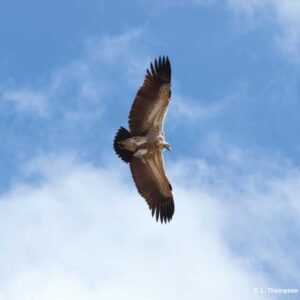
A Critically Endangered White-backed Vulture, Gyps africanus, photographed in South Africa’ s Limpopo Province © L. Thompson.
Poisoning Risk to Vultures: Southern African Parallels
The crisis mirrors threats in the Great Limpopo Transfrontier Conservation Area, where the EWT’s Birds of Prey Programme is taking action:
- Drafting South Africa’s Vulture Biodiversity Monitoring Plan
- Training rangers in Wildlife Poisoning Response
- Teaching crime scene preservation and carcass sampling
- Developing protocols to save surviving birds
“Each poisoning event can wipe out entire vulture colonies,” explains Dr Lindy Thompson. “We’re racing to build capacity before it’s too late.”
Urgent Conservation Measures Needed
-
Community awareness campaigns on poisoning impacts
-
Stronger legislation against vulture part trade
-
Cross-border cooperation to combat trafficking
-
Alternative livelihoods for traditional healers
With African vulture populations declining by up to 90% for some species, addressing the poisoning risk to vultures is critical to preventing ecological collapse across the continent.
A Critically Endangered subadult Hooded Vulture, which was poisoned, along with 64 other birds of prey, in South Africa’ s Limpopo Province in 2015. © L. Thompson.
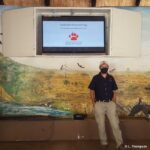
John Davies from the EWT’ s Birds of Prey Programme talking about wildlife poisoning at Moholoholo Wildlife Rehabilitation Centre in South Africa’ s Limpopo Province in 2020. © L. Thompson.
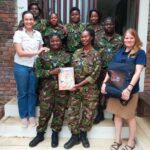
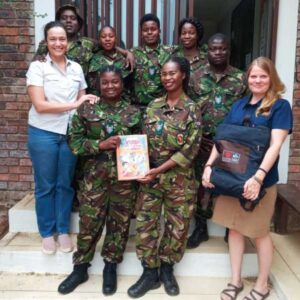
Dr Lindy Thompson (right), from the EWT’ s Birds of Prey Programme, presented Wildlife Poisoning Response Training for the Black Mambas, an all-female anti-poaching force, in South Africa’ s Limpopo Province.
The study was titled ‘Trade in vulture parts in West Africa: Burkina Faso may be one of the main sources of vulture carcasses’ , and you can access it here: https://doi.org/10.1017/S095927092100054X
References:
Daboné, C., Ouéda, A., Thompson, L.J., Adjakpa, J.B. & Weesie, P.D.M. (2022) Trade in vulture parts in West Africa: Burkina Faso may be one of the main sources of vulture carcasses. Bird Conservation International. https://doi.org/10.1017/S095927092100054X
Gore, M.L., Hübshle, A., Botha, A.J., Coverdale, B.M., Garbett, R., Harrell, R.M., Krueger, S., Mullinax, J.M., Olson, L.J., Ottinger, M.A., Smit-Robinson, H., Shaffer, L.J., Thompson, L.J., van den Heever L. & Bowerman, W. (2020) A conservation criminology-based desk assessment of vulture poisoning in the Great Limpopo Transfrontier Conservation Area. Global Ecology and Conservation 23:e01076. https://doi.org/10.1016/j.gecco.2020.e01076
Dr Lindy Thompson, the EWT’ s Birds of Prey Programme