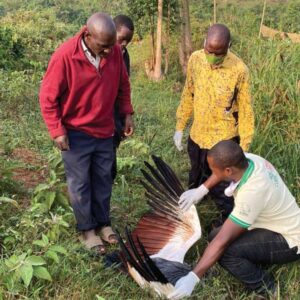
Addressing the impacts of power lines on Grey Crowned Cranes in Lwengo
Gilbert Tayebwa (Southcentral Uganda field officer and Sarah Kugonza (Conservation Intern)
Introduction
Any bird able to fly stands a chance of colliding with above-ground power lines and being killed or electrocuted when perching or nesting on electricity structures and cables. In Lwengo and possibly other regions of Uganda, power lines pose the greatest threat to the Endangered Grey Crowned Crane’ s survival. Migrating birds at night, birds flying in groups, and fast-flying and large birds like storks and raptors are particularly vulnerable to power line collisions. Electrocution from power lines has also been reported.
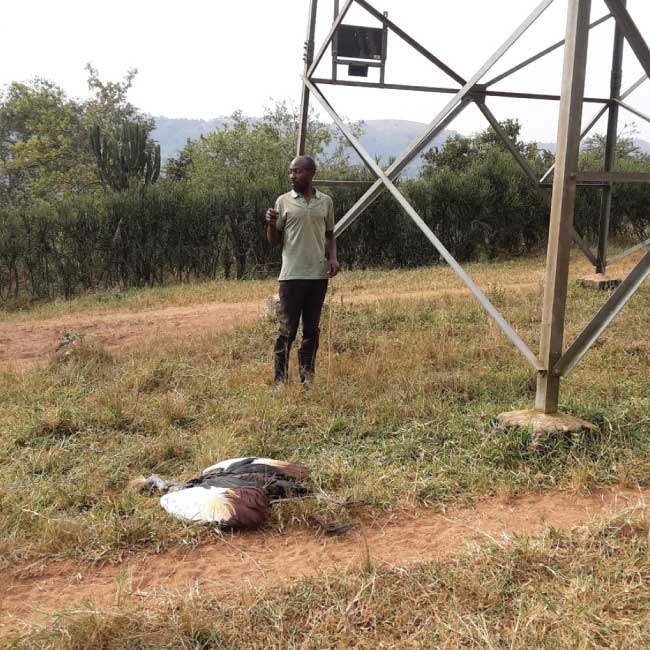
Grey Crowned Crane mortality beneath a power line in Lwengo, Uganda
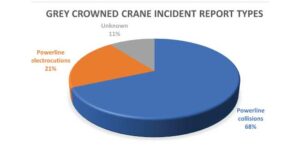 The percentage contribution of incidents by various electricity power line categories. The International Crane Foundation (ICF) and Endangered Wildlife Trust (EWT) Partnership’ s African Crane Conservation Programme aims to find and implement preventative solutions to lessen the damage power lines have on cranes, other birds, and their surrounding ecosystems. In Lwengo, more than 21 cranes have died after flying into and perching on power wires over one year. Grey Crowned Cranes are the only crane species affected by electrocution because it is the only crane that perches and roosts in trees and on power line infrastructure. Some of these cranes are electrocuted or shocked, and as a result of the accident, they perish. To better understand the impacts of human-caused mortality on cranes in south-central Uganda, we are implementing a project to understand how power lines and associated infrastructure affects biodiversity in Lwengo. We are using various methods, including:
- Mapping the distribution pattern of Grey Crowned Crane incidents caused by power line infrastructure (key emphasis and activities have been on mapping incidents and identifying incident hotspots)
- Establishing transects for routine monitoring
- Empowering key stakeholders (especially Crane Custodians, wetland management committees, and local government leaders to identify, handle, and ethically address crane-power line incidents.
Capacity Building
Crane Custodians are local community members who voluntarily care for cranes and their wetland habitats. Currently, the ACCP in southcentral Uganda has 15 custodians in Lwengo (eight females and seven males) and 15 in Rukiga who have been vetted for engagement in power line surveys. The selection was based on gender inclusiveness.
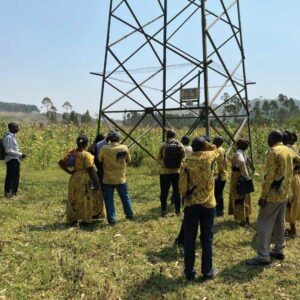
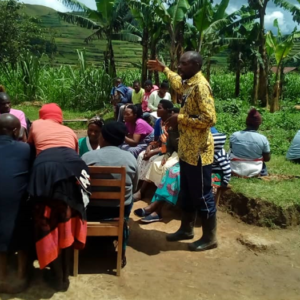
The custodians being taught how to collect data during power line surveys.
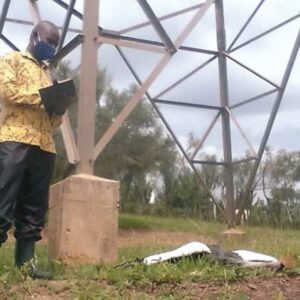
A crane custodian, after identifying an incident and recording it
Community engagement
Meetings and hands-on-field works are being held with other stakeholders, such as the communities that live in crane power line incident hotspots, to identify incidents, disseminate information on the presence of power line threats to cranes and other birds surveying critical hotspots for power line collisions. The project team has trained the groups on various aspects, such as:
- The different ways to handle power line incident mortalities
- How to report power line mortalities (currently, the project team, crane custodians, and nearby authorities are responsible for responding)
- Power line incident identification (differentiating between a power line collision and electrocution and elaborating on the cause of the incident)
- Adherence to safety guidelines when monitoring and handling power line-related mortalities.
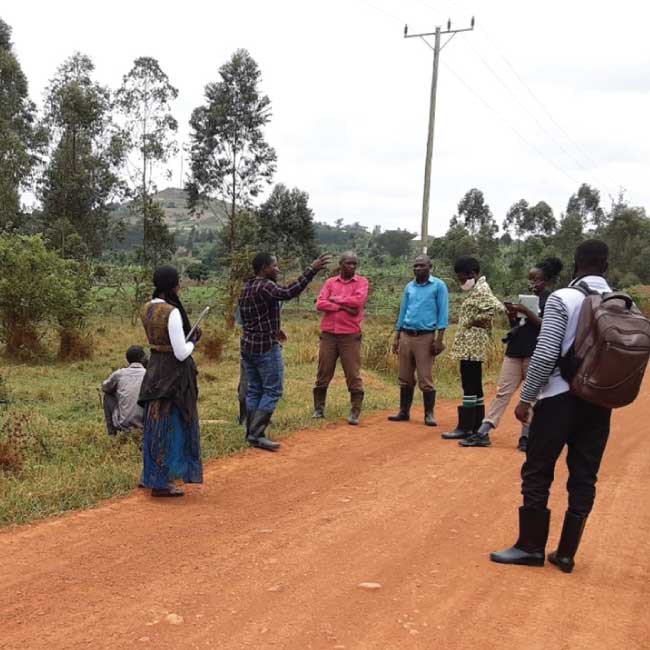
Community members during a field-based powerline survey in Lwengo
Most of the communities engaged are helping to disseminate information to other local communities on how and when to report power line incidents. The trainees can now spread information about the possibility of zoonotic diseases spreading to people who handle dead wildlife, such as cranes below power lines, and mobilise community members to report power line-related incidents involving cranes.
Capacity building within the project team
In June 2022, the Uganda team received one week of skills-building and enhancement sessions (in-house and field-based training). The team engaged in planning and developing powerline incidents data collection protocols and the setup of scientifically robust methods in crane mortality incidents data collection, including developing a risk assessment tool.
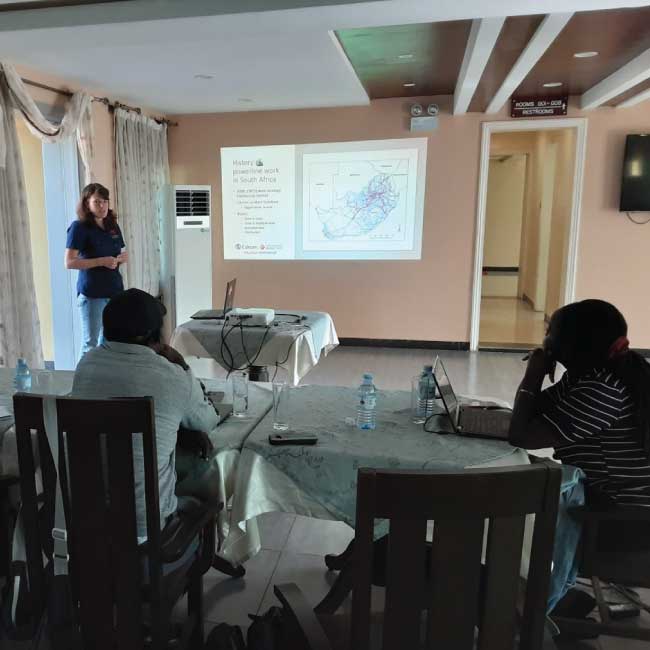
The EWT’ s Christie Craig from South Africa training the Uganda team in Power lines
CRANE CUSTODIANS STEP UP THEIR DRIVE TO ADDRESS CRANE POISONING IN UGANDA
Adalbert Aine-omucunguzi, Orishaba Phiona, and Gilbert Tayebwa, ICF/EWT African Crane Conservation Programme, adalberta@ewt.org.za
In 2012, the International Crane Foundation/Endangered Wildlife Trust Partnership (ICF/EWT) recruited and trained five community volunteers to safeguard breeding cranes in southwestern Uganda. This was in response to the escalating threats from crane poachers and wetland encroachment. These community volunteers were named Crane Custodians, and the approach was guided by the belief that securing a future for cranes depended on local people tolerating cranes on their farms, reporting poaching and other incidents, and receiving constant positive messages about cranes from their fellow community members. The Crane Custodians have since helped to raise community awareness about the importance of conserving cranes and have been instrumental in securing safe space for breeding cranes. The Uganda project has grown and now comprises 50 Crane Custodians, 17 females and 33 males
Despite this, in March and April 2021, over 60 cases of crane poisoning were reported in south-central Uganda. The poisoning is believed to have been driven by crop damaged caused by cranes. Some farmers are using agrochemicals, notably Furadan, to poison cranes that visit their crop fields. In response to escalating poisoning, our Crane Custodians have stepped up their awareness drive to educate communities so that they aware of the dangers of misusing agrochemicals, which are unfortunately readily available in local markets and can easily be purchased by anyone.
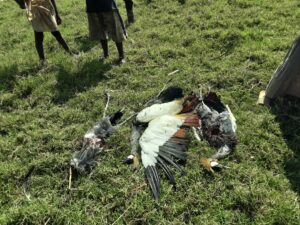 Through various available awareness-raising activities such as community meetings, church gatherings, music composition, and moving from house to house, the custodians are sensitising community members to the consequences of poisoning cranes and the need to protect Uganda’ s National Bird.The custodians have been instrumental in building the current community support and pride for cranes that we see in Uganda. The dedicated volunteers also report and monitor cranes that are breeding, contributing to increased breeding success for cranes within these communities.
The Uganda project team is heavily indebted to these unsung heroes for their dedication to crane and wetland conservation and their willingness to volunteer their time to serve nature.
FLOODING ENHANCES THE VULNERABILITY OF WETLAND-DEPENDENT COMMUNITIES IN SOUTH WESTERN UGANDA
Phionah Orishaba, Project Assistant, Nature Uganda (NU), Endangered Wildlife Trust (EWT), and International Crane Foundation Partnership (ICF), PhionaO@ewt.org.za
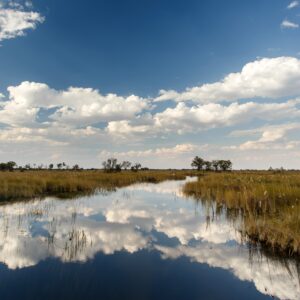
In the 1950s, as a result of the growing population and resultant increased demand for food, communities in the Kabale region of south western Uganda began draining intact wetlands for agriculture. With their rich, fertile soils, wetlands, riverbanks, and lakeshores were considered prime areas for crop production. Natural wetland resources are also harvested for food, building materials, and craft construction. Intact, functioning wetlands provide critical ecosystem services, such as water absorption and storage, which reduce flooding in the rainy season. Wetlands also release stored water during the onset of the dry season, thereby delaying water shortages during times of drought. However, extensive wetland encroachment and degradation has impacted the ecological functioning of wetlands, including the regulation of flooding.
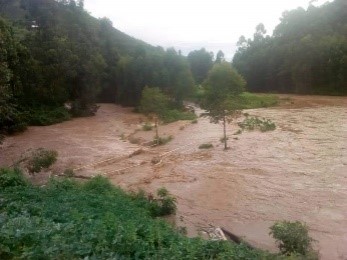
Prolonged rainfall events from March to May of this year, resulted in excessive flooding and landslides throughout most wetland areas in south western Uganda. Floodwaters carry substrates such as soil, stones and small boulders which endanger wildlife and degrade natural ecosystems. Resultantly, the floods impacted the survival and breeding success of local Grey Crowned Cranes, as they occurred during the peak of the crane breeding season.
The floods caused other forms of devastation, including the loss of crops and animals, and the destruction of buildings and roads. Maziba Primary School in Maziba Sub-County and Kakoma Church of Uganda in Katuna Town Council are among the buildings that were destroyed during the ordeal. Roads in Rubaya Sub-County were also ravaged. According to the District Natural Resources Officer of Kabale, Mr Rogers Akatwijuka, the floods resulted from increased rainfall, coupled with wetland encroachment and poor farming practices in the upslope regions. Mr Akatwijuka recommended that wetland restoration, and soil and water conservation initiatives be implemented to minimise the impact of future flooding events.
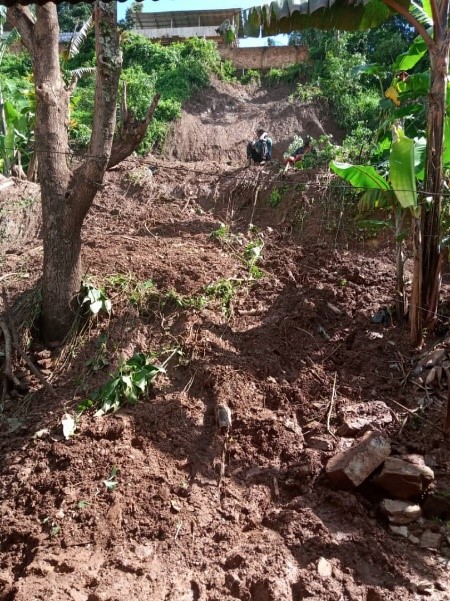
Ms Evas Asiimwe, the District Environment Officer of Kabale, said that economic activities such as agriculture, sand mining, brick making, industrialisation, infrastructure development, and wetland encroachment were the main drivers of habitat degradation. She continued, “Currently the region is facing weather-related challenges because most of the natural vegetation resources have been depleted, leaving the soils bare”. Ms Asiimwe emphasised that there is an urgent need to restore degraded habitats, guided by the national environmental policies and guidelines.
Mr John Zinkubire, the chairperson of the Kibuga Abarihamwe Community Group, and Crane Custodian Mr David Musinga reported that their crops were washed away by the floods and they are expecting that their community will face increased food insecurity and poverty. Amid the devastation, they did happily report that the six pairs of cranes, usually seen foraging in the wetland and cattle farms near their homes, survived the floods, and have been seen with juveniles. Similarly, Mr Francis Mwebesa, a community member of Mayengo Ward, Katuna Town Council, said the flooding this year was particularly extreme. The two families of cranes in the nearby wetlands are reported to have narrowly survived the floods. He witnessed the chicks floating on the water surface and navigating their way to safety.
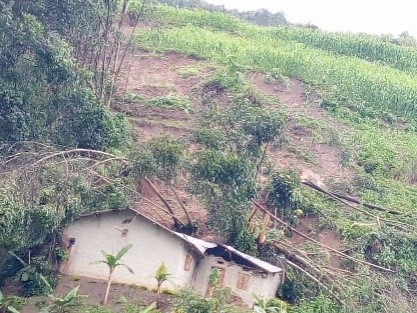
Unfortunately, not all crane families would have been so lucky. In an attempt to locate the two families of cranes in the wetland near Hakiheiga Trading Centre, Crane Custodians, Annet Tusiime and Jeniffer Tumuhimbise reported that, although the adult cranes were seen feeding near the flooded wetlands, none of their chicks were observed. They were unable to investigate further due to excessive flooding in the area. Mr Kamuzinzi Edward, a Crane Custodian from Kahungye Sub-County, reported that landslides had devasted his crops, and soil from the upland slopes had been washed into the wetlands. He feared that any eggs that had not yet hatched would have been unlikely to survive.
Lt Col Robert Nahamya of the Uganda Peoples Defence Forces and his army provided a helping hand to the families in Kaharo, whose homes had been affected by the flood. The Kabale LCV Chairperson, Mr Patrick Besigye Keihwa, extended comforting words to households whose properties were destroyed, promising to inform the office of the Prime Minister and the Ministry of Risks and Disaster Management, who would be able to provide additional relief services. Milton Kwesiga, the Executive Director of Africa Disaster Reduction Research and Emergency Missions, said that according to the constitution of Uganda, wetlands are protected areas. He continued that any agricultural activity in wetlands, except for recommended sustainable livelihoods, like apiary and harvesting of local materials for handicrafts, is illegal and should be punishable. He noted that wetlands provide essential ecological services, including water filtration, hydrological cycling, and flood control.
All Ugandans are called upon to curb wetland degradation by becoming conservation ambassadors and taking action to restore and conserve wetlands and reduce risks associated with climate change. There is an urgent need to implement environmental protection interventions, such as tree planting along wetland buffer zones, and soil and water conservation initiatives using bamboo and elephant grass. Most people in the Kigezi region depend on wetlands for survival and economic security. Thus, a collaborative approach between communities, government, and NGOs is essential to conserve wetland habitats for the benefit of both people and biodiversity.
THE UGANDA CRANE FESTIVAL 2020 DRAWS GREY CROWNED CRANES TO THE CELEBRATIONS
Jimmy Muheebwa, Uganda Projects Coordinator, Gilbert Tayebwa, Research and Monitoring Field Assistant, and Phiona Orishaba, Community Education Field Assistant, EWT African Crane Conservation Programme
JimmyM@ewt.org.za, GilbertT@ewt.org.za, and PhionaO@ewt.org.za
The unusual happened as the International Crane Foundation/Endangered Wildlife Trust/NatureUganda Partnership celebrated cranes on 2 March 2020 in Kabale, Uganda. The function that was held at Kikungiri Primary School and attracted hundreds of participants including primary school children, university students, conservationists, civic leaders, the media community, private sector practitioners, and politicians. Surprisingly, cranes, which were slated to be the centre of the talk during the celebrations, made an appearance, to the amazement of many.
The Uganda Crane Festival formed part of the build up to World Wildlife Day 2020, and was intended to promote partnerships and engagements with stakeholders who may be impacting on wetlands and cranes, increase crane and wetland awareness among youths in the project area, and engage communities to improve their appreciation of wetlands and their connection to Grey Crowned Cranes.
By 8:30 on the morning of the festivals, hundreds of participants had gathered at Highland Hotel Kibale, where they received t-shirts and banners. Guided by the traffic police and led on by a brass band, the procession marched through Kabale town up to the celebrations venue, Kikungiri Primary School. The guest of honour on this auspicious occasion was the Minister for Tourism, Wildlife and Antiquities, Godfrey Kiwanda, who was taken on a tour of a variety of wetlands-based arts and crafts exhibitions displayed by schools and communities to demonstrate sustainable use. The EWT’ s Jimmy Muheebwa was afforded the opportunity to share project initiatives such as Crane Custodianship, “Cranes in the Classroom”, and the Conservation Agreement approach, and how the initiatives have contributed to improved crane breeding success. A “Cranes in the Classroom” school assessment had also been conducted, and the winning schools received their prizes – a plaque for first place and certificates for second and third places – at the festival. Katuna Primary School were well-deserving winners, while Rushabo Primary School and Buhara Primary School took second and third place respectively.
As Minister Kiwanda took to the podium, a flock of cranes hovered in the area, clearly considering landing in the area. The crowd had been taught how to make crane calls, and put this knowledge to good use, calling for over five minutes, which then transformed into dancing, singing, gesturing, and clapping in imitation of Grey Crowned Cranes. The minister was amused by the timing of the cranes’ appearance, just as he was about to speak, and wondered if it had been prearranged. He was glowing in his praise of the work being done by the cranes project, and paid special tribute to EWT partners, the International Crane Foundation. The minister also launched the National Species Action Plan for the Grey Crowned Crane, the development of which NatureUganda had championed, on behalf of the government of Uganda. The proceedings were closed with local communities staging a crane dance, which the minister couldn’ t resist joining.
JIMMY MUHEEBWA SCOOPS A SPECIES RECOVERY AWARD
Earnest Muheebwa Kwesiga and Arnold Muheebwa Nakunda (18 and 17 years old) On 3 March 2020, Uganda joined the rest of the world in celebrating World Wildlife Day. As part of the activities to commemorate World Wildlife Day 2020, the government of Uganda, through the Ministry of Tourism, Wildlife and Antiquities, recognised people and institutions that have made unique and significant contributions to the sustainable conservation and development of wildlife resources in Uganda. This was through the National Conservation Awards Scheme set up in the ministry. Seven individuals and institutions were recognised during the event. Jimmy Muheebwa scooped the award for his outstanding efforts to save the Grey Crowned Crane – the National Bird of Uganda, and an Endangered species. A beaming Jimmy attributed this award to his 20 years of dedicated work on securing the future of Grey Crowned Cranes, and also to the support he has received from donors, fellow conservationists, and his family, who endure long absences from home as he manages the conservation project. He further contends that there is a need for Ugandans to practice sustainable relationships with Mother Nature, saying “Nature sustains our lives; we too, should sustain it.This is the second accolade Jimmy has won thanks to his amazing passion for conserving Grey Crowned Cranes, with the first being a prestigious Whitley Award in 2010. Jimmy is currently the Uganda Projects Coordinator for the African Crane Conservation Programme, being implemented under the International Crane Foundation/Endangered Wildlife Trust/NatureUganda Partnership, and has been involved in crane conservation in Uganda for the last 20 years.
It all began in 1998, when Jimmy enrolled for his MSc course at Makerere University in Uganda and his research topic was “Assessing the biology of the Grey Crowned Crane in Uganda,” which brought him to the International Crane Foundation in the USA. Jimmy traversed the whole country in 2000, looking for crane sites, crane nests and crane roost sites. By then the bird was listed as Vulnerable by the IUCN, and he wanted to make a difference in its life. The Grey Crowned Crane population estimate, which by his research stood at 10,000 birds, had declined from over 100,000 in the 1970s – an indication of a 40% decline in about 30 years, which was proof that the cranes were at risk of extinction if no conservation measures were taken, and sooner rather than later. According to his findings, the breeding success for the cranes then stood at 0.8. Breeding or fledging success is a comparison or ratio of number of chicks to the breeding pairs. Therefore 0.8 would mean that on average each breeding pair (with one nest) had less than one chick. For example, if you were monitoring 100 breeding pairs and they have 80 chicks in total, the ratio of chicks to the breeding pairs is 80:100 = 0.8. The causes of the low ratio could be breeding failure, egg collection, chick death or removal, among others.
Key wetlands for crane breeding and survival of other forms of biodiversity had suffered extensive degradation and affected not only the cranes, but also the humans and other biodiversity. Jimmy then embarked on an awareness programme in the communities, to facilitate the development of respect for cranes and their breeding habitats – the wetlands. The Nyamuriro Wetland Management Plan, that should have guided the sustainable use of the wetland, had been abandoned by the policy implementers for fear of direct confrontation with the communities who were using the wetlands for crop production. Jimmy had to take the bull by the horns. Through sensitisation meetings, he was able to draw the attention of the local communities and their local leadership towards crane tolerance on farmlands and more importantly to accept conducting wetland restoration demonstrations in the degraded sections of the wetland. The success stories at Nyamuriro wetland set a positive precedent and were replicated at Mugandu in Rubaya subcounty and at Kaku/ Kiyanja wetland in Lwengo district. Cranes took advantage of the restoring habitats to breed and feed there.
In 2010, Jimmy was honoured with a Whitley Award, in the UK, for his outstanding work on engaging communities to conserve cranes and wetlands. The award, which came with GBP 30,000, was a turning point for Jimmy, as he re-invested the funds into conservation activities to brighten the plight of the cranes. In 2013, the IUCN acted on concerns raised by Jimmy, and other conservationists, based on monitoring data and reviewed the status of Grey Crowned Cranes, uplisting them from Vulnerable to Endangered on the global Red List. Not short of innovations, along the way, Jimmy introduced the crane custodianship initiative where community members volunteer to enhance the breeding success by securing the breeding sites. To-date, there are over 50 volunteer custodians spread across the range districts of Masaka, Bushenyi and Kabale greater. They monitor cranes and submit monthly reports on a regular basis. They also conduct awareness campaigns in the communities on the importance of cranes. On several occasions, the custodians have intercepted crane captors and saved crane chicks that would have ended in sale or domestication.
In 2016, the National Species Action Plan for the Grey Crowned Crane, that Jimmy had been leading on, was approved by the Ministry of Tourism, Wildlife and Antiquities. It is now a working document that guides the conservation activities of the Grey Crowned Cranes in Uganda. Quite often, Jimmy has organised successful festivals to celebrate the cranes, the most recent being one that preceded World Wildlife Day 2020. At the same function, the National Species Action Plan was launched by the Hon Minister of State for Tourism, Wildlife and Antiquities.
The breeding success, consequently, has steadily improved over the years from 0.8 in the early 2000s to 1.56 in the 2019 breeding season. Similarly, cranes nesting in the restored areas have increased in numbers and so do those on public land. By February this year, eight breeding pairs have been recorded at restored Nyamuriro wetland, nine at the restored Mugandu, and five at Kiyanja