SELFIE AND SCARPER: THE OVER-TOURISM DILEMMA
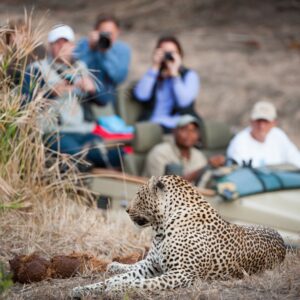
Phoebe Mottram, Founder of Thatch and Earth, info@thatchandearth.com Anyone who has visited a popular protected area in South Africa will have seen it – masses of vehicles packed with passengers ogling a particular species. These species fall into the ‘charismatic’ category and are usually big and pretty unique (sorry Impalas). Their popularity is understandable, some of these species are truly awe-inspiring, but clever marketing has encouraged guests to start visiting protected areas with species-specific tick lists, which isn’ t entirely negative. Quite frankly, the popularity of charismatic species has sustained many of South Africa’ s protected areas for decades. However, in recent years this has led to something close to species-specific over-tourism.
Academic literature refers to over-tourism as the congestion of tourists causing conflict with local communities. The congestion is clear; in these scenarios, poor sighting etiquette is unfortunately quite common. But what about the conflict? Many seasoned bush people will have stories of stress responses from animals. A 2018 paper by Broekhuis found that, in the Masai Mara, “female cheetahs that were exposed to high tourist abundance raised 0.210.72 cubs to independence compared to 2.320.11 cubs in low tourism areas”. Lower recruitment levels over consecutive years could quite easily drive a species towards extinction. If this trend were to repeat in protected areas across South Africa this would be extremely concerning, especially considering that many charismatic species are rare to begin with.
So, what do we do about this? We wouldn’ t want to stop tourism entirely. 2020 has proven that. The loss of tourism revenue this year has had devastating impacts on livelihoods. Some would recommend that we limit tourism through the low impact, high-value model. While this has seen success, it still has flaws, the major one being that it prices the vast majority of potential customers out of the market. In the long run, this may prevent the development of conservation-conscious behaviour changes that commonly arise from experiences with wildlife. Ideally, we would spread the tourism income equitably across protected areas, and thus limit the potential for over-tourism. However, there will always be areas which are considered ‘must-visits’ .
It appears then that the solution lies in widening the marketing focus from single species to entire ecosystems. Guests should be encouraged to learn about the species diversity of the protected area they’ re visiting before travelling, and to use professionally trained guides when they arrive. Guides can start to place wildlife encounters in the broader ecosystem context, using this to engage with guests about their place within, and their impact on, their environment. By ensuring that all guides, from the local to the national level, meet a high standard of scientific education and ethics, we can empower them to teach specific and important lessons, such as the value of ecosystem services. This changed approach may reduce the culture of guests tipping for sightings, encouraging them to tip in recognition of the skills and knowledge of their guide instead. This, in turn, will positively reinforce ethical practices.
Guests will always be excited to see charismatic species, as much as I will. If I’ m looking at a tree and a Leopard walks by, you can be sure I’ m always looking at the Leopard. But by empowering guides with more substantial scientific knowledge, and encouraging guests to search for lesser-known species, we can limit the effects of localised over-tourism. We can create generations of conservationists who appreciate the dung beetle in the elephant dung just as much as the elephant itself.
Reference: Broekhuis, F. 2018. Natural and anthropogenic drivers of cub recruitment in a large carnivore. Ecology and Evolution. 8. 6748-6755.
A WORD FROM THE CEO: THE EWT CALLS FOR THE URGENT REOPENING OF NATURE-BASED TOURISM IN THE NO-TOUCH ECONOMY
Yolan Friedmann, EWT CEO
yolanf@ewt.org.za
The coronavirus or COVID-19 global pandemic has affected every aspect of life as we know it. There is speculation about whether the world will return to ‘normal’ or if society will ever be the same again. However, we do know that the COVID-19 virus will not merely disappear and until a vaccine becomes available, or until human beings have developed a minimum immunity response rate, the world will not return to normal, if ever.
Despite job losses in major South African industries in recent years, the tourism sector has shown resilience. In 2017 the industry created 31,752 net new jobs, which was the most number of net new jobs generated by tourism within a year in at least the previous eight years.
“Africa’s unique diversity of wildlife and habitat has the potential to radically transform the continent’s economy” (UNEP, 2019).
There were 705,871 persons (or 4,5% of total employment) directly engaged in producing goods and services purchased by visitors in 2016, 681,619 persons (or 4,2% of total employment) in 2017, and 739,657 (or 4,5% of total employment) in 2018. (Tourism Satellite Account for South Africa, final 2016 and provisional 2017 and 2018/ Statistics South Africa). Over 60% of employed people in the sector are women (mostly in the areas of catering and accommodation) with a younger mean average age than all other sectors. Furthermore, Stats SA published data in 2018 show that one in every 22 working South Africans, and more than 2,892,303 people, are employed in the tourism sector.
The tourism industry in South Africa is heavily reliant on nature-based tourism, which is one of the main attractions for travellers in South Africa, as it is for 80% of foreign tourists (Saayman, 2017).
Nature-based tourism refers to all forms of tourism, where relatively undisturbed natural environments form the primary attraction or setting. The wildlife and nature-based sector specifically, supports a vast number of associated industries and sectors such as the conservation sector through generating income for park management, wildlife protection, anti-poaching, and to some degree border control through the management of human movement in transfrontier parks. For years, national and provincial conservation agencies have been generating significant revenue through nature-based tourism that contributes substantially to conservation management. The sector generates 40% more full-time employment than agriculture and provides greater opportunities for women than other sectors. (UNEP, 2019).
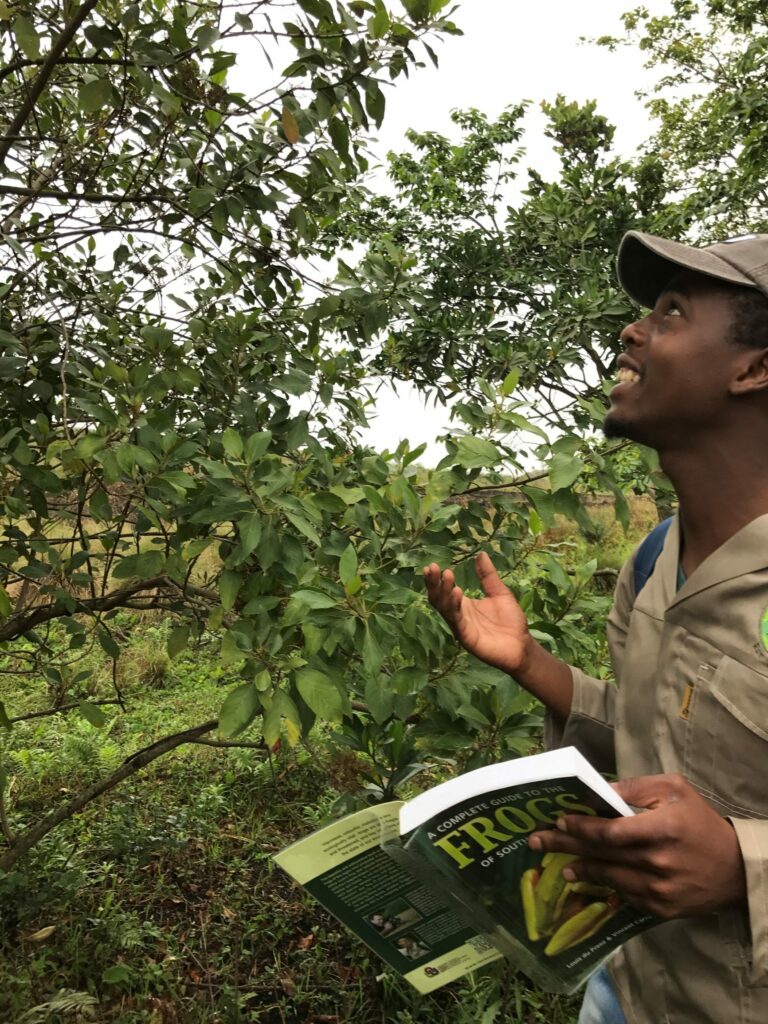
Game reserves in South Africa also generate significant benefits to the surrounding communities who contribute to goods and services consumed by visitors. In the absence of economic activity in these parks, there is an increased risk of poaching, illegal resource extraction and park invasion. It has taken years of stakeholder engagement and hard work for communities to have equitable access to benefits arising from conservation and nature-based tourism, and this will be for nothing if our protected areas lose their economic value to the communities who depend on them. To survive, these communities may resort to illegal resource use. It must be noted that many people employed in the nature-based tourism sector are unskilled/semi-skilled and are usually breadwinners in their families. Reopening local tourism ASAP will contribute to securing their employment and to safeguarding livelihoods in the most vulnerable households.
SANParks, as the custodian of approximately 70% of South Africa’s state-owned protected area network, derives 80% of its income from nature-based tourism activities. A significant component of this revenue funds park management, anti-poaching, management of marine protected areas, ranger patrol, and protection services, including the aircraft and associated rhino security technologies, as well as management of wildlife. Many community-owned reserves generate income for clinics, schools, community recreation facilities and contribute many jobs linked to goods and services associated with these reserves, including catering and accommodation. A number of these community-owned reserves are related to national and provincial parks and benefit from visitors to parks, or their own concessionaire managed lodges.
“To preserve their wildlife and wild places, governments should look at protected areas not only as environmental assets but economic ones as well, with the continent’s 8,400 protected areas producing US$48 billion in revenue.” (UNEP, 2019).
Tourism, and in particular wildlife and nature-based tourism, should, therefore, be prioritised in the measures to ease the economic impact of COVID-19. Nature-based tourism is also a major outlet for people who have been confined in urban areas. Many studies have shown a close link between human wellbeing and nature-based tourism. Approximately 70% of visitors to our national parks are local tourists, and the tourism sector can continue to support thousands of livelihoods, even before our borders reopen.
Other consumptive forms of nature-based tourism such as hunting for biltong and game meat also have a local market and might contribute to food security.
The consequences of any extended lockdown for the wildlife and nature-based tourism sector, and by extension to the entire tourism industry, will be dire and potentially devastating as a result of:
- significant job losses (in particular for those with a low skill base and less likelihood of finding alternative employment);
- revenue losses for the parks’ agencies, communities, NGOs, conservation authorities, and government (through taxes);
- eroded protection of South Africa’s biodiversity and protected areas;
- eroded infrastructure (fences, road networks, camp maintenance etc.);
- an increase in poaching, wildlife crime, and illicit wildlife trade;
- reduced benefits to communities whose land has been returned to them in the land restitution process;
- over-reliance on the unsustainable use of natural resources by rural communities;
- potential negative sentiment towards the protected area network should communities lose all the benefits derived from them; and
- reduced income for conservation NGOs who play a significant role in biodiversity conservation and community conservation in South Africa, and are major employers in the sector.
Most of our parks and game reserves are in areas that have lower infection rates and where economic activity could open faster than in metros. It is possible to introduce nature-based tourism into the economic recovery now, through a phased approach that sees this form of tourism being allowed to begin operating, under stable conditions and Standard Operating Procedures. This is based on the fact that:
- guests can participate in almost all nature-based tourism activities in semi-isolation and applying physical distancing principles. People could only visit the parks and reserves within their own provinces and limited numbers can be accommodated at any given time;
- wildlife and nature-based tourism offers guests the chance to self-drive, or go on game drives in open-air vehicles with reduced numbers of guests or family members only; providing a more exclusive and interactive experience;
- adventure tourism offers guests the opportunity to undertake outdoor activities such as hiking, trail running, mountain biking, canoeing/paddling, bird guiding and more, in semi-isolation states and with expert guides, thus reducing social interactions and in low numbers.
- Standard Operating Procedures have been developed for game reserves and parks, specifying acceptable sizes of groups for different activities, and enforcing strict protocol in restaurants and reception areas
The EWT believes that nature-based tourism not only offers guests the opportunities to have enjoyable, safe, and healthy vacation opportunities but is one of the few sectors that stands to revitalise our economy and bring much-needed income back into South African households in the short term.
Allowing a limited but early phased reopening of this sector offers the opportunity to increase the economic, mental and physical wellbeing of millions of people, and sustain the conservation of South Africa’s natural resources for future generations.
