Help protect Africa's 

South Africa’s Natural Heritage Needs Support

South Africa’s Natural Heritage Needs Support

South Africa’s Natural Heritage Needs Support

Eleanor Momberg
 

Threatened African carnivores protected through conservation efforts in South Africa

South Africa’s natural heritage requires a commitment from all to ensure that it is protected for future generations.

Without a healthy environment, neither people, plants or animals would survive.  This includes the protection and conservation of valuable water resources, the air we breathe and the soil required to sustain life.

Key to South Africa’s natural heritage are species under threat of extinction.  African Wild Dogs, Cheetahs and Lions are part of the living heritage that makes Africa unique.

“These species are deeply connected to our identity and to the landscapes for which Africa is internationally recognised. They are also important components of healthy, functioning ecosystems. Protecting them is therefore about much more than saving individual animals – it is about protecting the natural systems and wildlife that future generations should inherit,” says the EWT’s Carnivore Conservation Unit manager, Derek van der Merwe.

The EWT’s work to protect threatened wildlife has carnivore conservation as an important part of our history.

“Through the Carnivore Conservation Unit (CCU), we have spent decades combining science, field conservation, technology and partnerships to understand populations, reduce threats and create safer, connected landscapes for carnivores.

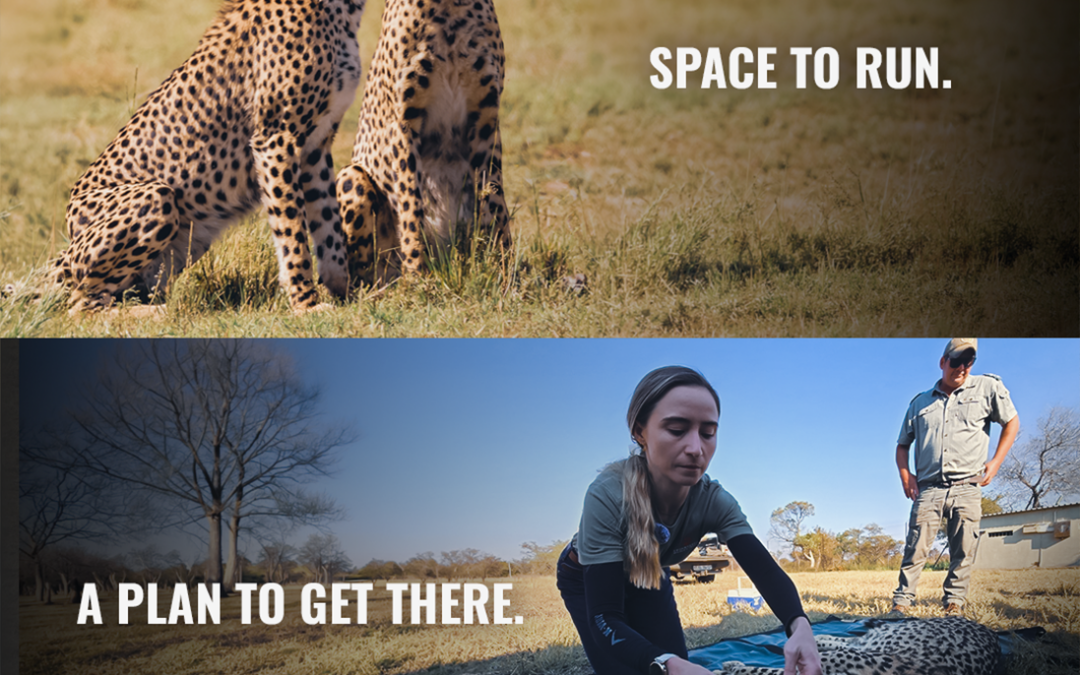
“This long-term investment is now delivering tangible results. As populations of African Wild Dogs and Cheetahs have increased in South Africa, our work has evolved from protecting remaining populations to helping restore species to areas from which they have been lost,” says van der Merwe.

The fenced reserve cheetah population has increased by an average of 8.8% annually since 2012. Last year it increased 19%. There are some great stats in the conservation matters article that Kelsey made in April! But it is important to note that increases has only really occurred in South Africa’s managed fenced reserves (metapopulation) outside of that it has been declining.

The contribution of each of the three species to South Africa’s heritage is evidenced through the presence of lions, Cheetah and African Wild Dog not only folklore and storytelling, or in symbols, but of all three species in art, tourism and in the country’s conservation identity.

While lions are symbols of strength, leadership, courage, and wilderness across Africa,   Cheetahs are Africa’s most iconic speed specialists representing open landscapes and ecological processes that have defined African savannas for thousands of years. African Wild Dogs, as one of Africa’s most unique and Endangered carnivores,  are know for their extraordinary social structure, cooperation, and family bonds making them a distinctive part of Africa’s natural identity.

Lions, Cheetahs and African Wild Dogs belong to our landscapes, our stories, our sense of identity, and our shared responsibility to future generations. Protecting them is about ensuring that the next generation inherits a wild Africa, not just memories of one.

These are species that require support through individual, group and national actions, including awareness, direct conservation and resource allocation.
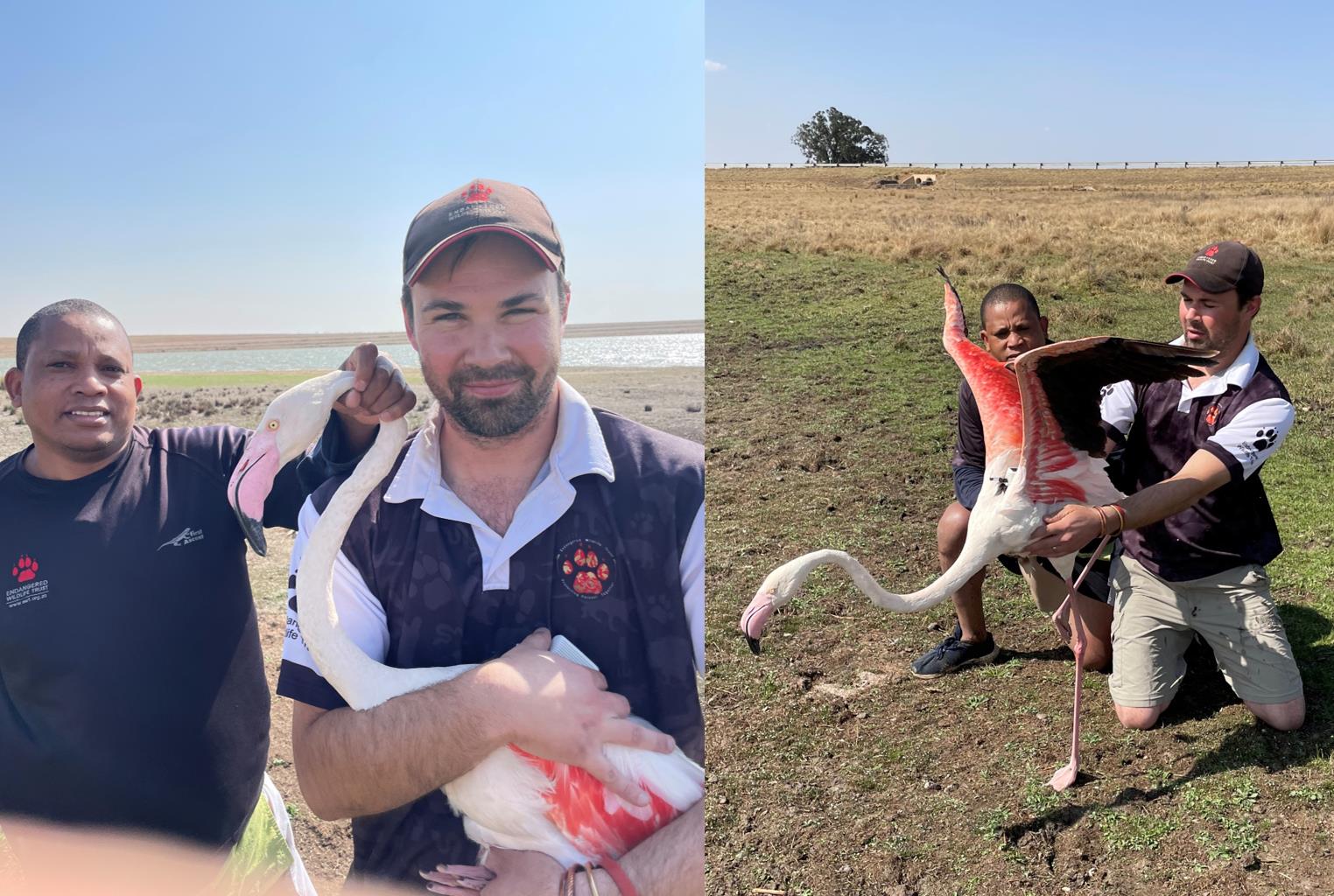
Targeting Hotspots: Protecting Lesser Flamingos from Power Line Collisions

Targeting Hotspots: Protecting Lesser Flamingos from Power Line Collisions


Science Snippets:

Targeting Hotspots: Protecting Lesser Flamingos from Power Line Collisions

By: Erin Adams and Lizanne Roxburgh


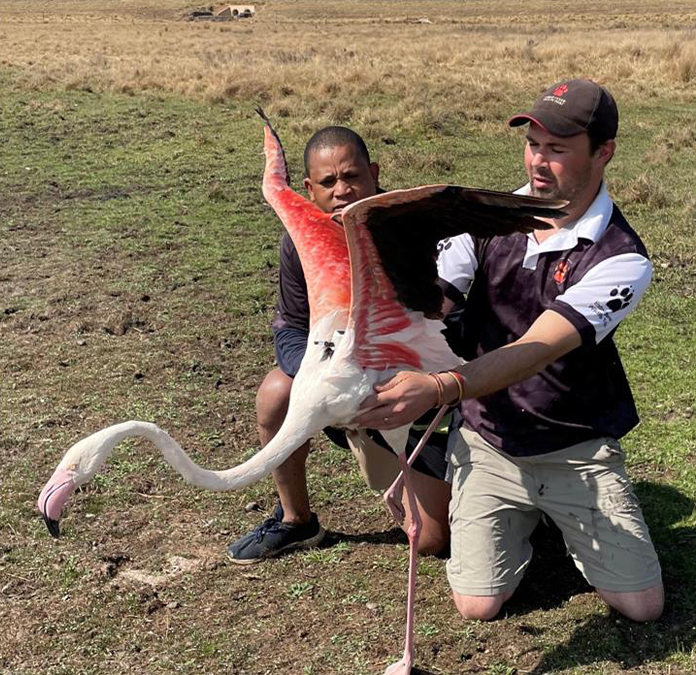
With an increase in human population comes a rising demand for electricity. However, this also brings the heightened risk of wildlife colliding with the structures that distribute that electricity across the landscape. Birds such as the Lesser Flamingo, which is Near Threatened on the IUCN Red List, frequently collide with power lines, often resulting in fatalities. Solutions like flashing markers on power lines can help reduce the risk, especially for birds that fly at night, like flamingos. However, these methods are costly, meaning they can’ t be applied across the entire range of the Lesser Flamingo’ s distribution. The best approach, therefore, is to determine where these markers would be most effective in reducing bird collisions with power lines. In a recent publication co-authored by EWT scientists*, the risk of power line collisions was modelled to address this exact need.

Three main inputs were used to create these models for Lesser Flamingos: 1) a habitat suitability index, 2) species exposure, and 3) threat exposure. The habitat suitability index included food availability, water quality, and water availability. Food availability, for instance, can be estimated based on the extent of green colouration in waterbodies, indicating the presence of the flamingos’ preferred food-cyanobacteria and diatoms. Species exposure accounted for the height at which Lesser Flamingos are likely to fly and the abundance of flamingos at a given site. Higher concentrations of flamingos increase the risk of power line collisions, especially when flamingos fly at lower altitudes. The final part of the model focused on threat exposure, including the height of the power line cables and their proximity to waterbodies where flamingos gather.


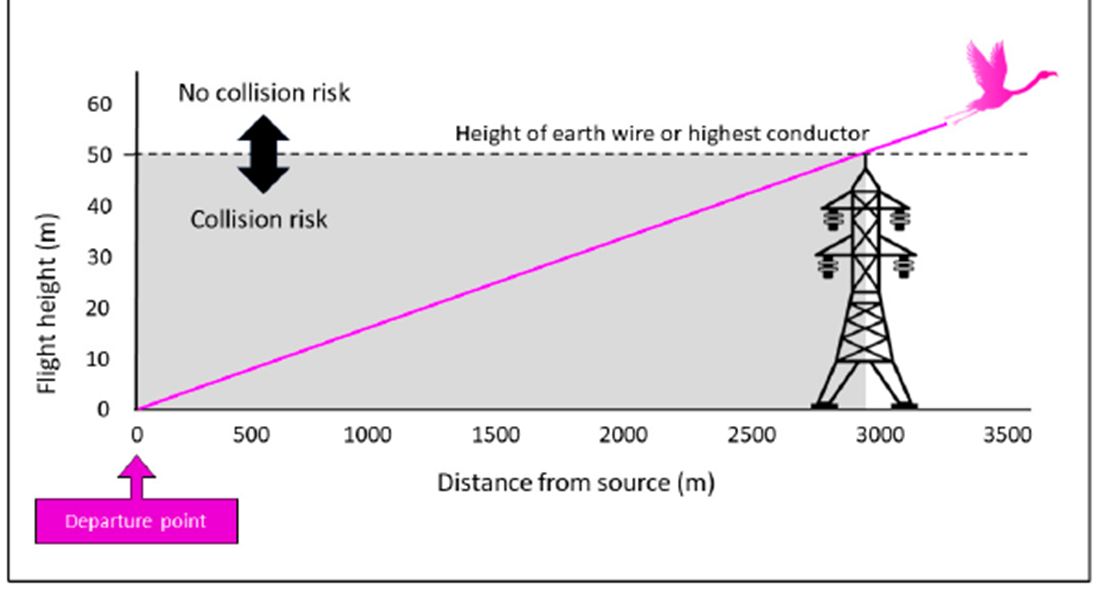
The risk of Lesser Flamingos colliding with power lines is based on the height of the power line and the flight height of the flamingo. There is no collision risk above 50 m due to the maximum height of power line cables (figure from Pretorius et al. 2023).


The scientists found that habitat suitability and flight height were the best predictors of where Lesser Flamingos are at most risk of colliding with power lines. Flamingos were only at risk of collision with power lines when flying lower than 50 meters (see Figure) and within 3 kilometers from the water’ s edge. High-risk power line sections were identified within 3 kilometer buffers around waterbodies, prioritised by habitat suitability for Lesser Flamingos. This approach has significantly reduced the number of power line spans identified for proactive marking with flashing markers. As a result, marking power lines can be done cost-effectively while maximising protection for Lesser Flamingos. This modelling approach can also be adapted for other bird species at risk of colliding with power lines.

*Pretorius, M. D., Galloway-Griesel, T. L., Leeuwner, L., Michael, M. D., Durgapersad, K., & Chetty, K. (2023). Defining Collision Risk: Lesser Flamingo Phoeniconaias minor Power Line Collision Sensitivity and Exposure for Proactive Mitigation. Birds, 4(4), 315-329. https://doi.org/10.3390/birds4040027