Help protect Africa's 

Flood Brings Frogs to Life at Medike

Flood Brings Frogs to Life at Medike


Flood Brings Frogs to Life at Medike

By Darren Pieterse, Medike Nature Reserve and Ecology Manager: Soutpansberg Protected Area

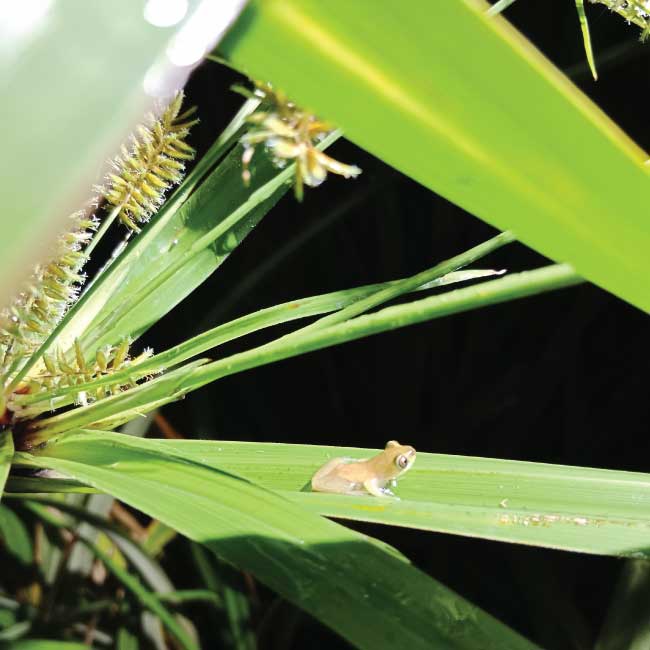
Following the recent good rains on the EWT Medike Reserve and the Soutpansberg in general, the Sand River came down in flood for the first time in two years. Almost instantly, a cacophony of amphibian calls accompanied the rising water level. Amphibians are well-known to rapidly take advantage of suitable conditions for breeding, as they never know when the next opportunity may occur, and most species’ eggs and tadpoles are reliant on water to complete their initial life stage (until they metamorphosise into terrestrial froglets that are less reliant on water). Calls are useful for researchers as each species’ call is unique, although some species, such as Tandy’ s, Tremolo and Cryptic Sand Frogs, cannot be reliably told apart based on external characteristics. This means that calls or DNA are required to make a positive identification.

Amphibians play a critical role in the ecosystem. They mostly prey on insects such as the flying ants, which abounded during our survey. They, in turn, are eaten by a variety of mammals, birds and snakes. Amphibians are also a good indicator of ecosystem health. Because frog skin is very porous to allow water to be absorbed and carbon dioxide to be released (the skin of toads is less porous), frogs are sensitive to chemicals such as industrial pollutants. As such, frogs are rarely found in areas with chemical pollution.

The recent onset of frog activity was an ideal opportunity for us to assess what species occur on Medike Reserve, and to get an indication of ecosystem health. During our survey, we recorded 14 different species (although the reserve’ s list currently stands at 23 species). None of the species recorded are threatened, although the relatively high species diversity does suggest that the freshwater system is still healthy. Two threatened species are expected to occur on Medike Reserve, one of which is only found on the Soutpansberg and nowhere else on earth. We will continue looking for these and additional species.

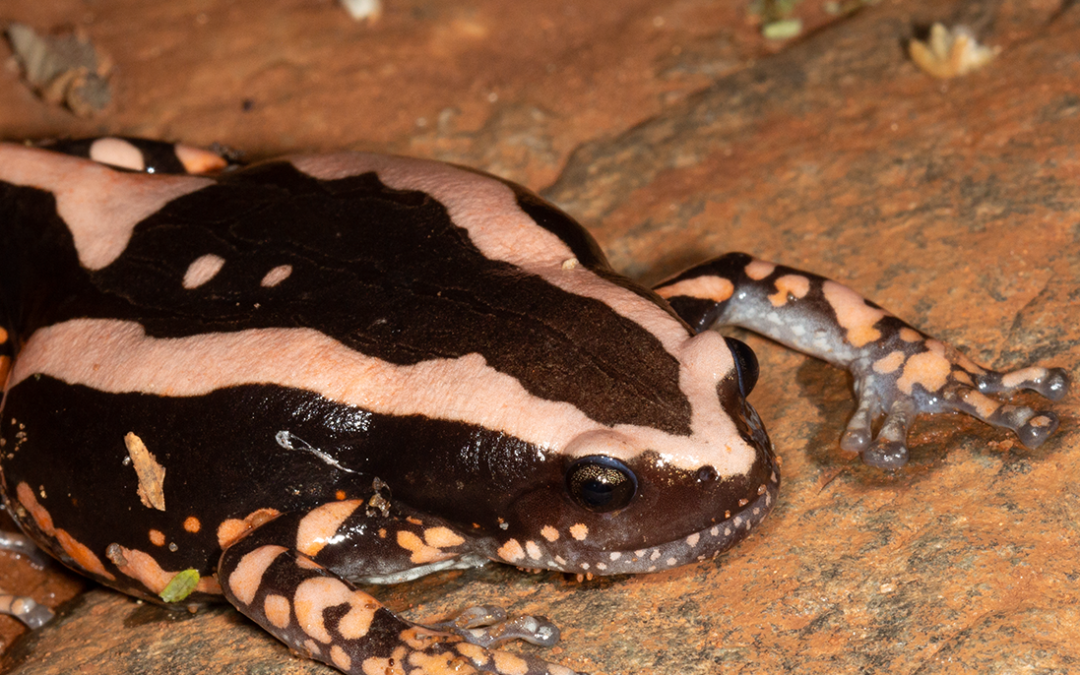
Of the species recorded, the Red-banded Rubber Frog is the most interesting, as it exudes toxins from its skin to dissuade predators from eating it. It advertises its toxic state through its bright black-and-red colouration, known as aposematic colouration. This frog exudes cardiotoxins (toxins that affect the heart) from its skin, so if you’ re going to kiss a frog in the hopes that it will become a prince (or princess), it’ s probably best not to kiss this frog.
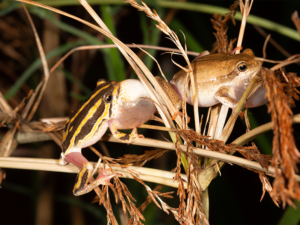
Painted Reed Frog – Hyperolius marmoratus

African Bullfrog – Pyxicephalus edulis
Banded Rubber Frog- Phrynomantis bifasciatus
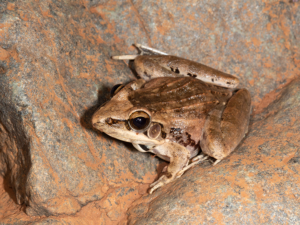
Plain Grass Frog – Ptychadena anchietae

Bubbling Kassina – Kassina senegalensis
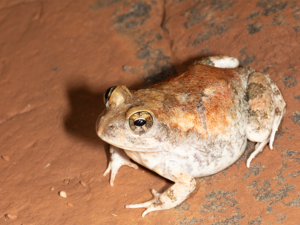
Russet-backed Sand Frog – Tomopterna marmorata
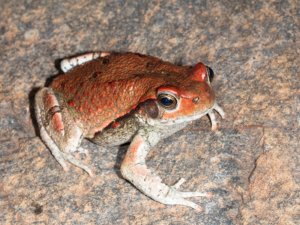
Eastern Red Toad – Schismaderma carens
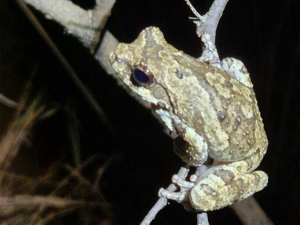
Southern Foam-nest Frog – Chiromantis xerampelina
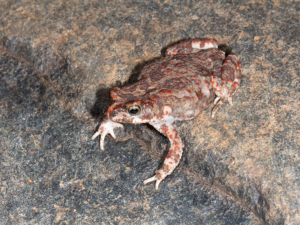
Northern Pygmy Toad – Poyntonophrynus fenoulheti
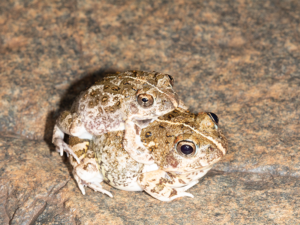
Tremolo Sand Frog – Tomopterna adiastola – Pair in amplexus
A speck of hope in a fragmented landscape: the story of the Widenham Wetland Protected Environment

A speck of hope in a fragmented landscape: the story of the Widenham Wetland Protected Environment


A speck of hope in a fragmented landscape: the story of the Widenham Wetland Protected Environment

By Joshua Weeber, Threatened Amphibian Programme

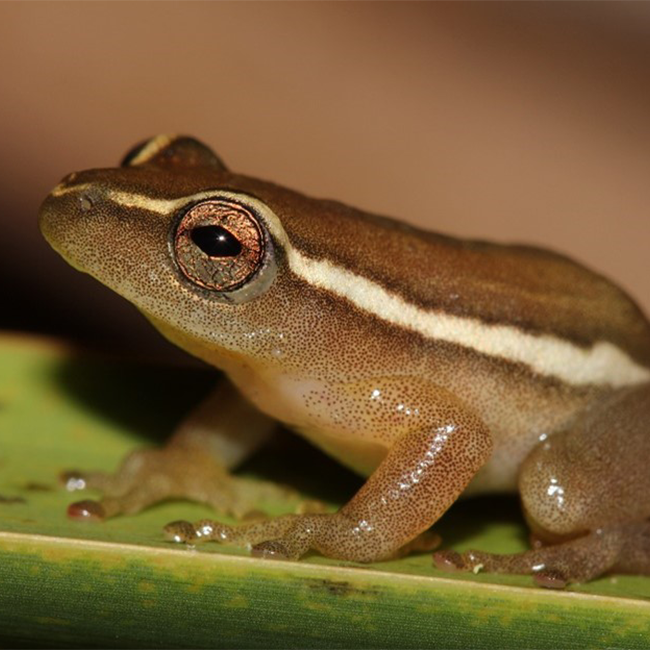
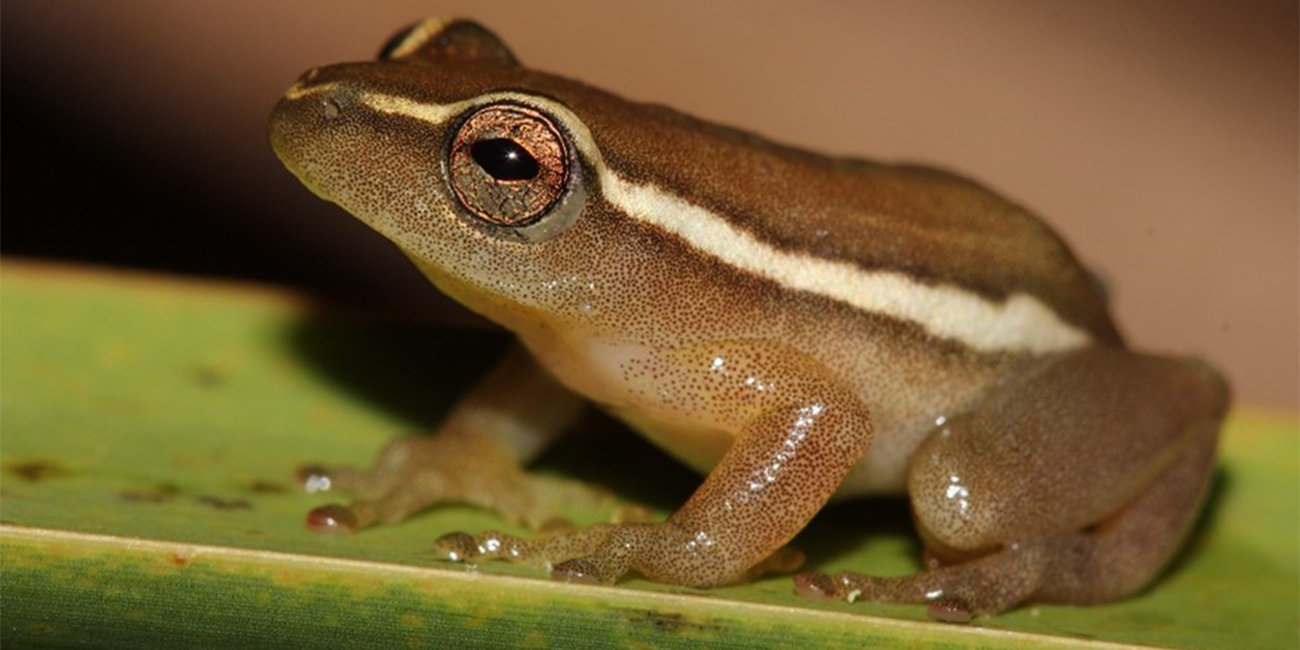
Critically Endangered Pickersgill’ s Reed Frog


The Windenham Wetland Protected Environment on the KwaZulu-Natal south coast has formally been declared.

The story of this Protected Environment began almost a decade ago. In 2015 the Endangered Wildlife Trust (EWT) initiated monitoring programmes for selected, critical wetland habitats supporting the Endangered frog Hyperolius pickersgilli (Pickersgill’ s Reed Frog) in the eThekwini Municipality. One of the selected wetlands was the ‘Widenham Wetland’ located in the suburb of Widenham, immediately south of the town of Umkomaas, approximately 45km south of Durban and within the eThekwini Municipality. The area is home to over 27,400 people with over 7,800 households of which 8.8% are informal dwellings. The site comprises of eight different erven and was acquired by the municipality in 2010 after a proposed residential development on the site was stopped because of the discovery of the then Critically Endangered Pickersgill’ s Reed Frog.

Widenham is a small (~1.6ha) channelled valley bottom wetland that comprises a mix of alien thicket / woodland and herbaceous marshland. It is located within the lower reaches of a small coastal stream system with relatively broad valley-bottom and a gentle longitudinal slope gradient and formed immediately upstream of the frontal dune system characteristic of coastal KZN.

Currently, much of the area within and around the Protected Environment has been transformed, and biennial wetland health assessments since 2015 show that the Present Ecological State (PES) of the wetland is classified as a D, which is Largely Modified. In short, Widenham Wetland represented a small, impacted system surrounded by urban infrastructure that was not a particularly intact state, but one that still provided habitat for a key endangered focal species for the EWT in the province.

In 2019 the EWT initiated actions to protect the Widenham wetland and drive long-term management and rehabilitation interventions that would safeguard this little natural space and the species within it for generations to come. A logical approach to achieve this goal was through Biodiversity Stewardship – an approach to securing land in biodiversity priority areas through entering into agreements with landowners with the intention of securing the biodiversity of South Africa. Fortunately, the wetland was purchased by the municipality, who were key partners in the project. A site assessment indicated that the area qualified for the Protected Environment category provided rehabilitation actions were developed and guided by a detailed Protected Area Management Plan. Working with key stakeholders such as eThekwini Municipality and Verdant Environmental, a detailed rehabilitation and management plan was developed.

Critically Endangered Pickersgill’ s Reed Frog

After many months of waiting, and assistance from our partners, Conservation Outcomes, the Widenham Wetland was finally gazetted as a Protected Environment on the 27th June 2024. The timing of this achievement has been crucial – the EWT’ s Threatened Amphibian Programme launched an exciting new project in early 2024 aimed at enhancing the ecological integrity of key wetland sites to improve local biodiversity and provide ecological goods and services to nearby communities. One of our priority sites linked to this project is Widenham Wetland, and efforts are already under way to improve the ecological functioning of this site through targeted alien vegetation clearing.

Working with the local municipality we are also in the process of implementing an extensive rehabilitation plan which will include redesigning a section of the wetland and revegetating impacted areas. All of these actions will be monitoring through wetland health assessments as well as passive acoustic monitoring of the isolated subpopulation of Pickersgill’ s Reed Frog that rely on this wetland. We hope our actions will safeguard this little speck of hope into the future.

This work has been in process for many years and would not have been possible without the efforts of Jeanne Tarrant and Cherise Acker, among many others. Similarly, our generous funders have been integral to this conservation success story. We thank Rainforest Trust, Synchronicity Earth, and Anglo American for their support.

Getting fired up for frogs

Getting fired up for frogs

Getting fired up for frogs


A novel approach to conserving a Critically Endangered frog

Alouise Lynch, Bionerds PTY Ltd.


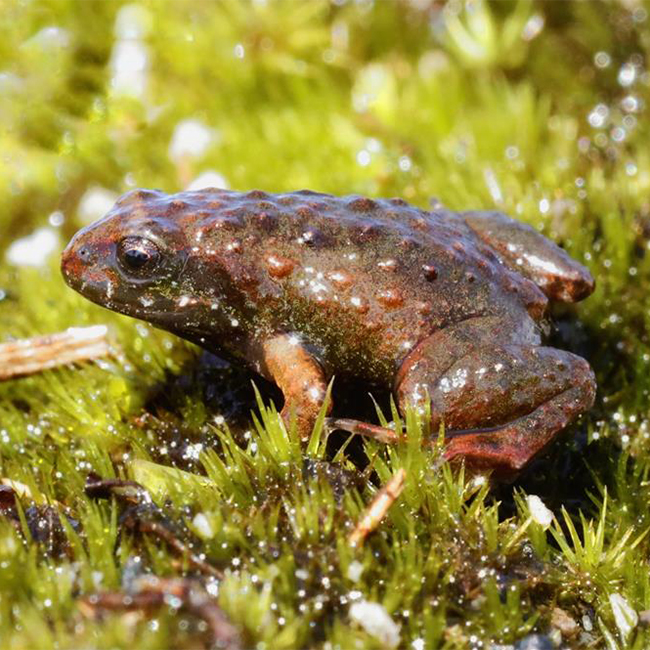
Amidst a field of agricultural development, the Klein Swartberg Mountain towers above the town of Caledon in South Africa’ s Western Cape Province. This lone mountain is home to the only known populations of the Critically Endangered (IUCN Red List 2016) Rough Moss Frog (Arthroleptella rugosa), an amphibian species restricted to this mountain. For this reason, the mountain was deemed an Alliance for Zero Extinction Site in 2017.

The Alliance for Zero Extinction (AZE) is a joint initiative of biodiversity conservation organisations from around the world working to prevent extinctions by promoting the identification and ensuring the safeguard and effective conservation of key sites that are the last remaining refuges of one or more Endangered or Critically Endangered species.

Alliance for Zero Extinction website, July 2023

Bionerds have been implementing this project for the Endangered Wildlife Trust since 2019. The Endangered Wildlife Trust’ s (EWT) Threatened Amphibian Programme (TAP) Conserving Threatened Frogs of the Western Cape  Project includes the Rough Moss Frog as a species of conservation concern given its restricted range. Furthermore, it still faces grave threats within this range, including habitat loss caused by alien invasive plants and frequent unplanned fires, which have led to a severe population decline (IUCN Red List 2016). Long-term acoustic monitoring by Cape Nature and Stellenbosch University documented this decline categorically, showing how the type (original) population had all but disappeared completely.

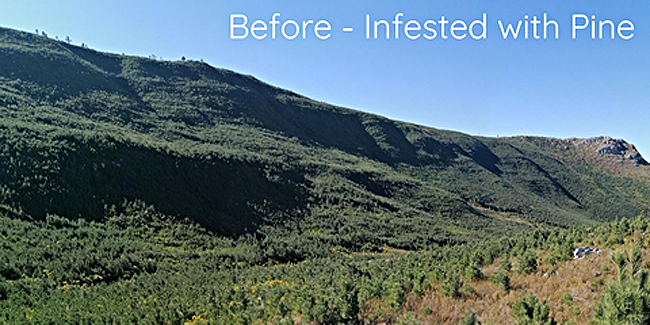
During our surveys in May 2020, a marching forest of alien vegetation, mostly Pine, was observed engulfing the then-only known populations of Rough Moss Frogs. It became evident that rapid intervention was needed to save and secure these populations. Unfortunately, the Covid-19 epidemic halted all efforts to implement interventions in 2020.

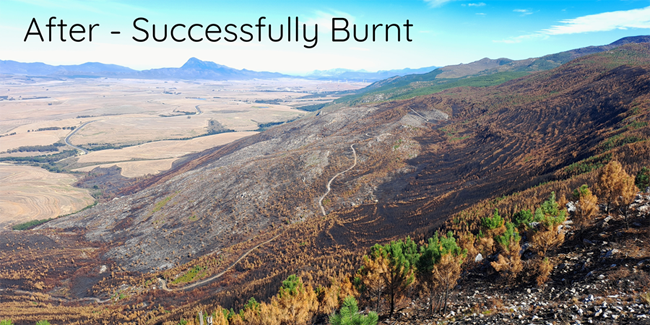
In 2021, the project was awarded a Rapid Action Grant from the IUCN Save Our Species fund and the European Union. This grant enabled us to create a firebreak around the Rough Moss Frog populations. We had limited time to implement this burn because the pine trees were starting to cone, and we had to act hastily to prevent another season for them to set seed. In March 2022, we worked with the local conservancy and landowners to implement a controlled ecological fire – the first time globally that prescribed fire was used as a management tool to reduce alien invasive vegetation threatening a frog species from extinction.

The Overberg District Municipality Fire Department and the Greater Overberg Fire Protection Association oversaw the burn and did a sterling job of ensuring all possible precautions were taken for the implementation of the burn, all permits were issued, and on the day, all hands were on deck to start, maintain, and close off the burn. Unfortunately, unforeseen windy conditions developed late in the day and the fire managed to break through several points and burnt a larger section of the mountain than was planned. Over 4,000 hectares were burnt, which is good news for pine eradication efforts but requires carefully planned follow-up management over a larger area. Bionerds have assisted with this through drone-mapping of priority areas.

A site visit following the fire in April 2022 confirmed the presence of Rough Moss Frogs, and in July 2022, we were relieved to hear the species calling at the sites of all known populations. In May 2023, multiple individuals were heard in an area where none were heard or recorded before the fire. During subsequent surveys, we discovered numerous additional populations of this species across the mountain – a big win for the project and the species!

This year, between July to September-  the coldest and wettest months– when these frogs breed, we will implement acoustic surveys to determine the presence or absence of Rough Moss frogs in all previously recorded sites. These surveys use three audio devices called Song Meters – a six-microphone array deployed at each population site for roughly an hour per site. The arrays record all frog calls during that period, and we can then use the audio file to estimate density and determine how many Rough Moss Frogs are present in each specific population at that specific time. We will be doing this for five years, each breeding season, to determine the effectiveness of the fire on the preservation of the sites, as well as capturing the rate of recovery of the frog populations at each site.

The landowners that are part of the Klein Swartberg Conservancy all support the protection of this species – and Bionerds and the Fynbos Trust have developed an alien clearing plan to guide the clearing of alien invasive vegetation from the mountain over the next decade. This alien vegetation clearing operation across the mountain creates jobs for local people from the Caledon area. This project is challenging, but we are positive and excited about the future of this tiny frog due to multiple partners working together towards protecting the species and its important fynbos habitat.

This project is funded by the IUCN Save Our Species and the European Union. The IUCN Save Our Species aims to improve the long-term survival prospects of threatened species. It also focuses on supporting the species’ habitats and working with the communities sharing this habitat. It achieves success by funding and coordinating conservation projects across the globe. The Member States of the European Union have decided to combine their know-how, resources, and destinies. Together, they have built a zone of stability, democracy, and sustainable development whilst maintaining cultural diversity, tolerance, and individual freedoms. The European Union is committed to sharing its achievements and values with countries and peoples beyond its borders.

Umgavusa Protected Environment

Umgavusa Protected Environment

Umgavusa Protected Environment

The Heart of Community-Based Conservation

Cherise Acker, the EWT’s Threatened Amphibian Programme

Umgavusa Protected Environment lies in the area surrounding the small town of Gingindlovu. Although small, Gingindlovu has a rich cultural heritage attributed to the Battle of Ndonkakusuka, in which King Cetshwayo won the struggle over his brother Mbulazi for the Zulu throne in 1856. Gingindlovu, meaning “The place of he who swallowed the elephant”, was named by King Cetshwayo in honour of his victory. In 1879, King Cetshwayo faced another battle against the British troops. This time, however, King Cetshwayo’ s army did not claim victory and was defeated by the British, after which Ginginglovu was placed under colonial rule.

Today, the now peaceful community of Gingindlovu farms extensively in the area where generations of farming families have forged a close-knit community with a passionate appreciation for their community and environment, knowingly safeguarding future generations. One local farmer, Ian Johnson, tracked the EWT’ s Cherise Acker-Cooper to a parking lot in Nyoni, where she was working with local teams clearing invasive alien plants. Ian’ s curiosity to identify a ‘Mystery Frog’ he had recently photographed in a reedbed on his farm spurred his eager pursuit. From a picture on Ian’ s phone, the ‘Mystery Frog’ was confirmed to be the Endangered Pickersgill’ s Reed Frog, known to occur exclusively along a narrow band along the KwaZulu-Natal coastline. Ian’ s excitement of knowing that his farm was home to this KZN endemic frog led him to report the record to the local Environmental Committee. Subsequently, the chair of this committee, Mr Ashton Musgrave, invited Cherise to present at their November 2019 committee meeting so they could learn not only of Pickersgill’ s Reed Frog but the importance of amphibians and their conservation.

It was during this presentation and the resulting acknowledgement of the plight for amphibian conservation in South Africa that four local farmers (Mr Ashton Musgrave, Mr Jonathan Saville, Mr Bret Arde and Mr Jonu Louw) banded together and asked Cherise to visit their farms to determine if the Pickersgill’ s Reed Frog was present on their farms. Song meters were rotated among the farms, followed by careful listening to hours of recordings until the Pickersgill’ s Reed Frog’ s quiet but distinctive call was confirmed by the EWT’ s Threatened Amphibian Programme Manager, Dr Jeanne Tarrant.

Confirming their presence was enough for these enthusiastic farmers, who were keen to ‘do the right thing’ and protect them to ensure their continued presence. In this spirit, the farmers keenly agreed to pursue formally declaring the habitat of the Endangered Pickersgill’ s Reed Frog as a Protected Environment through the Biodiversity Stewardship Process in 2020. However, the journey of declaration, led by Cherise, was not an easy route. Despite the numerous bends along the way, including COVID-19, the social unrest in July 2021, and the April 2022 floods, KZN MEC formally declared the Umgavusa Protected Environment from the Department of Economic Development Tourism and Environmental Affairs, Honorable Mr Siboniso Armstrong Duma, on 25 May 2023. It is the first protected area we have declared to conserve the Endangered Pickersgill’ s Reed Frog and its habitat, but it won’ t be the last!

The infectious drive for amphibian conservation by these local frog conservation pioneers has awakened a love for frogs and frogging within the community, who have flocked to the Umgavusa Protected Environment to catch a glimpse of the diminutive Endangered Pickersgill’ s Reed Frog.

It is not just frogs that these farmers are enthusiastic about. They work tirelessly to rehabilitate wetlands, clear and maintain watercourses from invasive alien plants, and support student research on the abundant wildlife that inhabits the area. These initiatives are driven by their innate love for their environment, and it is through this that the heart of community-based conservation offers enormous opportunities towards securing the biodiversity and cultural heritage of South Africa for all.

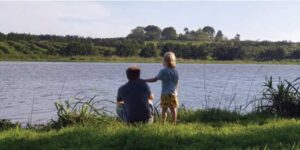
Mr Ashton Musgrave and his son enjoying their piece of the Umgavusa Protected Environment.

Thank you to our partners, Conservation Outcomes and Ezemvelo KZN Wildlife, and to Rainforest Trust and Synchronicity Earth for supporting the project.

Finding the albany adder

Finding the albany adder

Tale from the Field: Finding the Albany Adder – Following in the footsteps of Dr John Hewitt

 
Alouise Lynch, Bionerds PTY Ltd


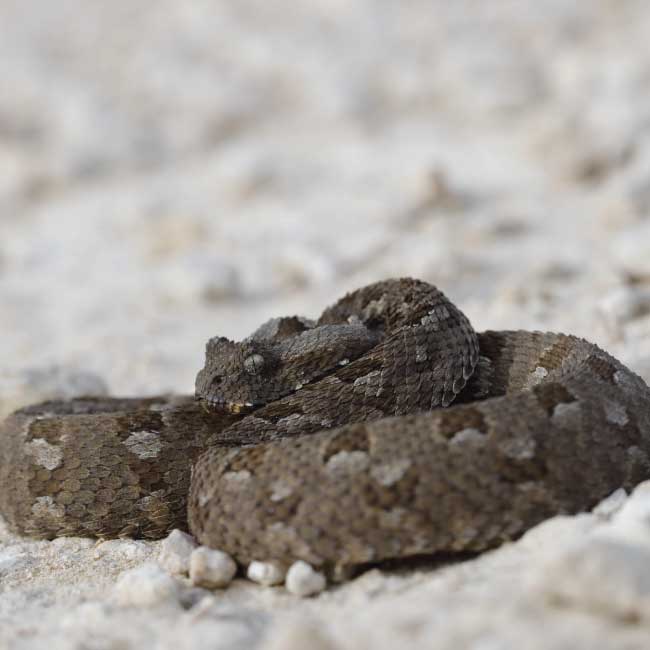
Albany Added on white sand

Dr John Hewitt was born in Dronfield, Derbyshire, England, on December 23, 1880. Between 1905 and 1908, he was the curator of the Sarawak Museum after studying natural sciences at Jesus College in Cambridge. In 1909, he was employed as an assistant curator at the Transvaal Museum in Pretoria, and in 1910, he was named Director of the Albany Museum in Grahamstown, Eastern Cape, South Africa. He was a skilled naturalist with a deep interest in herpetology, and he described, collected, and documented many of South Africa’ s frogs and toads.

My husband and I recently spent a week retracing his steps on a farm outside of Grahamstown. We visited the area where he discovered, collected, and described the Albany Adder, Bitis albanica, South Africa’ s most endangered snake species.

Most of us have a “bucket list,” a list of things we want to do or see before “kicking the bucket,” as it were. Some challenges are tricky, while others are as simple as trying tripe for the first (and usually last) time. Our bucket list is as nerdy as we are, a living list of 40 species we aim to see in a specific year. Discovering a needle in a haystack seems more likely than finding some of these species in the wild!

The Albany Adder, described as the holy grail of South African dwarf adders, had only been observed in the wild 12 times by 2017. That year, we collected a crew of nerds and embarked on our quest to find this uncommon snake. The Endangered Wildlife Trust discovered two specimens in the wild on a recent study trip, and we were hoping to be as fortunate as they were. NO PRESSURE!!!! We had five days to find this snake. It was cold and windy, and we had walked a long distance by day five. We had given up. We all agreed to return to the vehicles and try again the following year. I stepped around a bush to find a little brown and grey snake with tortoiseshell scallops on its back at my feet. The excitement was so great that we almost missed the snake making a “run” for it! We had discovered an Albany Adder. Number 13 in history! It was sheer enchantment.

The size of this species takes everyone we have ever shown them to by surprise. The largest adult female Albany Adder we have found was 34.6 cm long, a bit thicker than a pencil, with an extremely aggressive bity end on one end. When you are this small, you need a temper to survive in a world where everything is out to eat you. We still do not know where they shelter, how they breed, when or where they pup, or their general primary habitat use.

The Endangered Wildlife Trust allowed us to execute a research and monitoring project on the Albany Adder in 2018. We jumped at the chance and have been working on the “Averting Extinction – saving South Africa’ s Most Threatened Snake” project for the last five years. The project has not only increased the known number of specimens from 13 to 43 over five years, but we have also proven that they exist in various habitat types and are working with landowners to safeguard this species in areas where we have confirmed their occurrence. This past week was a watershed point for this project.

We eventually obtained our first confirmation of prey species – a very plump Variegated Lizard – after I gathered roadkill specimens from Addo Elephant National Park. And after many years of attempting, we finally acquired access to Dr Hewitt’ s old haunts. We spent three days scoping for feasible habitat in the area where he initially discovered this beautiful species. The landowners are conservation-minded and fiercely protective of their property and its fauna, which is a great plus for us because baboon spiders and snakes are indiscriminately poached in this area. We are very excited to return to this location during their next peak activity period to see if we can rediscover this species where Dr Hewitt found the first Albany Adder.

We hope to relocate these snakes at this site. If we succeed, we can begin establishing a conservation corridor from Gqeberha to Makhanda, incorporating private nature reserves, national parks, and private farmland – affording Albany Adders and many other species and habitats long-term protection.

Thanks to People’s Trust for Endangered Species (PTES), Rainforest Trust, PPC, Eastern Cape Parks and Tourism Agency (ECPTA), and Bionerds for supporting this work.