Ignorance is bliss: the unnoticed impacts of enjoying natural spaces and the role we all need to play in conserving them.
IGNORANCE IS BLISS: THE UNNOTICED IMPACTS OF ENJOYING NATURAL SPACES AND THE ROLE WE ALL NEED TO PLAY IN CONSERVING THEM.
Joshua Weeber, Threatened Amphibian Programme, joshuaw@ewt.org.za Despite our relatively recent urbanised society, most human beings still feel an innate need to immerse themselves in nature. To marvel at the magnitude of mountains, to feel the still, earthy air of a dense forest, to listen to the gentle trickle of a mountain stream – these are experiences that add value to our lives and provide us with space to think and feel. Unfortunately, this growing realisation of our need to interact with nature is mirrored by the disappearance of natural spaces themselves, destroyed mostly by human-related development. What is left are isolated natural spaces under increasing pressure from a growing human population, all searching for the peace that only nature can provide. While the increasing use of wild spaces shows an appreciation for their importance and beauty, nature lovers need to acknowledge the cumulative impacts of our presence in these spaces and ensure we play an active role in preserving them for future generations to enjoy.
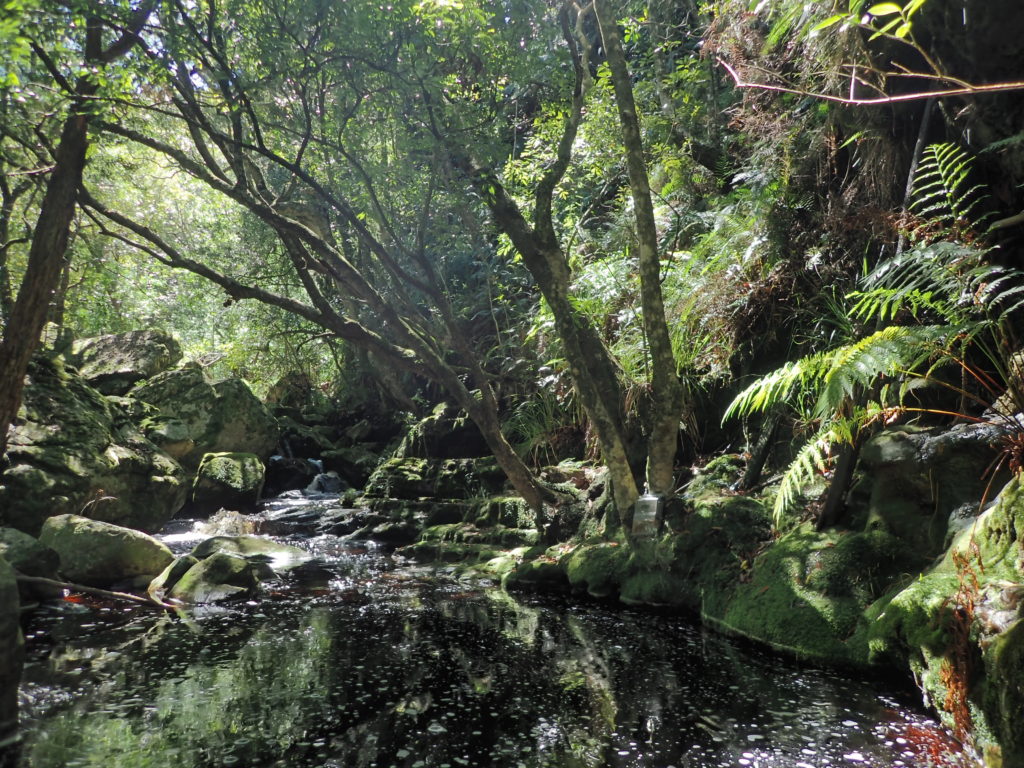
One of these spaces is the iconic and popular Table Mountain, a beacon of hope that provides a place to escape the bustling metropolis of the Mother City from which it emerges. Anyone living at the foothills of this mountain will tell you how lucky they are to have access to such a beautiful natural space, close enough for a morning run or an afternoon walk through the forest with the dogs. Looking at the sheer rock walls, endless fynbos slopes, and deep forested gorges, one might wonder how a human could possibly damage this vast mountain system. Walking with a small group of people and their pets barely leaves footprints on the rocky sandstone trail and crossing a clear mountain stream only takes a moment. This reasoning would hold true if there were not close to four million people living in Cape Town who potentially access the mountain frequently. As is often the case, we choose to view our actions in isolation, and in doing so, do not acknowledge the cumulative impact we have on the world around us.
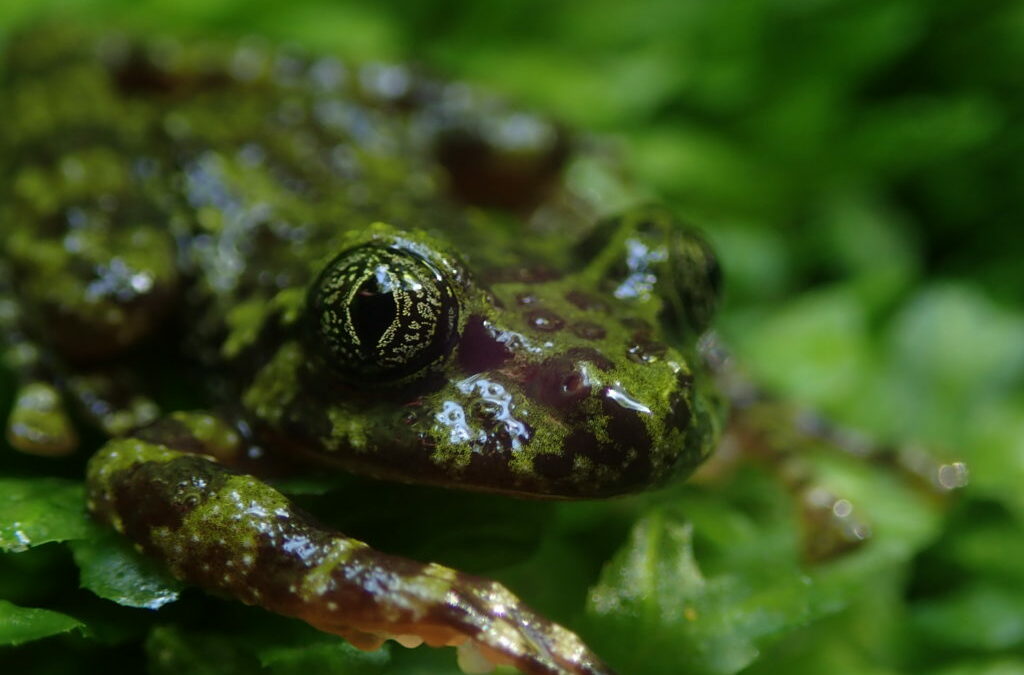
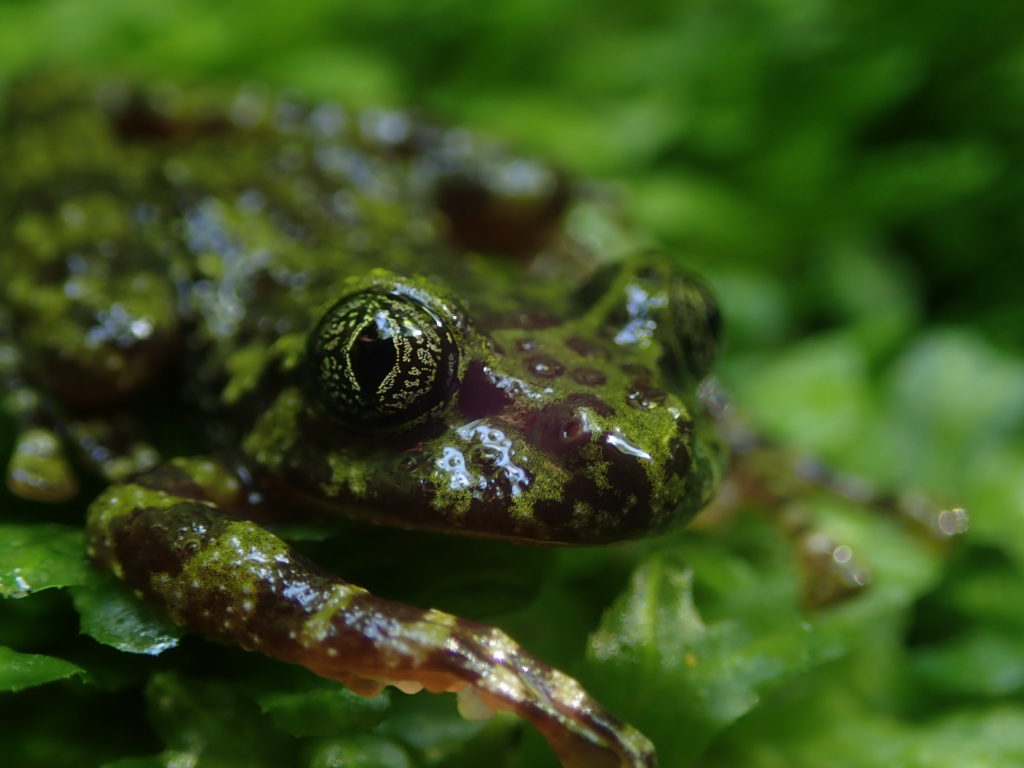
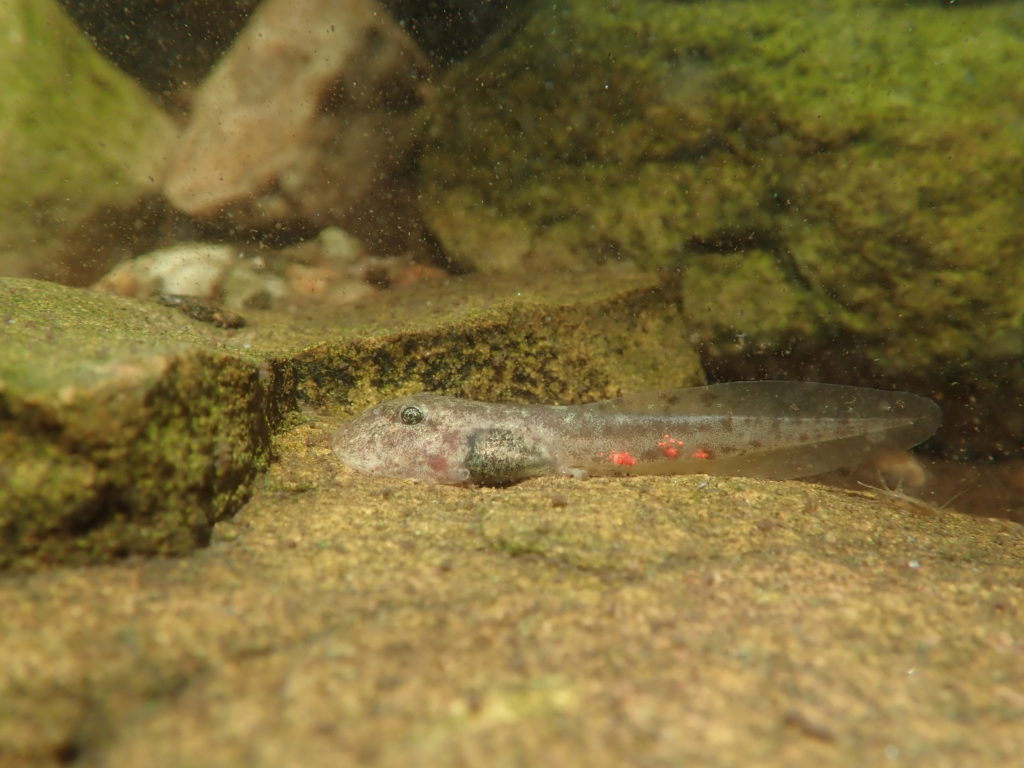
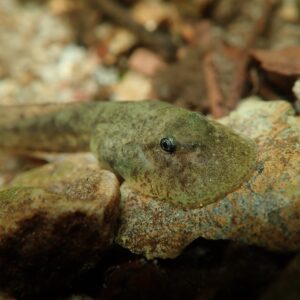
On Table Mountain, paths are used by millions of people every year, and the collective impact of individuals has begun to take a toll. In 2019, a collaborative project was initiated by the Endangered Wildlife Trust to investigate the health of Table Mountain’ s perennial streams, with special emphasis on the unique and already Critically Endangered ghost frogs that rely on these streams for survival. While the seemingly larger threats of climate change, water abstraction, and invasive alien plants have also been shown to be important, the impact of path erosion emerged as a key threat to stream health. Simply put, the number of footsteps on paths within the National Park continues to increase, causing paths to widen and deteriorate. In turn, this leads to a larger surface area of exposed and unconsolidated sand transported down paths during winter rains. Problems arise when a path intersects a stream because the eroded sand is swept along the path into the stream itself. These small, rocky streams cannot deal with the abnormal sediment load and clog up, changing the stream structure, which has knock-on effects for stream species and water health. The Critically Endangered Table Mountain Ghost Frog lives in the rocky streams of Table Mountain and is totally dependent on them, occurring nowhere else in the world. Tadpoles of this secretive species spend at least twelve months living in small stream pools before beginning their incredible transformation into adult frogs. They also have very specific requirements as tadpoles and use their specialised sucker mouths to hide and feed under rocks. As paths become eroded, large quantities of sand wash into these sensitive streams, causing the rocky habitat to disappear, lost under a layer of sand and silt. A similar problem can be seen at river crossings where hundreds of feet (and paws) pound over loose rocks each month, compacting the rocky bottom and closing the small yet crucial gaps these tadpoles need to survive and thrive.
The consequences of these impacts are already being felt all over the mountain, and ghost frogs have completely disappeared from one of the nine streams in which they occur, a stream that happens to be a popular hiking and dog-walking location. These sensitive amphibians are the first animals to be affected by habitat alteration, but they will by no means be the last. Their disappearance acts as a warning of what is to come and what these beautiful natural spaces may turn into if we continue to use them without being mindful of our impact.
What is the solution to this growing problem? Is it to prohibit anyone from accessing wild spaces, to ban trail running, picnics and dog walking? Definitely not! These spaces play a crucial role in our lives and contribute to our well-being. We simply need to ensure that we return the favour. We must remind ourselves that our individual, seemingly insignificant actions of stepping on a seedling or dislodging a rock become very significant when repeated hundreds of times by other people. Just as the source of the problem is an accumulation of small, seemingly insignificant steps, so too is the solution. Simple things like being mindful of where you walk, sticking to paths and boardwalks, avoiding already eroded areas, not littering and picking up litter you see, keeping pets out of streams and cleaning up after them, and not collecting or destroying plants can help to mitigate the negative effects of our presence in natural spaces. Organisations responsible for managing these spaces also need to place nature conservation at the centre of their focus, but we must not forget how difficult it is to manage an area with no gates and thousands of visitors, particularly if those visitors refuse to adhere to simple requests like staying off closed paths and sticking to boardwalks.
Ultimately, it is up to the people who use and appreciate these wild spaces to acknowledge that their individual actions do make a difference, both in destroying and preserving nature.
This collaborative project is funded by the Table Mountain Fund, Mohammed bin-Zayed, Whitley Fund for Nature, and Synchronicity Earth, in partnership with the South African National Biodiversity Institute, South African National Parks, the University of Cape Town, and the Freshwater Research Centre