Provinces challenged to manage their land more sustainably
By Bonnie Schumann, EWT Drylands Conservation Programme, bonnies@ewt.org.za
The UNDP-GEF5 Sustainable Land Management (SLM) Project and the Endangered Wildlife Trust (EWT) recently brought Engineering Technicians and LandCare officials together for a unique SLM challenge. The officials, all experts in soil erosion control, represented four provincial departments of agriculture from the Western-, Eastern- and Northern Cape, and the Free State. The challenge was hosted by the Samara Private Game Reserve near Graaff Reinet, in the Mountain Zebra Camdeboo Protected Environment (MZCPE) in the Eastern Cape, from 7–10 February 2022.
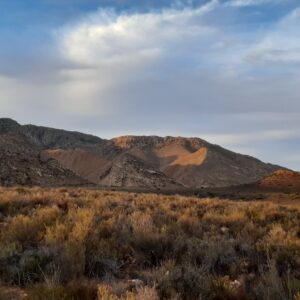
The four teams were tasked to assess three sites on Samara with varying severities of soil erosion that are typically found in the region. The teams were challenged to develop practical, cost-effective and replicable technologies and approaches to addressing the soil erosion issues. The degradation is primarily caused by historical grazing practices that were not ideal and is compounded by continuous grazing by game. What makes veld regeneration in this landscape particularly challenging is the topography in the area. The catchments are large and consist of mostly steep slopes, which result in high volume, very erosive runoff directed towards the lower slopes, where soils are vulnerable to erosion. The protracted drought experienced in the Karoo over the last approximately eight years resulted in a loss of vegetation cover, leaving soils exposed and vulnerable to both wind and water erosion.
The spirit between the provincial teams was positive, open, and cooperative, with high levels of camaraderie. Teams shared survey results, advice, and suggestions. Training of younger technicians formed an integral component of this knowledge sharing initiative. The collective institutional experience of the team was around 400 years, which is really astonishing considering there were only 14 participants. The challenge was concluded with a knowledge-sharing workshop and seminar. Participants on the last day included the Samara Management Team, neighbouring farmers, and two senior government officials from the Western- and Northern Cape responsible for Sustainable Land Management. The provincial teams presented their suggested soil conservation plans, and some lively discussions followed. In summary, all the participants agreed that this wealth of technical knowledge is critically important for SLM and soil conservation in the drylands. We need to ensure that this hard-earned experience and “institutional” knowledge needs to be shared with the next generation of soil technicians.
The next step will entail compiling these case studies and sharing the information with all the stakeholders in the MZCPE and throughout the drylands to encourage soil conservation action. Watch this space!
This initiative formed part of the United Nations Development Programme’ s GEF 5 SLM Project – Small Grants initiative. The EWT, through their Karoo Forever SLM project, is responsible for the implementation of small grants in the Karoo landscape.
www.karooforever.co.za
www.mzcpe.co.za
LATEST STORIES
A brighter and more sustainable future motivating Cedarville farmers to collaborate
Bonnie Schumann, EWT’s Drylands Conservation Programme, bonnies@ewt.org.za South Africa’ s Grassland Biome is highly productive and rich in biodiversity. However, the Grasslands are under tremendous pressure from agriculture and unsustainable mining developments. Poor planning, mismanagement, and inadequate enforcement have led to over-utilisation, degradation, and habitat loss. Altogether, 30% of the biome has already been irreversibly transformed. However, where the rangeland is still productive and extensively farmed, there are promising opportunities to reverse degradation and improve biodiversity resilience and agricultural production in the landscape. These opportunities can benefit the endemic and threatened species present and protect the livelihoods that depend on the landscape’ s natural resources and ecosystem services. Farming with livestock and crops in the grasslands plays a critical role in supporting livelihoods for communities. Knowledge sharing is a powerful approach to finding solutions to challenges, particularly in diverse landscapes involving various stakeholders. With this in mind, the Endangered Wildlife Trust (EWT) engaged farmers in the biodiversity-rich grasslands of the Cedarville area in the Eastern Cape. We talked to the farmers to understand their challenges and whether they were interested in attending structured training to develop solutions to an array of sustainable land management issues together.
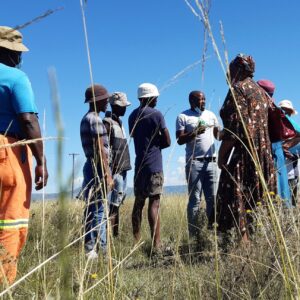
The Cedarville farmers face challenges primarily related to poor infrastructure on the commonages that does not support optimal grazing practices. Rangeland is grazed continuously, which does not allow the vegetation an opportunity to rest and build up reserves. Palatable species are under tremendous pressure and often disappear from the landscape, resulting in the loss of ground cover and production and an increase in undesirable plant species. Coupled with this, communities that utilise the rangeland have not had the opportunity to collaborate and coordinate their activities, limiting their abilities to manage the rangeland effectively. In addition, they cannot effectively access the highly competitive agricultural sector. Participating farmers were keen to address these issues and explore opportunities to collaborate to improve their farming practices and protect their natural resources. In February 2022, the EWT hosted an Integrated Farm Planning and Management (IFP) training course in Cedarville, attended by almost 40 farmers – double the expected turnout.
The IFP course content focuses broadly on sustainable land management principles. The original course created by the EWT was focused on the Nama Karoo Biome and is available as a free online course at https://karooforever.org.za/en/. The original course was adapted to include the Grasslands Biome content. The Cedarville course was the first IFP to be held in the grasslands, and the fourth IFP course we have presented. The EWT collaborated with Agricultural Extension officers from the Underberg Farmers Association and the Department of Agriculture and Rural Development (DRDAR), who copresented the course with staff from the EWT’ s African Crane Conservation (ACCP) and the Drylands Conservation (DCP) programmes.
The Cedarville area is important for Crowned Crane conservation as the birds breed in its wetlands. Conserving Africa’ s threatened crane species has benefits far beyond the cranes and their admirers. Africa’ s four threatened crane species are ambassadors for conserving water catchments, including wetlands and grassland ecosystems. They are iconic and charismatic and appeal to the public, allowing us to develop relationships within communities and with other stakeholders through crane conservation activities. These grasslands supply additional non-agricultural services, such as water supply and flow regulation, carbon storage, erosion control, climate mitigation, pollination, and cultural ecosystem services. For more information on the work in the Cedarville area, contact:
Samson Phakathi, Senior Community Project Officer, Endangered Wildlife Trust’ s African Crane Conservation Programme, samsonp@ewt.org.za
For resources on sustainable land management, visit:
https://karooforever.org.za/en/
The development of the original IFP Nama Karoo course was supported with funding from the UNDP GEF5 SLM Karoo Landscape Project.
The course in the Grasslands Biome in the Eastern Cape was made possible with funds from the National Lotteries Commission. The NLC relies on funds from the proceeds of the National Lottery. The Lotteries Act and regulations guide the way in which NLC funding may be allocated. The NLC wants the grants to make a difference in the lives of all South Africans, especially those more vulnerable, and to improve the sustainability of the beneficiary organisations. Available funds are distributed to registered and qualifying non-profit organisations in the fields of charities; arts, culture, and national heritage; and sport and recreation. By placing its emphasis on areas of greatest need and potential, the NLC contributes to South Africa’ s development.
LATEST STORIES
Healthy wetlands: people and cranes in Uganda
Dr. Adalbert Aine-omucunguzi, International Crane Foundation/Endangered Wildlife Trust Partnership, adalberta@ewt.org.za
Kathryn Lloyd, Margaret Pyke Trust, kathryn@margaretpyke.org
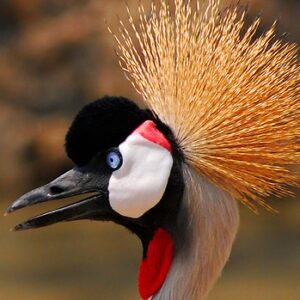
The wetlands of Rukiga in south-west Uganda are home to Uganda’ s National Bird, the Grey Crowned Crane, and they are vital to their human neighbours, who rely on the wetlands for their food, water, and livelihoods. But increasing human activity is putting pressure on the wetlands and their cranes. A new project between the International Crane Foundation (ICF) / Endangered Wildlife Trust (EWT) Partnership, Rugarama Hospital, the Margaret Pyke Trust, and the London School of Hygiene & Tropical Medicine is working to respond to these pressures for the benefit of Rukiga’ s wetlands, its cranes, and its people.
The population of Grey Crowned Cranes in East Africa has declined by over 80% in the last twenty-five years, largely due to increasing pressure on wetlands. As cranes are pushed into smaller and more marginal wetlands to care for their eggs and young, they are increasingly disturbed by people, domestic dogs, and livestock and are unable to breed successfully. Chicks raised on fragmented and degraded wetlands are easily captured for traditional medicine use, domestication within Africa, or exported to captive facilities at zoos and safari parks. The population of Grey Crowned Cranes in Uganda (a stronghold for the species) is now believed to consist of only 10,000-20,000 individuals.
As a first stage, the project team spent six months undertaking ethnographic research in Rukiga to properly understand the communities’ health, livelihood, social, and environmental challenges and views, and how they saw the connections between them. They reported a diversity of challenges, not least of which was inadequate healthcare provision, poor soil and water quality, and increasing sub-division and fragmentation of land on which to farm their crops.
For these reasons, project partners are implementing a Population, Health and Environment, or PHE, project that aims to empower communities to conserve their cranes and manage wetlands while also meeting the health and livelihood needs of Rukiga’ s communities. The project research highlighted that the people of Rukiga District wanted better health services, including family planning, to promote strong and sustainable families. The project also keeps women involved in local livelihood activities to support their families and reduce pressure on local natural resources, benefiting people, cranes, and the wetlands we all depend on.
Population Health and Environment, or PHE, is a conservation model defined by the Conservation Measures Partnership as “a multi-sectoral partnership approach to biodiversity conservation, human health, and sustainable livelihoods. PHE approaches are developed inclusively and equitably in response to local situations and the expressed needs of the people most closely linked to biodiversity conservation. PHE is intended to improve human health, particularly reproductive health, while empowering communities to achieve sustainable livelihoods, manage natural resources, conserve biodiversity, and maintain ecosystem services.”
Family planning allows couples and individuals to plan if and when to have children and how many. Making our own decisions about our health, bodies, and family size is a fundamental human right. But there remain many parts of the world where exercising this right is much more challenging due to barriers to family planning. One such place is Rukiga, where, prior to the launch of this project, accessing family planning was largely impossible due to the scarcity of local healthcare providers and other local challenges.
As those in the health sector know all too well, “healthy timing and spacing of pregnancy” is critical to improving health outcomes for women and infants. For instance, becoming pregnant too soon after a previous pregnancy puts mothers and their newborns at a higher risk of illness and even death. As well as the health impacts of not being able to choose if and when to have children, unintended pregnancies can lead to women withdrawing from the livelihood activities critical to supporting their families. The ethnographic research highlighted that the people of Rukiga District want better health services, including family planning, and that one of the reasons is because larger families place further pressures on them as parents at home and in the longer term, on the finite amount of agricultural land to sub-divide among children
Given that the people of Rukiga understand the connections between their own health and that of their local environment and their desire for adequate health services, the ICF/EWT Partnership’ s habitat restoration, alternative and sustainable livelihood interventions, and crane monitoring actions are integrated with the work of the Margaret Pyke Trust and Rugarama Hospital, to ensure the people of Rukiga receive the health services they want and need. Outreach clinics are now providing health services, clinicians are being trained to provide better services, and “service improvement” measures are being implemented.
The project team engages community members in various ways to raise awareness about wetland and crane conservation, sustainable livelihoods, and family planning. For instance, in the same session, the ICF/EWT conservation experts and Rugarama Hospital nurses raise awareness about the importance of wetlands for health, livelihoods, and cranes, and the benefits of family planning. This integrated approach means that men and women hear messages that they might not have heard before. This approach has wide-reaching benefits as frequently in Rukiga; men stop their female family members from using family planning services as they hold myths and misconceptions, such as family planning causes women to be promiscuous or causes cancer. Similarly, even though both men and women are involved in livelihoods, men are more likely to attend livelihood training, meaning that women often miss these important messages.
Community members themselves are also raising awareness about sustainable farming techniques, sound waste disposal methods, and healthcare. Leading this approach are the Conservation and Health Mobilizers, volunteers who engage their neighbours with messages around crane and wetland conservation and healthcare, in addition to monitoring cranes and reporting crane incidents, such as poisoning and capture, monitoring wetland water quality, and referring people for healthcare services.
Community members themselves are also raising awareness about sustainable farming techniques, sound waste disposal methods, and healthcare. Leading this approach are the Conservation and Health Mobilizers, volunteers who engage their neighbours with messages around crane and wetland conservation and healthcare, in addition to monitoring cranes and reporting crane incidents, such as poisoning and capture, monitoring wetland water quality, and referring people for healthcare services.
Project interventions include activities designed to increase community capacity for sustainable land use planning and management, such as soil and water conservation, to meet food security and conservation objectives. These interventions aim to prevent soil erosion and restore the soil fertility and productivity of hillslopes exhausted through unsustainable farming practices. This intervention aims to reduce the expansion of agriculture into wetlands.
The project’ s alternative sustainable livelihood provision enables communities to generate additional income to meet their families’ needs. Community members selected the livelihoods they wanted, and ICF/EWT provided them with materials, training, and mentoring to benefit their income generation and access to local markets.
By integrating actions across multiple sectors, PHE can reach more people linked to biodiversity outcomes, engage more men in reproductive health, and more women in livelihood and natural resource management. PHE can, ultimately, achieve more significant and longer-lasting conservation outcomes than would likely occur without integration. There is a further benefit of PHE, which the project team already sees. It is known as the “goodwill effect”. The ethnographic research highlighted the challenges that the people of Rukiga see in their everyday lives, and health services were a key priority. By listening to the community, ICF/EWT has built a partnership with the deeply respected local hospital. In the minds of the community, ICF/EWT is now associated with Rugarama Hospital and the provision of healthcare services. Conservation messages are broadcast at Rugarama Hospital’ s health centres and by Rugarama Hospital’ s staff. The people of Rukiga see that ICF/EWT cares about them and their health and wellbeing, not only cranes and wetlands. That can only be a good thing in a project so deeply embedded within the community.
LATEST STORIES
Focussing on sustainable land management in Victoria West
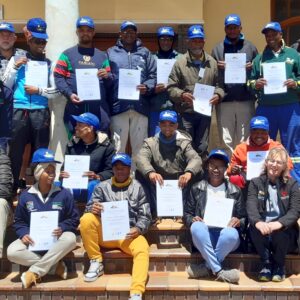
A group of emerging farmers from the Victoria West and Hutchinson area took part in an Integrated Farm Planning and Management training course held in Victoria West in October. The course was presented by the Endangered Wildlife Trust (EWT), in collaboration with the Department of Agriculture, Environmental Affairs, Land Reform and Rural Development and the Grootfontein Agricultural Institute. This was the third time the team has collaborated to present this course to farmers over the last two years: first in Loxton, then Prieska, and now in Victoria West.
The course aims to promote sustainable land management by building capacity amongst farmers, Agricultural Advisors and conservationists. It is vital that farmers are supported in their role as the custodians of the rich biodiversity found on South Africa’ s farmlands. These areas fall outside formally protected areas but remain critical to ensuring the health and functioning of ecosystems across landscapes.mpleted the course. The coAltogether 12 farmers course focuses on a holistic approach to farm planning and the principles of sustainable land management. Considering the predicted impacts of climate variation, we must start changing how we are doing things to build environmental and community resilience to extreme climatic events, such as the current drought. Sedrick Visser, Agricultural Advisor (Northern Cape), took the lead in presenting this course. Visser is passionate about training farmers and has taken the lead in presenting the last two courses after he attended the first one held in Loxton as a participant. Sharing knowledge and having discussions around solution-based approaches will empower people to act positively and be the change that is needed. Courses like these enable farmers to improve their farming practices, protect natural resources and create sustainable futuresStaff from the EWT’ s African Crane Conservation Programme joined the farmers on the course and underwent training to capacitate them to present the course to communities in KwaZulu-Natal early next year. The content of the course is currently being adapted to make it relevant to the grassland biome.
The training course is also available, for free, online at the www.karooforever.org.za website, created as a knowledge-sharing platform for sustainable land management. The content on the Karoo for Ever website was made possible by several specialists sharing knowledge in the form of webinars and written information. We thank them all for generously sharing their expertise and passion in the interest of promoting sustainable land management in the magnificent drylands of the Karoo.
The course was made possible with funding from the Global Environment Facility and managed by the United Nations Development Program in partnership with the Department of Environment, Forestry and Fisheries and Department of Agriculture, Land Reform and Rural Development and the National Lotteries.
For more information on the course contact:
Bonnie Schumann
Email: bonnies@ewt.org.za
Cell: 072 122 4232
or visit the website at karooforever.org.za
