EWT builds land and human resource management capacity in the Soutpansberg
EWT builds land and human resource management capacity in the Soutpansberg
By Dr Jenny Botha – People in Conservation Unit Manager, Endangered Wildlife Trust
Given that over 80% of the earth’ s land and freshwater resources fall beyond the boundaries of protected areas, it is vital that we as conservation organisations support landowners to manage their land in ways that sustain nature.
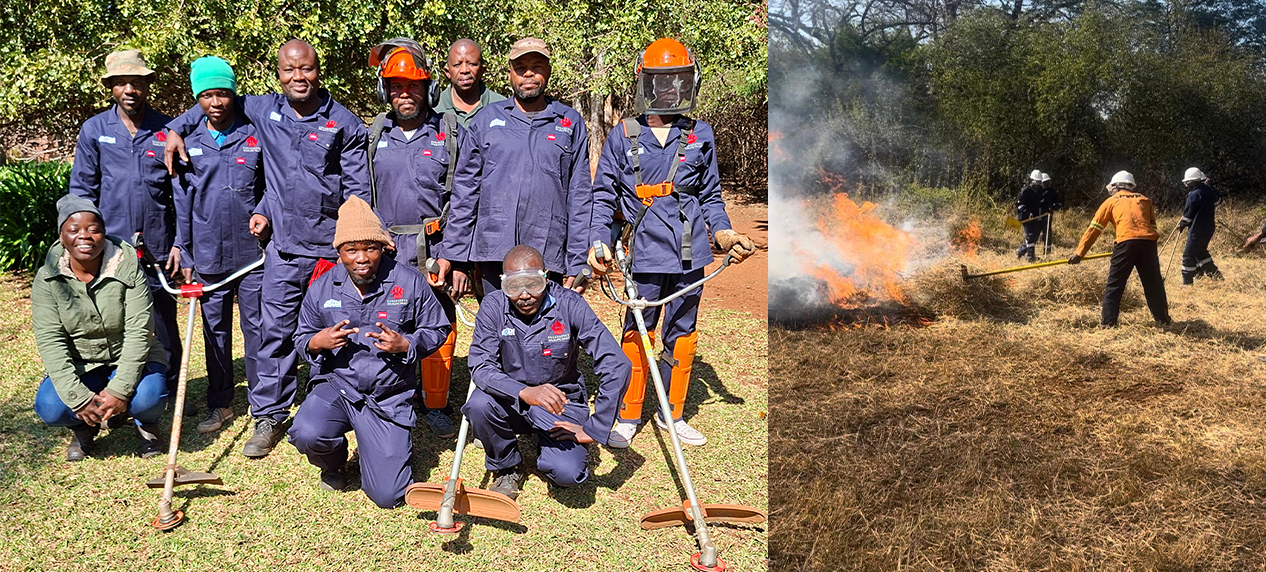
In the Western Soutpansberg region of Limpopo, we work closely with communities and Community Property Associations (CPA’ s) to build capacities and support sustainable socio-economic development. With support from a grant awarded by the National Lotteries Commission, a number of training initiatives were implemented earlier this year to build land management skills and strengthen the understanding of Occupational Health and Safety (OHS) of members of two CPAs and a community.
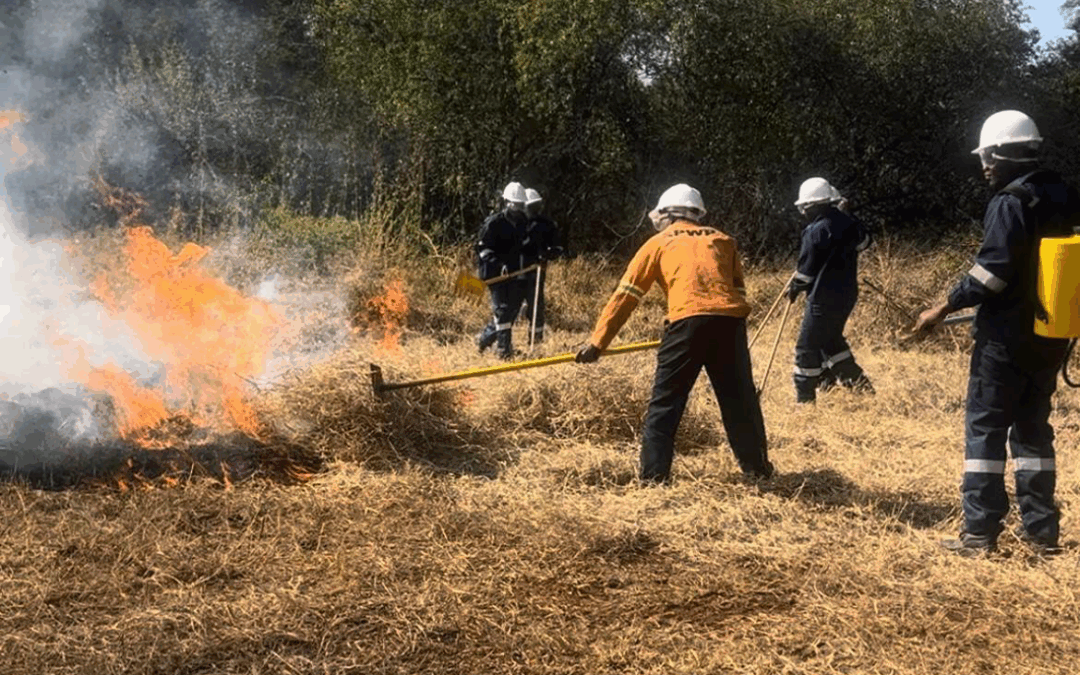
The training courses addressed needs previously identified by the communities, and included fire safety as well as herbicide application and brush cutter training to improve the management of bush encroachment, which is widespread in Limpopo. In addition, we implemented First Aid Level 1 training, SHE Representative, Hazard Identification and Risk Assessment (HIRA), and an introduction to environmental and OHS legislation. In all, 61 participants benefited from the training, including 29 youth and 23 women. Some of the EWT’ s Soutpansberg Protected Area rangers and managers also attended several courses.
The fire suppression and safety training was implemented in collaboration with Working On Fire. Each group also previously received fire beaters, fire knapsacks, and cotton overalls as starter equipment. The training and equipment are already enabling communities to deploy teams to fight fires, which can pose a severe risk to both people and property. Several years ago, our Medike team assisted landowners in putting out a fire that raged for two weeks on another part of the mountain and nearly caused severe property damage.
Just as important is understanding environmental legislation and having a basic knowledge of first aid, so community members are able to help others, particularly if injuries are sustained on patrols or snare removals in the veld or on the mountain. In addition, it is essential that they understand OHS regulations and how these need to be applied in support of the people working on properties, either formally or informally.
Farming practice
Agriculture is inherently risky, particularly in the face of climate change. In South Africa, smallholder farmers make an important contribution to food security, particularly at the local level. Many face severe challenges, however, particularly in semi-arid regions where environmental stressors are heightened. Effective fire management is essential not only to mitigate associated risks but also because fire is a valuable ecological tool for enhancing vegetation health and resilience.
Managing bush encroachment plays a key role in improving and maintaining ecosystem health and, together with rotational grazing, leads to improved grazing for livestock. In drought-prone areas, building ecosystem function and resilience is vital to ensure the long-term financial sustainability of a farm.
Occupational Health and Safety and Risk Management
Occupational Health and Safety in land management is especially important on community-owned land, which is frequently under-resourced. Common hazards include handling agricultural chemicals without adequate protective gear or training in their application, snake bite, and handling of equipment without sufficient training. These challenges are exacerbated when injuries occur in remote rural areas that lack cell networks and where people would have to walk relatively long distances to obtain help. A basic understanding of first aid and the strengthening of OHS awareness and practices through training can significantly reduce potential risks to workers and support the long-term sustainability of land stewardship efforts. Going forward, we are supporting the CPAs and communities to develop safety plans and protocols, and ensure that low-cost, practical safety measures are considered in the event of a fire or medical emergency.
The introductory course on environmental legislation also provided people with the opportunity to improve their understanding of the rationale for legislation, which ordinarily they would not have been exposed to, particularly in a readily accessible format.
Impact
Through our Medike Reserve, the EWT has a long-term relationship with communities and other landowners in the Soutpansberg region. Our recent training courses were attended by community members as well as EWT rangers and managers, which provided a wonderful opportunity to strengthen relations and build collaboration for more effective and sustainable land management in the future.
Both CPAs and the participating community now have teams with a variety of skills that contribute to sustainable land management and human health and safety. Several recently obtained employment in which their training could contribute to their new jobs. Clearly, this is an ongoing process but through collaboration and mutual support, it is a sound platform to grow capacity into the future.