The Mushroom Enterprise – A Game-Changer for Rural Livelihoods and Crane Conservation
The Mushroom Enterprise – A Game-Changer for Rural Livelihoods and Crane Conservation
Compiled by Zeneb Musiimire, East Africa Community Engagement Specialist, ICF/EWT Partnership.
A quiet revolution is taking place in the lush wetlands of East Africa. The International Crane Foundation (ICF), in partnership with the Endangered Wildlife Trust (EWT), has introduced an innovative solution that transforms rural livelihoods while safeguarding critical crane habitats. This initiative, centred around mushroom cultivation, is proving to be a game-changer for both people and wildlife. Communities in Uganda and Rwanda are developing mushroom cultivation enterprises as an alternative livelihood initiative. Mushroom cultivation is an indoor activity requiring minimal space, utilises agricultural waste as its growth media, and provides quick financial returns, often within just one month.
In Uganda, three pilot farmers’ groups with a total membership of 210 households around Rushebeya-Kanyabaha wetland in Rukiga District were supported with training materials and equipment to enable them to engage in mushroom farming. As a strategy to encourage ownership, continuity, and sustainability of the enterprises, beneficiaries were tasked with contributing to the project by building dark rooms and growing houses for the mushrooms, as well as securing substrate, water, and fuelwood. The three groups were given a total of 300 mushroom spawns and have since produced a total of 339 kilogrammes of fresh mushrooms, translating to USD 836.50 earned in just two months.
“Mushrooms have changed our lives in the shortest period. Just from the homestead, we now have a steady income, food without first degrading the homes of the cranes – the wetlands. I used to walk long distances up and down the hill to the wetland just to collect vegetables. This was tiring and time wasting. Now, all that is history, and right here in our homes the cranes have brought us a rich alternative source, the mushrooms. Because of these benefits, we no longer pester cranes and call them ‘Government cranes’ , they are now ‘our cranes’ ,” says Sarah Mugisha, a participant.
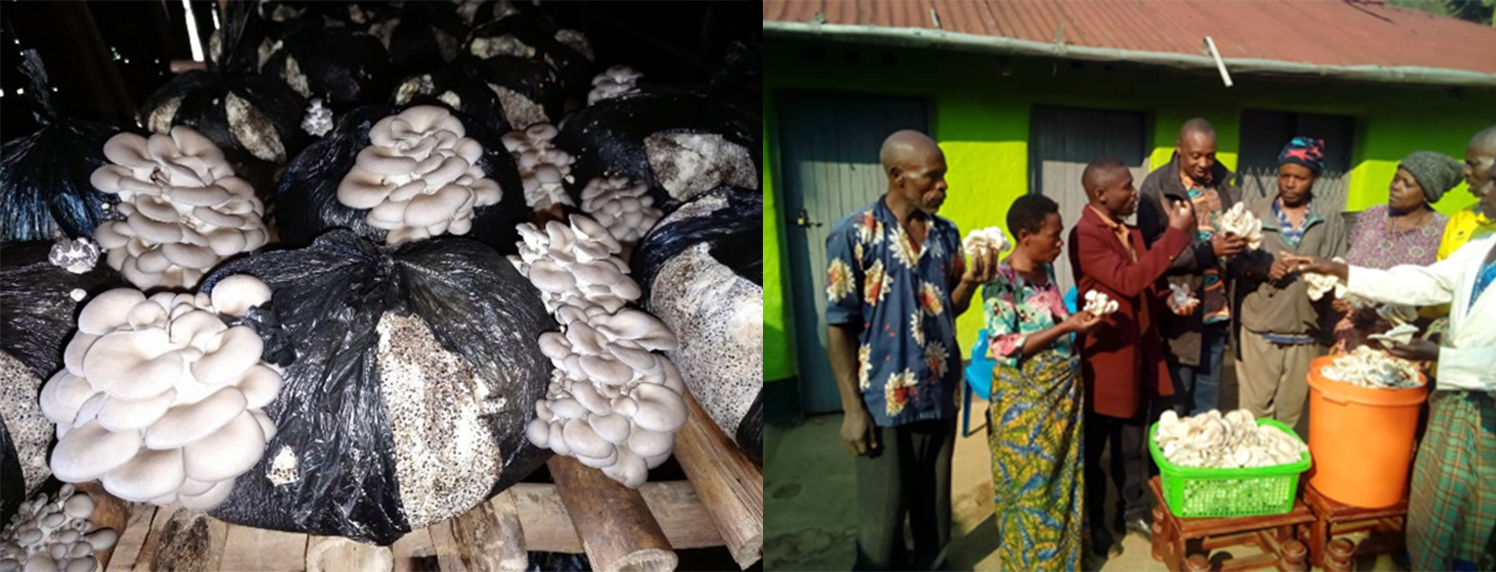
Proud community members displaying their mushroom harvest in Uganda
In Rwanda, 20 households around Rugezi Marsh were trained and supported with 2,900 mushroom spawns. Each spawn produces between 1.5 to 2.6 kilogrammes of fresh mushrooms over a period of three months, assuring the community of substantial rewards from their mushroom enterprises. Moreover, each kilogramme of fresh oyster mushrooms is priced at $2.50, making mushrooms more affordable than meat, which costs around $4.50 per kilogramme.
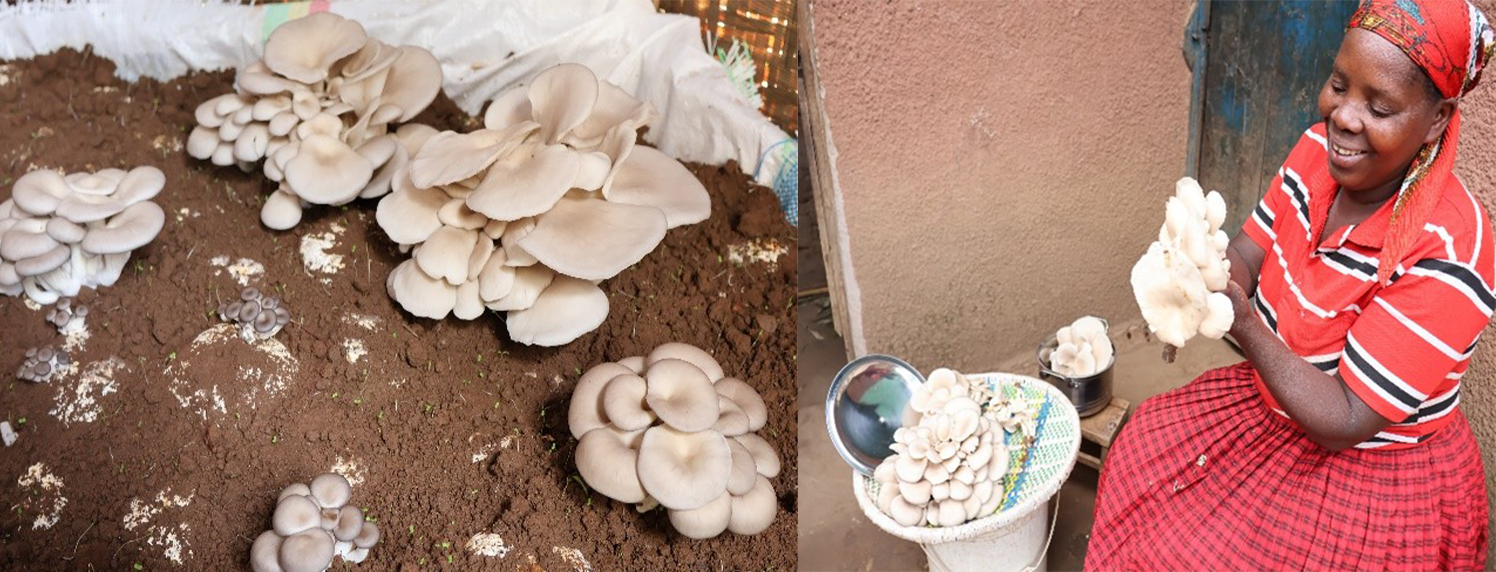
A thriving mushroom cultivation setup in Rwanda
Returns from mushroom cultivation are being reinvested into the enterprise, with some funds kept in the group’ s savings and credit scheme, allowing members to access short-term loans for implementing small and medium-sized nature-friendly enterprises.
A Win-Win for Communities, Cranes and Nature
By engaging 230 families, each with an average of six members, mushroom cultivation is effectively addressing critical community needs such as income generation, improved food security, and new employment opportunities, thus reducing dependence on wetland/marsh resources. This, in turn, results in safer spaces for cranes. By involving communities in such viable green enterprises, ICF enhances conservation efforts and outcomes while contributing to the achievement of the Sustainable Development Goals.
Looking to the Future
The success of this initiative has sparked plans for expansion, including:
- Increasing the number of participating households
- Exploring new markets for mushroom products
- Developing value-added mushroom products
As the project grows, it promises to create a lasting positive impact on both rural livelihoods and crane populations across East Africa.