
Help protect Africa's 

Blue Crane Conservation: Protecting South Africa’ s National Bird

Blue Crane Conservation: Protecting South Africa’ s National Bird

Blue Crane Conservation: Protecting South Africa’ s National Bird

By Dr Christie Craig, Conservation Scientist
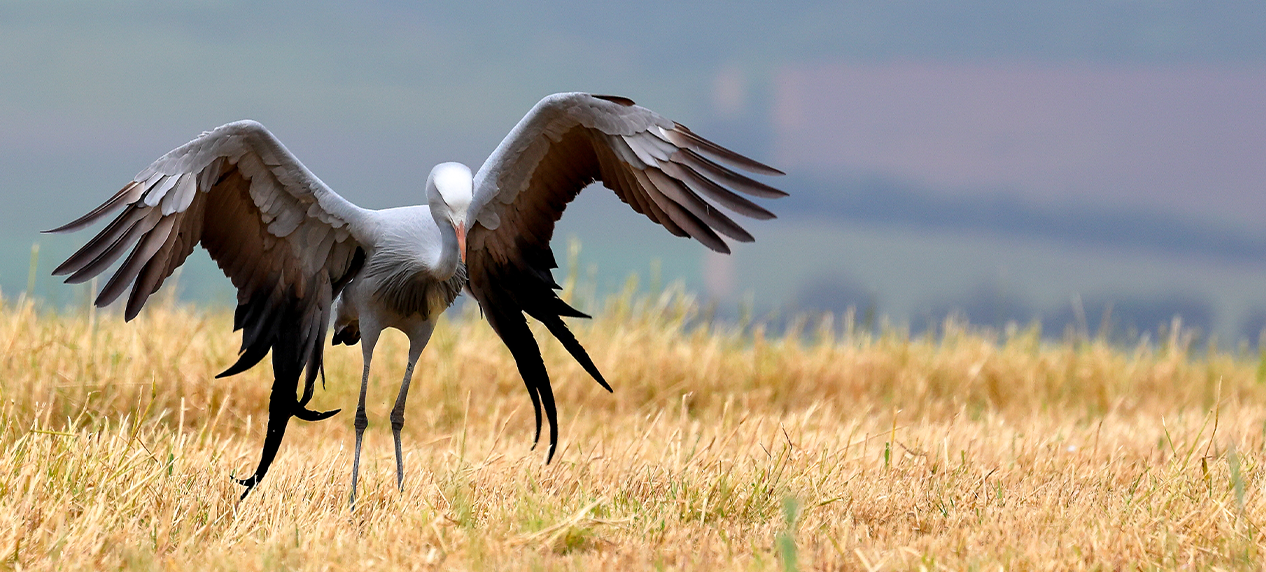


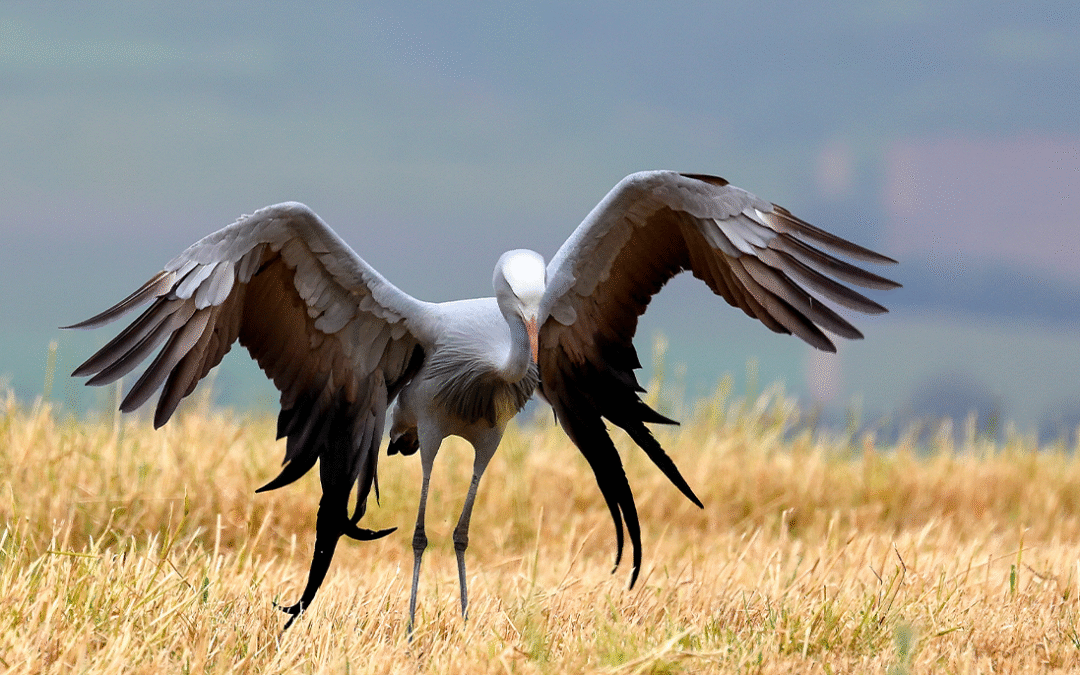
Blue Cranes in Western Cape farmlands as part of conservation efforts

Image Credit: Pieter Botha


September is Heritage Month in South Africa, a time when we focus not only on our cultural, but also natural heritage, most notably our National Bird, the Blue Crane.

To ensure the continued survival of this species, and its growth in areas where it has shown decline in recent years, the Endangered Wildlife Trust (EWT), through our partnership with the International Crane Foundation (ICF), has increased its efforts to conserve the Blue Crane, with a strong focus on the Western Cape and Karoo.

Decades of successful conservation interventions have yielded positive results in KwaZulu-Natal and the Northern Cape, and attention is now being directed to populations in the Western Cape, with the same positive outcomes being targeted.

Blue Cranes are endemic to South Africa, with a small population found in Namibia, making these the world’ s most range-restricted crane. There are less than 30,000 of these birds left in the world.

As part of our Heritage Month celebrations, and to mark Heritage Day on 24 September,  the EWT/International Crane Foundation partnership is expanding its existing activities to safeguard the future of Blue Crane populations in the Western Cape, by intensifying our focus on habitat restoration with communities and farmers, and addressing threats posed by energy infrastructure.

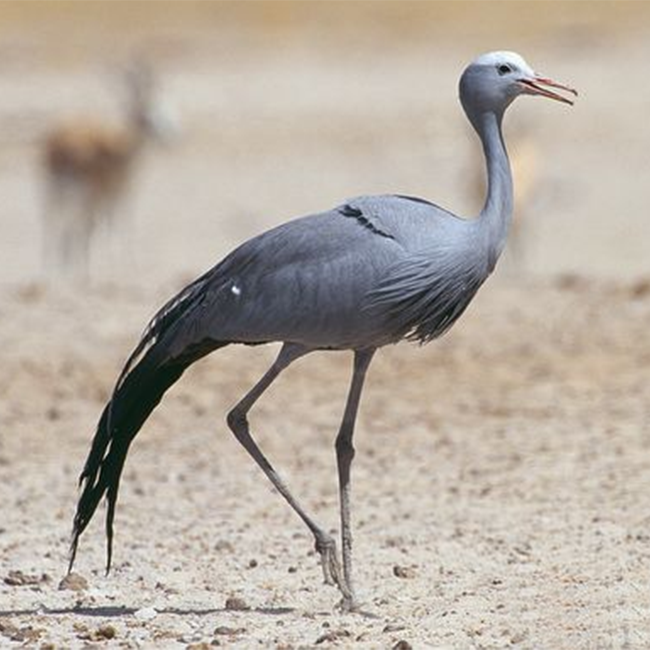
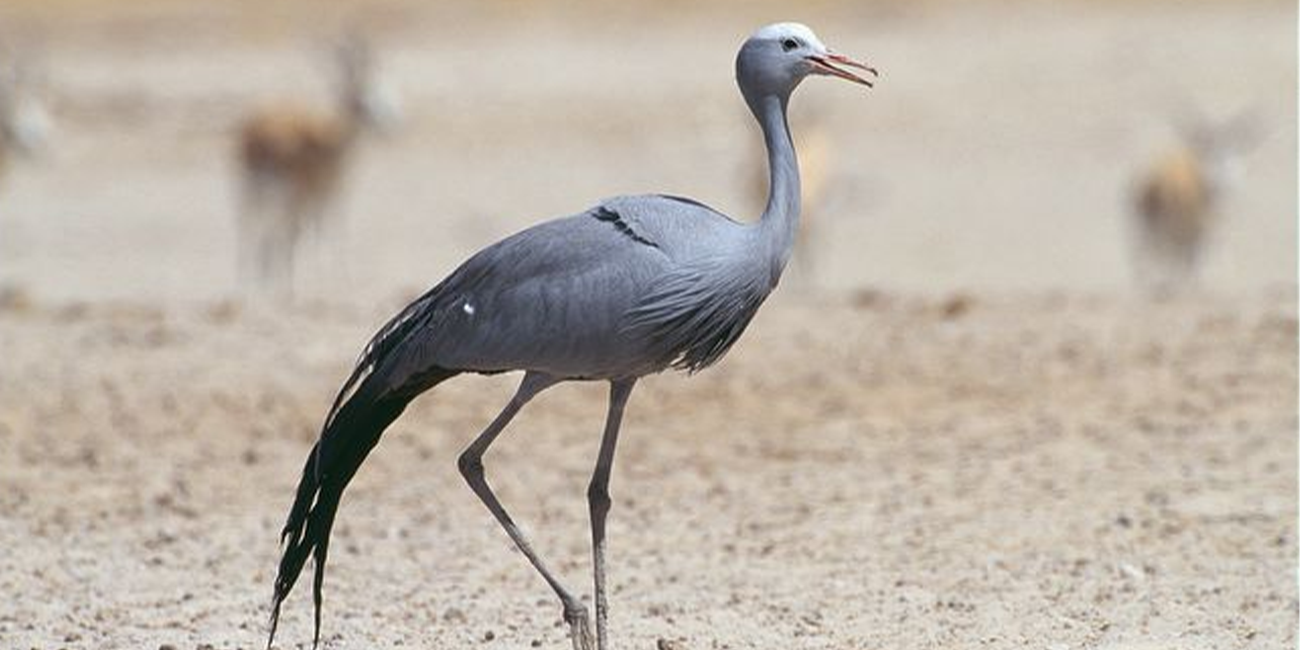
The Blue Crane (Anthropoides paradiseus) is an important element of South Africa’ s natural heritage, serving as a flagship for conservation in agricultural landscapes, from the rolling grasslands of KwaZulu-Natal to the expansive plains of the Karoo, to the patchwork of crops and renosterveld in the Western Cape. 

Since 1994, the EWT/International Crane Foundation partnership has been committed to Blue Crane conservation in South Africa, running projects in the grasslands, Karoo and Western Cape. Over the last 10 years, the majority of our applied crane conservation work has focused on the Drakensberg region, where Blue Cranes have historically faced steep declines. With consistent conservation action, including natural habitat protection, powerline impact mitigation and community projects, Blue Crane numbers are now slowly increasing, testimony to the success of our conservation activities.

Until 2010, Blue Crane numbers were increasing and healthy in the Karoo and Western Cape. However, a recent PhD study supported by the EWT/ICF Partnership reveals that numbers have subsequently been declining in these areas, especially in the Overberg ,where counts have dropped by 44% between 2011 and 2025. For more info on the reasons for this decline, see our June press release.

This has sparked the need for renewed conservation effort underpinned by a multi-stakeholder conservation plan, which was developed with the help of the Conservation Planning Specialist Group, gathering inputs from NGO, industry, landowners, communities and government.   


The  conservation plan comprises four parts:

1: Habitat protection.

The partnership will continue its commitment to Blue Crane conservation in the Drakensberg through ongoing habitat protection and will expand this work from the Western Cape into the Karoo. 

2:  Addressing energy infrastructure impacts.

Because Blue Cranes are particularly susceptible to colliding with energy infrastructure, the relationship with energy suppliers is being expanded to address this issue through powerline mitigation and improved infrastructure routing.

3:  Crane Friendly Agriculture

Engagement with the agricultural industry is increasing to co-create solutions that allow Blue Cranes and other species using the agricultural matrix to thrive alongside agricultural production. Blue Cranes are especially dependent on agriculture in the Western Cape, but also use agricultural habitats in the Karoo and grasslands. Work in the agricultural sector will focus on addressing threats such as poisoning and breeding disturbance, as well as helping farmers address crop damage issues.

4:  Research and Monitoring:

This is an essential underpinning of any good evidence-driven conservation project. Through monitoring Crane numbers and breeding success, we will be able to gauge our impact. Without research, we wouldn’ t have known that Blue Cranes’ numbers were declining or why. Through continued research, we will keep abreast of changes in the Blue Crane population and in the landscapes that they depend on.

The implementation of this four-pronged approach creates certainty for the EWT/ICF that we can reverse the decline in the Blue Cranes populations in the Karoo and Western Cape, as we have done in the Drakensberg region. 

The EWT remains committed through the implementation of its Future Fit Strategy to working with partners throughout Africa to ensure the survival of crane species, particularly the Blue Crane. Grey Crowned Crane and Wattled Cranes.


**  The EWT/ICF projects are generously supported by the Leiden Conservation Foundation, Eskom, Hall Johnson Foundation, Indwe Risk services, Jacksonville Zoo and Gardens Zoo Neuwied, Safari West, Nashville Zoo and the Paul King Foundation
How is South Africa’ s national bird, the Blue Crane, doing?

How is South Africa’ s national bird, the Blue Crane, doing?

How is South Africa’ s national bird, the Blue Crane, doing?

By Christie Craig of the Endangered Wildlife Trust/International Crane Foundation, Fitzpatrick Institute of African Ornithology


In an ever-changing world, conservation scientists face the daunting task of keeping pace with the shifting dynamics of threatened species and adapting conservation action accordingly. This is especially true for South Africa’ s national bird, the Blue Crane.

Historically, the Blue Crane’s population in its natural core range, the eastern grasslands and Karoo, suffered significant declines due to agricultural expansion and poisoning, leading to it being classified as Vulnerable on the IUCN Red List.

In contrast to the eastern side of the country, the Western Cape conversion of natural land (fynbos) to cereal agriculture and pasture was favourable for Blue Cranes and a new core population established and thrived there. Today, more than half of all Blue Cranes in South Africa are found in this intensively farmed landscape.

Despite this, there were major concerns about the sustainability of this population amidst the myriad threats posed by intensive agricultural practices. These are the questions I aimed to answer when completing my PhD. Between 2018 and 2023 we conducted field work to assess the distribution of the birds, their breeding success and predominant threats to the species. We also used citizen science data to determine population trends over the last 30 years.

Population estimates reveal a promising recovery of Blue Crane numbers since 2002. This is attributed to the recovery of grasslands due to ongoing conservation action, and Blue Cranes establishing a stronghold in the Western Cape.

However, this scenario changed in 2010 when Blue Crane numbers declined. Summer Coordinated Avifaunal Roadcounts showed that Blue Crane numbers dropped by 19% nationally between 2011 and 2019, particularly in the Overberg region where counts declined by 22%.

It was difficult to determine the exact cause of the decrease, and equally difficult to know whether it would continue. But, some clues as to where the problem may lie was sourced from survival and breeding data. Between 2016 and 2021 we fitted 31 satellite trackers to flighted Blue Cranes in the Western Cape.

From this data collected I was able to determine their survival rate, finding that 95% of breeding Cranes survive a given year, compared to 85% of non-breeding cranes. From the trackers we found that non-breeding cranes move significantly more (on average 9.5km per day) than breeding cranes (5.8km). This puts them at greater risk of dying as a result of collisions with powerlines and fences.

We also conducted extensive powerline surveys in the Western Cape and Karoo, walking or slowly driving 1,994km of powerlines to record collisions by Blue Cranes and other birds. We found that Blue Cranes were the most commonly recorded species, and collisions were particularly likely to occur if a powerline was within 2.5km of a seasonal waterbody. This is because Blues Cranes use shallow seasonal waterbodies to roost, and at low light they find it particularly difficult to circumvent powerlines. This knowledge will help us to, in future, better route powerlines and to proactively mark them to improve visibility. While there are significant casualties on powerlines, Blue Crane survival rates in the Western Cape are quite good compared to those found in regions such as the Karoo, and to other crane species outside South Africa.

This indicates that poor survival is not the primary reason for the population declining in this region. Rather, an alarm bell rang when I compared the breeding success of Western Cape cranes to past rates, and to rates in the Karoo and grasslands.

Recruitment of juveniles into the population is half of what it was in the Overberg 30 years ago. Swartland and Overberg Blue Crane breeding pairs successfully produce fledglings 43% and 40% of the time, compared to 68% of grasslands pairs and 67% of Karoo pairs. A caveat is that our data from the grasslands and Karoo is now over 10 years old, whereas the Western Cape data is recent, reiterating the need for continued monitoring.

Following a recent study showing that high temperatures and nest disturbance are risk factors for nest failure, we will need to actively work with land users to reduce disturbance at nests and give cranes their best chance at successfully raising young. The success of our long-term datasets for Blue Crane within South Africa is largely due to inputs by citizen scientists. Without this information we would not be aware of the decline in the Blue Crane population.

In 2023 we held a successful first Conservation Planning Workshop, facilitated by the Conservation Planning Specialist Group, to kickstart a process that will result in a finalised conservation plan when stakeholders meet again in October this year.

** A big thank you to Peter Ryan and Tanya Smith who supervised the PhD, and to Leiden Conservation Foundation, Eskom, Dave Myers, Hall-Johnson Fellowship and Bateleurs for supporting the research. We are grateful to the Leiden Conservation Foundation, Neuwied Zoo, Safari West and Jacksonville Zoo for sponsoring the conservation planning process.