Help protect Africa's 

The Green List: A Framework for Measuring Species Recovery and Conservation Impact

The Green List: A Framework for Measuring Species Recovery and Conservation Impact


The Green List: A Framework for Measuring Species Recovery and Conservation Impact

By Dr Samantha Nicholson – senior carnivore scientist, Endangered Wildlife Trust.
Conservation efforts are essential for conserving species, and it is important to focus on how species can recover and thrive over time with such efforts. The IUCN Green Status of Species is a new tool that works alongside the Red List to track species’ recovery and measure the impact of conservation actions. In this article, we’ ll explore how the Green Status is helping shape a more optimistic approach to conservation, starting with the lion, which was recently assessed for the first time.

The IUCN Red List of Threatened Species is globally recognised as the standard for assessing the extinction risk of species. However, an optimistic approach to species conservation is also essential, providing a roadmap for recovery and measuring the impact that conservation efforts have had on that species’ status. To complement the Red List, the IUCN Green Status of Species was developed to assess species recovery and the impact of conservation efforts.

The Green Status works alongside the Red List by evaluating how species populations are recovering and tracking the effectiveness of conservation actions. These assessments are crucial, offering a clear measure of recovery and the success of conservation initiatives. While the Red List highlights species that are threatened, the Green Status provides an additional perspective by measuring how much a species has and can recover. This helps identify successful conservation strategies and areas where further efforts are needed. By monitoring a species’ recovery, Green Status assessments allow conservationists to celebrate successes, maintain support for conservation projects, and adjust strategies for better outcomes. They also emphasise the importance of long-term conservation planning to ensure that species not only avoid extinction but also thrive and reach sustainable population levels. Furthermore, the Green Status contributes to a more comprehensive understanding of biodiversity conservation by emphasising both the prevention of decline and the restoration of species to healthy populations.

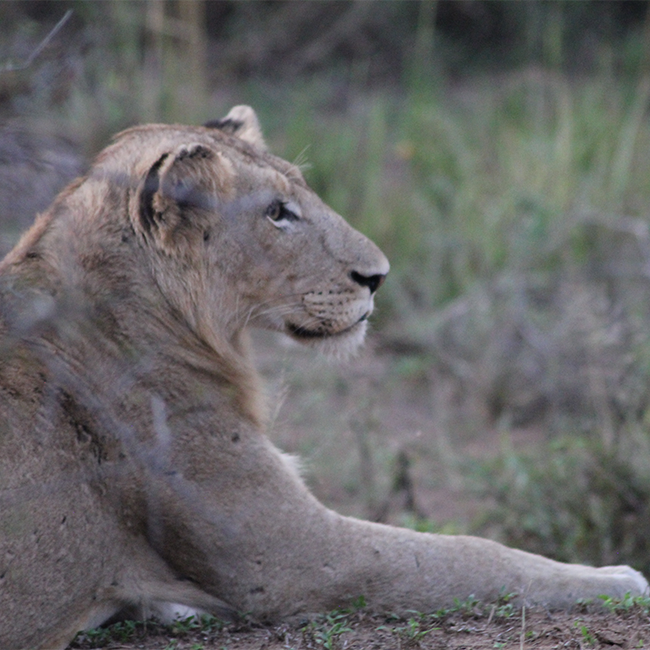
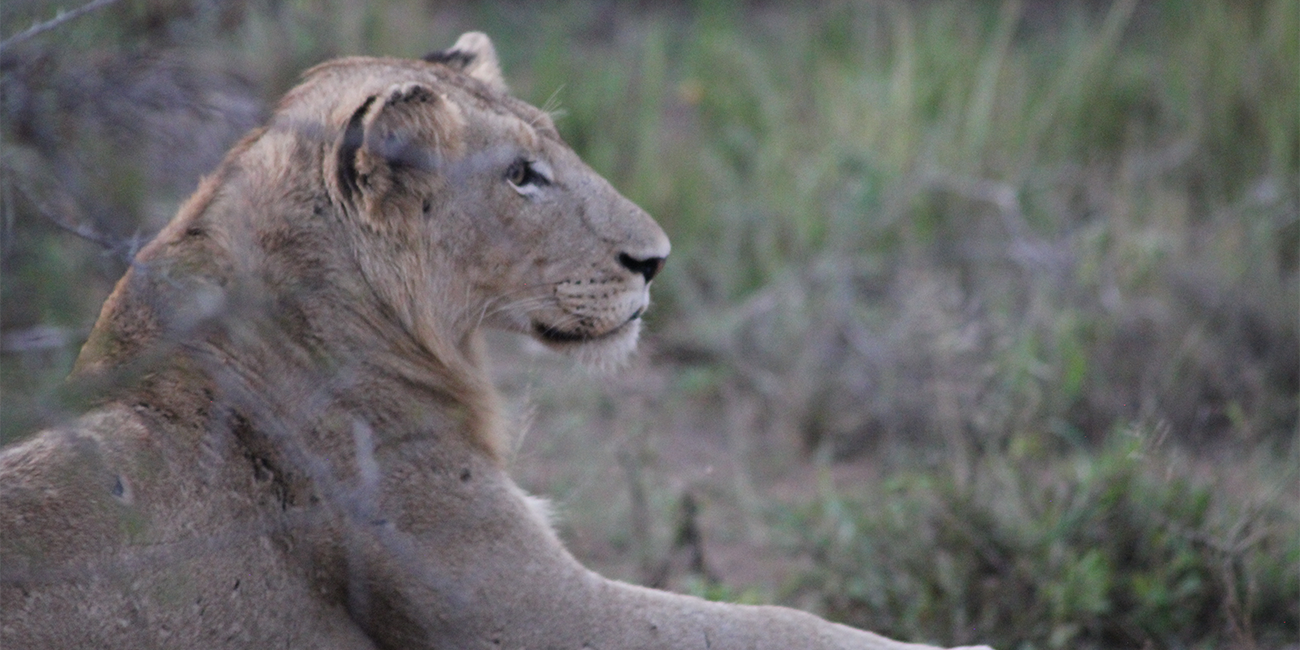
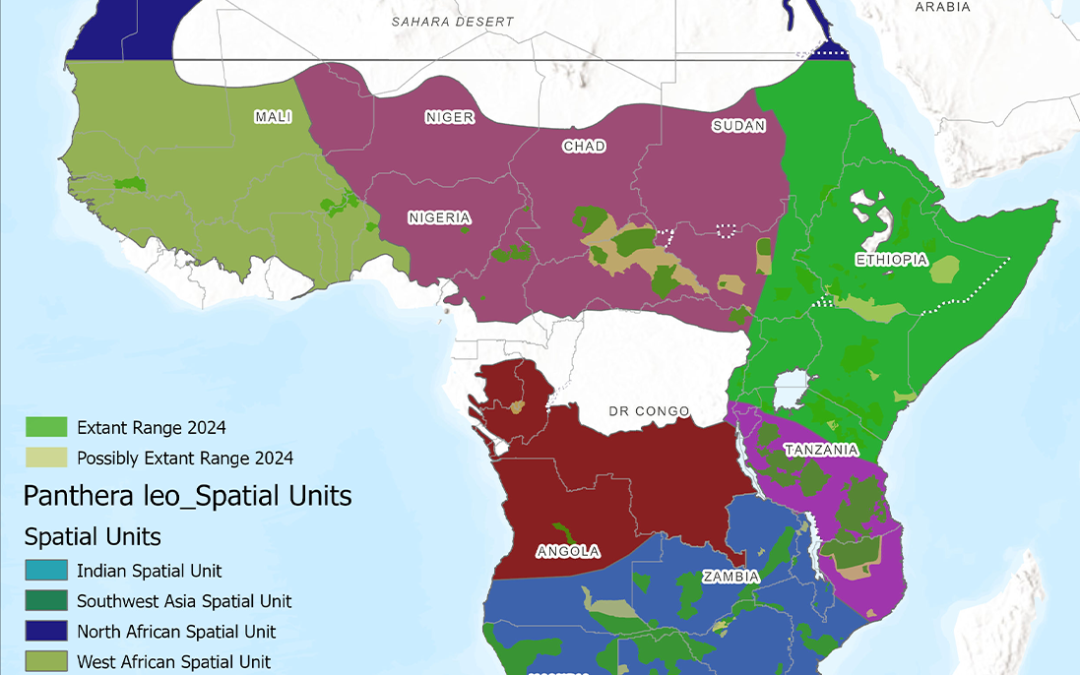
In 2024, the lion’ s (Panthera leo) Green Status was assessed for the first time. The assessment revealed that the species requires intensified conservation efforts. The lion’s recovery score was 30%, classifying it as “largely depleted.” We broke the indigenous range of the species into ten spatial units – a spatial unity being a distinct geographic area or boundary (Figure 1). The species is most likely absent in two of its ten spatial units, likely viable in one, and present in the remaining seven. This reflects a significant decline from historical levels. While lions may still exist in some areas, their numbers are far lower than before, and they face substantial survival threats.
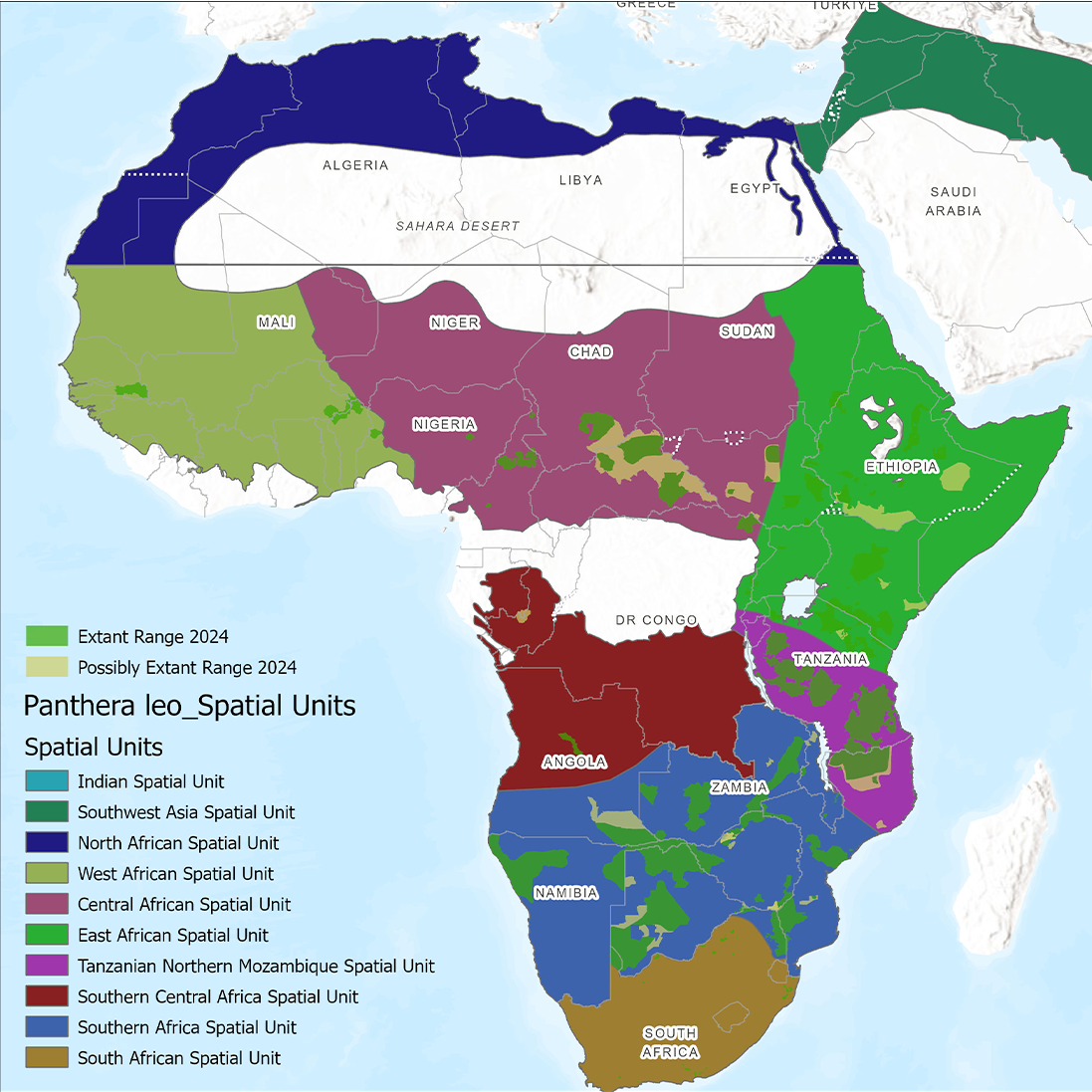
 

Figure 1. Map of the indigenous range of the Lion delineated into ten spatial units. Current range is based on the latest Red List Assessment (Nicholson et al. 2024): Extant range = Green; Possibly Extant Range = Light Yellow Green. Spatial units are as follows: Light Blue = Indian; Dark Green = Southwest Asia; Dark Blue = North African; Yellow-Green = West African; Pink = Central African; Bright Green = East African; Purple = Tanzanian Northern Mozambique; Red = Southern Central Africa; Blue = Southern Africa; Olive Brown = South African.


A key component of the Green List is determining a species’ “Conservation Legacy,” which compares its current Green Score to what it would be if no past conservation efforts had taken place. The lion, despite its depleted state, has a High Conservation Legacy, indicating that without past conservation actions—such as protected areas and legal protections—its population would have declined even further. The species’ conservation dependence is classified as “Medium,” meaning that its long-term survival and recovery rely moderately on continued conservation efforts. While lions may not face immediate extinction without these actions, they would experience significant population declines and escalating threats across their range. Without ongoing conservation measures like protected areas, legal protections, and active management, the lion is expected to be extirpated from three spatial units within the next decade. This highlights the urgent need for sustained conservation efforts to prevent further declines and ensure the species’ survival.

The Green Status evaluation shows that human activities are obstructing the lion’s ecological functionality across its range, with significant declines in many areas and extinction in North Africa and Southwest Asia. However, the assessment also emphasises that conservation efforts have helped prevent the species’ extinction in regions such as West and Southern Central Africa, South Africa, and India. To preserve the remaining populations, intensified conservation actions are critical, especially as human settlements continue to expand across the lion’s habitat.

The Green Status assessment of the lion highlights the critical need for continued and strengthened conservation efforts to safeguard this species. While the lion’ s population has dramatically declined and has vanished from parts of its former range, conservation measures such as protected areas and legal safeguards have played a key role in preventing its extinction in certain regions. Despite these successes, the species’ medium conservation dependence suggests that sustained and enhanced actions are crucial for its long-term survival.

As human development increasingly impacts lion habitats, it is essential to not only protect existing conservation areas but also to actively manage and expand them. Additionally, increasing funding and support for Conservation organisations working in the field is vital to ensure that these efforts are effectively implemented and scaled. Conservation organisations provide expertise, conduct vital research, and mobilize local communities, all of which are crucial for species recovery. Without these resources, vital conservation work may struggle to achieve lasting results. The Green Status approach is a powerful tool for measuring progress and identifying areas where further action is needed. Ultimately, the lion’ s future underscores the importance of long-term commitment, adequate funding, and global collaboration in protecting biodiversity for future generations.


Nicholson, S., Aebischer, T., Asfaw, T., Bauer, H., Becker, M., Bertola, L., Breitenmoser, U., Carlton, E., Fraticelli, C., Henschel, P., Hunter, L., Laguardia, A., Loveridge, A., Ndiaye, M., Roy, S., Sogbohossou, E., Scott, C., Strampelli, P. & Venkataraman, M. 2024. Panthera leo (Green Status assessment). The IUCN Red List of Threatened Species 2024: e.T15951A1595120251. Accessed on 31 March 2025.
 

A new sand frog discovered in Mozambique

A new sand frog discovered in Mozambique


New Species Discovery: Sand Frog Adds to Mozambique’s Biodiversity

Eleanor Momberg (Communications manager, Endangered Wildlife Trust)

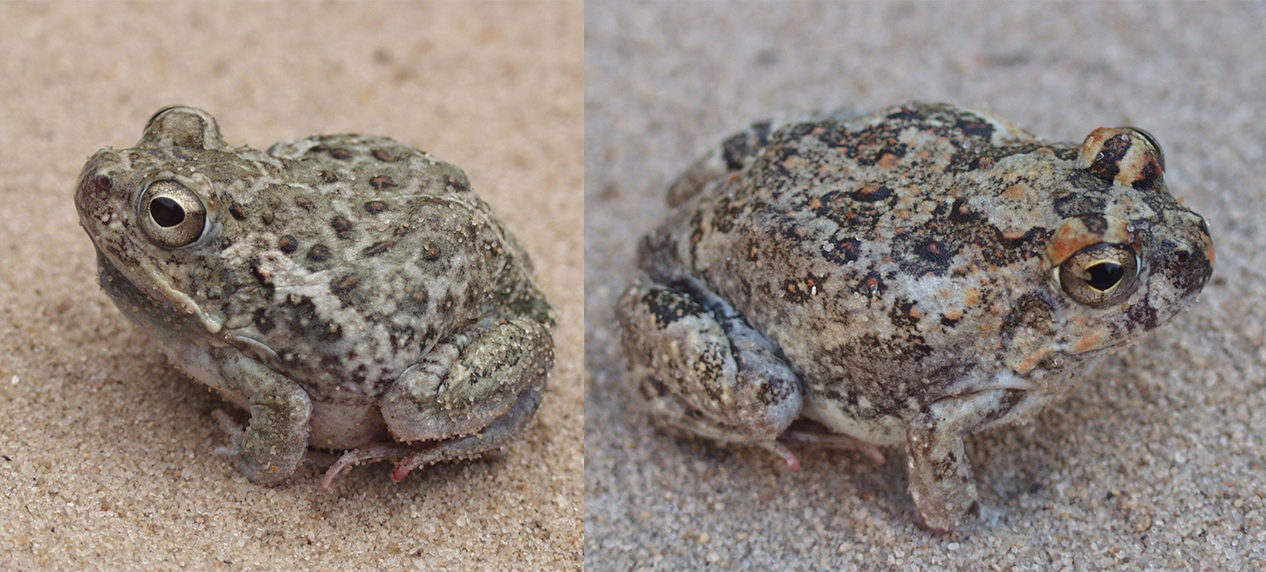
An Endangered Wildlife Trust ecologist recently joined two other South African researchers to confirm the discovery of a new sand frog species in the genus Tomopterna in Mozambique’ s Banhine National Park.

A small collection of frogs from inland of Beira, Mozambique, in December 1991 included two specimens of Tomopterna that differed morphologically and genetically from all previously known species. In subsequent years a series of Tomopterna specimens was collected from Banhine National Park. Genetic results indicated that the Banhine specimens were genetically closely related to those collected near Beira, and that these sequences differed substantially from all previously sequenced Tomopterna species.

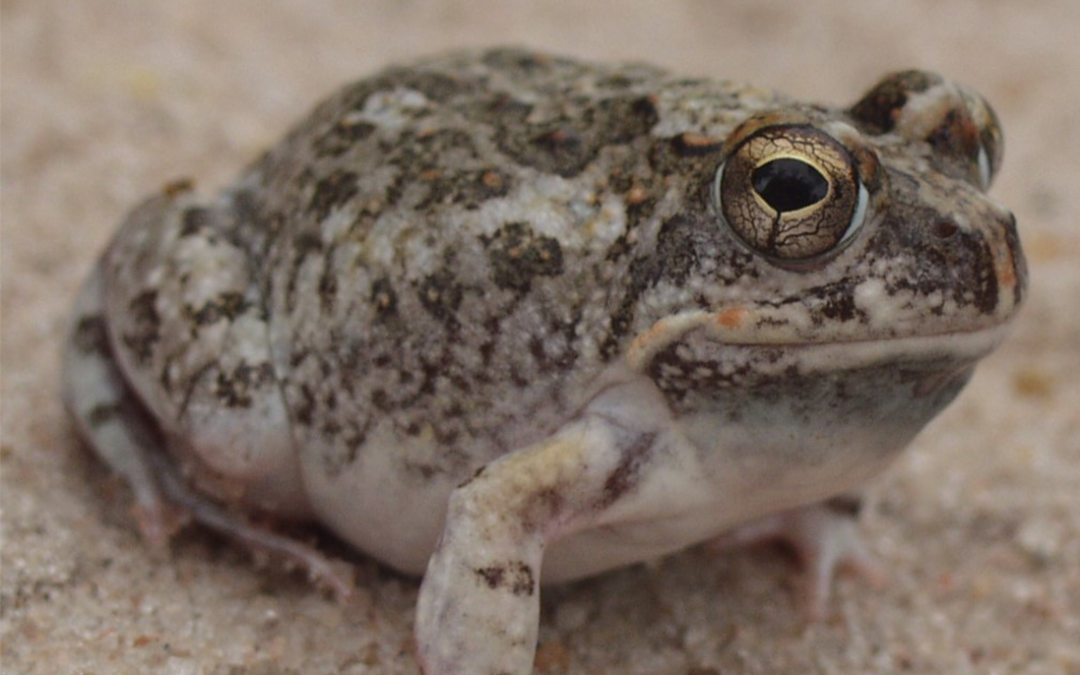
In findings published in ZOOTAXA, EWT ecologist Darren Pietersen, North West University’ s Alan Channing and the SA Medical Research Council’ s Abeda Dawood describe this new frog species, which they name Tomopterna banhinensis after the type locality, as a species that can be distinguished from all other described species of sand frogs by several characters.

These include that the males grow to a maximum size of 43 mm, that all individuals have two pairs of divided tubercles under the first finger, more than three phalanges free of webbing on the fourth toe, a continuous glandular ridge below the tympanum, a distinct tympanic membrane, the nostrils being situated closer to the snout tip than to the eye, the absence of an outer metatarsal tubercle, the presence of small dorsal warts, the absence of (or only weak) vomerine teeth, and barring on the limbs.

This description adds a further amphibian to the list of Mozambican frogs, which has increased significantly in recent years.

According to the published research, there are presently 18 recognised species within the genus Tomopterna.

The research shows that the species of sand frogs are very similar in overall morphology, no doubt the reason why so many cryptic species were unrecognised, or synonymised with the Cryptic Sand Frog (T. cryptotis) – which was believed to be a single widespread taxon.

Sand frogs are widely distributed in sub-Saharan Africa, excluding the rainforests of central Africa. They are usually found on sandy soils, although the Eastern Beaded Sand Frog (T. pulchra) and Natal Sand Frog (Tomopterna natalensis) are prone to inhabit more rocky habitats.

While this species is presently only known from Banhine National Park and the area around Beira in Mozambique, it is likely to be more widespread than present records suggest, occurring widely across the Mozambique plain, possibly including extreme south-eastern Zimbabwe (specifically Gonarezhou National Park), to which the sandveld and drainage systems of Banhine National Park are linked.

The research paper states that the discovery of many cryptic sand frog species using DNA sequencing suggests that there are more frog species waiting to be described. Sand frog species often occur sympatrically, but the high diversity of Tomopterna, up to five species, on the coastal plain of Mozambique is remarkable.


Research published by:

ALAN CHANNING1, DARREN W. PIETERSEN2,3 & ABEDA DAWOOD4
1Unit for Environmental Sciences and Management, North-West University, Potchefstroom 2520, South Africa.
2Department of Zoology and Entomology, University of Pretoria, Private Bag X20, Hatfield 0028, South Africa.
3Endangered Wildlife Trust, Plot 27 & 28 Austin Road, Glen Austin AH, Midrand 1685, South Africa
4Division of Research Capacity Development, South African Medical Research Council, Private Bag X385, Pretoria 0001, South Africa.


How to count lions in Africa

How to count lions in Africa

Science Snippet:

How to count lions in Africa

By Lizanne Roxburgh and Erin Adams

Knowing how many individuals of a species exist in the wild is important for managing that species. It is also important to know the trend in the number of individuals in a population. Whether the number is increasing, stable or declining will have implications for what management interventions should be used to conserve that population. There are currently many methods that can be used to estimate population size, however, each have their own strengths and weaknesses.

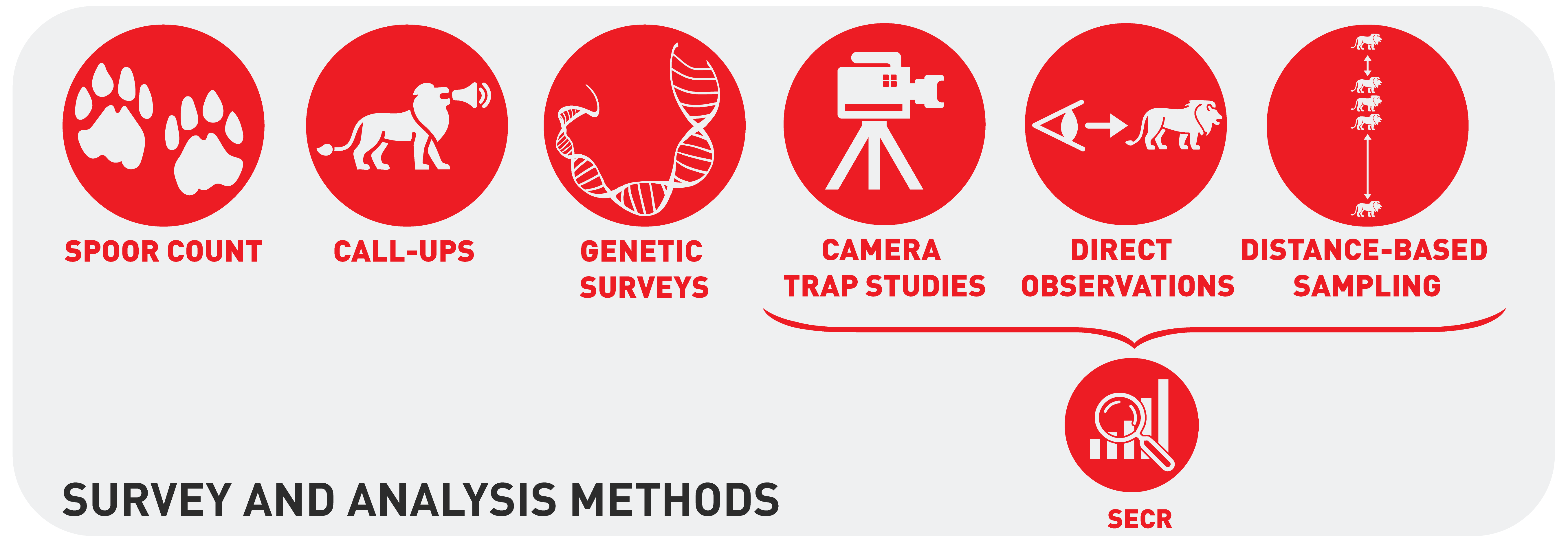
In a recent study*, scientists from the EWT, in collaboration with researchers from other institutions, reviewed all of the methods that are used to survey lion populations across Africa. They looked at 93 different studies from 1991 to 2022. Seven broad survey methods were identified. These included spoor counts, call-ups, genetic surveys, direct observations, camera trap studies, spatially-explicit capture-recapture (SECR) for both direct observations as well as camera traps, and distance-based sampling.

Pic: Eleanor Momberg

The scientists found that the most reliable methods for estimating lion population in Africa were those that included spatially-explicit capture-recapture (SECR) analysis. SECR is a method used to model animal capture-recapture data collected with a network of “detectors.” SECR takes into account both where the individual lions were captured by the detectors (such as camera traps or through direct observations) and where they were not captured. It’ s like solving a puzzle where you piece together information about where animals were detected to estimate their overall population density. Sampling techniques such as spoor counts and call-ups were found to be less reliable, as they tended to over-estimate population size.

The scientists strongly recommended that standardized methods be developed that can produce comparable estimates of the number of lions, both within and between sites and years. These methods can then be used to survey lion populations in areas where gaps in our knowledge of lion populations exist.

*Samantha K. Nicholson, David R. Mills, Erin C. Adams, David G. Marneweck, Hans Bauer, Lizanne Roxburgh, Rob Slotow. 2024. Towards effective and harmonized lion survey methodologies: A systematic review of practice across Africa. Global Ecology and Conservation.  https://doi.org/10.1016/j.gecco.2024.e02908

Science snippets: The Impact of Habitat Loss on Mammal Populations

Science snippets: The Impact of Habitat Loss on Mammal Populations

Science snippets: The Impact of Habitat Loss on Mammal Populations

By: Erin Adams and dr Lizanne Roxburgh

Habitat loss and degradation are among the leading causes of population decline for species worldwide. The main issue is the conversion of natural ecosystems to croplands, rangelands, forests and infrastructure. However, it has been difficult, up to now, to accurately assess on a large-scale what role habitat loss has played in the recent range declines of animal populations. In a recent publication, co-authored by EWT scientists*, they compared current and past (from the 1970s and 1980s) distribution ranges of mammals to understand the reasons as to why those ranges might be smaller today, and specifically whether their ranges are smaller due to habitat loss and degradation.

The scientists produced distribution maps for 475 land-dwelling mammals from 50 years ago – the “past range” – and for today – the “retained range”. By subtracting the two, they calculated what they called the “lost range”. They then compared the proportions of habitat available for the species in the lost range compared with the retained range. Habitat refers to areas suitable for the species to live in.

The scientists found that for 59% of species, their lost ranges have less habitat available to them compared to their retained ranges. This suggests that the ranges for these spaces have shrunk due to habitat loss.

The scientists also ran analyses in order to determine which factors influence the amount of habitat available.  The most important factors that negatively affected habitat availability were conversion of land to rangeland and high density of livestock. Intensive livestock grazing reduces the amount of food available for herbivores and granivores, leads to changes in vegetation structure, which affects small mammals, and reduces the prey available for carnivores. This study shows the importance of protecting habitats from human activities in order to conserve remaining habitat. For those species where lost ranges have a similar amount of habitat left compared to retained ranges, this gives hope for species recovery if other threats, such as hunting and persecution, can be reduced.

*Pacifici, M., Cristiano, A., Lumbierres, M., Lucherini, M., Mallon, D., Meijaard, E., Solari, S., Tognelli, M. F., Belant, J. L., Butynski, T. M., Cronin, D., d’ Huart, J.-P., Da Re, D., de Jong, Y. A., Dheer, A., Fei, Li, Gallina, S., Goodrich, J. M., Harihar, A. … Wiesel, I. (2023). Drivers of habitat availability for terrestrial mammals: Unravelling the role of livestock, land conversion and intrinsic traits in the past 50 years. Global Change Biology, 29, 6900–6911. https://doi.org/10.1111/gcb.16964

Science Snippets: Science through the 50 Years: the species we work on

Science Snippets: Science through the 50 Years: the species we work on

Science Snippets: Science through the 50 Years: The Species We Work on

Erin Adams and Lizanne Roxburgh, the EWT Conservation Planning And Science Unit

The Endangered Wildlife Trust (EWT) is celebrating its 50th anniversary, and we are reflecting on our remarkable contributions to scientific discovery over this period. Formed in 1973, the EWT was made up of species-focused working groups. These groups included the Vulture Study Group, the Carnivore Working Group, and the Elephant Survey and Conservation Programme (ESCP).
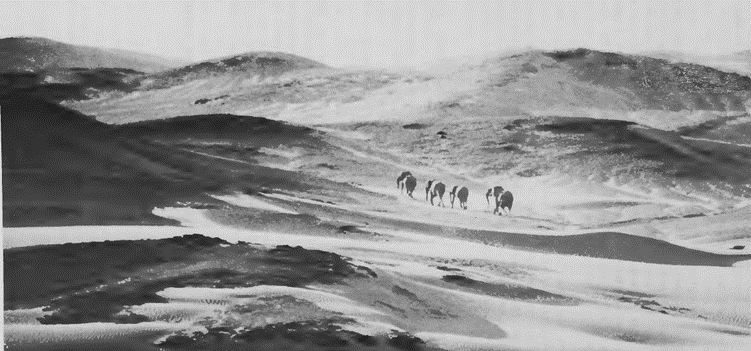
In the early 1980s, the EWT focused on elephant translocation into new reserves. The ESCP played a key role in relocating elephants from conflict areas in Namibia to the Pilanesberg National Park. Another study focused on the distribution and numbers of desert elephants in north-western Namibia. Towards the end of the 1980s, the EWT started working on cranes under the Highveld Crane Group. During the 90s, the EWT’ s crane work expanded throughout South Africa’ s important crane strongholds.

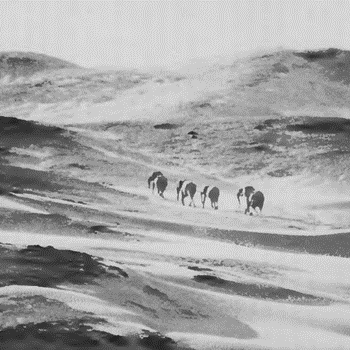
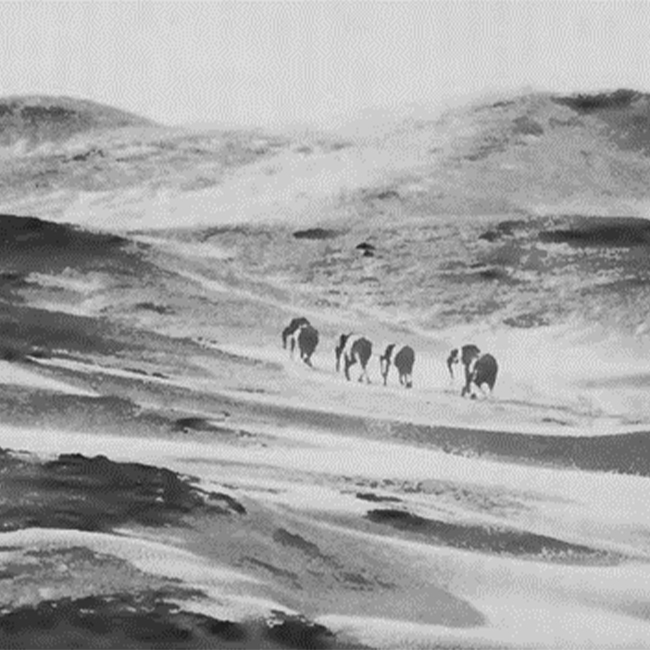
vintage photo of elephants in the desert

Figure 1. The desert-dwelling elephants of north-western Namibia (credit: C. Walker, 1982).

From the early 2000s, the EWT shifted its focus to carnivores, including Lions, Honey Badgers, Cheetahs, and Wild Dogs. Research on these species took place across southern Africa, including the Kalahari and Kruger National Parks. The EWT’ s crane work has also expanded through a formal partnership with the International Crane Foundation, and the crane group became known as the African Crane Conservation Programme.
In the 2010s, research and publication of our results became vital for the EWT, resulting in approximately 130 publications. The species of interest expanded to include frogs, oxpeckers, Riverine Rabbits, and Ground Hornbills. The Threatened Grasslands Species Programme, which studied grassland ecosystems and its resident species such as the Blue Swallow and the Oribi, was also prominent during this time. Other important topics investigated were the threats to species, including road mortalities, livestock predation, wildlife poisoning, and bird-powerline collisions.
Even though it is only three years into the 2020s, the EWT has already recorded 96 publications, highlighting the organisation’ s commitment to conducting valuable research and ensuring the dissemination of information to our audiences. The focus remains on employing robust sampling techniques to benefit the survival of threatened species. The EWT provides biodiversity data for scientific research and action and reviews environmental impact assessments in South Africa. We have also conducted studies on ranchlands to understand their biodiversity. Furthermore, the organisation has placed a greater emphasis on wildlife and law and business and biodiversity. It is also expanding into more cryptic but equally threatened species, such as Golden Moles, Dwarf Tortoises, and Colophon Beetles.
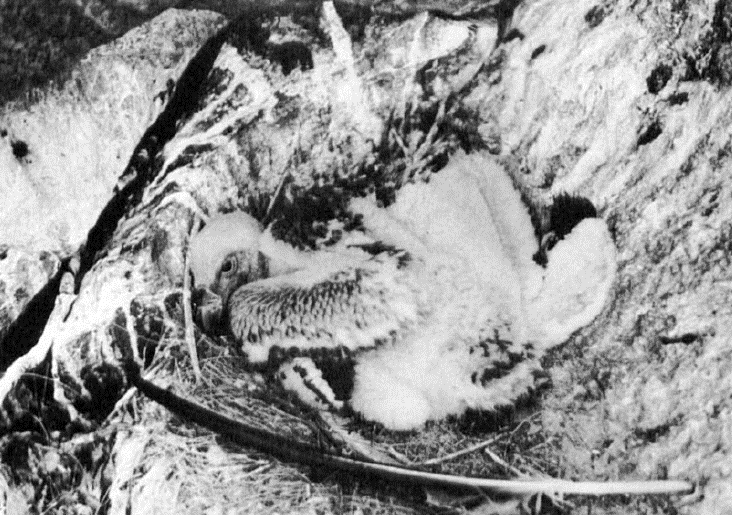
Throughout its history, the EWT has consistently prioritised the conservation of vultures. These birds remain a primary focus through the Birds of Prey and the Vultures for Africa programmes.

vintage photo of a cape vulture chick in the nest

Figure 2. A 51-day-old Cape Vulture chick (credit: P. Richardson, P. Mundy and I. Plug, 1986)