Help protect Africa's 

Energy-saving cooking in Rwanda

Energy-saving cooking in Rwanda

Energy-saving cooking in Rwanda

By DR Adalbert Aineo-mucungizi
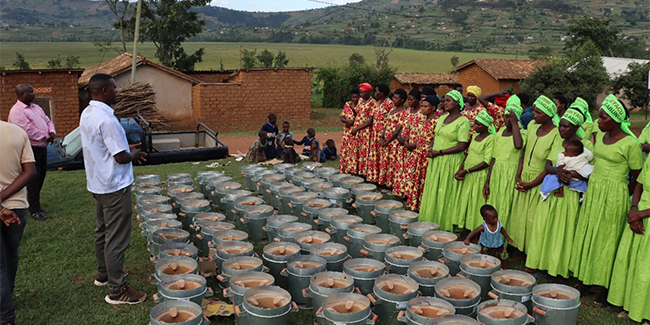
Energy-saving stoves being handed to households in Rwanda

With funding from Kansas City Zoo and Aquarium, International Crane Foundation/Endangered Wildlife Trust sourced and distributed 80 energy saving stoves for women from 40 households. Each household received two stoves.

The energy-saving stoves are made of clay liners, a metal casing, and vermiculite cement, which maintains heat during cooking. These stoves were supplied to women who had been cooking using the traditional three-stone open fire system, which encourages the loss of heat into the atmosphere, resulting in the use of a lot of fuel wood. Just to cook a meal, it used to take a woman and her children several hours to search for wood for fuel.

Some beneficiaries have indicated that using the energy-saving stoves has reduced wood consumption from 15-20 kg to 2-3 kg per day. This is because the beneficiary households can use pruned branches instead of entire felled trees for their fires.

The families not only use considerably less firewood, but the food is also being prepared faster. For example, one of the beneficiaries has reported that she has reduced her cooking time for beans from three hours to one. With the time saved, the women are now able to spend more time working in their gardens growing food for their families, and even for sale. This has boosted their household income and reduced the demand for wood.

Our immediate plan is to raise substantial funding to scale up this intervention to reach an additional 500 households in order to reduce pressure on the Rugezi Marsh and its catchment.

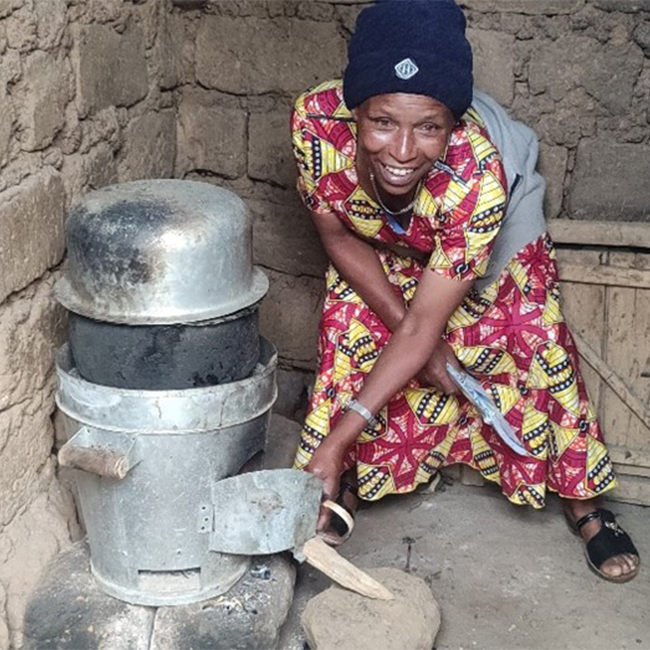
Using an energy-saving stove supplied by the African Crane Conservation Programme

Energy-saving stoves being handed to households in Rwanda

Traditional cooking methods used by the women
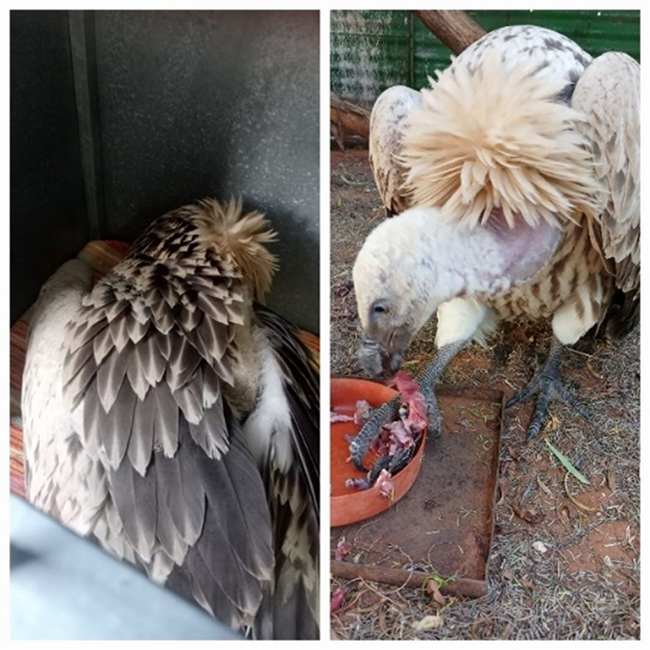
Two rehabilitated Vultures released by the Birds of Prey Programme in Mokala National Park

Two rehabilitated Vultures released by the Birds of Prey Programme in Mokala National Park

Two rehabilitated Vultures released by the Birds of Prey Programme in Mokala National Park

By Ronelle Visagie, Birds of Prey Programme.

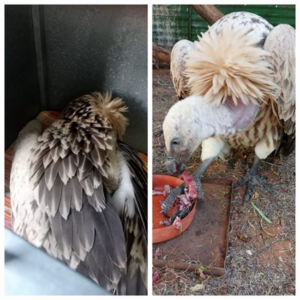
Neska on the day she was confiscated (13 January 2024) and a week later.

In December 2023, I fetched an injured White-backed Vulture from Kimberley Veterinary Clinic.  The bird was found somewhere in town and had a broken leg.  The bird was in an excellent condition and was eating well.  Its leg was pinned by Dr Burger.  From the start this vulture was very feisty so we decided to call her “Kwaaitjie” (bad girl).

Once home we put her in a deep crate as the orders from the vet were to keep her still. Two days later she was able to sit on the side of the crate and was ready to jump down so we moved her to a  small aviary where she could be on the ground and still not move too much.  Kwaaitjie must have decided it was too boring for her to be confined and not move around too much, so she took it upon herself to remove the pin from her leg – only eight days since the operation.

Because of this I contacted the Kimberley Vet Clinic and explained the situation.  Following a discussion, it was agreed that Kwaaitjie be left where she is as the risk of injury was too big if we transported or handled her.  I had also promised to take her to the Clinic if something happened to her leg.

An X-Ray of her leg two weeks later showed she was on the mend.  After being kept in a small enclosure for another two weeks, she was moved to the large aviary where she started to fly.

Barely a month later, in January 2024, I fetched a Cape Griffon from the Kimberley Veterinary Clinic that had been confiscated by police in a township near the Northern Cape town.  The police had taken the bird to Dronfield to be released. It was then that Aneska Almendro, working for De Beers at Dronfield, saw that the bird needed veterinary care and took her to the Clinic.  The Griffon was in a severely stressed condition, and the vets had to put her on at least two drips to save her life.


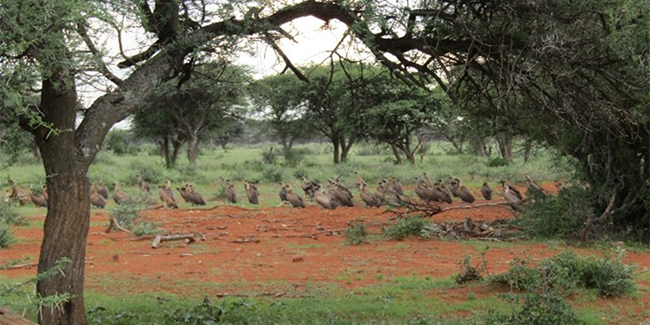
Part of a large group of vultures at the waterpoint.

Neska on the day she was confiscated (13 January 2024) and a week later.

After collecting her, I put the Griffon, which we had named Neska, in a large aviary so that she could walk and stretch her wings.  But, she refused to move for the first two days. This might be because of the way she was treated before she was confiscated.  It was exciting to see her finally start walking around and stretching her wings. She was also eating well after her ordeal.

Both vultures recovered very well prompting our decision to release them back into the wild as soon as possible.  Kwaaitjie and Neska were ringed before being transported to their new home —  Mokala National Park.

On our arrival at the watering hole where vultures usually bath and drink, we were met by more than 100 of raptors at the water and in the trees.  Most of them were White-backed Vultures and at least three Cape Griffons were also seen.

When we opened the transport crates, the two birds walked out, stood for a few minutes to take in their new surrounds and took flight.

** We would like to appeal to members of the public not to keep Birds of Prey as pets.  If you see an injured or poisoned bird, call your nearest veterinarian so they can receive the treatment needed.

Birds of Prey Programme co-hosts Veterinary Poisoning Response Training in Botswana

Birds of Prey Programme co-hosts Veterinary Poisoning Response Training in Botswana

Birds of Prey Programme co-hosts Veterinary Poisoning Response Training in Botswana

Wildlife poisoning, a pervasive and insidious threat, casts a dark shadow over ecosystems worldwide, exacting a toll on biodiversity, human health, and ecosystem integrity.

Defined as the deliberate or inadvertent use of toxic substances to kill or harm wildlife, this practice poses a significant challenge to conservation efforts and environmental sustainability. Although the impact of wildlife poisoning is vastly under recorded, its repercussions often extend far beyond the intended targets, affecting non-target species, ecological processes, and human communities.

The Birds of Prey Programme, for many years, has strived to reduce the toll this is having on not only birds of prey, but all species that are affected by this pervasive, yet under managed threat. One of the key shortfalls identified has been the inadequate response to these incidents by conservation staff, not only for reducing further exposure to wildlife but also relating to the veterinary treatment and management of live animals that may be found in these incidents. Considering that wildlife poisoning almost always presents as mass casualty scenarios, it is critical that the correct structures are already in place, all veterinarians understand the species-specific treatment regimen, and that this is followed by a timeline plan for patient recovery, assessment, and release.

With all this in mind, Dr Gareth Tate and John Davies from the EWT’ s Birds of Prey Programme, and Dr Jessica Briner from Briner Veterinary Services, teamed up with Dr Glyn Maude from Raptors Botswana, and Kyle Burger from Connect Trust, to host the first veterinary treatment workshop in Botswana.

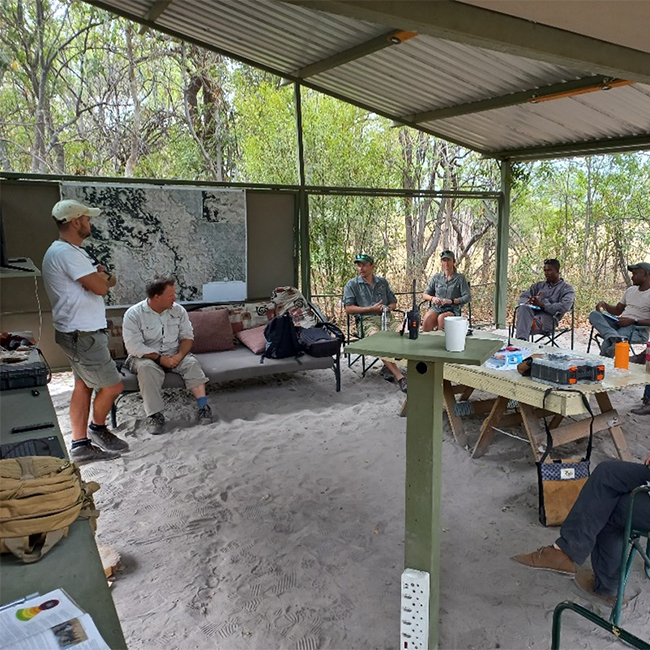
The course was held over two days in the southern part of the world-renowned Okavango Delta and was attended by seven veterinarians, mostly from the Botswana Department of Wildlife and National Parks. The course focussed on three main areas: firstly, presenting a background to the current situation with wildlife poisoning; secondly, how to treat and manage patients in a practical and effective way; and thirdly, scene management to reduce any further exposure and ensure that these events are handled and managed in a controlled manner.

Overall, the course was very successful, and in particular, we would like to thank Kyle Burger from Connect Trust for all his work to get these veterinarians together and make this a success.
Although this was a first step in the process, there is little doubt that there is much more work to be done. Fortunately, with the support of our collaborators, there is little doubt that improving the current outcome around mass wildlife poisoning events is in reach. Hopefully, we can look forward to seeing a sky filled with vultures in the near future. Our hope is that vultures will one day be seen as one of nature’ s critical species by all people.