Help protect Africa's 

Every Spot Counts: The Greater Kruger Cheetah Census 2026/27

Every Spot Counts: The Greater Kruger Cheetah Census 2026/27

Every Spot Counts: The Greater Kruger Cheetah Census 2026/27

By Olivia Sievert, manager of the EWT’s Cheetah Conservation Project
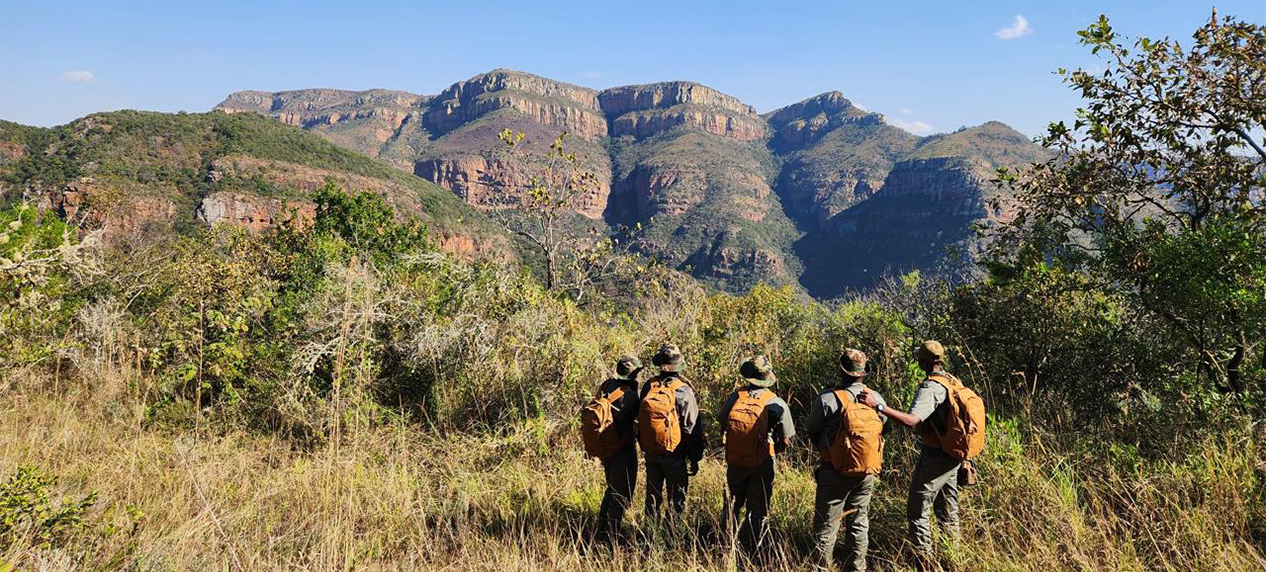
 

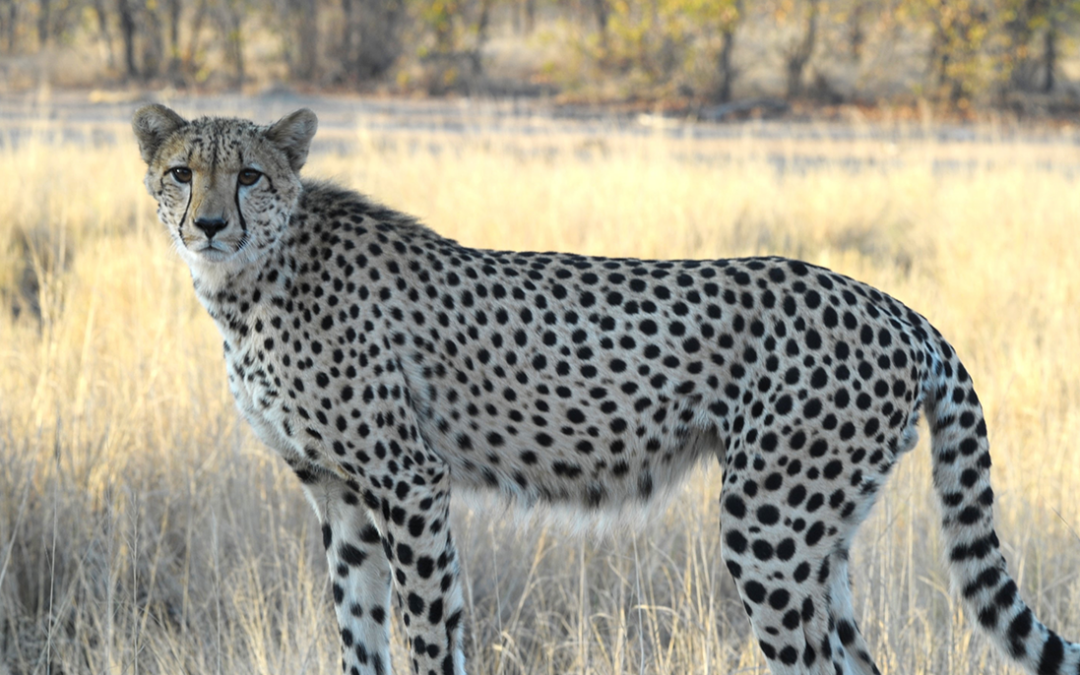
Wild cheetah in Greater Kruger identified through its unique coat pattern.

Everyone loves seeing a Cheetah in the wild, but did you know that behind every sighting lies an important scientific opportunity? A simple photograph can help us identify an individual, track its movements, and, when combined with thousands of other records, build a picture of an entire population.

This is the idea behind the Greater Kruger Cheetah Photographic Census, a collaborative initiative between the Endangered Wildlife Trust and SANParks, to improve our understanding of Cheetahs across the Greater Kruger landscape.

Building on decades of photographic monitoring

Photographic censuses of large carnivores have a long history in the Kruger. Citizen-science photographic surveys for African Wild Dogs began in 1988/89, with Cheetahs being first included in 1990. Further Cheetah censuses followed in 2004/05 and 2009/10, before the most recent, in 2021/2022.

The principle is simple: Cheetahs have individually distinctive coat patterns, allowing researchers to recognise the same animal from photographs taken at different times and places. Tourists, guides, staff, and other members of the public can therefore become part of the monitoring effort simply by submitting photographs of the cheetahs they encounter.

The last census in 2021/2022 received 196 Cheetah submissions, of which 151 were suitable for individual identification. From these photographs researchers were able to identify 86 individuals, while statistical modelling estimated approximately 116 Cheetahs across the national park.  These numbers, however, also highlight why the next census is so important. This population estimate was the lowest recorded to date, yet this apparent decline cannot simply be interpreted as a decline in the Cheetah population. The 2021/2022 census had fewer submissions, reduced tourism during the COVID-19 pandemic and introduced AI-assisted identification. Meaning a mixture of low reporting and a change in methods likely also contributed to our recorded population decline.

In other words, we have valuable information, but we still have important questions to answer.

Why Greater Kruger matters

The Greater Kruger landscape is one of the most important remaining strongholds for Cheetahs in southern Africa. As part of the wider Greater Limpopo Transfrontier Conservation Area (GLTFCA), which includes the Kruger National Park, the Associated Private Nature Reserves, and adjoining conservation areas in Mozambique and Zimbabwe, it forms part of a vast connected conservation landscape spanning nearly 100,000 km². Large, connected landscapes are essential for maintaining viable wildlife populations as they allow animals to move between suitable habitats and host large enough populations to maintain genetic diversity without intervention.

The GLTFCA represents roughly three percent of the Cheetah’s remaining global range and contains some of the largest protected areas available to the species in southern Africa. Within South Africa, the Greater Kruger landscape is particularly significant, encompassing approximately 47% of the country’s protected Cheetah habitat. Yet the most recent population estimate suggests that it supports only around 17% of South Africa’s remaining wild Cheetah population.

Large, connected protected areas are critical for the long-term conservation of Cheetahs. The species naturally occurs at low densities, requires extensive areas over which to hunt, disperse, establish territories and avoid competing predators. Additionally, Cheetah are vulnerable to increasing human pressures beyond protected areas where we have seen some of the most drastic population declines in the last 15 years. Therefore, ensuring that protected landscapes such as the Greater Kruger continue to support healthy Cheetah populations will require informed and targeted conservation action.

But, effective management depends on reliable information. We need to understand how many Cheetahs occur across the landscape, where they are found, how they move between areas, and which threats may be limiting their population growth. The Greater Kruger Cheetah Census aims to provide this knowledge, creating the foundation for evidence-based conservation and helping to guide management decisions for one of South Africa’s most important wild Cheetah populations.
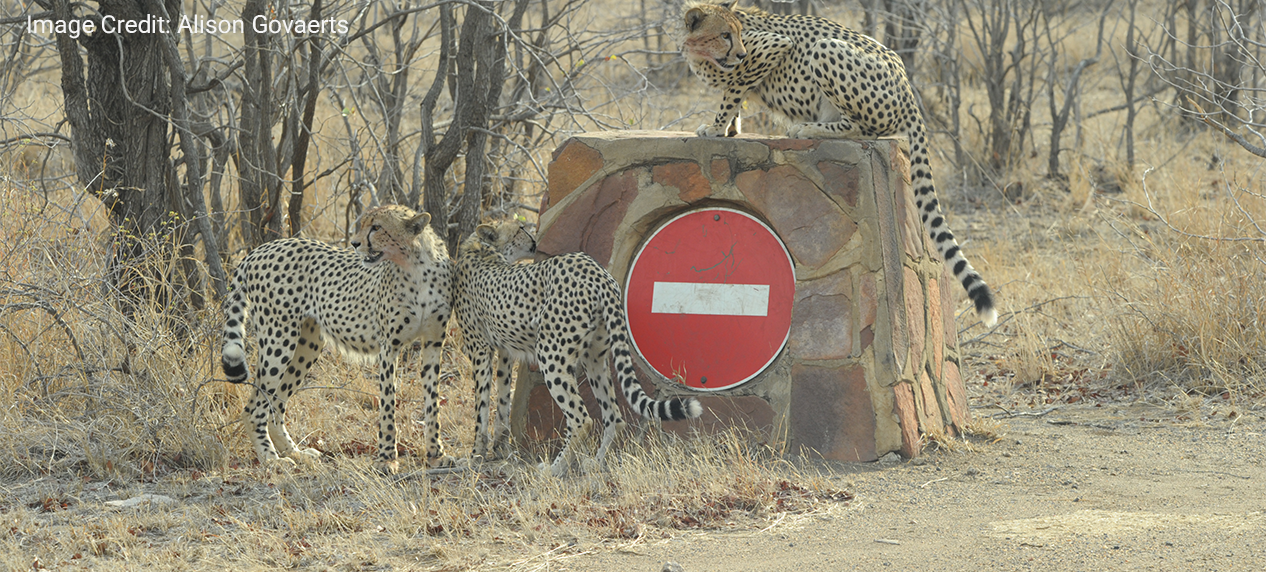
Wild cheetah in Greater Kruger identified through its unique coat pattern.

What do we know, and what don’t we know?

We know that Cheetahs generally occur at low densities, have large ranges and can move considerable distances. During the 2021/2022 census, one individual was recorded as having a potential range of more than 810 km² and moving more than 90 km between sightings.

We also know that photographic monitoring works. But we do not yet have a sufficiently consistent, landscape-scale baseline to answer some of the most fundamental conservation questions confidently. How many Cheetahs are there? Is the population stable, increasing or declining? How many cubs are surviving? How long do individuals live? Are Cheetahs making use of the wider landscape? And what threats are impacting the population? All these questions are imperative to answer if we want to properly conserve the Cheetah across the Greater Kruger.

Turning photographs into conservation action

The 2026/27 census aims to build on this history by bringing together new photographic submissions with historical photographs, camera-trap images, ranger records, existing monitoring data, and other available information. Individual Cheetahs will be identified using AI-assisted coat-pattern recognition, with manual verification where necessary.

The goal is not simply to produce another population estimate. We want to establish a reliable baseline for the Greater Kruger Cheetah population, understand how individuals move and survive across the landscape, identify important core population areas and potential connectivity routes, and improve our understanding of threats. This information can ultimately support more targeted threat reduction, better coordination between conservation areas, and adaptive management.

You can help

If you are visiting Greater Kruger landscape between 1 September 2026 and 31 August 2027, you can take part in the census.

If you see a Cheetah, take photographs from a safe and respectful distance. Where possible, photographs of both the left and right sides of the animal are especially valuable because they help us distinguish individuals accurately.

When submitting your sighting, please include:

  • The photographs of the Cheetah(s);
  • The date of the sighting;
  • The approximate location, GPS coordinates, road number, or nearest landmark;
  • The number of Cheetahs observed; and
  • Any additional observation.

Every photograph adds another piece to the puzzle. A single image may help identify an individual; repeated sightings can reveal movements and survival; and thousands of photographs collected over time can help us understand the population as a whole.

Your next cheetah sighting could help shape the future of Cheetah conservation in Greater Kruger: Every Spot Counts.
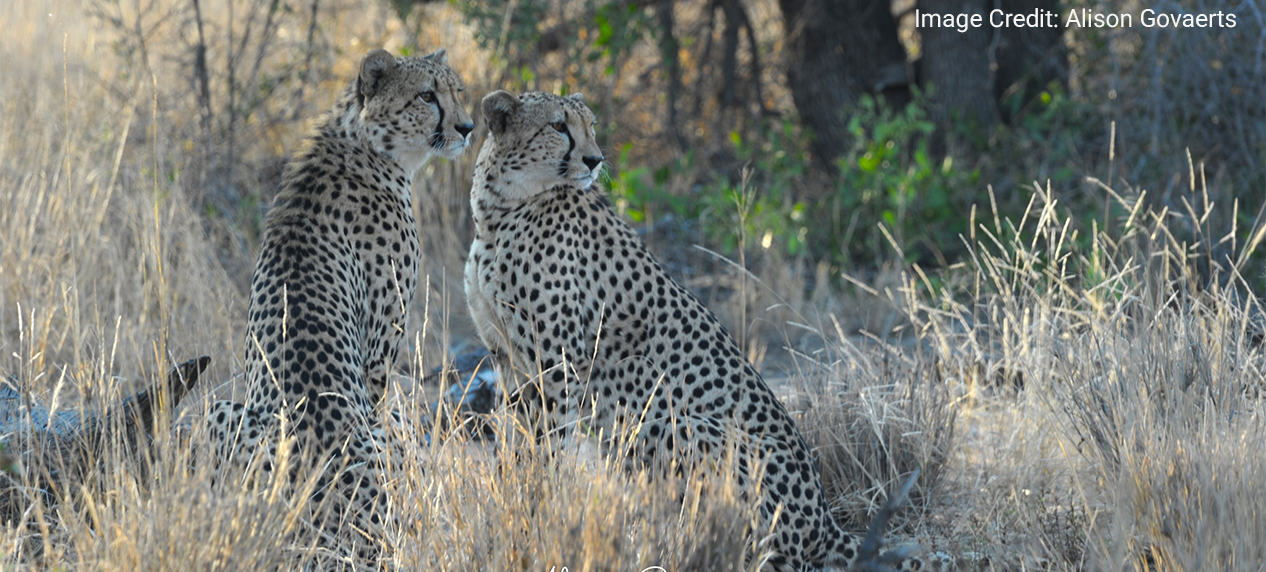
Cheetah photographed during the Greater Kruger Cheetah Census 2026/27.

** This work is being done in partnership with SANParks. Funding is provided by DERTOUR Foundation and SANParks Honorary Rangers Fund with support from Ford Wildlife Foundation, SANParks Honorary Rangers and Tech4Conservation.
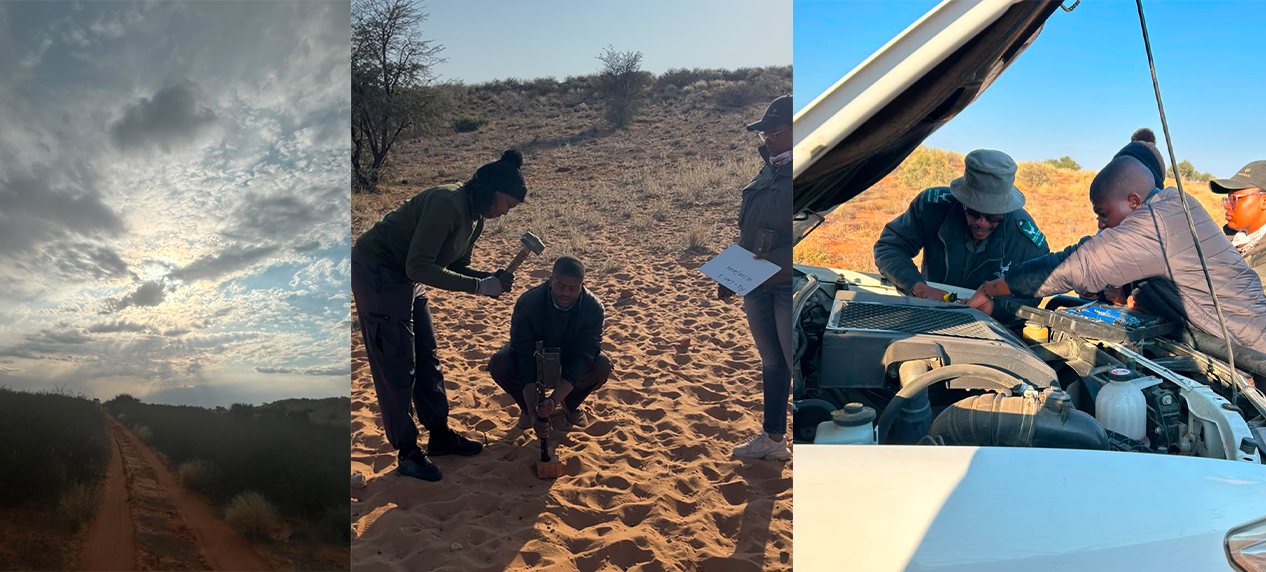
EWT team returns to Kgalagadi Transfrontier Park to conduct lion research

EWT team returns to Kgalagadi Transfrontier Park to conduct lion research

EWT team returns to Kgalagadi Transfrontier Park to conduct lion research


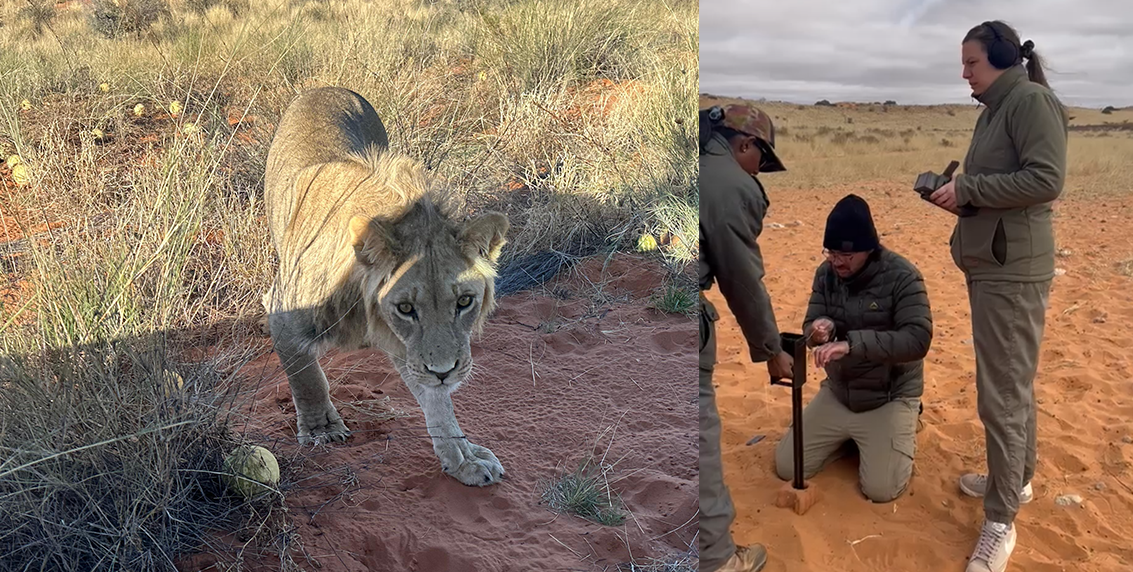
EWT researchers conducting the Kgalagadi lion population census in South Africa.

An Endangered Wildlife Trust team has returned to the Kgalagadi Transfrontier Park to conduct this year’s lion population census, helping SANParks monitor and better understand the lion population in the park.

The lion monitoring project started on 1 August and ends on 31 October 2026. In 2025, the team had also spent three months in the Kgalagadi Transfrontier Park, which spans South Africa and Botswana, to collected the first tranche of data about the lions living in this desert landscape.

In the next three months, the EWT team, supported by SANParks, will determine how many lions are estimated to live in the South African part of the Transfrontier Conservation Area, their demographics, and their spatial distribution within the park. A team from Kalahari Research and Conservation are undertaking a similar project on the Botswana side of the Transfrontier Conservation Area.

Repeated annual surveys will form the base for subsequent, less frequent long-term monitoring of the Kgalagadi lion population, the second-largest free-roaming lion population in South Africa.

Understanding the status and performance of this population is central to national lion conservation planning and to the long-term management of the broader transboundary ecosystem. It supports SANParks in the effective management of lion populations within its parks.

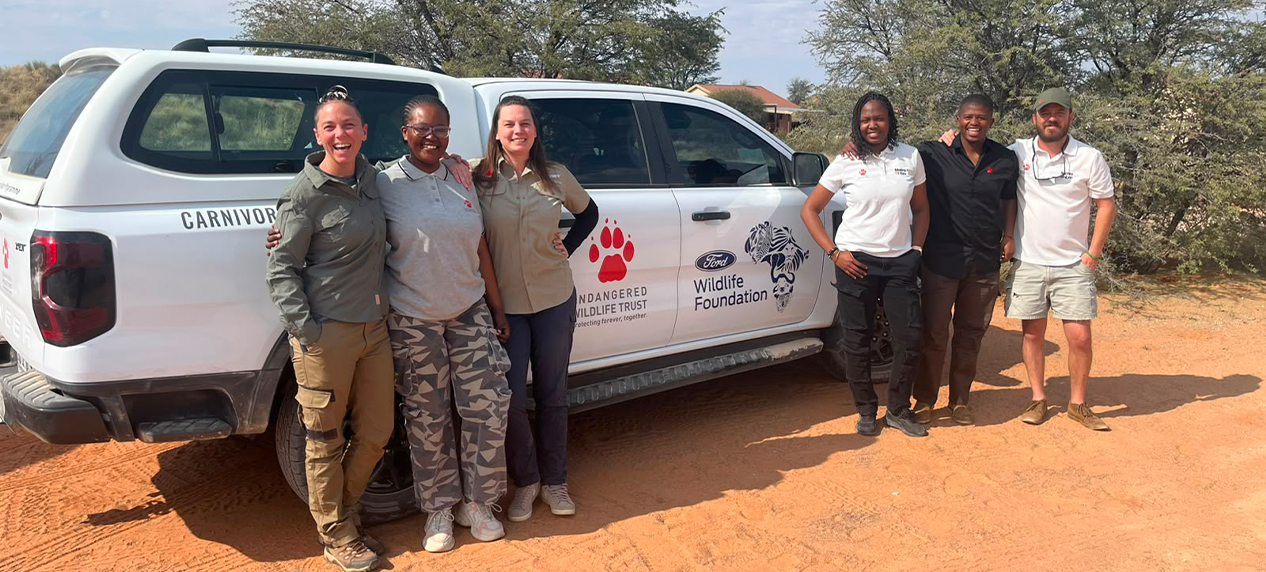
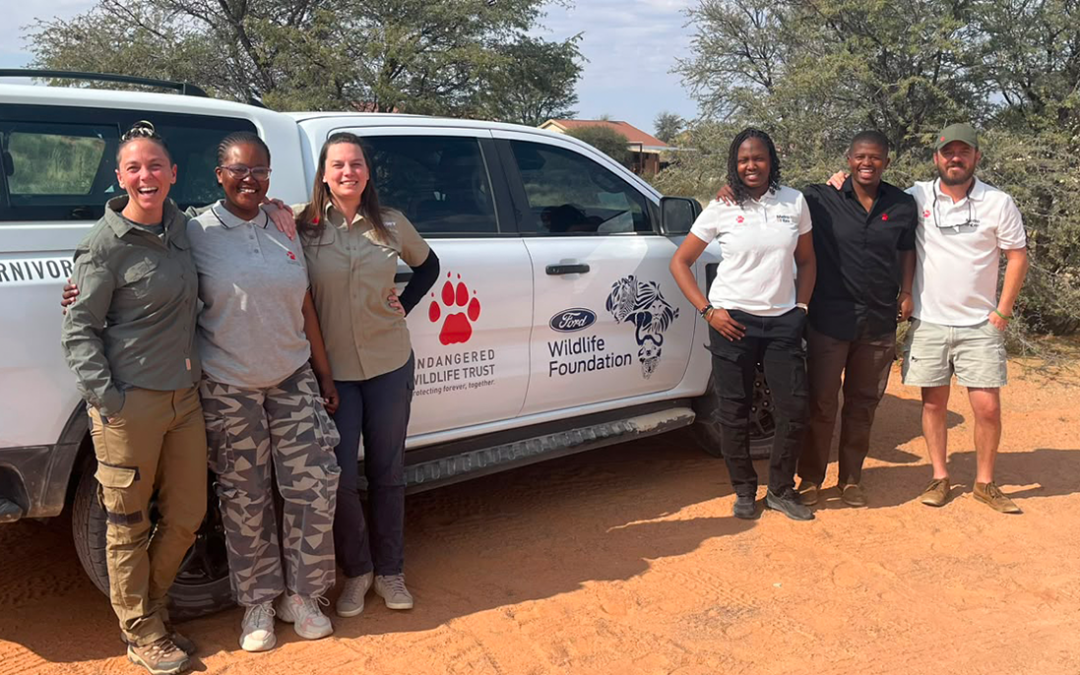
The core team comprises four women and two men. It is led by the EWT Carnivore Conservation Unit’s data analyst, Alison Govaerts, who is supported by EWT project manager Marnus Roodbol. Also on the team are EWT field technicians Nonkuleleko Mokobong, Lesedi Leope, Sabelo Mahlangu and Lizaene Cornwell.

Field researchers monitoring lions across the Kgalagadi Transfrontier Park.

The team are using photographs and camera trap footage to individually identify each encountered lion (excluding lion under one-year-old) using their unique whisker pattern.

At the end of the three-month period, the results and reports of the surveys by the EWT and Kalahari Research and Conservation will be combined to estimate lion numbers across the whole Transfrontier Park. As the lions move freely across borders, some individuals will be identified by both teams. By combining the survey data, possible double counting of these lions will be avoided.

Through the monitoring of existing populations, we are able to keep track of population dynamics, which provides a powerful tool to inform management strategies and to identify potential threats in time. The protection and conservation of lions remains a priority for this apex predator that plays a central role in keeping the balance within ecosystems by maintaining a healthy prey base, and keeping the meso-predator population in check. Without lions, prey populations would risk overgrazing the landscape.

Lions are a flagship species, and are a popular sighting as a key member of the Big Five during safaris. Thus, their economic importance.

Lion are also culturally important as they symbolise power, strength, and leadership, and are embedded in many practices, ranging from representing totems and clans, to being a symbol or name for sports teams, or play a role in spiritual and traditional customs.

In partnership with SANParks, and with the support of the Lion Recovery Fund and private donors, the EWT is taking a important step forward for lion conservation.

EWT Carnivore Conservation Unit carrying out lion population surveys.

In Memorium: Gus Mills leaves an indelible mark on carnivore conservation

In Memorium: Gus Mills leaves an indelible mark on carnivore conservation

In Memorium

Gus Mills leaves an indelible mark on carnivore conservation

By Eleanor Momberg


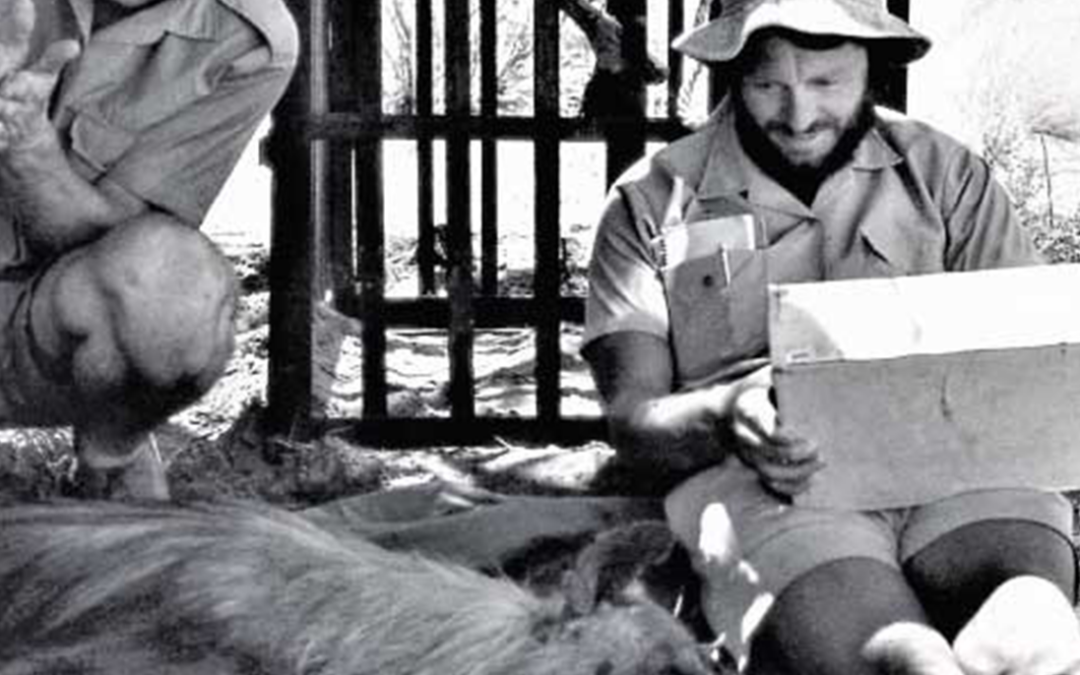
Dr Gus Mills conducting carnivore research in the Kalahari.

In July 2026, the Endangered Wildlife Trust joined conservationists and researchers worldwide in mourning the death of Dr Gus Mills, a renowned Brown Hyaena, Cheetah and African Wild Dog specialist, and author.

Gus left an indelible mark on carnivore conservation in South Africa, and through a variety of international bodies on which he shared his expertise about nature’ s apex predators, including canids and big cats.  This included serving as a senior member of the IUCN Carnivore Specialist Groups. He was a former chair of the Hyaena Specialist Group and member of the steering committees of the Cat Specialist Group and the Canid Specialist Group.  Gus was the founder of the Endangered Wildlife Trust’s Carnivore Conservation Group.

Gus’ s first introduction to the EWT was when he undertook research in the Kalahari into Brown Hyaena in 1973, the year the EWT was established by South African conservationist and artist, Clive Walker, James Clarke and Neville Anderson. A year later, the EWT funded some equipment for the project run by the then MSc student at the University of Pretoria. This was the EWT’ s third sponsorship.

Describing Gus as a “wonderful human being”, Clive Walker, founder of the EWT, said: “He was second researcher the EWT invested in back in the 1970’ s and one of the finest who devoted his life to conservation”.

Gus continued his research about Brown Hyaenas and Spotted Hyaenas for 15 years, publishing Kalahari Hyenas: the comparative behavioural ecology of two species in 1990.

In 1996, he was asked by the then Director of the EWT, Dr John Ledger, to form the EWT’ s Carnivore Conservation Group. This was achieved through a partnership with SANParks which allowed him to work full-time on carnivores while establishing and running the EWT’ s Carnivore Conservation Group and working for SANParks. Funding for this unique arrangement was provided by the Lewis Foundation.

The EWT’ s Carnivore Conservation Unit is today recognised as a leader in lion population research, the metapopulation management of Cheetah and African Wild Dog throughout southern Africa, and addressing threats to carnivores through human-wildlife conflict and the illegal wildlife trade.

During his time at SANParks, Gus researched Cheetah, African Wild Dog, Honey Badgers, Brown Hyena, and lions. He introduced the concept of metapopulation management of wild dogs and with the assistance of the late Pat Fletcher, pulled together numerous agencies and landowners to achieve genetic management of scattered populations through the Wild Dog Advisory Group.

Derek van der Merwe, manager of the EWT’ s Carnivore Conservation Unit, said: “It is remarkable to reflect on how much has changed since those early days, when Gus would fly over the Kruger National Park in a small EWT aircraft equipped with telemetry equipment, tracking African wild dogs from the air. Those pioneering efforts helped establish many of the approaches that underpin carnivore conservation today”.

Cole du Plessis, project manager in the Carnivore Conservation Unit said: “Long before GPS collars and big datasets, there were people like Gus patiently building our understanding of Africa’s carnivores, one observation at a time.  He was also ahead of his time. He encouraged visitors to Kruger National Park to photograph wild dogs and cheetahs because every individual has a unique coat pattern. Those photographs became one of South Africa’s earliest citizen science programmes, and remarkably, that project still contributes to carnivore conservation today”.

Cole believes what made Gus so remarkable was that he fundamentally changed the way we understand Africa’s carnivores. “He wasn’t simply observing animals – he was curious. He spent decades asking and answering the questions that have shaped how we understand Africa’s carnivores today”.

“His work on lions, cheetahs, hyaenas and African wild dogs laid much of the scientific foundation that modern carnivore conservation is built upon. But perhaps just as importantly, Gus had an incredible ability to connect science with the natural world. He showed that good science and a deep appreciation for nature could go hand in hand.”  said Cole who believes his greatest impact was how Gus did his science.

 “I actually think that may be his greatest legacy. Scientific papers are incredibly important, but they only go so far. Gus invested in people. He mentored students, encouraged young researchers, and inspired countless conservationists through his generosity, humility and willingness to share his knowledge. If you look across Africa today, many of the people leading carnivore conservation were either directly mentored by Gus or influenced by his research. His legacy isn’t just in the knowledge he created—it’s in the people who continue that work every single day”  said Cole.

Gus retired from SANParks in 2006 after 40 years of service.  Based in the Kalahari, with his wife, Margie, Gus then embarked on a study of Cheetah that saw the publication of A Natural History Guide to the Arid Kalahari in 2014,  four years after the release of what remains one of his most memorable books Hyena Nights and Kalahari Days.  This book continues to raise awareness about this often misunderstood species.

“Gus was an excellent public speaker and presenter. His talks to EWT members at the Johannesburg Country Club were always ‘full-house’ occasions. His charming personality drew people towards him and his passion for carnivore conservation was admired by many EWT supporters. Some of the latter, like Stuart Bromfield and Norman Stein became generous donors to EWT carnivore projects,”  said John Ledger.

Derek described Gus as a quiet, yet immensely influential presence in conservation.

“There are few people whose authenticity, humility, and dedication matched his. His writings, particularly Cry of the Kalahari, captured not only the science of conservation, but also the wonder and privilege of sharing the landscape with Africa’s wildlife. His contributions to the conservation of lions, Cheetahs, African Wild Dogs, and hyaenas extended far beyond the EWT, influencing generations of researchers and practitioners around the world,” he said.

“For those of us who now have the privilege of carrying this work forward, we do so standing on the shoulders of pioneers like Gus. His legacy lives on not only through his extraordinary scientific contributions, but through the countless people he inspired and the conservation programmes he helped set in motion,”  said Derek.

Yolan Friedmann, CEO of the EWT, described the immense influence Gus had on her career.

“I had the privilege of getting into the field with Gus as an early-stage career conservationist, and to watch with wonder how he tracked Wild Dogs; I remember with fondness bumping around in the back of bakkies as we tore after these extraordinary carnivores in pursuit of their pray. Gus instilled in me a love for Wild Dogs and I worked with Gus to develop the first project to develop a sustainable Wild Dog population outside of the Kruger National Park through range expansion into KwaZulu-Natal, in the early 2000s. I loved our debates about the philosophical lines between animal welfare and conservation and the role of the individual versus the population. Gus taught me so much and made a lasting impression on my conservation career. His legend will live on in the lives he touched wherever he went,” she said.

Gus will be remembered as was a dedicated conservationist who believed that the youth and local communities had an important role to play in the future of all species. His mark on conservation will always be remembered. His wife Margie worked alongside Gus in the field in the Kalahari, enduring hardships in remote areas and contributing to their joint books in a remarkable partnership that endured for more than half a century. We share the grief of losing of this special man with Margie, their biologist son Michael, daughter Debbie and the grandchildren.

Pride & Progress: Inside the Kgalagadi’ s Desert Lion Survey

Pride & Progress: Inside the Kgalagadi’ s Desert Lion Survey

Pride & Progress: Inside the Kgalagadi’ s Desert Lion Survey

By Alison Govaerts and Nonkululeko Makobong, Carnivore Conservation Unit


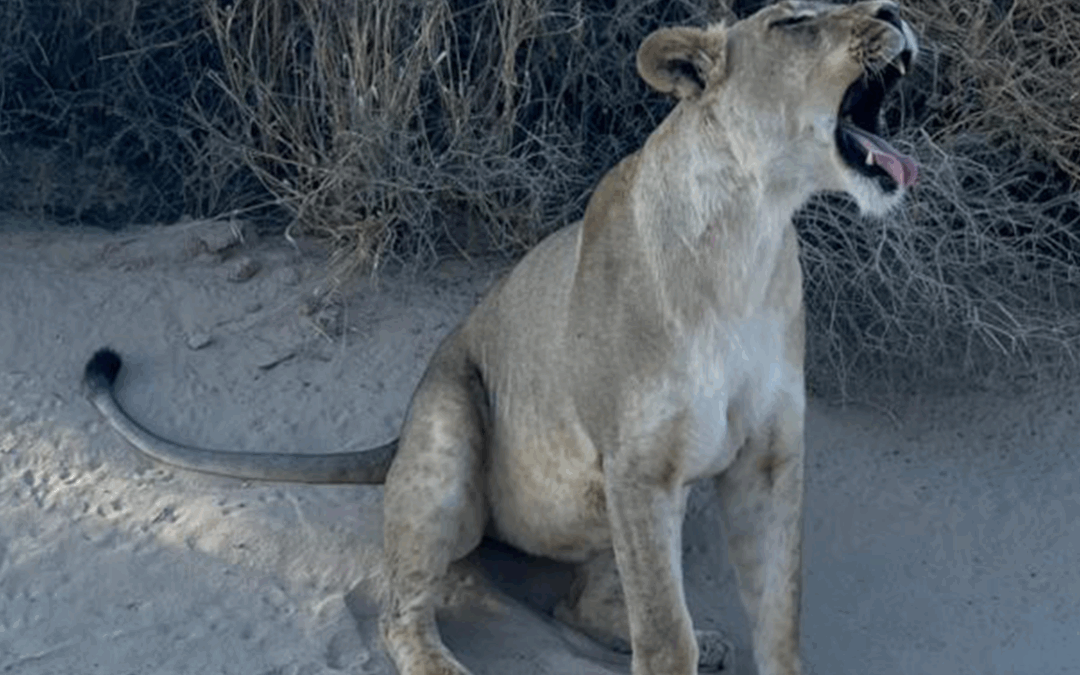
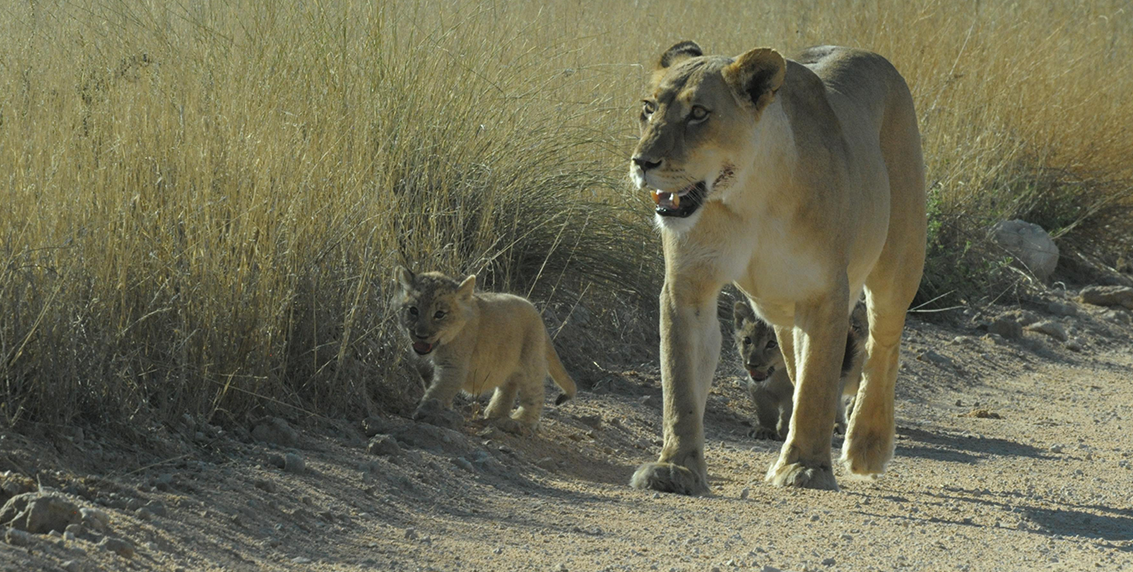
desert lions photographed during Kgalagadi lion population survey


The lion (Panthera leo) is a predominant species in the functionality of ecosystems across Africa. These cats play a vital role in maintaining a balance in the food chain and in supporting biodiversity.  

In the Kgalagadi Transfrontier Park, spanning parts of South Africa and Botswana, lions have adapted to one of the harshest environments. These desert lions roam a landscape of vegetated red dunes, depend on manmade waterholes for water, and need to cope with temperatures ranging o from scorching to freezing. Despite these challenging conditions, the park is home to a variety of bird, reptile and mammal species; enough to support a healthy lion population. 

To develop and implement effective conservation efforts for this species, it is crucial to monitor the populations closely. That’ s why the Endangered Wildlife Trust, in collaboration with SANParks, surveyed the lions in the park over three months to obtain robust estimates of population numbers and demographics. Much like the lions, the research team needed to adapt to the challenging environment while enjoying the privilege of following the lions until October 2025.

To obtain robust estimates of the lion population, we used what is known as a spatial capture-recapture methodology, which meant we had to identify as many lion as possible through physical searches and using camera traps, and measuring the effort it took to get them.

Because lions do not have spots like Leopards or African Wild Dogs, the key to identifying them lies in tiny whisker spots on their faces. Each lion has a unique pattern of whisker spots, on both the left and right of its face. Therefore, you must get quite close and have proper cameras to capture this.

There were two ways to get an identification: the team would either drive transects while recording the kilometers driven on a mobile tracking APP on our smartphones and find lions close enough to identify; or we would capture them on the camera traps that we put out. Because the team identified the lions individually, there were no double counts, and pride/coalition catalogues could be constructed based on lions spotted together. Only lions above the age of one were counted, as the mortality rate among younger lions is very high.

camera trap image from Kgalagadi lion population survey

In the field

Life in the field was far from ordinary, and definitely not your average day at the office. The area is remote, which meant only one town visit a month for massive bulk shopping and limited contact with the outside world – only one of the camps had good cellphone reception. The team relied on hefty cameras, rugged 4×4 vehicles and each other. In each transect, two people shared a vehicle: one drove over treacherous dunes while the other scanned for lions that blended perfectly into the sand. Success hinged on flawless teamwork. The team of six moved like nomads, rotating between the three camps (Twee Revieren, Nossob and Mata Mata) each week, following the lions across hundreds of kilometers of dunes.   Since we all hailed from different walks of life, the team had to adopt a number of intriguing lifestyle changes. 

One highlight was the day we stumbled upon a pride of seven lions – six lionesses and a male.  It topped a day in which we had had three other lion sightings. It’ s breathtaking to realise that you would have to tell them apart later.

Data processing turned into a puzzle of whisker dots and pride dynamics. This was tackled directly after each transect to keep the information fresh. When the dust settled, the results were encouraging. The Kgalagadi lion population is thriving and unusually well‑balanced. While many regions show a 2:1 female‑to‑male ratio, Kgalagadi prides exhibit a near‑even sex ratio, indicating strong genetic health and stable social structures. This differs from other prides that often have two or more adult males instead of one male dominating over one pride, like in other protected areas.

The survey’ s findings provide significant information about the lion population dynamics in the area. However, the extensive sand dunes and limited road network posed logistical challenges. The restriction to certain areas influenced the detection probability and overall sampling, and there was a week when all the teams had no lion sighting at all.  This was discouraging, but that is the reality of working in a Transfrontier conservation area; the animals can move around freely as they choose. Despite these limitations, the team pioneered through and conducted the study to the best of their ability. More than 100,000 kilometers were driven, and even more pictures captured. The survey was a success!

A detailed report is being drafted by the team. The results will inform conservation and management strategies and ultimately contribute to the long-term conservation of the lions of the Kgalagadi.

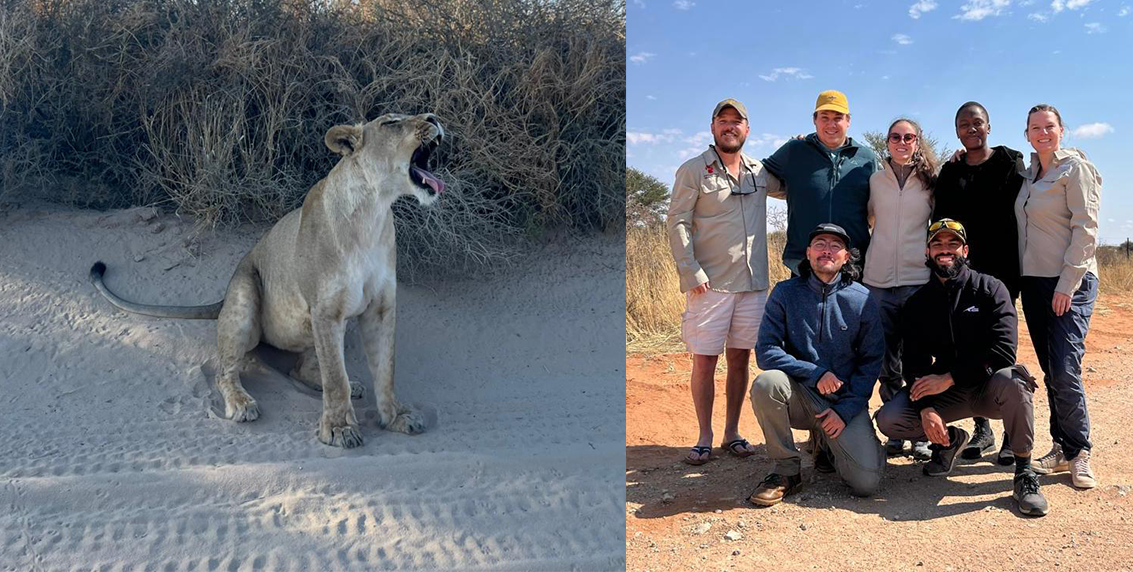
researchers identifying lions by whisker spots during Kgalagadi lion population survey

** ** The EWT would like to thank its sponsors – the Lion Recovery Fund and the Ford Wildlife Foundation – for their support during the 95-day Kgalagadi lion population survey.

EWT-led Vulture Safe Zone certified in a national park

EWT-led Vulture Safe Zone certified in a national park

EWT-led Vulture Safe Zone certified in a national park

By Eleanor Momberg – Communications manager, Endangered Wildlife Trust 


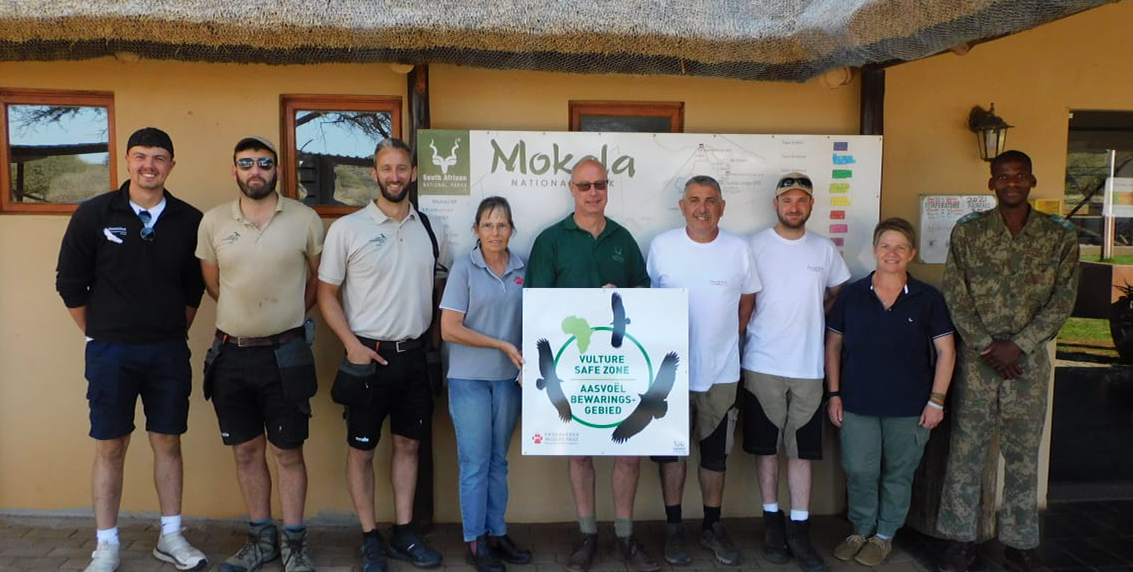
EWT-led Vulture Safe Zone in Mokala National Park

An Endangered Wildlife Trust-led Vulture Safe Zone has been certified in the Mokala National Park – a first for South Africa.

The national park, in the Northern Cape, is a stronghold for breeding White-backed Vultures (Gyps africanus).  It is the first SANParks national park to be certified a Vulture Safe Zone

“The certification is a further step in a working relationship between the Endangered Wildlife Trust (EWT) and SANParks to conserve threatened species and restore and preserve the habitats they require to survive,”  says the CEO of the EWT, Yolan Friedmann.

The EWT has been working in Mokala National Park since 2008, monitoring vultures and other raptors.  In the last three years, the EWT’ s Birds of Prey team and park management have been mitigating threats to vultures and related species on the 27,500ha property with the aim to certify it as a Vulture Safe Zone (VSZ).


What is a Vulture Safe Zone?

Vulture Safe Zones are an outflow of what is commonly known as the Asian Vulture Crisis, spanning the 1980s and 1990s, which saw declines of over 99% in the population of vultures in this landscape.  Subsequent research found that the mass die-off had been caused by the veterinary NSAID (non-steroidal anti-inflammatory drug), Diclofenac. The disappearance of Vultures in India led to the ecological tipping of scales, causing the death of tens of thousands of people due to the spread of pathogens because of the decline in vultures, known as the environment’ s clean-up crew.

The urgent need for action to stop the rapid decline of vulture species in Eurasia and Africa led to the development of the Multi-Species Action Plan to Conserve African-Eurasian Vultures (commonly referred to as the Vulture MsAP). Vulture Safe Zones are recognised in the Vulture MsAP as a means to encourage the responsible management of the environment by actively reducing threats to vultures in identified areas. In South Africa, the EWT has led the implementation of the Safe Zones, spanning the Karoo,  the Kalahari and the Eastern Cape.

Among the criteria for a VSZ is that the area must be poison free and carcasses may not be laced with NSAIDs, power lines are mitigated to prevent electrocutions and collisions by wildlife, breeding or roosting populations of vulture species are protected from disturbance; and that breeding and/or roosting populations are monitored annually.


The Mokala Vulture Safe Zone

Mokala is the first of many identified national parks to be certified as a Vulture Safe Zone. In partnership with Eskom, the project has ensured that all power lines are safe and, through a kind donation by the SANParks Honorary Rangers, the team was able to cover the dams with nets to prevent drownings.

Because the reserve is a stronghold for White-backed Vultures, a team led by the EWT has ringed and tagged over 1,100 vulture chicks in the park since it began working there. In October 2025 alone, 90 chicks were ringed and tagged, and 155 active nests were counted in the larger breeding area, which includes neighbouring farms.

“With the Vulture Safe Zone certification in place, Mokala National Park now has ample support to continue critical conservation efforts to protect their resident vulture populations, as well as other threatened birds of prey, including Martial Eagle and Tawny Eagle,”  said Friedmann.

** The EWT would like to thank our donors, partners and collaborators for their ongoing and much appreciated support for this important conservation initiative:  Charl van der Merwe Charitable Trust, Puy du Fou, Gauntlet Conservation Trust and Hawk Conservation Trust, as well as the SANParks Honorary Rangers