FODDER GROWING PUTS A SMILE ON THE FACES OF WOMEN, SAVES RUGEZI MARSH IN RWANDA
Adalbert Aine-omucunguzi, East Africa Regional Manager, and Daniel Munana, Rwanda Field Coordinator, EWT African Crane Conservation Programme (EWT/ICF Partnership)
AldabertA@ewt.org.za and DanielM@ewt.org.za
In Rwanda, like many other developing countries, women are predominantly responsible for management and conservation of resources for their families. They spend vast amounts of time collecting water, fuel wood, food and fodder, and managing crop fields and livestock. Women are also the primary caregivers to children, the elderly and the sick, in addition to ensuring a clean environment around homes. Their traditional and generational knowledge of biodiversity supplies communities with medicines and nutritional balance. As a result of this relationship with nature, women have, over time, acquired knowledge of the land/soil conditions, water, wetlands, and forest resources as well as other environmental features.
Our project in Rwanda has taken advantage of women’ s relationship with nature to empower them to grow fodder and reduce vegetation harvesting pressure on Rugezi Marsh. This followed a realisation that women and children were walking long distances on steep slopes and spending many hours harvesting vegetation from Rugezi Marsh to feed livestock. This was in addition to their routine heavy domestic chores. To address this plight of women, as well as reduce pressure on Rugezi Marsh, our project promoted the growing of Napier Grass to provide fodder. We conducted sensitisation campaigns that targeted both men and women, but in the end, women showed a greater interest in the programme. Most of the men confessed that they had allowed or asked their wives to engage in the fodder growing programme. This was not surprising because fodder collection and livestock feeding under a zero grazing system is the responsibility of women.
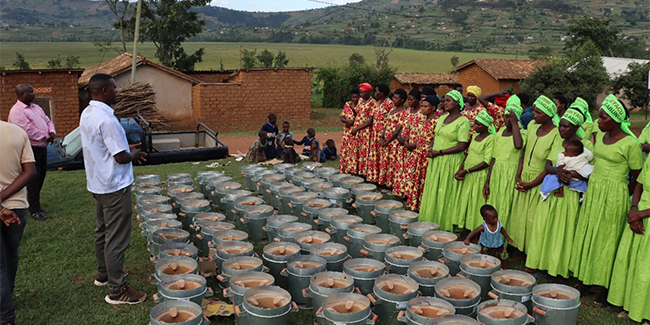
We provided Napier Grass seedlings to 559 households and provided training on its management. Two years down the road, women from some of these households could not hide their delight when asked how fodder growing has helped them. Below are examples of what they had to say:
Uwiragiye Chantal from Rusarabuye Sector: “Fodder growing saved my time. I used to spend two to three hours in the marsh harvesting grass, but for now, I have it at the comfort of my home. Our animals are well fed because we have enough fodder for them. Rugezi Marsh will recover because we have stopped harvesting grass from it.”
Uzabakiriho Jeannette from Butaro Sector: “I am very happy that the project gave us fodder. My life and that of my family has changed since we started producing fodder on our farm. Feeding my animals has become easy and less time consuming. As a result of feeding animals well, we have more milk for our children and a surplus for sale. We now have more income from milk compared to when we had to gather grass from Rugezi.”
Nyambere Celine from Rusarabuye Sector: “My family is no longer in conflict with neighbours and local leaders. In the past we used to illegally harvest grass from Rugezi, and the local leaders would run after us. At times our hungry animals would escape into our neighbours’ gardens. All this used to generate conflict, but now we are free and my animals feed well. The whole community has benefited because we are giving planting materials to other community members. Some people come to visit our gardens to learn how to grow Napier Grass.”
Ngendahimana Dative from Ruhunde sector: “My children and I no longer move long distances to harvest grass from Rugezi Marsh. We are able to feed our animals using home grown fodder and they are healthy. They are giving more milk, some of which we sell. “
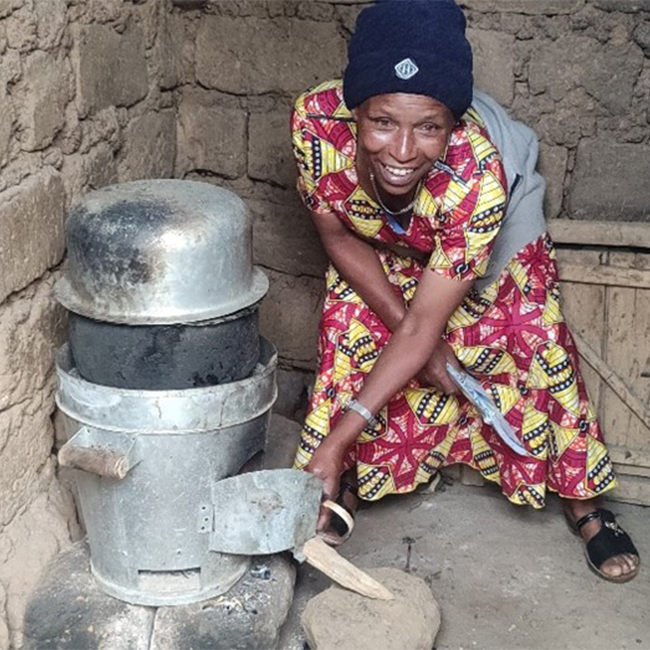
These testimonies are evidence that fodder growing has relieved women of the burden of walking long distances to harvest it from Rugezi Marsh. It has reduced their daily workload and put a smile on their faces.
This work is made possible by the MacArthur Foundation and the Critical Ecosystem Partnership Fund (CEPF).