
Help protect Africa's 

Unexpected Barn Owl tenants successfully moved to safety

Unexpected Barn Owl tenants successfully moved to safety

Unexpected Barn Owl tenants successfully moved to safety

Jenny Botha, the EWT’ s community specialist
 

Barn owl relocation South Africa Limpopo rescue operation

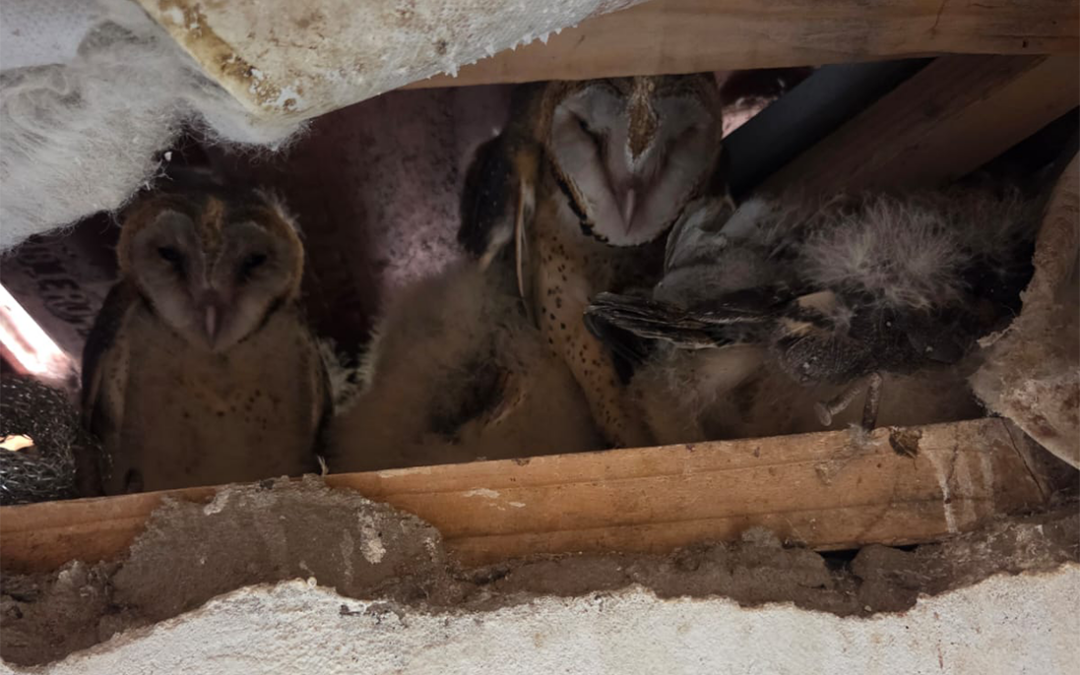
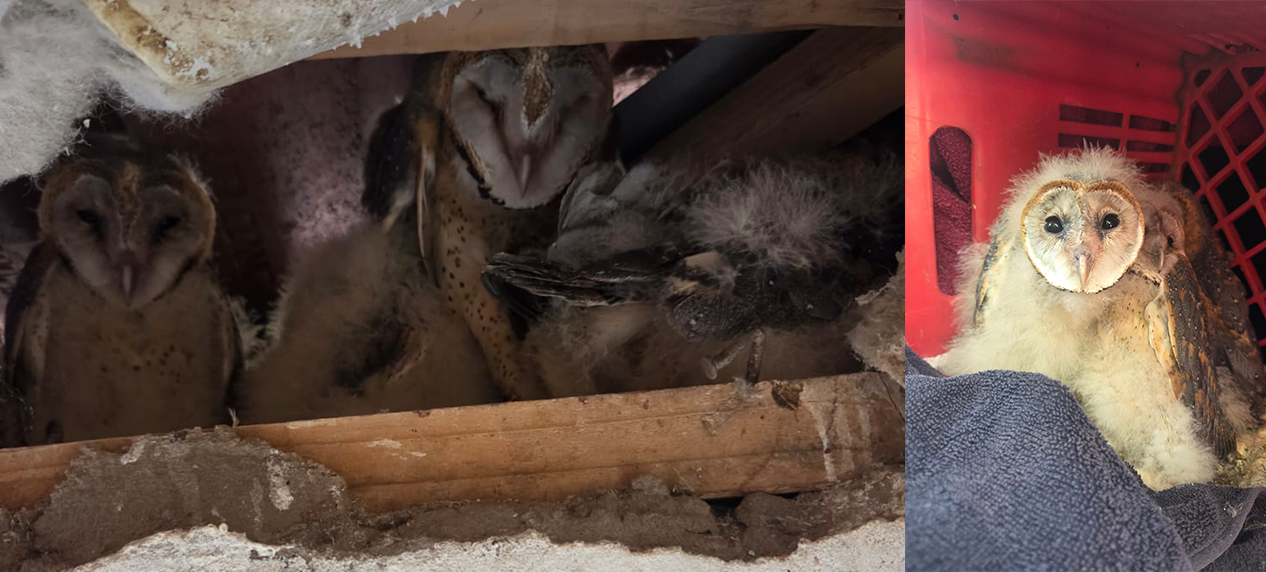
On Monday, 11 May 2026, the Endangered Wildlife Trust (EWT) received a call from a community member requesting assistance with some rather unexpected tenants who had taken up residence in the ceiling of a home in the Western Soutpansberg, Limpopo.

The family of Barn Owls was discovered during a pre-building inspection. Unfortunately. the five chicks were too young to be released into nearby natural habitat, which would have been our preferred approach. Instead, they were carefully relocated to the Moholoholo Wildlife Rehabilitation Centre, where they will be cared for until they are old enough to be safely released back into the wild.

We are extremely grateful to the community member who reached out for assistance. Too often, well-meaning attempts to “rescue” young owls can unintentionally reduce their chances of survival. For example, finding a young owl on the ground does not necessarily mean it has been abandoned. Usually, it is best to leave it where it is, ensuring only that it is safe from threats such as domestic dogs and cats.

Young Barn Owls and Eagle Owls typically leave the nest before they can fly and before they are fully independent. During this stage, they spend time in vegetation around the nest and on the ground as they explore their surroundings and build strength in their legs and wings. At this “toddler-stage”, their early efforts at flying are often brief and unsteady,  and it is important that they are protected from disturbance as far as possible.

Importantly, their parents usually stay nearby and continue to feed and care for the chicks throughout this period. As the juveniles develop their flying and hunting skills, parental support is gradually reduced until the young birds are able to catch their own prey.

It can take up to 2–3 months for juvenile owls to become fully independent and it is essential to minimise disturbance during this critical stage.

It is only necessary to intervene if a bird is injured or exposed to danger from pets, predators, or traffic. If you find a young owl on the ground, please observe them from a distance and disturb them as little as possible. Check that their parents are around and tending to them, and that the birds are safe. When in doubt, it is always best to contact a conservation organisation or vet for guidance before attempting to move the bird. They may look cute and cuddly, but it as far as possible, it is best to leave them where they are so that they have the best chance of survival.
A Secretary Bird’ s flight to recovery

A Secretary Bird’ s flight to recovery

A Secretary Bird’ s flight to recovery

By Ronelle Visagie, EWT Birds of Prey Programme
 

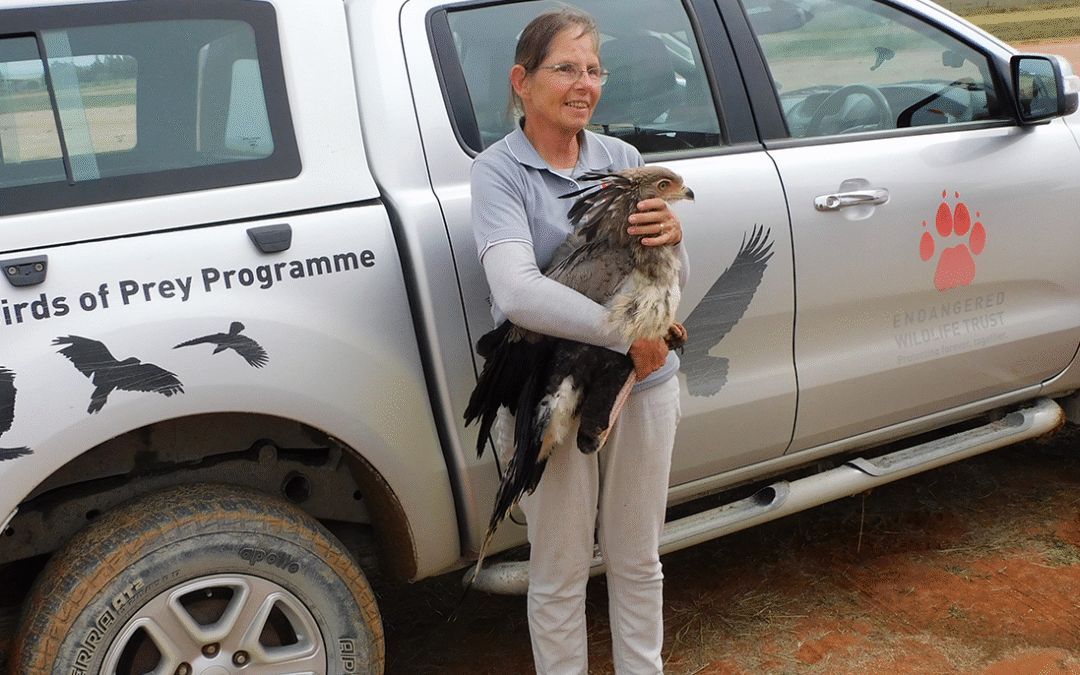
As most people settled down to enjoy the Easter Weekend this year, my husband, Stoffel, Bateleurs pilot Allan Thomson, co-pilot Nikki Bush, volunteer Abraham van Zyl, and I were watching the weather and embarking on a mission to ensure a juvenile Secretary Bird would receive the rehabilitation it needed.   It was a journey that took this young bird on a flight (by plane) from Orania in the Northern Cape to the Dullstroom Birds of Prey & Rehabilitation Centre in Mpumalanga.

It all started in February when I received a call from Megan Murgatroyd of HawkWatch International, who is doing raptor research on a farm in the Calvinia district.  She informed me about a Secretary Bird nestling that was in a deteriorating state and suffering from starvation. Birdlife SA PhD candidate, Wesley Gush, had installed a camera at the nest, which revealed that the nestling had not been fed for a minimum of nine days and had a weight of only 1.5 kg.

A day later, I retrieved the nestling from De Aar and started caring for it, observing its remarkable improvement and increasing strength with each passing day. The poor bird was so weak initially that it could not stand up or even lift its body.

Because this Secretary Bird would require training from a falconer to ensure it had the best possible opportunity for survival, a decision was made to transfer him to the closest falconer and rehabilitation centre–the Dullstroom Birds of Prey and Rehabilitation Centre.

All parties involved with the bird’ s care agreed that this was the most beneficial course of action for its well-being. But, getting this Secretary Bird from the Northern Cape to Mpumalanga proved a large challenge as transporting him by road would take at least two days, and would prove very stressful for the bird, which would have to be kept in a box for the journey.

It was then that the Bataleurs stepped in.  After two months, the permits were in place and the bird was ready to go to a rehabilitation centre.   

On Sunday morning, 20 April, the sky was overcast, and rain was forecast for some time during the day.  Because I live around 70 km from the nearest airfield—in Orania—we had to wait for Allan Thomson to inform us when he would be able to depart from Johannesburg, which was also faced with bad weather.   As soon as we received the go-ahead, we carefully caught the bird and put it in a crate for the trip to Orania.  The first half of the road to Orania is a gravel road that is in poor condition and after the rain it is even worse!

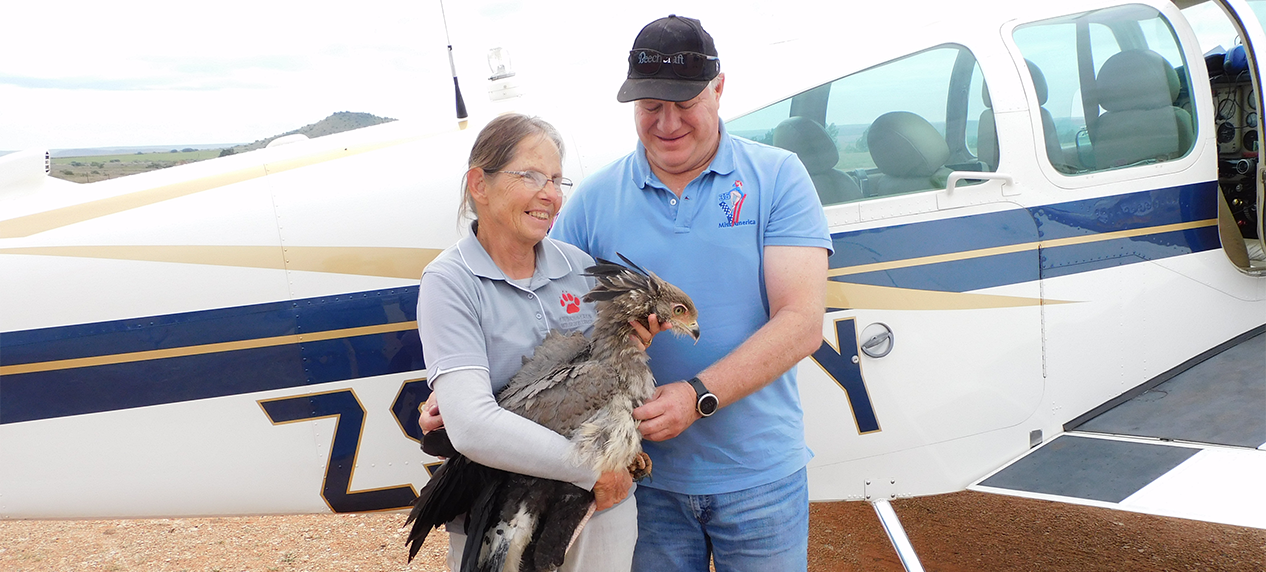
This was Allan’ s first ever Bateleur’ s mission.   Stoffel and I arrived at the airfield about half an hour before Allan and Nikki arrived.  After a quick cup of tea, we took some pictures before loading the precious cargo on the plane. Finally, the bird was on its way to Dullstroom!

The team and the Secretary Bird were met at Walkerson’ s airfield, where Magdali Theron and the team from the Dullstroom Bird of Prey & Rehabilitation Centre welcomed their new charge.

Once he has been trained to hunt and fend for itself, he will be returned to the same Karoo farm where he was rescued and released back into the wild. Before release, he will be fitted with a tracker so we will be able to follow the success of the rehabilitation.

** The EWT would like to thank the Charl van der Merwe Charitable Trust, Puy du Fou the Bateleurs for your support.