Help protect Africa's 

Camera Traps Monitor Bird Activity on Power lines

Camera Traps Monitor Bird Activity on Power lines

In the Field

Camera Traps Monitor Bird Activity on Power lines

By Amos Letsoalo, Wildlife and Nature Unit senior field officer


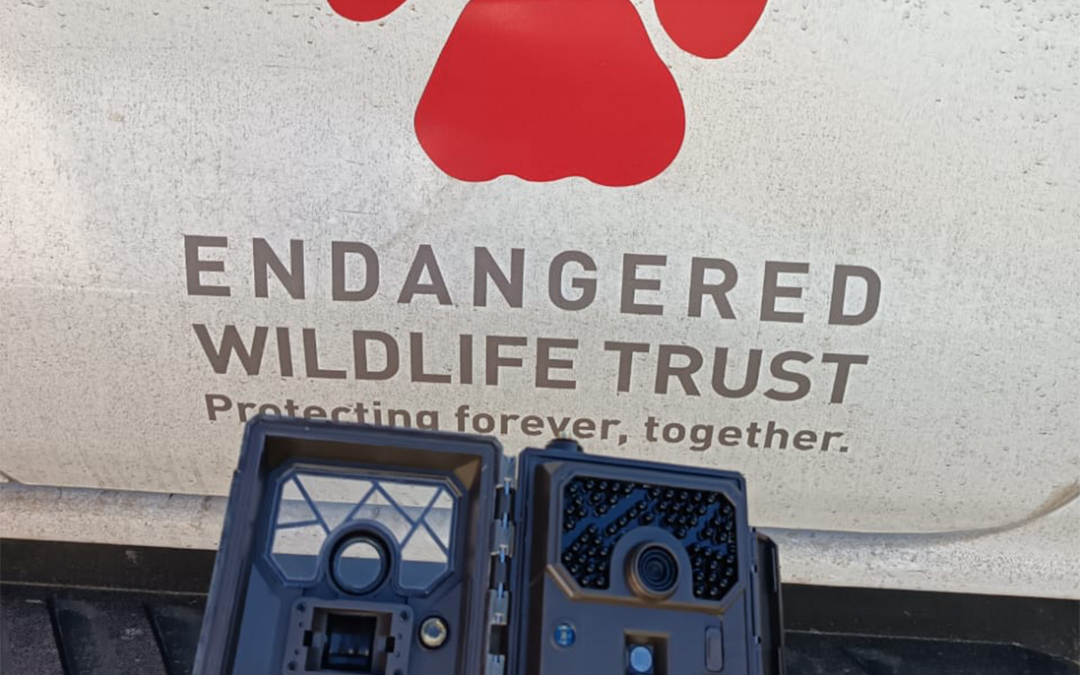
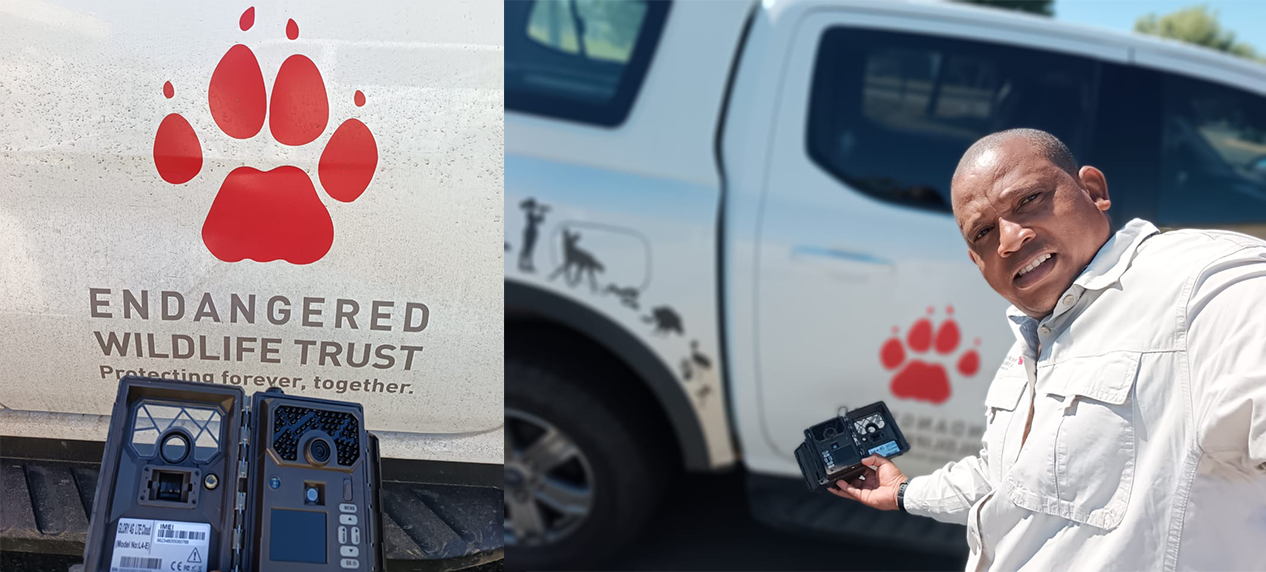
Wildlife monitoring camera installed on power infrastructure in the Northern Cape

The EWT’ s Wildlife and Infrastructure Unit (WIN), in collaboration with National Transmission Company of SA (NTCSA), has installed camera traps on a power line within a nature reserve In the Northern Cape to understand incidents involving birds along this section of line.

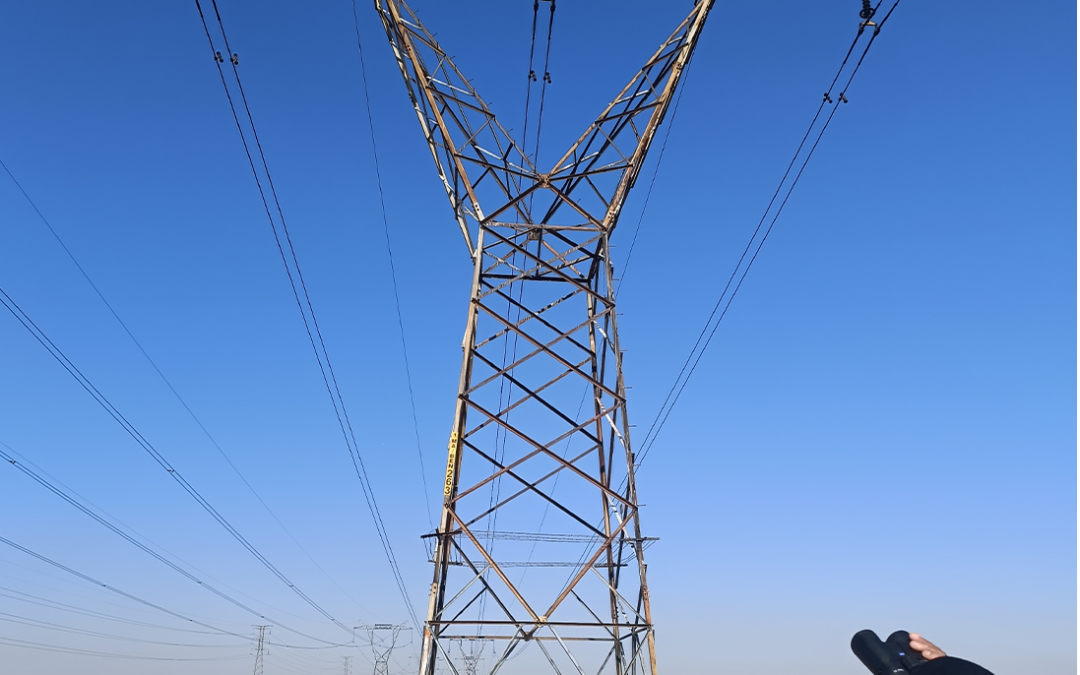
The use of camera trap technology will help us to monitor bird interactions with power infrastructure on a Boundary Olien 1 power line within the Dronfield Nature Reserve outside Kimberley.  This is because the power line has had several wildlife and electrical infrastructure incidents in the recent past, including vulture collisions.

Following the installation of three camera traps a few months ago, a fourth one was added to the line, to increase monitoring of the area. 

With these four technological eyes now monitoring the power lines, we hope to gather more data on how birds interact with the power lines. This   will not only help us better understand these interactions, but also assist us in applying relevant mitigation measures to minimise negative impacts on both wildlife and power lines and other electrical infrastructure.

Without this intervention the impact on vulture populations in the area will continue. The Wildlife in Nature Unit is appealing to the public to report any incidents involving power lines and electrical infrastructure to amosl@ewt.org so we can take the steps needed to protect the wildlife and power lines.


Planning for Flight Paths: Bird Monitoring at Energy Infrastructure

Planning for Flight Paths: Bird Monitoring at Energy Infrastructure

Focus on Wildlife in Nature

As Africa’ s energy needs increase, and the continent embraces the growth and implementation of green energy, a number of innovative methods have had to be developed to reduce the negative interactions between wildlife and infrastructure.

The Endangered Wildlife Trust’ s Wildlife and Infrastructure  Unit, has developed numerous innovative methods to reduce these interactions, work to positively influence utilities’ wildlife management policies, and ultimately phase out problematic processes and hardware. Through adaptive management and the development of pioneering and innovative techniques, South Africa is now recognised as a world leader in managing the burden of wildlife damage on electrical infrastructure while addressing the threats to wildlife.

In the second article in a series of three about the work being done by the EWT to mitigate the effect of power lines on wildlife, particular birds.

Planning for Flight Paths: Bird Monitoring at Energy Infrastructure

By Hennie de Beer, Tamanna Patel, Matt Pretorius, Oscar Mohale, Kish Chetty


Conservation scientists inspecting power lines for evidence of bird collisions.

Pre-construction monitoring cannot predict everything. Once infrastructure is operating, post-construction monitoring tracks what happens and adaptive management responds. Addressing problems during operation is almost always more costly than getting the planning right from the start, but some risks only become visible during operation. This article looks at what South African monitoring reveals, how adaptive management responds when problems emerge, and the interventions that are saving birds’ lives as a result.

What post-construction monitoring involves

Trained observers conduct regular carcass searches beneath turbines and along power lines, with results adjusted for scavenger removal (the proportion of collision fatalities removed by scavengers before carcass searchers can detect them) and searcher efficiency (the proportion of fatalities found versus missed by carcass searchers). Where overhead power lines are part of a wind farm, the same specialist teams extend their searches to those lines. Beyond a wind energy facility (WEF)’s footprint, no structured monitoring programme exists for power lines.

Monitoring relies on incident-based reporting through the Eskom and Endangered Wildlife Trust Central Incident Register, and on incidental discovery and ad hoc annual power line patrols. For power lines in sensitive areas, a structured monitoring and adaptive management plan must be part of the Environmental Management Programme (EMPr), something to extend and learn from the wind energy sector. Monitoring results feed into formal reports submitted to regulators every six months. This work is not simply counting; it is a verification process that compares actual outcomes with predictions, identifies what was missed, and triggers mitigation before losses accumulate.

What monitoring reveals

A recent analysis of post-construction data by BirdLife South Africa from 33 South African wind farms has produced results that challenged pre-construction predictions. Pre-construction surveys missed raptors nesting very close to turbines; this only became clear once carcasses were found.

Verreaux’s Eagle deaths peak between April and August, driven by the demands of the breeding season. Dassie colonies have also played a role, drawing hunting eagles toward turbines at some sites. New above-ground power lines brought a secondary hazard: in open landscapes where perching structures were scarce, freshly installed pylons attracted raptors to infrastructure that posed electrocution risks.

Success stories: when monitoring drives results

Landowner engagement for vulture-friendly farming has roots in power line conservation work that predates the wind energy sector. Wind farm operators have since adopted and expanded this approach through vulture food management programmes, using dedicated patrol teams to remove any dead animals promptly and reduce the food-related draw on turbine areas.

At one Eastern Cape wind farm, this reduced the Cape Vulture fatality rate from 0.07 to 0.02 vultures per turbine per year, a reduction of more than 70 percent sustained over six years. The same principle continues to be extended to power lines, pairing vulture-friendly farming practices with diverter installation on high-risk spans.

Shutdown on Demand places trained observers (Observer-led SDoD) at vantage points to watch for priority species approaching turbines, halting the relevant turbines within seconds of detection. By mid-2024, Observer-led SDoD programmes had been established at five South African wind farms: Dorper, Excelsior, Jeffreys Bay, Golden Valley and Roggeveld.

At a Western Cape site near the Potberg Cape Vulture colony, this prevented an estimated 7 to 19 Cape Vulture and one to four Black Harrier fatalities in a single year. The Black Harrier faces a zero-fatality threshold: the species cannot sustain any further mortality at all, making every fatality avoided critical at the population level. Weather, human error, and communication delays constrain its reliability. At Excelsior Wind Farm near Swellendam, Observer-led SDoD caused just over 56 hours of downtime in almost three years of operation, equating to less than one per cent of revenue lost, directly addressing concerns about implementation cost. Automated detection systems (technology-driven SDoD) combining cameras and artificial intelligence must be more widely tested as a complement to human observers if Shutdown on Demand is to scale effectively across the sector.

Blade patterning works by painting one blade to break the motion smear that makes rotating turbines effectively invisible to approaching birds. In Smøla, Norway, a single black blade reduced eagle fatalities by 100 % relative to unpainted controls over 10 years. At Umoya Wind Farm near Hopefield, South Africa, a trial using single red-striped blades on four turbines produced preliminary but promising results, recording zero raptor fatalities in the 16 months following patterning, compared with seven in the equivalent pre-treatment period. From at least two experiments conducted globally to date, further testing across different species and environments remains critical.

Securing approval to paint turbines blades a colour other than white required a coordinated push from South African Wind Energy Association (SAWEA), BirdLife SA and the Birds and Renewable Energy Specialist Group (BARESG) to obtain a Civil Aviation Authority blanket permit in January 2024, as existing regulations required blades to be white. Avifaunal specialists recommending this mitigation should consult the SAWEA/BirdLife SA/BARESG Blade Patterning Guidelines 2024 to ensure optimal design, colour and treatment coverage.

Post-construction monitoring at two Northern Cape wind farms over five years identified 12 Verreaux’s Eagles and 3 Martial Eagles electrocuted on above-ground collector lines. Wooden perches were installed to draw birds away from energised components, and insulation of the most dangerous structures was recommended. Underground burial of collector lines should be standard practice at all new wind farms where site conditions allow.

Getting mitigation selection right

Proving whether a measure is effective requires more than watching fatalities fall after it is introduced, since rates vary naturally from year to year. The most reliable evidence comes from Before-After-Control-Impact (BACI) designs that retain a comparison group.

This is not without controversy: the idea of deliberately leaving some turbines unpainted or some spans unmarked while bird fatalities continue is difficult to defend on conservation grounds alone. But without controls, background fatality rates are difficult to determine, and any observed improvement cannot be confidently attributed to the intervention. The practical solution is deliberate zoning: designating certain turbines or line sections as study controls while fully marking those nearest to sensitive areas or known breeding sites.

Bird flight diverters (BFDs) are devices attached to power line cables at regular intervals to increase their visibility to birds in flight, reducing collision risk. The choice of diverter design matters as much as the decision to mark a line. Most diverters are designed around daytime-active species, but cranes, bustards, and flamingos are also active in low-light conditions, and a diverter without features suited to be effective during periods of reduced visibility offers little practical protection. Recommending that every span (line section between two towers) be marked from the outset, while well-intentioned, can also preclude measuring whether the chosen design works for the relevant species. Proving BFD effectiveness through BACI studies requires that collision rates are comparable across treatment and control spans before marking begins, a condition that is more complex to meet on power lines than at turbines and demands careful study design from the outset. Article 3 examines this in more detail.

A long-term commitment

Monitoring and mitigation continue for as long as a facility operates. Wind farms have an operational life of approximately 20 years; power lines can remain in service for 50 years or more. These are operating costs, not construction costs, and should be planned and budgeted from the outset, not treated as afterthoughts once infrastructure is commissioned. For power lines, the difficult question is whether mitigation implementation is built into asset management plans that span half a century, or whether it disappears once construction is complete. Developers, regulators, avifaunal specialists, and the governments and development banks financing South Africa’s energy expansion all have a role in ensuring this commitment is sustained.

When knowledge saves lives

Post-construction monitoring creates a learning loop: every discovery feeds into adaptive management and improves how future projects are designed. Vulture food management, Shutdown on Demand, blade patterning, and infrastructure retrofits all demonstrate what that loop achieves. But it only works for infrastructure that is being watched.

The Endangered Wildlife Trust is in the early stages of developing guidelines for power line bird mitigation in South Africa, a development that will give practitioners the standardised framework the sector currently lacks. Article 3 turns to the power lines with no scheduled monitoring, the species whose behaviour we still do not fully understand, and the path to closing these gaps.


Further reading
  • BirdLife South Africa 2025. Summary Bird Monitoring Reports from Operational Wind Energy Facilities in South Africa. BirdLife South Africa Occasional Report Series No. 3. BirdLife South Africa, Johannesburg, South Africa. https://www.birdlife.org.za/wp-content/uploads/2025/02/Summary-of-Bird-Monitoring-Reports-Final-Version.pdf
  • SAWEA, BirdLife South Africa and Birds and Renewable Energy Specialist Group (BARESG). 2024. Blade Patterning Guidelines for Avian Specialists. South African Wind Energy Association and BirdLife South Africa. https://www.birdlife.org.za/wp-content/uploads/2024/10/SAWEA-BLSA-Blade-Patterning-Guidelines-2024.pdf
  • May, R., NygÃ¥rd, T., Falkdalen, U., Ã…ström, J., Hamre, Ø., and Stokke, B.G. 2020. Paint it black: Efficacy of increased wind turbine rotor blade visibility to reduce avian fatalities. Ecology and Evolution. 2020:1–9. https://doi.org/10.1002/ece3.6592
  • Stokke, B.G., NygÃ¥rd, T., Hamre, Ø., and May, R. 2024. NINA Report 2333. Norwegian Institute for Nature Research, Norway.
  • Smallie, J., Froneman, A., Smith, D.L., and Mulvaney, J.M. 2024. Shutdown on Demand for the mitigation of bird collision risk at onshore wind farms in South Africa. BirdLife South Africa, Johannesburg, South Africa.

Science Snippets: The impact of roads and powerlines on South Africa’ s primates

Science Snippets: The impact of roads and powerlines on South Africa’ s primates

Science Snippets: The impact of roads and powerlines on South Africa’ s primates

Erin Adams and Lizanne Roxburgh, the EWT Conservation Planning and Science Unit

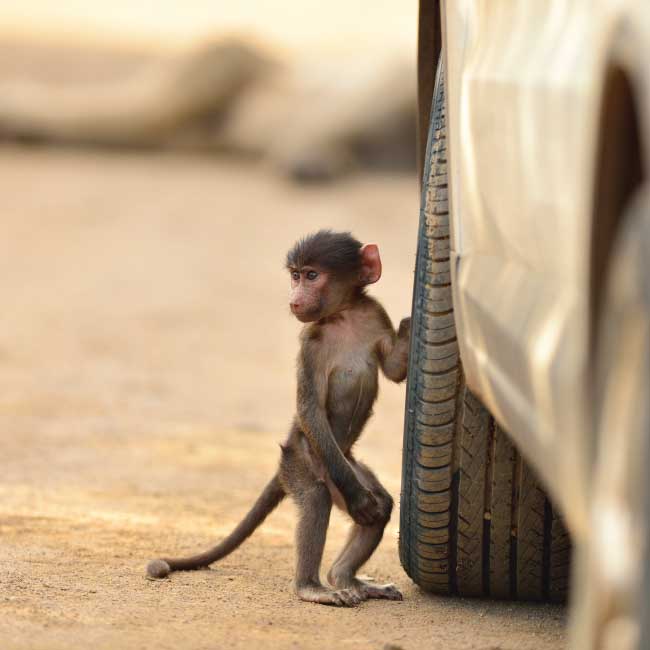
South Africa has an extensive linear infrastructure network of roads, railways and powerlines, which is essential for human connectivity. However, it is not great news for primates. Approximately 18% of the world’ s primates are directly impacted by linear infrastructure. In a recent paper* co-authored by EWT scientists, the impact of linear infrastructure on South Africa’ s primate species was studied.

Within South Africa, many primates are killed in road collisions and powerline electrocutions every year. To get an indication of the extent to which primates are affected by wildlife, data was collated from the EWT’ s database of vertebrate roadkill**, as well as from the EWT-Eskom Central Incident Register, which is a national database of wildlife incidents on electrical infrastructure, mainly electrocutions and collisions. The focal species for this study were the Vervet Monkey (Chlorocebus pygerythrus), Chacma Baboon (Papio ursinus), Thick-Tailed Bushbaby (Otolemur crassicaudatus), Southern Lesser Bushbaby (Galago moholi), and Samango Monkey (Cercopithecus albogularis).

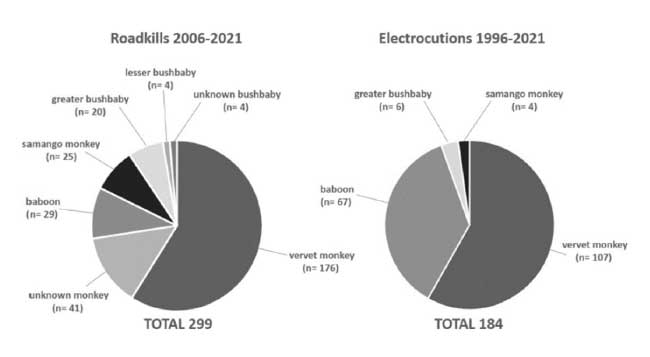
The authors found that Vervet Monkeys were most reported in both roadkill and powerline collision incidents (see the figure below). The Southern Lesser Bushbaby was least frequently reported. The data also showed that several incidents involved more than one individual. When it came to roadkill, 4% of incidents involved between two and four individuals killed in one collision, whereas in electrocution incidents, 13% of cases had between two and six individuals killed in one incident.

Graph showing the comparison of South Africa’ s primate roadkill and electrocution mortalities

Comparison of South Africa’ s primate roadkill and electrocution mortalities (from Linden et al. 2022)

The authors recommended that mitigation measures, such as canopy bridges across roads and better insulation of transformers and substations, be more widely implemented to help conserve South Africa’ s primate populations. Although South Africa leads the African continent regarding roadkill and electrocution data collection, key information, such as GPS coordinates and the age and sex of individuals, is missing. Data collection protocols can be improved to better inform mitigation measures and understand impacts on populations. Future Red List assessments should acknowledge linear infrastructure as a more significant threat to primates.

* Linden, B., Cuozzo, F. P., Sauther, M. L., & Jonker, W. C. (2022). Impact of linear infrastructure on South Africa’ s primate fauna: the need for mitigation. Folia Primatologica, 1(aop), 1-19.

** The EWT has a free road watch app available to record any roadkill sightings. This will help us identify hotspot areas as well as the species most at risk.

Marking power lines in Bhutan for Black-necked Cranes

Marking power lines in Bhutan for Black-necked Cranes

MARKING POWER LINES IN BHUTAN FOR BLACK-NECKED CRANES

Ndzalama Chauke, Junior Field Officer, EWT Wildlife and Energy Programme
ndzalamac@ewt.org.za


The EWT’ s Wildlife and Energy Programme was recently able to assist the Royal Society for Protection of Nature (RSPN), an NGO in Bhutan, to mark power lines to reduce potential crane collisions. Lourens Leeuwner, the Wildlife and Energy Programme manager, held a webinar with members of the RSPN, explaining a solution used in South Africa, as part of our strategic partnership with local power utility, Eskom. He also provided the supplier’ s details and advised on how to fit the product. The Eskom/EWT partnership has been testing the effectiveness and durability of bird flight diverters, including the Eberhardt Martin Bird Flapper, for over nine years in the Karoo. Results have indicated that the device will reduce collision incidents of crane species by 90%. The team at RSPN elaborates:

“We are writing to update you on exciting new project developments. We suspect much of your work amidst the current COVID-19 pandemic has changed.  The current circumstances have barred most of our work as well, especially given our focus on direct community engagement. However, since the situation in Bhutan is relatively stable, we have been able to carry out field work that does not require large gatherings. One important activity has been the marking of key power lines to reduce potential crane collisions. This is the first time such an endeavour has been attempted in Bhutan, and the initial pilot phase looks very promising.

The proactive burying of power lines in Phobjikha, which hosts the largest wintering population in the country (approximately 490 in the winter of 2019-2020), has proved beneficial for cranes as well as the local communities. However, in other wintering habitats, overland power line systems were already laid out. In recent years, we have received a few reports of crane collisions, especially in the central winter habitat of Bumthang. While this habitat only receives a few wintering Black-necked Cranes (5 – 11) annually, it represents how human pressure, and development can displace wildlife from historically important areas. According to community elders, Bumthang used to receive more than 100 Black-necked Cranes in the past.

To ensure a safe environment for the cranes in this area, we have been working with the local community and government stakeholders to consider innovative approaches to conservation and management. For the installation of flight diverters in Tang and Chumey (Bumthang), where power lines are in close proximity to Black-necked Crane roosting sites, we partnered with the Bhutan Power Corporation (BPC), the responsible agency for power line distribution in the country. As recommended by experts from South Africa/ICF, we used Eberhardt Martin Bird Flappers.

We installed 47 diverters in total, with two alternating colours (Yellow and Black with glowing yellow stickers in the centre) at 2.5 m apart. A hot stick was used to install the diverters with help from RSPN and BPC staff. For lines higher than 45-50 feet, the hot stick was not rigid enough to hang the diverters in the right position. For the higher tensioned power lines, a crane would be needed for installation, though the cost for operation would increase. These efforts represent the pilot phase of a long-term project to safeguard Bhutan’s wintering crane populations by mitigating the impact of energy development and distribution in-country. Our team intends to keep a close eye on these sites in the fall to assess the efficacy of these early efforts. RSPN and BPC are presently discussing plans to scale up these initial efforts in additional habitats. We are also considering the use of this technology in the riverine territories of the critically endangered, White-bellied Heron, a species that is arguably more vulnerable to power line collisions and the impacts of energy development.

All’ s well that ends well for breeding cormorants

All’ s well that ends well for breeding cormorants

ALL’S WELL THAT ENDS WELL FOR BREEDING CORMORANTS

Lourens Leeuwner, Manager, EWT Wildlife and Energy Programme

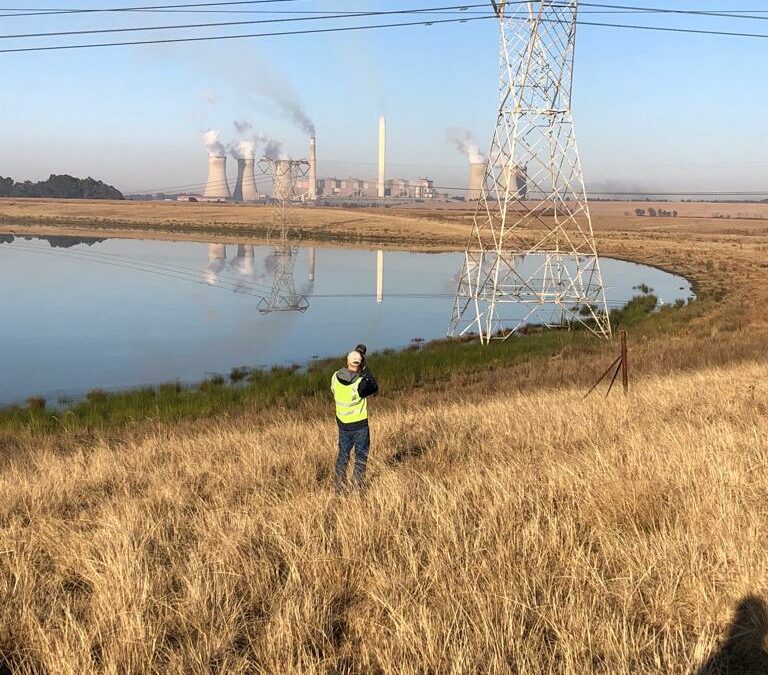
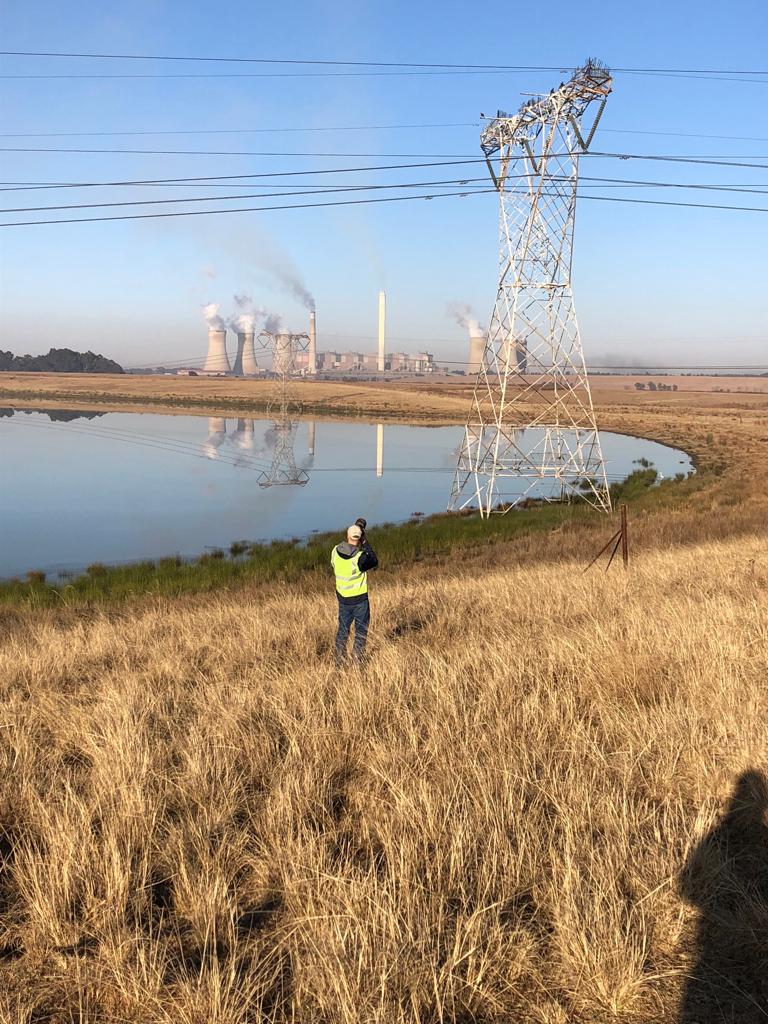
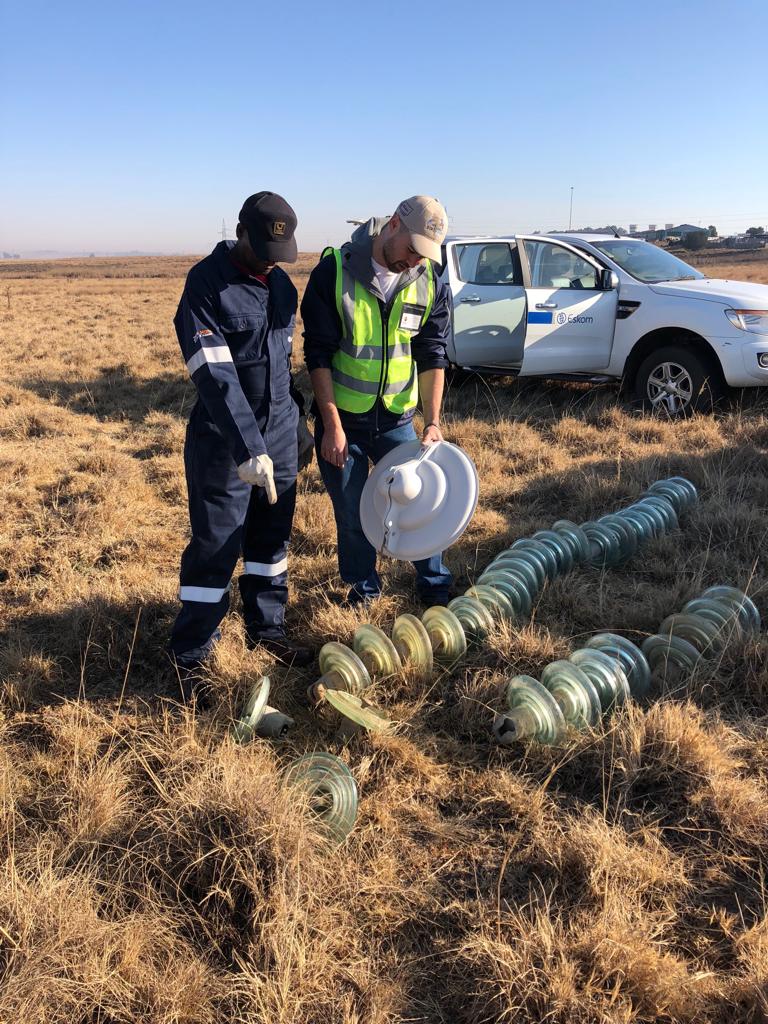
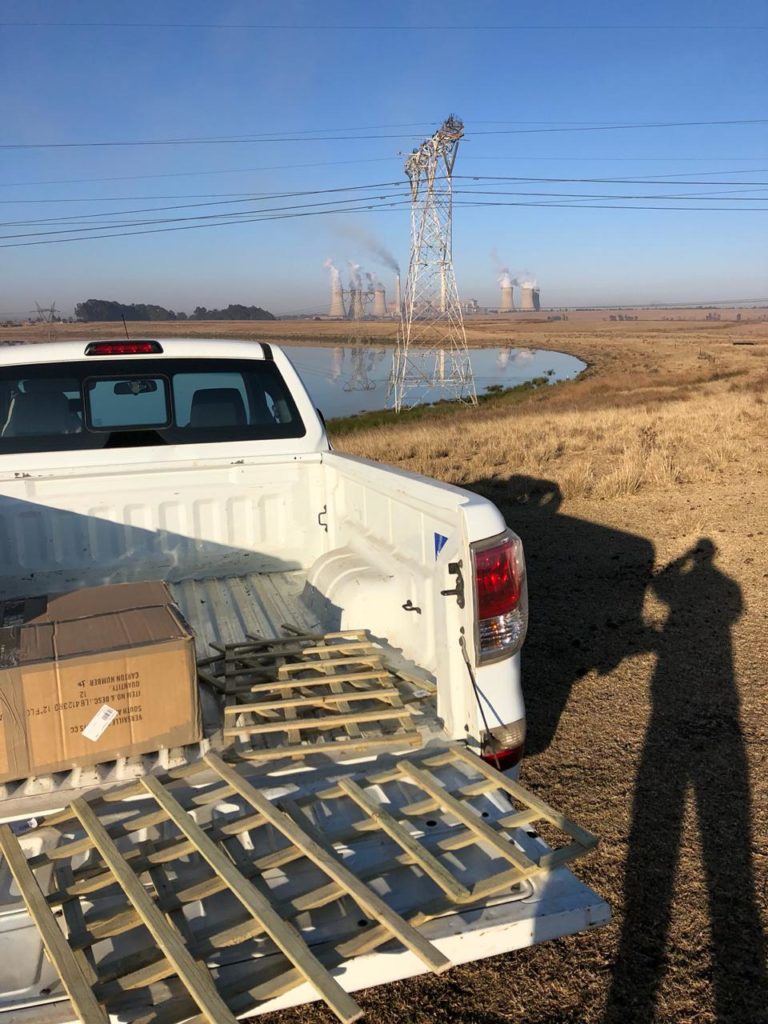
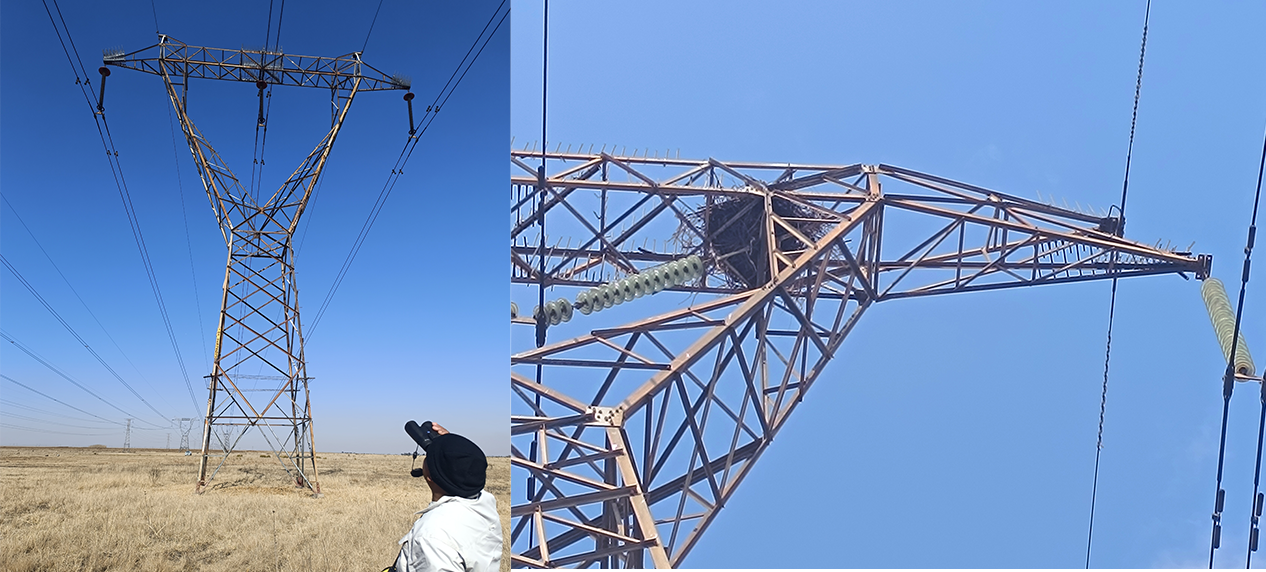
LourensL@ewt.org.zaRecently the EWT’ s Wildlife and Energy Programme (WEP) received a request for urgent action from Eskom Transmission’ s North-East Grid to help deal with nesting cormorants causing problems for Kriel Power Station. When the grid’ s linemen inspected the source of the faults, several White-breasted Cormorants were found to be nesting on steel lattice towers of the Hendrina-Kriel 400 kV transmission line. Some of the birds were nesting directly above the insulator strings and their continued presence resulted in heavy pollution in the form of a coating of faeces on these critical components. Initial remediation to clean the insulators was only a temporary solution; when WEP was called to action on Thursday, 27 June, the line had again tripped the transformer at Kriel Power Station, which in turn resulted in a significant loss of supply. A quick solution would be to simply remove the nests immediately, but the North-East Grid’ s environmental manager, Tovhowani Tshikomba, correctly asked for assistance in doing so responsibly and within the constraints of their ordinal permit to manage bird nests on their infrastructure.

A decision was initially made to move the nests lower down the tower, however when a senior field officer from WEP was dispatched to investigate the situation, he found that only one of the nests contained nestlings that had not yet fledged. Fortunately, this particular nest was not situated directly above the insulators, and thus posed no serious threat in causing additional faults. The soiled insulators and bird guards still had to be replaced, however, and Eskom linemen were hoisted up to the top of the tower by helicopter that Saturday morning. The adults and fledglings left the tower when disturbed, leaving the last nest with its nestlings too young to fly. The team from Eskom took care when working close to the nest, and WEP monitored the nest from a distance once the work was completed. Everyone was relieved to see the parents return soon after the helicopter had left.

This has been a good example of how wildlife can have an impact on electrical infrastructure, and of how the Eskom/EWT Strategic Partnership strives to solve such problems responsibly and with no negative impact to our wildlife residents.