Poisoned vultures take to the sky
Poisoned vultures take to the sky
Emily Taylor, the EWT’ s Communications Manager
While we endeavour to bring our audiences positive conservation news, it is important that we also bring attention to conservation challenges and grave news. As the Endangered Wildlife Trust’ s Communications Manager, I hear the good and the bad, and it’ s my job to pass on the information to our supporters and to ensure that we increase awareness around the challenges our threatened species face and how we can all overcome them. The Endangered Wildlife Trust’ s Support Service staff don’ t get to go out into the field as often as we would like, but this time, my colleagues Sizie Modise (Head of Marketing) and Lesego Moloko (Governance Manager) and I did, and I could write the story first-hand. While I was not present at the events leading up to the moments I witnessed, they were devastating and in need of urgent attention, so I will give some background before I tell my tale.
Background
It can be bad out there, and our field officers are on the frontline of a critical battle we are fighting against the indiscriminate poisoning of our wildlife. The Great Limpopo Transfrontier Conservation Area (GLTCA), which includes the Kruger National Park and surrounding reserves, is a landscape rich in biodiversity, and vultures play an integral role in the functioning of its ecosystems. It is also a high-risk area for wildlife poisoning, with at least 796 vultures across five threatened species killed in the area since January 2019. In the GLTFCA, vultures are often poisoned and harvested for their body parts for use in traditional medicine. They also regularly fall as the unintended victims for poisons left out for other wildlife such as lions, hyaenas and leopards, which are also targeted and slaughtered for their body parts, or because they threaten local livestock.
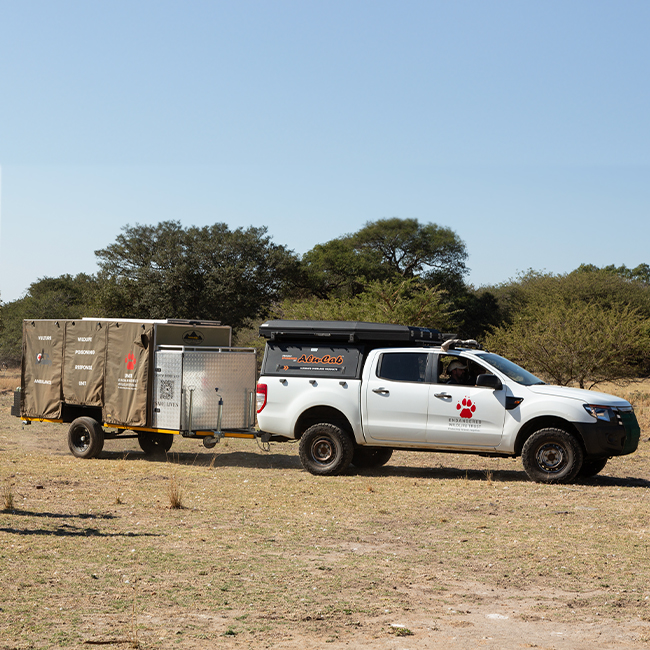
At 14:50, on Youth Day (16 June), the Endangered Wildlife Trust (EWT) Birds of Prey Programme Lowveld team, John Davies and Dr Lindy Thomson, responded to a call regarding a wildlife poisoning incident on a reserve in the Greater Kruger area. They were on the road in ten minutes and arrived just before sunset at a dismal scene with one dead and two live White-backed Vultures in grave condition. The team loaded the two surviving birds into crates in the EWT’ s custom-made Vulture Ambulance and rushed them to Moholoholo Wildlife Rehabilitation Centre near Hoedspruit – arriving at 11 pm.
The rescue
Determined that there were more lives to save, John and Lindy returned with the ambulance at 4 am the following day and, joined by SANParks rangers, Honorary Rangers, and Dr Joel Alves and Isabella Grünberger from WildScapes Veterinary and Conservation Services, they scoured the area for six hours, discovering and bringing more survivors back to the ambulance for treatment as they were found.
The main poisoning scene was deep in the bush, and after the vet, Dr Joel Alves and the EWT’ s John Davies treated each bird on site, a team member then carried the birds 3 km to where the Vulture Ambulance was parked. Another six vultures (one Hooded, one Lappet-faced, and four White-backed vultures) were critical but still alive. Sadly 45 vultures, a Bateleur Eagle, a lion, and three lion cubs did not survive the poisoning. The surviving birds were safely delivered to the Moholoholo Wildlife Rehabilitation Centre for treatment and rehabilitation in the capable hands of Dr Jess Briner and the Moholoholo Clinic team.
The release
The eight rescued vultures that survived a mass poisoning incident in June, including six White-backed Vultures, one Lappet-faced Vulture, and one Hooded Vulture, were released back into the wild on 1 July 2023 after being successfully treated and rehabilitated over two weeks. I was honoured to be at the release of these rehabilitated birds in person on Saturday, 1 July 2023. It is humbling to see not only the resilience and grace of these magnificent birds but also the passion, determination, and care the EWT and the Moholoholo Clinic team show while saving their lives. We got there at around 10 am and were shown to the clinic where the vultures were being prepared for their return to the skies. We all got stuck in – immersing ourselves in as much of the process as possible to truly understand and appreciate it. It’ s not easy work, and we got to see the easiest part.
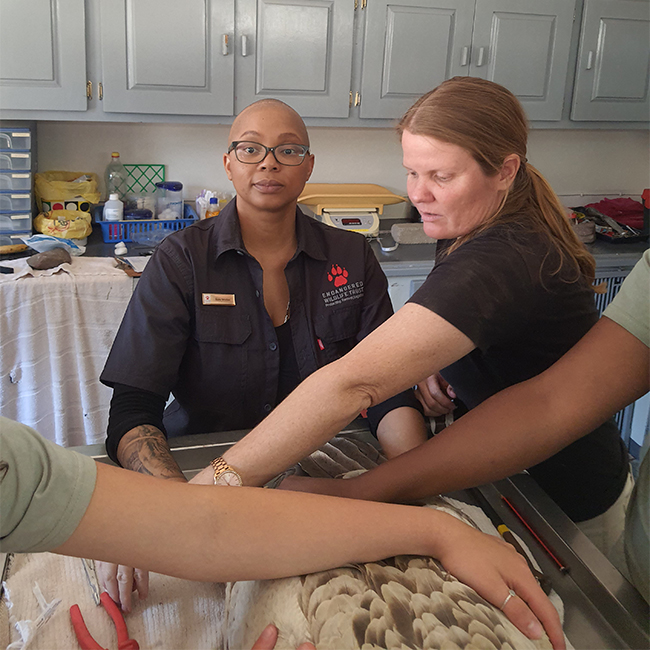
One after the other, the birds were brought through to the clinic, fitted with leg rings for identification purposes and their tracking devices – lightweight, solar-powered devices that have been custom-made for the EWT to ensure they are long-lasting, do not cause the birds any discomfort, and are able to transmit accurate location and flight path data of the birds post-release. This data will allow the EWT to monitor their movements and safety once they are released.
-
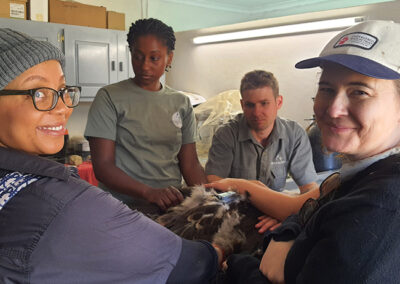
EWT staff assisting to fit the tracking collars
-
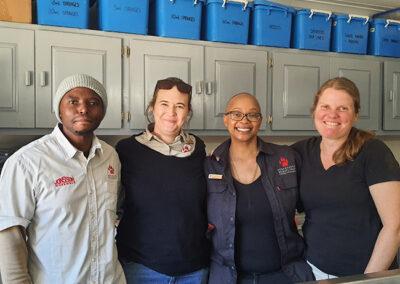
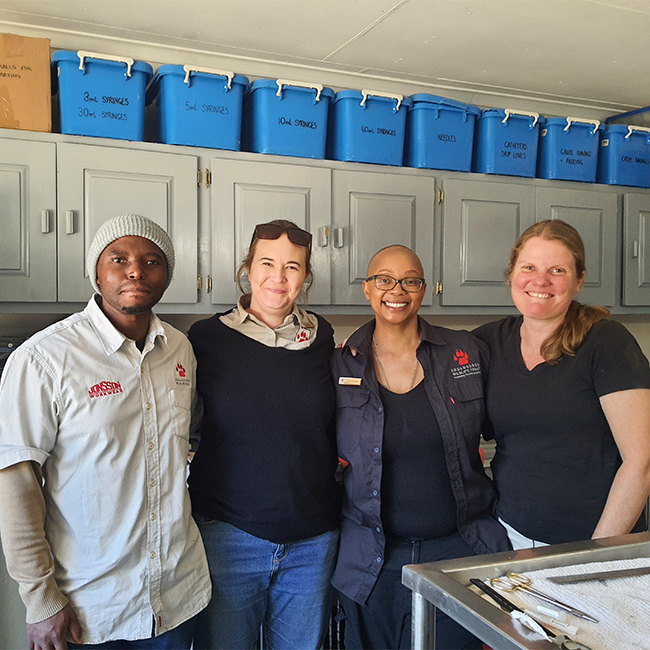
The EWT's Lesego Moloko, Emily Taylor, Sizie Modise, and Lindy Thompson
-
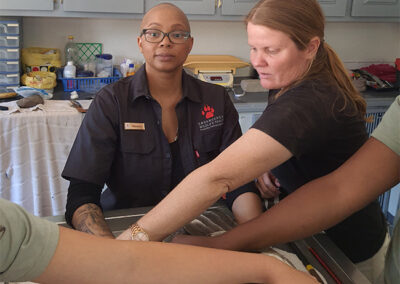
Sizie holding on to the vulture's feet so that Lindy is able to fit leg rings on the bird
-
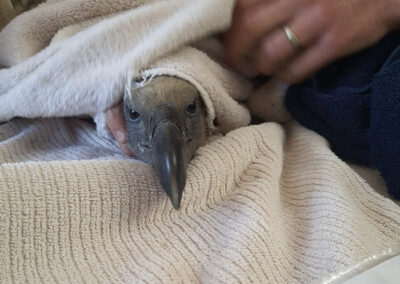
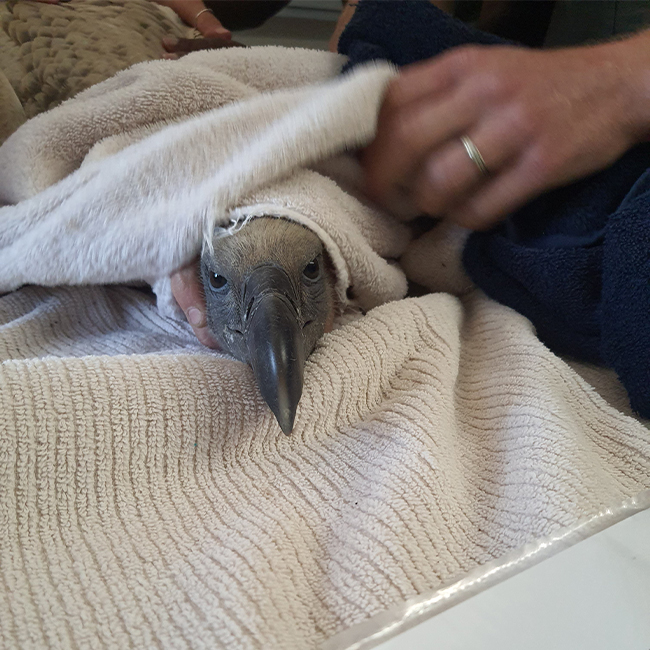
A peek at one of the vultures in the clinic

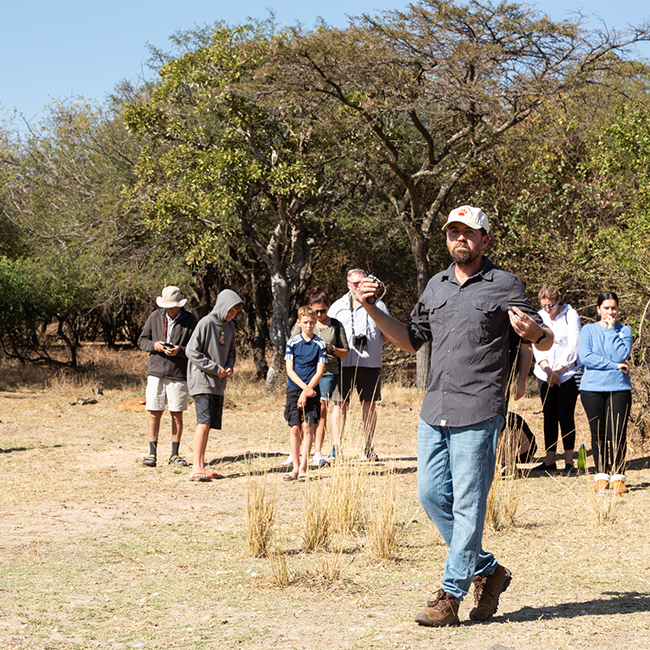
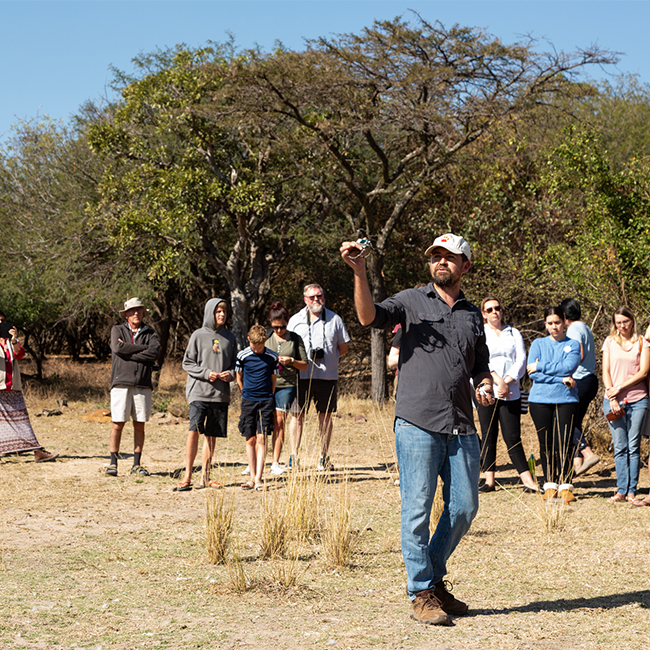
When all of the birds were prepared and loaded into the vulture ambulance, we headed to the Moholoholo Vulture Restaurant nearby, where we would send the birds on their way. These events are important opportunities for education and awareness raising, and so there were invited guests to witness the release. John Davies from the EWT’ s Birds of Prey Programme gave a talk on the essential role vultures play in ecosystems, the threats they face, and the necessary role of organisations like the EWT and Moholoholo Wildlife Rehab Centre in the long-term survival of our wildlife.
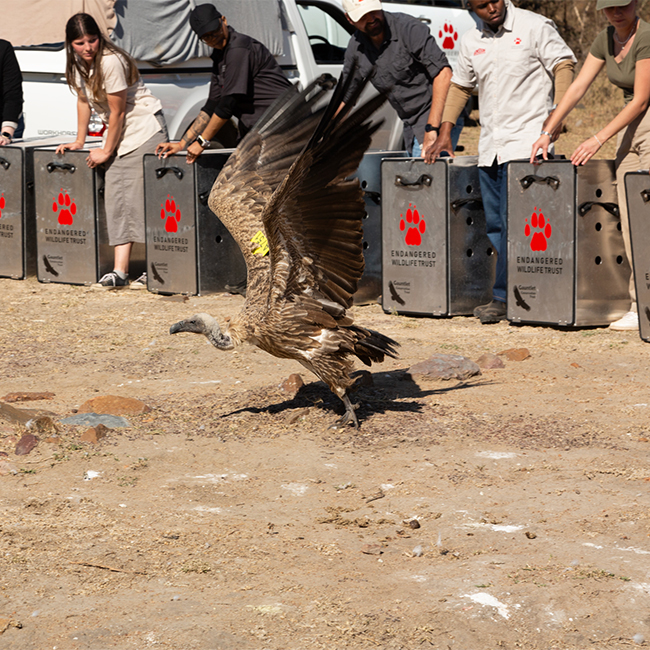
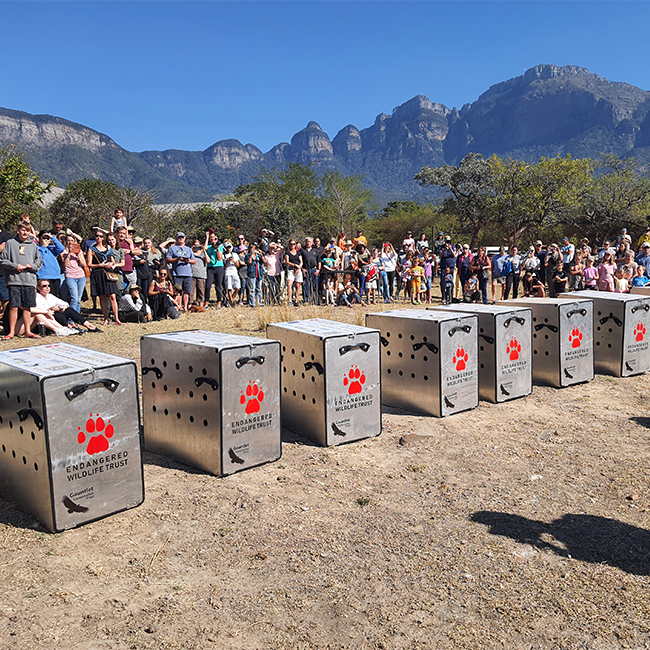
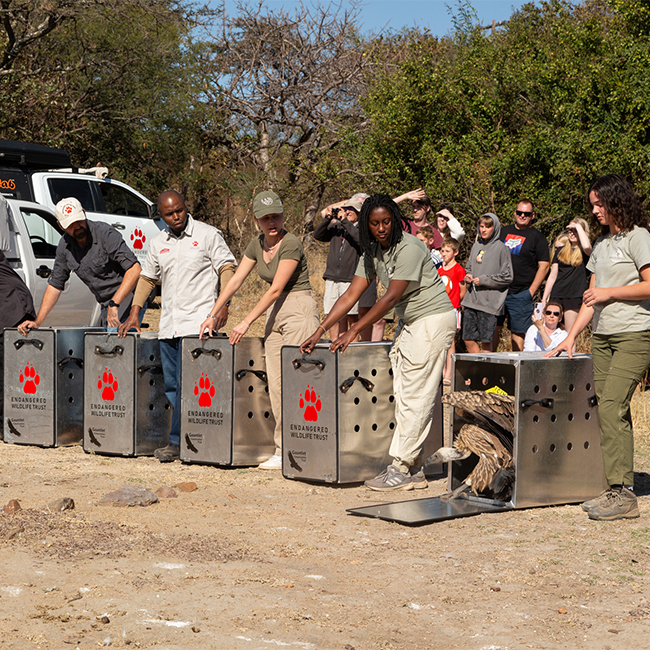
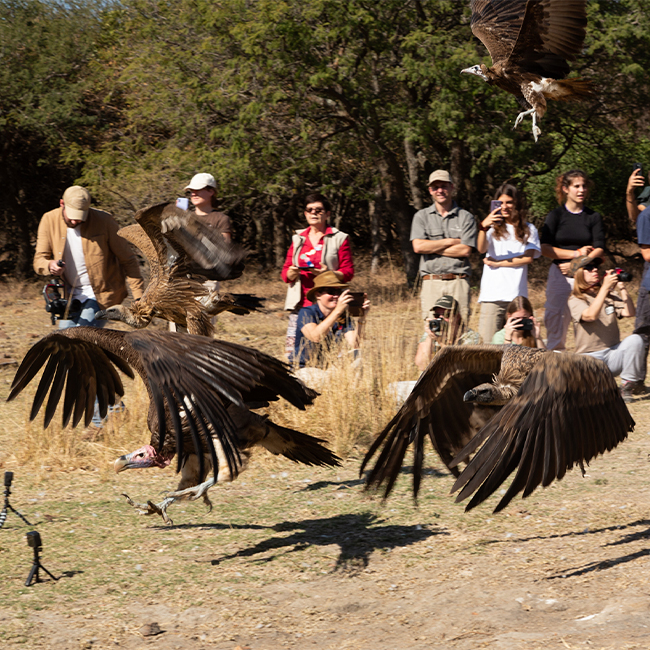
We then put meat out nearby to attract wild birds before unloading the crates and lining them up in sight of the food. One by one, we opened the crates, and in the blink of an eye, they were out. I opened one of the crates, and I could feel the wind from their powerful wings as they took to the sky.
I think that it must be quite stressful being in a cage for a few weeks when you’ve been a wild bird all your life. So I think they do get a little bit stressed, but with this release, what we did today at the Moholoholo Vulture Restaurant, we put food down and waited for the wild birds to come down and then opened the crates so that the released birds can see their buddies flying in the sky dropping down towards the food, and they join them.
Dr Lindy Thompson, the EWT Birds of Prey Programme
It is not only the release of the vultures that is critical. It is also important to monitor their movements using their tracking devices. The GPS data allows us to see where the birds are travelling and respond to any indication of unusual behaviours, such as immobility, for longer than normal periods, particularly in areas we know are at high risk for wildlife poisoning.
We have to evolve with the threats to vultures and with the situation around us, and technology and innovation are absolutely critical to this. From tracking birds across vast expanses using GPS telemetry to ensuring more poisoned birds make it to the rehabilitation centre in time using the vulture ambulance, which in the past has just not been available to people in severe situations dealing with many birds.
John Davies, the EWT Birds of Prey Programme
-
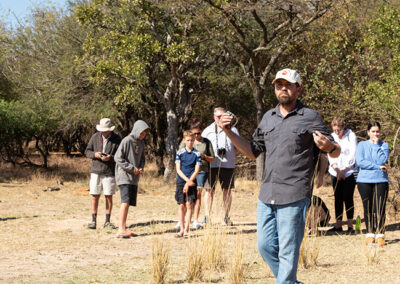
John Davies talking about the threats to vultures, such as poisoning, and how we address these threats. Photo credit Sarah Goodman
-
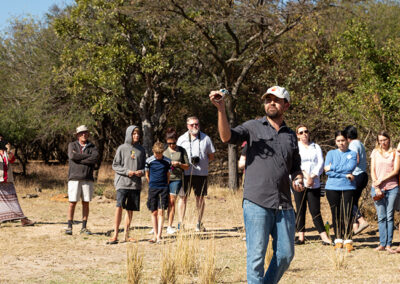
John showing an example of the collars we use to track the released birds. Photo credit Sarah Goodman
-
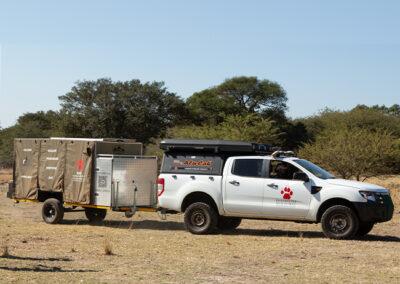
The EWT Vulture Ambulance. Photo credit Sarah Goodman
-
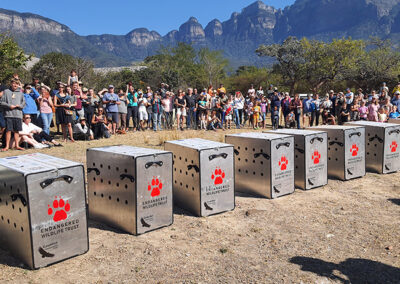
Crates lined up for vultures to be released together. Photo credit Sarah Goodman
-
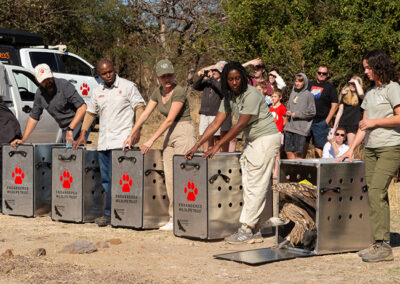
The first vulture takes tentative steps to freedom. Photo credit Sarah Goodman
-
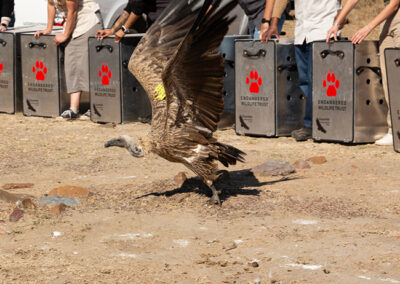
The first bird takes flight. Photo credit Sarah Goodman
-
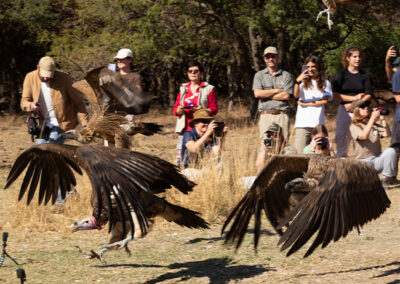
And they're off! Photo credit Sarah Goodman
-
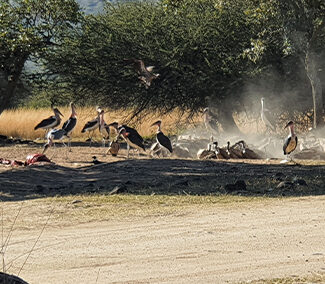
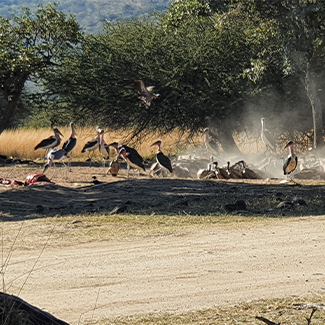
The released birds join the others at the meat laid out for them. Photo credit Emily Taylor
The tracking devices fitted to these vultures started transmitting immediately, and when we downloaded the data just a few days after the birds were released, we were astounded. It’s incredible to see the distance the vultures can travel in such a short time, especially when these birds were gravely ill from poisoning just three weeks ago! You can see a video showing these movements here.
From seeing the passion and dedication on the faces of our colleagues to feeling the wind from their wings as birds take flight – these experiences are what inspire us, give us hope, and keep us going in the fight against threats to our wildlife.