Sowing Seeds of Hope – the Endangered Wildlife Trust’ s Medicinal Plant Initiative
Sowing Seeds of Hope – the Endangered Wildlife Trust’ s Medicinal Plant Initiative
By Dr Jenny Botha and Phomelelo Malatji, EWT People in Conservation
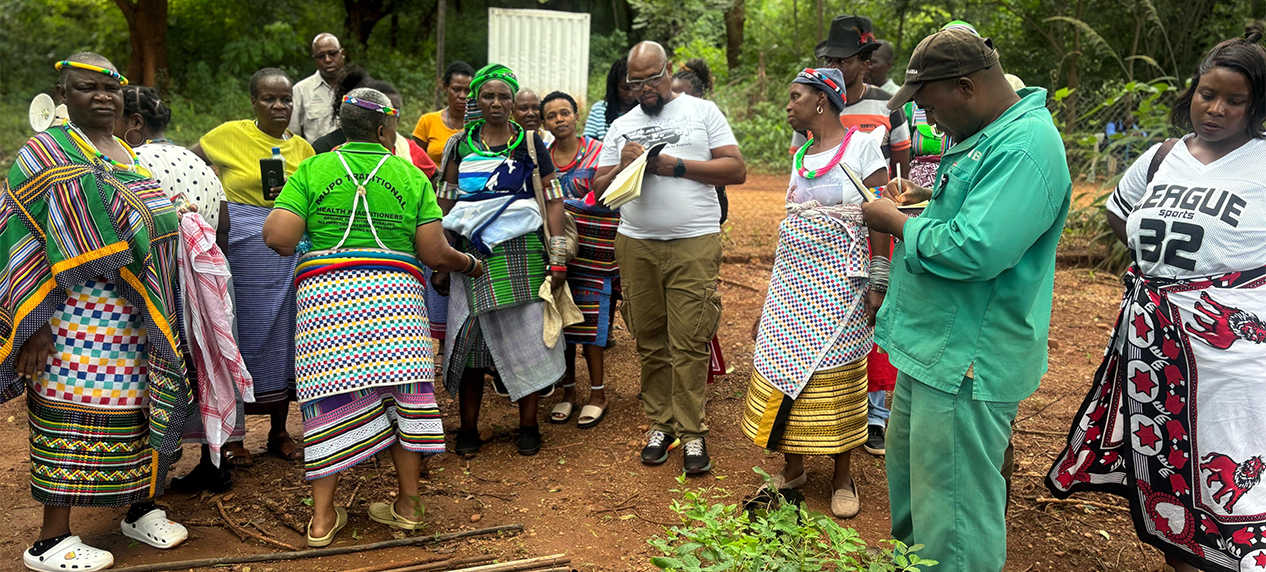
Working with traditional healers, distributing seedlings for their own cultivation
Deep within Africa’ s rich and diverse landscapes, the ancient practice of harvesting medicinal plants has long sustained traditional medicine and other cultural practices, as well as livelihoods.
Historically, cultural rituals, protocols, and practices have protected plants from over-harvesting, but, as human populations have grown and rural populations migrated to urban areas, demand has increasingly outpaced available sources of many plant species. This, together with an erosion of harvesting controls and extensive transformation habitats through other human activities, has placed considerable pressure on numerous species.
In South Africa, approximately 2,062 plant species are used for traditional medicines, with about 770 species having been recorded in markets across the country. At present, 182 species are listed on the country’ s IUCN Red List of Threatened Species, and 82 are believed to be at risk of extinction in the wild.
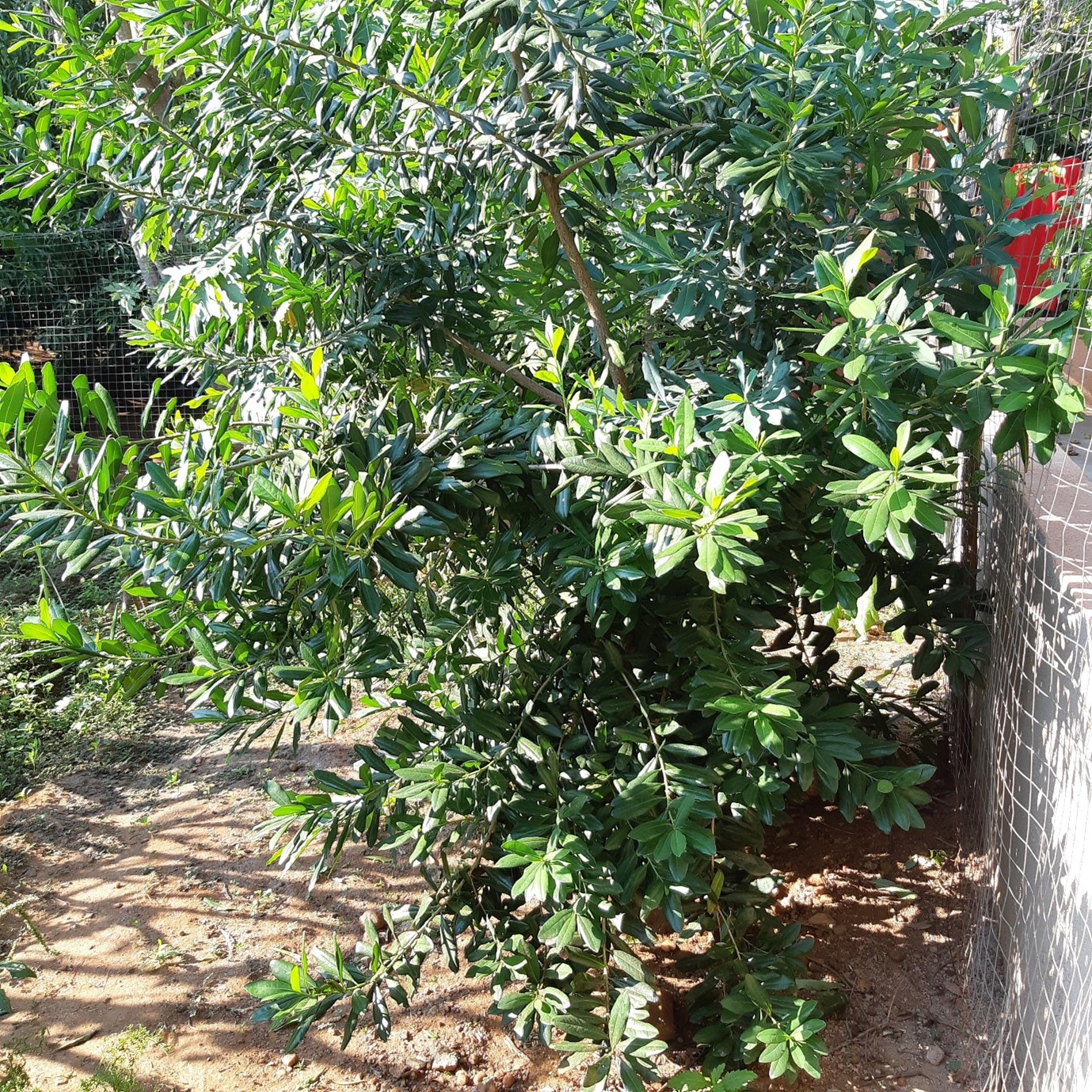
In 2019, the Endangered Wildlife Trust (EWT) launched an integrated conservation project in Limpopo to contribute to national efforts to conserve one of our most iconic medicinal plant species, the Pepper-bark Tree (Warburgia salutaris). Since then, we have expanded the scope of the project to include additional species and geographic locations in Mpumalanga, KwaZulu-Natal, and Gauteng.
Reducing threats to wild Pepper-bark tree populations in Limpopo
The Pepper-bark tree occurs in montane forests, thickets, and woodlands in the KwaZulu-Natal, Mpumalanga, and Limpopo Provinces of South Africa. It is also found in Mozambique and eSwatini. The tree is believed to be extinct in the wild in Zimbabwe.
The bark, roots, and rootbark of the tree have long been in high demand for traditional medicine across southern Africa. More recently, many of its therapeutic properties have been corroborated scientifically. Importantly, from a conservation perspective, its leaves were found to contain the same phytochemicals as the other plant parts that were traditionally used for medicine. The substitution of leaves for bark, roots, or rootbark significantly reduces harvesting impact.
Over the past three decades, conservationists from national and regional conservation agencies have partnered with traditional healers and the private sector to reduce harvesting pressures through cultivation. Over this period, over 80,000 seedlings have been distributed to traditional healers and community members.
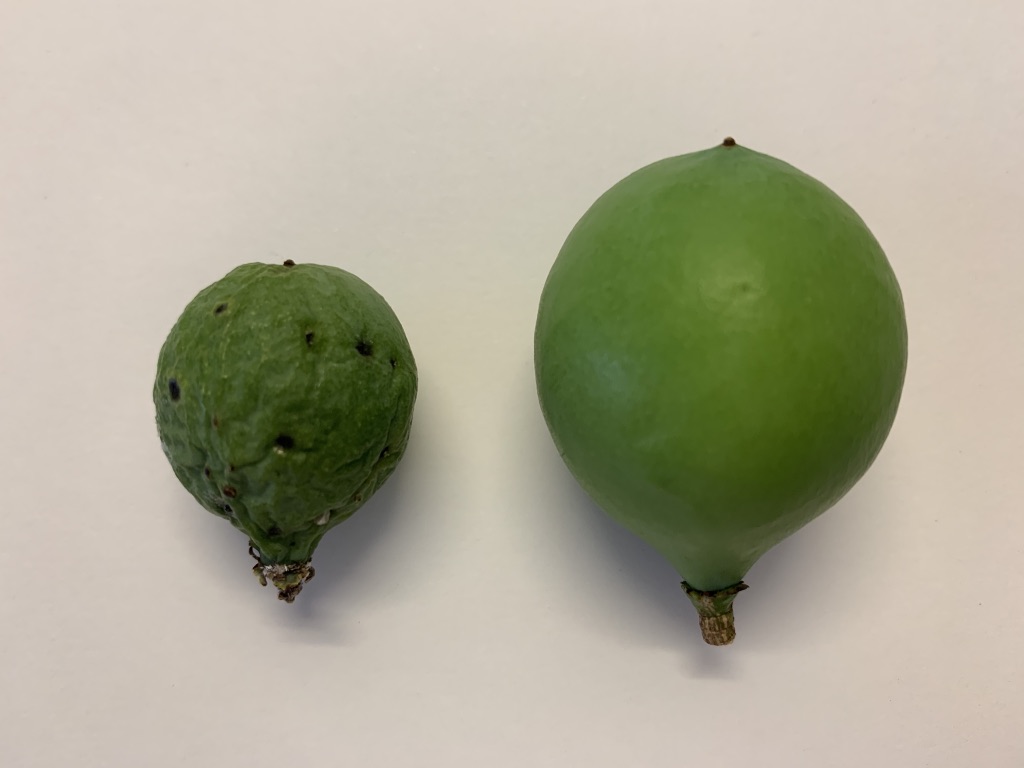
The EWT’ s Pepper-bark tree project incorporates collaboration with traditional healers, traders, and harvesters to increase the diversity of species that are being cultivated in many areas. In addition, we are implementing strategies alongside private and communal landowners to protect and restore habitats. A seed viability assessment has also been conducted as the species germination rates in some populations are low.
Habitat protection and restoration
To secure habitat for the Pepper-bark Tree and other species, the EWT has collaborated with the Limpopo Department of Development and Tourism (LEDET) and private landowners to secure formal protection of land through South Africa’ s Biodiversity Stewardship Programme. The EWT’ s team of rangers has also cleared over 70 ha of invasive alien and encroaching vegetation in Pepper-bark tree habitats, which has led to what is believed to be re-emergence of Pepper-bark tree seedlings in areas where they had not previously been seen.
We are also engaging with several communities in areas where Pepper-bark trees and other medicinal species are being intensively harvested to explore opportunities to support them to improve harvesting controls and remind people of the importance of their biocultural heritage. Harvesters frequently come from outside the area and, where possible, we invite them to join this national effort to improve the sustainability of medicinal plants for now and for future generations.
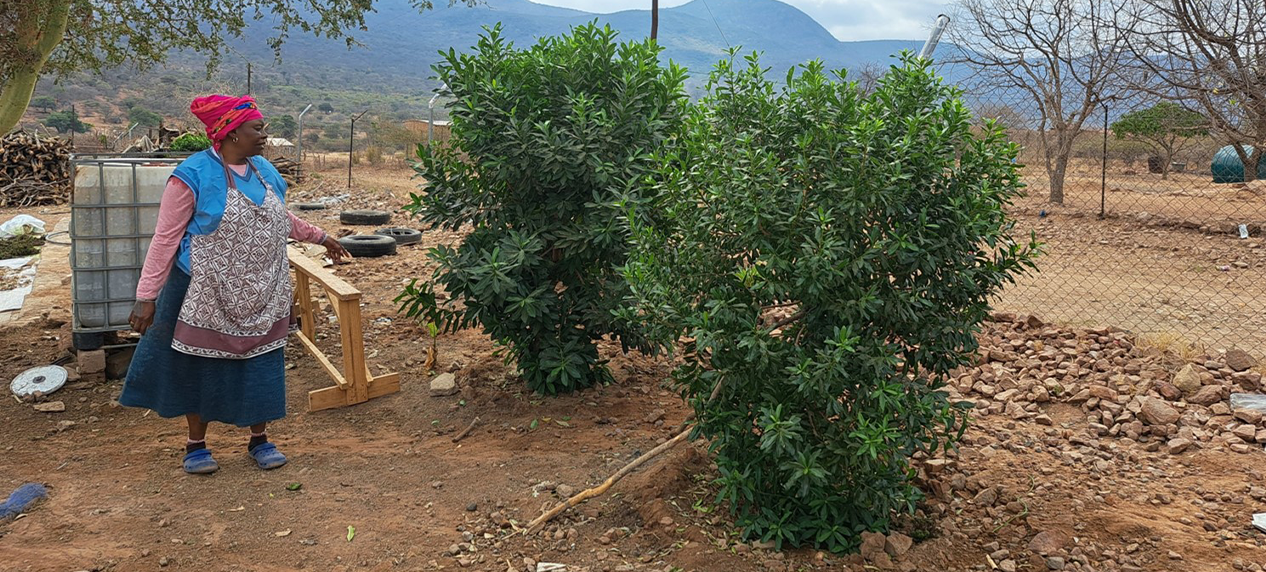
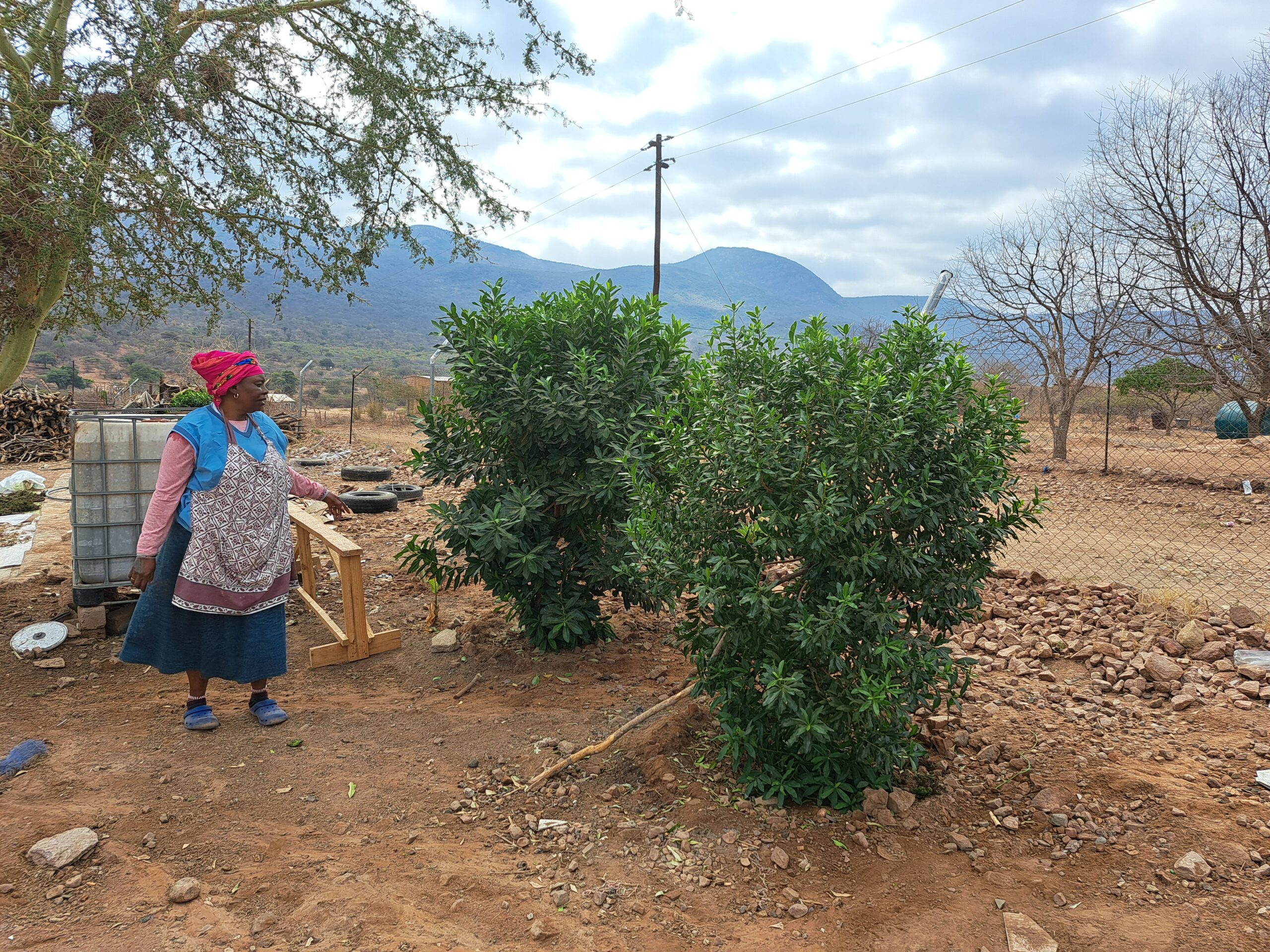
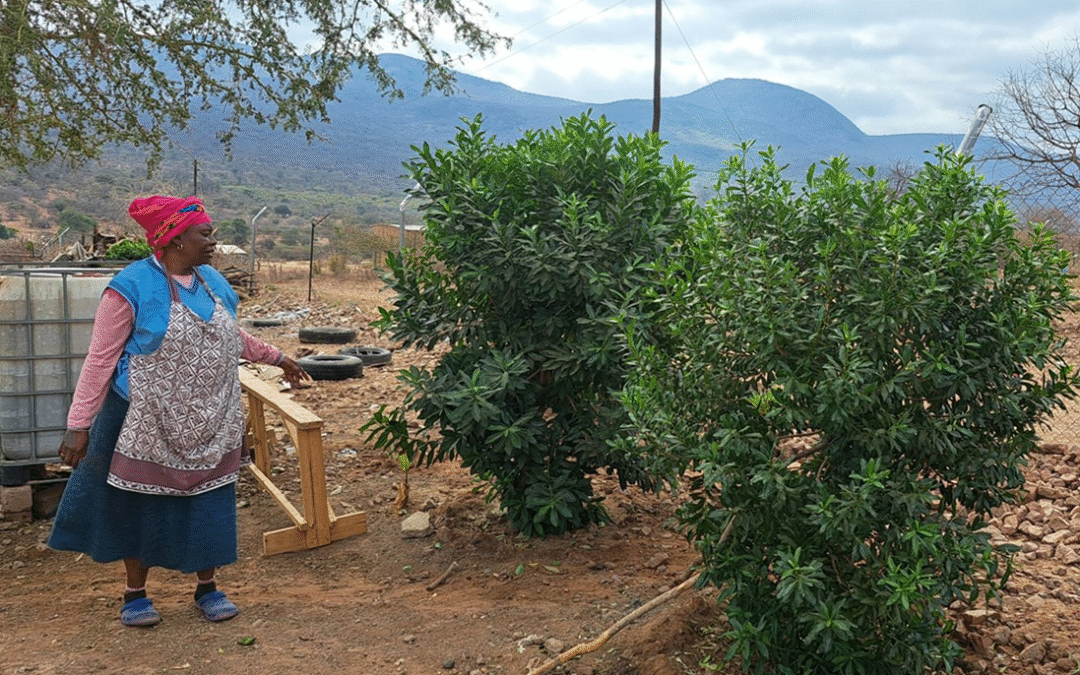
Traditional healer with Pepper-bark trees in home garden
Collaboration with traditional healers, traders, and communities to cultivate and protect wild Pepper-bark trees.
The EWT has engaged with approximately 300 traditional healers from over 20 communities in Limpopo to identify strategies to reduce threats to wild medicinal plant populations. In February and March 2025, we collaborated with the South African National Biodiversity Stewardship Institute (SANBI) to develop and implement training on the cultivation of medicinal plants. This training will gradually be implemented across all our project areas to support cultivation and lay the foundation for scaling up these production efforts over time.
Following visits to SANBI’ s Thohoyandou Botanic Gardens, 205 traditional healers and harvesters attended four three-day training courses in Vhembe. The training incorporated demonstrations of various cultivation and propagation techniques, discussions on legislation and the permitting system, and engagement on challenges people are facing in accessing medicinal plants.
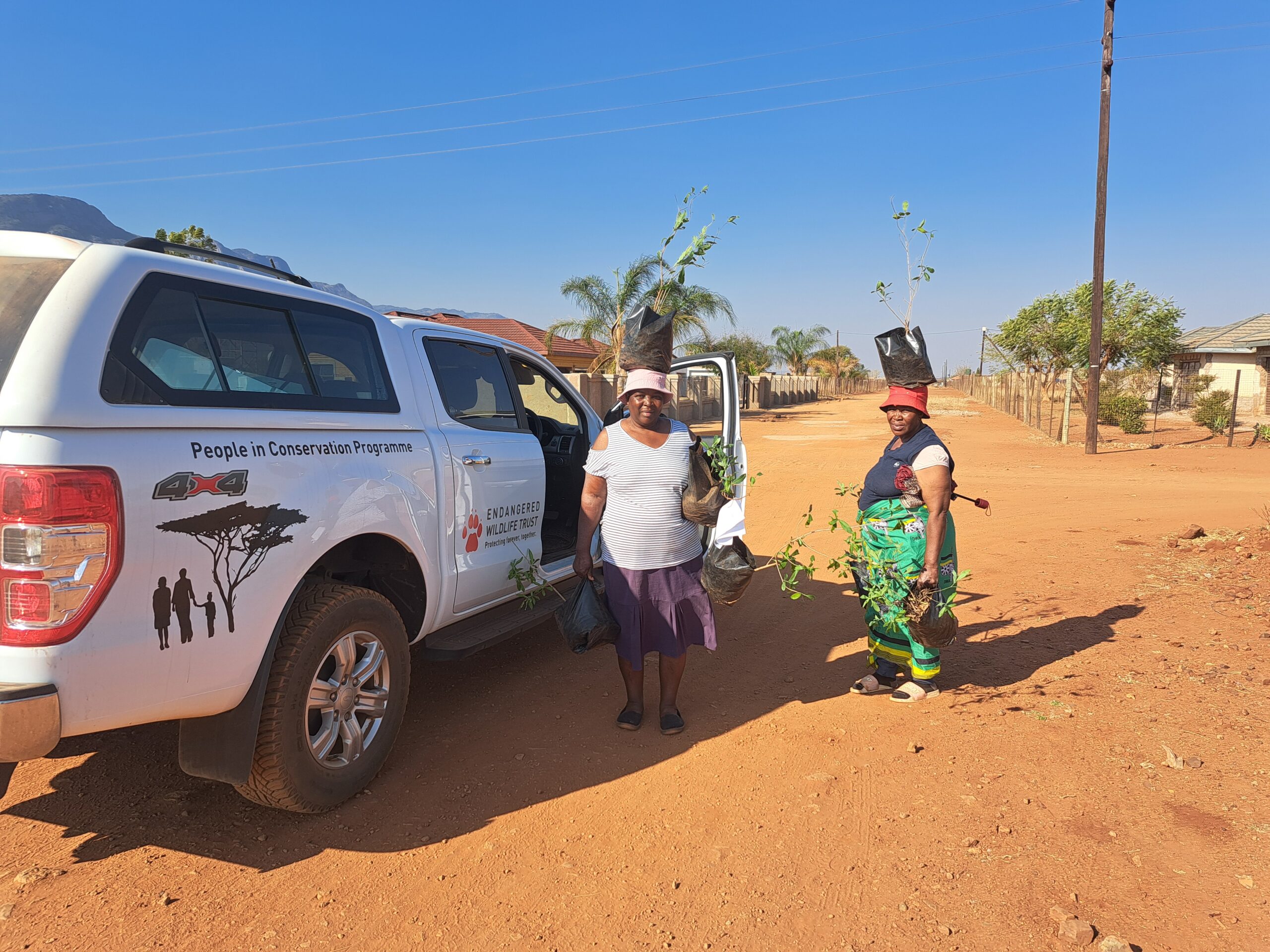
Each participant received a starter pack and seedlings to enable them to start cultivating immediately. Our team follows up with the groups regularly to monitor the survival of plants and any challenges that they may be experiencing. We are also in the process of sourcing additional species for them to start growing.
Planting seeds of hope
Plants have been valued for their curative powers for millennia, not only as traditional medicines, but also in conventional medicine. Achieving our goals to reduce threats to species of conservation concern at scale will clearly take time and collaborative efforts across partner organisations and sectors to enable us to synergise our resources and share the knowledge, understanding, and collective effort that is required to avert extinctions.
Critically, we need to consider the needs of the poorest consumers who depend on these plants for their health care. Many simply cannot afford more expensive alternatives and it is vital that we co-develop strategies to cultivate plants that are both affordable and aligned to the cultural protocols associated with the use of these medicines so that their therapeutic values are retained or even, in some instances, restored.
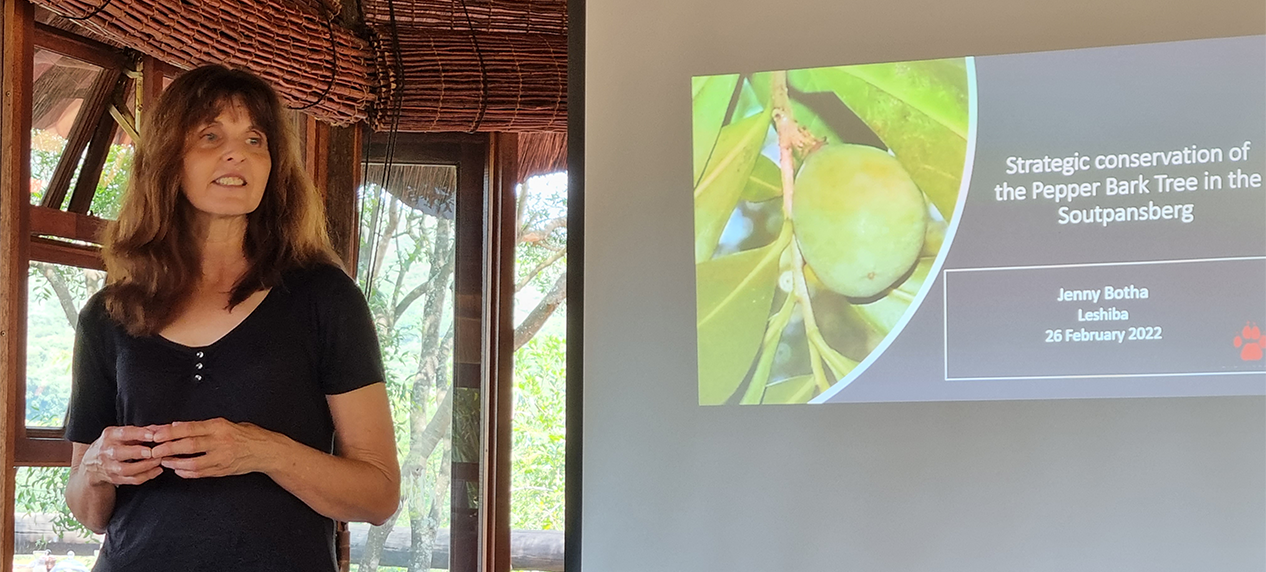
Dr Jenny Botha presenting to landowners on Pepper-bark tree conservation
Fondation Franklinia has supported the Endangered Wildlife Trust’ s Pepperbark tree project over the last six years and allowed our team to implement focused conservation action to safeguard this threatened species for years to come. Through this work, we have been able to secure safe space for multiple threatened and endemic species by declaring and now expanding the Western Soutpansberg Nature Reserve. Our rangers have also recovered habitats through clearing 70 hectares of exotic Eucalyptus trees from riverine and wetland mountain areas, including restoring habitat for Pepperbark trees where we are seeing natural recruitment of the species taking place.
In addition, the support of Fondation Franklinia has allowed our team to expand on critical work with traditional healers and traders, by assisting them to cultivate their own trees and distributing seedlings in three different provinces in South Africa.
We would like to thank Fondation Franklinia again for the critical support they have provided our project over this time, and congratulations on celebrating 20 years in conservation!
** The EWT would like to thank the Fondation Franklinia for its support of this project, and for extending support to enable us to implement the second phase. The project is also funded by the UK Government through the Illegal Wildlife Trade Challenge Fund. In addition, SANParks, through the Kruger National Park Pepper-bark Conservation Programme, which has received support from SAPPI, ARC, SANBI, SAEON and the SANParks honorary rangers, has donated Pepper-bark trees. The Ford Wildlife Foundation has also played a key role in the success of this and other People in Conservation projects through the provision of a Ford Ranger to the EWT’ s People in Conservation Unit.