Why the IPBES Business and Biodiversity Assessment Matters
Why the IPBES Business and Biodiversity Assessment Matters
By Suzanne Powell and Catherine Kuhn of the EWT’ s Biodiversity and Business Unit

We can no longer afford to overlook nature on a continent where many economies are expanding, infrastructure investment is accelerating, and global markets are demanding stronger environmental performance across value chains. At the same time, the Kunming-Montreal Global Biodiversity Framework (GBF) calls on governments and businesses to take coordinated, transformative action to halt biodiversity loss while strengthening resilience and development outcomes.
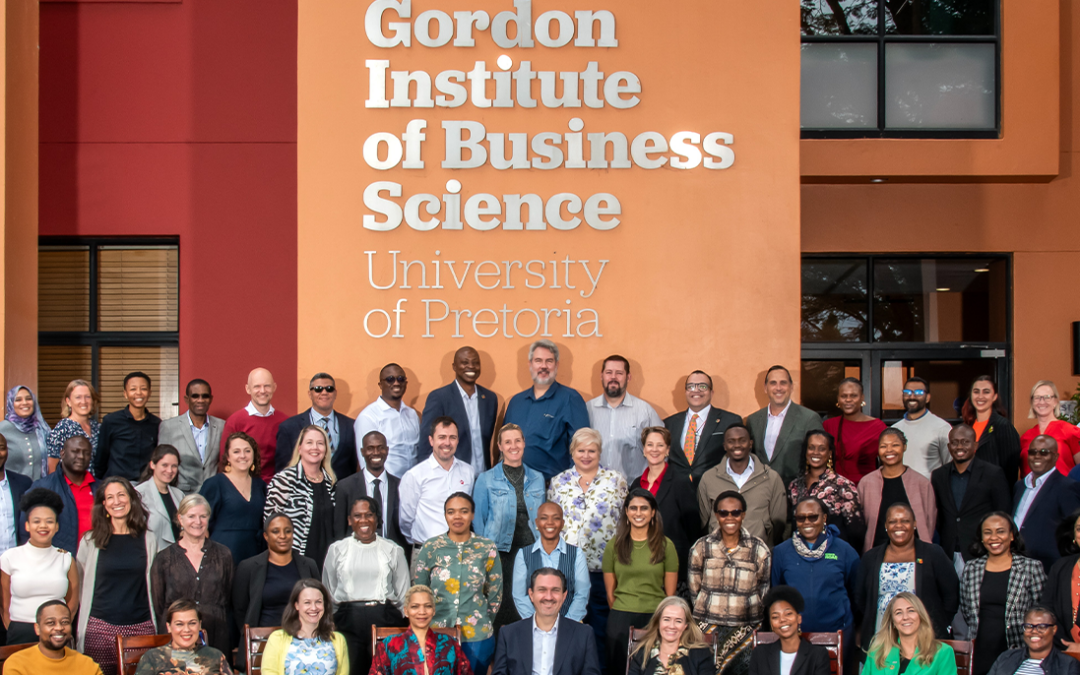
Hosted by the Secretariat of the Convention on Biological Diversity (CBD), in collaboration with the South Africa Department of Forestry, Fisheries and the Environment (DFFE), the South African National Biodiversity Institute (SANBI) and the Endangered Wildlife Trust (EWT), the two-day forum provided delegates with an opportunity to exchange ideas, learn from each other and create future collaborative opportunities to solve problems related to the inclusion of environmental practices into business in line with, amongst other, the Global Biodiversity Framework’ s Target 15. This target aims to progressively reduce the negative impacts and increase the positive impacts of business on biodiversity and to encourage more sustainable patterns of production.
Among the key presentations was the unpacking and evaluation of a recently released report that highlighted the fact that the cost of the growth of the global economy has been at the cost of immense biodiversity loss. This now poses a critical and pervasive systemic risk to the economy, financial stability and human well-being.
The landmark global assessment places biodiversity firmly at the centre of business risk, responsibility and opportunity. The Intergovernmental Science-Policy Platform on Biodiversity and Ecosystem Services (IPBES) released the Business and Biodiversity Assessment: Summary for Policymakers. Among its authors was the EWT’ s head of Sustainability, Kishaylin Chetty. His involvement reflects the growing contribution of African expertise to global conversations on the biodiversity-business interface.
The assessment comes at a critical time when evidence shows that biodiversity and nature’ s contributions to people are declining across the globe.
Prepared under IPBES by 79 experts from 35 countries, and drawing on more than 5,000 references, this assessment carries significant scientific and policy weight as the first global IPBES assessment dedicated specifically to business and biodiversity. The report was approved through the IPBES Plenary by representatives of the Platform’ s more than 150 member Governments on 9 February 2026, giving the assessment particular international authority.
So what does the assessment reveal? Here are five key insights that show why this report matters:
- Nature is a systemic part of the economy
All businesses depend on biodiversity, whether directly or indirectly. Extensive evidence indicates that more than 50% of global GDP depends on nature. While sectors like agriculture, forestry, fisheries and tourism depend directly on biodiversity, other industries are indirectly dependent through their value chains. Raw materials, energy sources, and ecosystem services are all part of modern economies.
As awareness grows, biodiversity loss is increasingly recognised as a systemic risk to economies and financial systems, with serious consequences for financial stability and human wellbeing.
- Money is still flowing in the wrong direction
Estimates suggest that globally, only around US$220 billion per year is directed toward biodiversity conservation and restoration, while a staggering US$7.3 trillion flows into nature-negative activities annually. At the same time, current economic incentives continue to lock in harmful activities, reinforcing this stark imbalance. More broadly, today’ s business environment is not always compatible with a just and sustainable future, with unsustainable outcomes structurally embedded through perverse incentives, harmful subsidies and the failure to account for biodiversity impacts.
- Momentum is growing
Globally, fewer than one percent of publicly listed companies disclose their impacts and dependencies on biodiversity. While this number is growing as awareness increases and frameworks such as the Taskforce on Nature-related Financial Disclosures (TNFD) gain wider adoption, it raises a more fundamental question: what is actually changing for nature on the ground?
If most companies are not yet measuring or disclosing their impacts, it becomes difficult to know where biodiversity is being lost, and whether actions are contributing to positive conservation outcomes. Compounding this is the lack of independent verification which makes it hard to distinguish between meaningful action and tangible and credible improvements for biodiversity. Businesses need to ask themselves: Are ecosystems recovering? Are pressures on ecosystems being reduced? Are our actions contributing to harm or to positive outcomes? And how are we tracking this to ensure credibility and to avoid greenwashing?
- The tools to act are already in place
A common assumption is that limited data is the main reason businesses are not acting on biodiversity. The report challenges this. While biodiversity measurement is complex, many methods already exist to help businesses understand their impacts and dependencies. The real challenge lies in using the correctly aligned approach method.
The report provides a robust guidance table to help companies select the correct method for a particular purpose at the appropriate decision-making level, whether for risk screening, comparing options or assessing impacts on the ground.
The assessment also identifies more than 25 actions businesses can take across strategy, operations, value chains and investment decisions. This includes embedding biodiversity into strategy, reducing impacts, improving supply chain transparency and shifting capital toward nature-positive outcomes.
- Transforming the system will require collective effort
Many current incentives still reward activities that harm nature. While business action has historically been driven by regulation, real change requires shifting the system itself. Businesses can help shape an enabling environment by influencing suppliers, partners and markets. Governments are also central to this shift, setting the rules through policy, regulation and incentives. Civil society plays a vital role in building capacity, monitoring progress and holding actors accountable.
Ultimately, transforming the system requires collective action to ensure that positive outcomes for nature become the norm.
In closing, the message is clear: what is good for biodiversity is also good for long-term economic stability and business resilience. Through collaboration, shared responsibility, and an enabling environment, businesses can become part of the solution to shaping a just and sustainable future.