Discovering the Old Salt Trail
Discovering the Old Salt Trail
Cath Vise, the EWT’ s SPA Programme Manager, cathv@ewt.org.za
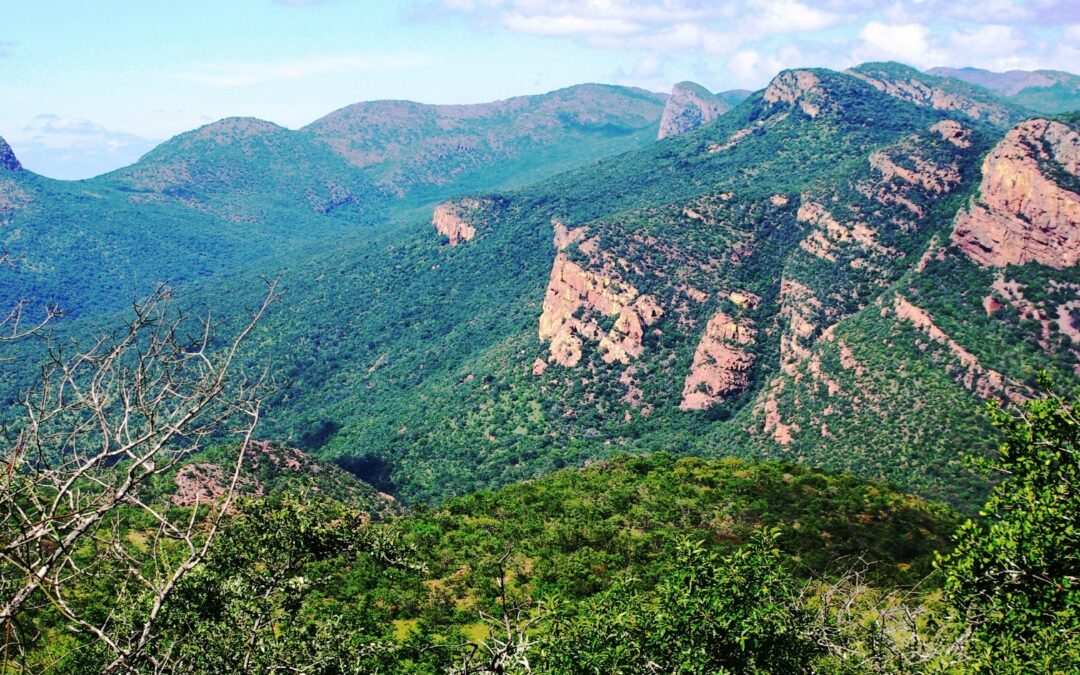
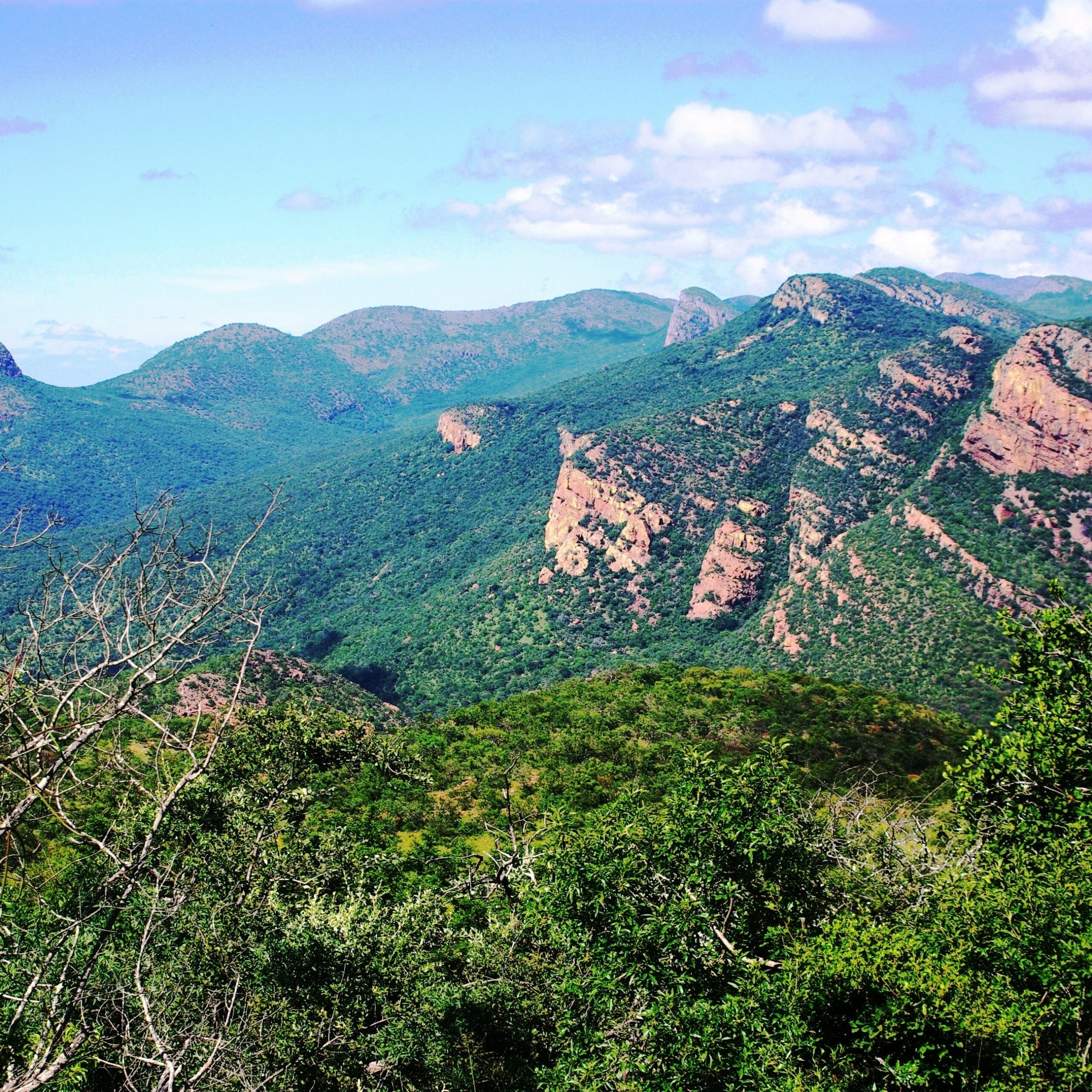
 The Endangered Wildlife Trust’ s Soutpansberg Protected Area Programme has established a multi-day hiking trail across the Western Soutpansberg. The trail crosses several private properties and the Luvhondo Nature Reserve. Our team has been working with these properties’ owners in a truly collaborative effort to establish a world-class trail within the proposed Western Soutpansberg Nature Reserve.
The trail aims to establish the Soutpansberg as an ecotourism destination and bring in essential sustainable funding to support our conservation efforts. It will also help drive local economic growth and establish training and job opportunities for locals, such as becoming guides on the trail.
During the week of 9 May 2022, our SPA team and managers from the other properties did a final recce of the trail, completing the full five-day slackpacking route. Here is a first-hand account of the trail by our SPA Programme Manager Cath Vise.
This week has possibly been one of my best weeks on the job. We have been dreaming of setting up with trail for the last three years, and with thanks to the F E van Pletzen/L Steynberg Trust for a generous donation towards the project, this dream is now becoming a reality.
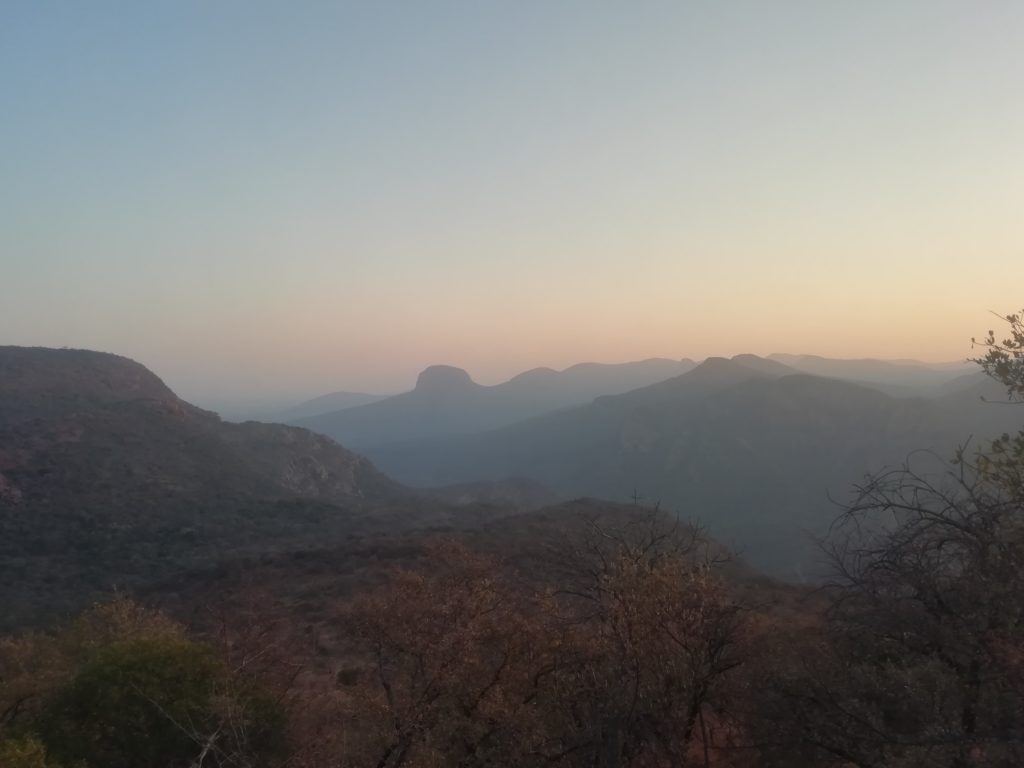
The Old Salt Trail Slackpacker’ s Deluxe (western loop) is a 75 km, five-day trail starting at our Medike Mountain Reserve. It heads up the mountain to Leshiba, then on to Sigurwana, up to Lajuma, back to Leshiba and finally back down to Medike. It goes from the lowest point of the mountain range as it crosses the Sand River (813 m) up to the highest point of the Soutpansberg, the mighty Mount Lajuma (1,727 m), with an elevation gain of nearly 1 km and a lot of ups and downs in between.
Our hikers for this week included Kathy and Pete Straughan (Leshiba’ s Managers), Peter Breedveld (Sigurwana Manager) and our EWT SPA staff Chris Joubert (Medike Manager), Rotondwa Sithagu and Shumani Makwarela (Soutpansberg Rangers and FGASA Guides) and myself. We were supported by Tharollo Mthisi (Soutpansberg Ranger), who transported all our luggage from lodge to lodge throughout the week.

Climbing up out of the Sand River Gorge on Medike
We left Medike on Monday morning and headed up the mountain. This first day really gets the lungs and legs going, as it is a steep climb to get up out of the gorge. The trail then took us into the Duluni Gorge, where we followed a mountain stream up the mountain. Pete had hiked down from Leshiba and met us in the gorge. On our way up, Pete showed us a rock art site on Medike. Pete is an expert in rock art and tree identification and possibly one of the most entertaining walking encyclopaedias out there. Our journey back in time started at this site, with Pete explaining a bit about the different Bushman and their different painting styles. We carried on up the gorge onto Leshiba, where we had to climb through the first Hiker’ s Doggy Door – a cunning small swing gate (that looks like a doggy door for humans) that ensures that the gate always stays closed. On Leshiba, we were lucky enough to spot a Narina Trogon, which flew over our heads and landed briefly in a branch above. They are such beautiful birds. The first night was spent at Leshiba’ s Luvhondo Camp, with Giraffe walking into the camp and Cape Vultures flying low overhead, making for an amazing end to a beautiful day.

Traversing ‘The Slabs’ in Leshiba’s Hamasha Gorge
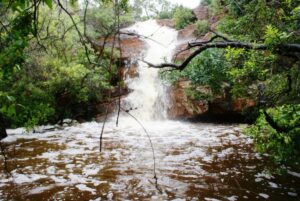
Day two’ s hike started with another walk back in time as we headed through the Bushman’ s Medicine Chest (medicinal trees and shrubs), another rock art site, where the stories of the past inhabitants continued to unfold. The trail then took us through Hamasha Gorge on Leshiba. This is the most difficult and technical day of hiking but is rewarded with incredible dramatic scenery, lots of water in the stream, and great company that made it a spectacular and entertaining day. We had to do a fair amount of rock-hopping along a stream bed, cross the stream a few times, then hike at an angle up ‘The Slabs’ , these magnificent red rock slabs in the gorge. After a nice lunch break next to the stream, we headed west out of the gorge on a long rocky path back up the mountain. This path is an old route believed to link back to the salt pans. We then entered Sigurwana. Near the end of the hike, a beautiful Waterberry forest and a small waterfall and rock pool made the perfect place to sit and cool our feet for a while and soak up all the beauty. Liesel and Neil Wright from Sigurwana and their staff made us feel right at home with a very warm welcome and spoilt us with a wonderful evening and boma braai.

Up the mighty Mount Lajuma, looking back at what we have achieved
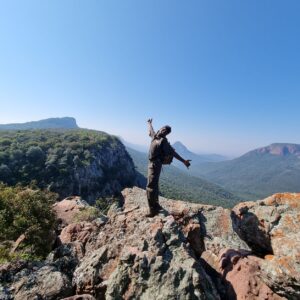
After a very comfortable night’ s sleep in Sigurwana’ s beautiful and luxurious accommodation, our team continued our journey west towards the mighty Mount Lajuma. After a climb up a rocky slope next to a waterfall, there is a long plateau on the top of Sigurwana, with open grasslands and wetlands. We visited another could rock art site, with new insights into the lives of the Bushman revealed. It was fairly easy, straightforward hiking all the way to Mount Lajuma, along both game trails and jeep tracks. We took a break at the base of Mount Lajuma to gather our strength for the climb to the top. The view from the top and the feeling of pure joy are exhilarating. What a sense of achievement as you look back across the mountain and see how far you have come. Standing on the top of Lajuma, looking back east filled me with pride and joy to see how far our Western Soutpansberg Nature Reserve stretches, with an inspiring group of landowners working together to conserve this precious mountain.
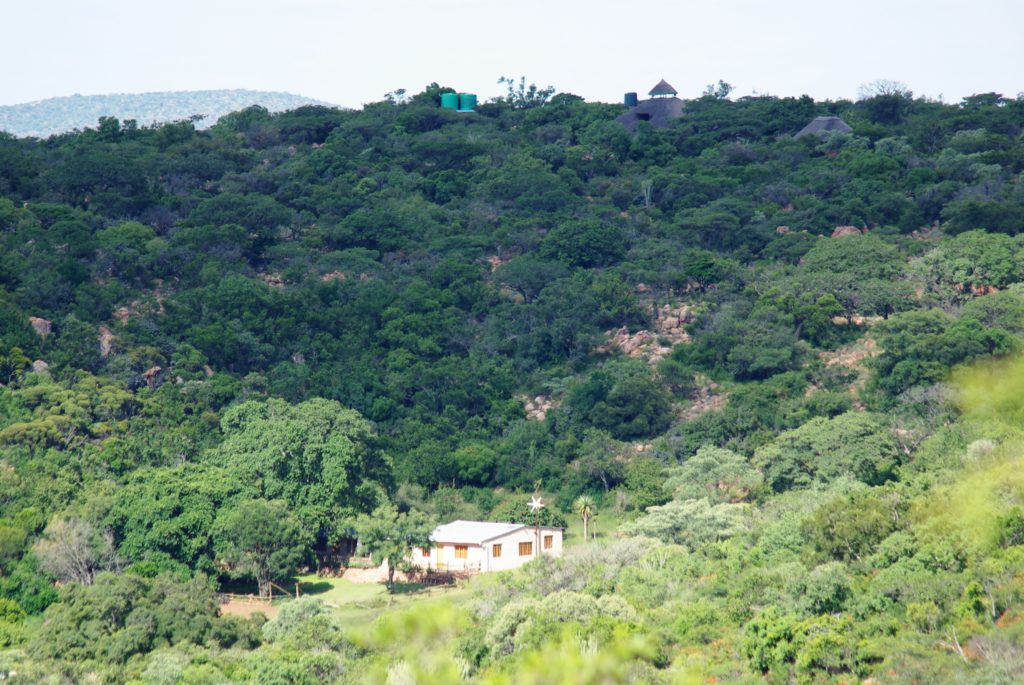
We spent the evening at Lajuma Research Centre’ s Wilderness Camp, designed as student accommodation, on the edge of a cliff with beautiful views south. We spent the evening around the fire, reminiscing on the day’ s adventures.

A forest wonderland with the giants
Day four was possibly the easiest hiking day, although it was the longest (19 km). We started with a scramble up ‘The Chimneys’ , a rocky crevice up a cliff line to get to the plateau above. Once on the plateau, it was a long, easy hike along a trail and then jeep track, requiring us to cross a wetland and get our feet wet. It was a good opportunity to set a good pace, get into a rhythm and make up some ground on a long day. After three days of technical hiking, having this day was easy on the tired legs and a welcome break. After a short break at a stunning view spot, we entered the forest and were rendered speechless. It is an absolute wonderland, and we stared up in awe at the giant ancient Yellowwoods and Strangler Figs weaving their way between hundreds of other plants. We took our time, enjoying every minute of it and listening to the calls of the Turaco. After the forest, we hiked back down a hill on a jeep track to the Leshiba fence line. We said goodbye to Peter (from Sigurwana), who left us at this point. The final hike through Leshiba followed part of the cycling track and was a beautiful way to end a long day on the trail. We sat with our feet in the cool water of the lodge’ s pool, with an ice-cold drink to cool us off, watching all the game passing through the plains below. We were spoilt again by the friendly Leshiba staff, who looked after us extremely well. The dinner conversation was full of laughter, reliving entertaining moments on the trail.

Shumi, Chris, and Rotondwa back on home turf at the top of Medike
On our final morning, we bid farewell to Kathy, who sadly had to attend to some business for the day. Pete joined us on our morning hike across Leshiba to the cliffs. We passed by about five incredible viewpoints on the edge of the mountain. We then headed back towards Medike and had to climb through another Hiker’ s doggy door. Back on our home turf, the EWT team walked the final stretch. After passing by an old settlement, where we found some old pot shards, we popped out onto a small clearing and looked down into the Sand River Gorge, where our journey began five days prior. Spirits were high, and with great enthusiasm, we descended the long, steep decline to the bottom of the gorge. After a short while back on Medike’ s jeep track, we were back home, and our incredible journey had come to an end.

Crossing the finish line of the Old Salt Trail
I absolutely loved this hike because every day has something completely new and different and unexpected about it. No two days are the same. We went through so many different habitats, were lucky enough to see some amazing bird and game sightings and really felt like we stepped back in time as we learnt about the Bushman gatherings on the mountain and felt like we were following their footsteps across this ancient land. Everything about the hike worked well. It is a very challenging and technical hike, requiring a good level of fitness for experienced hikers. However, your efforts on the trail are rewarded with the best hospitality on offer. What an incredible experience. I truly believe that this will become a “Bucket List” trail that you won’ t want to miss!
For more information, visit our website: https://ewt.org/old-salt-trail/
Follow us on social media:
Facebook: https://www.facebook.com/theoldsalttrail/
Instagram: @the_old_salt_trail