A WORD FROM THE CEO
Yolan Friedmann, EWT CEO
yolanf@ewt.org.za As I write this, our country has moved to lockdown level one and hopefully, with that, a return to some kind of normal life for millions of South Africans as they struggle to rebuild their lives and businesses from the wreckage of the past 12 months and mourn the loss of what can never be recovered or rebuilt. What the ‘new normal’ will be is anyone’ s guess, and no-one seems to want to predict life beyond the next 30 days anymore. What 12 months have done to change our world and ourselves! A year ago, human beings around the world were anxiously debating the possibility of the “Wuhan virus” ever reaching our various shores or alternatively, were bracing for millions of deaths along the lines of the Spanish Flu, whilst just as many were pretending that life would never change so why worry?
But life DID change; let’ s recount just some of the ways: In just 12 months, humans the world over have witnessed complete and total economic shutdown; buried family members and friends; lost businesses and jobs, created new ones online; seen corporate giants like MSC Cruises and Victoria Secret crash whilst Zoom shares skyrocketed; learned a new language that included words like “pivot”, “unmute” and “lockdown”; we all learned to wear earphones and masks, some more stylishly than others. And some of us not, just as a political statement. COVID turned us into pandemic denialists, anti/pro-vaxers, statisticians, fake news mongers, PPE tenderpreneuers, homeschoolers, beggars, thieves, heroes, medical experts, ginger horticulturalists, cultural bigots, and social connectors, all online, of course. Essential permits were issued, and homebrew recipes were exchanged. We lambasted rules that made no sense whilst we fed an insatiable black market that grew on the side. Beachgoers became criminals, and the skies became quiet with the absence of air traffic. Our conversations transformed in 12 months from blaming China to blaming Bill Gates. We admired Sweden, and we all know more about herd immunity than our GP does. It’ s a crazy world for sure, and I cannot imagine anymore what the next 12 months will bring.
But here’ s the thing: all of this has only affected the human species and the crazy, artificial world that we have built for ourselves, under the guise of development and civilisation. For all the madness in our world, Mother Nature continued to pass the passage of time with very little interruption or disorder. Lions continued to hunt their prey, Southern Right Wales went south to Antarctica, and tadpoles grew from eggs into frogs, all in the perfect order of things. Rain fell on the savannahs and prairies and night stars shone (more brightly perhaps) as they have for millennia. Humans believe that our world is tough and robust and built to last, whilst in fact, the more we construct a civilisation that is removed from nature, the more vulnerable we become. We rely on governments to give us food grants and supply us with water, to remove our effluent and educate our children. We rely on businesses to feed our families, and we need strangers who may not even exist to tell us the ‘truth’ . We value paper with presidents’ heads printed on it above compassion and equality, and we demean those who tell us otherwise. And all the while, we believe we have dominion over the Earth and must control everything that lives on it – whether they need us or not. It is a strange world, isn’ t it, and we are a very strange species.
I hope that some people have at least learned some important things this past year. It may not be the politicians or big business, and it probably won’ t even be those we most trust to lead us in times just like these. It will probably be those we write off as weird or different, or perhaps even a vegan or two. But maybe some people took note of how much better and safer and healthier our lives would be, and how more predictable our future could be if we took a few steps backwards and were a little less ‘civilised’ and a little more ‘back to nature’ . I, for one, hope that the next 12 months take us back a little if it means creating a healthy planet and an equitable world that values and sustains the diversity of all life. And, as this is the Vison of the Endangered Wildlife Trust, we believe that this is the only future that we should be working towards in the 12 months to come. Either way, we will be with you on this journey as we learn from nature the most important survival lessons we will ever need.
Here’ s to the 2021 ride.
Yolan Friedmann
CEO
A WORD FROM THE CEO
Yolan Friedmann, EWT CEO
yolanf@ewt.org.za There is not much more to say about 2020 that has not already been said. But if you are reading this then you, like us, have a lot to be grateful for despite the hardships of the year. The EWT staff and trustees have banded together in an unprecedented way to ensure that we forge ahead in a time of grave uncertainty and change and that above all else, conservation and wildlife do not suffer. The year forced us to reset our priorities and ensure that we keep our own heads above water whilst supporting the wellbeing of the communities we serve – human and wildlife – and safeguarding the most vulnerable. We have not been unaffected by the turbulence of the year, and yet we have continued to provide essential lifesaving services to thousands of people, and support the conservation of many wildlife species. The pages ahead detail just some of these triumphs and make for uplifting reading at a time when joy and gratitude are so important.
We could not have done this without the support of our followers and your help has helped to save lives. From my desk, I never take for granted how blessed I am to be part of team of people that puts each other, their work, their commitment to conservation and their desire to build a better world first. The sacrifices made by the EWT staff during this time, to keep us all moving forward together, have been extraordinary I am grateful to the EWT team that has become stronger and more united as a result. Protecting tomorrow together has never been more real or more relevant as it was this year, or as we step forward into another year of uncertainty. Thank you to the EWT staff, the Board of Trustees and to all our supporters who kept making conservation happen this year. The reset button on all of our lives has had some positive benefits and, at this time of global gratitude and joy, may these opportunities for change and to count our blessings prevail as we build this tomorrow, together.
Yolan Friedmann
A WORD FROM THE CEO
Yolan Friedmann, EWT CEO
yolanf@ewt.org.za
A key question we are often asked these days is whether the lockdown has benefitted rhino and reduced poaching in general. With rhino poaching having escalated in recent years, and species like elephant and lions beginning to show worrying poaching trends in South Africa, one would hope that the strict lockdown regulations that crippled our economy and disrupted lives, would have at least benefitted species whose existence is being threatened by the illegal wildlife trade.
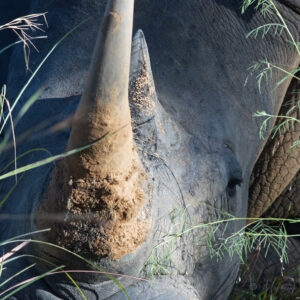
The short answer is that yes, to some degree, the poaching of rhino and trade in rhino horn did decrease during the strict lockdown period. According to official figures, rhino poaching in South Africa decreased by around 53% in the first six months of 2020 with only 166 rhino being killed since the beginning of the year, compared to 316 during the first six months of 2019. Minister of Environment, Forestry and Fisheries, Barbara Creecy, noted that “…the decline in rhino poaching … was specifically welcome in the Kruger National Park where, during April, no rhino were killed in the Intensive Protection Zone, for the first time in almost ten years.” The Kruger National Park recorded 88 cases of rhino poaching in the first six months of 2020, compared to 153 in the first six months of 2019.
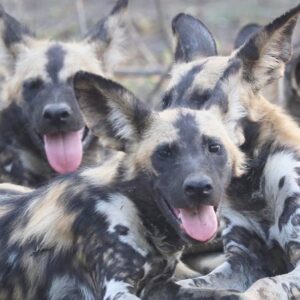
The lockdown did not, however, spell good news for all wildlife, and incidences of poaching for bushmeat using snares and poisons unfortunately increased. The EWT staff, and our associates working in the field, noted a significant increase in the use of snares to catch species such as various antelope, bushpig and birds. Secondary consequences of this scourge include the increase in snaring of threatened species such as Wild Dogs, who are unfortunately prone to being caught in snares set for other animals. Much of this kind of poaching has been attributed to rapidly escalating levels of starving people, and around the country, we noted an increased reliance by many people on wildlife such as hares, birds and small game for food. If successful, this kind of poaching can also assist with income generation in cash-strapped households, and the lockdown has pushed thousands of people to rely on their natural environment for food, income and even medicinals, with plant harvesting also increasing in some areas. Whether or not the relaxed lockdown regulations will result in a reversal of this trend is yet to be seen, and if not, this could spell disaster for many species who will not withstand the impact of rampant countrywide snaring.
But back to rhino: what is clear is that there are indeed actions that can be taken to reduce rhino poaching in the future, and this does not necessarily have to be another severe national lockdown. Visible policing followed by roadblocks (albeit that police may have been looking for alcohol and cigarettes, some roadblocks in fact identified wildlife products in transit) and strict monitoring of vehicles entering and leaving our parks, definitely played a role in reducing poaching. Whilst we want our borders to remain open, it is also evident that consistent and strict monitoring of what goes out and screening of all baggage and cargo for illicit wildlife products can make a difference. Despite many reserves having fewer ranger patrols and less human activity in their reserves (or because of it) poaching of high value, internationally traded species reduced as markets could not be accessed as easily. This is a clear indication of how, if we can control trade routes and reduce the ease of access to markets, one can reduce the incentive to poach.
Going forward, this is a clear indication of where our priorities need to lie in the future and how we can stay ahead of the poaching and illegal wildlife trade scourge before it gets the better of us again. Let there be these positive take-home lessons for conservation into the future and may our rhino continue to enjoy a little more peace for a little bit longer.
Yolan Friedmann
CEO
KEEPING US CONNECTED DURING COVID-19
Bonnie Schuman, Nama Karoo Coordinator, and Esther Matthew, Specialist Conservation Officer, EWT Drylands Conservation Programme
Bonnies@ewt.org.za and Estherm@ewt.org.za
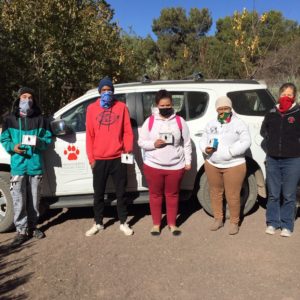
The EWT’ s Drylands Conservation Programme (DCP) was thrilled to receive funding from the Lewis Foundation to support communities and individuals significantly impacted by the COVID-19 lockdown in the Karoo. There were ten recipients from Loxton, and three from Nieuwoudtville, who each received a router and a data package to support their studies and community work for one year, particularly when they needed to operate from home during the lockdown.
Fredeline Frieslaar, a qualified Edu Care teacher, was the first in Loxton to receive her router. Fredeline has made a significant positive impact in Loxton over the last two years, working as a teaching assistant for the EWT-Rand Merchant Bank Clever Rabbit learning support project. She is also Loxton’ s adult reading facilitator and is currently tutoring four adults who are learning to read and write. Fredeline wants to study second year foundation phase education at NWU (long distance learning) and needs internet access to complete short courses online in preparation. Fredeline and two other women in the Loxton community have also been working tirelessly to provide food to community members in need, as the soup kitchen in Loxton was closed during the lockdown.
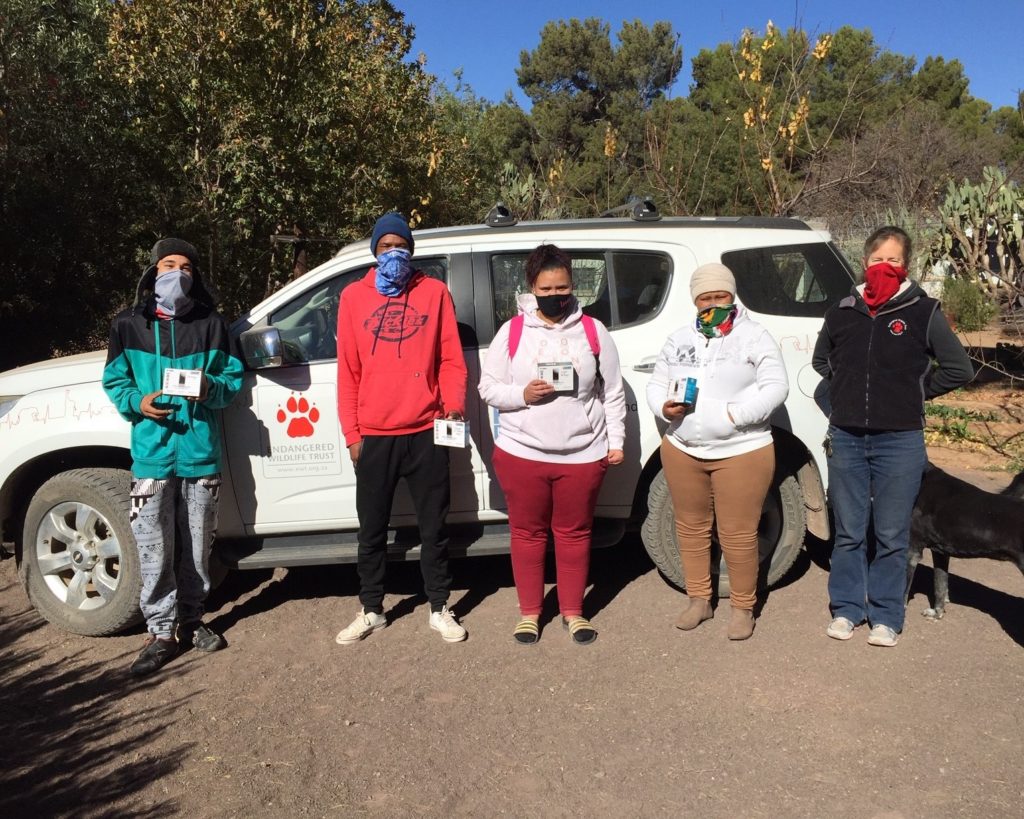
Seven young adults completing their diplomas in animal production through the DCP’ s e-learning centre in Loxton also each received a router, so that they can complete their studies online. This made it possible for them to complete their assignments while the centre was closed during lockdown, and while EWT staff implemented the necessary health and safety measures before reopening the e-learning centre. The remaining router was allocated to a group of matric learners (Grade 12) to continue their education while schools were closed. Thank you to the Lewis Foundation for supporting our youth, so that they are better able to support others.
CONTINUING CONSERVATION’ S SUPPORT FOR COMMUNITIES
Megan Murison, Project Officer, EWT National Biodiversity and Business Network
meganm@ewt.org.za
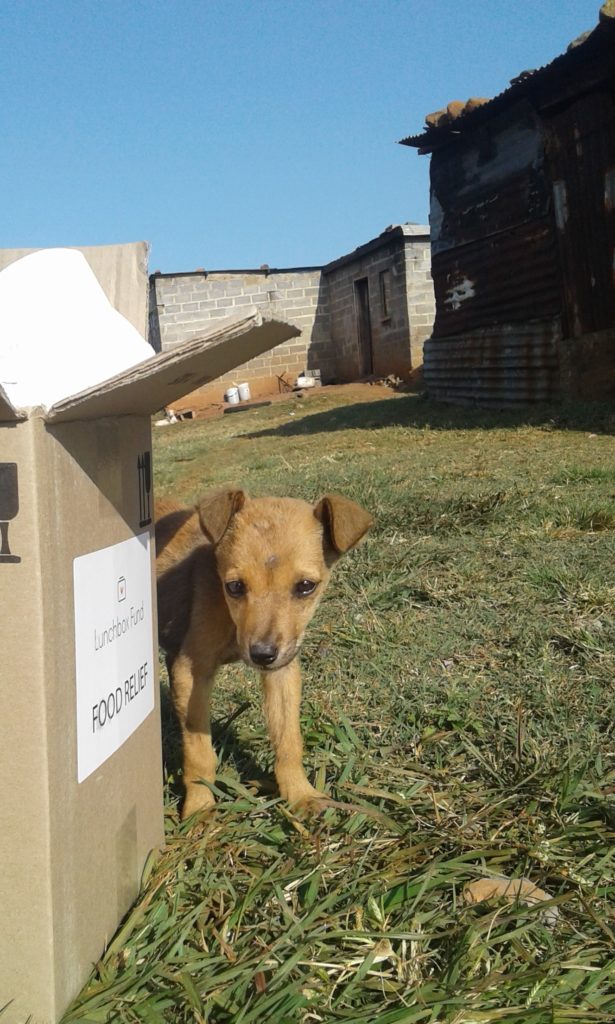
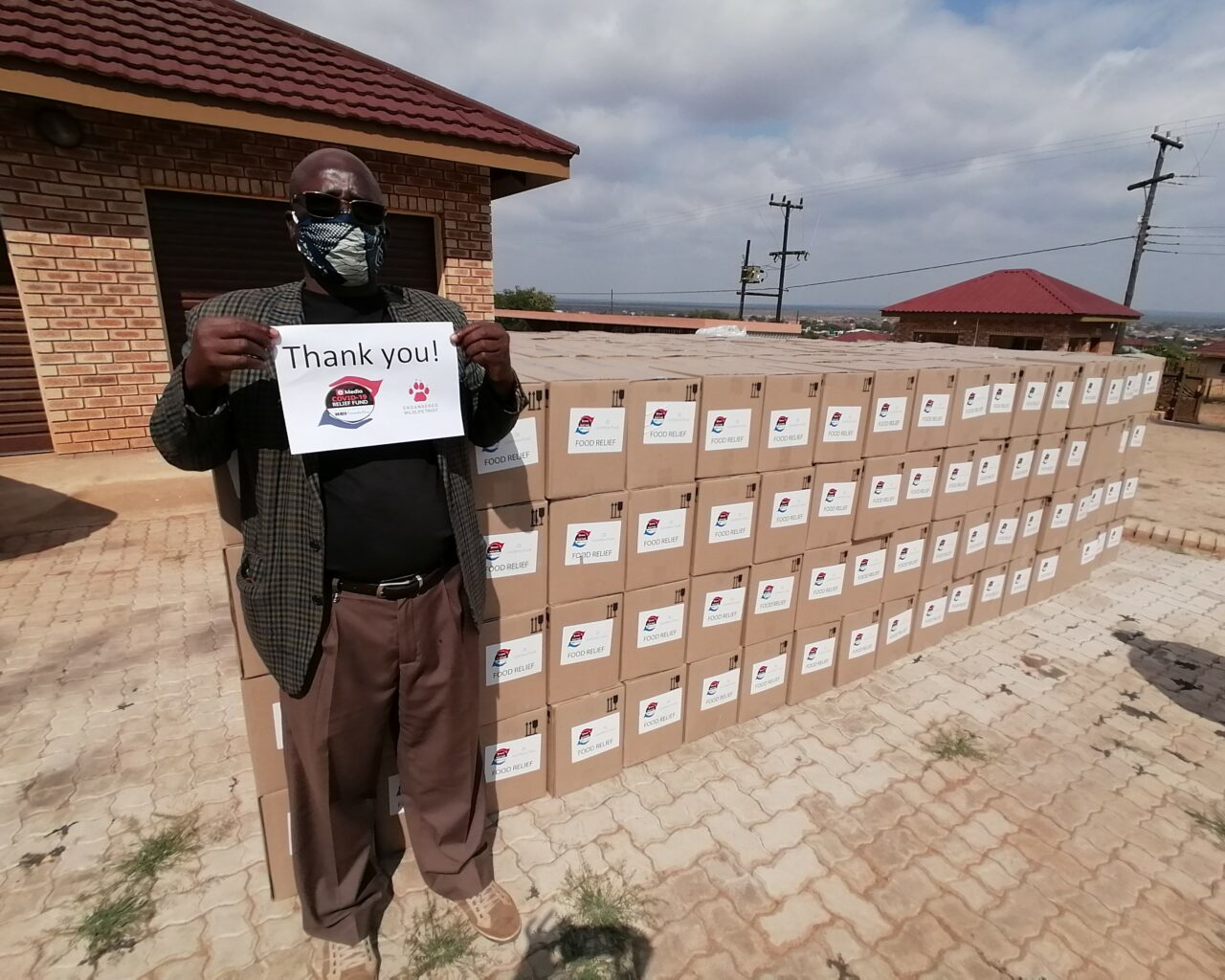
Adjusting to a new way of life during the lockdown period has been tough on all South Africans. While we are all enduring the same storm, we may not all be in the same boat. The COVID-19 crisis has hit many people hard, increasing job losses and further straining household resources. Many communities are currently experiencing extreme hardships through lack of basic resources. The Endangered Wildlife Trust (EWT) partnered with the HCI Foundation / eMedia COVID-19 Food Relief Fund to assist in eradicating hunger in vulnerable communities. The role of the EWT was to identify communities we have worked or are currently working with and ensure food parcels reached these groups.
The communities that the EWT works with range across South Africa, from the Soutpansberg, to the KwaZulu-Natal (KZN) Midlands, and all the way to Loxton in the Karoo. At the EWT-owned Medike Nature Reserve in the Soutpansberg, it was deemed essential that we play a role n help our neighbours, with the closest village being only 4km from Medike. The EWT’ s Soutpansberg Protected Area (SPA) and the EWT’ s People in Conservation (PIC) teams jumped into action. In collaboration with the traditional leadership structure of the Ha-Kutama Traditional Authority, we were able to provide 700 families from nine villages with food parcels, supporting approximately 3,000 people. The delivery was made to Chief Vele Prince Kutama, Mr Gilbert Muofhe, Chairperson of the Development Committee, and the headmen of the villages. We provided the members of the tribal authority with face masks and hand sanitiser, and explained the health and safety protocols to safely distribute the food boxes to the families.

The EWT’ s Drylands Conservation Programme (DCP) is embedded in the Loxton community of the Northern Cape. When the opportunity arose to be involved in distributing food parcels, the DCP team hopped into action. They involved the local social worker for the Department of Social Development, Rocco Olifant, as well as Fredeline Frieslaar who is the EWT-RMB Clever Rabbit learning support project assistant. Fredeline is currently feeding children from her home as the closing of the local soup kitchen left many families unexpectedly without any way to feed their children. The local SAPS office was approached for permission to go out and they offered to assist with the distribution. Because the community is small, and distances short, the team was able to do a door to door delivery of 60 food parcels to the 60 families identified. Bonnie Schumann, the EWT’ s Nama Karoo Coordinator, explained that, “The crisis the community is in is very personal for the DCP staff as this is a small community and everyone pretty much knows everyone. The people needing help are not anonymous names on a list, but well-known members of our community. There are some initiatives to help within the community, but the HCI donation was a great boost, both in terms of food and morale”. Within KwaZulu-Natal, the EWT’ s African Crane Conservation Programme (ACCP) and PIC worked with local tribal authorities to distribute food parcels to communities with whom we work closely. These communities partner with us to address catchment management issues, illegal poaching or hunting with dogs, and to raise awareness about the importance of a healthy environment for all. The food parcel deliveries were just a small way we could make people’ s lives a little easier, and often involved our staff carrying boxes to the most remote of homes in each village. One particular community in KZN, KwaMkhize, ensured that the EWT team got their steps in. The rugged terrain and lack of roads meant that food parcels were hiked up to the houses. Ninety parcels were delivered over one and a half days! The team was assisted by the Chief Induna, Theo Sibisi, and two community members, Zinhle Ngwane and Londiwe Susibu.
Overall, a total of 1,203 food parcels was distributed. The distribution breakdown was as follows: 150 parcels in Loxton (Northern Cape), 700 parcels in the Soutpansberg (Limpopo), 240 parcels in the KZN Midlands, specifically Bulwer and KwaMkhize (KZN), 54 parcels in Mqatsheni (Southern Drakensberg, KZN), and 59 parcels in the Normandien area (northern KZN). The EWT’ s third strategic imperative, Benefiting People, sees us working towards improving the lives and wellbeing of thousands of people who are often the most vulnerable, but who also act as custodians of the ecosystems they live in and rely on. We were proud to have been part of this initiative, which enabled us to give back to those communities we work in.