Help protect Africa's 

Lion Population Survey in Kruger National Park shows continued species decline

Lion Population Survey in Kruger National Park shows continued species decline

Lion Population Survey in Kruger National Park shows continued species decline

By Eleanor Momberg
 

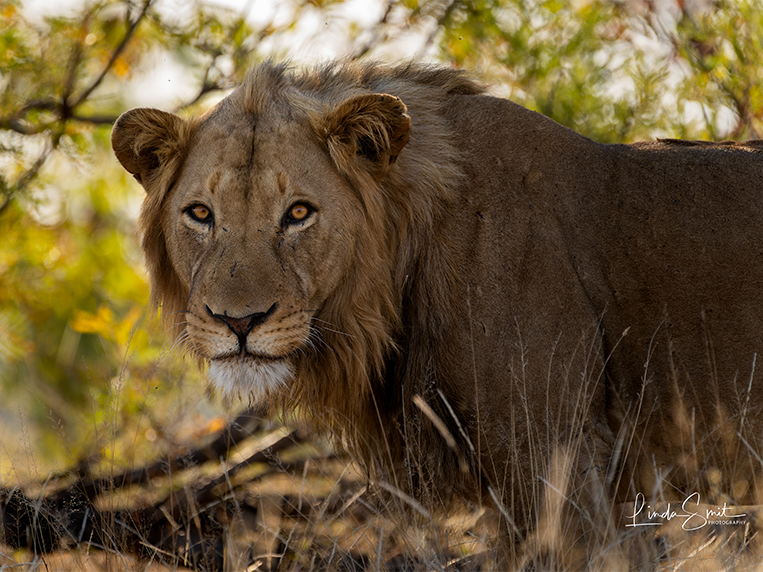
Lion photographed for whisker spot identification in Kruger National Park

The Greater Limpopo Transfrontier Conservation Area, spanning South Africa, Mozambique and Zimbabwe is one of the few remaining strongholds for Lions (Panthera leo) in southern Africa.

Central to the cross-border conservation area is the Kruger National Park which serves as a key source population of Lion for neighbouring reserves.   However, in the past decade, poaching has started taking a toll on the species, either through bushmeat snaring or the deliberate poisoning of carnivores, in certain areas.

In the first park-wide survey in 2005 the lion population was estimated at 1,803 individuals. With that survey now a decade old and reports of increased poaching—particularly in the northern Kruger National Park— the report states that concerns about the present status of Lions in the region are justified.

Partnering with South African National Parks (SANParks) and the Lion Recovery Fund, the Endangered Wildlife Trust (EWT) in 2024 undertook a Lion population survey in the northern half of the Kruger National Park to obtain robust estimates of Lion populations to inform future Lion management policies and practices.

During a similar Lion population survey in the Nxanatseni north region of the Kruger National Park over three months in 2023, the population was estimated at 105 individuals. Two field protocols had been used to collect the 2023 data – search encounters and camera traps.

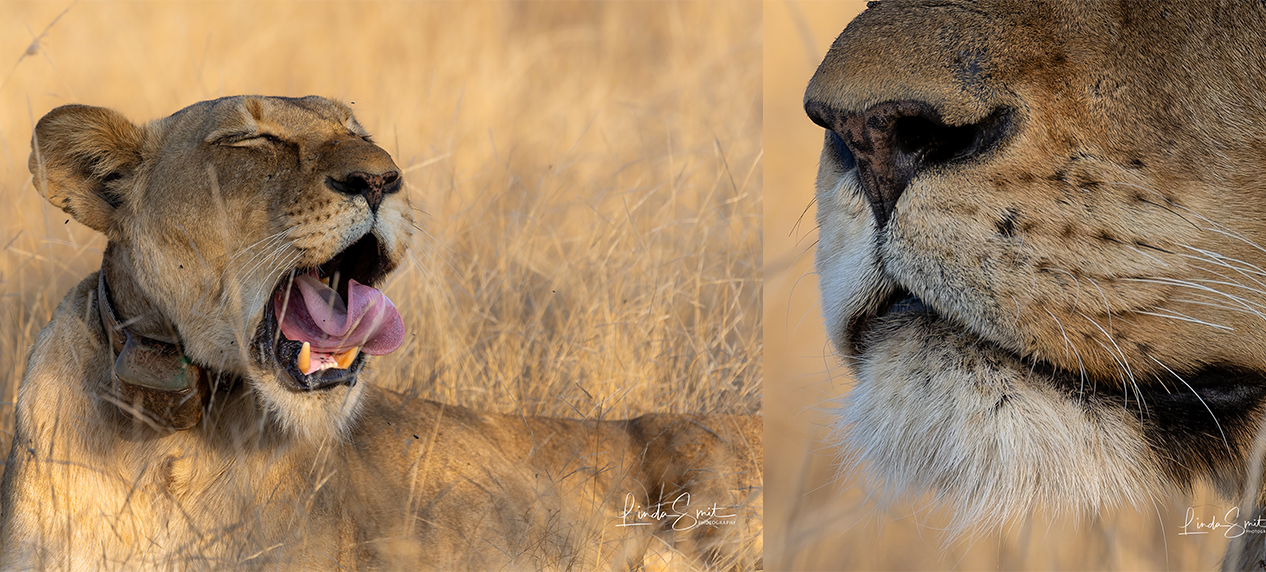
In 2024, a three-month Lion population survey was conducted in the Nxanatseni south region of the Park using spatial capture-recapture models to obtain more reliable and comparable estimates of the abundance and density of lions.   Spatial capture-recapture entails taking photographs of a Lion’ s whisker spots to identify individuals.  Some are seen more than once, thus the recapture of their information and avoiding counting the same lion twice.

Between July and September 2024, the members of the EWT’ s Carnivore Conservation team drove 10,446 km in search of Lions, resulting in 182 detections of 74 individuals—22 males and 52 females. Because of the high mortality among Lions less than a year old, these were excluded from the survey.

Using this dataset, it is estimated that there are 144 lions in Nxanatseni South;  a density of 3.5 lions per 100 km².  Besides the higher number of Lion in the southern Nxanatseni area, the survey again found that Lion density decreased the further the carnivores were away from water.  Out of the 247 lions detected, 182 could be positively identified, while 65 could not.  Identifying more individuals would have improved precision without necessarily changing the estimated

The report states that Lion densities varied across the study area, with the highest estimates in sections, which support large herds of herbivores due to productive soils and grazing grounds. It adds that lower densities were found in the western sections, where mopane woodland, proximity to communities, and conflict with poaching may limit Lion populations. In another area, which had an intermediate density, poor soils, low rainfall and the hilly terrain were found to be constrains on the species.

Although poaching was not directly assessed during the study, poached Lion were found within the research area, on the western boundary of the Park, and the Limpopo National Park in Mozambique.

The report concludes that the observations are concerning given the conservation importance of the Kruger Lion population, adding additional research needs to be done to determine what effect water management and increasing human pressures may have on the species.


** The EWT would like to thank SA National Parks for permission to carry out the survey, AHA Hotels and Lodges and Singita for their logistical support,  LexEDA Infra Bharat Pvt. Ltd. for advanced computing support and the Lion Recovery Fund for their generous support.
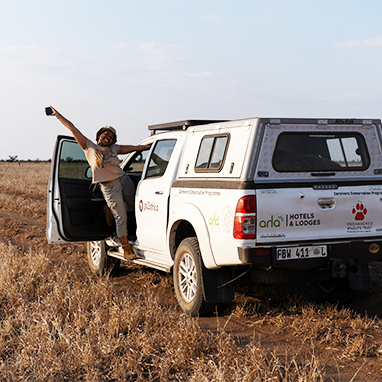
Comprehensive Lion Survey Brings Hope for Conservation

Comprehensive Lion Survey Brings Hope for Conservation


Comprehensive Lion Survey Brings Hope for Conservation


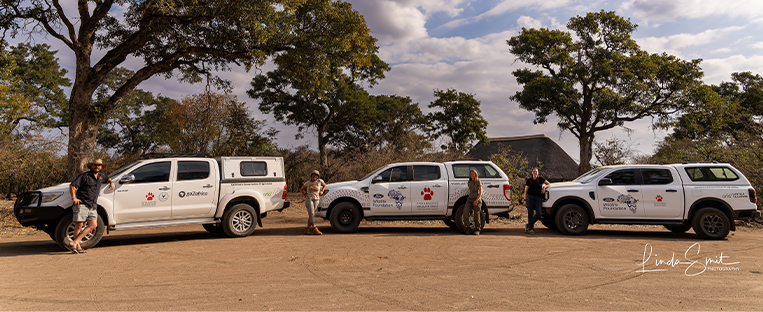
In a significant conservation effort, a dedicated lion survey team, in collaboration with South African National Parks (SANParks) and funded by the Lion Recovery Fund, set out to assess the lion population in Xanatseni South region of the Kruger National Park (KNP). This initiative not only aimed to count these majestic animals but will also contribute to their long-term conservation. Led by Lowveld Project Manager Marnus Roodbol, alongside co-lead PhD student Alison Govaerts and EWT intern Lesego Mthethwa, the team’ s diverse expertise and passion for wildlife conservation provided a strong foundation for the project’ s success.

Over the course of 90 days, the team rotated between three camps: one located outside Phalaborwa Gate, Letaba Rest Camp, and Tsendze Rustic Camp. Their goal was to search for, count, and identify the lions within this vital ecosystem. This strategic approach allowed them to cover a vast area and gain a comprehensive understanding of the lion population dynamics.

 
Methodology: Spatial Capture-Recapture

The survey employed the Spatial Capture-Recapture method, a robust approach for estimating lion density, abundance, sex ratios, and spatial distribution in KNP’ s northern central region. The survey involved extensive fieldwork, where team members employed tracking techniques and observational skills to locate, count, and identify individual lions. This technique combined counts of individually identified lions with thorough search efforts. By utilising both traditional tracking methods and modern technology, the team aimed to gather accurate data to inform future conservation strategies.

To locate lions, team members drove along established transect roads, actively searching the landscape while utilising their knowledge of the area, field skills, and tips from tourists and field guides. Each search encounter was meticulously recorded using a customized Cyber Tracker application that captured GPS points and logged lion numbers and sex ratios upon sighting.


Detailed Documentation

When lions were spotted, the team documented the sighting with specifics including date, time, GPS location, number of lions present, and demographic information. They took individual ID photos, focusing on the unique whisker patterns on the lions’ cheeks (these patterns serve as distinct identifiers, akin to human fingerprints). It was vital to capture clear images of both sides of a lion’ s face, as each side has unique features. Additionally, other characteristics such as the nose, ears, and teeth were noted.

The team compiled the photographs into a comprehensive catalogue, which served multiple purposes: it allowed for comparisons with previous sightings, tracked the health and dynamics of the lion population, and provided insights into each lion’s movements and interactions within the park. By reviewing the catalogue, the team could determine whether a sighting represented a new individual (capture) or a previously catalogued lion (recapture). This approach helped prevent double counting and enhanced the accuracy of population estimates.


Importance of the Survey

Understanding lion populations is crucial for their conservation. With lions facing various threats, accurate population data is essential for developing effective management plans. The information gathered during this survey will contribute to ongoing efforts to protect these iconic animals and their habitats.

Lions are classified as vulnerable by the IUCN Red List due to threats such as human-wildlife conflict, habitat loss, and the impacts of climate change. These factors complicate population recovery efforts. Regular surveys like this one are vital for obtaining up-to-date and robust estimates of lion populations, which are crucial for effective management and conservation strategies. Understanding the current population dynamics helps determine what actions are necessary to protect these magnificent predators, ensuring their survival in Kruger National Park.


Conclusion

The lion survey in Xanatseni represents a critical effort in the on-going mission to conserve one of Africa’s most iconic species. By utilising innovative tracking methods and a collaborative approach, the team contributes invaluable data to lion conservation efforts. With the commitment of dedicated individuals and organisations, there is hope for the future of lions in the wild. As we strive to maintain healthy lion populations and continue to advocate for wildlife conservation, initiatives like this remind us of the importance of collaboration and the need for sustained efforts to protect our planet’ s biodiversity.