Help protect Africa's 

Lion Collaring and Monitoring Update: Northern Kruger National Park

Lion Collaring and Monitoring Update: Northern Kruger National Park

Lion Collaring and Monitoring Update:
Northern Kruger National Park


By Marnus Roodbol, project manager, Carnivore Conservation Unit


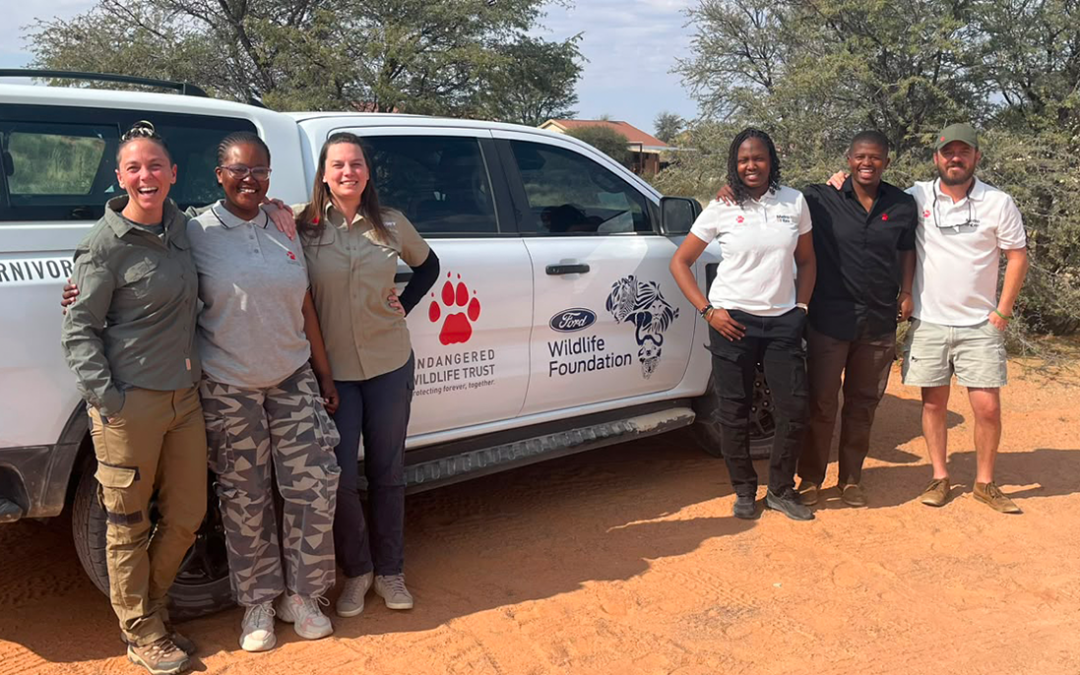
The Endangered Wildlife Trust (EWT) conducting a lion collaring and survey operation.

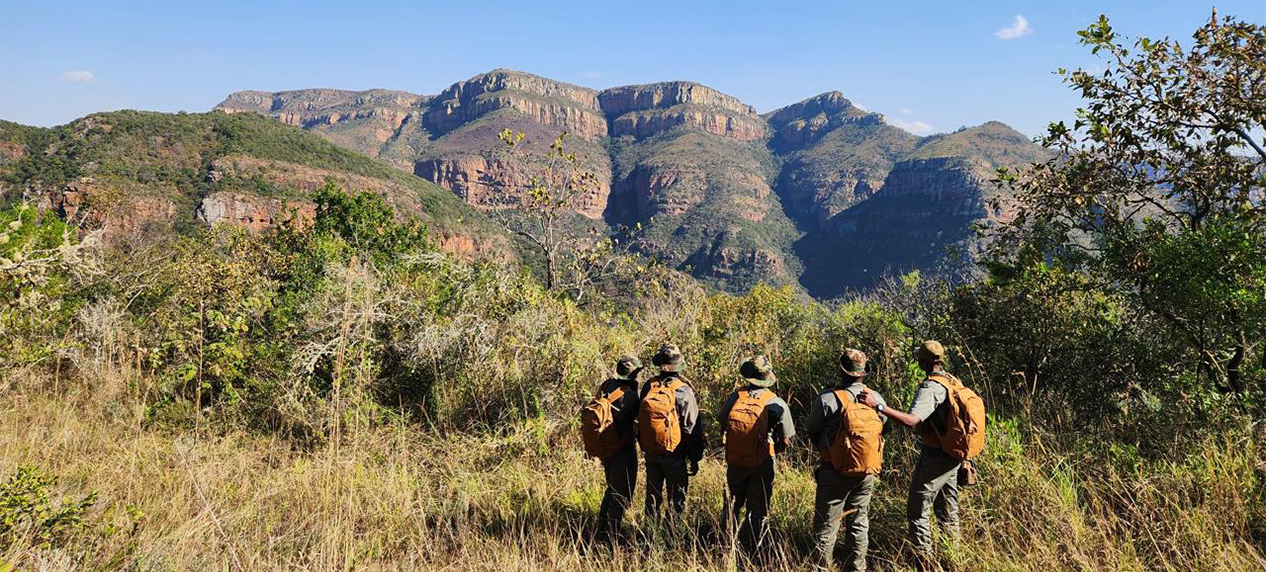
The Endangered Wildlife Trust (EWT), in collaboration with SANParks and Greater Kruger Environmental Protection Foundation (GKEPF), conducted a lion collaring and survey operation in the Nxanatseni North region of northern Kruger National Park from 21–29 September 2026. The operation focused on locating, identifying and monitoring lions in an area where the population faces increasing threats from snaring, poisoning, targeted poaching and human-wildlife conflict. A total of 30 lions were observed, including adult males and females, sub-adults, juveniles and cubs. Selected lions were processed, branded and fitted with GPS collars to strengthen the ongoing monitoring of the population.

The GPS collars provide an important conservation tool by allowing the team to remotely monitor lion movements, survival and behaviour across the large northern Kruger landscape. Collar data can also help identify when lions move into high-risk areas or display unusual movement patterns, supporting more targeted responses by conservation and ranger teams. This information will contribute to a better understanding of pride movements, dispersal, habitat use and the survival of individual lions, including translocated animals.

The EWT would like to sincerely thank Painted Wolf Wines and the Lion Recovery Fund for their generous support towards the provision of GPS collars for the northern Kruger lion monitoring programme. This contribution has increased our capacity to monitor individual lions and respond to potential threats. We also thank SANParks and the veterinary and field teams for their support during the operation.

While not all of the collars deployed during the operation are fully operational yet, the team is completing activation and communication checks to ensure that the remaining units are transmitting correctly. As the collars come online, the resulting data will provide valuable information for the continued monitoring and protection of lions in Nxanatseni North.

Archives

EWT team returns to Kgalagadi Transfrontier Park to conduct lion research

EWT team returns to Kgalagadi Transfrontier Park to conduct lion research

EWT team returns to Kgalagadi Transfrontier Park to conduct lion research


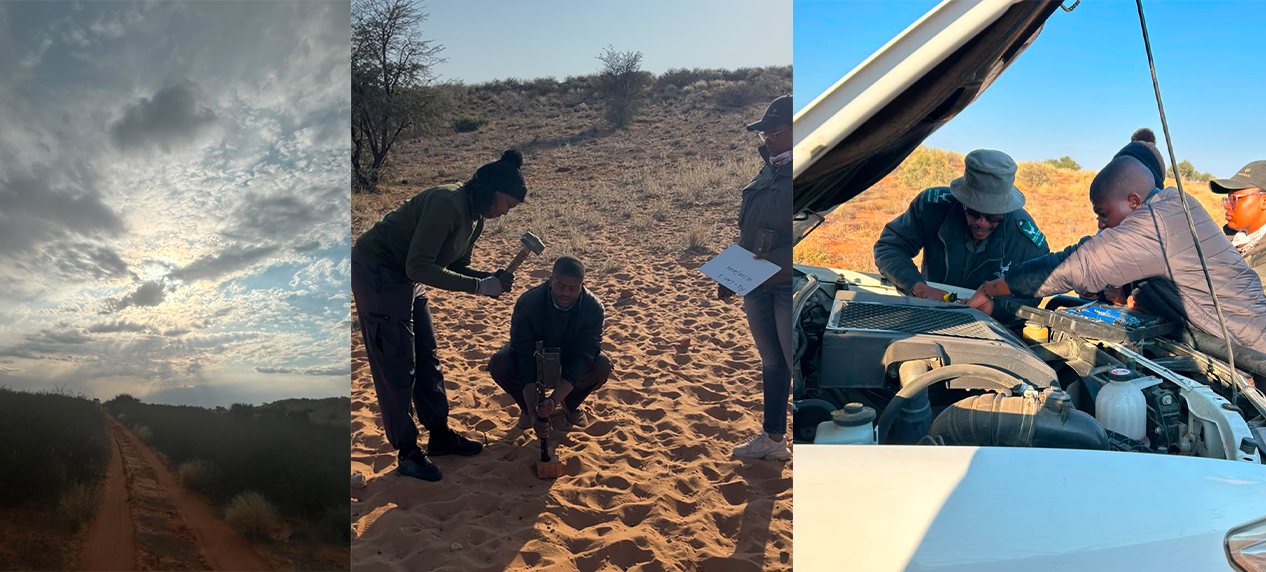
EWT researchers conducting the Kgalagadi lion population census in South Africa.

An Endangered Wildlife Trust team has returned to the Kgalagadi Transfrontier Park to conduct this year’s lion population census, helping SANParks monitor and better understand the lion population in the park.

The lion monitoring project started on 1 August and ends on 31 October 2026. In 2025, the team had also spent three months in the Kgalagadi Transfrontier Park, which spans South Africa and Botswana, to collected the first tranche of data about the lions living in this desert landscape.

In the next three months, the EWT team, supported by SANParks, will determine how many lions are estimated to live in the South African part of the Transfrontier Conservation Area, their demographics, and their spatial distribution within the park. A team from Kalahari Research and Conservation are undertaking a similar project on the Botswana side of the Transfrontier Conservation Area.

Repeated annual surveys will form the base for subsequent, less frequent long-term monitoring of the Kgalagadi lion population, the second-largest free-roaming lion population in South Africa.

Understanding the status and performance of this population is central to national lion conservation planning and to the long-term management of the broader transboundary ecosystem. It supports SANParks in the effective management of lion populations within its parks.

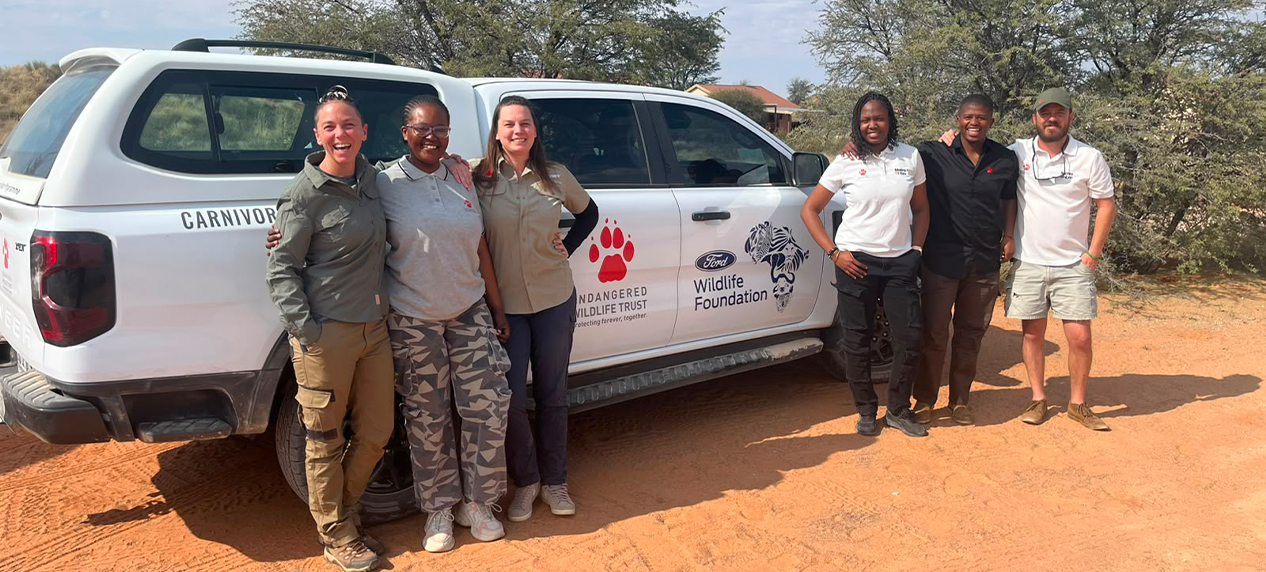
The core team comprises four women and two men. It is led by the EWT Carnivore Conservation Unit’s data analyst, Alison Govaerts, who is supported by EWT project manager Marnus Roodbol. Also on the team are EWT field technicians Nonkuleleko Mokobong, Lesedi Leope, Sabelo Mahlangu and Lizaene Cornwell.

Field researchers monitoring lions across the Kgalagadi Transfrontier Park.

The team are using photographs and camera trap footage to individually identify each encountered lion (excluding lion under one-year-old) using their unique whisker pattern.

At the end of the three-month period, the results and reports of the surveys by the EWT and Kalahari Research and Conservation will be combined to estimate lion numbers across the whole Transfrontier Park. As the lions move freely across borders, some individuals will be identified by both teams. By combining the survey data, possible double counting of these lions will be avoided.

Through the monitoring of existing populations, we are able to keep track of population dynamics, which provides a powerful tool to inform management strategies and to identify potential threats in time. The protection and conservation of lions remains a priority for this apex predator that plays a central role in keeping the balance within ecosystems by maintaining a healthy prey base, and keeping the meso-predator population in check. Without lions, prey populations would risk overgrazing the landscape.

Lions are a flagship species, and are a popular sighting as a key member of the Big Five during safaris. Thus, their economic importance.

Lion are also culturally important as they symbolise power, strength, and leadership, and are embedded in many practices, ranging from representing totems and clans, to being a symbol or name for sports teams, or play a role in spiritual and traditional customs.

In partnership with SANParks, and with the support of the Lion Recovery Fund and private donors, the EWT is taking a important step forward for lion conservation.

EWT Carnivore Conservation Unit carrying out lion population surveys.

Visiting Mozambique’s youngest national park

Visiting Mozambique’s youngest national park

Visiting Mozambique’ s youngest national park

By Darren Pietersen, EWT Threatened and Endemic Species project management


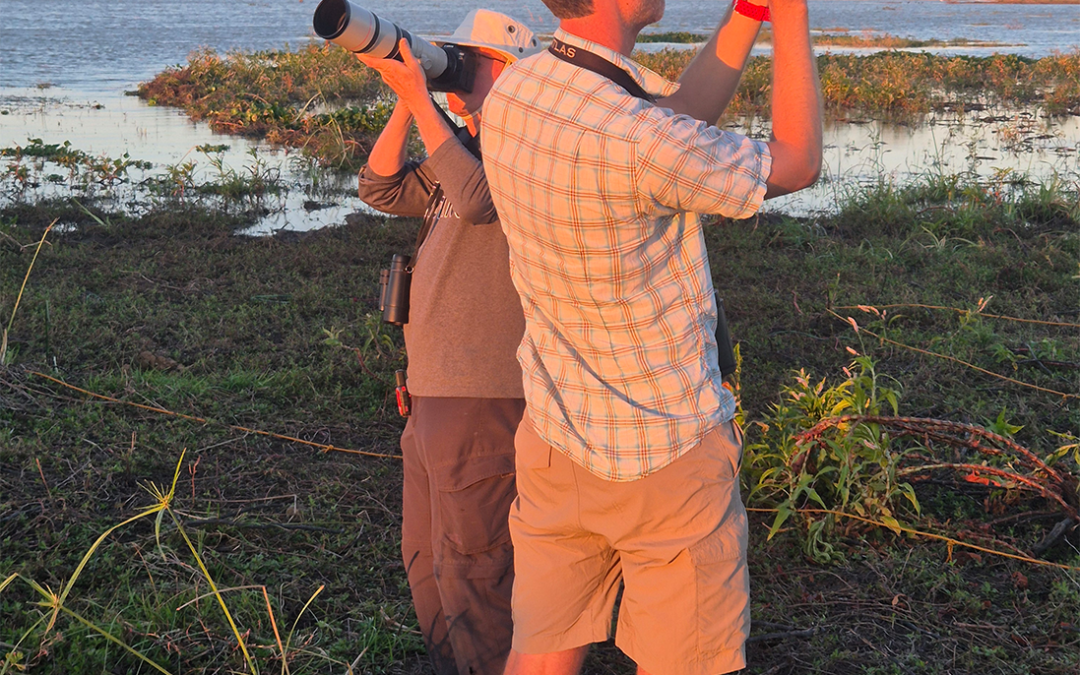
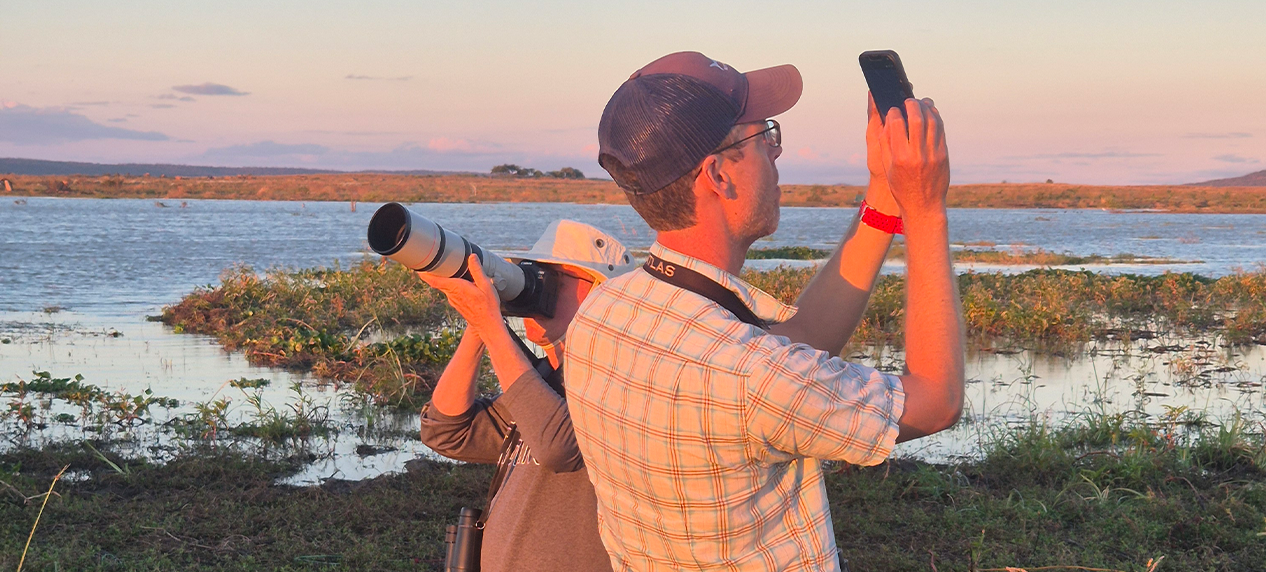
EWT researchers conducting wildlife surveys in Mágoè National Park's Zambezi Valley bushveld.

From mid-June to late-July 2026, the Endangered Wildlife Trust’ s Carnivore Conservation Unit, together with representatives from Catawba University in the United States, paid a three-week visit to Mágoè National Park in Mozambique. The primary goal  was to determine whether large predators (particularly African lions) persisted in the landscape, although the opportunity was taken to conduct a general, rapid biodiversity survey at the same time.

After three days of travel by road, I met the rest of the team at Tete International Airport, and after the usual delays at customs, the team set out for Mágoè National Park (250 km and seven police roadblocks later).

Mágoè is Mozambique’ s youngest national park and is nestled on the southern banks of Lake Cahora Bassa, between the Zimbabwean border and the town of Songo where the Cahora Bassa Hydro-electric power station is located.  Named after the nearby town, Mágoè National Park was established in 2013 and encompasses approximately 3 559 km2 of largely unspoilt Zambezi Valley bushveld.
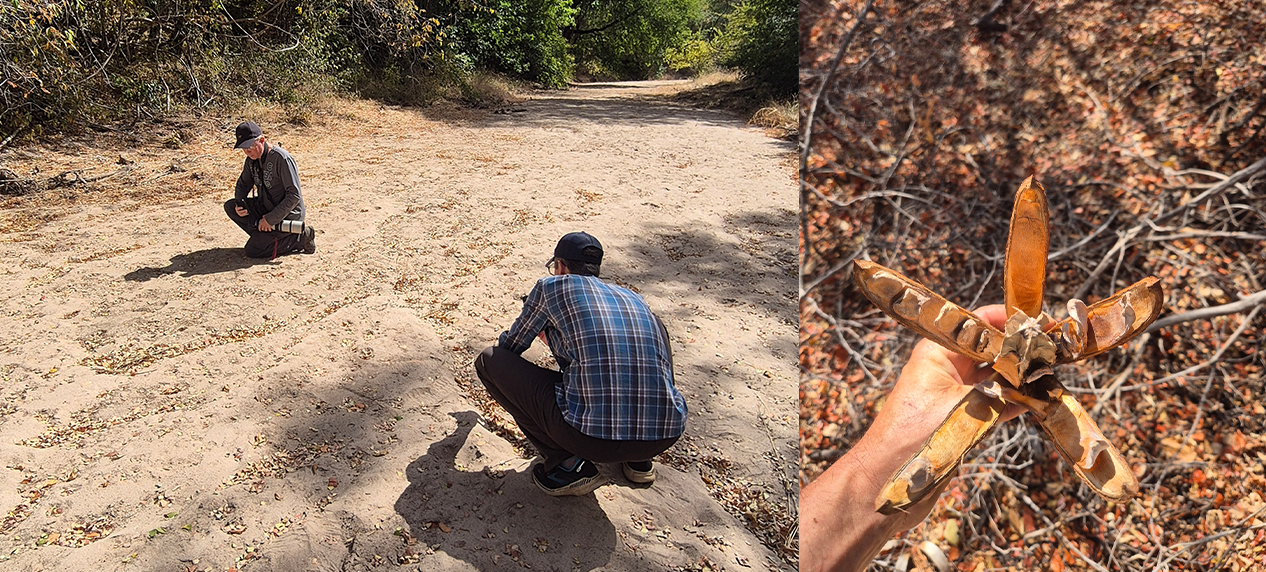
Lake Cahora Bassa shoreline in Mágoè National Park during a three-year drought.

Right: Caprivi Wooden-Banana Entandrophragma caudatum

Prior to being declared a national park, this was previously the Tshuma Tchato community conservation area which was  mostly leased as hunting concessions to Mozambican or foreign safari companies.

As is typical of most of the Zambezi Valley, Mágoè National Park is dominated by tall Mopane woodland, with a few low rocky ridges. One outstanding feature of the park is Serra Comboio – a large (roughly 25 x 7 km) sandveld plateau rising about 300 m above the surrounding plains. At the time of our visit the area was in its third consecutive year of drought, and the low lake levels resulted in a wide, short grassy plain extending up to 3 km from the lakeshore treeline to the current lakeshore. The effects of the drought were further manifested in the many fishing villages that had been temporarily abandoned, and a concomitant number of temporary abodes that had been erected much nearer the current shoreline. This national park hosts a significant human population, with most people living along its shored relying on these waters for protein, in the form of the innumerable fish that are harvested each day.

The generally uniform vegetation, which is predominantly dry Mopane Woodland, resulted in a relatively low recorded species diversity, although the prevailing drought and the season (winter) did not aid the general biodiversity survey either despite this being the ideal time to survey large carnivores.
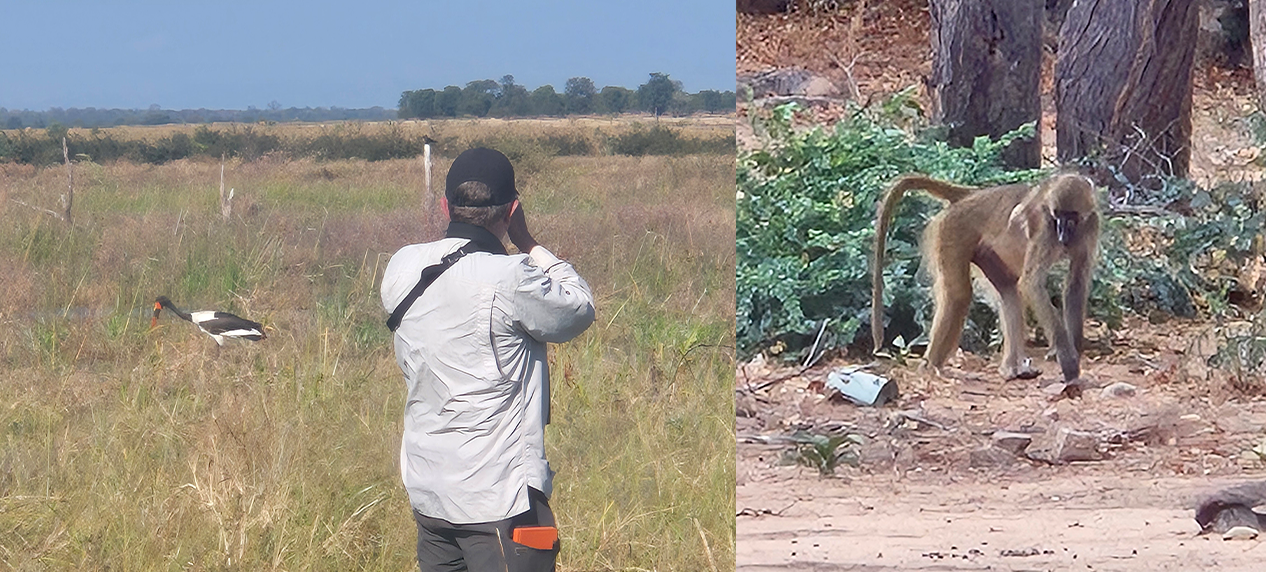
EWT researchers conducting wildlife surveys in Mágoè National Park's Zambezi Valley bushveld.

Right: Grayfoot Chacma Baboon Papio ursinus ssp. griseipes

Nonetheless, we recorded 208 bird species, submitted 18 Full Protocol cards across 16 pentads to the Second Southern Africa Bird Atlas Project (SABAP2), and 14 pentads of which had not been surveyed since the inception of the project in 2006 (so-called virgin pentads). We also submitted incidental bird sightings for an additional 22 virgin pentads. The bird highlights included recording a Lesser Black-backed Gull which is a  rarity in southern Africa, and being awakened each morning by the raucous calls of Grey-necked and Meyers Parrots, as well as Lillian’ s Lovebirds. Waterbirds were numerous, with egrets and herons of every shape and size, including the presence of Black Herons with their characteristic ‘umbrella’   hunting technique.

Because of the relatively high human density along the lakeshore, the waterbirds were also generally trusting – certainly a lot more so than is typical. We saw several flocks of Banded Martins – an intra-African migrant to southern Africa in the Austral summer – that should have been on their wintering grounds in Central and East Africa already. The number of martins recorded, and the time of year, could suggest that this species overwinters along Lake Cahora Bassa, or may even be resident here, although much more data needs to be gathered to ascertain the status of this population.

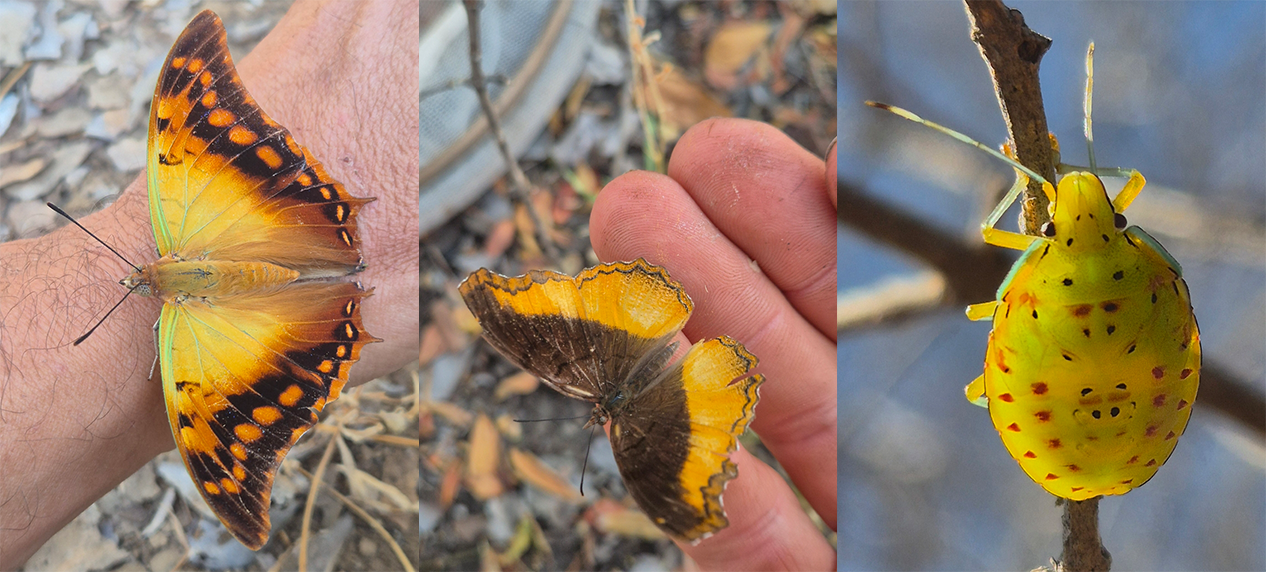
The Mucumbura River Floodplain in the west of the park has a high likelihood of hosting regional rarities and vagrants, especially in summer. Even during our visit, we recorded White-browed Coucal, Dwarf and Little Bittern, Lesser Moorhen and Orange-breasted Waxbills here. Across the park we also recorded 37 mammal species, 33 reptile species, two amphibian species and 51 invertebrate species which included 23 butterfly species, five of which were Charaxes species – not bad for a mid-winter survey!
Mágoè National Park in Mozambique during an EWT biodiversity and carnivore survey.

Left: Green-veined Emperor Charaxes candiope. Centre: Southern Golden Piper Eurytela dryope ssp. angulata. Right: Two-spotted Stinkbug Bathycoelia distincta.

And the carnivores? We did not record any evidence of lions, although that does not mean that they do not occur in the area. The Carnivore Conservation Unit’ s Osvaldo Abrão placed 40 trail cameras that were left in-situ for two months, passively recording mammals well after the survey team had left. These cameras will be lifted in early September, and will give the team a better idea of what mammal species really occur in the area. Who knows – perhaps they will reveal one or more images of lions after all.

We did, however, record Spotted Hyena during our trip, as well as leopard, Black-Backed and Side-Striped Jackal, Caracal and numerous civets, genets and other smaller carnivores. We also recorded a lot of African Elephant activity, as well as Cape Buffalo and varying levels of plains game, particularly in the western section of the park.

Being a relatively new national park, Mágoè still has a lot of room to grow, and with the keen management at the helm (and perhaps with a little outside support from a suitable funder and advisor), it will be interesting to see how the park develops further in the coming years.
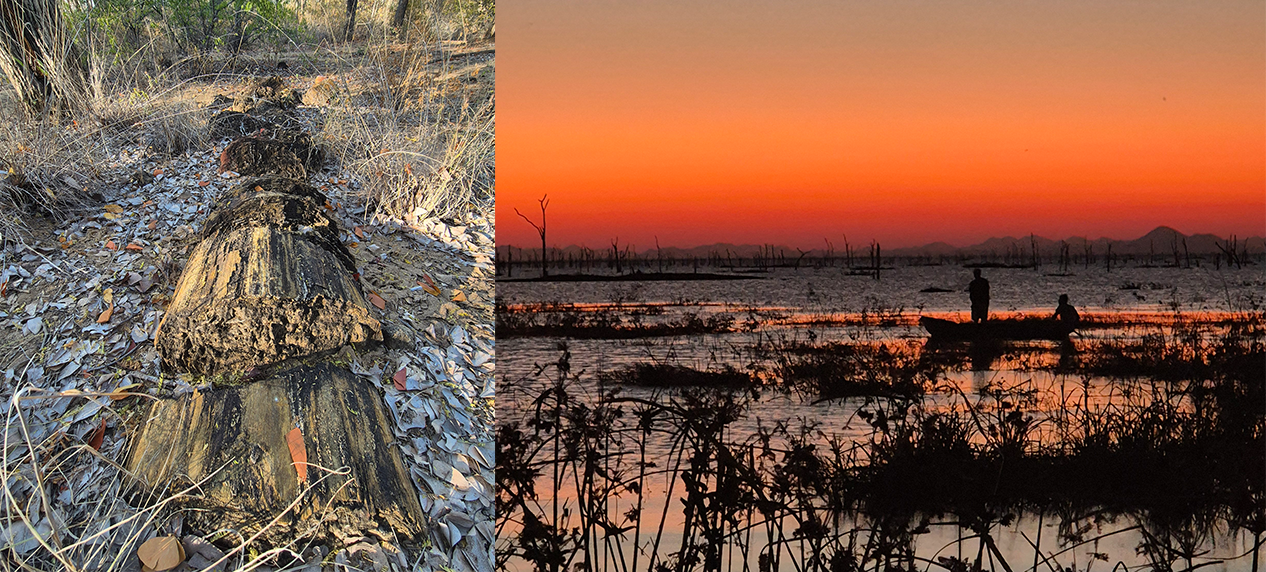
Left: Petrified log. Right: Sunset over Cahora Bassa.

** This work has been made possible by the Oak Foundation