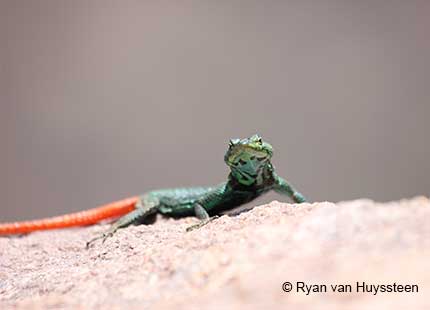
Reptile Awareness Day Shines Spotlight on Western Cape’s Scaled Biodiversity
This Reptile Awareness Day, we celebrate the remarkable diversity found at Lettas Kraal Private Nature Reserve in the Anysberg region. The Western Cape boasts 155 reptile species, with 22 found nowhere else on Earth. Situated in the transitional zone between mountain fynbos and Klein Karoo veld, Lettas Kraal’s 7,000 hectares provide critical habitat for 54 reptile species – 31 of which were recorded during a 2020 survey by EWT’s Drylands Conservation Programme.
Notable Species at Lettas Kraal
The reserve protects both common and threatened reptiles including:
- Endangered Karoo Dwarf Tortoise (Chersobius boulengeri) – IUCN Red Listed
- Karoo Sand Snake (Psammophis notostictus)
- Western Sandveld Lizard (Nucras tessellata)
- Bibron’s Thick-Toed Gecko (Chondrodactylus bibronii)
- Karoo Dwarf Chameleon (Bradypodion gutturale)
Reptile Awareness Day Initiatives
Our educational event for Anysberg landowners and farmworkers covered:
Identification of local reptile families
- Venomous snake awareness and bite first aid
- Myth-busting about snake behaviour
- Dangerous arachnid recognition (spiders/scorpions)
- Hands-on encounters with common species
Why This Matters
As former EWT Field Officer Jean-Pierre Le Roux notes, Lettas Kraal’s size makes it invaluable for reptile conservation. The reserve:
- Protects vulnerable endemic species
- Provides corridors between habitats
- Offers research opportunities
- Educates local communities
This Reptile Awareness Day, we encourage everyone to appreciate these often-misunderstood creatures that play vital roles in our ecosystems.
Learn more:
Lettas Kraal Nature Reserve
EWT Drylands Programme
CROUCHING ROCKS, HIDDEN RABBITS
Bonnie Schumann, EWT’ s Drylands Conservation Programme, Senior Field Officer, bonnies@ewt.org.za
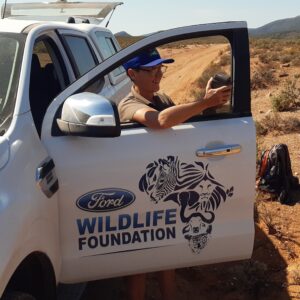
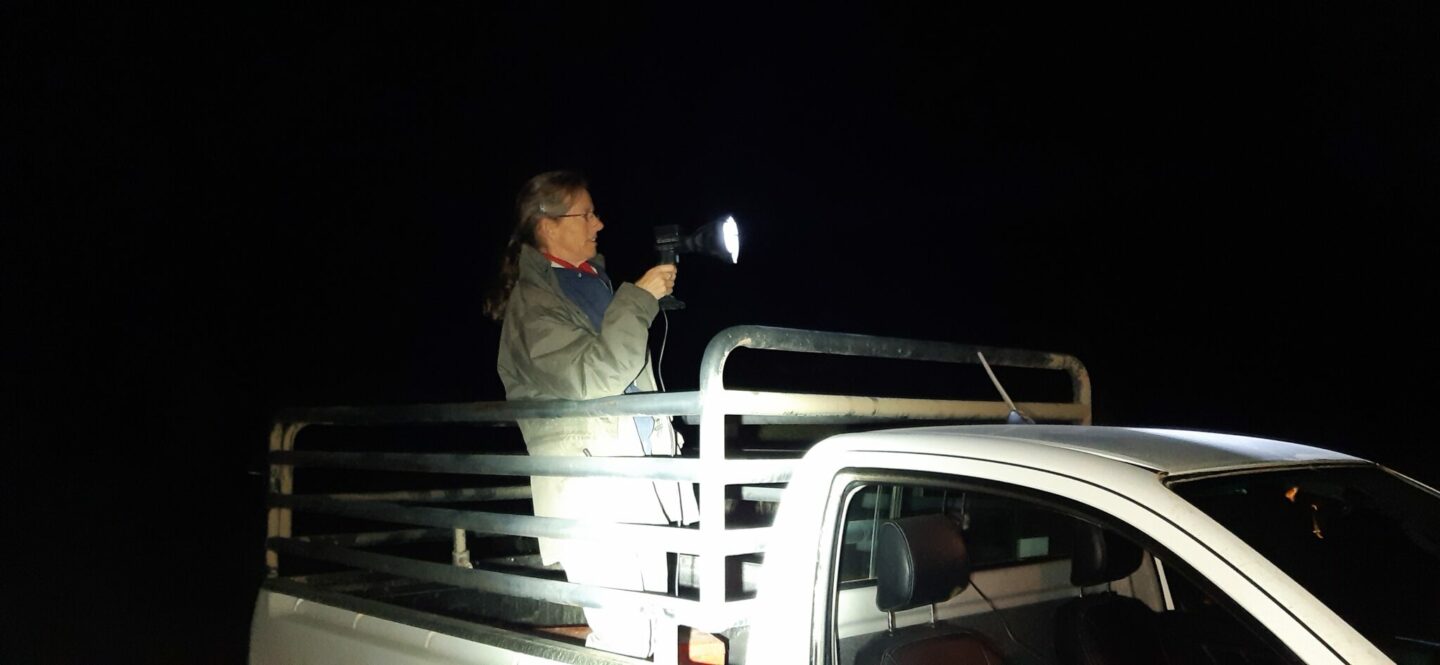
Searching for Critically Endangered Riverine Rabbits (Bunolagus monticularis) in the vast and rugged Karoo landscape is one of the hardest but most rewarding aspects of what we do. Marienne de Villiers, Faunal Ecologist with CapeNature, and I recently spotted a rabbit on a night drive on the Lettas Kraal Private Nature Reserve. This was a first for Marienne, who admitted that she was starting to doubt the existence of this mythical creature! When reflecting on our success, we realised that we had tallied up just over eight hours of searching on two rather freezing cold night drives before we got lucky and laid eyes on a live rabbit between the two of us. After a few hours of searching for all creatures great and small in the beam of a spotlight, from the back of a bakkie bumping along a dusty dirt track, one tends to get a bit cross-eyed. As a result, we had spotted many rabbits along the way, only to discover on closer inspection that they were rabbit-like rocks crouching in the veld, while the real rabbits remained safely hidden!
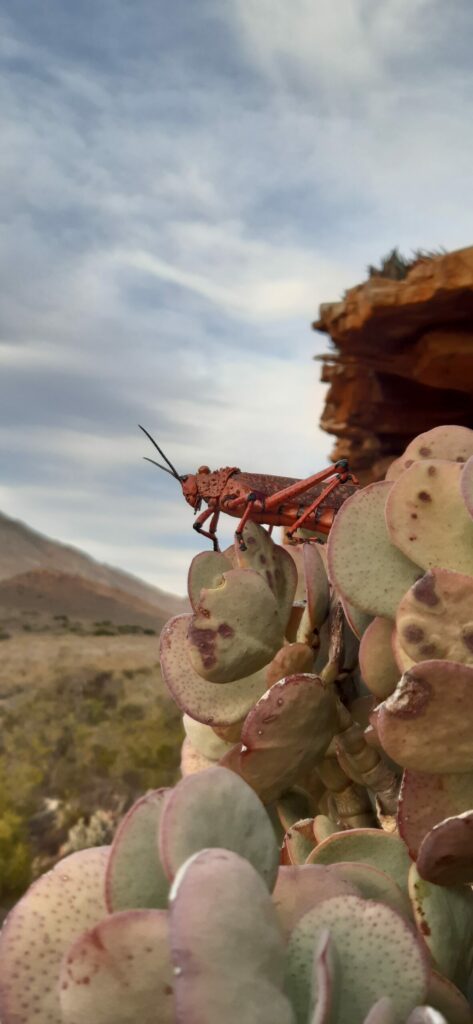
These bunnies are the ultimate masters of hiding in plain sight, so seeing a live Riverine Rabbit is somewhat of an achievement that few people can lay claim to. Although camera trap surveys in 2019 and 2020 revealed their presence, Riverine Rabbits had never actually been seen on Lettas Kraal. This trend is not unusual, given that the species managed to remain undetected, in two of the three landscapes in which it occurs, for over a hundred years! Following their initial discovery near Deelfontein in the Nama Karoo in 1901, they were only recorded in the Little Karoo, a distinct geographic region lying within the Succulent Karoo, for the first time in 2003. This southern population was in the Touwsriver area, and as recently as 2018, an eastern population was found in the Uniondale area. In both cases, the documenting of roadkill was what finally revealed their presence.
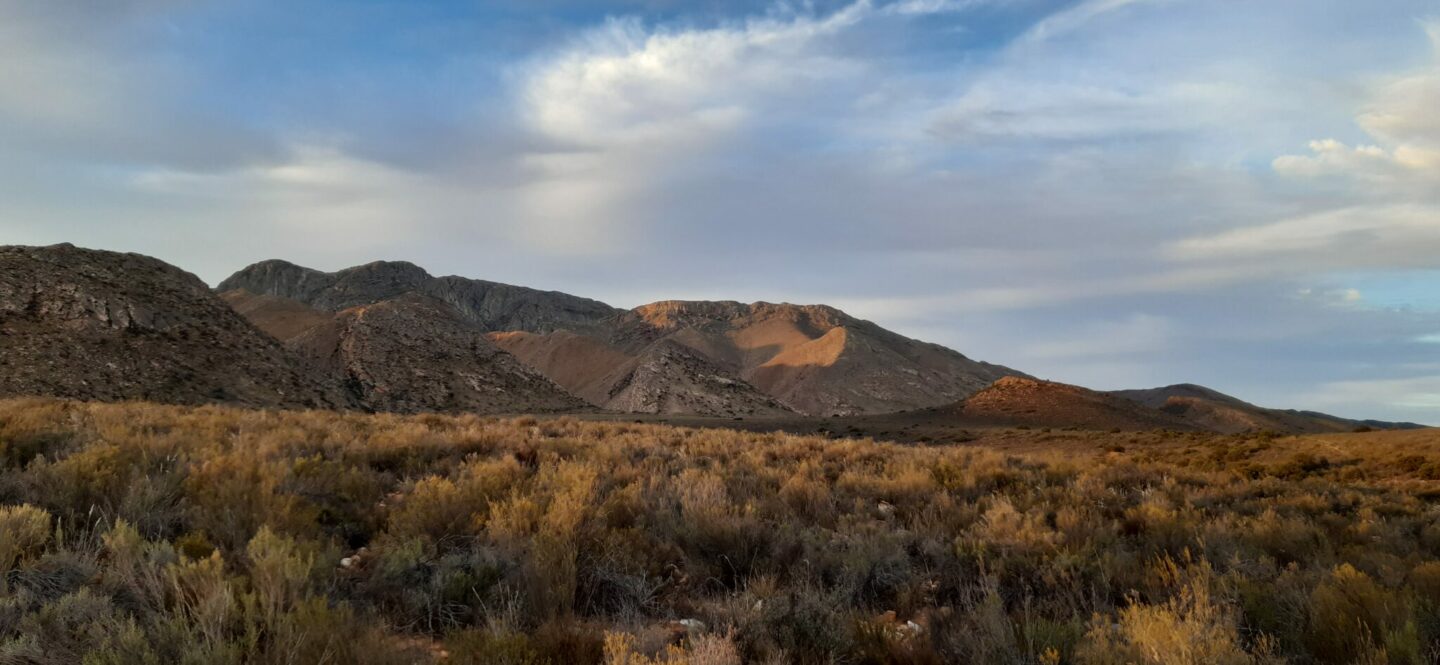
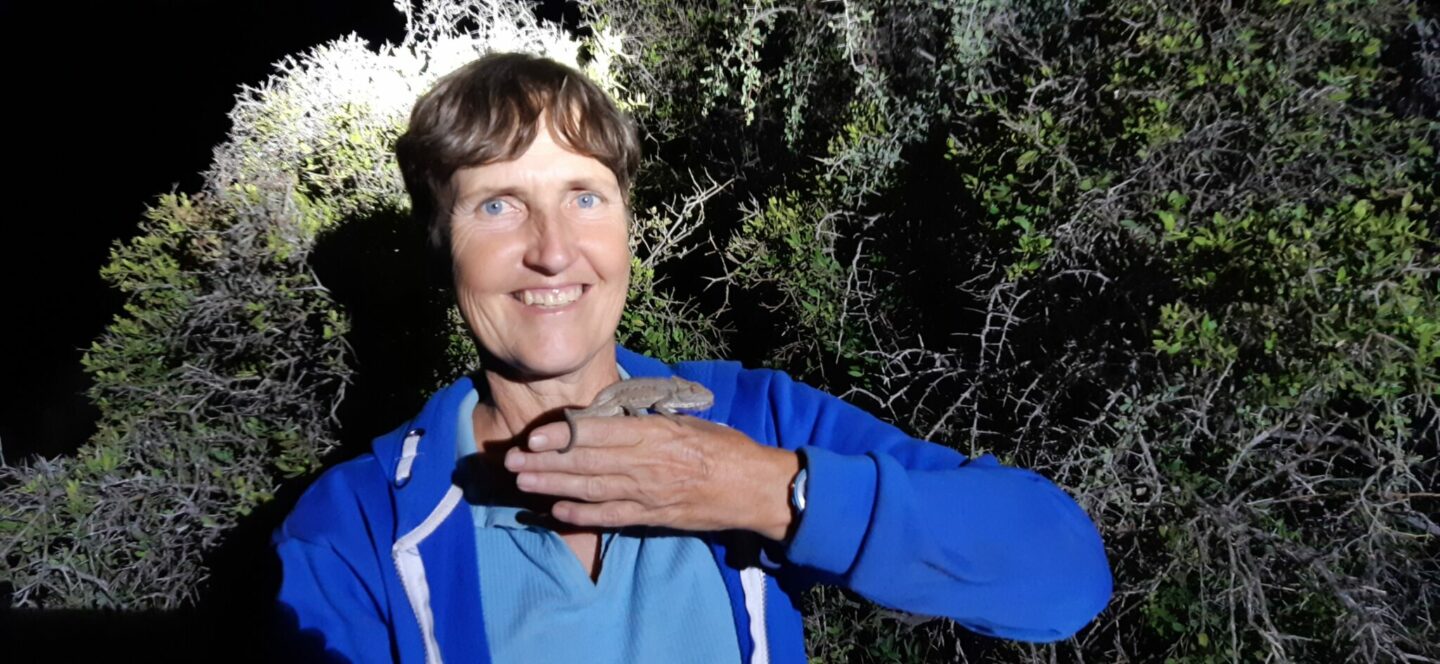
Lettas Kraal, home to many Little Karoo botanical gems, some of which have not even been described yet, is also home to a known population of Riverine Rabbits. This property is in the process of being declared a Contract Nature Reserve, which will ensure the safety and protection of the unique biodiversity there. The night drive was part of the process of documenting the biodiversity on this beautiful property. This process is already well underway, following detailed botanical and camera trap surveys in 2020. Three hours into this particular night drive, our persistence paid off when Marienne spotted a Karoo Chameleon (Bradypodium gutturale). This was an impressive demonstration of her ability to multitask, as between driving and batting (more on this later), she spotted this small creature nestled on its Gwarriebos perch as the beam of the weaving spotlight passed over the bush. Widespread habitat degradation and loss pose a severe risk to these ancient-looking little reptiles. Adding this species to the Lettas Kraal inventory was a rare feel-good moment, knowing that this species, too, is safe on Lettas Kraal, under the protective eye of Johan Roodt, the owner of Lettas Kraal. If you wondered what “batting” mentioned earlier is all about, this entails listening for and recording bat calls. Capturing recordings of bat calls is one of the most effective ways of documenting bat species presence – for which Marienne has quite a knack.
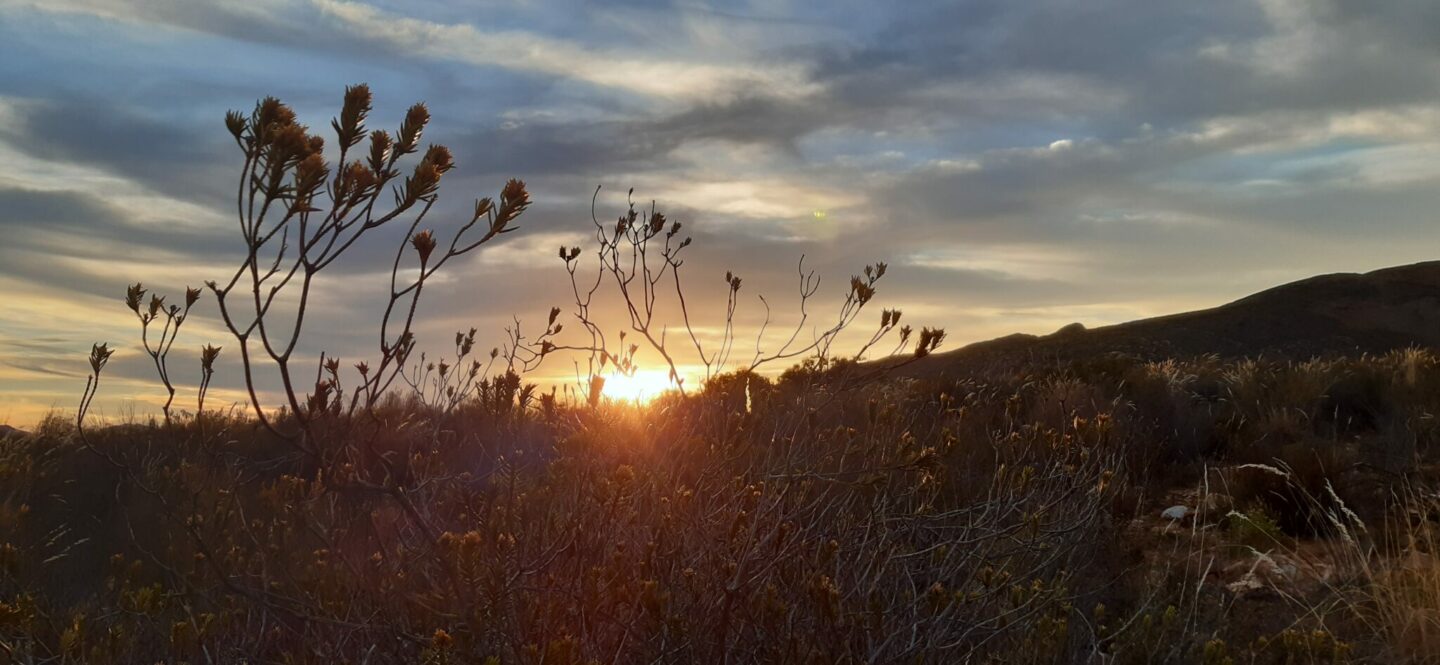
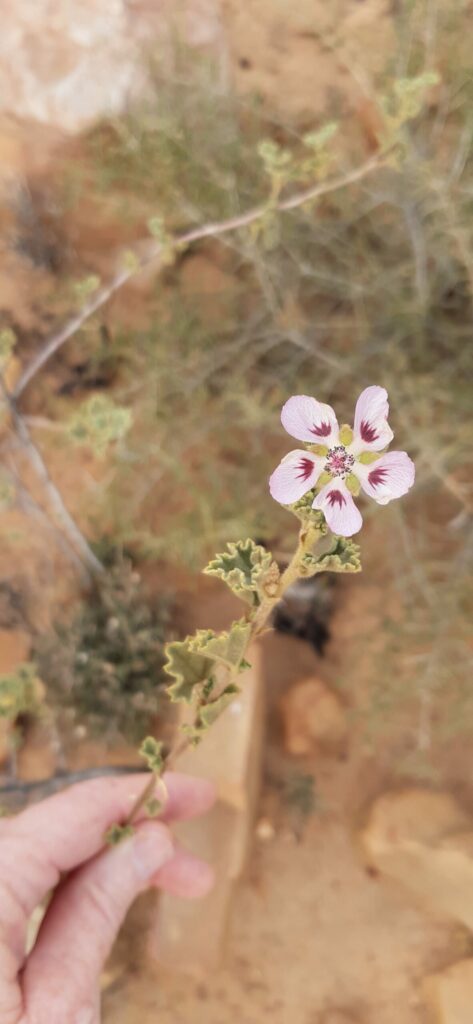
After our exciting rabbit show at the magic hour of midnight, we grabbed a few hours of sleep before we set off early again – this time with Jan Vlok, renowned Succulent Karoo botanist also working on Lettas Kraal. Jan was on a mission to supplement the botanical survey he did in Spring 2020 with what the autumn season had to offer. Despite telling us, “If it doesn’ t photosynthesise, I’ m not interested!” Jan is a veritable encyclopaedia on all things Karoo. Over 20 autumn species were added to the more than 800 species counted in spring.
Many more species await documenting, and getting the full picture will literally take years. Plants need to be particularly picky about when they expose themselves because expending energy and resources, particularly during the flowering and seeding process, is a risky business at the best of times. In a region where the rainfall varies between 100 mm and 450 mm per year, and summer temperatures can exceed 40⁰C, often accompanied by blistering berg winds, the risks are next level. It’ s all about timing, and some species will wait years to put it all out there. It requires a lot of luck to have feet on the ground just when the conditions are, for an all too short time, favourable for plant reproduction. Having flowers and seeds makes the daunting job of identifying species accurately considerably easier. However, with over 3,200 species already recorded in the Little Karoo alone, you need to know your stuff! Jan Vlok, a co-author of “Plants of the Klein Karoo”, is one of the few people up to this task.
To put the value of biodiversity refuges, such as Lettas Kraal, into perspective, less than 0,5% of the Succulent Karoo biome is formally conserved. Under the guardianship of conservation-minded individuals such as Johan Roodt, properties such as this one add much-needed resource capital to the scant inventory of protected areas in this region. Riverine Rabbits find refuge here, in veld that is slowly recovering from over 200 years of being heavily impacted by livestock and ostrich farming. In some areas, diversity is lost forever. Lettas Kraal was lucky that much of its biodiversity has remained, and species very sensitive to grazing can still be found. Once abundant, these species are slowly emerging from the midst of thorny bushes and start to grow in the open again, reclaiming their space in this spectacular landscape, amongst the crouching rocks and hidden rabbits.
The biodiversity survey was funded by the Global Environment Facility and managed by the United Nations Development Programme, in partnership with the Department of Forestry, Fisheries, and Environment, and the Department of Agriculture, Land Reform and Rural Development.
FINDING FAIRIES WHERE BIOMES COLLIDE
Bonnie Schumann. Senior Field Officer, EWT’ s Drylands Conservation Programme, bonnies@ewt.org.za
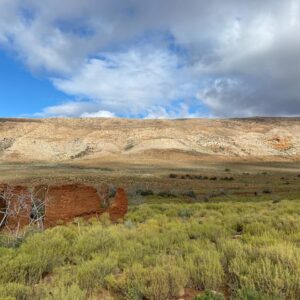
There is a pretty special place in the Klein Karoo where three biomes collide across a landscape of hidden valleys and impossibly rugged slopes. This “collision” of biomes, as renowned botanist Jan Vlok describes it, has resulted in a stunning array of biodiversity, ranging from fairy shrimps in shallow rock pools on remote mountain peaks to several undescribed plant species.
Previously valued purely for its livestock grazing attributes, Lettas Kraal has been quietly resting and recovering under Johan Roodt’ s watchful eye for the last 25 years. Johan oversaw the final departure of the last of the goat and sheep herds that left their harsh mark on this unique and sensitive environment. Johan’ s vision when he purchased Lettas Kraal was to dedicate the property to conserving the natural resources found here. The property is now being declared a Nature Reserve, which will secure Johan’ s conservation vision for the property into perpetuity.
The Klein Karoo, hosting some 3,200 known plant species, is located in the Succulent Karoo, a plant biome recognised as an international biodiversity hotspot with over 6,300 plant species. Add a dash of Fynbos, and a touch of Subtropical Thicket to the Succulent Karoo and the species diversity explodes. This was confirmed by a recent five-day biodiversity survey, coordinated by the Endangered Wildlife Trust (EWT) and CapeNature, and supported by specialists and several volunteers.
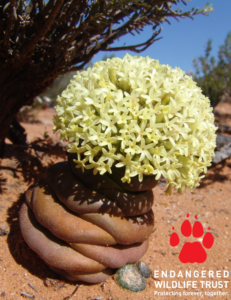
Vlok put in a herculean effort, cataloguing an incredible 814 plant species in just under five days. These species occur in no less than nine vegetation units identified on the property. As expected, the winning family was the daisy family (Asteraceae) at 180 species. The most prominent genus is Crassula with a mindblowing 37 species! Astounding also are the 20 Pelargonium species and 18 Hermannia species. Vlok said afterwards, “No wonder my head was spinning at the end of the week! No ways that I could have hit more than 80% of the species, as I did not even cover 10% of the reserve’ s area. This means that a true total count will be around 975 species. What can I say but ‘gee-whiz’ , I would never have guessed that there would be that many – a total of about 10% of the species in the entire Cape Floristic Region. So who still says that arid areas are boring plant wise?” Besides the known species recorded so far, Vlok was last seen heading for the herbarium and his microscope, to identify several unknown plant treasures found on the property, some of which may turn out to be new species.
In addition to the focussed botanical assessment, specialists from the EWT, CapeNature and a group of volunteers went in search of all things great and small, including small mammals, reptiles, birds, bats, butterflies and moths. While the botanical component put on a spectacular show after the recent rainfall brought welcome relief from the unprecedented drought, surveys reflected that many of the other components still need time to recover. Guy Palmer, retired CapeNature Scientific Manager, Biodiversity (Scientific Services), couldn’ t resist an invitation to participate in small mammal surveys. He and a team of two CapeNature faunal ecologists found very few signs of small mammals, although they did trap and release two common rodent species and one species of sengi (elephant shrew). Palmer says the lack of small mammal activity is indicative of the severity of the protracted drought. In addition to the focussed botanical assessment, specialists from the EWT, CapeNature and a group of volunteers went in search of all things great and small, including small mammals, reptiles, birds, bats, butterflies and moths. While the botanical component put on a spectacular show after the recent rainfall brought welcome relief from the unprecedented drought, surveys reflected that many of the other components still need time to recover. Guy Palmer, retired CapeNature Scientific Manager, Biodiversity (Scientific Services), couldn’ t resist an invitation to participate in small mammal surveys. He and a team of two CapeNature faunal ecologists found very few signs of small mammals, although they did trap and release two common rodent species and one species of sengi (elephant shrew). Palmer says the lack of small mammal activity is indicative of the severity of the protracted drought.
The discovery of a treasure trove of small mammal bones in an old barn owl roost in the God’ s Window cave suggested that small mammals were far more abundant in the past. Going hand in hand with this, and demonstrating the domino effect when food chains are disrupted, few observations of birds of prey were made. However, on a positive note, and reflecting the resilience of dryland species, most of the small mammals that were caught were females, and many of them appeared to be pregnant; a good sign of things to come.
The work didn’ t stop at sunset. Andre Fourie (a volunteer) and Marienne de Villiers (CapeNature) spent many night hours eavesdropping on bat conversations. These little flying mammals use echolocation to navigate, locate prey, and communicate, and most of their calls are at frequencies too high for human ears to detect. However, they can be picked up by an ultrasonic bat recorder, and the sonograms that these machines produce, provide clues to species identities. At least three bat species were detected in this way, but a more in-depth analysis of the data is likely to add to the list. Most of the bat activity was around the Lettaskraal homestead, where there is a permanent water supply and an abundance of bugs attracted to lights. A bonus find was a horseshoe bat in a narrow crevice near the God’ s Window cave.
JP le Roux (EWT), and Martine Jordaan (CapeNature), led the search for all things aquatic, documenting four frog species and aquatic invertebrates. A little bit of water goes a long way in the Karoo, and JP, acting on a rumour of water on Bloutoring, a remote mountain peak, led the strenuous climb up this mountain in search of this “puddle”. The climb was not in vain and resulted in the discovery of fairy shrimps (Class Branchiopoda) in a single shallow rock pool.
The birders were not to be outdone as Renier Balt (volunteer), Dominic Henry, and Ian Little (EWT) vied for top recorder, while Stefan Theron (Dept Agriculture: LandCare, Western Cape) multi-tasked to assess priorities for restoration while making sure he got some birding in. Altogether 97 bird species were recorded on the property over the five days. A further 53 species recorded in the immediate area, including migrating visitors, bring the bird list total to 150 species.
Although it was a bit early in the season, as temperatures were still relatively low, Chair of the Lepidopterist’ s Society of Africa, Andrew Morton, assisted by his son Sasha, managed to record some insect activity as well. It will be particularly interesting to do more extensive surveys of insects and other invertebrates when temperatures are warmer, as the diversity of species may well be correlated to the incredible plant species diversity.
The CapeNature Anysberg Nature Reserve team dubbed the “Klipspringers” for its members’ agility and speed on the steep slopes, provided both (hu)manpower and expertise to the survey effort. Volunteers Renier and Millene Balt, Sven Wesemann, Lara Krassnokutski, and Carina Becker (Manager of the Rooiberg Breede River Conservancy), supported by the Leslie Hill Succulent Karoo Trust from WWF-SA, provided additional logistical support and bucket-loads of enthusiasm during the survey.
The outstanding biodiversity on Lettas Kraal not only reflects the incredible biological wealth of the Klein Karoo as a region but again reiterates just how unique virtually every square kilometre of the entire Succulent Karoo is – no two areas are the same. The Succulent Karoo is threatened by mining activities, overgrazing, and the illegal collection of, and trade in, succulent plants, leaving less than 30% of the hotspot pristine. We must look at ways to conserve as much of this unique biome as possible, given that so much of it has already been transformed and degraded.
Where agriculture is being practised, we must explore ways to implement more sustainable land management that integrates the conservation of the remaining biodiversity with the agricultural priorities. Partnerships between landowners, CapeNature and NGOs such as the EWT, present a win-win solution for effectively conserving the region’ s biodiversity. Together we can ensure a bright future for Lettas Kraal as a hub of biodiversity. Anyone spending time here cannot but help become a champion for the conservation of the Succulent Karoo.
The Endangered Wildlife Trust, Drylands Conservation Programme’ s work is made possible through support and partnerships with landowners. In addition, our broader work in the Drylands landscape forms part of the Global Environment Facility (GEF5) funded Sustainable Land Management Project at the United Nations Development Programme (UNDP), in partnership with the Department of Forestry, Fisheries and the Environment (DFFE). Projects are also supported by Rand Merchant Bank.
For more information contact:
Bonnie Schumann
Endangered Wildlife Trust
Email: bonnies@ewt.org.za
Cell: 072 1224232
Marienne de Villiers
CapeNature
Email: mdevilliers@capenature.co.za
Cell: 082 729 3419
GRIET’ S GHOST AND THE LONG LOST RABBIT: THE LETTAS KRAAL CONSERVATION STORY
Bonnie Schumann, Nama Karoo Coordinator, Drylands Conservation Programme, bonnies@ewt.org.za
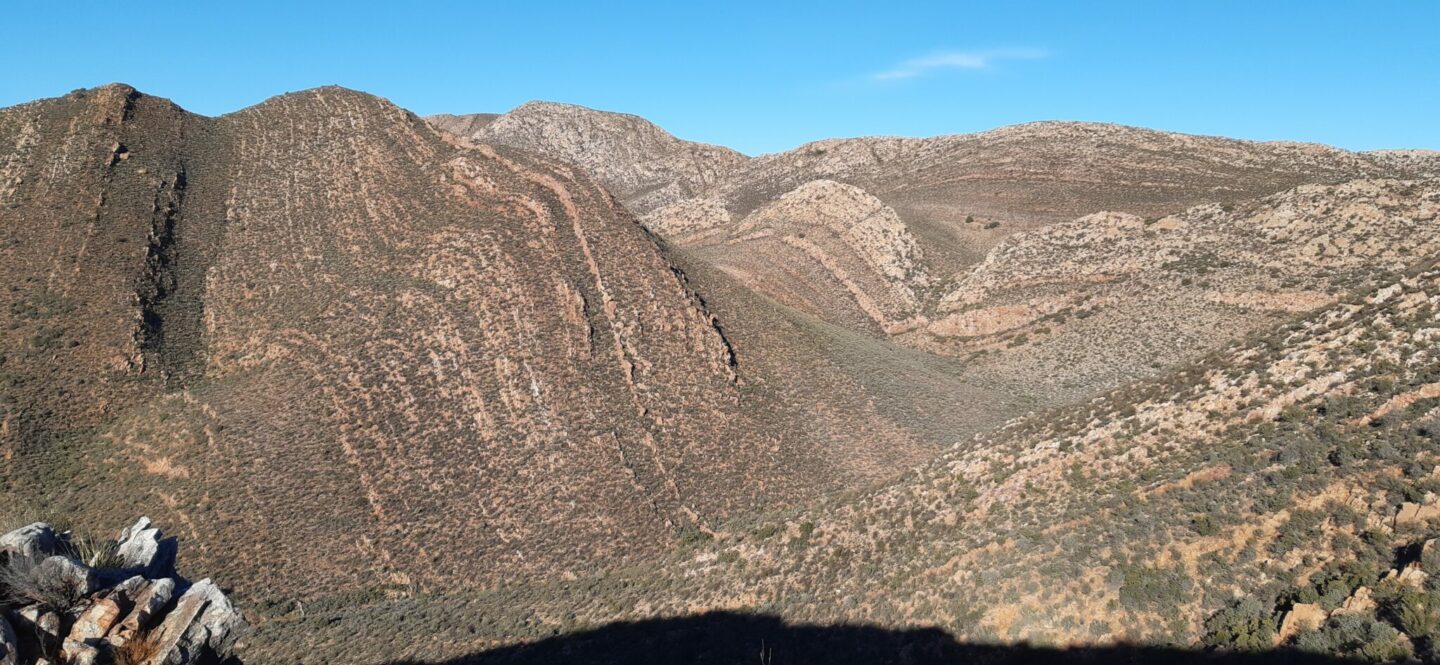
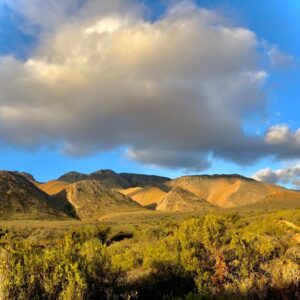
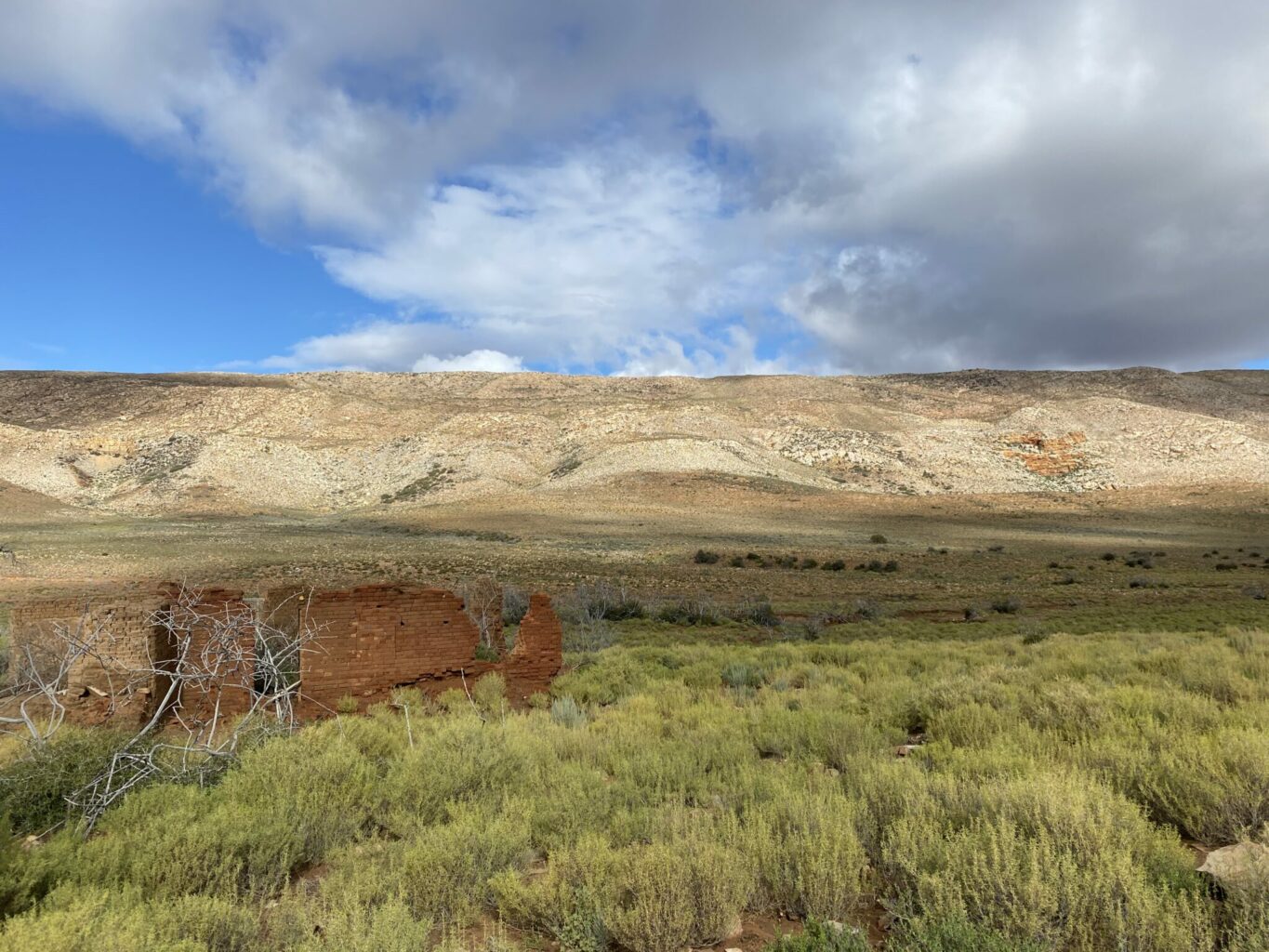
The Lettas Kraal story began a long, long time ago, with the folding of the Cape Fold Mountains that formed the spectacular landscape we see in much of the southern and western Succulent Karoo today. The ancient history of the geology of the region is written in stone, manifesting itself as the diverse, often tortured-looking, rugged topography of the Karoo.
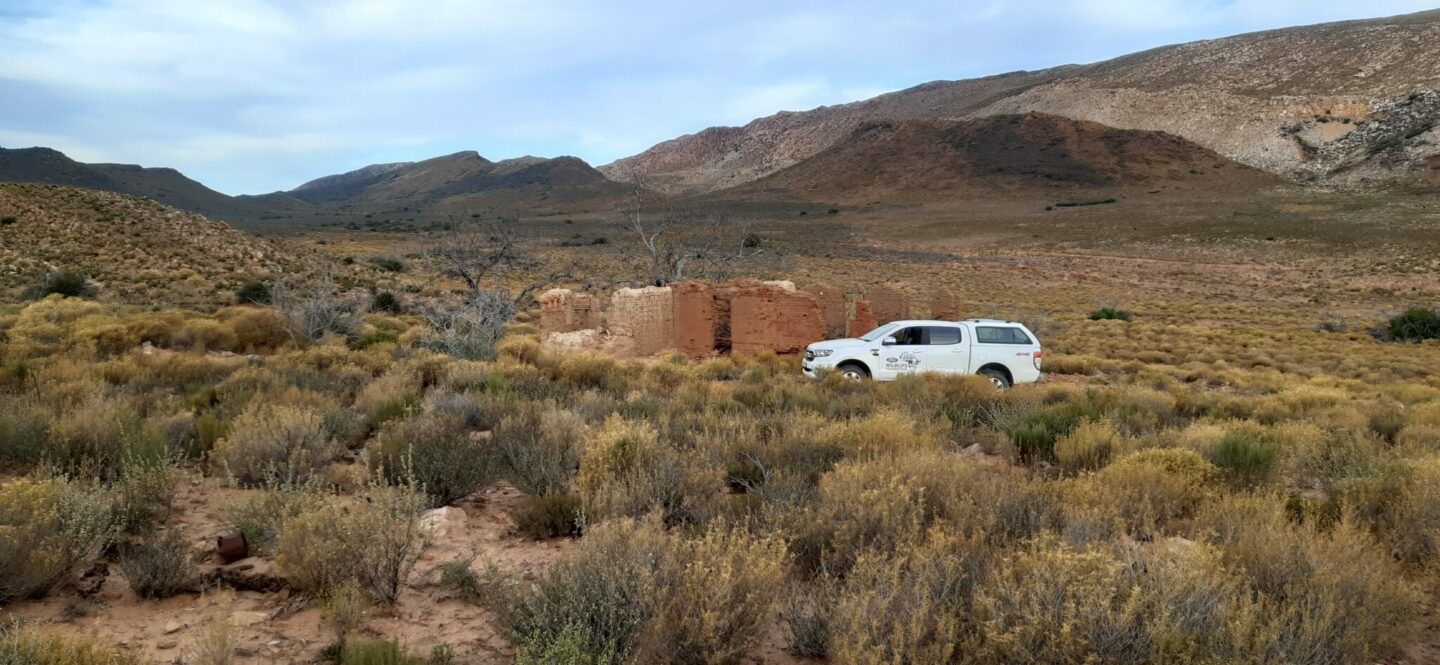
Lettas Kraal, located in the Little Karoo near Touwsriver, has its own story to tell, not all of which has been heard. We don’ t know much about Griet, the Lettas Kraal farm ghost and her little dog, who allegedly walk the road to the ruin of her old cottage regularly. Her chapter may well be lost in time. We do know that long before Griet called Lettas Kraal her home, San hunter-gatherers left their artistic legacy in the form of beautiful paintings in secret places on Lettas Kraal. Alongside the various human footprints left over time, small padded tracks, barely visible, were also being left on Lettas Kraal by one of the rarest and most historically interesting of southern Africa’ s mammals. The hide-and seek-champion of the Karoo, the Critically Endangered Riverine Rabbit, remained undetected on Lettas kraal until its presence was revealed two years ago with the discovery of a Riverine Rabbit roadkill near the Lettas Kraal homestead. This elusive species has been lost and found several times since it was first discovered in the Karoo in 1901, but that’ s a story for another day.
Because of a “love at first sight” encounter more than 20 years ago, this spectacular landscape with its incredible biodiversity, Griet’ s story, and the survival of the Riverine Rabbit on Lettas Kraal, will be protected into perpetuity. Lettas Kraal, which has been carefully conserved and nurtured for over two decades, is at long last in the process of obtaining formal recognition as a Private Nature Reserve. This part of the story started 24 years ago.
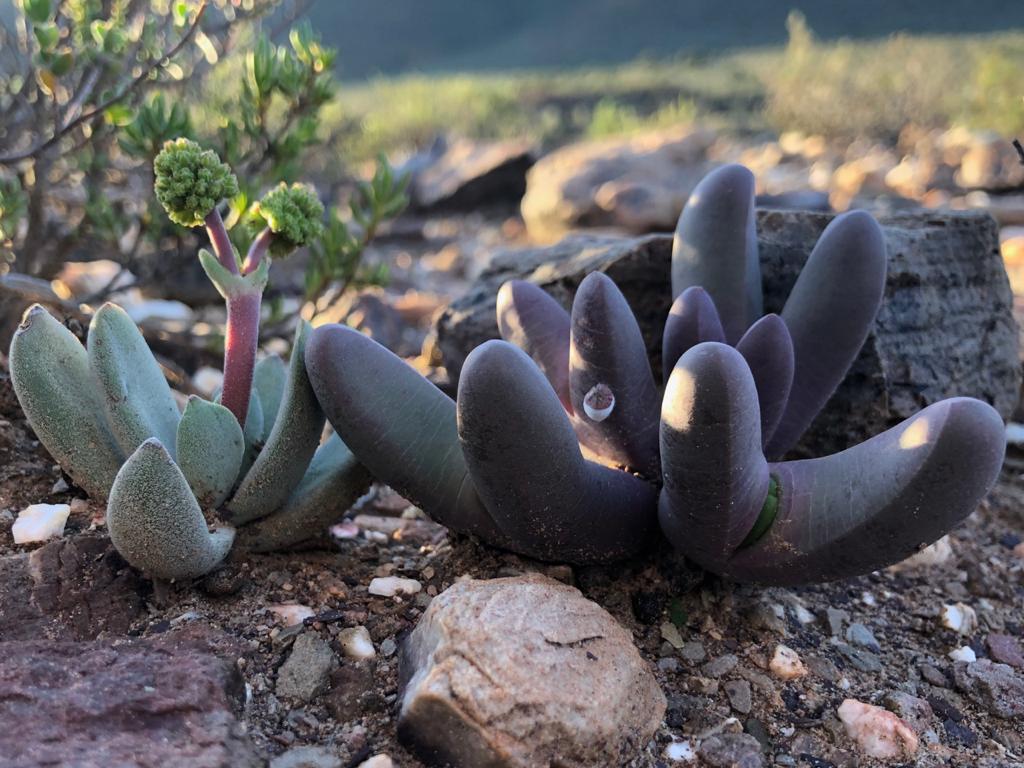
Johan Roodt, owner of Lettas Kraal, visited a neighbouring farm in 1996 and, in his own words, fell in love with the area at first sight. As fate would have it, just two weeks later, Lettas Kraal came up for sale. It was a match made in heaven. The property was heavily utilised as a commercial small stock farm in the past. However, from the start, Johan’ s vision was to dedicate the property to the conservation of this region’ s unique and highly threatened biodiversity. As such the veld has been rested from livestock grazing for the past 24 years. Although game, including eland and gemsbok move freely over the property, which is not game fenced, they occur at a low density. The removal of livestock and the prevailing low game numbers has allowed the vegetation to recover. Very little trampling of the veld is evident, and the healthy living soil crust comprised of tiny plants and lichens and moss is testimony to the recovery that has taken place, despite the severe drought that has plagued the region for several years. Skeletons of Karoo are proof that Lettas Kraal was not spared from the severe drought. However, following good rains this year, seedlings can be seen germinating all over, and life is rapidly returning to the veld.
The topography of the property is diverse, ranging in altitude from about 670 m above sea-level in the valleys to mountain peaks over 1,200 m high. The varied topography yields a wide variety of habitat types, in turn supporting a fascinating range of plant and animal species. The main vegetation types that occur on the property include Matjiesfontein Quartzite Fynbos, Matjiesfontein Shale Renosterveld, and Western Little Karoo. Only a small portion of the farm (less than 50 ha), is used for farming operations, including some irrigated grazing, horse paddocks, and an olive tree orchard. The farm has its own artisanal olive oil press, which produces highly sought-after olive oil for the boutique market under the Lettas Kraal label. Lettas Kraal is also the location of an approved African Horse Sickness Quarantine Station for horses moving into the horse sickness controlled area in the Western Cape, and the horse sickness free area in Cape Town. Johan also stables his dressage competition horses, which compete in the top rankings in South Africa, on Lettas Kraal. The rest of the 7,000 ha property is dedicated to conservation, and Johan approached the Endangered Wildlife Trust (EWT) and CapeNature to formally secure the protection of this unique piece of land.
Lettas Kraal lies within the Succulent Karoo Biome, recognised as a global biodiversity hotspot. In addition to the biodiversity value of the property, Lettas Kraal also borders the spectacular Anysberg Nature Reserve, and when declared, will expand the existing protected area considerably. The EWT carried out a small targeted camera trap survey in 2019 and confirmed the presence of Riverine Rabbits on Lettas Kraal. After consideration, the provincial conservation authority has given the green light to proceed with the declaration. The Endangered Wildlife Trust is partnering with Lettas Kraal to complete the declaration process, and carry out surveys to develop comprehensive species lists for the property.
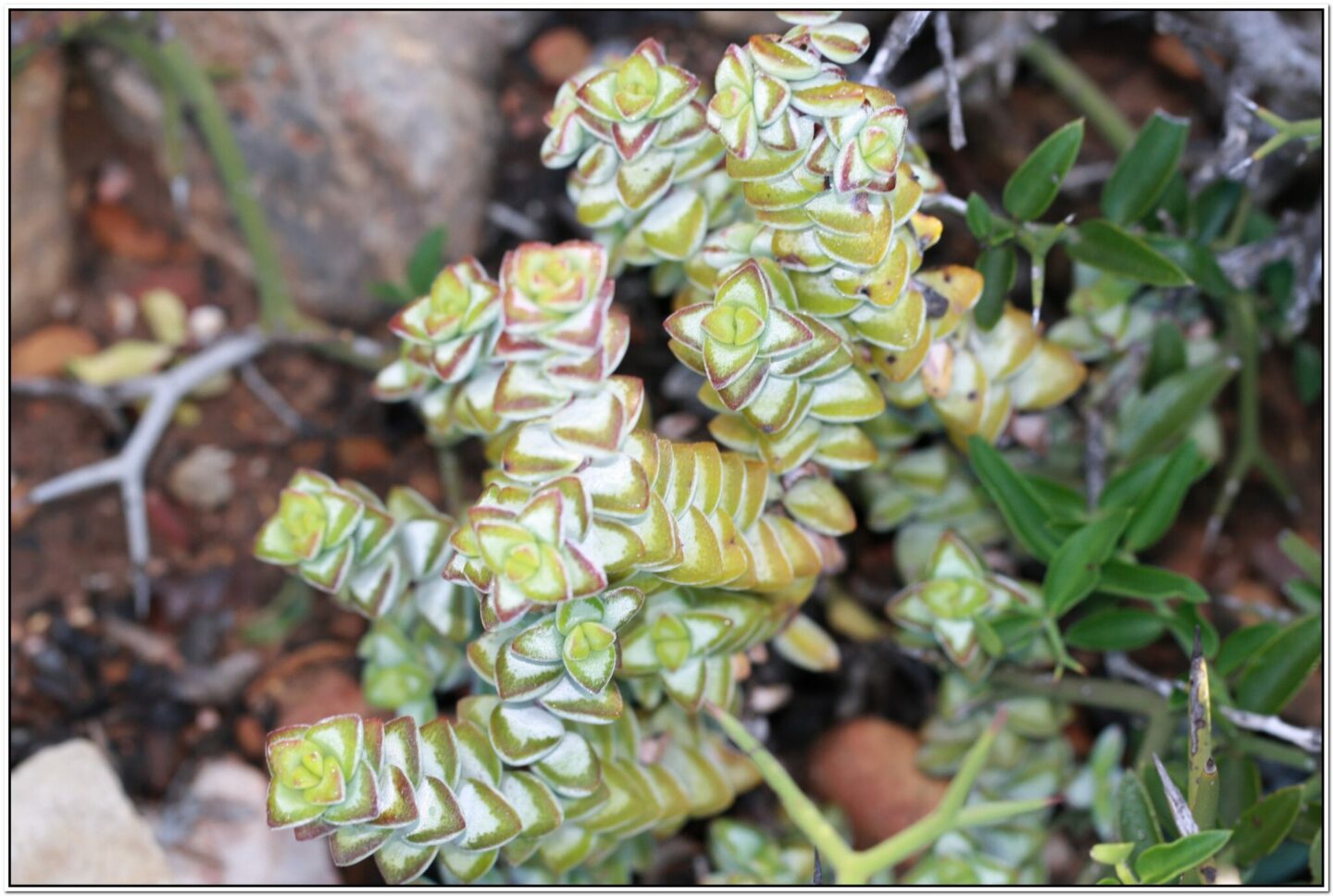
The first step to developing an inventory of all things great and small on Lettas Kraal took place in July. An intrepid group of very determined conservationists went head-on with a mammoth cold front, racing the weather to place 98 camera traps on Lettas Kraal to survey biodiversity. EWT’ s Bonnie Schumann and Esther Matthew headed the expedition. Johan and his wife Tessa (who also hiked with teams), and good friends Renier Balt and his wife Millene, managed travel logistics on the farm, to ensure teams could access all the camera stations by the fastest routes possible.
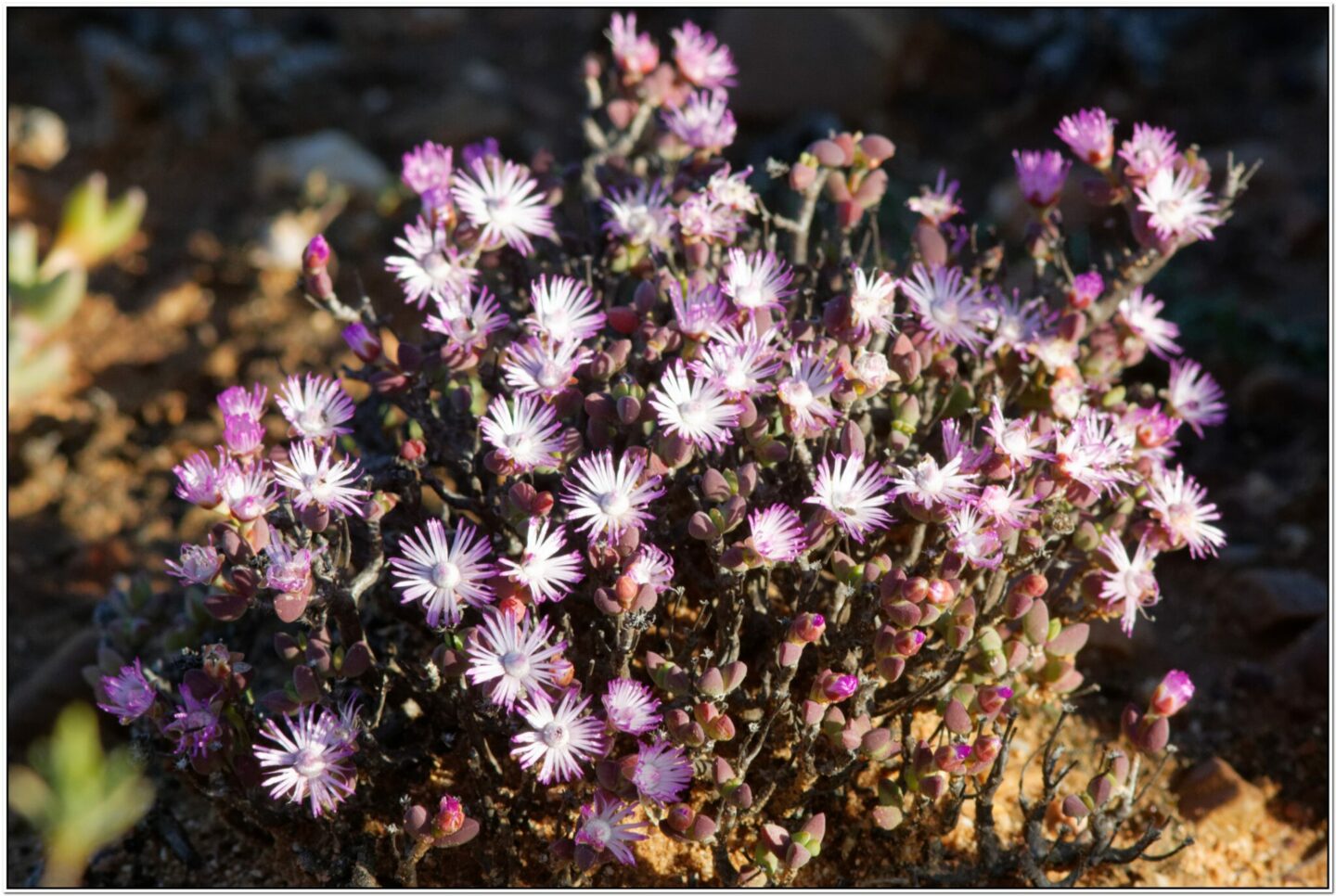
Marius Brand and his team from the Anysberg Nature Reserve lent a much appreciated neighbourly hand, helping to carry the heavy stakes for the cameras, and sharing expertise placing cameras in this rugged terrain. Certain camera stations were placed to target leopards, with two cameras being placed opposite one another, to enable individual identification of any leopards photographed. The Cape Leopard Trust’ s Anita Wilkinson and Jeannie Hayward joined the expedition to share their leopard (photo) capturing expertise. Sites needed to be carefully selected to increase the odds of capturing images of these elusive carnivores. Carina Becker, Manager of the Rooiberg Breede River Conservancy (which is supported by the Leslie Hill Succulent Karoo Trust from WWF-SA), also joined the expedition, both gaining and sharing experience in camera placement. Teams hiked up to 14 km a day, through rugged terrain and in freezing temperatures, managing to finish the placements in just two full days, proving the adage that “many hands make light work”.
And so begins a new chapter in the Lettas Kraal story. Partnerships between private individuals, provincial conservation authorities, and NGOs are critical to ensuring that South Africa’ s biodiversity is adequately protected. The Biodiversity Stewardship Programme is the perfect tool to facilitate this vision of extending biodiversity protection outside of the state-owned National Parks and Nature Reserves. Private and communal landowners and users are the custodians of most of our biodiversity, and the biodiversity stewardship mechanism offers the opportunity to formally recognise their valuable role in ensuring ecosystem functionality and critically important biodiversity conservation across landscapes and biomes. The EWT Drylands Conservation Programme’ s work is made possible through the support of, and partnerships with, landowners.
Our broader work in the Drylands landscape forms part of the Global Environment Facility (GEF5) funded Sustainable Land Management Project at the United Nations Development Programme (UNDP), in partnership with the Department of Forestry, Fisheries and the Environment (DFFE). Projects are also supported by Rand Merchant Bank.
