Help protect Africa's 

Kafue Lechwe numbers on a steep decline on the flats

Kafue Lechwe numbers on a steep decline on the flats
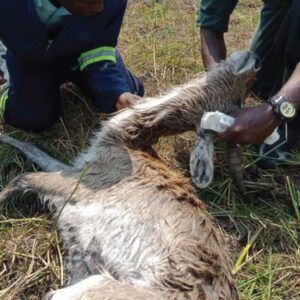
Kafue Lechwe numbers on a steep decline on the flats

A dead Endangered Kafue Lechwe Antelope (Kobus leche kafuensis)

Saziso Moyo, EWT-ICF Partnership African Crane Conservation Programme

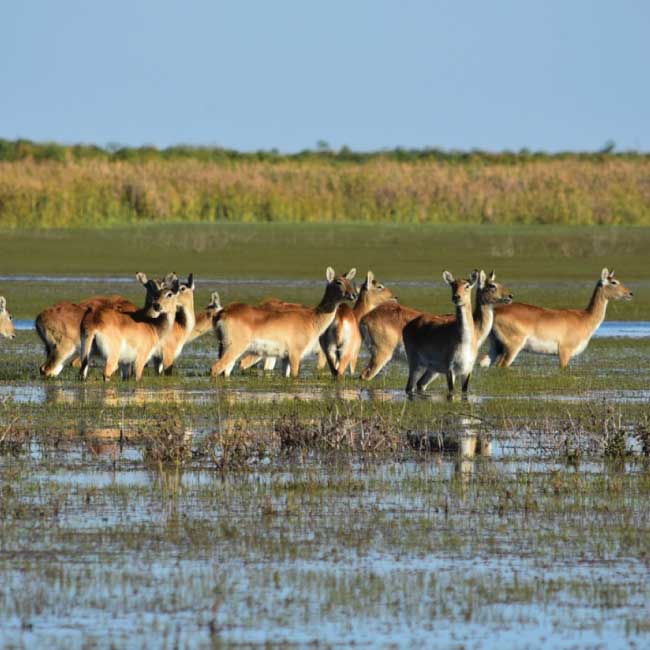
The Endangered Kafue Lechwe antelope (Kobus leche kafuensis) is the predominant antelope species of the Kafue basin. These lechwes are semi-aquatic, medium-sized antelopes that live in large groups close to water bodies or marshes. The antelope engage in competitive displays and courtship rituals, known as lekking, to entice visiting females who are surveying prospective partners with whom to mate. The lechwe population in the Kafue basin has steadily declined from an estimated 80,000 in 1975 to about 23,000 in 2018, leading to its inclusion on the IUCN Red List of Threatened Species. For this reason, the International Crane Foundation/Endangered Wildlife Trust (ICF/EWT) Partnership has, in addition to the crane species we focus on, included the Kafue Lechwe on the list of important species to monitor and conserve. To achieve this, it has become increasingly important to investigate all potential factors contributing to the decline of the Kafue Lechwe population.

During the dry season in 2022, the Kafue Lechwe were dying daily, sometimes as many as 10-20, with the females and young being among the most affected. The ICF/EWT research team and field patrol officers detected this during mandatory monitoring activities.

A team of veterinarians from the University of Zambia (UNZA), the Department of National Parks and Wildlife (DNPW), and the Central Veterinary Research Institute (CVRI) was put together by ICF/EWT to investigate the cause of the alarming mortalities. The DNPW permitted the team to hunt down three lechwes to collect substantial samples of the internal organs. The reports revealed that the lechwes had various health issues, including bacteria and endo- and ectoparasites. The vet team argued that the bacteria and other health issues uncovered were not enough to kill the lechwe, but a combination of the disease load and poor nutritional value of their remaining food source could be acting together to cause the high number of deaths observed.

The report specifically indicates the presence of bacteria such as E. coli, Moraxella spp, and Klebsiella spp. The E. coli is because of the open defecation practised in the fishing villages. The villages have open pit toilets released directly into the water during flood season, presenting a significant public health issue for the people living in fishing villages and for the lechwe that drink from these water holes. Other causes of high mortality rates in the lechwe are human encroachment and the competition for food with the cattle that now number around 80,000 on the Kafue Flats.

The next step will involve presenting these results to relevant stakeholders and authorities for further action. Solutions may include developing a sanitation programme for the villages and a comprehensive management plan for the Kafue Flats for the well-being of people and wildlife.

Additionally, this calls for a deliberate, aggressive monitoring programme of the Kafue Lechwe involving the institutions mentioned above. Monitoring will help us to understand the stress factors and the potential mitigation measures to implement to ensure a thriving wetland for ALL.
Vulture-safe Zones benefit biodiversity and people

Vulture-safe Zones benefit biodiversity and people

Vulture-Safe Zones benefit biodiversity and people

Danielle du Toit, EWT Birds of Prey Programme

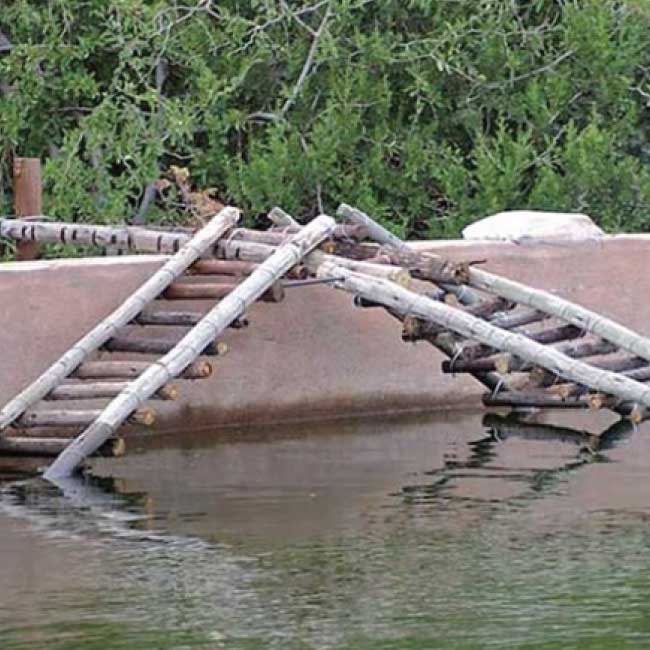
Southern African vulture populations are declining rapidly due to threats such as collisions with and electrocutions by electrical infrastructure, drowning in farm reservoirs, and of course, poisoning in all its many forms. Vulture Safe Zones have been established to address these issues and conserve vultures. Vulture Safe Zones are appropriately-sized geographic areas in which threats to the vulture species present are identified and mitigated through targeted conservation methods. They are established through active engagement with landowners and assistance through Vulture Safe Zone Alliance parties to create safe spaces for vultures to forage, roost and ultimately breed.1,2

Unintentional poisoning occurs when vultures ingest toxic contaminants, including veterinary pharmaceuticals still present in a carcass after treatment3,4, lead fragments in carcasses or entrails from lead ammunition5–8, and agrochemicals used illegally to kill so-called problem animals such as Black-backed Jackal or Caracal. Vultures are sometimes killed intentionally in a direct link to poaching. Sentinel poisoning is the action of vultures being killed due to their behaviour when feeding, which indicates the presence of a carcass of an animal which has been poached. Poachers sometimes poison these carcasses to provide themselves with more time to escape, as vultures die after feeding and do not provide signs to anti-poaching officials that there has been an incident. In traditional medicine, vultures are often killed for their body parts – namely the heads. Some cultures believe that by eating vulture heads and brains, one could be gifted with foresight9.

Through the establishment of vulture safe zones, landowners and conservation organisations alike must address and ultimately remove all threats to vultures within the area, and although we identify these threats as they relate to vultures, they can negatively impact the health of the ecosystem and humans alike. For example, by using lead-free ammunition, meat harvested through hunting will not contain lead – a heavy metal proven to have serious health implications on those exposed to it, even in small amounts – and is thus healthier for humans to eat. Reservoirs fitted with safeguards to prevent drowning do not have to be drained every time an animal (such as a baboon or bird) drowns in it and contaminates the water supply, thus saving valuable water resources. By mitigating powerlines and energy infrastructure against collisions and electrocutions, we can save hundreds of other birds of dozens of species, not only vultures, and prevent or reduce power outages on these lines. When mitigating the threat of poisoning to vultures, we aim to assist landowners in using responsible non-lethal methods of predation management – which often goes hand in hand with a more hands-on approach to stock and land management. We aim to take a holistic approach – employing a decision-making framework rather than a single tool – to address livestock predation on properties.

Cattle herders are also crucial for the management of the predation of livestock. They are proven to not only be eliminate livestock losses to predators but, if following a grazing management plan, can also assist in regenerating otherwise unproductive soil and increasing ground cover. Simply put, increasing ground cover on otherwise barren landscapes reduces the impact of rainfall and allows the water to seep into the soil rather than run off and cause erosion. By implementing herding on properties, we can upskill and create employment opportunities for members of communities, as demonstrated by The SACT Herding Academy. By combatting desertification, landowners will be able to better withstand the effects of drought and build resilience to the impacts of climate change.10,11

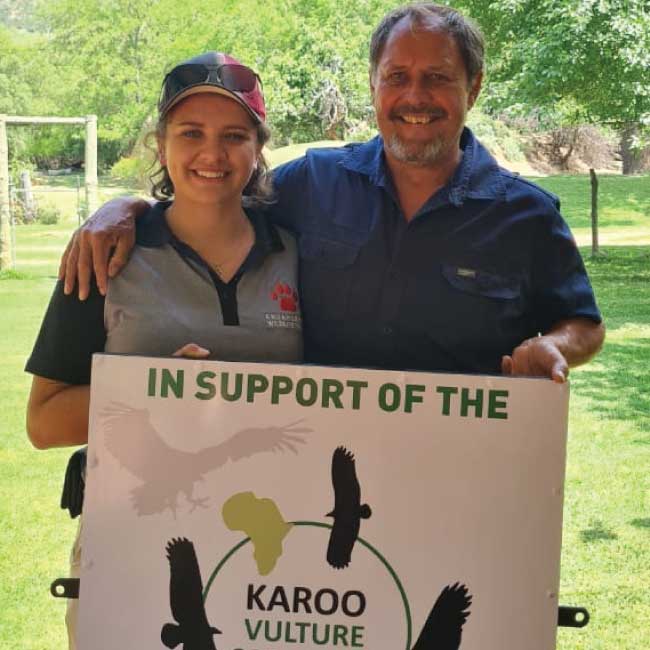
The general market for agricultural products seeks sustainably and responsibly produced, traceable products12. By becoming Vulture Safe, a landowner can honestly present their practices and market to consumers while benefitting nature and the people around them. We encourage landowners and partners to use the Vulture Safe Zone logo for promoting their properties and products to generate interest and support for the cause and the landowners who are part of it. Vulture Safe Zones may focus on vultures, but they benefit all.

This work is made possible by the Charl van der Merwe Trust, IUCN Save Our Species Rapid Action Grant, Ford Wildlife Foundation, Alu-Cab, the Rupert Nature Foundation, and the Disney Conservation Fund

References:

  1. Mukherjee, A. & Galligan, T. H. Vulture Safe Zones to save Gyps vultures in South Asia Enhancing community-based vulture conservation in western lowlands of Nepal View project Vulture Safe Zone View project The Royal Society for the Protection of Birds. https://www.researchgate.net/publication/312315404 (2014).
  2. BirdLife International Vulture Safe Zone Fact Sheet.
  3. Plaza, P. I., Martínez-López, E. & Lambertucci, S. A. The perfect threat: Pesticides and vultures. Science of the Total Environment vol. 687 1207–1218 Preprint at https://doi.org/10.1016/j.scitotenv.2019.06.160 (2019).
  4. van Wyk, E., van der Bank, F. H., Verdoorn~, G. H. & Beans, H. CHLORINATED HYDROCARBON INSECTICIDE RESIDUES IN THE CAPE GRIFFON VULTURE (GYPS COPROTHERES). Camp. Btochem. Physiot vol. 104 (1993).
  5. Pain, D. J., Mateo, R. & Green, R. E. Effects of lead from ammunition on birds and other wildlife: A review and update. Ambio 48, 935–953 (2019).
  6. Gangoso, L. et al. Long-term effects of lead poisoning on bone mineralisation in vultures exposed to ammunition sources. Environmental Pollution 157, 569–574 (2009).
  7. Fisher, I. J., Pain, D. J. & Thomas, V. G. A review of lead poisoning from ammunition sources in terrestrial birds. Biol Conserv 131, 421–432 (2006).
  8. Garbett, R. et al. Association between hunting and elevated blood lead levels in the critically endangered African white-backed vulture Gyps africanus. Science of the Total Environment 630, 1654–1665 (2018).
  9. Ogada, D. L., Keesing, F. & Virani, M. Z. Dropping dead: Causes and consequences of vulture population declines worldwide. Ann N Y Acad Sci 1249, 57–71 (2012).
  10. LaCanne, C. E. & Lundgren, J. G. Regenerative agriculture: Merging farming and natural resource conservation profitably. PeerJ 2018, (2018).
  11. Gosnell, H., Gill, N. & Voyer, M. Transformational adaptation on the farm: Processes of change and persistence in transitions to ‘climate-smart’ regenerative agriculture. Global Environmental Change 59, (2019).
  12. Responsible Wool Standard (RWS) – Textile Exchange.
Battle of the Bullets

Battle of the Bullets

Battle of the Bullets: lead-free in the lead

Danielle Du Toit, EWT’ s Birds of Prey Programme Karoo Vulture Safe Zone and Sustainable Land Management Coordinator, danielled@ewt.org.za

Battle of the Bullets was an event conceptualised during a brainstorming session in Langebaan in early 2022. The event aimed to promote a lead-free environment within the Karoo Vulture Safe Zone. Lead poisoning occurs in many ways, but in this case, the Endangered Wildlife Trust’ s Birds of Prey Programme focused on poisoning from the ingestion of lead ammunition by vultures and other animals scavenging on carcasses and entrails. Vultures that ingest lead fragments from ammunition have been found to have higher levels of lead in their blood, which affects their health and can kill them. For more about how lead ammunition affects vultures, read this article.

Similarly, people who eat a lot of game meat are also at risk of lead poisoning when venison is hunted using lead ammunition. We saw Battle of the Bullets as an opportunity to engage with industry stakeholders and people on the ground who use ammunition to raise awareness of the impact of lead bullets and the available lead-free alternatives. Furthermore, we wanted to practically demonstrate how these alternatives can do the job just as well as lead bullets.

To unpack the impact of lead ammunition on the environment and vultures, we started the event with some presentations on the topic. Lizanne Nel, Conservation Manager of the SA Hunters and Game Conservation Organization, opened with a talk on the conservation impacts associated with lead ammunition and how their members can help by reducing its use.

Presentations on the impact of lead ammunition on vultures

The EWT’ s Danielle du Toit, the EWT’ s Karoo Vulture Safe Zone and Sustainable Land Management Coordinator, spoke about the importance of reducing the presence of lead bullets in the environment to create a vulture safe zone and benefit nature as a whole. Linda van den Heever of BirdLife South Africa dove deeper and enthralled the attendees with the science and research into lead poisoning in vultures across South Africa. Her talk was followed by an in-depth talk by Kobus du Plessis of Impala Bullets on the ballistic science behind lead- and lead-free ammunition.

Kobus du Plessis from Impala Bullets talking about ballistic science

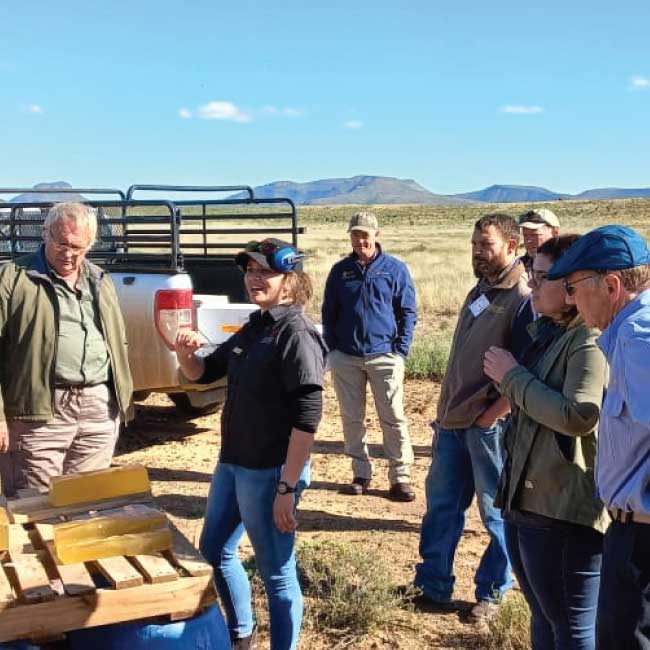
After the presentations and a hearty lunch, we asked the bullet manufacturers to demonstrate their lead-free ammunition to show its suitability as an alternative to lead bullets. To do so, Chris Strydom of Balistix Bullets, Wessel Landman of GS Customs, and Kobus du Plessis from Impala Bullets all took turns shooting from 100 m into dummy targets made from gelatin. Gelatin targets slow and trap the energy dispersion of the bullet upon impact and along its trajectory. They are a useful educational tool to show how a bullet performs in practice. Ammunition, like many other things, is designed and manufactured according to its purpose. In a hunting bullet, one needs specific ballistic characteristics for the area in which the bullet is used and for the prey being hunted. A target shooting bullet must perform well through various challenges, including long-distance, gong shooting, and paper targets. Those present were shown how lead-free ammunition (also known as monolithic ammunition) is similarly designed, crafted, and tested for its end purpose in mind and witnessed how it performs in different scenarios.

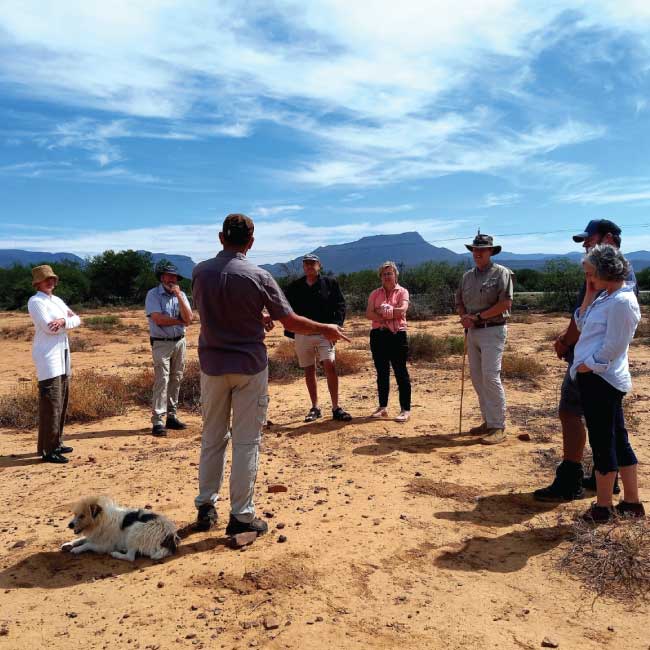
After the demonstrations, attendees were invited to shoot at several other dummy targets themselves and join in for a few rounds of clay target shooting hosted by the Graaff-Reinet Gun Club. The afternoon was warm and calm, and those who didn’ t take part in shooting sat and chatted about one thing: ammunition and what to do about it. Evening rolled around, but the day wasn’ t over. Lucky draw prizes were kindly donated by Karoo Guns (two R250 gift vouchers and a hat), Boomsticks (R500 gift voucher), Nommerpas (R1,000 gift voucher), and Balistix Bullets (a bullet puller for all calibres, valued at R500). The fire was lit as the lucky draw happened, and meat began to sizzle on the grill.

The day ended with a delicious meal of classic Karoo Lamb chops, other meat, and salads, prepared to perfection by Andre and Annette Nagel and thoroughly enjoyed by all. The event achieved its objective of bringing together industry professionals and their clients, conservation officials, landowners, and local shooting enthusiasts, for an open and productive conversation about lead and lead-free ammunition and how to work together to create a lead-free environment to benefit animal and human health. Those who attended were given a well-rounded introduction to the risks to vultures and people of using lead ammunition and witnessed first-hand how lead-free ammunition performs in practice. Feedback from attendees was positive, and a shift in mindset was visible. All parties agreed that it’ s time we start thinking about lead-free ammunition as a natural next step rather than an alternative.

A hearty thanks and congratulations to everyone who was part of the day. We hope to see you all again soon and continue this important conversation!