Help protect Africa's 

Lion Collaring and Monitoring Update: Northern Kruger National Park

Lion Collaring and Monitoring Update: Northern Kruger National Park

Lion Collaring and Monitoring Update:
Northern Kruger National Park


By Marnus Roodbol, project manager, Carnivore Conservation Unit


The Endangered Wildlife Trust (EWT) conducting a lion collaring and survey operation.

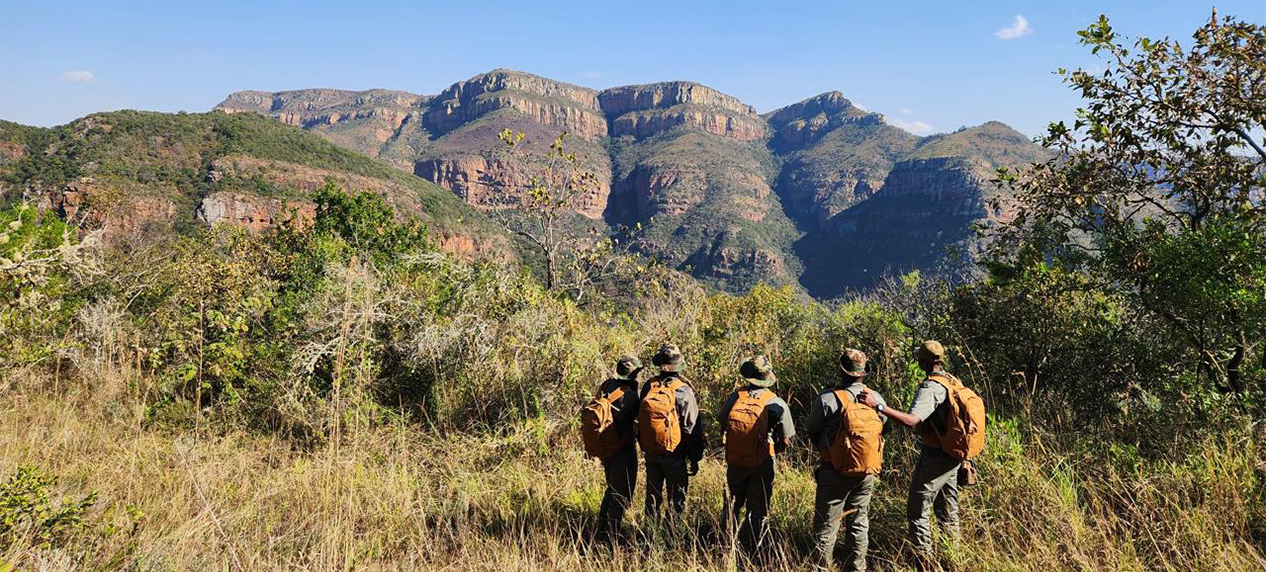
The Endangered Wildlife Trust (EWT), in collaboration with SANParks and Greater Kruger Environmental Protection Foundation (GKEPF), conducted a lion collaring and survey operation in the Nxanatseni North region of northern Kruger National Park from 21–29 September 2026. The operation focused on locating, identifying and monitoring lions in an area where the population faces increasing threats from snaring, poisoning, targeted poaching and human-wildlife conflict. A total of 30 lions were observed, including adult males and females, sub-adults, juveniles and cubs. Selected lions were processed, branded and fitted with GPS collars to strengthen the ongoing monitoring of the population.

The GPS collars provide an important conservation tool by allowing the team to remotely monitor lion movements, survival and behaviour across the large northern Kruger landscape. Collar data can also help identify when lions move into high-risk areas or display unusual movement patterns, supporting more targeted responses by conservation and ranger teams. This information will contribute to a better understanding of pride movements, dispersal, habitat use and the survival of individual lions, including translocated animals.

The EWT would like to sincerely thank Painted Wolf Wines and the Lion Recovery Fund for their generous support towards the provision of GPS collars for the northern Kruger lion monitoring programme. This contribution has increased our capacity to monitor individual lions and respond to potential threats. We also thank SANParks and the veterinary and field teams for their support during the operation.

While not all of the collars deployed during the operation are fully operational yet, the team is completing activation and communication checks to ensure that the remaining units are transmitting correctly. As the collars come online, the resulting data will provide valuable information for the continued monitoring and protection of lions in Nxanatseni North.

Archives

Every Tag Tells a Story: Helping Monitor Vultures

Every Tag Tells a Story: Helping Monitor Vultures


Every Tag Tells a Story: Helping Monitor Vultures

Dr Lindy Thompson, research and monitoring coordinator, Birds of Prey Unit


Tagged White-backed Vultures


Have you ever spotted a vulture with a colourful tag attached to its wing and wondered why it was there?

Wildlife marking is an important tool for conservationists, helping us identify individual animals and learn more about their movements, survival and breeding. For threatened vultures, this information is invaluable.

As part of her MSc research, Emma Laurieston investigated people’s knowledge and perceptions of wildlife marking, with a particular focus on patagial-tagged vultures. She surveyed 207 people in and around Kruger National Park, including conservation staff, field guides, wildlife photographers, local visitors and international tourists.

Her findings showed that awareness of wildlife marking was generally high, and many people recognised its value for research and conservation. Although some participants raised concerns about animal welfare and the appearance or comfort of tags, responses to patagial-tagged vultures were often positive. This work was co-supervised by Prof Colleen Downs (UKZN), Dr Louise Swemmer (SANParks) and Dr Lindy Thompson (EWT). Emma’s research article will be published in African Zoology.

One of the most important findings was that people’s awareness of how to report tagged vultures differed between stakeholder groups. Importantly, reporting behaviour was linked to awareness of reporting procedures, rather than whether people felt positively or negatively about tagging. This suggests that many people may be willing to help but simply do not know how or when to report a sighting.


Left: Lappet-faced Vulture and Right: White-backed Vulture


Have you seen a tagged vulture? Please submit your resightings to resightings@ewt.org, including the GPS coordinates or a pin drop of where you saw the bird, the code on the tag (e.g. A401), and the date of the sighting. Every report helps researchers understand where these threatened birds travel and how best to protect them. Every tag tells a story, and every sighting can make a difference.

Archives

Lioness Leadership Camp: Finding Strength in Nature and in Ourselves

Lioness Leadership Camp: Finding Strength in Nature and in Ourselves

Lioness Leadership Camp: Finding Strength in Nature and in Ourselves

Lesego Mthethwa, field officer in the Carnivore Conservation Unit


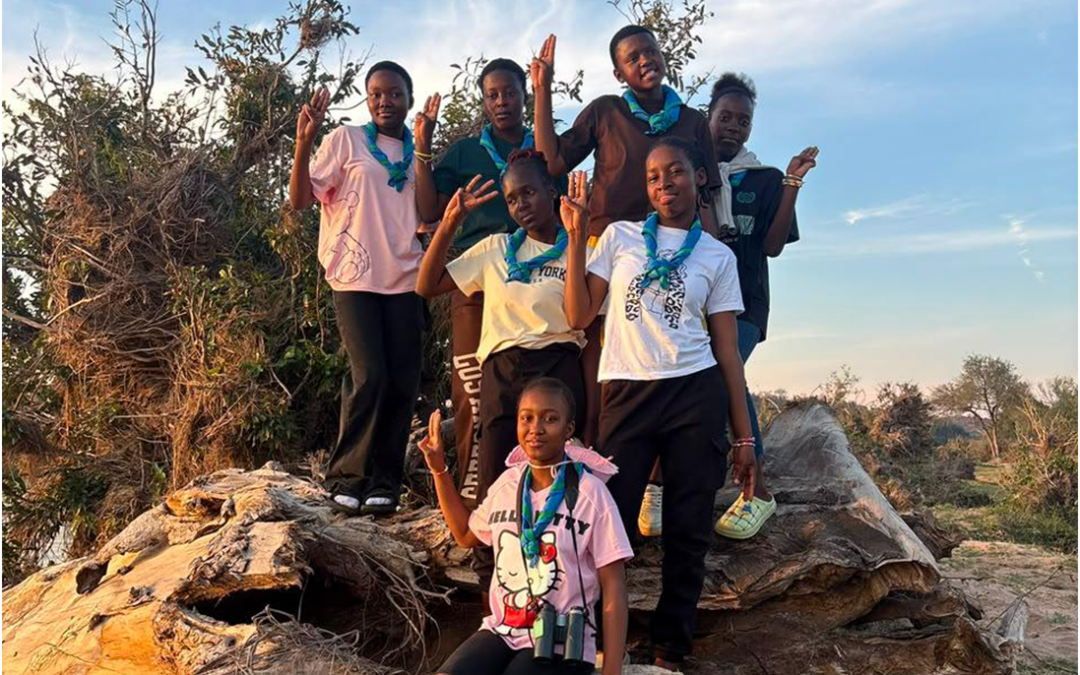
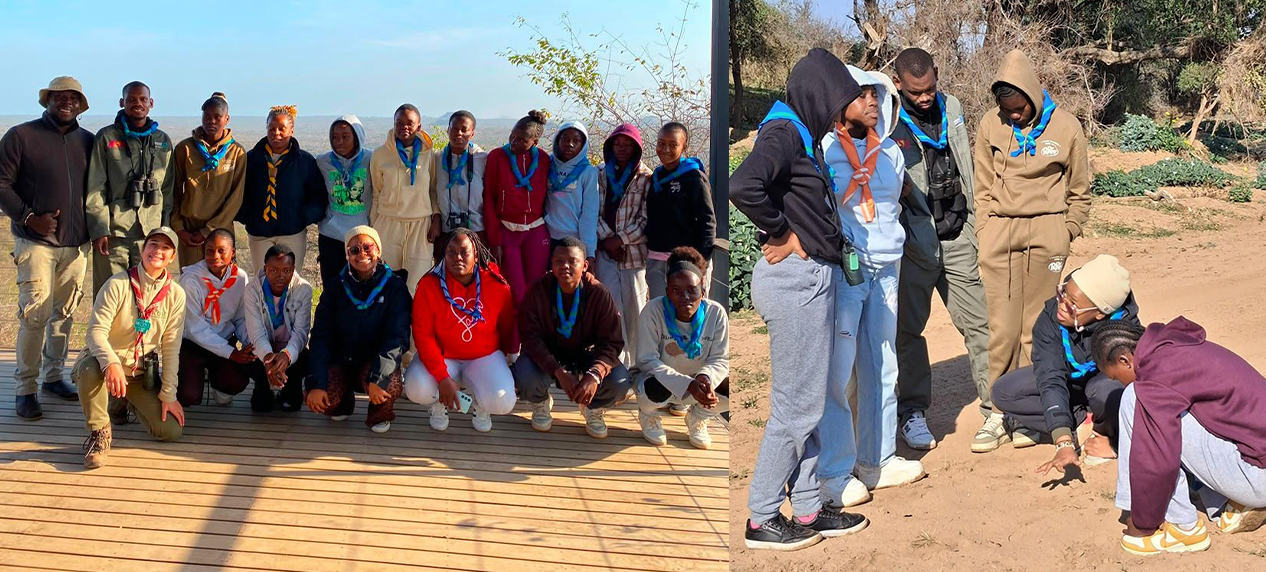
Young women participating in the Lioness Leadership Camp near Kruger National Park

In August, a month in which we celebrate women in South Africa and mark World Lion Day,  I had the privilege of hosting the first-ever Lioness Leadership Camp for girls living in communities along the western boundary of the Kruger National Park.

These girls empowerment camps are part of the Carnivore Culture programme – a collaboration between the Endangered Wildlife Trust (EWT), Conservation South Africa (CSA) and Scouts South Africa.  The aim is to empower young women living in communities neighbouring protected areas so they can become changemakers within their communities.

All participants in the camps hosted during August haled from the communities of Utah, Dixie, Thorndale, Seville “B” and Hluvukani which border the Manyeleti Game Reserve, Sabi Sands Nature Reserve and the Kruger National Park, all which fall within the Greater Limpopo Transfrontier Conservation Area. These communities are incredibly close to some of Africa’s most important wildlife areas, yet proximity to conservation does not always mean proximity to opportunity.

Many young people, particularly girls, have limited access to leadership development, mentorship, career exposure and personal growth opportunities. Social and economic barriers can also affect their confidence, aspirations and ability to see themselves in spaces such as conservation.

The Lioness Leadership Camp was created to help change that. Developed in partnership with Conservation South Africa and Koru Camp, the camps aimed to empower young women through leadership development, mentorship, personal growth and conservation awareness — while creating a safe space where they could learn, express themselves, build confidence and begin imagining the women they want to become.

But for me, this camp was also deeply personal. It was a full circle moment.

A Full-Circle Moment

My mom is from Acornhoek, and I spent much of my childhood at my grandmother’s house in the area. Some of my earliest memories are connected to this community and to the natural world around it. I always imagined that one day I would be able to give back to the same community that played such an important role in shaping my love for nature and conservation. I just never thought it would happen so soon. At 25, standing in front of young girls from a community that was part of own childhood, and having the opportunity to create a space where they could learn, dream and grow, felt extremely special. In many ways, I was looking at younger versions of myself.

Starting With a Dream

The camp began with a simple question:

What is your dream for this camp?

Each girl introduced herself, shared her deepest fear and told us what she hoped to take away from the experience. It was the beginning of watching a group of girls who arrived as strangers slowly become a community.

On the first afternoon, we headed out on our first game drive before gathering at a viewpoint for our opening ceremony. The girls received journals, chose their own power animals and created a camp flag. It was a small but meaningful beginning. Each girl had the opportunity to identify something that represented her own strength while also becoming part of a team.

In the evening, we gathered around the campfire for the Carnivore Charades Game – a  fun way of introducing the girls to carnivores and later, our journalling and gratitude circle moved the conversation from wildlife to something much closer to home: being able to speak honestly about their lives, listen to one another and realise that they were not alone in the challenges they faced.

Learning From Nature

The second day started before sunrise. We began with yoga and morning affirmations before heading out on a game drive and taking part in a nature sit spot, encouraging the girls to slow down and simply observe the world around them.

For me, this captured something important about conservation. Our work is often about monitoring, data, research and protecting species, but our connection to nature starts with something much simpler: being present enough to notice it.

We explored carnivore conservation through an interactive session and a carnivore relay race. The girls learned about the carnivores that share these landscapes and the fascinating behaviours that make each species unique.

We then created strength bracelets, with each girl choosing qualities she felt she needed to follow her dreams. These included confidence, courage, resilience and focus. The bracelets are small reminders that the qualities needed to achieve our dreams are often qualities we already carry within ourselves.

Learning About Ourselves

The camp was intentionally about more than conservation. It was also a space for conversations around menstruation, reproductive health, contraception and relationships; conversations that young women deserve to have in safe, supportive environments.

Through interactive activities, demonstrations and a pregnancy and sex myth-busting game, the girls were encouraged to ask questions and learn more about their bodies and well-being. Empowerment is not simply telling young women to “be strong”. It is giving them knowledge, creating safe spaces for them to ask questions and helping them develop the confidence to make informed decisions about their own lives.

Lessons From the Lioness

Throughout the camp, I kept coming back to the lessons we can learn from female carnivores. The lioness became the heart of the camp. Lionesses are courageous, protective and deeply connected to their pride. They care for one another and play an essential role in the survival of their families and communities.

The Cheetah reminds us of independence, speed and focus. The leopard teaches us resilience, adaptability and the ability to navigate challenging environments, and the hyaena challenges many of the assumptions we have about leadership. In hyaena societies, females hold significant social power and occupy important leadership roles. Nature constantly reminds us that strength and leadership do not have one particular shape.

As a young Black woman working in a traditionally male-dominated industry, I know that finding your place and believing in yourself can be difficult. I was fortunate to grow up with a mother who supported me despite the negative things people sometimes said about my ambitions. That support made a difference in my life, and it is the kind of support I believe we should be giving one another.

I believe that like lionesses, we should protect each other, love each other and take care of each other.

This mantra felt particularly important during Women’s Month and within the broader context of gender-based violence affecting women and girls in South Africa. Creating spaces where young women can recognise their value, understand their boundaries and support one another is incredibly important.

A Promise to Their Future Selves

On the final morning, the girls were asked to write a letter to their future selves.

The question was simple:  Where would you like to be in 10 years?

After three days of conversations, wildlife encounters, laughter, learning and moments of vulnerability, they had the opportunity to imagine the women they wanted to become. During the pledge and departure ceremony, each girl made a promise to herself, and that, for me, was the heart of the entire experience. The girls arrived with fears, dreams and questions. They left having spent three days discovering that they are capable of more than they may have realised.
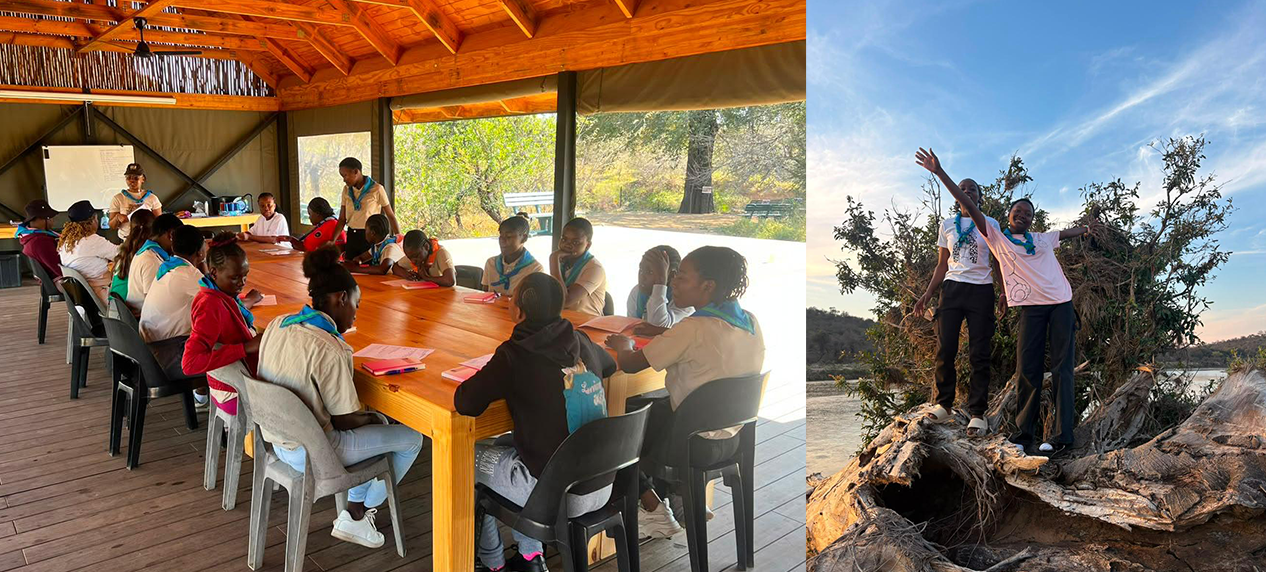
Lioness Leadership Camp empowering girls through conservation, mentorship and leadership development

Creating Space for the Next Generation

The Lioness Leadership Camp reminded me that conservation is about so much more than protecting wildlife, it is also about people and the communities who live alongside these landscapes. If we want young people to see conservation as something they can be part of, we have to create opportunities for them to experience it, understand it and see themselves within it, but the camp was never about telling these girls that they all have to become conservationists. It was about showing them that they have choices, conservation needs scientists, field officers and ecologists, but it also needs educators, lawyers, accountants, communicators, marketers, photographers, entrepreneurs and community leaders. Sometimes all a young person needs is someone to tell them: “There is a place for you here.”

I hope the Lioness Leadership Camp gave these girls that feeling.

I am incredibly grateful to Koru Camp for their support, and belief, in this project.

To return to a community that shaped my childhood and give back through something I love so deeply is a privilege I will never take for granted, and perhaps the greatest lesson of all is that sometimes, when we create space for young girls to dream, we don’t just empower the next generation of women. We help them realise that they were powerful all along.

Every Spot Counts: The Greater Kruger Cheetah Census 2026/27

Every Spot Counts: The Greater Kruger Cheetah Census 2026/27

Every Spot Counts: The Greater Kruger Cheetah Census 2026/27

By Olivia Sievert, manager of the EWT’s Cheetah Conservation Project


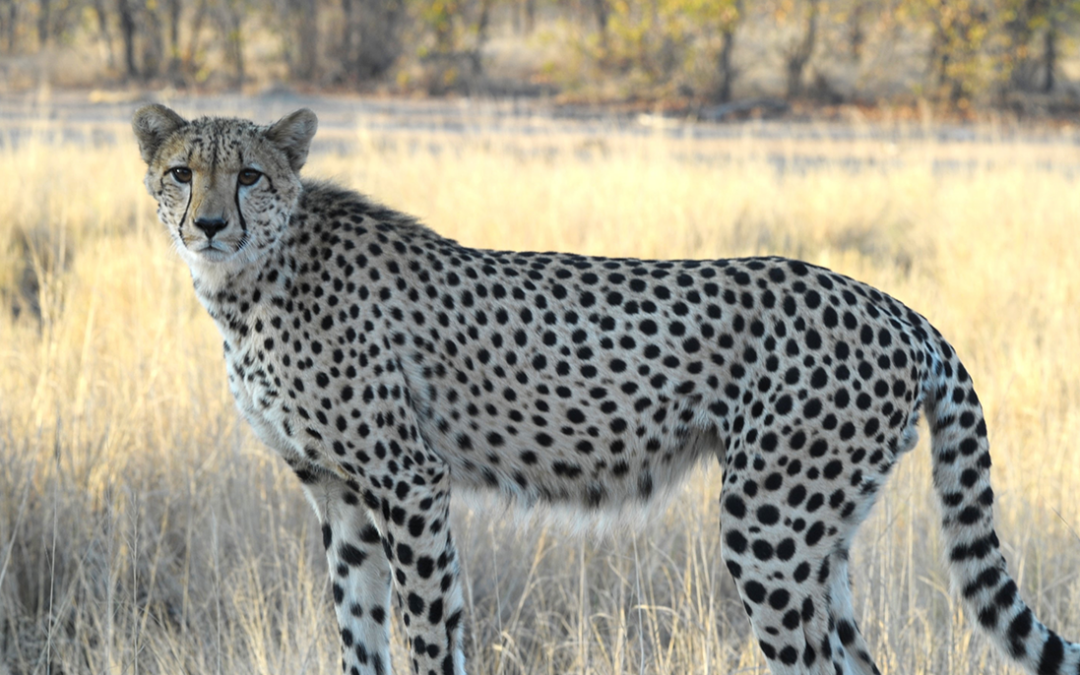
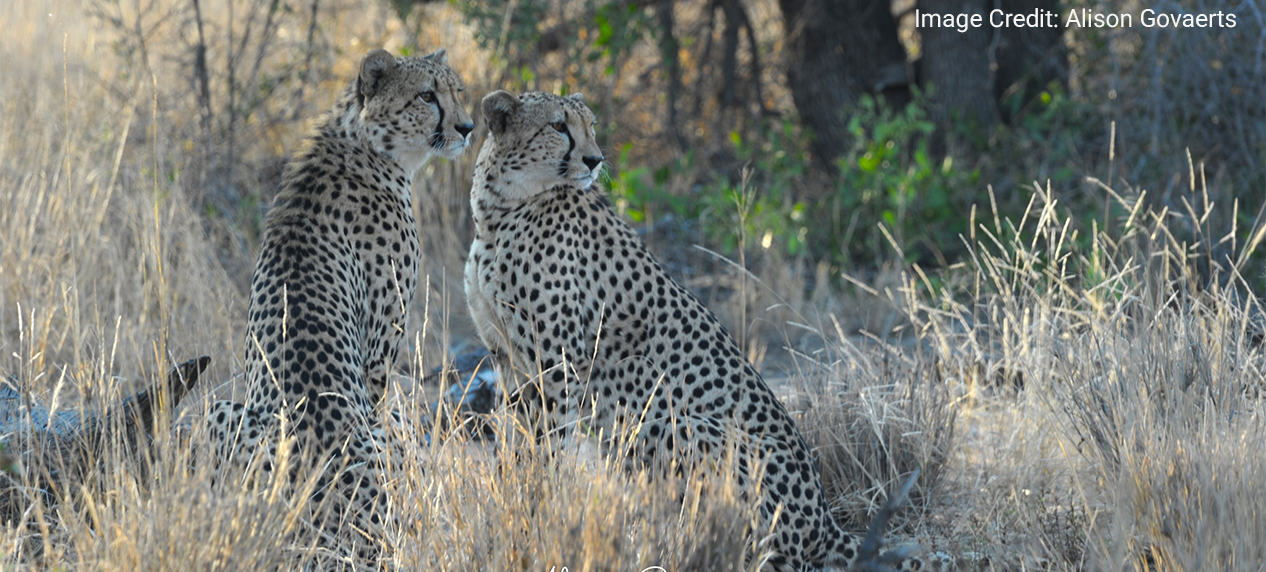
Wild cheetah in Greater Kruger identified through its unique coat pattern.

Everyone loves seeing a Cheetah in the wild, but did you know that behind every sighting lies an important scientific opportunity? A simple photograph can help us identify an individual, track its movements, and, when combined with thousands of other records, build a picture of an entire population.

This is the idea behind the Greater Kruger Cheetah Photographic Census, a collaborative initiative between the Endangered Wildlife Trust and SANParks, to improve our understanding of Cheetahs across the Greater Kruger landscape.

Building on decades of photographic monitoring

Photographic censuses of large carnivores have a long history in the Kruger. Citizen-science photographic surveys for African Wild Dogs began in 1988/89, with Cheetahs being first included in 1990. Further Cheetah censuses followed in 2004/05 and 2009/10, before the most recent, in 2021/2022.

The principle is simple: Cheetahs have individually distinctive coat patterns, allowing researchers to recognise the same animal from photographs taken at different times and places. Tourists, guides, staff, and other members of the public can therefore become part of the monitoring effort simply by submitting photographs of the cheetahs they encounter.

The last census in 2021/2022 received 196 Cheetah submissions, of which 151 were suitable for individual identification. From these photographs researchers were able to identify 86 individuals, while statistical modelling estimated approximately 116 Cheetahs across the national park.  These numbers, however, also highlight why the next census is so important. This population estimate was the lowest recorded to date, yet this apparent decline cannot simply be interpreted as a decline in the Cheetah population. The 2021/2022 census had fewer submissions, reduced tourism during the COVID-19 pandemic and introduced AI-assisted identification. Meaning a mixture of low reporting and a change in methods likely also contributed to our recorded population decline.

In other words, we have valuable information, but we still have important questions to answer.

Why Greater Kruger matters

The Greater Kruger landscape is one of the most important remaining strongholds for Cheetahs in southern Africa. As part of the wider Greater Limpopo Transfrontier Conservation Area (GLTFCA), which includes the Kruger National Park, the Associated Private Nature Reserves, and adjoining conservation areas in Mozambique and Zimbabwe, it forms part of a vast connected conservation landscape spanning nearly 100,000 km². Large, connected landscapes are essential for maintaining viable wildlife populations as they allow animals to move between suitable habitats and host large enough populations to maintain genetic diversity without intervention.

The GLTFCA represents roughly three percent of the Cheetah’s remaining global range and contains some of the largest protected areas available to the species in southern Africa. Within South Africa, the Greater Kruger landscape is particularly significant, encompassing approximately 47% of the country’s protected Cheetah habitat. Yet the most recent population estimate suggests that it supports only around 17% of South Africa’s remaining wild Cheetah population.

Large, connected protected areas are critical for the long-term conservation of Cheetahs. The species naturally occurs at low densities, requires extensive areas over which to hunt, disperse, establish territories and avoid competing predators. Additionally, Cheetah are vulnerable to increasing human pressures beyond protected areas where we have seen some of the most drastic population declines in the last 15 years. Therefore, ensuring that protected landscapes such as the Greater Kruger continue to support healthy Cheetah populations will require informed and targeted conservation action.

But, effective management depends on reliable information. We need to understand how many Cheetahs occur across the landscape, where they are found, how they move between areas, and which threats may be limiting their population growth. The Greater Kruger Cheetah Census aims to provide this knowledge, creating the foundation for evidence-based conservation and helping to guide management decisions for one of South Africa’s most important wild Cheetah populations.

Wild cheetah in Greater Kruger identified through its unique coat pattern.

What do we know, and what don’t we know?

We know that Cheetahs generally occur at low densities, have large ranges and can move considerable distances. During the 2021/2022 census, one individual was recorded as having a potential range of more than 810 km² and moving more than 90 km between sightings.

We also know that photographic monitoring works. But we do not yet have a sufficiently consistent, landscape-scale baseline to answer some of the most fundamental conservation questions confidently. How many Cheetahs are there? Is the population stable, increasing or declining? How many cubs are surviving? How long do individuals live? Are Cheetahs making use of the wider landscape? And what threats are impacting the population? All these questions are imperative to answer if we want to properly conserve the Cheetah across the Greater Kruger.

Turning photographs into conservation action

The 2026/27 census aims to build on this history by bringing together new photographic submissions with historical photographs, camera-trap images, ranger records, existing monitoring data, and other available information. Individual Cheetahs will be identified using AI-assisted coat-pattern recognition, with manual verification where necessary.

The goal is not simply to produce another population estimate. We want to establish a reliable baseline for the Greater Kruger Cheetah population, understand how individuals move and survive across the landscape, identify important core population areas and potential connectivity routes, and improve our understanding of threats. This information can ultimately support more targeted threat reduction, better coordination between conservation areas, and adaptive management.

You can help

If you are visiting Greater Kruger landscape between 1 September 2026 and 31 August 2027, you can take part in the census.

If you see a Cheetah, take photographs from a safe and respectful distance. Where possible, photographs of both the left and right sides of the animal are especially valuable because they help us distinguish individuals accurately.

When submitting your sighting, please include:

  • The photographs of the Cheetah(s);
  • The date of the sighting;
  • The approximate location, GPS coordinates, road number, or nearest landmark;
  • The number of Cheetahs observed; and
  • Any additional observation.

Every photograph adds another piece to the puzzle. A single image may help identify an individual; repeated sightings can reveal movements and survival; and thousands of photographs collected over time can help us understand the population as a whole.

Your next cheetah sighting could help shape the future of Cheetah conservation in Greater Kruger: Every Spot Counts.

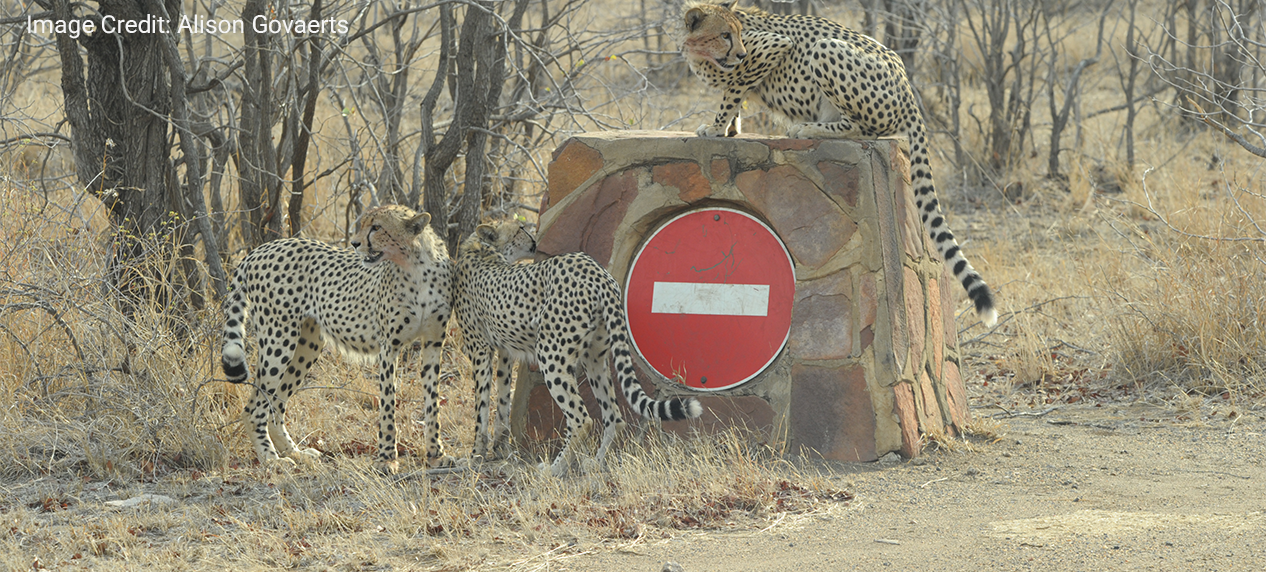
Cheetah photographed during the Greater Kruger Cheetah Census 2026/27.

** This work is being done in partnership with SANParks. Funding is provided by DERTOUR Foundation and SANParks Honorary Rangers Fund with support from Ford Wildlife Foundation, SANParks Honorary Rangers and Tech4Conservation.

Turning Traps into Hope: Poacher’ s Snares Repurposed for Conservation

Turning Traps into Hope: Poacher’ s Snares Repurposed for Conservation


Turning Traps into Hope: Poacher’ s Snares Repurposed for Conservation

By John Davies


Across much of Africa, snaring of wildlife is on the rise, driven by a combination of poverty, bushmeat demand, and organized wildlife crime. With economic hardships pushing more people toward illegal hunting for sustenance or profit, snares have become the weapon of choice—they are cheap, easy to set, and devastatingly effective. However, they do not discriminate, often trapping unintended species, including elephants, lions, and wild dogs. Many animals suffer prolonged, agonising deaths, while those that survive can be left with severe injuries that compromise their ability to hunt or evade predators.

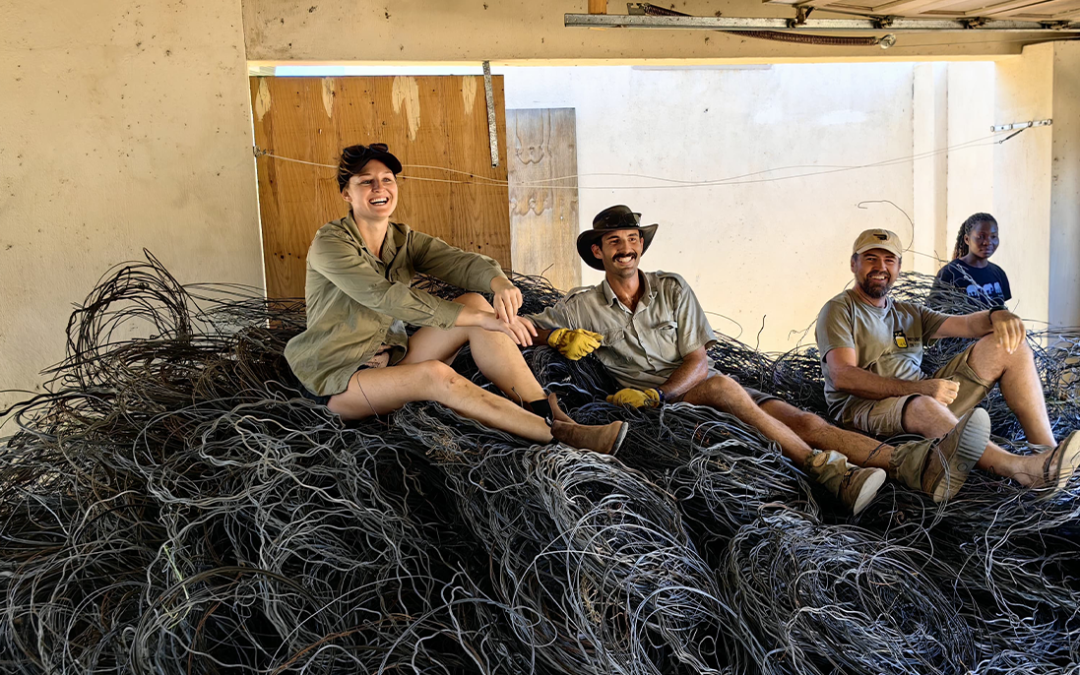
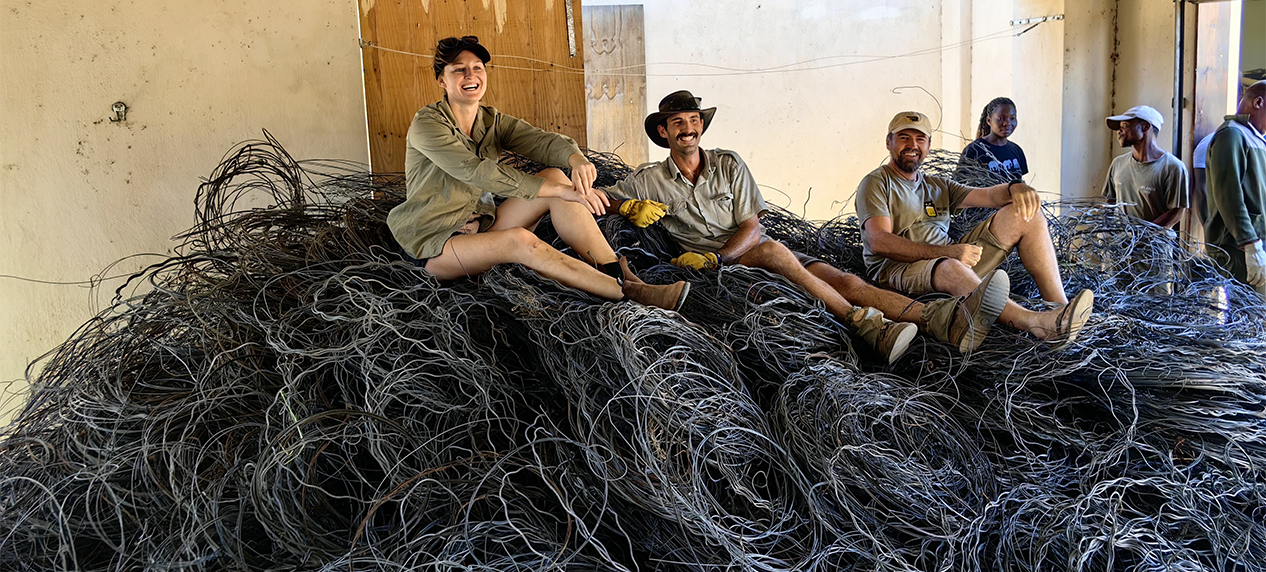
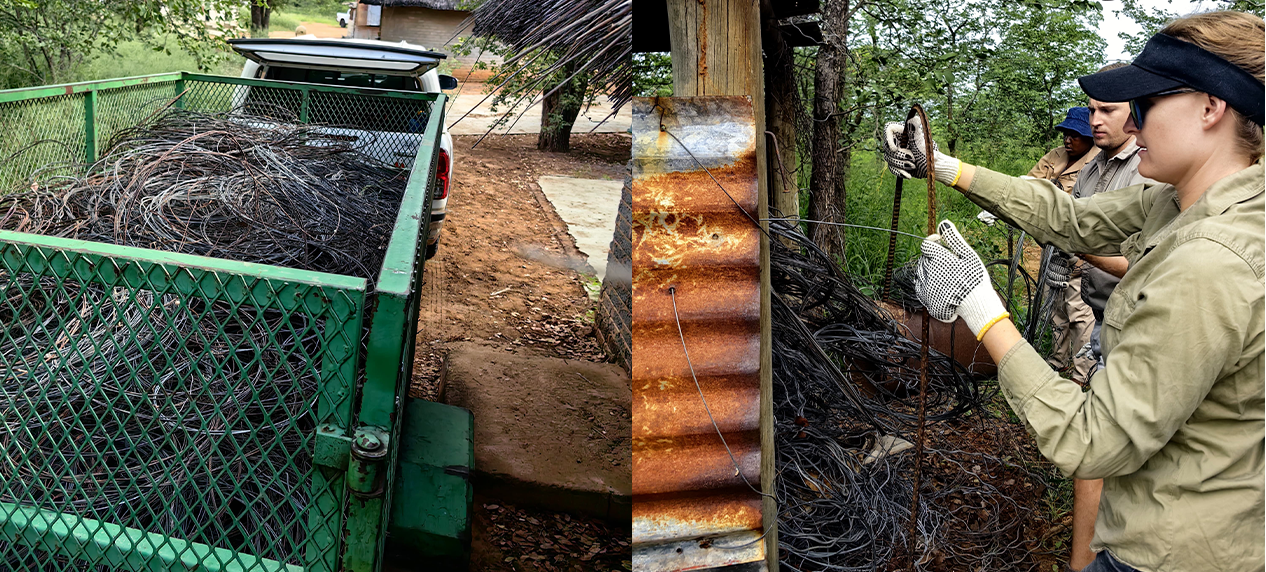
In a significant step toward protecting South Africa’ s wildlife, the Endangered Wildlife Trust (EWT) recently removed 3.5 tons of wire snares from a protected area in the Lowveld region of South Africa, forming a critical buffer zone along Kruger National Park’ s western boundary. These snares had been stockpiled over the last five years and had been removed during routine patrols by reserve anti-poaching teams.

Instead of being discarded, the snares have been given a second life through a partnership with Down2theWire, a local initiative that transforms confiscated poaching materials into handcrafted jewellery. This innovative project not only raises awareness about the devastating effects of snaring, but also provides funding for conservation efforts generated through the sale of jewellery and other products made from snares. Profits from the jewellery sales will be reinvested into anti-poaching initiatives, supporting rangers, education programs, and community-driven conservation efforts.

This initiative underscores the importance of sustainable solutions in wildlife conservation, proving that even the most destructive tools can be reshaped into symbols of resilience and protection.

As wildlife crime continues to challenge conservationists, creative collaborations like this offer a beacon of hope. Consumers can now play a direct role in the fight against poaching—one bracelet at a time.