Help protect Africa's 

EWT team returns to Kgalagadi Transfrontier Park to conduct lion research

EWT team returns to Kgalagadi Transfrontier Park to conduct lion research
EWT team returns to Kgalagadi Transfrontier Park to conduct lion research


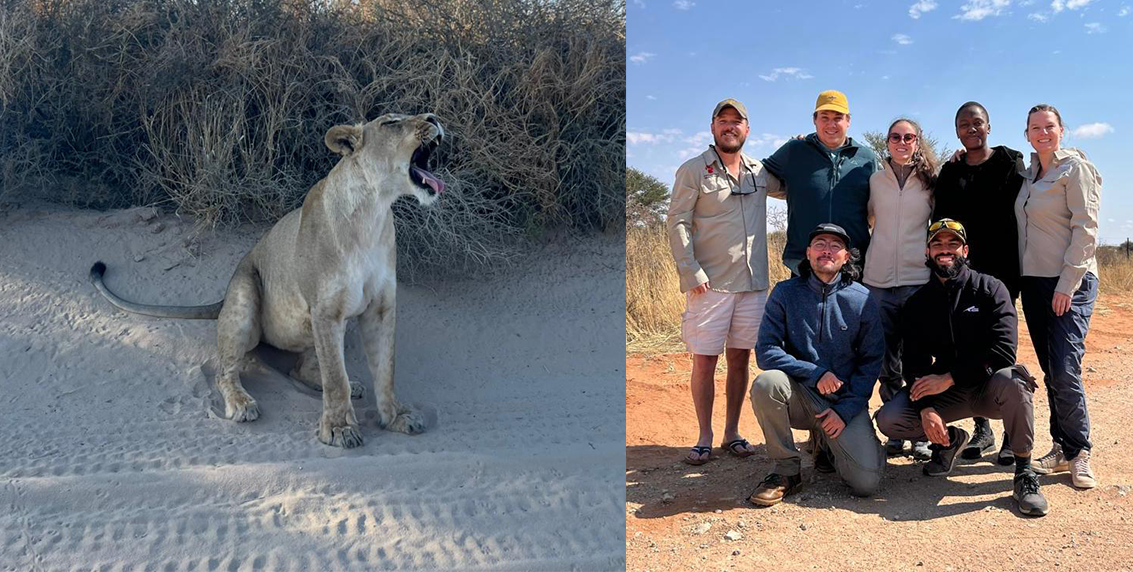
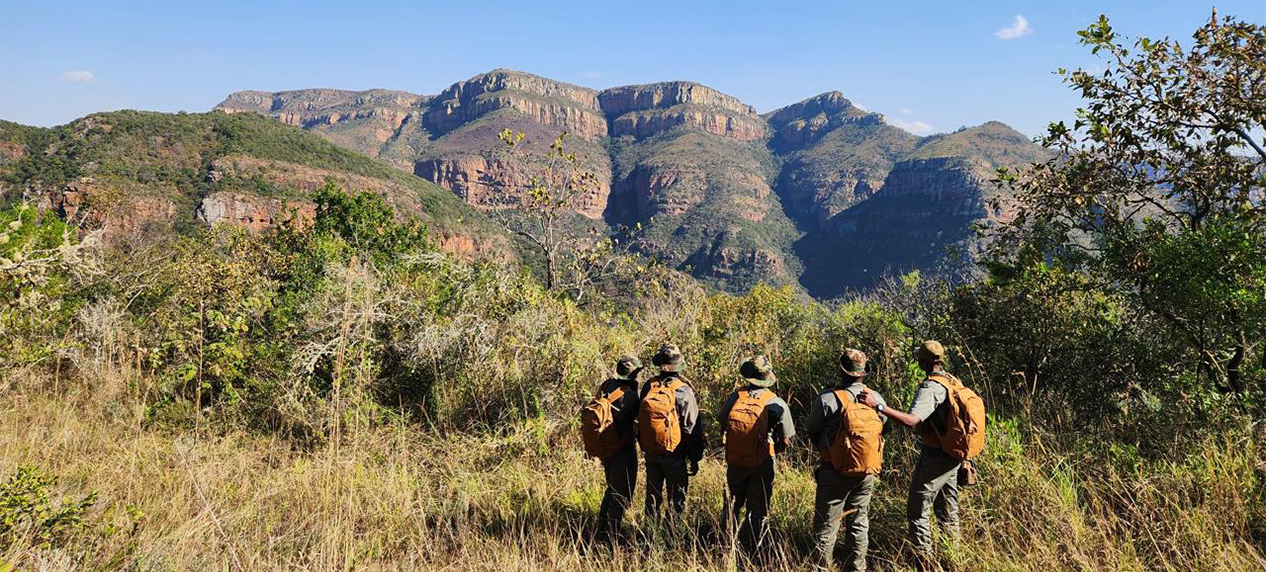
EWT researchers conducting the Kgalagadi lion population census in South Africa.

An Endangered Wildlife Trust team has returned to the Kgalagadi Transfrontier Park to conduct this year’s lion population census, helping SANParks monitor and better understand the lion population in the park.

The lion monitoring project started on 1 August and ends on 31 October 2026. In 2025, the team had also spent three months in the Kgalagadi Transfrontier Park, which spans South Africa and Botswana, to collected the first tranche of data about the lions living in this desert landscape.

In the next three months, the EWT team, supported by SANParks, will determine how many lions are estimated to live in the South African part of the Transfrontier Conservation Area, their demographics, and their spatial distribution within the park. A team from Kalahari Research and Conservation are undertaking a similar project on the Botswana side of the Transfrontier Conservation Area.

Repeated annual surveys will form the base for subsequent, less frequent long-term monitoring of the Kgalagadi lion population, the second-largest free-roaming lion population in South Africa.

Understanding the status and performance of this population is central to national lion conservation planning and to the long-term management of the broader transboundary ecosystem. It supports SANParks in the effective management of lion populations within its parks.

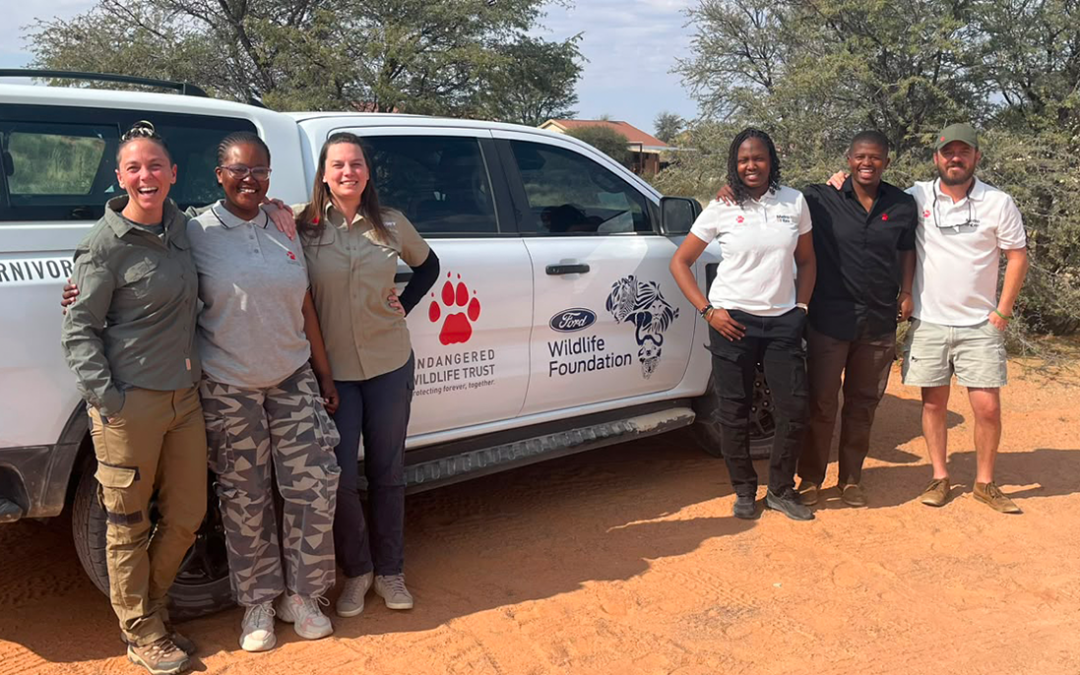
The core team comprises four women and two men. It is led by the EWT Carnivore Conservation Unit’s data analyst, Alison Govaerts, who is supported by EWT project manager Marnus Roodbol. Also on the team are EWT field technicians Nonkuleleko Mokobong, Lesedi Leope, Sabelo Mahlangu and Lizaene Cornwell.
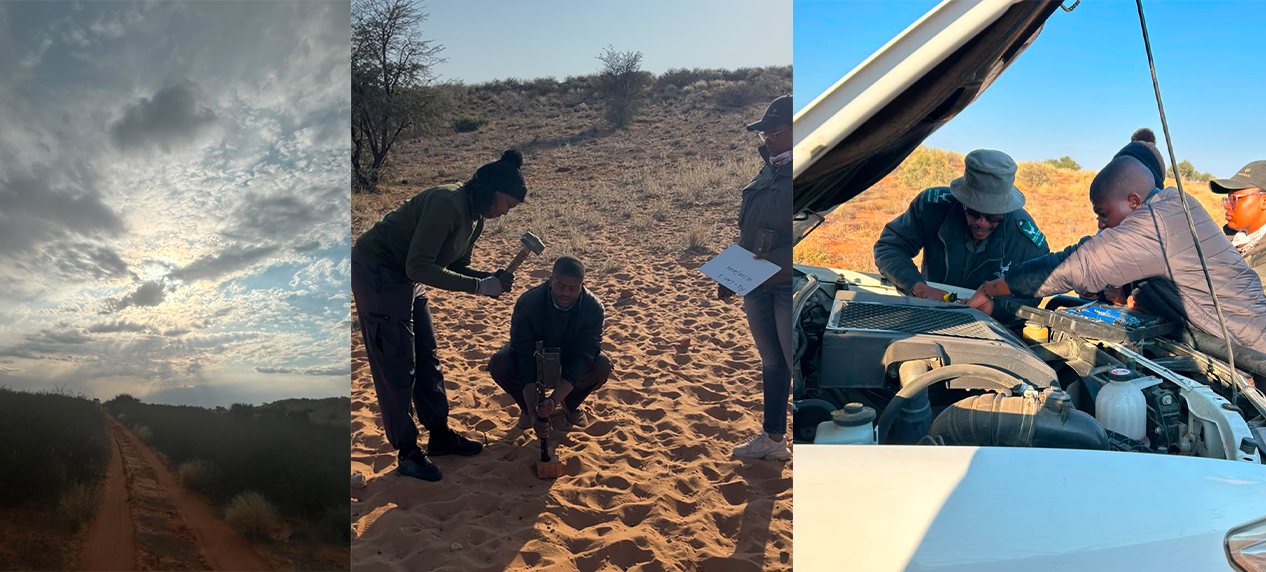
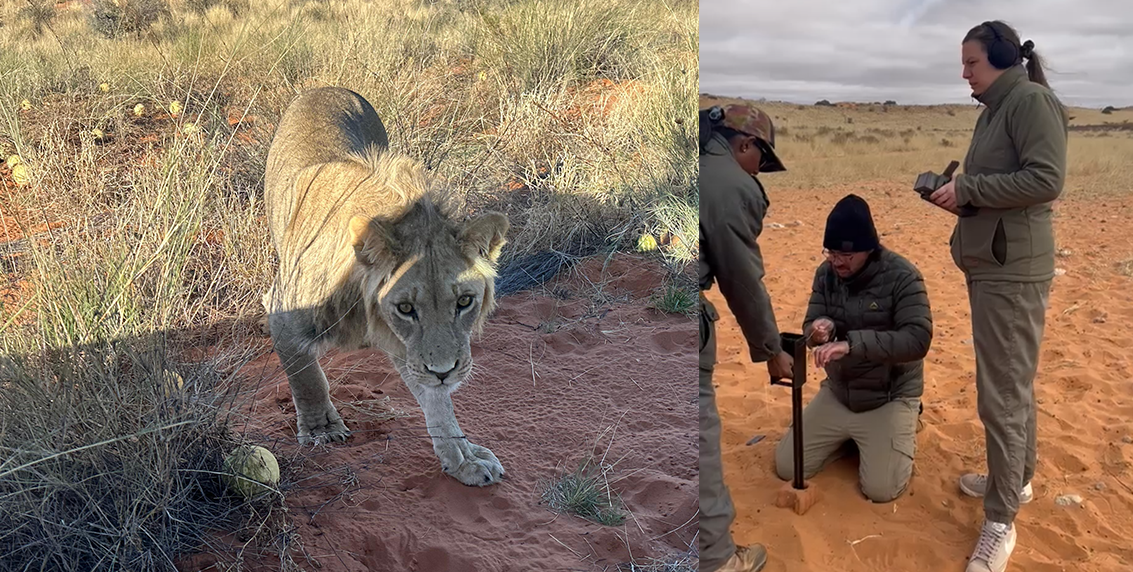
Field researchers monitoring lions across the Kgalagadi Transfrontier Park.

The team are using photographs and camera trap footage to individually identify each encountered lion (excluding lion under one-year-old) using their unique whisker pattern.

At the end of the three-month period, the results and reports of the surveys by the EWT and Kalahari Research and Conservation will be combined to estimate lion numbers across the whole Transfrontier Park. As the lions move freely across borders, some individuals will be identified by both teams. By combining the survey data, possible double counting of these lions will be avoided.

Through the monitoring of existing populations, we are able to keep track of population dynamics, which provides a powerful tool to inform management strategies and to identify potential threats in time. The protection and conservation of lions remains a priority for this apex predator that plays a central role in keeping the balance within ecosystems by maintaining a healthy prey base, and keeping the meso-predator population in check. Without lions, prey populations would risk overgrazing the landscape.

Lions are a flagship species, and are a popular sighting as a key member of the Big Five during safaris. Thus, their economic importance.

Lion are also culturally important as they symbolise power, strength, and leadership, and are embedded in many practices, ranging from representing totems and clans, to being a symbol or name for sports teams, or play a role in spiritual and traditional customs.

In partnership with SANParks, and with the support of the Lion Recovery Fund and private donors, the EWT is taking a important step forward for lion conservation.
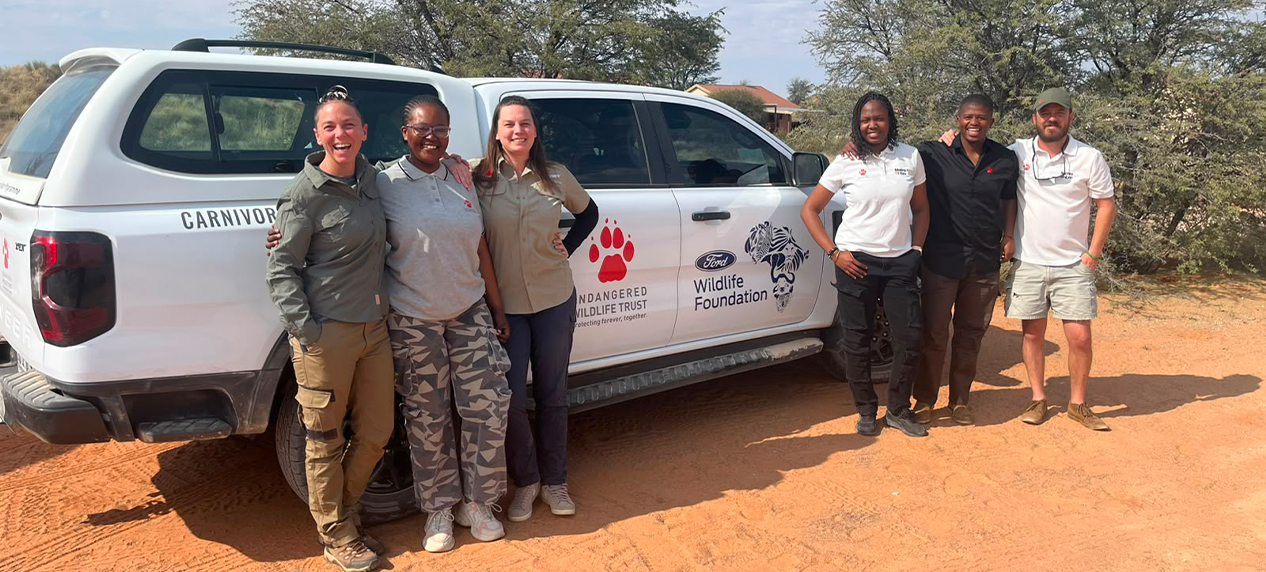
EWT Carnivore Conservation Unit carrying out lion population surveys.

Pride & Progress: Inside the Kgalagadi’ s Desert Lion Survey

Pride & Progress: Inside the Kgalagadi’ s Desert Lion Survey

Pride & Progress: Inside the Kgalagadi’ s Desert Lion Survey

By Alison Govaerts and Nonkululeko Makobong, Carnivore Conservation Unit


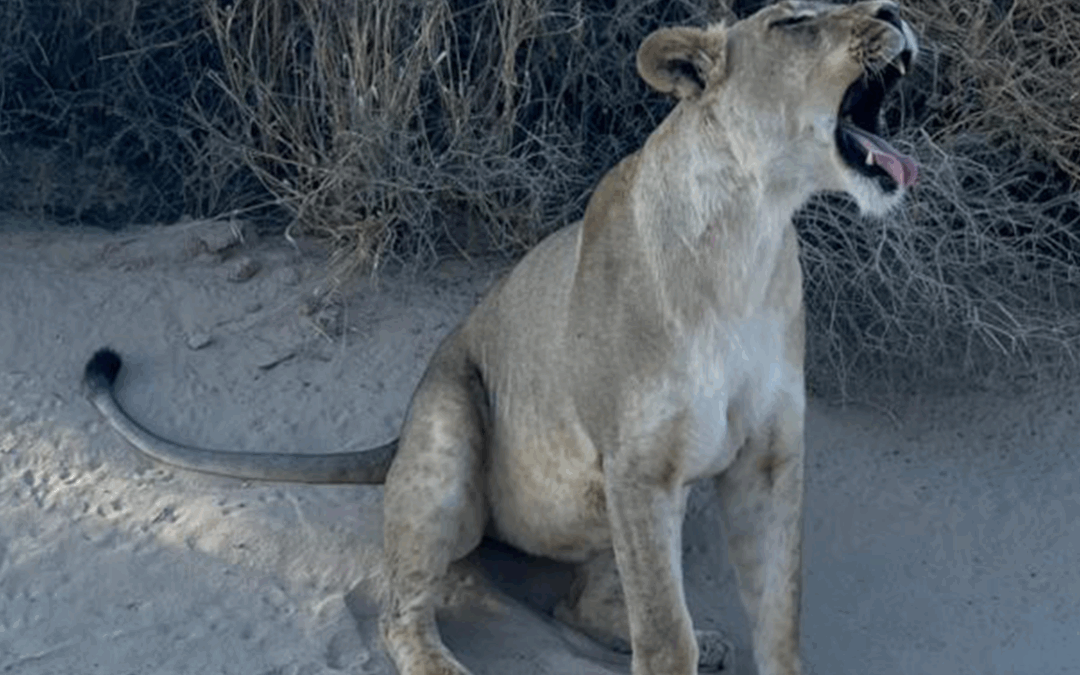
desert lions photographed during Kgalagadi lion population survey


The lion (Panthera leo) is a predominant species in the functionality of ecosystems across Africa. These cats play a vital role in maintaining a balance in the food chain and in supporting biodiversity.  

In the Kgalagadi Transfrontier Park, spanning parts of South Africa and Botswana, lions have adapted to one of the harshest environments. These desert lions roam a landscape of vegetated red dunes, depend on manmade waterholes for water, and need to cope with temperatures ranging o from scorching to freezing. Despite these challenging conditions, the park is home to a variety of bird, reptile and mammal species; enough to support a healthy lion population. 

To develop and implement effective conservation efforts for this species, it is crucial to monitor the populations closely. That’ s why the Endangered Wildlife Trust, in collaboration with SANParks, surveyed the lions in the park over three months to obtain robust estimates of population numbers and demographics. Much like the lions, the research team needed to adapt to the challenging environment while enjoying the privilege of following the lions until October 2025.

To obtain robust estimates of the lion population, we used what is known as a spatial capture-recapture methodology, which meant we had to identify as many lion as possible through physical searches and using camera traps, and measuring the effort it took to get them.

Because lions do not have spots like Leopards or African Wild Dogs, the key to identifying them lies in tiny whisker spots on their faces. Each lion has a unique pattern of whisker spots, on both the left and right of its face. Therefore, you must get quite close and have proper cameras to capture this.

There were two ways to get an identification: the team would either drive transects while recording the kilometers driven on a mobile tracking APP on our smartphones and find lions close enough to identify; or we would capture them on the camera traps that we put out. Because the team identified the lions individually, there were no double counts, and pride/coalition catalogues could be constructed based on lions spotted together. Only lions above the age of one were counted, as the mortality rate among younger lions is very high.

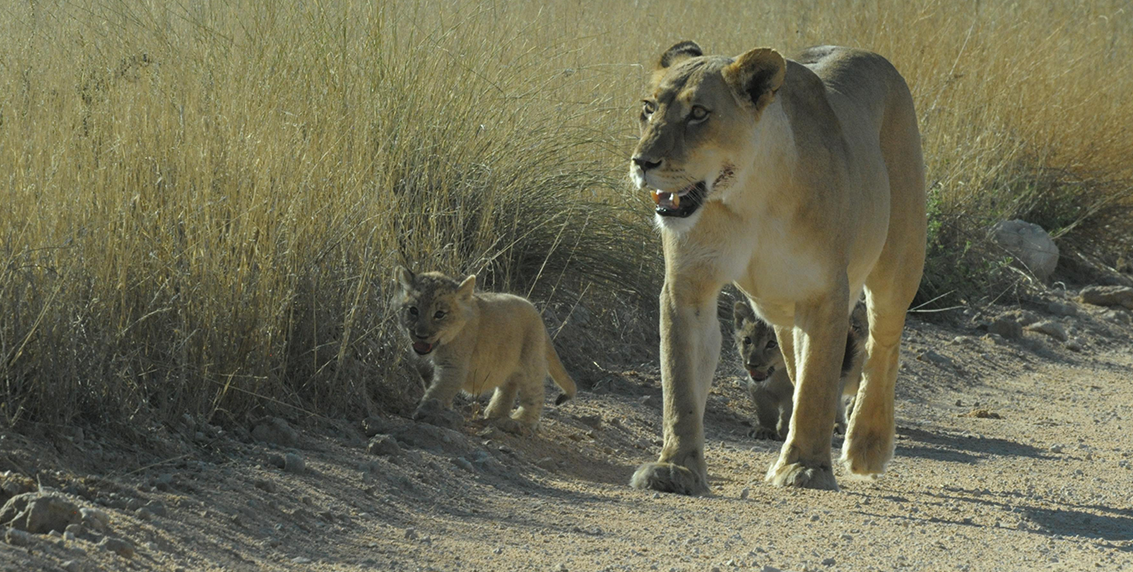
camera trap image from Kgalagadi lion population survey

In the field

Life in the field was far from ordinary, and definitely not your average day at the office. The area is remote, which meant only one town visit a month for massive bulk shopping and limited contact with the outside world – only one of the camps had good cellphone reception. The team relied on hefty cameras, rugged 4×4 vehicles and each other. In each transect, two people shared a vehicle: one drove over treacherous dunes while the other scanned for lions that blended perfectly into the sand. Success hinged on flawless teamwork. The team of six moved like nomads, rotating between the three camps (Twee Revieren, Nossob and Mata Mata) each week, following the lions across hundreds of kilometers of dunes.   Since we all hailed from different walks of life, the team had to adopt a number of intriguing lifestyle changes. 

One highlight was the day we stumbled upon a pride of seven lions – six lionesses and a male.  It topped a day in which we had had three other lion sightings. It’ s breathtaking to realise that you would have to tell them apart later.

Data processing turned into a puzzle of whisker dots and pride dynamics. This was tackled directly after each transect to keep the information fresh. When the dust settled, the results were encouraging. The Kgalagadi lion population is thriving and unusually well‑balanced. While many regions show a 2:1 female‑to‑male ratio, Kgalagadi prides exhibit a near‑even sex ratio, indicating strong genetic health and stable social structures. This differs from other prides that often have two or more adult males instead of one male dominating over one pride, like in other protected areas.

The survey’ s findings provide significant information about the lion population dynamics in the area. However, the extensive sand dunes and limited road network posed logistical challenges. The restriction to certain areas influenced the detection probability and overall sampling, and there was a week when all the teams had no lion sighting at all.  This was discouraging, but that is the reality of working in a Transfrontier conservation area; the animals can move around freely as they choose. Despite these limitations, the team pioneered through and conducted the study to the best of their ability. More than 100,000 kilometers were driven, and even more pictures captured. The survey was a success!

A detailed report is being drafted by the team. The results will inform conservation and management strategies and ultimately contribute to the long-term conservation of the lions of the Kgalagadi.

researchers identifying lions by whisker spots during Kgalagadi lion population survey

** ** The EWT would like to thank its sponsors – the Lion Recovery Fund and the Ford Wildlife Foundation – for their support during the 95-day Kgalagadi lion population survey.