Creating a Thriving Wetland For All in Zambia
Creating a Thriving Wetland For All in Zambia
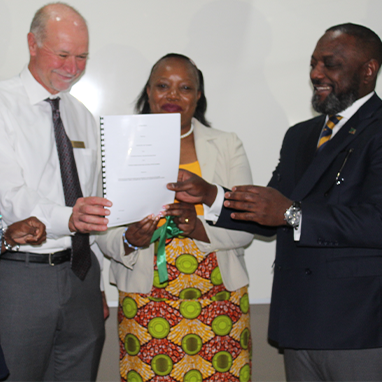
A major conservation milestone was achieved in Zambia on 10th October as the International Crane Foundation, in partnership with the Endangered Wildlife Trust (EWT), officially launched a 20-year collaborative management agreement for the Kafue Flats with the Ministry of Tourism under the Department of National Parks and Wildlife and the World Wide Fund for nature (WWF) Zambia. This groundbreaking initiative, the Kafue Flats Restoration Partnership, aims to create a “thriving wetland for all” by engaging local communities in the conservation and management of this vital ecosystem.
The Kafue Flats includes 6,500 hectares of wetlands, lagoons, grasslands, and floodplains including the Blue Lagoon and Lochinvar National Parks. This region is home to more than 470 bird species, among them the endangered Wattled Crane. Cranes and the lechwe antelope are key indicators of the health of the Kafue Flats ecosystem. More than 1.3 million people live in or around the Kafue Flats, and over 300,000 people rely on this area for freshwater, grazing, livelihoods, and cultural ceremonies.
Sadly, the floodplain is degrading under increasing pressure from unsustainable economic practices, population growth, and climate change. The 20-year agreement will tackle critical problems such as wildlife poaching, poor grazing, unsustainable fishing practices, unplanned settlements, and the impacts of flooding. The partnership will study these issues and manage the region by focusing on finding sustainable solutions that protect both the environment and the livelihoods of the local people.
At the launch, Minister of Tourism Rodney Sikumba emphasised the importance of balancing socio- economic needs with environmental protection of the Kafue Flats. This area is a wetland of international importance under the Convention on Wetlands, a key biodiversity area under Birdlife International, and a Man and Biosphere Reserve under the United Nations Education, Scientific and Cultural Organisation, UNESCO.
Recently, His Excellency, the President of Zambia, Mr. Hakainde Hichilima made a declaration during the Lwanza Traditional Ceremony in Bweengwa, Southern Province, outlining plans to boost cattle production through the establishment of cattle economic zones in the Kafue Flats south and north of the Kafue River. The focus on disease control and improved genetics is seen as a strategic move to enhance the quality of Zambian beef amid climate change challenges.
“We all know that climate change is real, hence the need for adequate adaptation and mitigation,” said Mr Sikumba. “Ecosystem based adaptation is an important option which implies that we manage the Kafue Flats especially in terms of the vegetation, water and fires, because we all know that a well-managed ecosystem is more resilient to the climate shocks such as drought and flood. Therefore, concerted efforts from all partners are needed to manage the Kafue Flats and I wish to reiterate the ministry’ s support on this noble cause,”
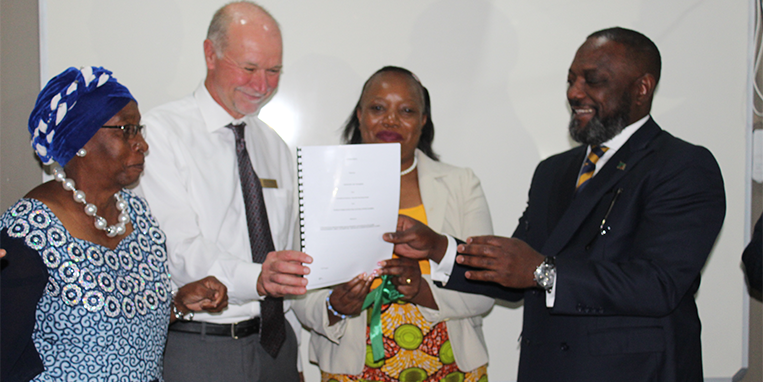
“There is urgent need for sustainable solutions in the Kafue Flats for people and wildlife for a brighter future,” said Dr. Rich Beilfuss, President and CEO of the International Crane Foundation. “We must all work together to safeguard the future of the Kafue Flats and its incredible wildlife, including cranes and the endemic Kafue lechwes,”
The Kafue Flats Restoration Partnership will combine the efforts of these three institutions more vigorously with local communities to prevent further degradation in the Kafue Flats. The partnership’ s vision will serve as a model for balancing ecological conservation and economic development in a protected area floodplain ecosystem for the benefit of both people and nature.