Help protect Africa's 

Lion Collaring and Monitoring Update: Northern Kruger National Park

Lion Collaring and Monitoring Update: Northern Kruger National Park

Lion Collaring and Monitoring Update:
Northern Kruger National Park


By Marnus Roodbol, project manager, Carnivore Conservation Unit


The Endangered Wildlife Trust (EWT) conducting a lion collaring and survey operation.

The Endangered Wildlife Trust (EWT), in collaboration with SANParks and Greater Kruger Environmental Protection Foundation (GKEPF), conducted a lion collaring and survey operation in the Nxanatseni North region of northern Kruger National Park from 21–29 September 2026. The operation focused on locating, identifying and monitoring lions in an area where the population faces increasing threats from snaring, poisoning, targeted poaching and human-wildlife conflict. A total of 30 lions were observed, including adult males and females, sub-adults, juveniles and cubs. Selected lions were processed, branded and fitted with GPS collars to strengthen the ongoing monitoring of the population.

The GPS collars provide an important conservation tool by allowing the team to remotely monitor lion movements, survival and behaviour across the large northern Kruger landscape. Collar data can also help identify when lions move into high-risk areas or display unusual movement patterns, supporting more targeted responses by conservation and ranger teams. This information will contribute to a better understanding of pride movements, dispersal, habitat use and the survival of individual lions, including translocated animals.

The EWT would like to sincerely thank Painted Wolf Wines and the Lion Recovery Fund for their generous support towards the provision of GPS collars for the northern Kruger lion monitoring programme. This contribution has increased our capacity to monitor individual lions and respond to potential threats. We also thank SANParks and the veterinary and field teams for their support during the operation.

While not all of the collars deployed during the operation are fully operational yet, the team is completing activation and communication checks to ensure that the remaining units are transmitting correctly. As the collars come online, the resulting data will provide valuable information for the continued monitoring and protection of lions in Nxanatseni North.

Archives

From Conflict to Climate – What is Threatening Lions in Africa?

From Conflict to Climate – What is Threatening Lions in Africa?

Science snippet:

From Conflict to Climate – What is Threatening Lions in Africa?

By Erin Adams, Science Officer 


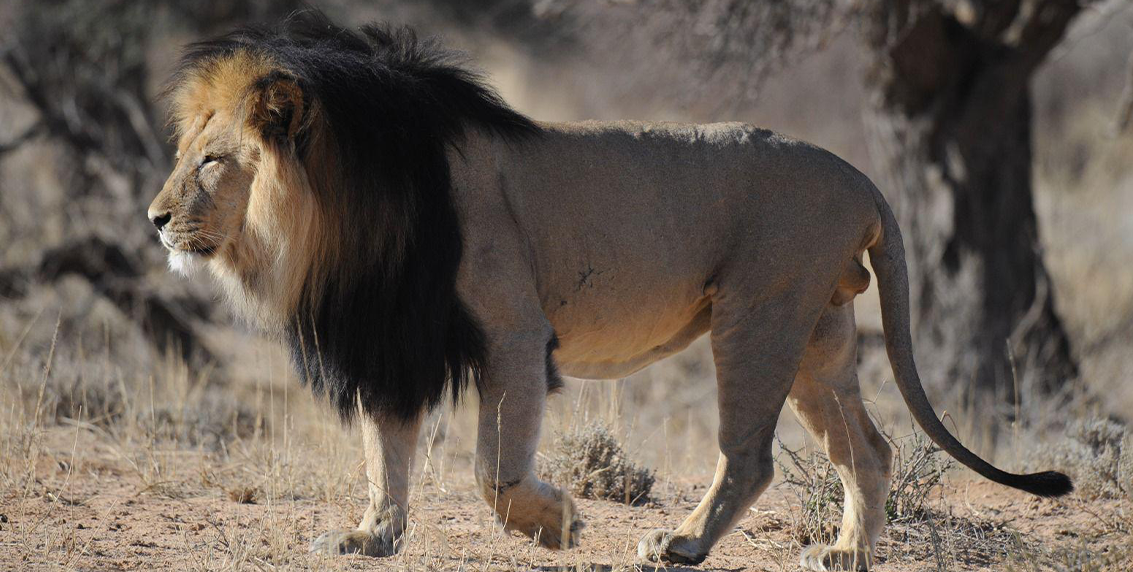
African lion in habitat highlighting threats to lions in Africa


Lions in Africa face a wide range of threats throughout their habitat, with both the type and intensity of these threats varying significantly by region.

Endangered Wildlife Trust (EWT) scientists recently published the results of a continent-wide study to assess to nature and severity of threats to lion populations, finding that these varied per region.

To gather data, researchers distributed an online survey to landscape managers and lion researchers working within 132 lion subpopulations, representing approximately 75% of the current lion range across Africa. The aim was to develop a global threat index, which considered factors such as civil unrest, armed conflict, climate change, and trophy hunting. A local threat index was also created, evaluating both direct and indirect threats, Direct threats included vehicle collisions, intentional poisoning, snaring by-catch, cultural killings, retaliatory killings, unregulated trophy hunting, and disease, and indirect threats, included habitat loss, infrastructure development within lion territories, and the expansion of agriculture and human settlements.

Additional contributing factors, such as ineffective population management, small and isolated populations vulnerable to local extinction, loss of natural prey due to poaching or habitat degradation, and inconsistent or insufficient funding for lion conservation areas were also assessed.

Based on responses from the questionnaires, lion populations are believed to be increasing in 38% of their range, are stable in 37%, and declining in 17%. Threat severity was perceived to be highest in Central Africa, while Southern Africa faced comparatively lower perceived threat severity. The highest threat indices were recorded in Angola, the Democratic Republic of Congo, Cameroon, and Ethiopia, whereas Rwanda, South Africa, and Namibia had the lowest. Key factors influencing threat severity were the presence of communities within lion habitats, livestock grazing and competition with wildlife, fencing practices, community engagement, and available management resources.

Across the continent, the most severe perceived threats to lions varied by region. Higher threat indices were significantly associated with several factors. These were not only the presence of communities living within lion habitats and livestock grazing within the area, but also competition between livestock and wildlife, and inadequate management resources. In contrast, subpopulations that were fully fenced reported significantly lower local threat severity scores. A major challenge noted across the continent was resource limitation, as almost half of the surveyed lion populations (49.24%) reportedly lacked sufficient resources to adequately reduce the illegal killing of lions.

In Central Africa, lions are perceived to be most severely impacted by human encroachment, the loss of prey due to poaching, and retaliatory or pre-emptive killings to protect livestock. In East Africa, the most pressing threats include inconsistent or insufficient funding for conservation, retaliatory or pre-emptive killings, and human encroachment into lion habitats. In southern Africa, lions face challenges from inconsistent or insufficient funding, human encroachment, and infrastructure development near or within their territories. Meanwhile, in West Africa, the most severe threats are the loss of natural prey due to poaching, targeted poaching of lions for their body parts, and the vulnerability of small, isolated populations.

On a global scale, climate change was considered the most significant perceived threat to lion populations in East and southern Africa. In Central Africa, civil unrest is perceived to pose a direct danger to lion populations. Similarly, in West Africa, civil unrest and local conflicts were seen as the greatest global threats due to their impact on the effectiveness of protected area management.

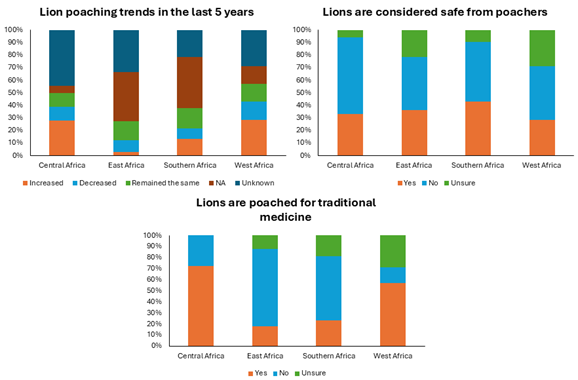
Another major threat to lions is poaching. This crime poses a multifaceted and significant threat to lion populations, encompassing both targeted killing for body parts and unintentional bycatch in snares. Lion populations are declining rapidly due to direct threats such as targeted poaching for body parts for the illegal wildlife trade. This practice is suspected to be driven by both local traditional medicinal practices and the international illegal wildlife trade, where lion bones are sometimes smuggled to the East as a substitute for dwindling tiger (Panthera tigris) parts. Lions were reported to be poached for parts in 30% of surveyed subpopulations (40 out of 132), with the most frequently sought parts being skin, claws, teeth, and fat. Uses for these parts, particularly in local markets, range from strengthening the body, curing diseases, increasing power, and improving the immune system.
conservation team monitoring lions in Africa

Figure 1. Responses to questions relating to poaching of lions per region in Africa (reported as percentages, n = 132) (Graphs adapted from Nicholson, S. K., Roxburgh, L., Bauer, H., Adams, E., Asfaw, T., Naude, V. N., & Slotow, R. (2025). African lion conservation requires adaption to regional anthropogenic threats and mitigation capacity. Global Ecology and Conservation, 62, e03760)

This study highlights the complex and region-specific challenges facing lions in Africa. Identifying the most severe threats at the population level is essential for developing targeted and effective conservation strategies. At the site level, this understanding allows managers to implement and enforce effective mitigation measures, such as utilising fencing, which was found to significantly lower local threat severity scores. These findings inform policymakers and multilateral conventions, guiding decisions and prioritising areas that require immediate, intensive conservation action. This prioritisation is vital for highly threatened areas like Angola, Cameroon, and Ethiopia, which face high threat severity alongside insufficient resources. Furthermore, identifying the most common resource limitations (such as a lack of consistent funding) is essential for generating greater investment to safeguard vulnerable lion populations, halt expected population declines, and achieve long-term conservation success.

*Nicholson, S. K., Roxburgh, L., Bauer, H., Adams, E., Asfaw, T., Naude, V. N., & Slotow, R. (2025). African lion conservation requires adaption to regional anthropogenic threats and mitigation capacity. Global Ecology and Conservation, 62, e03760.

Counting Lions: EWT Surveys Decline in Kruger’ s Northern Pride

Counting Lions: EWT Surveys Decline in Kruger’ s Northern Pride


Counting Lions: EWT Surveys Decline in Kruger’ s Northern Pride

By Marnus Roodbol

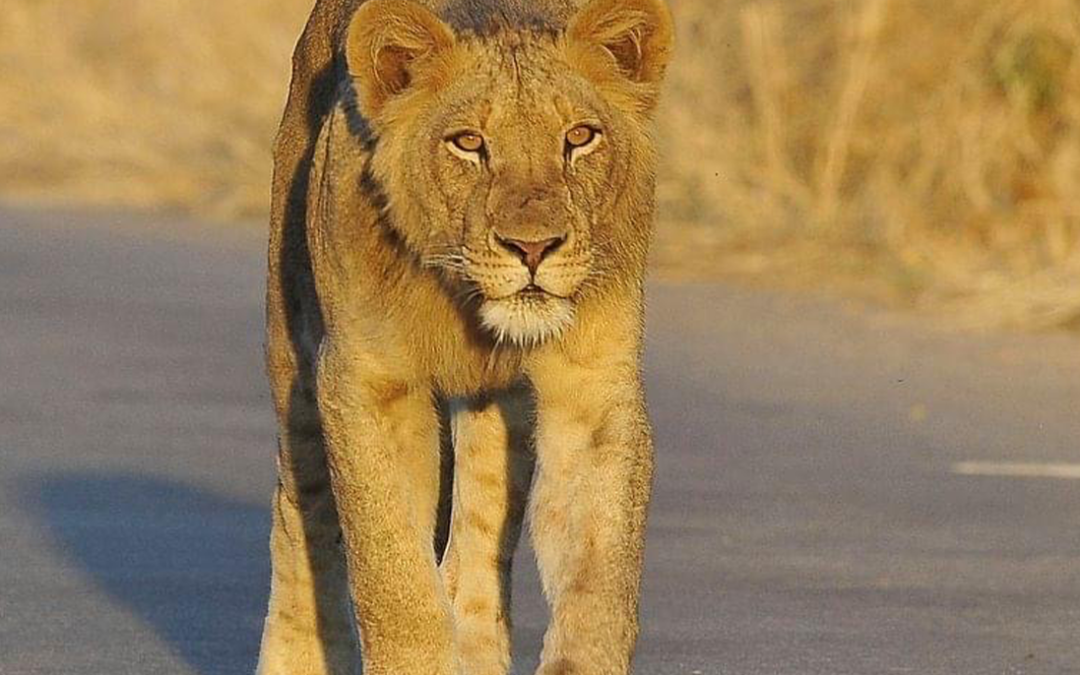
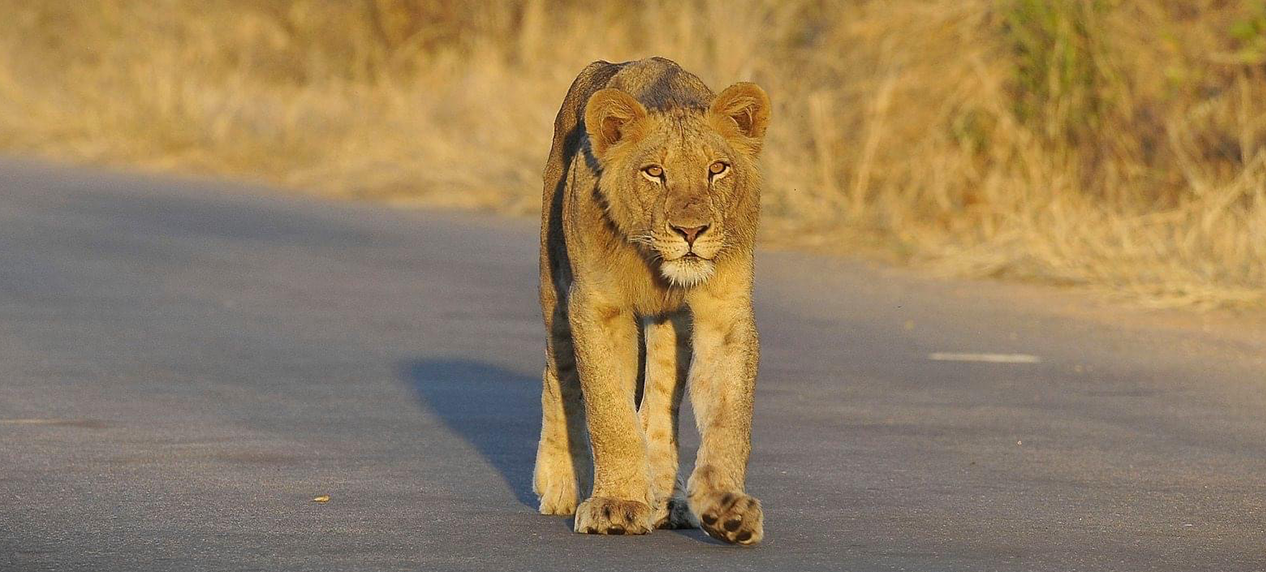
Juvenile Lion – KNP. Image by M Roodbol


The Great Limpopo Transfrontier Conservation Area (GLTFCA), which includes Kruger National Park, in South Africa, and Limpopo National Park, in Mozambique, is one of the last ten Lion strongholds in Africa. While these strongholds occur in formally protected areas and contain a stable or increasing population, indications are that the lion population in the northern reaches of the Kruger National Park are declining because of targeted poisonings and poaching.

In partnership with SANParks and the Lion Recovery Fund, the Endangered Wildlife Trust (EWT) has been monitoring lions across the landscape to understand their movements, habitat use and what measures are needed to alleviate threats to the iconic species.

From 17 September to 1 December 2023, a team from the EWT conducted a lion population survey in the Nxanatseni north region of the Kruger National Park. Spanning 5162 square kilometres, the area spanned the Pafuri, Vlakteplaas, Punda Maria, Shangoni, Woodlands and Shingwedzi sections of the Park.

Two field protocols – search encounter and camera traps – were used to collect data. These were designed to obtain high quality photographs that the team could zoom into and be able to individually identify lions through their unique whisker spots. All photographs taken of lions were inspected to try and identify individuals roaming the area.

Because it is not feasible to find every lion in the landscape, methods were used enabling the team to estimate the number of lions based on a sample of that population. To do this, advanced spatial capture-recapture models that are widely used for large carnivores globally were used. Due to the fact that lions less than one year old tend to suffer high mortality, they were excluded from the analysis.

Results

The EWT team drove 10,006 km and deployed camera traps for 2,684 trap nights over the survey period. Using the combined dataset, it was estimated that there were 105 lions in Nxanatseni North.

Our survey represents the fifth estimate of lions in the Nxanatseni North region of Kruger: In 2005, a call-up survey estimated 283 lions; a 2008 call-up survey with reduced sampling estimated 75 lions; the 2005 survey was replicated in 2015 and estimated a population of 119 lions and in 2023, the estimate was 122 lions. The EWT’ s estimate of 105 lions is similar to the latter two surveys.

All were conducted in the same region and are estimates of lions over the age of one year. This represents a possible 63% decline over the 18 years separating the surveys. The precise reasons for this have not been investigated, but anecdotal evidence suggests that there has been an increase in targeted poaching of lions, coupled with increased levels of general bushmeat poaching.

Our results show that lion density is lowest in the Pafuri and Punda Maria sections, areas that are thought to suffer from relatively high levels of snaring, poisoning, and general poaching.

The results also provide a clear signal that distance to water is an important factor explaining the variation in lion density across the landscape. Lion density was highest close to water. In recent times, artificial waterholes have been switched off in Kruger National Park, and this will likely have had an impact on lion numbers in the Nxanatseni North region, which has a semi-arid climate. Worth noting is that while lions are not dependent on water, their primary prey species typically are.

Conservation approaches typically encompass a range of approaches aimed at safeguarding their habitats, mitigating human-lion conflicts, combating poaching and illicit wildlife trade, and fostering harmonious coexistence between lions and local communities.

Identifying trends in lion numbers and demographics remains crucial for their conservation, as is investigating the factors that drive those trends.

We recommend that future conservation efforts are coupled with regular population monitoring in this region to inform conservation actions and assess their effectiveness, taking an adaptive management approach.


** The EWT would like to thank SA National Parks for permission of carry out the survey, AHA Hotels and Lodges for their logistical support and the Lion Recovery Fund for their generous support.

News from the Field – Translocation Tales: The Carnivore Range Expansion Project

News from the Field – Translocation Tales: The Carnivore Range Expansion Project

News from the Field

Translocation Tales: The Carnivore Range Expansion Project

By Eugene Greyling, Carnivore Conservation Field Officer

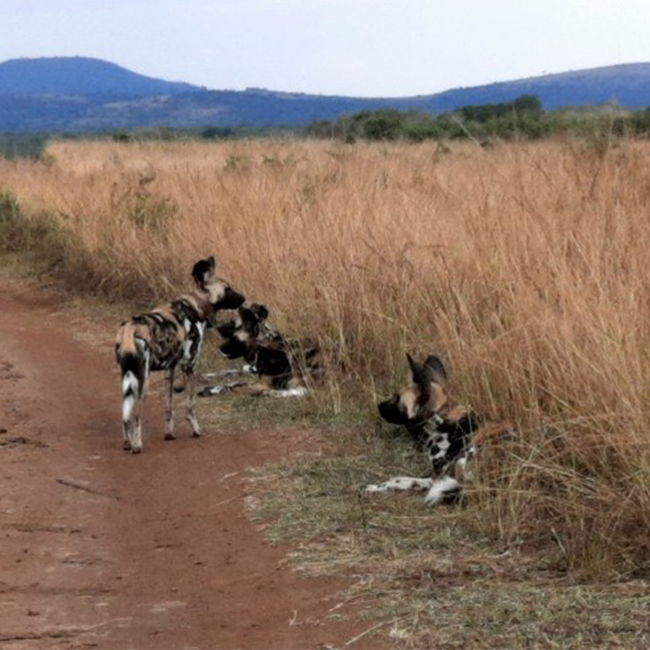
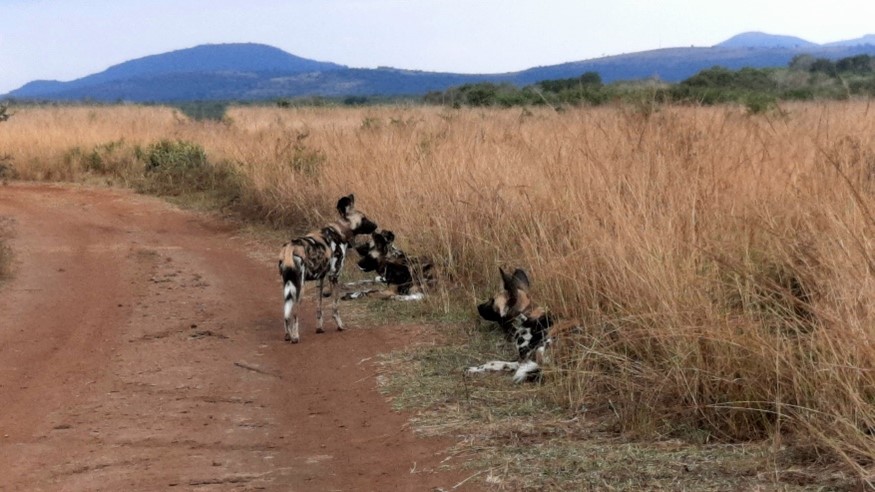
Wild dogs relaxing after being released at Mpilo Game Reserve

The general aim of the Endangered Wildlife Trust’ s Carnivore Range Expansion Project, operating within the Carnivore Conservation Programme, not only includes the conservation of current carnivore populations and the maintenance of genetic integrity in areas where a lack of sufficient ecological connectivity hinders natural dispersal, but also extends to the expansion of geographical range for focal species (with a primary focus on African wild dogs Lycaon pictus and cheetahs Acinonyx jubatus).

Restoring previously extirpated or locally extinct populations, thereby recovering lost range, and securing safe space across the African continent is thus an important priority for us.

“Translocation” refers to the action of purposefully taking an organism from a suitable habitat in one area to a suitable habitat in another area. This is done to encourage threatened species to repopulate in a new area to improve the conservation status of the species and restore the functioning of the ecosystem through population restoration.

Most recently, several translocations have been undertaken by our wild dog range expansion team to reintroduce wild dogs to additional safe spaces in South Africa.

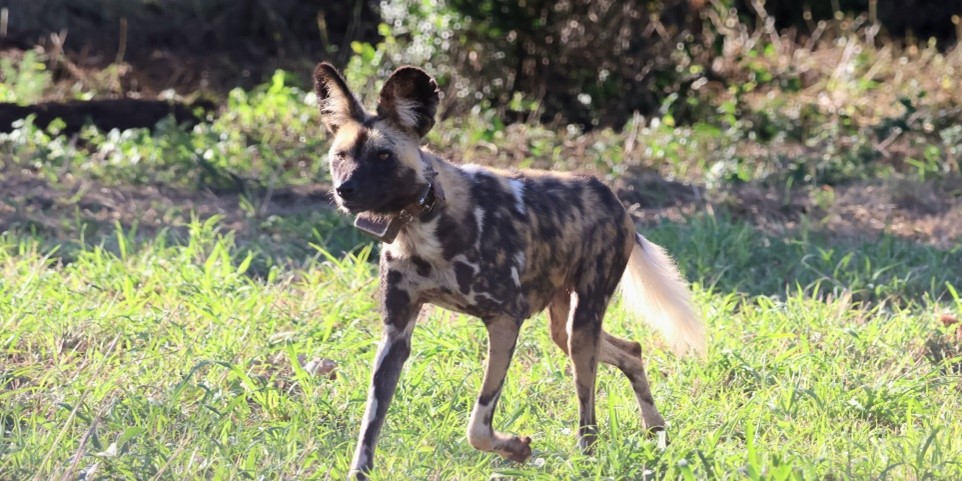
For the first time, founder packs have been introduced into Mpilo Private Game Reserve and Nambiti Private Game Reserve, in collaboration with Ezemvelo KZN Wildlife and Wildlife ACT. All introduced individuals have been fitted with tracking collars to enable daily monitoring of their movements, population and behavioural dynamics, and ecological influences and to help prevent human-wildlife conflict. The information gathered allows for informed decision-making – both at the reserve and the species level.

The pack at Mpilo PGR established well, birthing a litter of pups and curiously exploring their new environment, whilst the pack at Nambiti PGR is still adjusting and acclimatising to their new home in a boma before being released onto the reserve.

With less than 600 wild dogs found in South Africa, of only an estimated 6,600 that remain in the wild globally, every individual counts and we are immensely grateful for the commitment of these reserves to the conservation of the African Wild Dog.

Sometimes, we also need to get creative in the field, as was the case when we executed another successful wild dog translocation to Makalali Private Game Reserve in Limpopo recently.

Due to challenges faced with non-ideal weather conditions as temperatures plummeted to -3°C on the day of relocation, we opted to transport this small pack of four together in a single-compartment lion crate instead of the specially-designed wild dog crates we would generally use. By simulating a den-like environment within the crate, the wild dogs were able to keep each other warm and at rest, minimising stress throughout the journey.

If one thing is certain, it is that no day in the field is quite the same, and by being continuously challenged we continue to explore, innovate, learn, and adapt with every operation.


One of the collared female wild dogs released at Nambiti Game Reserve

Lions roaming Phalaborwa darted and sent back to the Kruger National Park

Lions roaming Phalaborwa darted and sent back to the Kruger National Park


Lions roaming Phalaborwa darted and sent back to the Kruger National Park

by Marnus Roodbol, lion conservation senior field officer, CCP

On Monday, 3 June, 2024, five young lions were spotted roaming Villa Luso in Phalaborwa. The  same lions were later spotted by the Phalaborwa horse patrols along the western boundary of the Kruger National Park, south of the Phalaborwa gate.

Later in the they moved onto the Hans Merensky Golf Course before returning to the greater Kruger area.

Although the community and stakeholders assumed that the lions had left the town and  returned to the safety of the greater Kruger, the pride was again seen in town later that night.

That was when we all sprang into action to ensure that the five lions were removed from the town limits and moved to the Kruger National Park.

Following a consultation between the Limpopo department of Economic Development, Environment and Tourism (LEDET), the Phalaborwa Heritage Foundation (PNHF), the Endangered Wildlife Trust (EWT), and the regional and section rangers of the Kruger National Park,  it was decided to capture the lions and to move them back into the safety, and security, of the greater Kruger area.

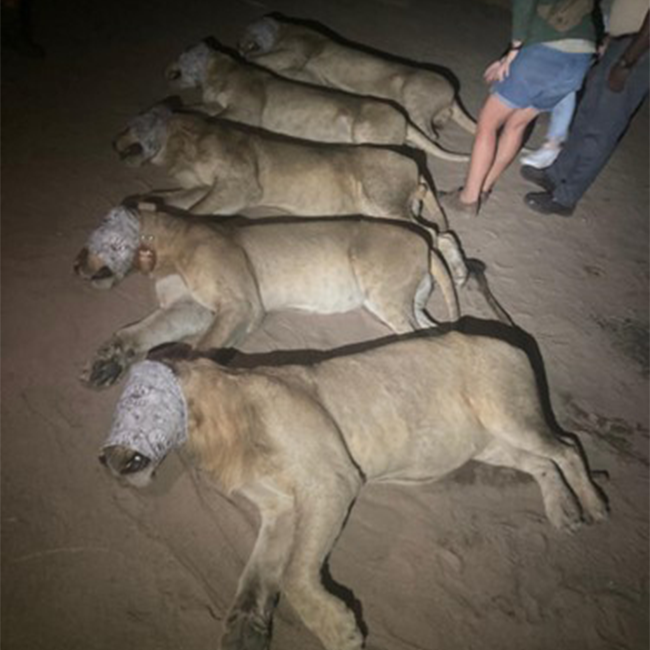
The EWT Carnivore Conservation team on site assisted in the capture and darting of the five lions – two adult females and three young males.  One of the lionesses was fitted with a GPS tracker by the EWT so that we can continue to monitor the pride’ s movements.  This will also assist stakeholders should further assistance for this pride be needed in future.


The darted lions, of which one was collared, before being transported back into the Greater Kruger area.