Help protect Africa's 

Olifants River Survey Monitors Ecological Threats to the system

Olifants River Survey Monitors Ecological Threats to the system

In the Field

Olifants River Survey Monitors Ecological Threats to the system

Liam Taylor, field officer in the Birds of Prey Unit
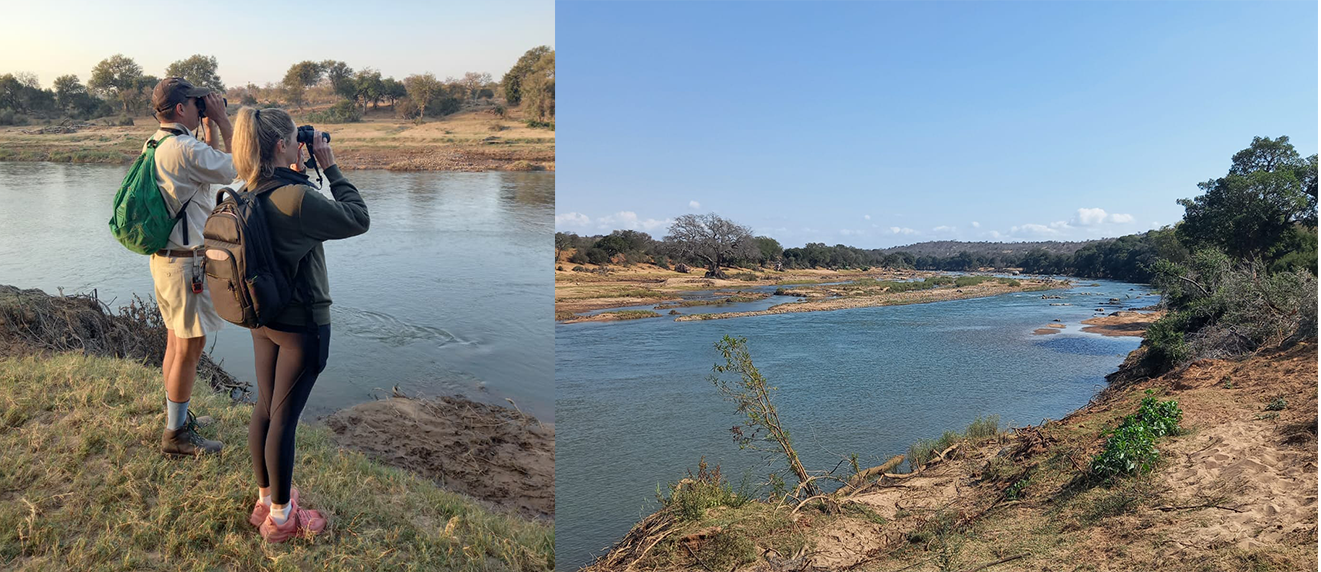
 

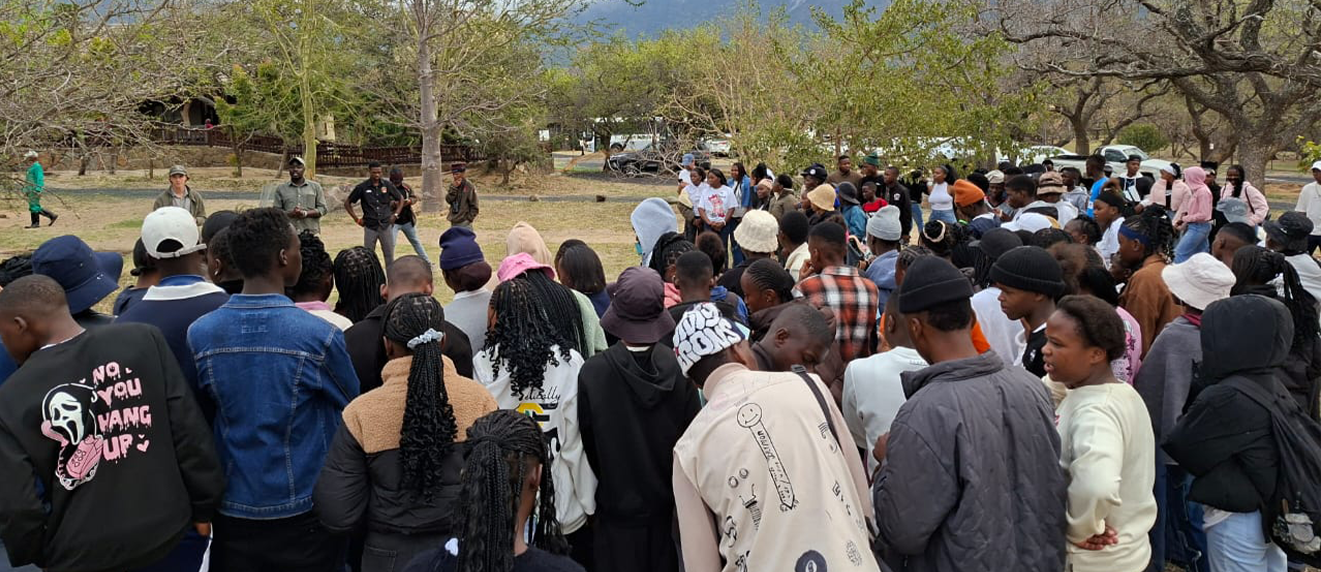
EWT researchers conducting an ecological survey along the Olifants River in the Lowveld

The Olifants River is one of the defining features of the Lowveld. Unfortunately, the last three decades brought with it extensive flood events that have had cataclysmic impacts on the river’s trees.

In addition, opposing drought impacts, flow regime changes from water abstraction and damming, and chemical and pesticide run-off from mining and agriculture, have all threatened the natural functioning of this system.

Recently, EWT researchers and field staff took part in an ongoing survey along the section of the Olifants River inside the Greater Balule Game Reserve region to monitor this vital habitat.

Organised by the EWT’s Birds of Prey Unit research and monitoring coordinator, Dr Lindy Thompson, the team included EWT project manager, Dr Darren Pietersen, field officer Liam Taylor, and Dr Carrie Hickman of the APNR Ground Hornbill Project, as well as numerous wardens and rangers from the various reserves along the river. The team was split into two, and each one walked over 50 km, on opposite banks, counting every single waterbird, crocodile and hippo they saw, allowing numbers and species to be compared to previous years. The trees were also scanned for both White-backed and Hooded Vulture nests, where incubating birds or chicks were recorded. This section is a major breeding stronghold for these Critically Endangered birds. These nests will be monitored until the chicks fledge in October. The search also included looking for the famous and elusive Pel’s Fishing Owl.

The impacts of the January 2026 mega-flood event were clear. Many trees and tracts of habitat were removed. The riparian forest is also classified as Endangered, making the losses extra worrisome. We made other additional ecological observations, including elephant herbivory on riparian trees, Pied Crow interactions with nests, and documented where human activity may jeopardise breeding success.

The survey did not have many challenges, but on one occasion, a pod of hippos came stampeding out of the bush back into the water, crashing through everything in their path. Fortunately, no researchers (or hippos!) were harmed, and we scored an exciting story to tell friends later around the braai.

These surveys are vital for long-term monitoring and identifying threats to ecology and Endangered species. Continued support for this work will help ensure that changes in the Olifants River system are detected early, that conservation responses are guided by reliable field data, and that this remarkable river can continue to sustain its wildlife. By maintaining regular monitoring and acting on what the river is telling us, we can help safeguard one of the Lowveld’s most important ecological areas.
A Race to Rescue Limpopo’s Vultures

A Race to Rescue Limpopo’s Vultures

In the Field

A Race to Rescue Limpopo’s Vultures

Dr Lindy Thompson, Birds of Prey Unit Research and Monitoring Coordinator


EWT Birds of Prey Unit releasing rehabilitated vultures on International Vulture Awareness Day

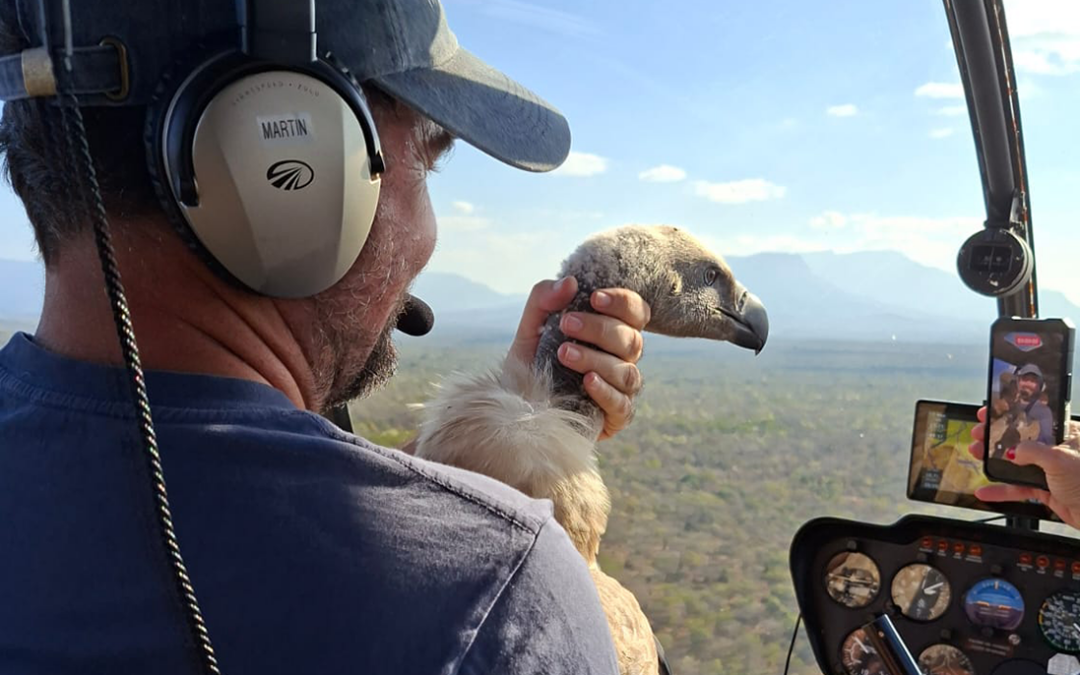
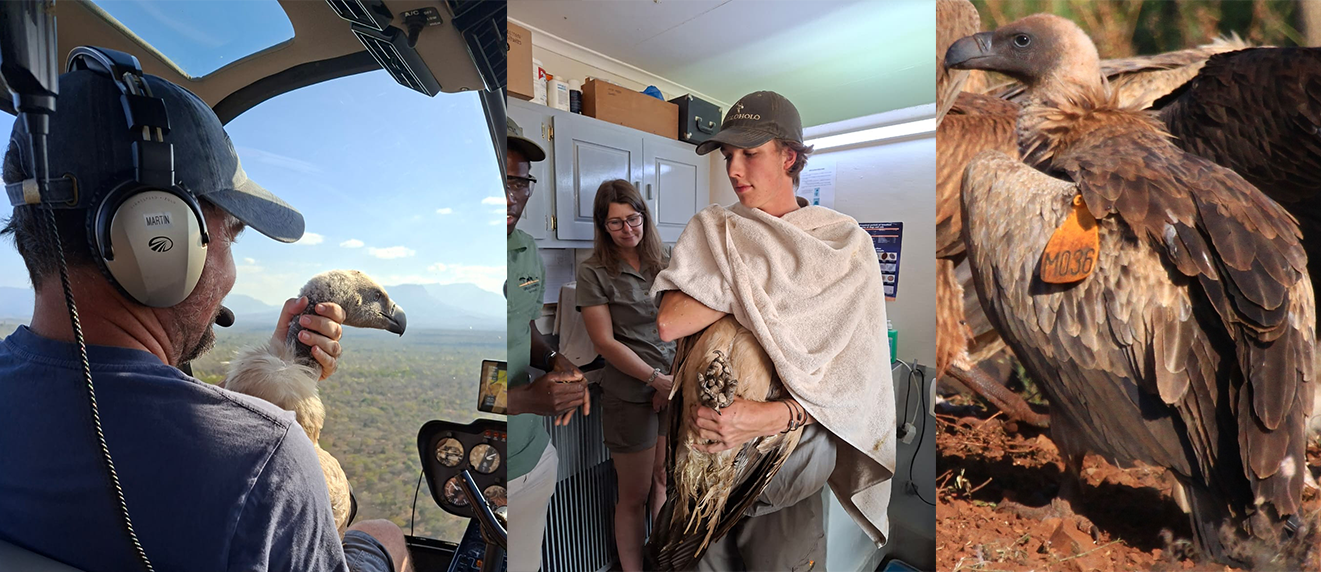
Left: A Cape Vulture being transported to Moholoholo Rehab Centre by helicopter. Center: Moholoholo clinic team treated the vultures.

On 28 August 2026, the EWT Birds of Prey Unit received an urgent notification that a number of vultures had been found unable to fly on a property in Limpopo.

With the assistance of the Hoedspruit Endangered Species Centre, these birds were quickly collected and transported to Moholoholo Wildlife Rehabilitation Centre.

Pilot Jana Meyer from Hope for Wildlife also joined the rescue effort, flying us in her helicopter to search the surrounding area for any other grounded vultures.

In total, 18 vultures were taken to Moholoholo, where they received first aid and expert care from the clinic team. Rehabilitating vultures is intensive work, requiring round-the-clock care during the first 48 hours while the birds are stabilised, until they are out of the woods. We have the greatest respect for the Moholoholo team, whose experience and dedication gave these birds the best possible chance of recovery. Sadly, one bird died on arrival and another died that night, but the remaining 16 recovered well and were ready to return to the wild about a week later.

The timing of their release could not have been more fitting: the 16 survivors (three Critically Endangered Hooded Vultures, 12 Critically Endangered White-backed Vultures, and one Vulnerable Cape Vulture)  were released at Moholoholo on 5 September – International Vulture Awareness Day.

To make the occasion even more special, the EWT supported 250 learners to visit the Cape Vulture Nature Reserve before travelling to Moholoholo to witness the release. For these young people, seeing the vultures take to the skies was a powerful opportunity to connect with these remarkable and highly threatened birds.

It was also particularly important that the adult vultures got home quickly, as winter is the breeding season and most of the rescued birds had brood patches, indicating that they had chicks waiting for them in their nests. Both male and female vultures share responsibility for incubating and raising their young, so every day away from their chicks mattered. Thankfully, the tracked birds gave us the best news possible: they returned to their nests straight away.

What began as an urgent rescue ended with 16 vultures back in the wild, their chicks waiting for them, and 250 young conservationists watching them take flight; a wonderful reminder of why every vulture matters.

1. Young learners watching rescued vultures return to the wild at Moholoholo

The vultures were released at Moholoholo on International Vulture Awareness Day

** This work is made possible by Critical Ecosystems Partnership Fund (CEPF) Rapid Response to Conservation Crises (R2C2).

Using an ethogram as a guide to understanding Hooded Vulture breeding behaviour

Using an ethogram as a guide to understanding Hooded Vulture breeding behaviour

Science Snippets

Using an Ethogram as a guide to understanding Hooded Vulture breeding behaviour

Lindy Thompson, the EWT’ s Birds of Prey Programme

Most vulture species are highly threatened, and their populations are declining. Researchers have been focusing more on vultures in recent years, and certain topics, such as their movements, are becoming well studied. However, other topics, such as how diseases affect vultures, and behavioural studies on vultures, have not been as popular. These areas need more attention because understanding all aspects of a species’ behaviour can help inform conservation efforts.

Studies on an animal’ s behaviour can be enhanced using an ‘ethogram’ . An ethogram clearly defines, describes, and classifies distinct behaviours commonly exhibited by a species. Researchers use ethograms as templates to record and understand the species’ behaviour. Importantly, ethograms can help to standardise data collection across different studies, which increases objectivity, and allows comparisons of results from different researcher teams.

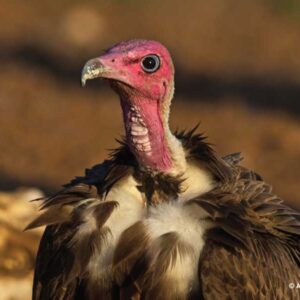
Researchers from the Endangered Wildlife Trust and the University of KwaZulu-Natal recently produced the first ethogram describing the nesting and breeding behaviours of the Critically Endangered Hooded Vulture (Necrosyrtes monachus). They gleaned information from 14 Hooded Vulture nests in South Africa’ s Lowveld region, from direct observations and over 400,000 camera photographs. The team described 28 behaviours exhibited by Hooded Vultures at their nests, and they grouped these behaviours into five categories: ‘Body Care’ , ‘Movement’ , ‘Nesting’ , ‘Resting’ and ‘Social’ . In their ethogram, the researchers also provided photographic records of each behaviour for researchers to use as references. Many of the behaviours exhibited by Hooded Vultures may be common to other tree-nesting vulture species, so this ethogram should be helpful for other research teams studying the breeding of other vulture species globally. It will also be used for further investigating the behaviour of Hooded Vultures in South Africa, and the next step is to look at activity budgets.

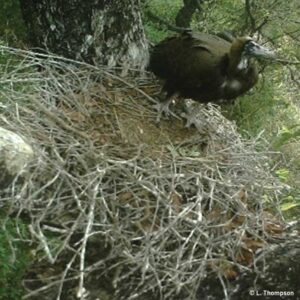
A juvenile Hooded Vulture on its nest in a Jackalberry tree. © L. Thompson/UKZN

The research team comprised the EWT’ s Dr Lindy Thompson (the camera trap photos we used were collected during Lindy’ s postdoctoral studies on Hooded Vultures), Prof. Colleen Downs (who supervised Lindy’ s postdoc from the University of KwaZulu-Natal), and Fiona Fern, who is soon to start her PhD on raptor health with the EWT’ s Birds of Prey Programme.

The study was funded by the Rufford Small Grants Foundation, GreenMatter, and the National Research Foundation (ZA).

The study was titled ‘An ethogram for the nesting and breeding behaviour of the Hooded Vulture Necrosyrtes monachus’ , and you can access it here: https://doi.org/10.2989/00306525.2022.2072965

The first Pan-African study on vulture movements

The first Pan-African study on vulture movements

THE FIRST PAN-AFRICAN STUDY ON VULTURE MOVEMENTS

Dr Lindy Thompson, Project Coordinator: Vulture Conservation and Research, EWT Birds of Prey Programme
LindyT@ewt.org.za

Since 2016, we have been working with collaborators across Africa on a study on the movements of the critically endangered Hooded Vulture. This project was the brainchild of Dr Keith Bildstein, a world expert on raptor migration, and previous Director of Conservation Science at Hawk Mountain Sanctuary, USA. Keith brought together scientists working in The Gambia, Kenya, Botswana, Mozambique, South Africa and Ethiopia, who had tagged a total of 30 Hooded Vultures. By pooling their tracking data, these scientists were able to compare the movements of Hooded Vultures in eastern, western and southern Africa, with some very interesting results. We looked at Hooded Vulture home-range size, and whether this was affected by age, breeding season or region. Breeding season didn’ t really affect Hooded Vulture home-range size much, but we found big differences between birds in different regions of Africa. Hooded Vultures in southern Africa had massive monthly home-range sizes (12,453 km²), while those in eastern Africa were much smaller (3735 km²), and Hooded Vultures in western Africa had the smallest monthly home-range sizes (only 121 km²). We believe this variation is related to how Hooded Vultures feed in different parts of their range. The birds in West Africa are a different subspecies to the Hooded Vultures we get in southern and East Africa. The northern subspecies in West Africa often feed at rubbish dumps or on scraps left by people at markets, and they can be very relaxed around people. In contrast, the southern subspecies in southern and eastern Africa feed mainly in wild areas, and they do not usually feed close to people. This means that for Hooded Vultures in West Africa, food is predictable, the birds know when and where to find it, so they do not need to spend much time travelling around in search of food, and this translates into comparatively tiny home-range sizes. Our southern African Hooded Vultures on the other hand must travel massive distances in search of food, because there is no way of knowing when or where the next carcass may be found, and this results in enormous home-ranges. We also found that younger birds have much bigger home-ranges than adults, possibly because they are exploring new areas and they aren’ t yet tied down to a nest-site. Vultures’ home-ranges overlap international borders, which highlights the need for international cooperation in vulture conservation activities. Our results will be useful for conservation planners when drafting national management plans for vultures.

You can read a summary of the article here https://doi.org/10.1111/ibi.12836, or email Lindy (LindyT@ewt.org.za) to request a copy of the full article. We are grateful to all our funders, including AZA Conservation Grant Fund, Bowling for Rhinos, Denver Zoo, Detroit Zoo, GreenMatter, San Diego Zoo Global, National Geographic Society, Raptors Botswana, The Wallace Research Foundation, The Rufford Foundation, Fulbright, the Wilderness Wildlife Trust, the National Research Foundation, and Wildlife Computers Inc.