Help protect Africa's 

Making our mark at the Underberg Agricultural Show

Making our mark at the Underberg Agricultural Show

In The Field: 

Making our mark at the Underberg Agricultural Show

By Jacquie van der Westhuizen – Field Officer, Endangered Wildlife Trust (EWT)
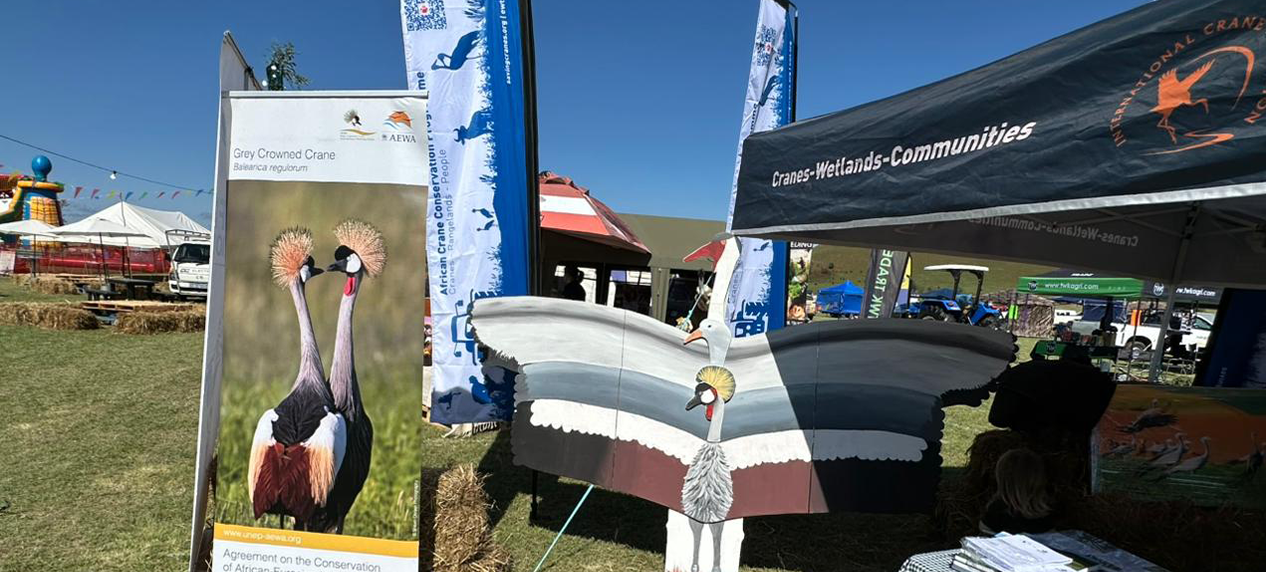
 

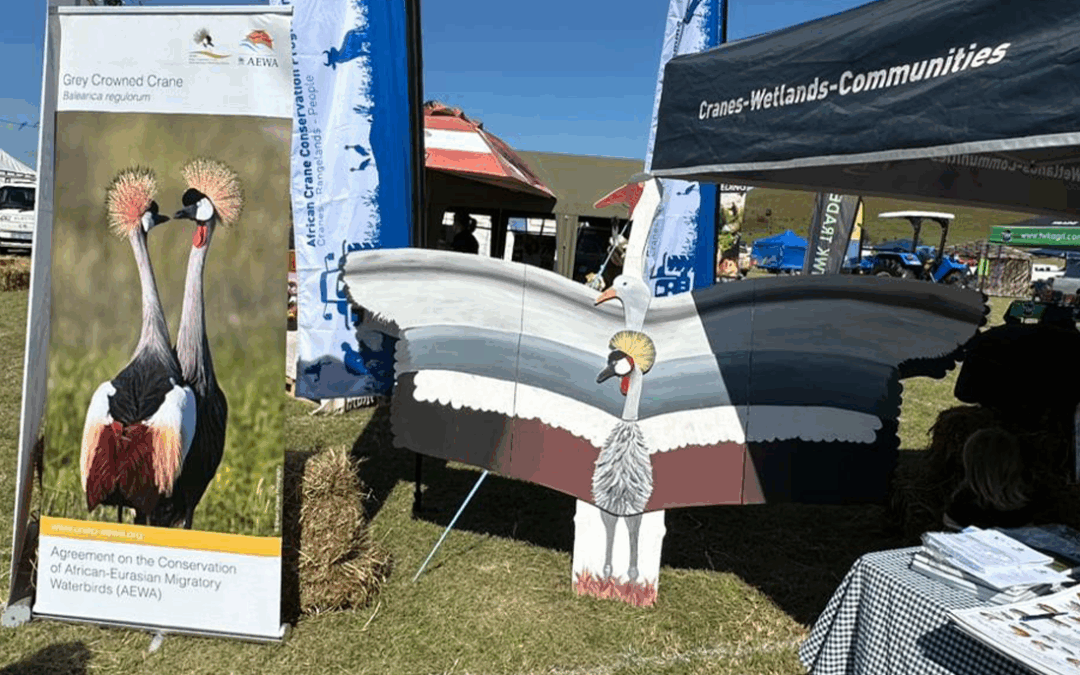
EWT African Crane Conservation Unit stand at Underberg Agricultural Show


The African Crane Conservation Programme, this year, showcased the work we have been doing in the Southern Drakensberg at the Underberg Farmers Association agricultural show held at the beginning of October.

The Southern Drakensberg is the stronghold for Wattled Cranes in South Africa, and houses populations of Grey Crowned and Blue Cranes too – literally Crane central!

Creating awareness about cranes, the importance of wetlands, highlighting the role of communities,  educating children and meeting and speaking to farmers were our main goals, something we achieved over and over.

When we arrived on Friday and set up our stand in freezing cold, rainy weather, we dreaded what the rest of the weekend was going to be like.  Joking that we were going to have to buy a braai to keep it lit in the middle of our stand to keep us warm, we woke up on Saturday and Sunday to the most beautiful, sunny weather.

We were visited by lots of old friends and farmers, and met a lot of new farmers who will soon become old friends too.

The outcome was amazing and exactly what I had hoped for.

My colleagues Samson Phakathi and Lindo Mgwaba were in charge of setting up a wetland scene that included our trusty taxidermised Wattled Crane and Oribi (all with the correct permits, of course)  firmly planted amongst some wetland grasses – yes, they actually went to a wetland and dug up some grasses.  It looked amazing and attracted lots of eager children who couldn’ t believe how big and soft a Wattled Crane is.

I also had our wooden cranes set up so people could see exactly what the wingspans and heights of the three crane species are. This made a huge impact on show attendees, many of whom joined me in appreciating how majestic, stately and huge these birds are.

Obviously, being at an agricultural show surrounded by farmers, we wanted to give them a practical and useful gift to take away with them.   The farmer in Pieter Botha kicked in, and he came up with the brilliant idea to have keyrings made from cattle ear tags! My daughter drew a picture of the three crane species, which we had lasered into one side.  The other carries the logos of the Endangered Wildlife Trust and the International Crane Foundation in celebration of our more than 30-year partnership.

A chance to win a beautiful blue crane canvas, candy floss and stunning Wattled Crane zoo biscuits enabled us to collect the details and information of about 60 farmers (and their children) on the cranes they have on their farms.

What a successful weekend of friendship, networking, socialising and creating awareness!
Reviving the Soutpansberg: Clearing Alien Species, Restoring Water, and Reclaiming Wetlands

Reviving the Soutpansberg: Clearing Alien Species, Restoring Water, and Reclaiming Wetlands


Reviving the Soutpansberg: Clearing Alien Species, Restoring Water, and Reclaiming Wetlands

The Soutpansberg is South Africa’ s northernmost mountain range, stretching east-west across Limpopo, from Vivo to Punda Maria in the Kruger National Park. It is recognised as a Centre of Endemism and Key Biodiversity Area due to its rich biodiversity. The range is also identified as a Strategic Water Source Area (for both groundwater and surface water in the east), providing vital water resources to communities and agriculture. However, the range faces several threats, one of the most significant being the spread of invasive alien plants.

Invasive alien plants (IAPs) are plants introduced into an ecosystem from foreign environments. They establish themselves, spread rapidly, and negatively impact the environment by displacing indigenous species, altering habitats, and affecting water resources. Globally, invasive alien species are recognised as one of the major drivers of change in ecosystems, alongside habitat transformation and climate change. IAPs are also referred to as a ‘wicked problem’ because they can be economically valuable for other industries, complicating their removal. In the Soutpansberg, some key culprits include Eucalyptus sp. (Eucalyptus) and Acacia mearnsii (Black Wattle). These trees were originally imported from Australia for their timber value but have since spread and become highly invasive. They are known to consume significantly more water than indigenous species, having a high impact on water resources in the country.

In 2018, shortly after the Soutpansberg Protected Area Programme was initiated, we launched a water conservation project. With initial funding from the Coca-Cola Foundation’ s Replenish Africa Initiative, we brought together a small team of rangers to remove invasive alien trees from wetlands and mountain catchment streams across the western Soutpansberg. This project was further supported by critical funding from Fondation Franklinia, focusing on habitat restoration.

The rangers worked tirelessly to cut down large stands of Eucalyptus and Black Wattle from numerous properties in the western Soutpansberg. This required weeks of work on-site, often camping in remote locations away from their families. Many of these invasive tree strands were in extremely inaccessible areas, making the work even more challenging. Despite these difficulties, our rangers have successfully cleared over 60 hectares of Eucalyptus and Black Wattle from remote mountain areas, resulting in an estimated 30 million litres of water being replenished to the environment annually.

As part of the project, we have also focused on upskilling the rangers. They have gained valuable experience in invasive plant management and received accredited qualifications in First Aid, Herbicide Application, and Intermediate Chainsaw Operation.

After six years of hard work, and in collaboration with landowners on the western Soutpansberg, our efforts are paying off. We conduct annual follow-ups to prevent regrowth, and we are witnessing natural regeneration of wetlands and riverine systems. This includes the natural recruitment of endangered tree species and other forest species. These results show that with continued collective effort, we can restore and protect critical ecosystems.

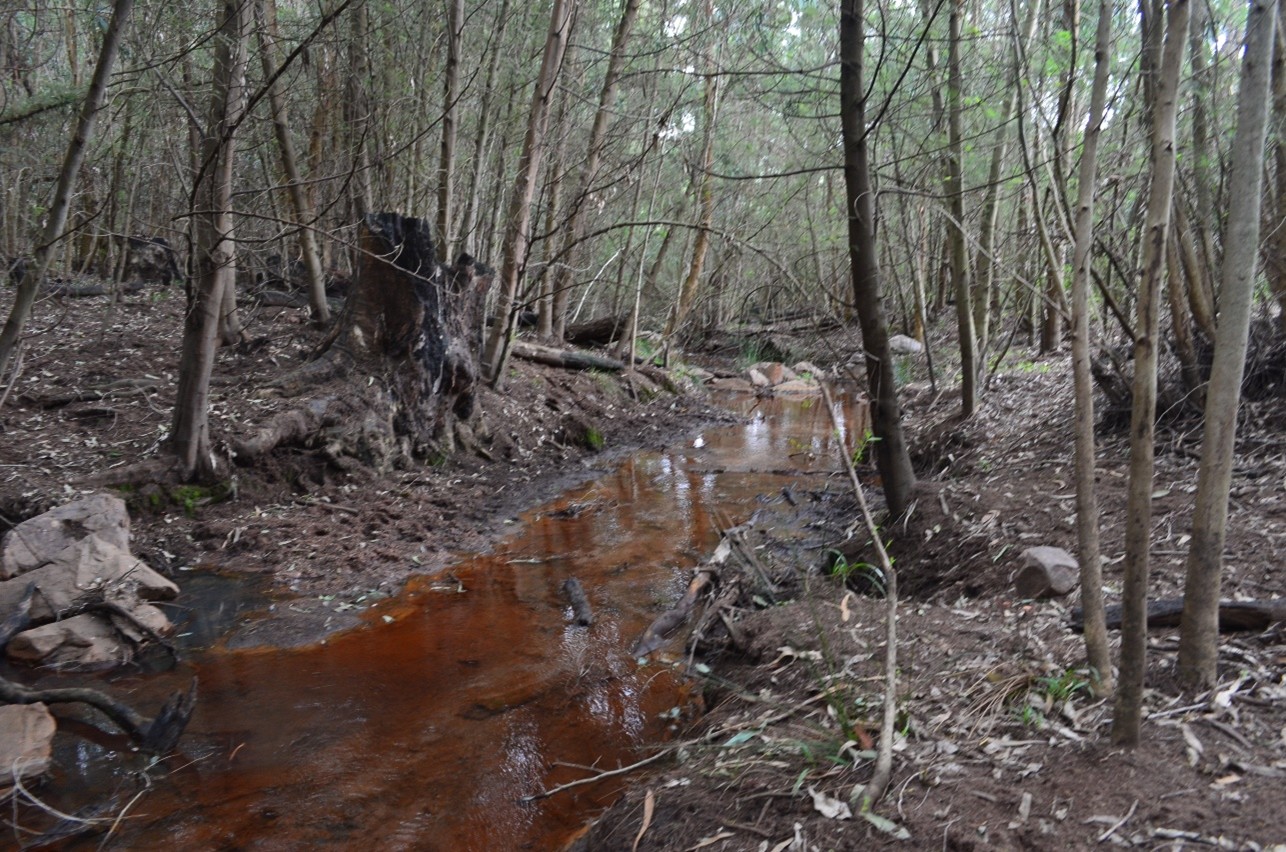
one of the alien clearing sites in 2018, showing a wetland invaded by Black Wattle. It is clearly evident that no other vegetation grows under the stands, displacing biodiversity and heavily impacting wetlands and mountain streams.


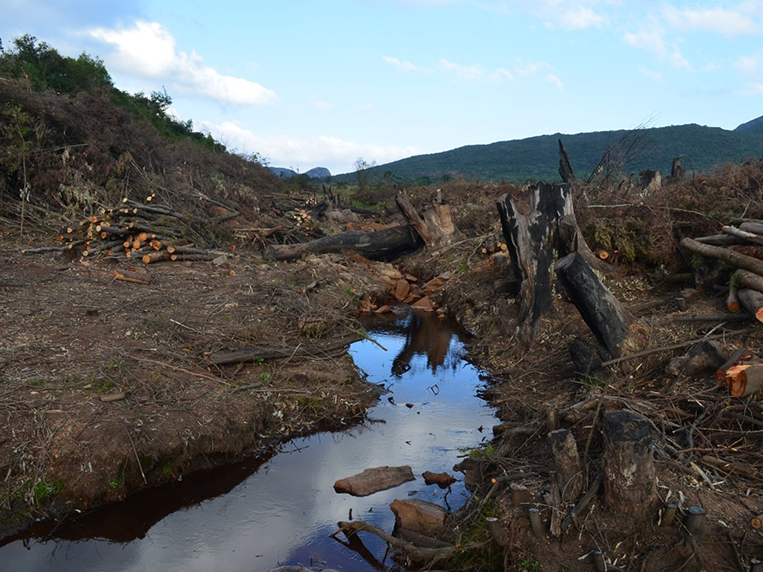
the same alien clearing site after logging in 2019, where felling and control work has been carried out by the rangers. Biomass is left in the field for the use of the landowners and is often recovered for firewood.


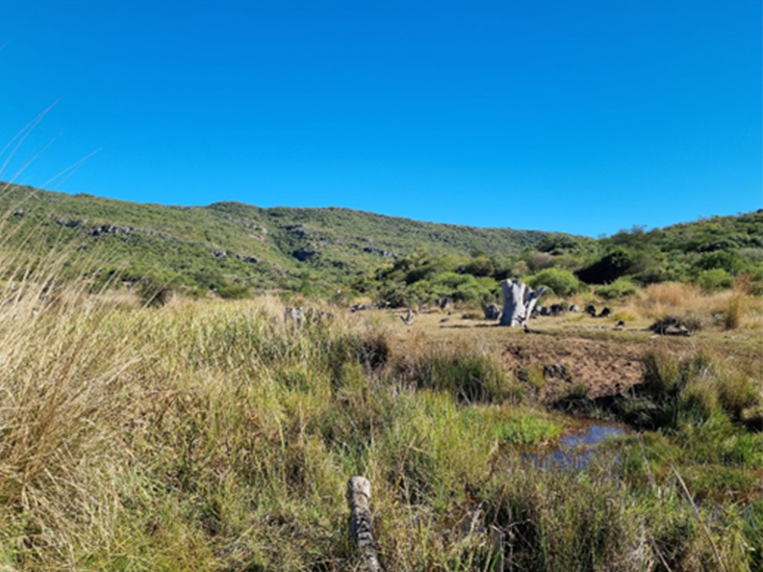
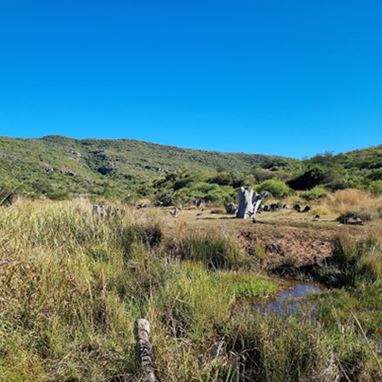
Five years later, the wetlands and mountain streams are recovering well, with sedges and grasses returning, along with other species, and water flowing downstream almost year-round – much more than before the invasions were cleared.