Help protect Africa's 

Protecting South Africa’s unique Lizard species from human-induced threats

Protecting South Africa’s unique Lizard species from human-induced threats

Protecting South Africa’s unique Lizard species from human-induced threats

Carina Bruwer, manager of the EWT Wildlife in Trade Unit


South Africa is a megadiverse country, with many of our species occurring nowhere else on Earth. It is also home to many weird and wonderful reptile species, including snakes, lizards and tortoises. These species have evolved to adapt to their unique habitats, with many occurring in only small pockets within the country.

These include the Armadillo Girdled Lizard (Ouroborus cataphractus) and the Giant Girdled Lizard, commonly known as the Sungazer Lizard (Smaug giganteus).
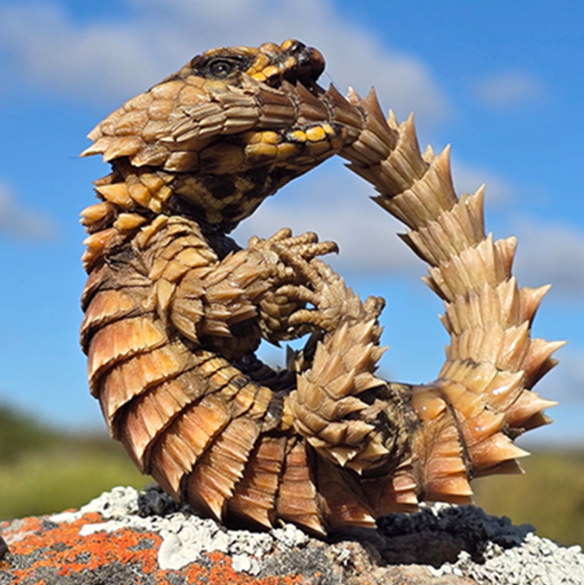
Armadillo Girdled Lizard, one of South Africa’s unique threatened reptile species

Figure 1: Source: EWT

Both members of the Cordylidae family, these lookalike, social lizards resemble little dragons and are covered in hard spiny scales, acting as armour against natural predators. The Armadillo Girdled Lizard is listed as Near Threatened by the International Union for the Conservation of Nature (IUCN), which assesses species based on their risk of extinction. Sungazers are listed as vulnerable, with the population currently decreasing. It is therefore imperative that we protect them and their precious habitats.

Armadillo Girdled Lizard

Armadillo Girdled lizards are social animals, living together in family groups in rocky outcrops in the Western and Northern Cape provinces. They feast primarily on insects, communicate through body language and can reach up to 16 cm in length. They can live up to 25 years and have low fecundity (a low reproduction rate). Females give birth to one or two offspring, which she may even feed, a behaviour quite uncommon for lizards. When threatened, they curl up into a ball, biting their tail to protect their soft bellies. This behaviour inspired their scientific name, which refers to the devouring of their tail. They can also drop their tails to distract predators, just like the geckos with whom many of us share our homes.

Sungazer Lizard

Sungazer lizards occupy the highveld grasslands of Mpumalanga and the Free State, with some recorded in KwaZulu-Natal. Unlike most other reptiles, they are oviparous. They reproduce only every second or third year and give birth to one to three live young. Averaging a length of about 22cm, they are the largest of the girdled lizard species in the Cordylidae family. They can live up to about 21 years of age in the wild. Their common name is derived from their basking behaviour with their heads turned to the sky. Like Armadillo Girdled Lizards, Sungazers are also social animals, living in groups in their underground burrows.
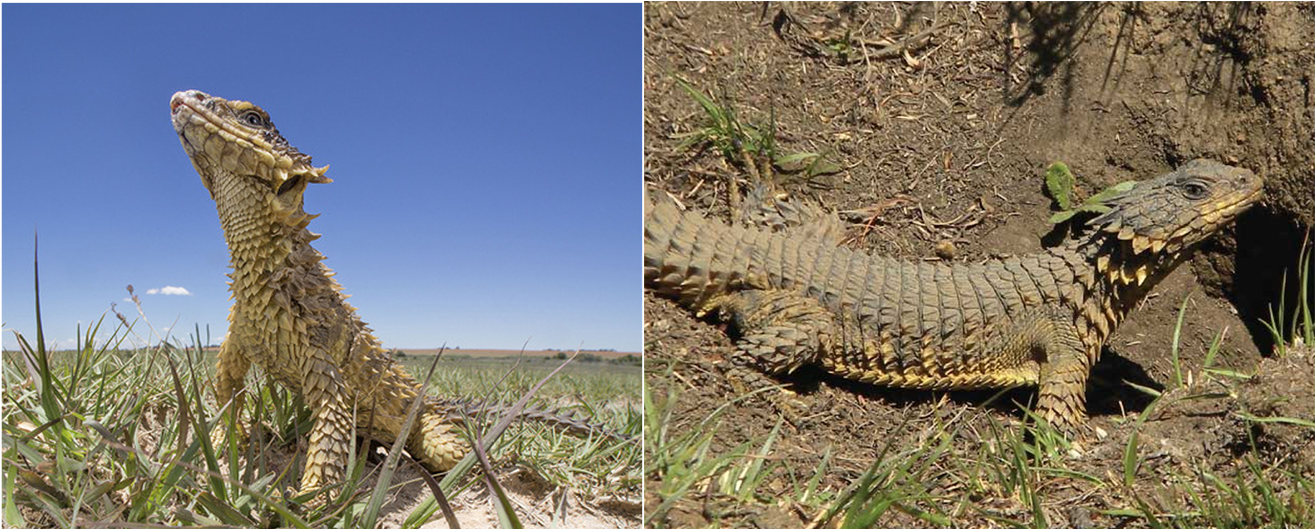
Sungazer Lizard in its natural South African grassland habitat

Left: Figure 2: Source: Shivan Parusnath. Right: Figure 3: Source: EWT

National and international legal protection

Based on their unique contribution to the biodiversity of South Africa and their precarious conservation status, both species are listed on the National Environmental Management: Biodiversity Act (NEMBA) Threatened or Protected Species (ToPS) List. Activities like harvesting, killing, buying, selling or exporting of the species are therefore strictly regulated nationally and require a permit. Violating NEMBA can result in a R10 million fine, 10 years imprisonment, or both. The species are also protected in provincial legislation. Because both species occur in the international pet trade, they are also listed on Appendix II of the Convention on International Trade in Endangered Species of Wild Fauna and Flora (CITES), requiring strict controls and export permits before the species can be traded internationally.

Their natural armour cannot withstand human threats

Most reptiles are shy creatures, and this is no different for Armadillo Girdled and Sungazer lizards. Unlike agama lizards who happily illustrate their push-up abilities to appreciative human observers, Armadillo Girdled Lizards and Sungazer Lizards keep to themselves, sheltering in rock crevices and burrows out of harm’s way. While startled Sungazers make a beeline to their underground burrows, making you question whether you ever truly saw them, Armadillo Girdled Lizards curl up into a tight ball when feeling threatened, attempting to protect their soft bellies. Unfortunately, these defences against their natural predators have not kept them safe from human interference.

Both species face significant threat from the illegal harvesting of wild individuals for the international pet trade, while Sungazers are also harvested for traditional use. Sungazers’ grassland habitats are also shrinking at worrying speed as a result of agricultural practices, mining and development. This habitat transformation has caused the Sungazer population to decline by an estimated 48%.

Because of their slow reproduction rates, both species struggle to recover from these human impacts. Bar a handful of exceptions, Sungazers are also not known to breed in captivity.  Coupled with their weak ability to adapt to new environments after being removed from illegal trade or translocated due to development,  their capacity to recover population losses is weak.
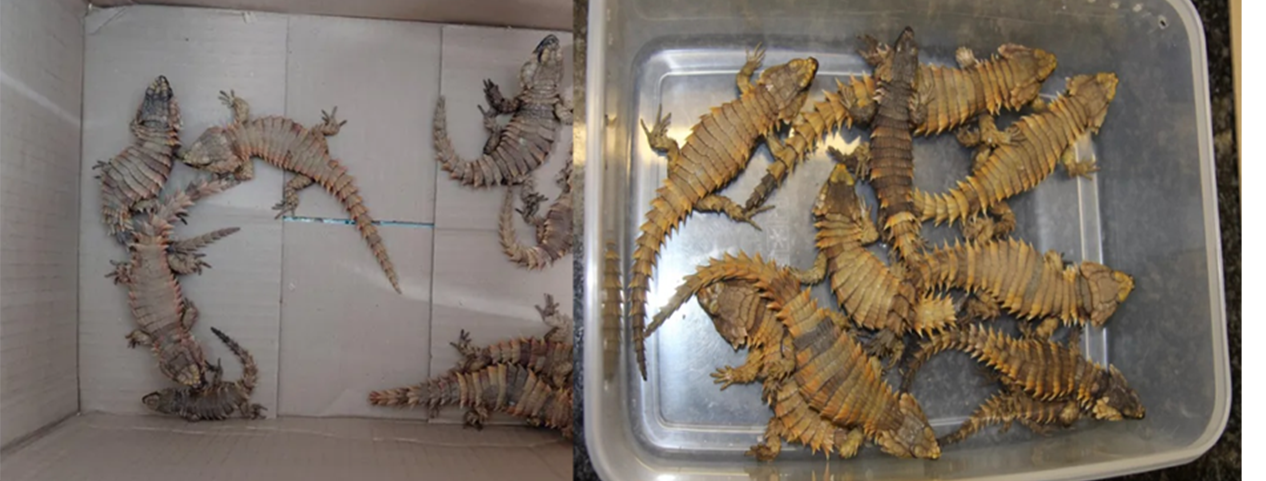
Sungazer Lizard threatened by habitat loss and illegal wildlife trade in South Africa

Left: Figure 4: Armadillo Girdled lizards seized from a Spanish citizen in Vredendal in 2025. Source: Cape Argus. Right: Figure 5: Armadillo Girdled Lizards intercepted by CapeNature (source CapeNature)

Illegal harvesting and trade

Their unique characteristics make both the Armadillo Girdled Lizards and Sungazer Lizards a sought after species in the international reptile market, with reptile enthusiasts vying to own them as pets or for display purposes. Only legally obtained individuals may be traded internationally and only if authorised after a finding that trade in the species will not be detrimental. The harvesting and trade of wild individuals is therefore prohibited. Because of the negative impact of illegal trade on Sungazers, and the fact that successful breeding in captivity remains to be proven, no trade in Sungazers, wild or captive-bred, is currently allowed.

While legal wildlife trade is regulated by permits, illegal trade takes place outside formal structures and is intentionally obscured. Quantifying illegal trade is therefore more challenging, but is anecdotally assumed when colonies disappear from previously recorded locations without any other known reason or proven mortality,  or when lizards are offered for sale at reptile fairs or online marketplaces, with no evidence of being captive-bred. The legal trade has also been used to launder wild-harvested specimens under the guise of being captive-bred. This is why proving parentage in captive-bred specimens is vital to prove that an animal was not wild-harvested.

Both Sungazer and Armadillo Girdled Lizards are included in the South African Sensitive Species List, highlighting the need to restrict access to species data and information on wild populations that could cause them to be removed from the wild.

Habitat transformation

Armadillo Girdled Lizards’ rocky habitats are not currently considered under significant threat, although challenges like climate change, habitat fragmentation and invasive alien plants do negatively impact them. The situation is much more dire for the Sungazer, as 50% of its grassland habitat has  been transformed and continues to shrink due to agricultural development, urbanisation and surging mining.
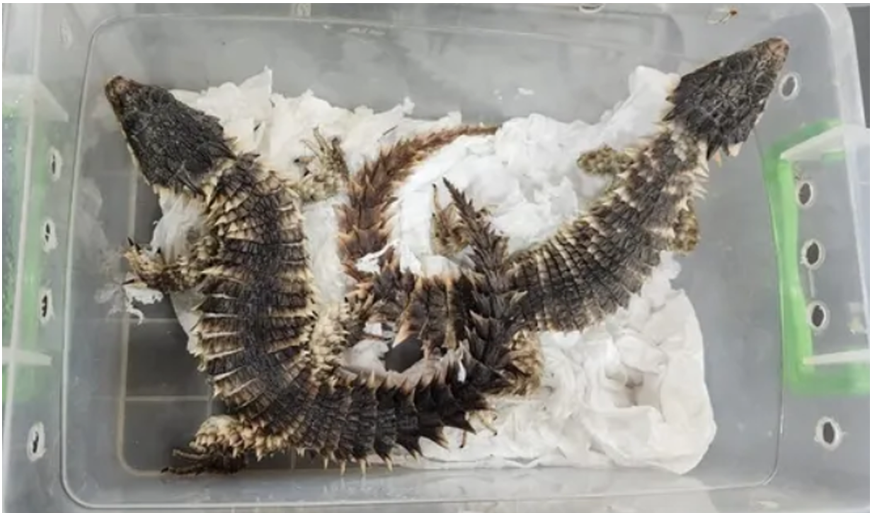
South African girdled lizards protected from illegal trade and human-induced threats

Figure 6: Sungazer lizards seized at a PostNet. Source: IOL

Traditional use

Sungazers are also used in Africa Traditional Medicine. This use is regulated through permits, but if harvesting takes place illegally or unsustainably, the impact of this use will further contribute to the species’ decline.  

Looking ahead at species conservation goals

A Biodiversity Management Plan is currently being drafted for Sungazers. It is hoped that once this plan is finalised and approved, it will act as the guideline for conservation of the species to ensure their longterm survival in the wild. But urgent funding is needed to improve our understanding of both species, including how to increase their chance of survival when human interference has already removed them from their habitats. Whether this is translocation to a new grassland due to a mining application being granted in prime Sungazer habitat, or finding a new rocky home for illegally harvested Armadillo Girdled Lizards seized from the trade. Funding is also needed to care for seized individuals, allowing them the best possible opportunity to be returned to their wild habitats. Imagine the impact of a dedicated reptile refuge where seized or injured individuals can recover before going back home!

What can you do to protect South Africa’s unique reptiles? 

  • Educate yourself and teach others about South Africa’s wild and wonderful reptiles.
  • Appreciate reptiles in their natural habitat and do not post their exact locations online.
  • Wild reptiles are not pets. Never buy a reptile unless you can establish its legal origin, and even then, consider if it is in the best interest of the animal to be kept in captivity.
  • Protect their habitats by participating in land use applications during public participation processes.
  • Report any suspicious activity to the police, provincial conservation authorities or the EWT.
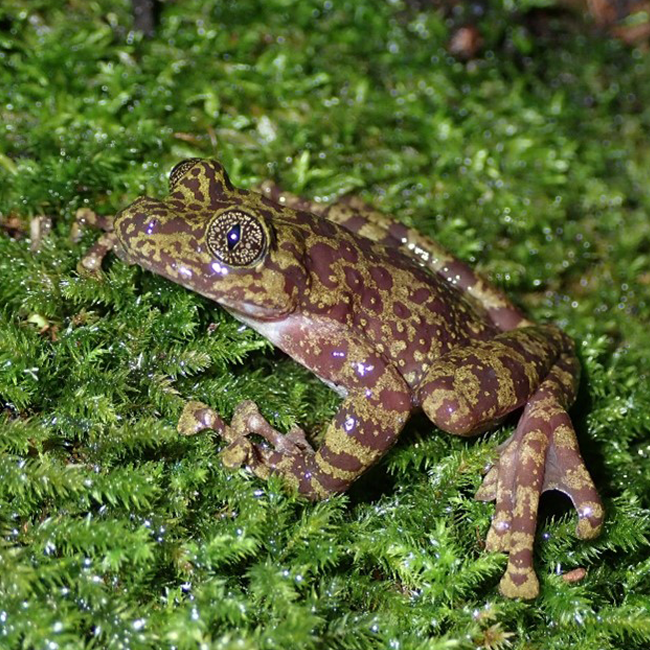
Ghostly Decline: Unveiling Tadpole Trends in Table Mountain’s Critically Endangered Frog

Ghostly Decline: Unveiling Tadpole Trends in Table Mountain’s Critically Endangered Frog

Science Snippet:

Ghostly Decline: Unveiling Tadpole Trends in Table Mountain’s Critically Endangered Frog

By Erin Adams and Dr Lizanne Roxburgh


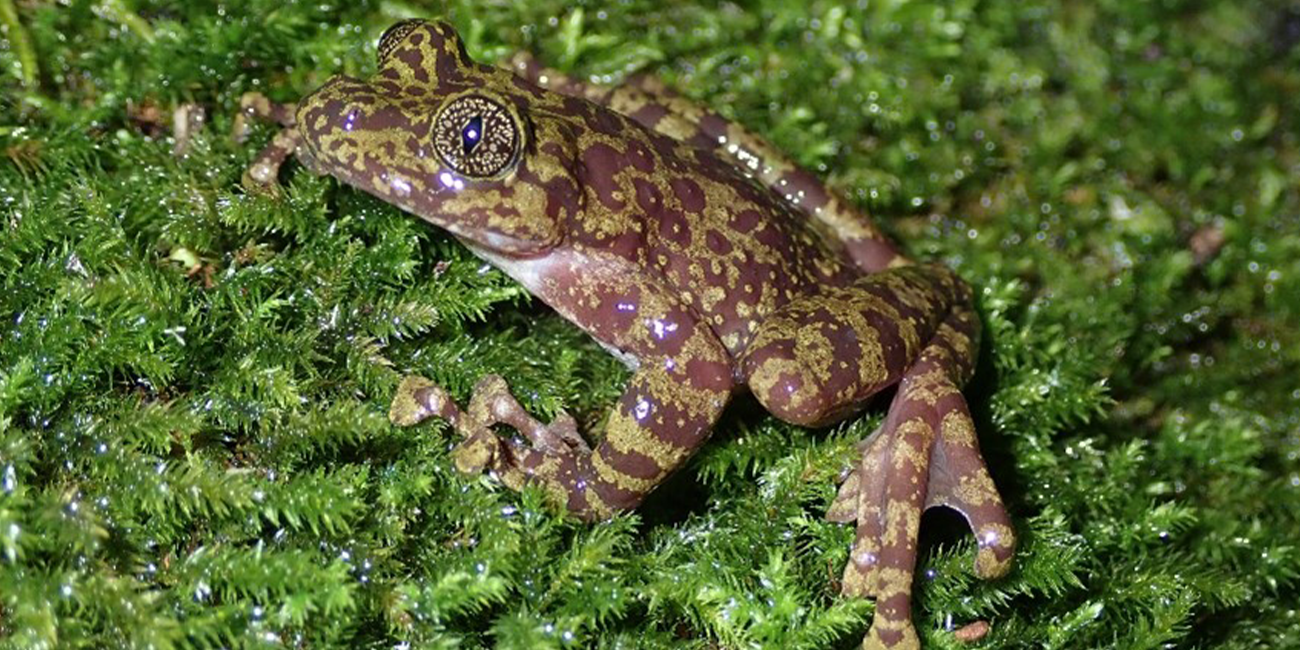
Amphibians, which include frogs, toads and salamanders, are one of the most threatened animal groups worldwide, with just under 50% of species nearing extinction. The Table Mountain Ghost Frog (TMGF) is no exception. It is a Critically Endangered frog, with very specific habitat requirements and is restricted to the streams and pools on Table Mountain in Cape Town. While loss of habitat is known to be the primary cause of TMGF declines, information linking fine-scale drivers of declines to specific, localised threats were lacking. Therefore, in a recent study co-authored by EWT scientists* the fine-scale factors influencing where TMGF tadpoles settle and grow were studied.

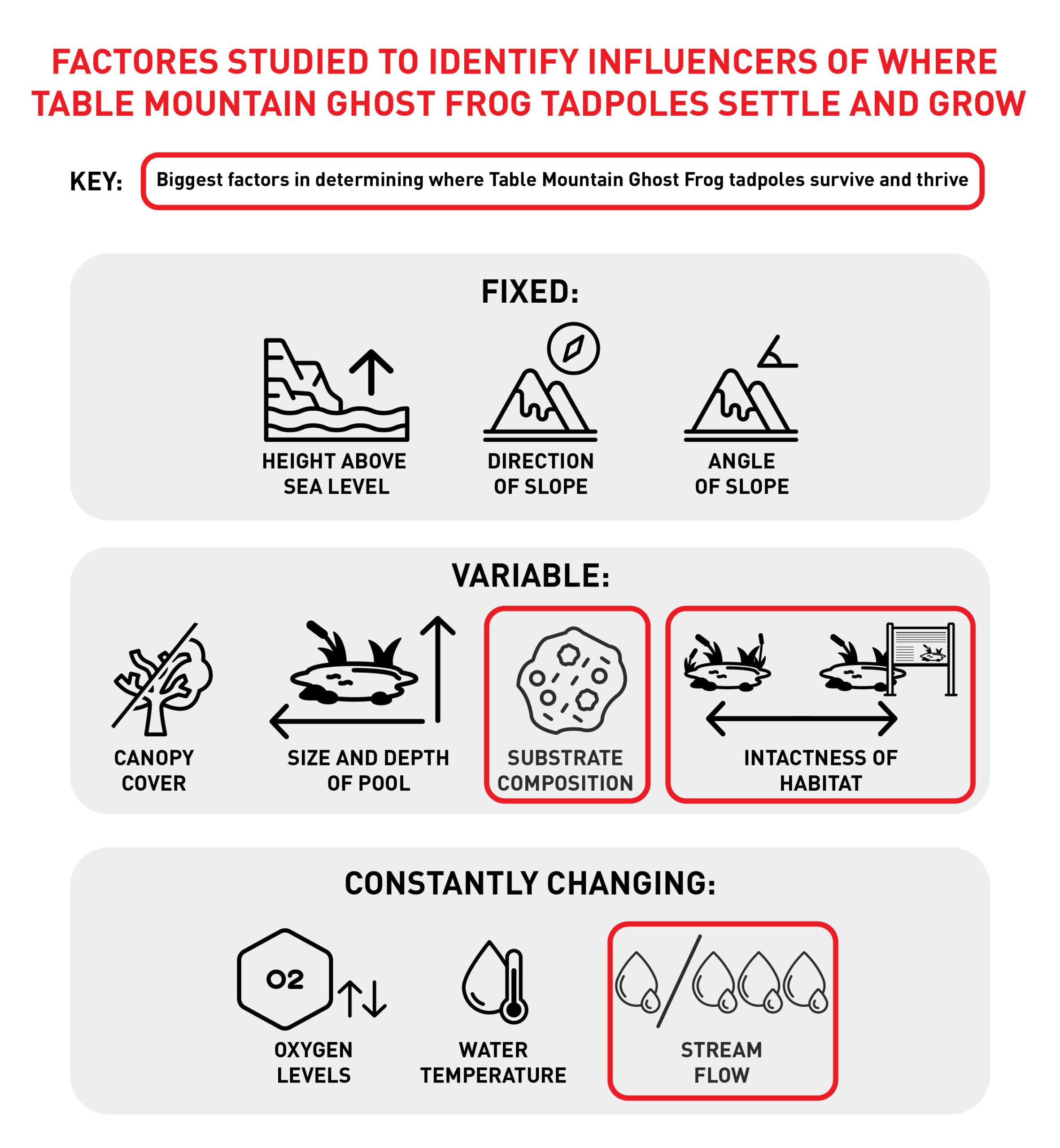
For three years, the scientists studied multiple pools containing Table Mountain Ghost Frog tadpoles. During this time, they compared pools and recorded fixed features that won’ t change, such as height above sea level, the direction of the slope and the angle of the slope. Features that could change depending on the season, such as canopy cover, size and depth of the pool, substrate composition and an index of how intact the habitat is, were also measured. Finally, factors that are constantly changing, such as the amount of oxygen present in the pool, water temperature, flow and the weather were recorded at each visit.


The scientists found that substrate composition of the pools (whether the bottom of the pools had silt, sand or rocks), was the biggest factor in determining where Table Mountain Ghost Frog tadpoles survive and thrive. Pools with more silt were far less likely to contain tadpoles compared to those with less silt. They also found that areas with high foot traffic, such as hiking trails across streams, promote erosion and increase silt and sand in the pools, which changes the physical structure of the stream. Another big threat to the tadpoles’ survival is the reduction of stream flow, which reduces the stream’ s ability to flush sediments such as silt and sand downstream, increasing sedimentation and causing loss of tadpole habitat. Stream flow is negatively impacted by the presence of dams and weirs as well as by dense stands of invasive vegetation, which traps the water.

In order to conserve the habitat integrity of these, and other, aquatic species on Table Mountain, the authors recommend that boardwalks be constructed on the hiking trails that cross streams, to reduce sedimentation in the pools. Invasive plant species should also be removed. And weirs should be opened in drier parts of the year, especially in the late summer to allow the first wet season rains to naturally fill the streams.

*Weeber, J., Altwegg, R., Tarrant, J., & Tolley, K. A. (2023). Fine-scale drivers of extinction risk: tadpole occupancy dynamics of the Table Mountain Ghost Frog (Heleophryne rosei). African Zoology, 58(3-4), 106-119. https://doi.org/10.1080/15627020.2023.2282448

Lions remain listed as Vulnerable in the 2023 Red List Assessment

Lions remain listed as Vulnerable in the 2023 Red List Assessment

Lions remain listed as Vulnerable in the 2023 Red List Assessment

By Dr Samantha Nicholson, Senior Carnivore Scientist & Manager of the African Lion Database

The IUCN Red List of Threatened Species (hereafter the Red List), established in 1964, offers a comprehensive overview of global conservation status, covering plants, animals, and habitats.

With 150,300 species assessed globally, 28% are threatened with extinction, including notable percentages in various taxa. These assessments serve as vital tools for conservation efforts, employing standardised criteria to evaluate extinction risk based on factors such as threats, habitat loss, and population trends. This approach, guided by rigorous standards, provides a clear understanding of species vulnerability and aids in prioritising conservation actions.

The Red List’s systematic approach helps identify species at high risk of extinction, guiding global, regional, and local conservation priorities. While appeals are possible, listings are generally accepted by range states, conservation bodies, and international conventions. Red List assessments inform targeted conservation strategies and resource allocation, guiding conservation action for species and habitats. They foster global commitment and unity among range states in addressing conservation challenges. Additionally, the Red List Index tracks overall trends in extinction risk, serving as a crucial indicator for measuring progress towards reducing biodiversity loss on an international scale.

Determining a species’ listing involves a systematic process conducted by expert assessors following IUCN Red List criteria. Assessments consider factors like population decline, current population size and trends, distribution, and population fragmentation. They also incorporate the probability of extinction over a specified timeframe, often utilising modelling techniques. Data from various sources, including scientific studies and expert assessments, inform these evaluations. Assessors apply strict criteria to determine the species’ conservation status accurately.

Data on the Lion, an omnipresent symbol for Africa, was recently updated by several lion experts led by the Endangered Wildlife Trust’ s Dr Sam Nicholson.

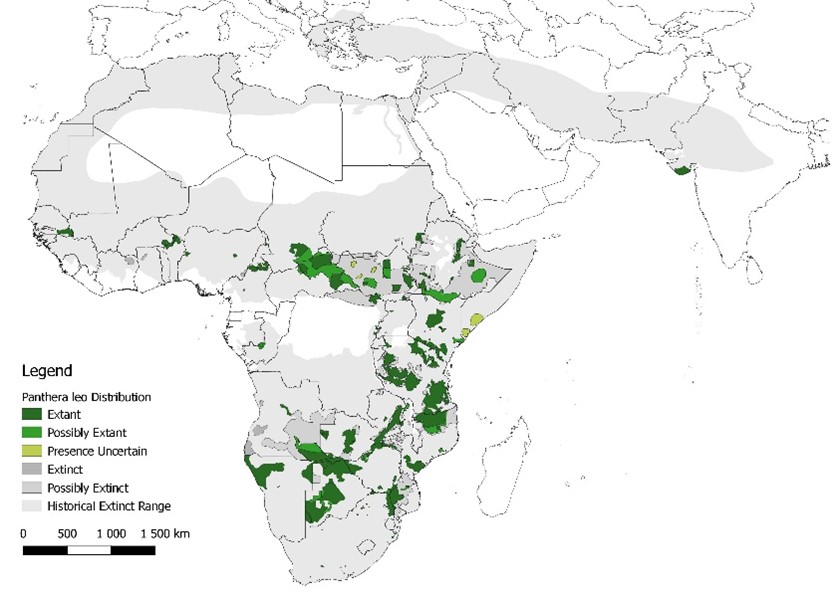
The Lion, once widespread in Africa, has suffered significant declines in population and range in recent decades. These declines, more severe for lions compared to other large carnivores, have led to consistent Vulnerable listings in IUCN assessments since 1996. The team of assessors found that the extant Lion range in 2023 is estimated to be only 6% of its historical range, highlighting the severity of the decline. The current population of adult and subadult Lions in Africa is estimated to be between 22,000 and 25,000, with an additional ~670 Lions in India. These figures represent a decline from previous estimates and underscore the urgency of conservation efforts.

Various factors contribute to the decline of Lion populations. Habitat loss, primarily driven by human activities such as deforestation and land conversion, is identified as the most significant threat. Depletion of prey bases, exacerbated by poaching and the bushmeat trade, further exacerbates the problem.

Human-Lion conflict, often resulting in the killing of Lions to protect human life and livestock, adds to the pressure on populations. Additionally, the trade in Lion body parts for traditional medicine poses a growing threat, as does poorly regulated trophy hunting, which can lead to population declines if not managed effectively. The impact of violent extremism in certain Lion ranges in Africa is also a concern, as it further jeopardises conservation efforts. Instances of poaching for Lion body parts, particularly in Mozambique, highlight the need for increased vigilance and enforcement measures to combat illegal trade.

Despite these challenges, there have been efforts to mitigate threats and conserve Lion populations. Reintroduction programs in certain areas have shown promise (e.g. Zembeze Delta in Mozambique, Akagera National Park in Rwanda), and recommendations for improved management practices in activities such as trophy hunting have been made. However, more comprehensive monitoring and enforcement are necessary to ensure the long-term survival of the species.

Given the ongoing and increasing threats faced by Lions across their fragmented range, it is recommended that the species be closely monitored, with a reassessment of its threat status after a minimum three-year period, or as soon as new information emerges. The decline in both population and range, coupled with the continuation of known threats, justifies its classification as Vulnerable according to the specified criteria. Urgent action is needed to address the complex challenges facing Lion conservation and secure a future for this iconic species.

The Lion’ s Vulnerable status reflects a critical need for long-term survival efforts. The dwindling lion population not only raises ecological concerns, but also has economic and cultural repercussions. As apex predators, lions regulate ecosystems, affecting biodiversity. Economically, reduced lion numbers may impact tourism revenue in countries reliant on lion-based tourism. Culturally, lions hold symbolic importance, and their decline could affect traditions and spiritual beliefs.

The latest Red List assessment provides enhanced knowledge on the status of the species including data gaps, threats, geographic distribution and changes in range. The full assessment is on the IUCN website and can be accessed here