Greater financial support and collaboration between all stakeholders is needed to save the world’ s endangered species from extinction.
That was the message from participants in the first World Species Congress Satellite Event on 14 May 2024 co-hosted by the Endangered Wildlife Trust (EWT), South African National Biodiversity Institute (SANBI), Department of Forestry, Fisheries and the Environment (DFFE), the Botanical Society of South Africa (BotSoc), BirdLife SA and the Two Oceans Aquarium Foundation.
The World Species Congress is a virtual 24-hour congress hosted by Reverse the Red. It offers a forum for collaboration and the chance to develop a roadmap for success for anyone striving to create a healthier planet.
The South African event held ahead of the 24-hour World Species Congress on 15 May 2024 showcased a number of examples of species recovery. Participants in the virtual event also discussed the country’ s global commitments towards species recovery, including the Kunming-Montreal Global Biodiversity Framework. For South Africa, the inputs received are an important contributor to the national targets to be set in the National Biodiversity Strategy and Action Plan.
Mukondi Matshusa of the DFFE said the South African event provided the government with an opportunity to shape and quantify its collective conservation efforts through collaboration, inclusiveness and partnership.
Collaboration between government, NGOs and communities as the people who live with the species is what was needed for conservation and recovery to make implementation of the White Paper, and the development of the GBF, workable, she said.
Target 4 of the GBF aims to Halt Species Extinction, Protect Genetic Diversity, and Manage Human-Wildlife Conflicts. This means ensuring urgent management actions to halt human induced extinction of known threatened species and for the recovery and conservation of species, in particular threatened species. The aim is to significantly reduce extinction risk, as well as to maintain and restore the genetic diversity within and between populations of native, wild and domesticated species to maintain their adaptive potential. This can be done through in situ and ex situ conservation and sustainable management practices, and effectively manage human-wildlife interactions to minimise human-wildlife conflict for coexistence.
Domitilla Raimondo, SANBI’ s Programme Manager of the Threatened Species Unit, pointed out the conservation in South Africa is a whole of society approach. South Africa is unique in the number of citizens, including community members and traditional healers, that help to monitor species, assisting scientists with data on the health of species.
“We do things together and will continue to do things like that,” she said.
Raimondo stated that in South Africa a landscape approach is used to conserve species. The country has intricate spatial biodiversity planning and in that targets are set for every type of ecosystem which allows for the conservation of common and threatened species. By doing this, unchecked development can be halted to protect vulnerable and threatened species.
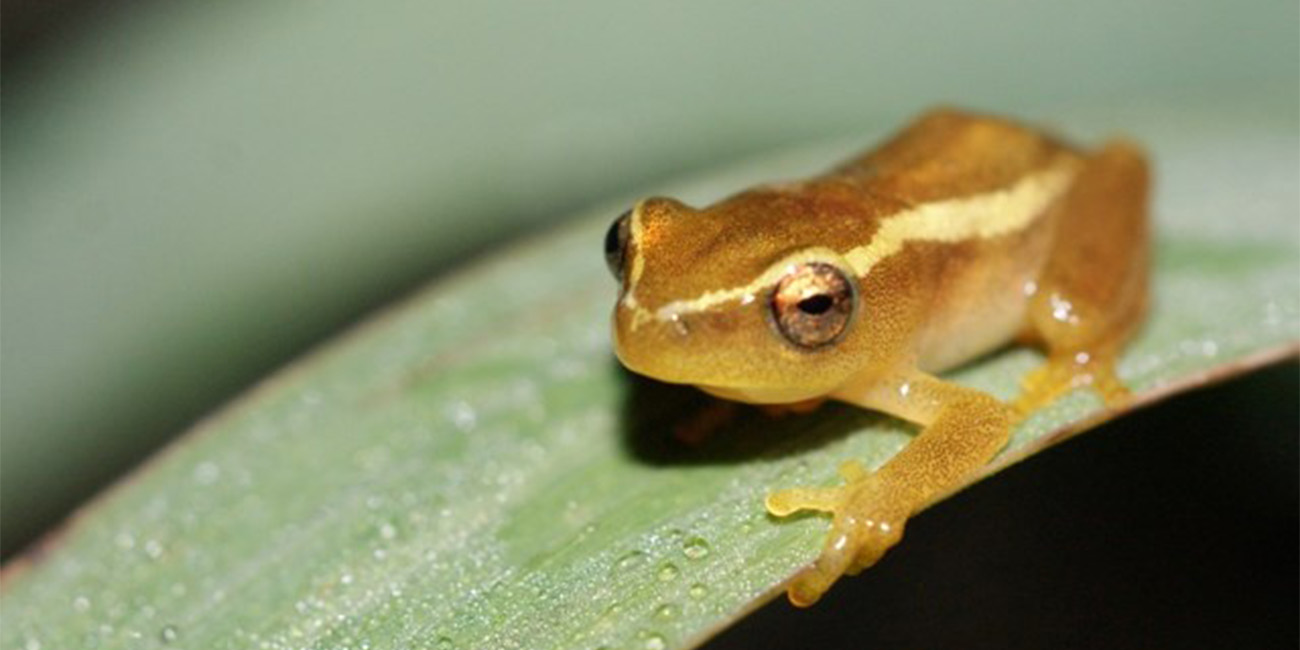
The Red List assessments done for 12 taxonomic groups in SA indicate that 25 species are faced with extinction. The highest level of threat is to 30% of freshwater fish for which a huge increase in funding is required to intervene in their conservation and management. Eleven amphibian species, including the Desert Rain Frog which is facing collapse because of climate change and mining, 14 mammal species of which 50% are small mammals, 16 bird species including the Botha’ s Lark, Blue Swallows and Vultures, as well as numerous marine species and 109 plant species, are in need of urgent recovery.
“We will require significant upscaling of investment to reach Target 4. We have the know-how, we have the people, we just need the financing, said Raimondo.
The EWT’ s Senior Manager Sustainable Financing and Business Partnerships Kishaylin Chetty said although the landscape approach is central to species conservation, and there is a focus on stewardship and large intact areas, the EWT remains a species-focused conservation NGO.
“We understand that funding is absolutely critical for us to take our work forward, and that collaboration is key. For us to achieve conservation impact at a national and international scale we need to collaborate with the right types of partners to make sure that we have action on the ground,” he said.
The EWT has a vision in terms of a healthy planet, and an equitable world that values and sustains the diversity of all life. It is mainly dedicated to conserving threatened species in southern and East Africa to the benefit of all. With 12 programmes and over 110 employees the EWT’ s paw print has touched 21 countries within the African continent. Although species-led, the EWT equally recognises the value of conserving habitats and benefiting people.
Reaching the Global Biodiversity Framework targets of conserving 30 percent and land and water by 2030 and 50% by 2050 is still within reach. While parts of the world, the African continent and parts of South Africa have been highly impacted by environmental destruction, there are also parts that are still largely intact.