
Help protect Africa's 

Tales from the Field:  EWT Conservation Campus Takes Bold Steps for Pompom Weed Eradication

Tales from the Field: EWT Conservation Campus Takes Bold Steps for Pompom Weed Eradication

EWT Conservation Campus Takes Bold Steps for Pompom Weed Eradication

Dr Kerushka Pillay, the EWT’ s CONSERVATION PLANNING AND SCIENCE UNIT

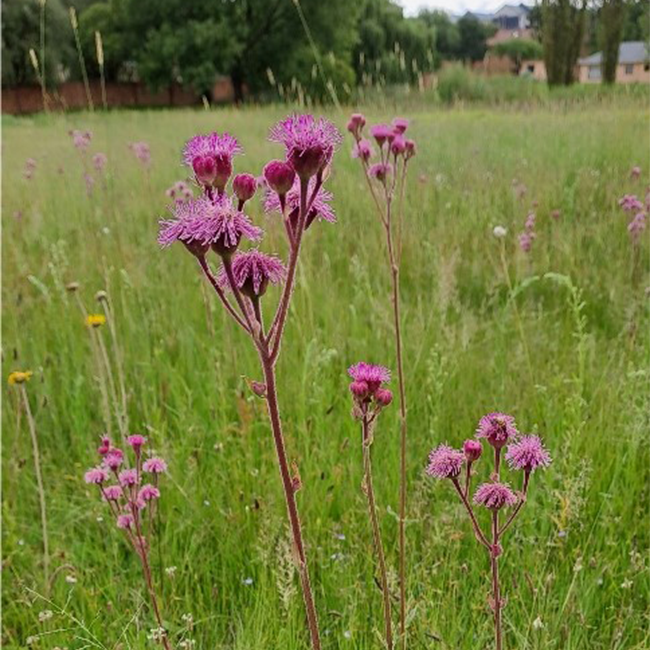
In the heart of Glen Austin, Midrand, the EWT Conservation Campus is leading the charge against the invasive Pompom weed (Campuloclinium macrocephalum), aligning with our commitment to biodiversity preservation and ecosystem health.

The Pompom weed, native to Central and South America, has become a significant concern in South Africa. The plant has been classified as invasive under stringent legislation such as the Conservation of Agricultural Resources Act (CARA), 2002, and the National Environmental Management Act (NEMBA).
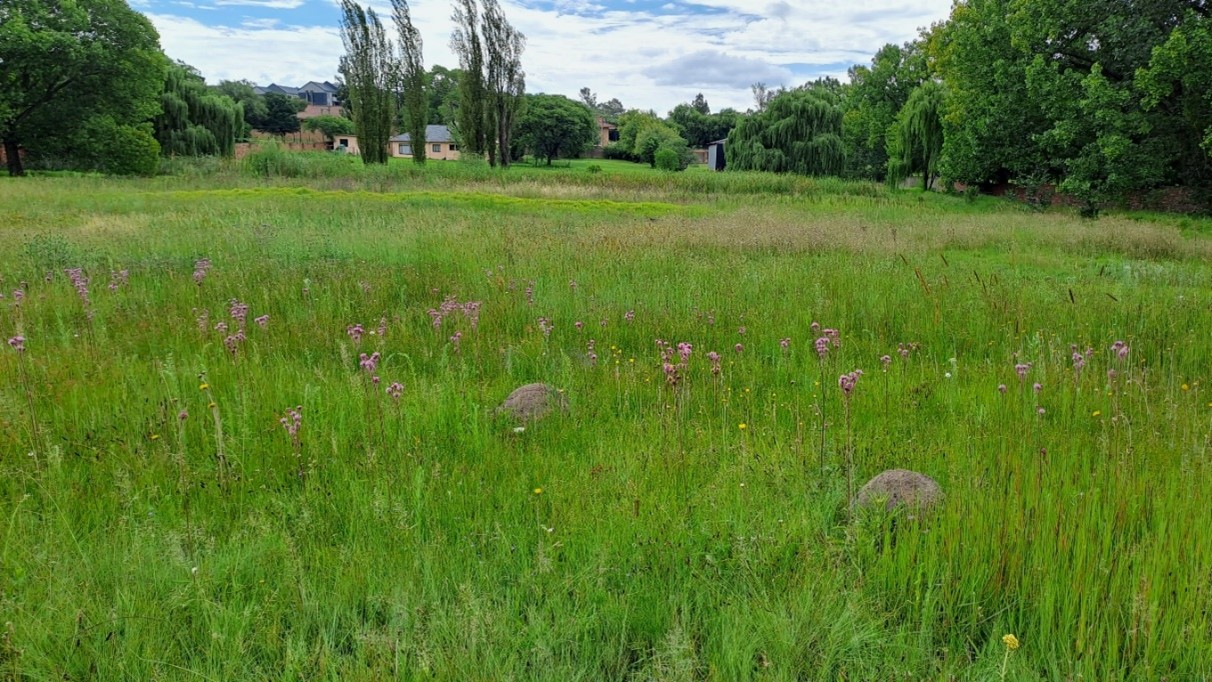
 

The invasive Pompom poses a severe threat to our local ecosystem, particularly in grassland regions of Gauteng, KwaZulu-Natal, Limpopo, Mpumalanga, and the Eastern Cape Provinces. Leading by example in efforts to address this, the EWT Conservation Campus has implemented a comprehensive and innovative long-term eradication plan, focusing on the strategic removal of Pompom weed from our property.

As part of our commitment to sustainable practices, we have introduced a biocontrol strategy utilising the Pompom thrips (Liothrips tractabalis), tiny insects imported from Argentina. Carefully studied and proven to feed exclusively on Pompom weed, these thrips were released on our grasslands in December 2023. Thrips play a vital role by selectively feeding on Pompom, causing damage to its vital structures, and impeding its growth. This targeted approach minimises the impact on non-target species, promoting a balanced ecosystem.
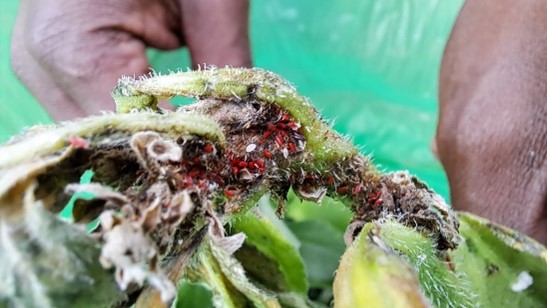
 

In collaboration with the Agricultural Research Council (ARC), our team will conduct regular assessments to measure the thrips’ impact on Pompom populations and overall ecosystem health. This initiative not only showcases our dedication to biodiversity preservation but also highlights the strength of interdisciplinary collaboration.

In the past, the EWT team, under the leadership of Obeid Katumba (Wildlife in Trade Programme), commenced a physical, manual removal process to kickstart Pompom eradication efforts. This involved cutting seed-containing plant sections, placing them in bags, and uprooting remaining plants. Thorough disposal through incineration was done, emphasising the urgency for effective control, especially in highly infested areas.

Our ongoing efforts, including the introduction of eco-friendly biological control, signify our commitment to long-term environmental health and sustainability. We anticipate updates on the project’s success and encourage stakeholders to reach out with any questions or queries regarding the Pompom eradication plan. For further information, please contact Dr Kerushka Pillay at KerushkaP@ewt.org.za or on 0727193741.



A brighter and more sustainable future motivating Cedarville farmers to collaborate

A brighter and more sustainable future motivating Cedarville farmers to collaborate

A brighter and more sustainable future motivating Cedarville farmers to collaborate

Bonnie Schumann, EWT’s Drylands Conservation Programme, bonnies@ewt.org.za  South Africa’ s Grassland Biome is highly productive and rich in biodiversity. However, the Grasslands are under tremendous pressure from agriculture and unsustainable mining developments. Poor planning, mismanagement, and inadequate enforcement have led to over-utilisation, degradation, and habitat loss. Altogether, 30% of the biome has already been irreversibly transformed. However, where the rangeland is still productive and extensively farmed, there are promising opportunities to reverse degradation and improve biodiversity resilience and agricultural production in the landscape. These opportunities can benefit the endemic and threatened species present and protect the livelihoods that depend on the landscape’ s natural resources and ecosystem services. Farming with livestock and crops in the grasslands plays a critical role in supporting livelihoods for communities. Knowledge sharing is a powerful approach to finding solutions to challenges, particularly in diverse landscapes involving various stakeholders. With this in mind, the Endangered Wildlife Trust (EWT) engaged farmers in the biodiversity-rich grasslands of the Cedarville area in the Eastern Cape. We talked to the farmers to understand their challenges and whether they were interested in attending structured training to develop solutions to an array of sustainable land management issues together.

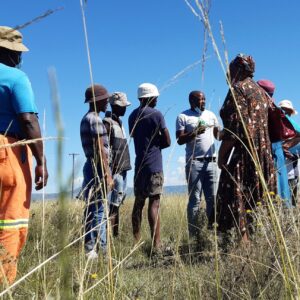
The Cedarville farmers face challenges primarily related to poor infrastructure on the commonages that does not support optimal grazing practices. Rangeland is grazed continuously, which does not allow the vegetation an opportunity to rest and build up reserves. Palatable species are under tremendous pressure and often disappear from the landscape, resulting in the loss of ground cover and production and an increase in undesirable plant species. Coupled with this, communities that utilise the rangeland have not had the opportunity to collaborate and coordinate their activities, limiting their abilities to manage the rangeland effectively. In addition, they cannot effectively access the highly competitive agricultural sector. Participating farmers were keen to address these issues and explore opportunities to collaborate to improve their farming practices and protect their natural resources. In February 2022, the EWT hosted an Integrated Farm Planning and Management (IFP) training course in Cedarville, attended by almost 40 farmers – double the expected turnout.

The IFP course content focuses broadly on sustainable land management principles. The original course created by the EWT was focused on the Nama Karoo Biome and is available as a free online course at https://karooforever.org.za/en/. The original course was adapted to include the Grasslands Biome content. The Cedarville course was the first IFP to be held in the grasslands, and the fourth IFP course we have presented. The EWT collaborated with Agricultural Extension officers from the Underberg Farmers Association and the Department of Agriculture and Rural Development (DRDAR), who copresented the course with staff from the EWT’ s African Crane Conservation (ACCP) and the Drylands Conservation (DCP) programmes.

The Cedarville area is important for Crowned Crane conservation as the birds breed in its wetlands. Conserving Africa’ s threatened crane species has benefits far beyond the cranes and their admirers. Africa’ s four threatened crane species are ambassadors for conserving water catchments, including wetlands and grassland ecosystems. They are iconic and charismatic and appeal to the public, allowing us to develop relationships within communities and with other stakeholders through crane conservation activities. These grasslands supply additional non-agricultural services, such as water supply and flow regulation, carbon storage, erosion control, climate mitigation, pollination, and cultural ecosystem services. For more information on the work in the Cedarville area, contact:

Samson Phakathi, Senior Community Project Officer, Endangered Wildlife Trust’ s African Crane Conservation Programme, samsonp@ewt.org.za

For resources on sustainable land management, visit:

https://karooforever.org.za/en/

The development of the original IFP Nama Karoo course was supported with funding from the UNDP GEF5 SLM Karoo Landscape Project.

The course in the Grasslands Biome in the Eastern Cape was made possible with funds from the National Lotteries Commission. The NLC relies on funds from the proceeds of the National Lottery. The Lotteries Act and regulations guide the way in which NLC funding may be allocated. The NLC wants the grants to make a difference in the lives of all South Africans, especially those more vulnerable, and to improve the sustainability of the beneficiary organisations. Available funds are distributed to registered and qualifying non-profit organisations in the fields of charities; arts, culture, and national heritage; and sport and recreation. By placing its emphasis on areas of greatest need and potential, the NLC contributes to South Africa’ s development.

LATEST STORIES