Help protect Africa's 

GETTING NOSY FOR TORTOISES – A CONSERVATION RACE

GETTING NOSY FOR TORTOISES – A CONSERVATION RACE

GETTING NOSY FOR TORTOISES – A CONSERVATION RACE

By Esther Matthew, Specialist Officer, EWT Drylands Conservation 
 

** Chelonians include all tortoise, turtle, and terrapin species. For the purposes of this article, we will use the term “tortoises”.

Few people are aware that South Africa holds the title as the tortoise capital of the world, boasting no less than 13 tortoise species, most of which are endemic.

Unfortunately, the statistics are damming, showing that tortoises are among the most imperilled vertebrate groups, with over 60% of the world’ s 357 known species threatened with extinction (Lovich et al. 2018; Turtle Conservation Coalition 2018; Stanford et al. 2020). Approximately 52% of all assessed tortoise taxa have been classified as Critically Endangered, Endangered or Extinct (IUCN, 2020). South Africa’ s tortoise species are no exception, with two species presently listed by the IUCN Red List of Threatened Species as Endangered, and one as Critically Endangered.

Multiple threats face the survival of South Africa’ s tortoise species, including illegal collection, uncontrolled fires, habitat loss and degradation, and predicted changes in habitat due to climate change. In addition, the combination of climate change and electrical infrastructure has created the “perfect storm” of conditions favouring the growth of pied crow numbers in the shrublands of South Africa. Despite the decline in multiple species, there are not many proactive conservation plans and monitoring strategies for these defenceless South African species.

The Endangered Wildlife Trust (EWT), in partnership with the Turtle Conservancy (TC) and Mapula Trust, recently launched research projects focusing on conservation efforts for South Africa’ s most Endangered tortoise species, the Geometric Tortoise (Psammobates geometricus). The species has a very restricted range compared to that of other species in the country. As such, there is a big need to find the tortoises in new locations, monitor existing populations and implement conservation actions.

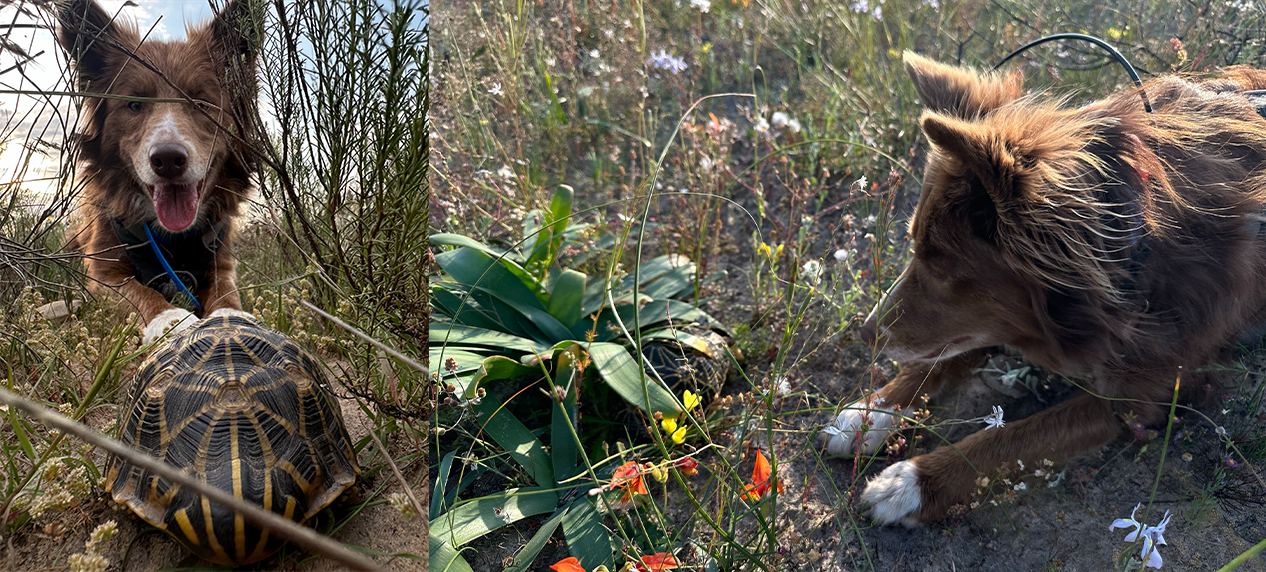
Although these tortoises have a colourful pattern on their shells, the design helps them camouflage in the natural vegetation, making them difficult to find. However, the EWT’ s Drylands Conservation Programme uses an innovative approach to help researchers find these animals—scent detection dogs.

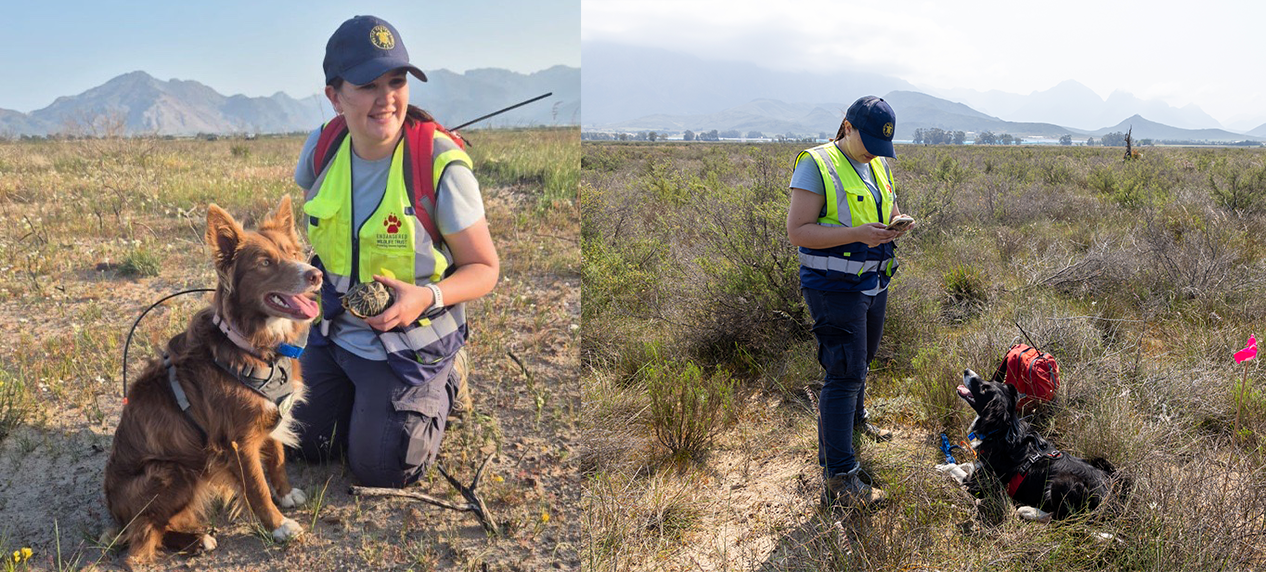
Two Border Collies, Delta and Dash, are helping their human teammates locate these tortoises. During recent surveys, the dog team was able to increase overall finds with an average of 30%, a significantly higher detection rate of live Geometric tortoises than by their human counterparts. The dog team found an average of three live tortoises, compared to the average of 0.6 per person. That means the dogs found five times the number of live tortoises than the average human, demonstrating the value of having a dog team in the field to increase our efficiency. These canines will continue to assist our field staff for long-term monitoring of the species, to inform the conservation recommendations and to possibly assist with fire rescue missions. The hope is that Delta and Dash’ s impact on the conservation of rare species will increase.

Please note: All tortoises are protected species. They are listed under the Convention on International Trade in Endangered Species of Endangered Fauna and Flora (CITES), as well as provincial legislation, such as the CapeNature Conservation ordinance of 1974 and the National Environmental Management: Biodiversity Act 10 of 2004. It is illegal to collect any tortoise species in South Africa, and they may not be kept as pets without a permit.
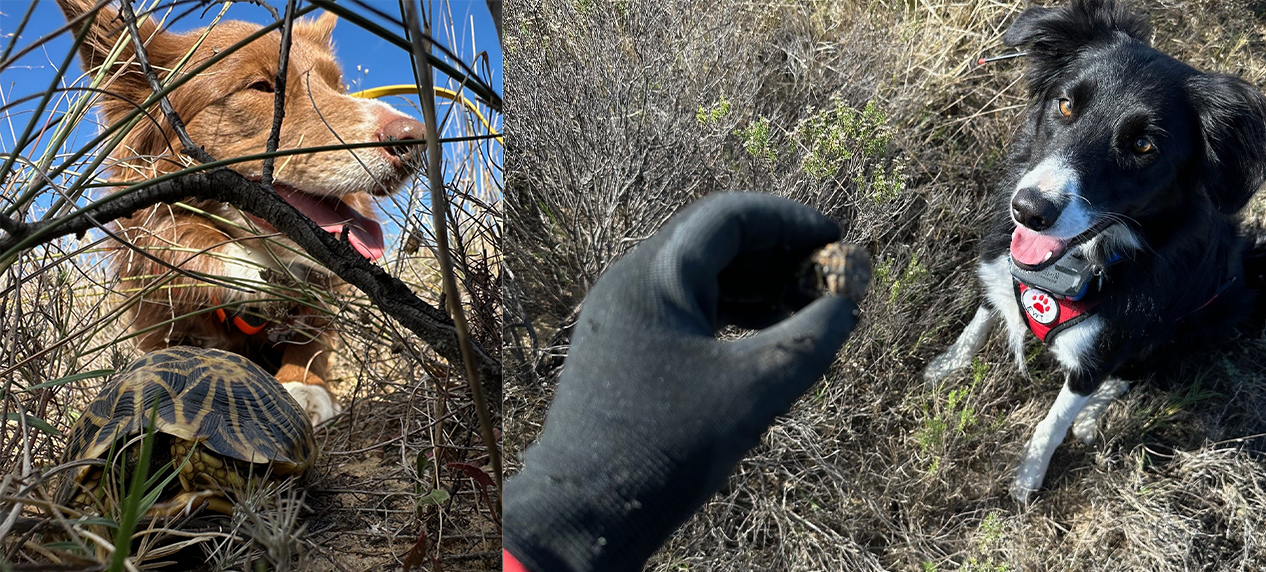
 

Conservation canines Delta (right) and Dash (left) with tortoises
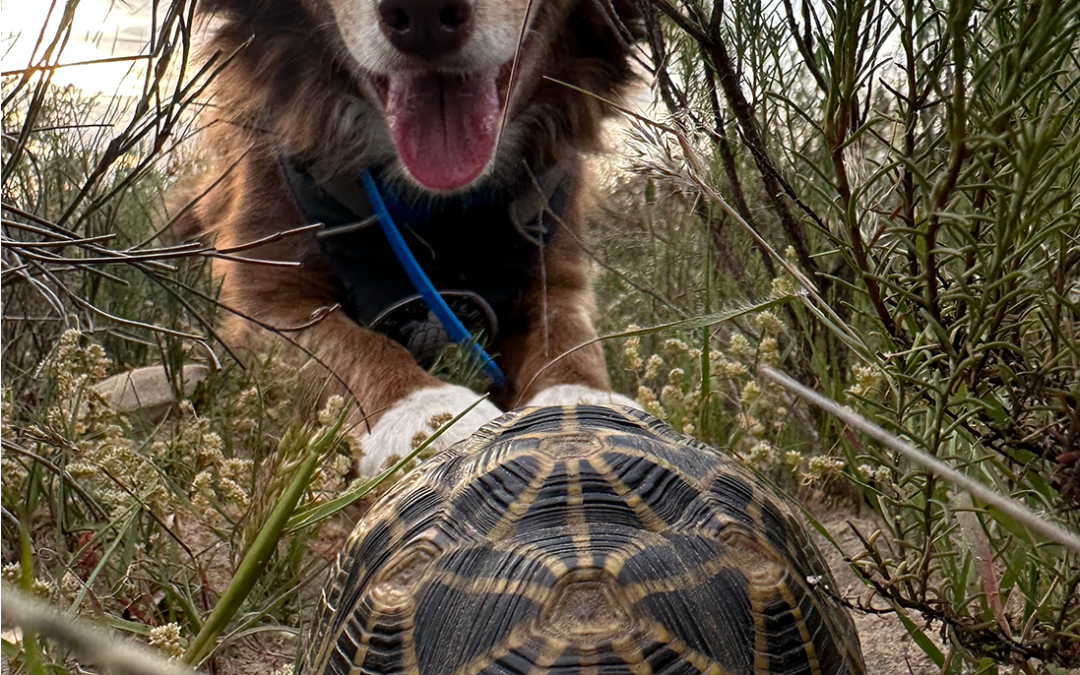
EWT TORTOISE CONSERVATION CANINES – NOSY FOR NATURE

EWT TORTOISE CONSERVATION CANINES – NOSY FOR NATURE


EWT TORTOISE CONSERVATION CANINES – NOSY FOR NATURE

By: Esther Matthew – Specialist Officer | Drylands Conservation Programme

Chelonians includes all tortoise, turtle, and terrapin species. For the purposes of this article, we will use the term “tortoises”.


South Africa is one of the most biodiversity-rich countries in the world and is home to no less than two of the world’ s most well-known botanical “biodiversity hotspots”, the Succulent Karoo and Fynbos Biomes. However, few people are aware that South Africa also holds the title as the tortoise capital of the world. South Africa is home to no less than 13 tortoise species, most of which are endemic to the country.

The Endangered Wildlife Trust (EWT), in partnership with the Turtle Conservancy (TC) launched tortoise conservation research projects over the last two years to locate viable populations and implement conservation action for three of South Africa’ s most Endangered tortoises in the dryland areas of South Africa, including the Karoo, which is home to nine of the 13 tortoise species found in South Africa.

There are five species of dwarf tortoise globally, four of which occur in the South African Karoo and one in Namibia. As their name implies, dwarf tortoises rank amongst the smallest of the tortoise species. South Africa also has one Critically Endangered tortoise species, called the Geometric Tortoise. Unfortunately, over the last 20 years researchers have started to notice an alarming decline in population numbers for all of three of the country’ s Endangered tortoise species. This significant impact can be attributed to factors like habitat loss, poaching, and crow predation that has been specifically being observed.

Certainly, the human teams have struggled to find a single viable population of both the Karoo and the Speckled Dwarf Tortoise over the last two years of extensive surveys. More than 20 surveys have yielded depressingly few live animals, and in most cases only shell fragments are to be found. All these species are elusive and well camouflaged, making it difficult for even the well-trained eye to spot. As such, it has been vital for us to look at other survey methods, such as using scent detection dogs.

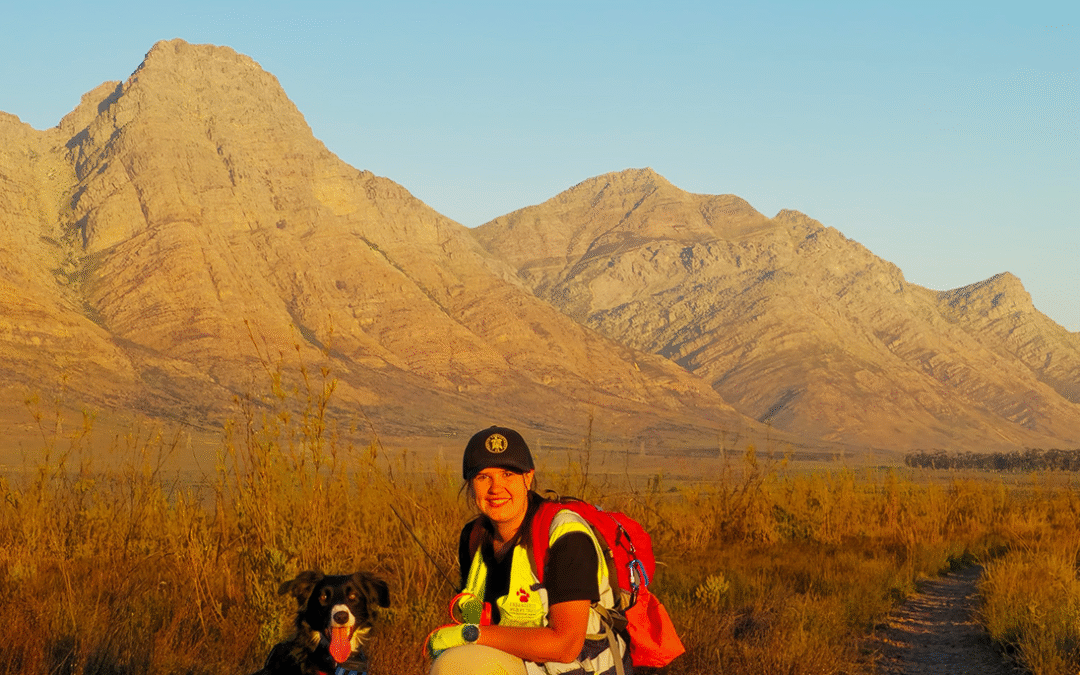
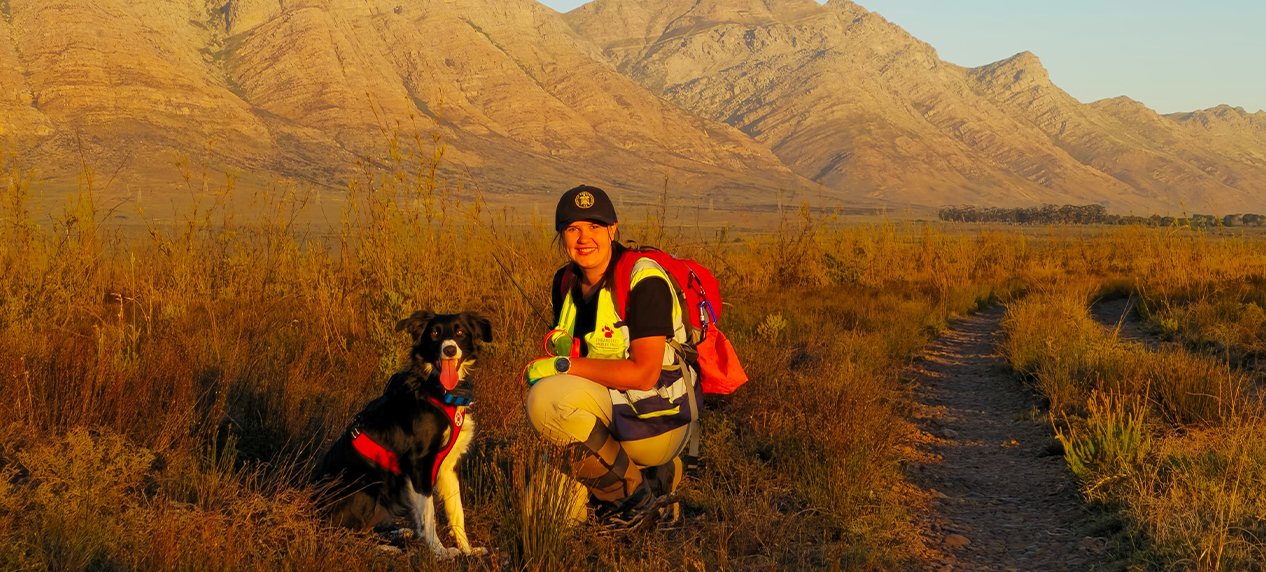
The EWT’ s Drylands Conservation Programme, therefore, started training scent detection dogs to assist with tortoise fieldwork projects. Two Border collies, Delta and Dash, have been assisting our team in the field to help locate tortoises with a little guidance from their handler Esther Matthew. Delta has been contributing to this research for the last two years, while Dash only recently started helping after passing his certification. The dogs have helped increase the number of finds, with Delta almost setting a record of six tortoises found in 50 minutes for one of the species. The detection dogs make our search efforts a lot more efficient as we are able to move faster and find hidden tortoises we would likely have missed. Their assistance in the field contributes to data collection for species distribution mapping and monitoring the survival of species in the wild. We can’ t wait to see how their “nose work” will continue to benefit the conservation of these unique tortoise species.

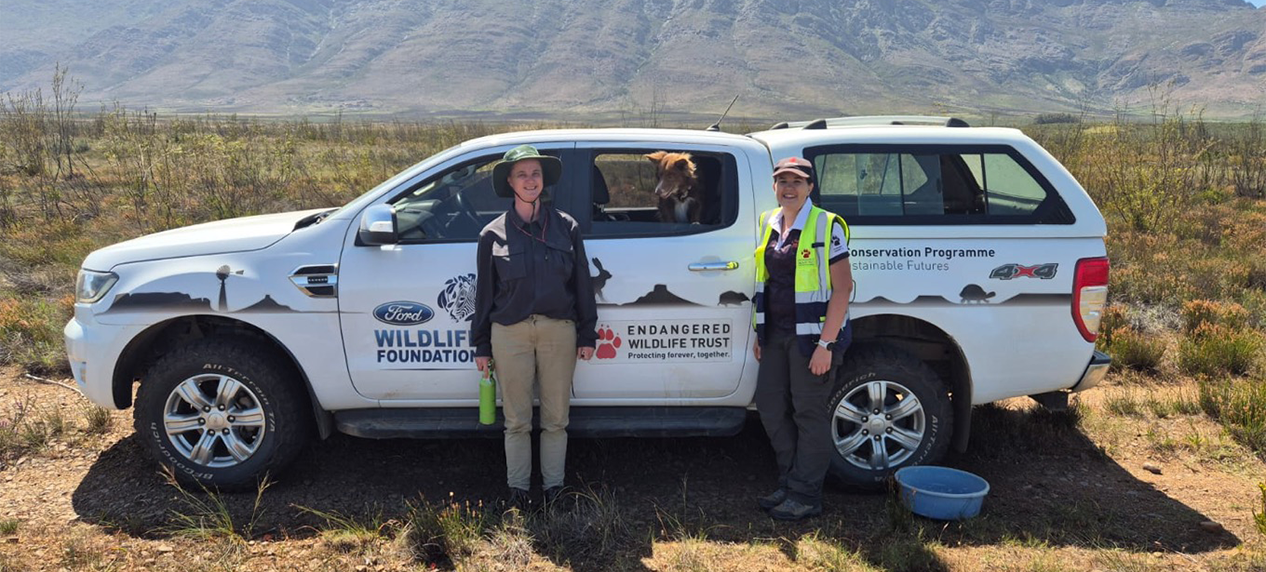
The EWT tortoise conservation work is supported by Turtle Conservancy, Dwarf Tortoise Conservation, Rainforest Trust and the IUCN NL. A special word of thanks to Ford Wildlife Foundation for the vehicles that safely gets our staff and working dogs to the remote locations across the Western- and Northern Cape, where we conduct our vital tortoise surveys.


Please note, that landowner permission and valid permits from relevant conservation authorities in each province are always required for the use of conservation detection dogs. Additionally, all tortoises are protected species and listed under the Convention on International Trade in Endangered Species (CITES) as well as provincial legislation such as the CapeNature Conservation Ordinance of 1974 and National Environmental Management: Biodiversity Act 10 of 2004. As such, it is illegal to collect any tortoise species in South Africa, and they may not be kept as pets without a permit. However, please report sightings of these rare species to us at ewt@ewt.org.za.


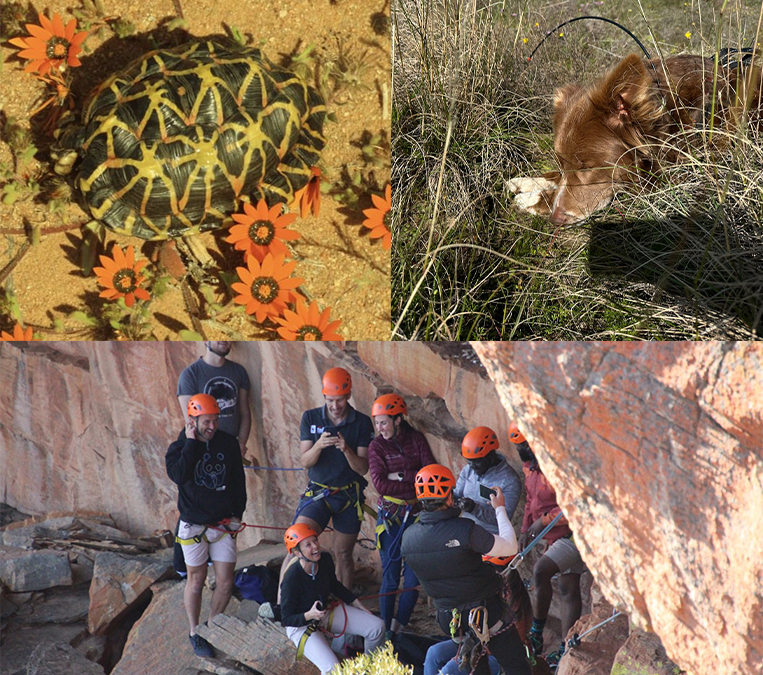
DCP showcasing Projects and “furries” with Funders

DCP showcasing Projects and “furries” with Funders


DCP showcasing Projects and “furries” with Funders.


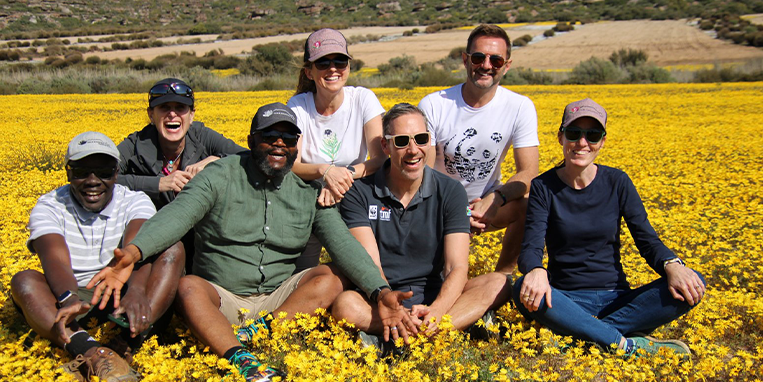
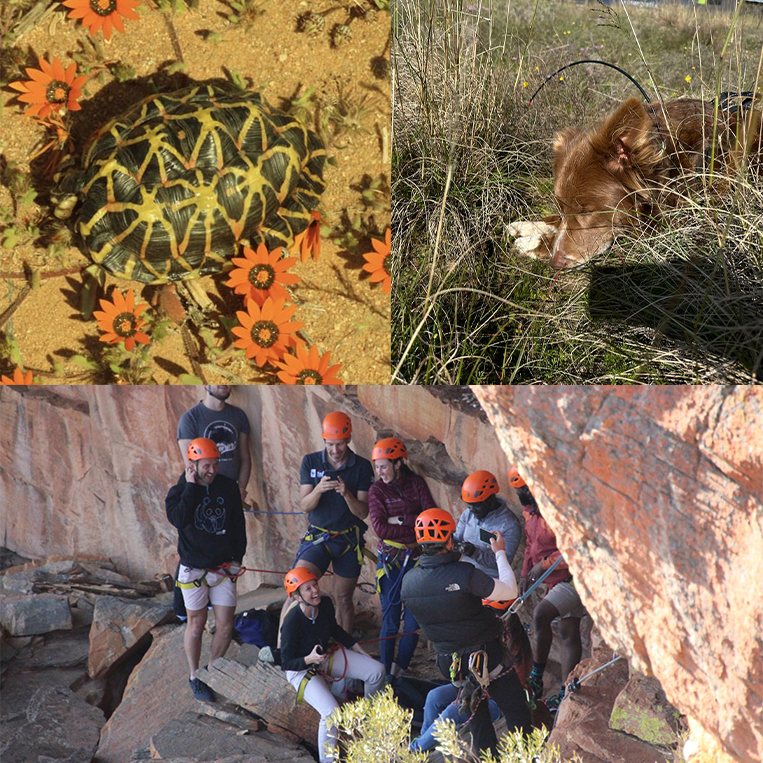
On the weekend of 31 August and 1 September, the DCP team enjoyed the company of the Table Mountain Fund (TMF) Board and officials at Papkuilsfontein Farm in the Northern Cape. TMF is funding the project: Fynbos on the Edge, which is aimed at exploring and developing opportunities to diversify the farming income, through making the overall business model more sustainable from a financial, agricultural, and ecological perspective. Diversifying and growing income from a single agricultural income to a tourism income targeting a range of visitor profiles is aimed at taking pressure off the natural resources, particularly the natural rangeland. The Papkuilsfontein Farm is located on the Bokkeveld Plateau and is the stage for a phenomenal flower display during August and September. On arrival on the farm, the Board members were introduced to the Van Wyk family, who are the 6th generation who bravely took the step to sign a Protected Environment Stewardship Agreement and enter into diversifying their agricultural income through developing remarkable eco-tourism products such as mountain biking, hiking routes and the Via Ferrata on the farm. The group enjoyed hikes, the Via Ferrata and sundowners on the cliffs before returning to their respective destinations.

Esté and Delta mesmerized the Rainforest Trust Board on 8 September on the Worcester Geometric Reserve. Delta, being the star of the day, ensured that her nose and loving persona captured the imagination of the group of Board members before she was put to work to locate, and indicate, live geometric tortoises. This range restricted species is endemic to the winter rainfall region of the south-western Cape and is listed as one of the top 25 most endangered tortoises (and turtles) in the world. The species face threats such as habitat loss due to urban and agricultural expansion, fragmentation of existing habitat leading to isolated populations, invasive alien vegetation and animals, such as feral pigs, and too frequent fires. The risk of poaching of specimens from the wild is also a significant potential threat. Delta ensured that some of the guests on the day saw a Geometric tortoise for the first time in their lives.

Projects made possible by Table Mountain Fund and Rainforest Trust.